
General Dentistry · Gum Disease Guide
Treating Periodontal Disease at Home: What Works and What Does Not.
Home care is essential but cannot cure active gum disease on its own. Correct brushing, daily interdental cleaning, and chlorhexidine rinsing control bacterial load and prevent the disease from worsening, but calculus below the gum line requires professional instruments to remove.

Key takeaways
- Home care prevents plaque hardening but cannot remove calculus already bonded below the gum line.
- Gingivitis (no bone loss) may resolve with cleaning plus improved home care; periodontitis always requires professional treatment first.
- Modified Bass brushing, daily interdental cleaning, and short-course chlorhexidine rinsing are the three evidence-supported home interventions.
- Oil pulling, baking soda, and hydrogen peroxide rinses have weak evidence and should not replace proven methods.
- Full-mouth scaling and root planing at Picasso Dental costs approximately 6,000,000 VND (USD 235) versus AUD 1,000–2,000 in Australia.
- 3-month recall appointments after active treatment are the evidence-based standard for preventing recurrence.
What Home Care Can Do, and What It Cannot.
The distinction between gingivitis (reversible, above the gum line) and periodontitis (bone-destructive, below the gum line) determines whether home care is sufficient or professional treatment is required first.
What home care can do: prevent plaque hardening into calculus and control bacterial populations on accessible surfaces.
Plaque, the soft bacterial film that forms on teeth throughout the day, can be removed by brushing and interdental cleaning. If disrupted every 24 hours, it does not harden into calculus. Home care keeps this cycle broken on all surfaces your tools can reach. For gingivitis (inflammation confined to the gum tissue with no bone loss), this may be sufficient to resolve the condition within 2 to 4 weeks, particularly after one professional cleaning that starts from a clean baseline.
What home care cannot do: remove calculus below the gum line or reverse bone loss already caused.
Once plaque hardens into calculus (tartar), it bonds to the root surface and cannot be dislodged by any brush, floss, or rinse. Calculus below the gum line, called subgingival calculus, is the primary driver of periodontitis. It releases bacterial toxins continuously and triggers the immune response that destroys the supporting bone around the teeth. No home remedy addresses this. Only professional scaling instruments remove subgingival calculus. Any bone loss that occurs before treatment cannot be regenerated through home care.
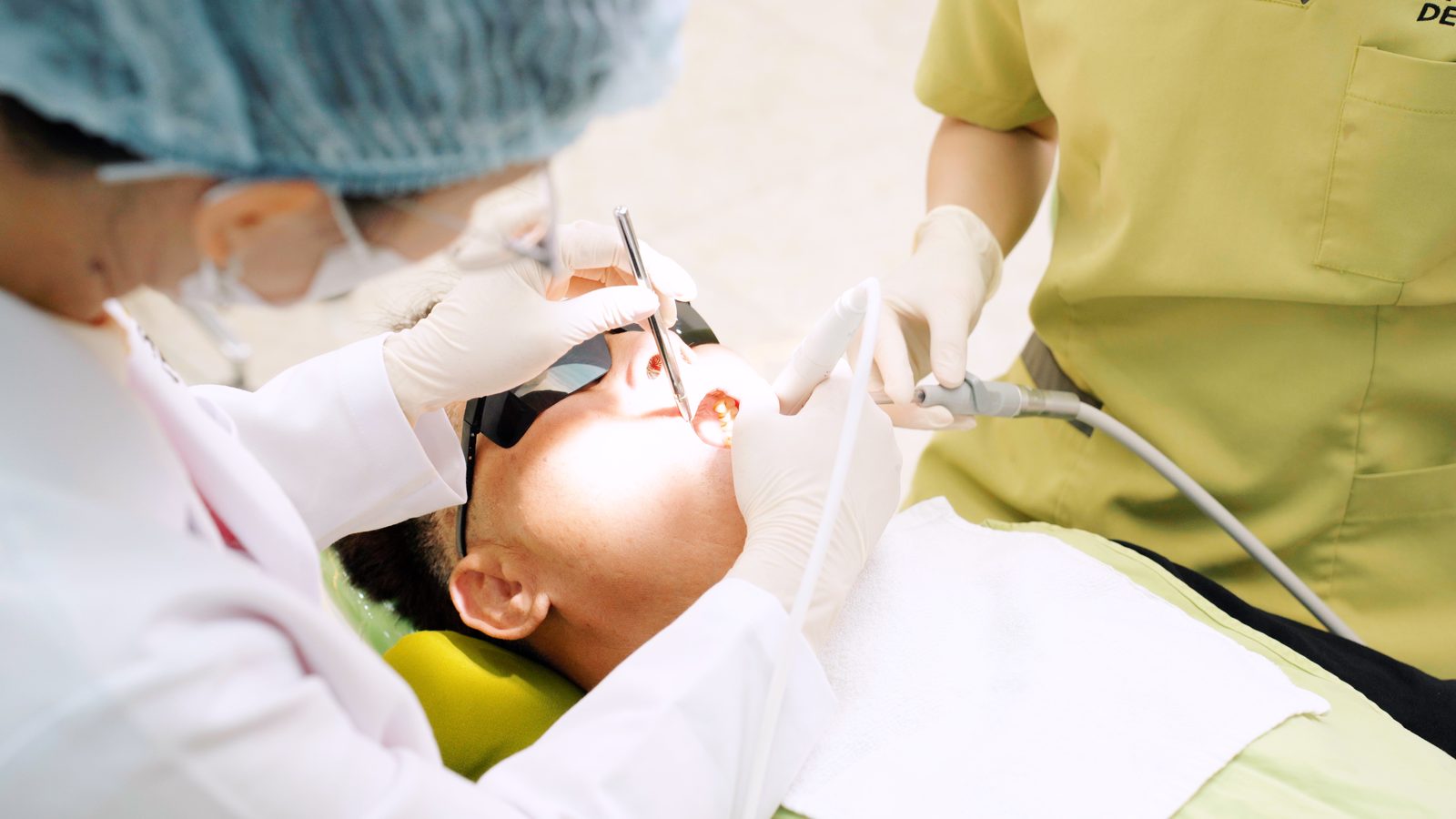
Evidence-Supported Home Measures, Ranked by Impact.
These are the interventions with consistent clinical evidence behind them. Everything else in the home remedy space has weak or no supporting data.
- Modified Bass brushing technique. Place the bristles at a 45-degree angle to the gum line, pointing toward the gum. Use short horizontal strokes or small circles, spending approximately 2 seconds per tooth before moving to the next. Brush for two full minutes minimum, twice daily. An electric toothbrush with a pressure sensor is significantly better than most patients' manual technique and is worth the investment for anyone with gum disease. Hard bristles and vigorous scrubbing damage receding gum tissue without improving plaque removal.
- Daily interdental cleaning. A toothbrush cleans only three of the five surfaces of each tooth. The proximal surfaces (between teeth), where gum disease often starts and progresses fastest, require a separate tool. Traditional floss, used in a C-shape wrapping around each tooth and sliding just below the gum margin, is the reference standard. Interdental brushes (TePe or equivalent) are more effective than floss for patients with receding gums or wide gaps. Water flossers set to medium pressure reduce gum inflammation and are particularly useful for patients who struggle with dexterity. Daily use of whichever tool you will actually use consistently is the key.
- Chlorhexidine 0.12% mouthwash. A 0.12% or 0.2% formulation, rinsed for 30 seconds twice daily, reduces the bacterial population in shallow pockets and on accessible surfaces. It is most effective as a 2-week adjunct during and immediately after professional scaling, not as a permanent replacement for mechanical cleaning. Prolonged use causes brown staining on teeth and alters taste perception. Do not rinse with water after using it; the active ingredient needs contact time to work.
- Quit smoking. Tobacco is the most significant modifiable risk factor for periodontal disease. Smoking reduces blood flow to the gums, which impairs healing and suppresses the inflammatory response, meaning smokers' gums bleed less even when disease is severe, masking the warning sign. Smokers are two to seven times more likely to develop periodontitis than non-smokers, and professional treatment is significantly less effective in active smokers. Gum healing begins to improve within 4 to 8 weeks of quitting.
- Blood sugar control (diabetic patients). Diabetes and periodontal disease have a bidirectional relationship. Poorly controlled blood sugar impairs the immune response, making gum infections more severe and slower to heal. Conversely, active periodontal infection causes systemic inflammation that makes blood sugar harder to control. HbA1c above 7% is associated with significantly worse periodontal outcomes. Diabetic patients with gum disease should treat both conditions simultaneously.
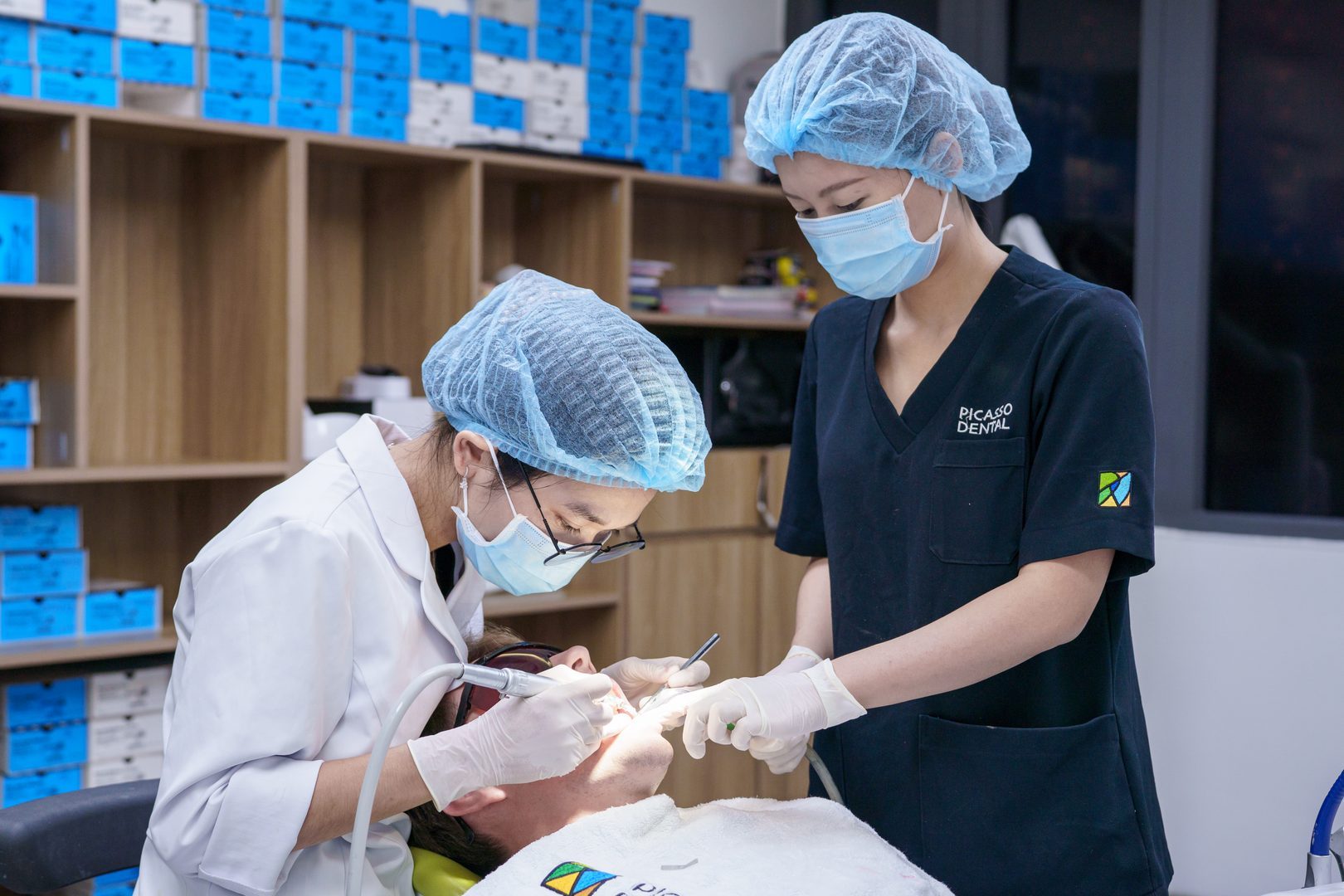
Popular Home Remedies That Lack Evidence.
These approaches are widely recommended online but have weak clinical data. None should replace proven methods.
Supported by evidence
- Soft-bristle brushing, Modified Bass technique
- Daily floss or interdental brush
- Chlorhexidine 0.12% (short course)
- Smoking cessation
- Blood sugar management
Weak or no evidence
- Oil pulling (coconut oil) — harmless but unproven
- Baking soda rinse — minor pH effect, no pocket penetration
- Hydrogen peroxide 3% — surface only, irritates tissue at higher concentrations
- Saltwater rinse — comfort measure post-procedure only
- Turmeric gel / essential oils — no peer-reviewed clinical trials in periodontitis patients
When to See a Dentist: The Decision Tree.
Use this guide to determine whether your situation can be managed at home, or requires professional treatment urgently.
| Symptom | Stage | Home care sufficient? | Action |
|---|---|---|---|
| Gums bleed when brushing, no other symptoms | Possible gingivitis | Possibly, with improved technique | Improve brushing and flossing for 2 weeks. If bleeding persists, book a cleaning. |
| Red, swollen, or puffy gums | Active gingivitis or early periodontitis | No, not alone | Book a professional cleaning. Home care alone will not resolve the inflammation source. |
| Persistent bad breath despite good hygiene | Subgingival infection | No | Professional scaling required. Bacteria below the gum line produce the volatile sulphur compounds causing the odour. |
| Gums pulling away from teeth (recession) | Moderate periodontitis | No | Pocket depth measurement and X-ray needed. Scaling and root planing likely required. |
| Loose teeth or teeth shifting position | Advanced periodontitis with bone loss | No. Dental emergency. | Same-day appointment. Bone loss is irreversible. Delay increases risk of tooth loss. |
| Pus between tooth and gum, or painful swelling | Periodontal abscess | No. Same-day treatment needed. | Contact the clinic directly. Abscess requires drainage and antibiotic prescription. |
Book a periodontal consultation →
Periodontal Treatment Cost in Vietnam vs. Australia, the UK, and the US.
Professional periodontal treatment at Picasso Dental Clinic versus equivalent treatment in home countries. Exchange rate reference: 1 USD = approximately 25,700 VND (May 2026).
| Treatment | Vietnam: Picasso Dental | Australia | UK | US |
|---|---|---|---|---|
| Scale and polish (mild tartar) | 300,000 VND (~USD $12) | AUD $150–$250 | £60–£120 | USD $100–$200 |
| Scale and polish (heavy tartar) | 500,000–600,000 VND (~USD $20–$24) | AUD $200–$350 | £100–£180 | USD $150–$300 |
| Deep cleaning under local anaesthetic | 2,000,000 VND (~USD $78) | AUD $300–$500 | £150–£300 | USD $200–$400 |
| Periodontal pocket treatment (per quadrant) | 1,500,000 VND (~USD $58) | AUD $250–$500 | £150–£300 | USD $200–$400 |
| Full-mouth scaling and root planing (4 quadrants) | ~6,000,000 VND (~USD $235) | AUD $1,000–$2,000 | £600–£1,200 | USD $800–$1,600 |
| Gingivitis treatment | 1,200,000 VND (~USD $47) | AUD $200–$400 | £120–£250 | USD $150–$300 |
| Gum grafting (autograft) | 5,000,000 VND (~USD $195) | AUD $1,500–$3,000 | £800–£2,000 | USD $1,200–$2,500 |
For international patients needing full-mouth periodontal treatment, the cost saving versus Australia or the UK typically covers return flights and several nights' accommodation. Contact our Hanoi Old Quarter or Da Nang clinic for a personalised treatment plan, or visit our international patients page for scheduling guidance.
What Professional Periodontal Treatment Actually Involves.
Most patients expect the worst and are relieved by the reality. The procedures are straightforward; the anaesthesia makes them comfortable.
Standard cleaning (mild to moderate tartar): 30 to 60 minutes, no anaesthetic needed.
An ultrasonic scaler uses high-frequency vibration and water irrigation to break down calculus deposits above and just below the gum line. Most patients with mild gingivitis or early periodontitis are treated this way with no anaesthetic. The procedure feels like mild pressure and occasional cold water; it is not painful for the majority of patients. Duration: 30 to 60 minutes for a full mouth. This is the most common procedure at Picasso Dental and costs 300,000 to 600,000 VND depending on the amount of tartar present.
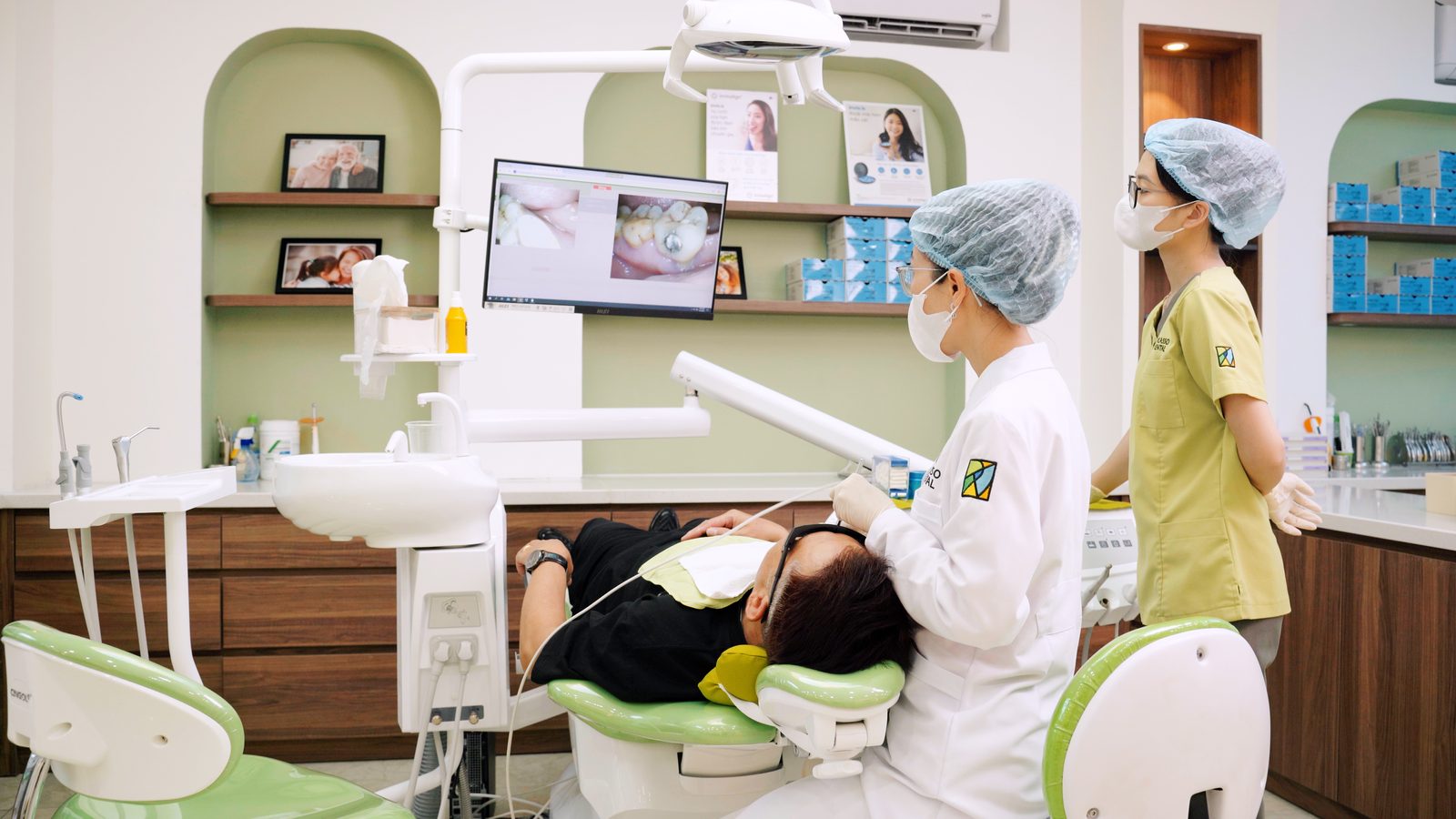
Scaling and root planing (SRP): deep cleaning under local anaesthetic, one quadrant per session.
For pockets of 4mm or deeper, SRP accesses the root surface below the gum with hand curettes and ultrasonic instruments, removing calculus from the root and smoothing the surface so gum tissue can reattach. Performed under local anaesthetic: you feel pressure and vibration, not pain. Post-treatment soreness and temperature sensitivity last 3 to 5 days. A full mouth is typically done in two sessions (two quadrants per visit, one to two weeks apart) or in one longer appointment for motivated patients who prefer to complete it in a single trip. This is the standard of care for moderate periodontitis and represents the most common treatment for international patients visiting Vietnam for periodontal care.
Periodontal maintenance: every 3 months for the first year after active treatment.
After completing SRP, bacteria repopulate treated pockets within 3 months. Research consistently shows that patients on a 3-month maintenance schedule have significantly lower rates of disease recurrence and tooth loss than those who return to 6-month or annual cleanings. Maintenance visits are shorter than the initial treatment: typically 45 to 60 minutes for a full-mouth assessment, probing, and cleaning. For international patients who cannot return every 3 months, the treating dentist provides a home care protocol and coordinates with a local periodontist in the patient's home country for interim maintenance.
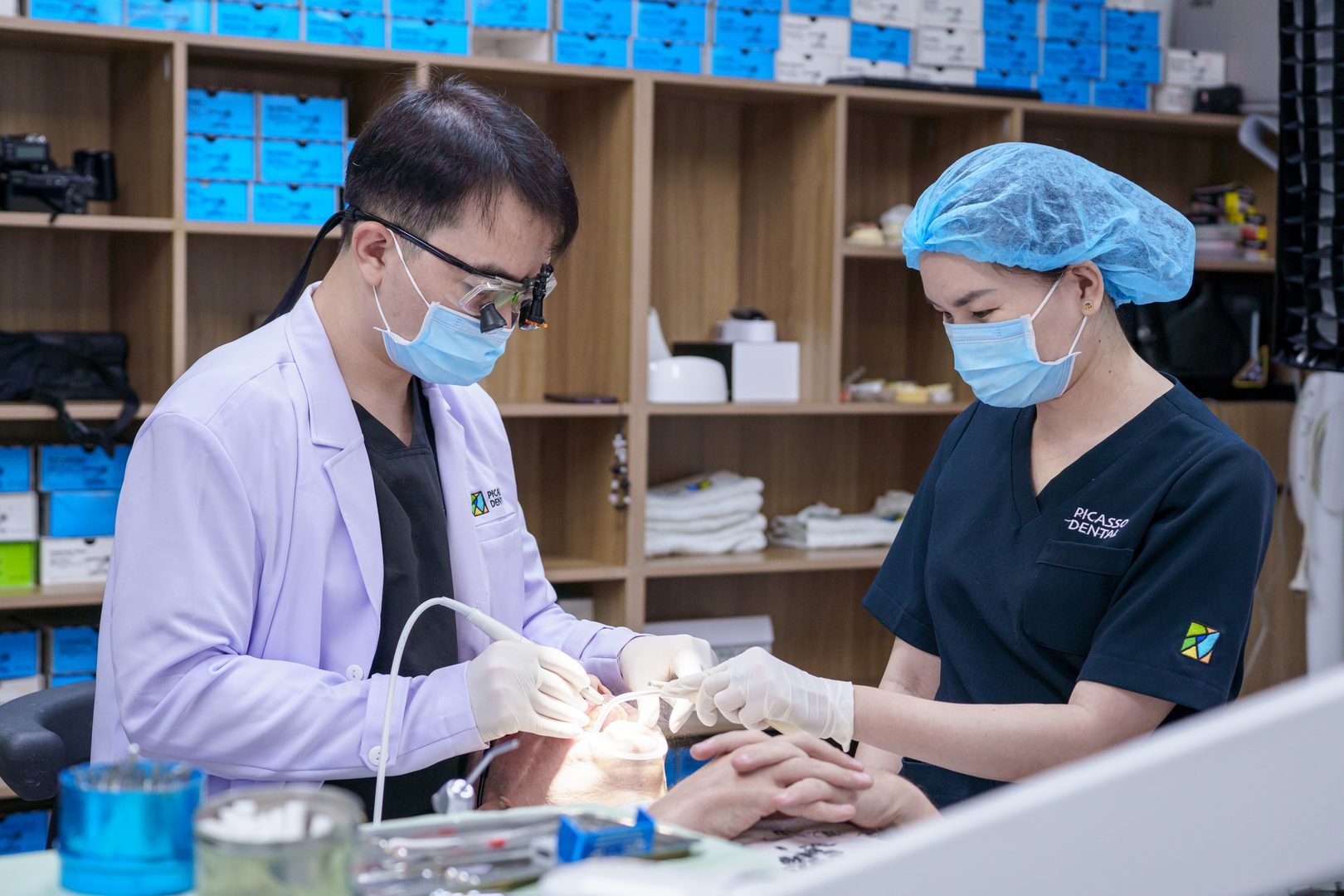
"I used to have severe gum disease and I got my 2 treatments back in the US thinking the result must have been better than in VN. And guess what? My gum was still infected, I even thought it was hopeless for my situation until I came to Picasso. After 2 treatments my gum was back to the healthy state, something I could have never dreamt of."
Maxxie Nguyen · Hanoi Old Quarter branch · Google review
"I started coming here due to a friend's recommendation and after having a horrible experience at another dental clinic in town. They wanted to do gum surgery! Painful, expensive and completely unnecessary! So thankful I got a second opinion from Picasso Dental."
Debby Wisham · Da Nang branch · Google review
"Back at home, they told me I needed gum treatments and some enamel treatment. Picasso checked and told me some treatments were unnecessary and only did what needed to be done. Everything was painless and smooth."
Jane Jeon · Hanoi Old Quarter branch · Google review
Frequently Asked Questions About Periodontal Disease Treatment.
Can periodontal disease be reversed completely?
Gingivitis (inflammation without bone loss) is fully reversible with professional cleaning and improved home care. Periodontitis (with bone loss) is not reversible in the sense that bone lost to the disease does not fully regenerate through standard treatment. What treatment achieves is arresting the disease: stopping further bone loss, reducing pocket depths, and allowing the remaining gum tissue to reattach. With consistent maintenance, many patients hold stable pocket depths for decades after initial treatment.
How long does it take to see improvement after gum treatment?
Gum bleeding typically reduces within 2 to 4 weeks of scaling and improved home care. Pocket depth reduction is measured at a re-evaluation appointment 6 to 8 weeks after completing scaling and root planing. Significant improvement (pockets reducing from 5–6mm to 3mm, gums firming up and returning toward the tooth surface) is visible by this point for most patients. Full stabilisation takes 3 to 6 months of consistent maintenance.
Is a water flosser effective for gum disease?
Yes, with caveats. A water flosser (Waterpik or equivalent) set to medium pressure significantly reduces gum inflammation and is clinically superior to not cleaning interdentally at all. It is particularly effective for flushing debris from shallow pockets (up to 3mm penetration). It is not a replacement for traditional floss or interdental brushes for proximal plaque removal, which requires physical contact with the tooth surface. Use it as an addition to, not a replacement for, mechanical interdental cleaning.
My gums bleed every time I floss. Should I stop flossing?
No. Bleeding gums during flossing signal inflammation that requires flossing more consistently, not less. The bleeding comes from engorged blood vessels in inflamed gum tissue, not from physical damage caused by the floss. With correct flossing technique and daily consistency, most cases of flossing-induced bleeding resolve within 1 to 2 weeks as the gum tissue inflammation reduces. If bleeding continues beyond 2 weeks of daily correct flossing, book a professional cleaning.
Can I get periodontal treatment in Vietnam as a short-stay tourist?
Yes. A full-mouth scaling and root planing (4 quadrants) is completed in 1 to 2 appointments, which fits within a 5 to 10 day visit. The first appointment treats two quadrants; the second, 5 to 7 days later, treats the remaining two. Patients leave Vietnam with the active treatment complete. Maintenance and monitoring continue with a dentist at home. Contact the Hanoi Old Quarter, Da Nang, or Ho Chi Minh City branch to confirm availability and scheduling around your travel dates.
What is the link between gum disease and heart disease?
Periodontal disease is associated with an elevated risk of cardiovascular disease in multiple large-scale studies. The likely mechanism is systemic inflammation: bacteria from deep periodontal pockets enter the bloodstream, triggering inflammatory responses that affect arterial walls. The American Heart Association acknowledges the association while noting the evidence for causality is still developing. Treating periodontal disease reduces systemic inflammatory markers (CRP) measurably within months. Patients with existing cardiovascular disease should inform their dentist, as some procedures require antibiotic prophylaxis. See our periodontal treatment service page for more detail.
Can I treat periodontal disease at home?
Partly. Home care controls the bacterial load on accessible tooth surfaces and prevents the disease from worsening, but it cannot remove calculus that has formed below the gum line. Calculus harbours the bacteria that cause bone loss, and only professional scaling instruments can remove it. For active periodontal disease, professional deep cleaning must come first. Home care then maintains the result.
What toothbrush and technique should I use with gum disease?
Use a soft-bristled manual brush or a rechargeable electric toothbrush with a pressure sensor. Hard bristles and vigorous scrubbing damage receding gum tissue and erode exposed root surfaces without improving plaque removal. The Modified Bass technique is the standard for patients with gum disease: place the bristles at a 45-degree angle to the gum line pointing toward the gum, and use short horizontal strokes for 2 seconds per tooth before moving to the next. Brush for two minutes minimum, twice daily.
Start here
Get your plan in 24 hours.
Online consultation reviewed by a licensed dentist. Response within 24 hours. No obligation.
No obligation · Since 2013