Cosmetic Dentistry · Led by Dr. Huong Nguyen (Dr. Rosie) · Last reviewed May 2026
Emax Veneers, the Ceramic
Top Cosmetic Clinics Use.
Emax is pressed lithium disilicate ceramic, manufactured by Ivoclar Vivadent in Liechtenstein, and the standard veneer material at top cosmetic clinics in Sydney, Paris and New York. Every Emax veneer at Picasso carries a 7-year material warranty, is designed digitally before any tooth is touched, and is bonded by Dr. Huong Nguyen (Dr. Rosie), our dedicated cosmetic dentist. Across six branches, two of them inside accredited hospitals.

Savings
Same Ivoclar Ceramic. Same Protocols. Roughly One Third the Price.
Indicative single Emax veneer ranges in private practice. Sources: ADA, BDA and AusDent published surveys; Picasso published rate card. Your case may vary; we send a written, itemised quote within 24 hours of seeing your photographs.
| Country | Typical Emax Veneer (per tooth) | What You'd Save |
|---|---|---|
| United States | $1,200 to $2,500 USD | ~70 to 80% |
| Australia | $1,500 to $2,800 AUD | ~70 to 80% |
| United Kingdom | £700 to £1,400 | ~65 to 75% |
| Canada | $1,200 to $2,200 CAD | ~65 to 75% |
| New Zealand | $1,800 to $2,800 NZD | ~70 to 80% |
| Picasso Dental, Vietnam | Emax to Lisi tiers, see cost guide | — |
Full itemised pricing on the cosmetic dentistry cost guide. A typical 8-veneer Emax smile makeover in Vietnam costs less than a single front veneer in many home markets.
What It Is
What Is an Emax Veneer?
An Emax veneer is a thin shell of pressed lithium disilicate ceramic, manufactured by Ivoclar Vivadent in Liechtenstein, bonded to the front of a tooth. The material is naturally translucent (close to natural enamel), monolithic (no layered porcelain to chip), and strong, with a flexural strength of roughly 360 to 400 MPa for Emax Press. It is the standard veneer ceramic used by top cosmetic clinics worldwide.
Why Picasso
Why Picasso for Emax
Three claims that should be true of any cosmetic clinic placing pressed lithium disilicate. Here is exactly how we deliver each one.
Genuine Ivoclar Emax, not generic lithium disilicate.
Every Emax veneer at Picasso is pressed from genuine Ivoclar Vivadent ingots, traceable by batch and manufacturer documentation. The pressed ceramic market is full of unbranded look-alikes that compromise on translucency and bond strength. We do not use them. Emax Press, Emax Press Plus and the premium Lisi alternative (GC Group, Japan) are the four pressed-ceramic options on the rate card.
Designed digitally, previewed in your mouth before any tooth is touched.
Every cosmetic case begins with photographs, an iTero scan and a Digital Smile Design preview. We then produce a physical wax-up and a temporary mock-up you wear in your mouth. You see, speak and smile with the planned shape, and approve it, before a single millimetre of enamel is touched.
Minimally invasive preparation, 0.3 to 0.5mm, or none at all.
Emax Press veneers require only 0.3 to 0.5mm of enamel reduction, a fraction of what crowns or older porcelain-fused-to-metal restorations needed. Where the case allows, non-prep Emax veneers preserve all of your enamel. Every Emax veneer leaves Picasso with a 7-year material warranty, and we retain your digital impression files so a duplicate can be pressed quickly if anything ever goes wrong.
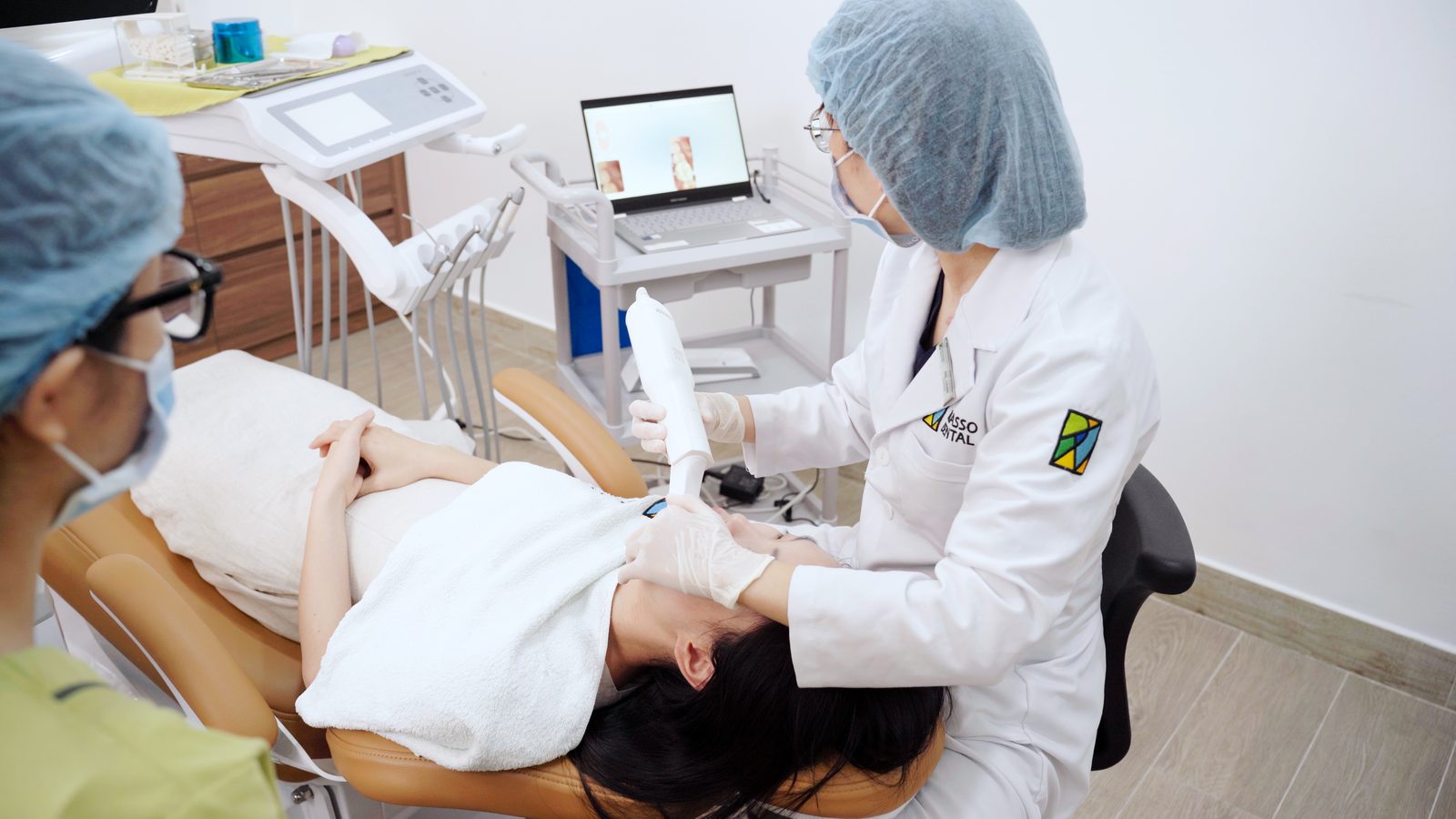
iTero digital impression. Sub-30-micron accuracy, no goopy putty trays.
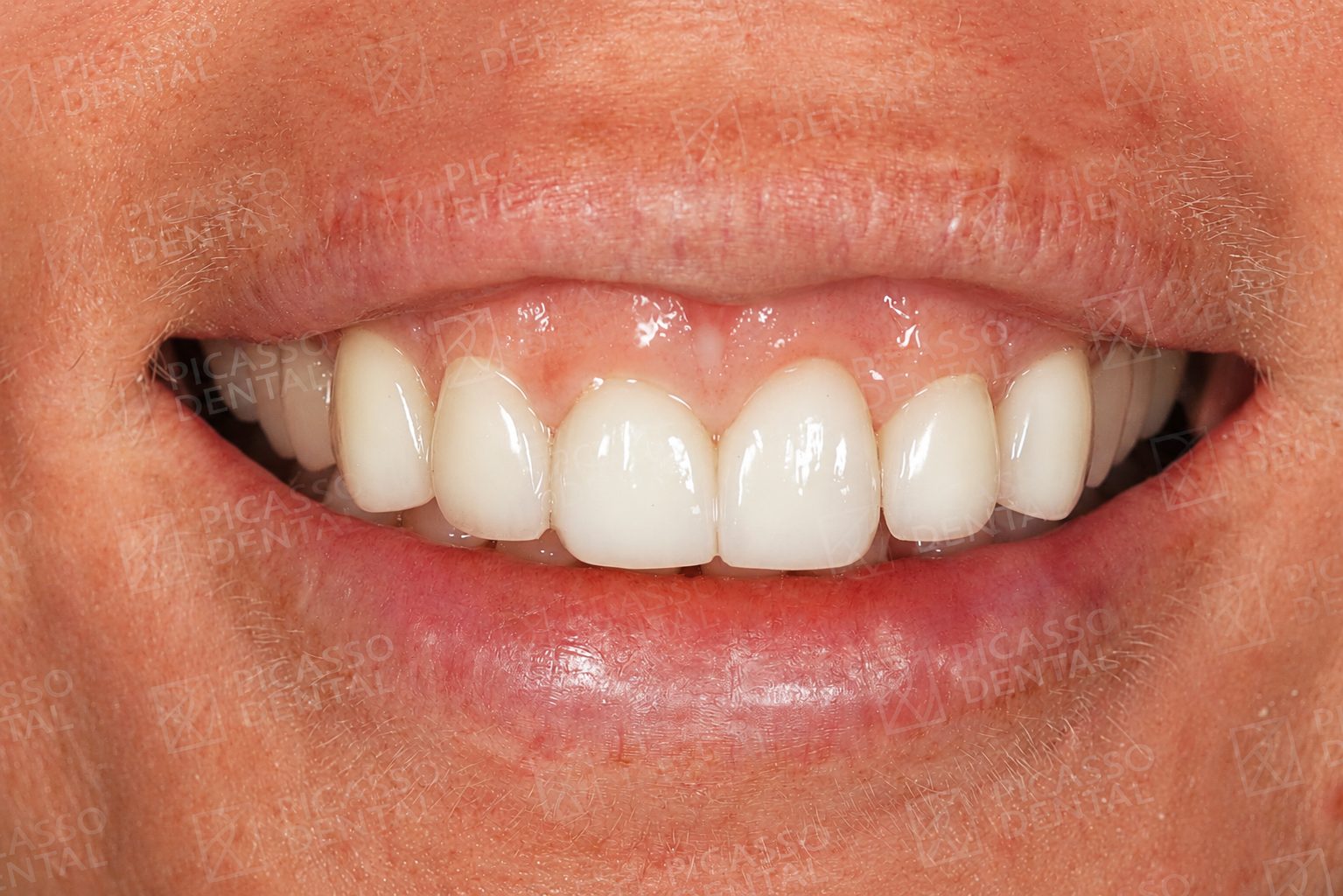
Final pressed-ceramic veneers. Approved on a mock-up before the porcelain was finalised.
Variants
Emax Variants & Warranties
Four pressed-ceramic options at different price points, all carrying the 7-year material warranty. Your cosmetic dentist will recommend based on tooth condition, bite, shade goals and how much enamel can be safely preserved.
| Variant | Preparation | Warranty | Best For |
|---|---|---|---|
| Emax Press | 0.3 to 0.5mm enamel | 7 years | Standard pressed-ceramic veneer · most patients |
| Emax Press Plus | 0.3 to 0.5mm enamel | 7 years | Improved aesthetic layering · shade-critical cases |
| Non-Prep Emax | No enamel removed | 7 years | Enamel preservation · reversible in principle |
| Lisi (GC Group, Japan) | 0.3 to 0.5mm enamel | 7 years | Premium showcase smile makeovers |
For itemised pricing across all four pressed-ceramic options plus inlays, onlays and full smile-makeover packages, see the cosmetic dentistry cost guide. Need full coverage instead of front surface? See porcelain crowns.
Candidacy
Who Is, and Isn't, a Good Candidate?
Emax veneers suit some patients beautifully and are the wrong tool for others. Here is the honest version, decided after photographs, an iTero scan and a bite assessment.
You're a strong candidate if
- You want to correct shape, colour, small gaps or minor edge irregularities on otherwise healthy front teeth.
- Your bite is stable, no significant overbite, crossbite or grinding-driven wear pattern.
- Your teeth have intact enamel for the Emax to bond to, lithium disilicate bonds best to enamel, not dentine.
- Your gums are healthy, with no active periodontal disease.
- You are willing to wear a nightguard if you grind, and to attend 6-month hygiene visits.
- You have realistic expectations, Emax improves appearance, but it does not move teeth.
Emax may not be right if
- You have moderate or severe misalignment, Invisalign or braces should come first.
- You grind or clench heavily without protection, even Emax can fracture under repeated bruxism.
- You have large existing fillings, fractures or weakened tooth structure, an Emax crown is the correct restoration, not a veneer.
- You have very dark underlying teeth, Emax's translucency may not mask discolouration; zirconia or internal whitening may be needed.
- You have significant enamel loss, there may not be enough surface for reliable bonding.
- You expect veneers to function permanently with no maintenance, they will need replacement at some point in your lifetime.
If any of these apply, we'll tell you, and recommend orthodontics, a crown, whitening or treatment elsewhere if that's the right answer for you.
Treatment Process
Emax Treatment, Step by Step
From your first photograph to your final bonded smile, exactly what to expect at each stage. Total timeline for a standard Emax case: two to three weeks across two to three visits.
Day 1 · 60 min
Consultation & Photography
Bite assessment, high-resolution clinical photographs, iTero digital scan and shade analysis. Dr. Rosie confirms whether Emax veneers are the right tool, or whether whitening, orthodontics or crowns would do a better job.
Day 2 to 3
Design & Mock-Up
Digital Smile Design preview, physical wax-up and a temporary composite mock-up placed directly on your teeth. You speak, smile and live with the planned shape before any preparation begins.
Day 7 · 90 to 120 min
Preparation & Scan
Minimal enamel removal (0.3 to 0.5mm for Emax Press; none for non-prep). Final iTero scan, temporaries fitted. Ivoclar-certified labs press your final Emax veneers to digital tolerances over the following week.
Day 14 · 90 min
Bonding & Polish
Each Emax veneer checked for fit, shade and contact, then bonded with light-cured resin cement. Final polish, occlusion check, post-bonding photographs. You leave with your new smile.
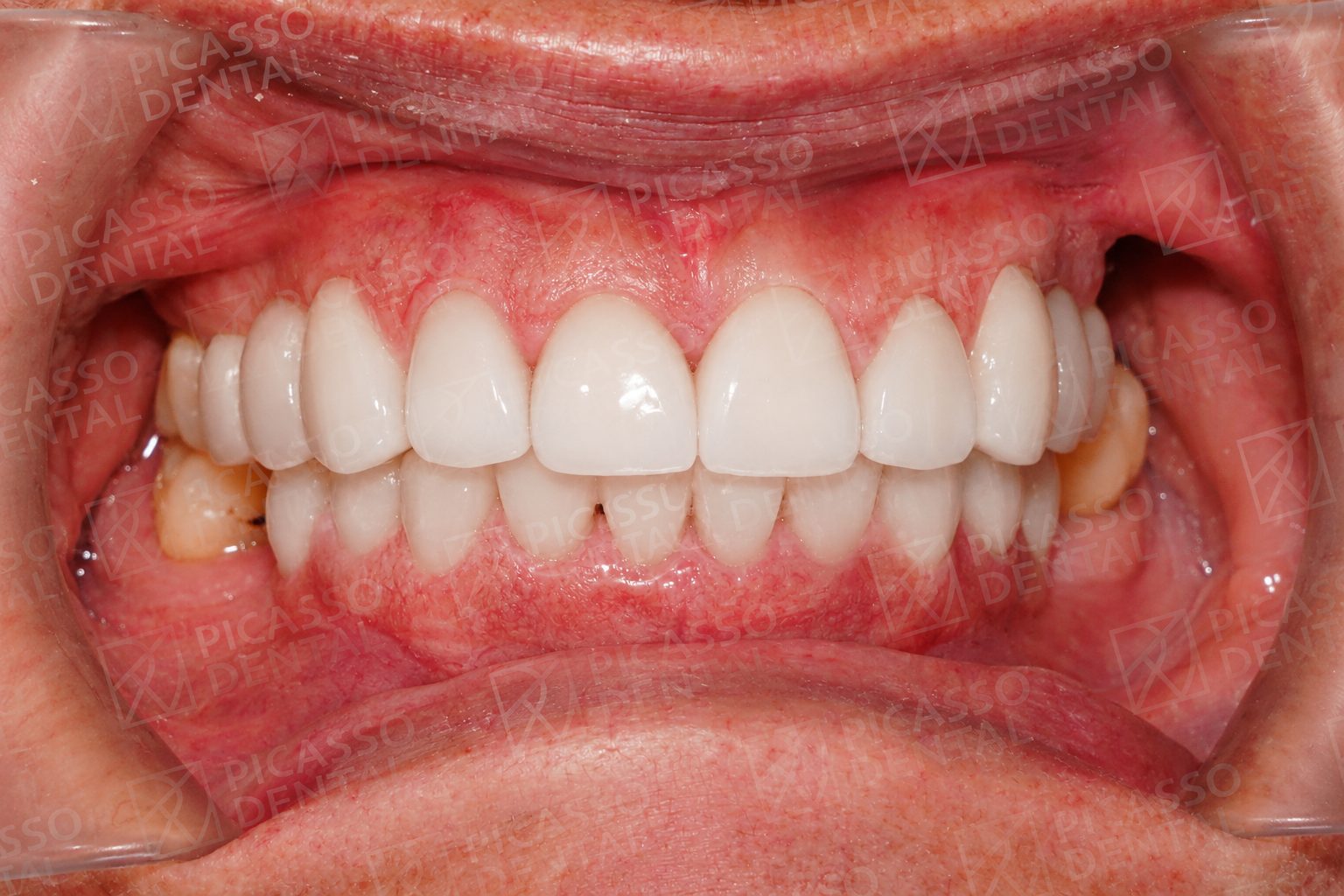
A full-arch cosmetic case approved on mock-up first, finalised in pressed ceramic second. Picasso Dental HCMC Thao Dien.
Real Case
A Real Emax Case.
A recent pressed-ceramic smile makeover at Picasso Dental, published with the patient's written consent. Material, scope and duration are documented exactly as performed.
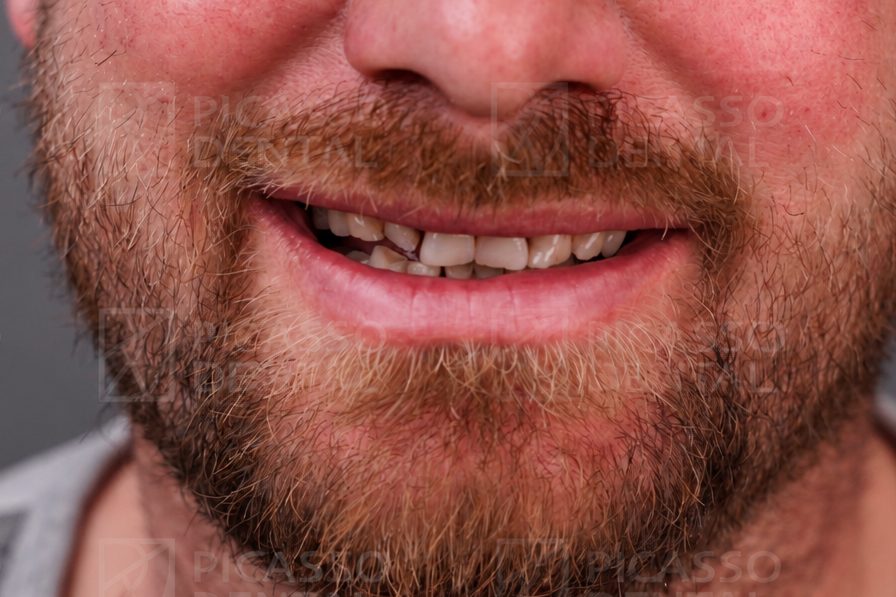
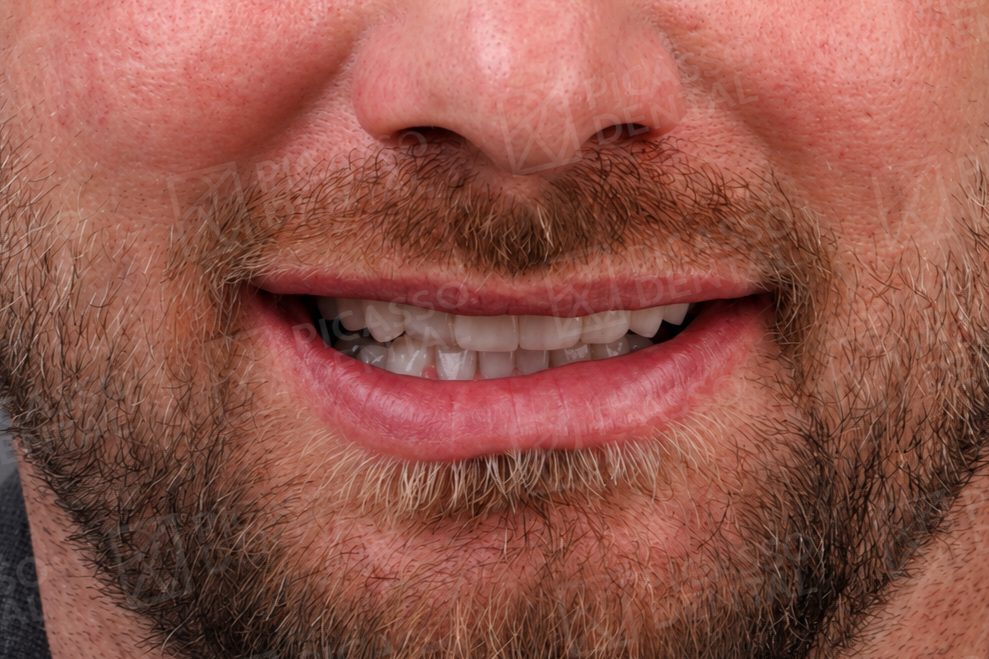
20 Porcelain Veneers
- Material LAVA 3M (USA)
- Scope 20 veneers: 10 upper jaw + 10 lower jaw
- Duration 3 appointments, 7 days apart
- Branch Ho Chi Minh City
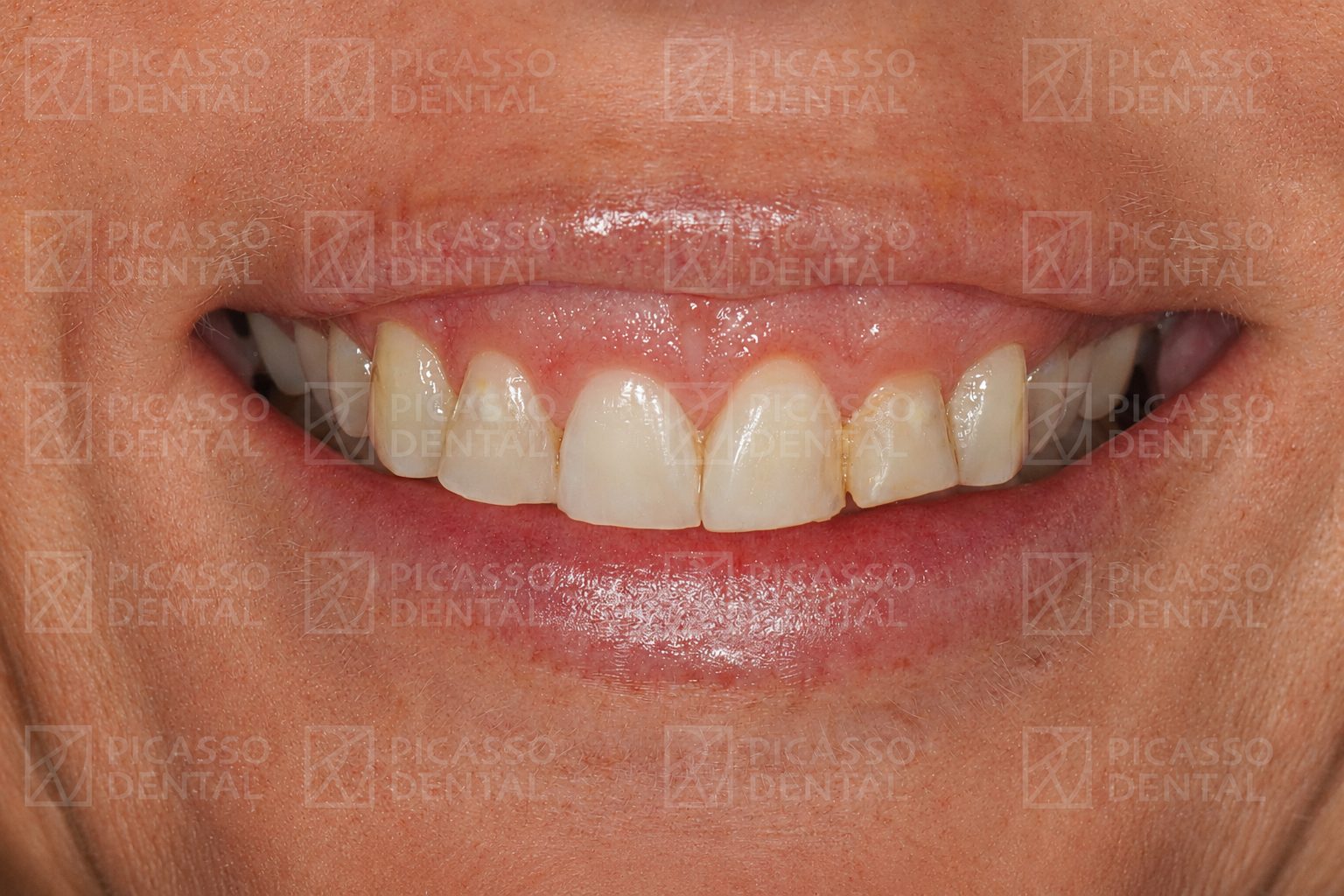
Before · A real Picasso patient before 10 Lisi pressed-ceramic veneers across the upper jaw.
After · The same patient after 10 Lisi veneers, designed on mock-up first.
Comparison
Emax vs Zirconia vs PFM
The technical comparison patients ask for most. Three veneer-class materials, three different jobs.
| Property | Emax | Zirconia | PFM |
|---|---|---|---|
| Material | Lithium disilicate | Zirconium dioxide | Porcelain fused to metal |
| Translucency | High (mimics enamel) | Lower (more opaque) | Lowest (metal substructure) |
| Flexural strength | ~360 to 400 MPa | ~900 to 1200 MPa | ~100 MPa (porcelain layer) |
| Tooth reduction | 0.3 to 0.5mm | 0.5 to 0.7mm | 1.0 to 1.5mm |
| Best for | Front aesthetic veneers | Back-tooth crowns, high load | Older restorations, less common today |
| Aesthetics | Excellent | Good but more opaque | Visible metal margin risk |
For full-coverage restorations, see porcelain crowns. For entry-tier or short-term cosmetic correction, see composite veneers. For broader veneer comparison, see porcelain veneers.
When Zirconia
When Zirconia Makes More Sense
Honest counter-recommendation. Emax is the right answer for most front-tooth veneer cases, but not all of them.
Zirconia is significantly stronger and more opaque than Emax. Those properties matter in three specific scenarios:
- Heavy grinders who fracture porcelain veneers repeatedly even with a nightguard. Zirconia's higher flexural strength (~900 to 1200 MPa) survives bite forces that crack Emax.
- Posterior teeth where chewing loads are higher and aesthetic translucency is less critical. Zirconia crowns dominate in the back of the mouth for this reason.
- Masking very dark teeth where Emax's translucency is a disadvantage. Zirconia's opacity blocks the underlying discolouration so the final shade is predictable.
In all three cases, we generally recommend zirconia as a crown material rather than as a veneer. Bonding zirconia to enamel is harder than bonding Emax, and the strength advantage is more useful as full coverage. For pure cosmetic veneer work on front teeth, Emax remains the correct choice.
Adjunct treatments we may recommend first
Active gum disease must be treated before veneers. Significant misalignment is better corrected with Invisalign first, then refined with a small number of Emax veneers. Very dark single teeth often respond to internal bleaching, which may avoid a veneer entirely.
The Emax veneer vs Emax crown decision
A veneer covers the front surface only; a crown covers the whole tooth. If your tooth is structurally sound, a veneer is enough. If decay, large fillings, root canal or fracture have compromised the tooth, an Emax crown is the correct restoration, not a veneer. We confirm this with a CBCT or periapical X-ray if needed.
Team
The Cosmetic Team
Emax cases at Picasso Dental are led by Dr. Huong Nguyen (Dr. Rosie), our dedicated cosmetic dentist, and our founding clinical director Dr. Emily Nguyen. Smile design is a different discipline from general restorative work, your Emax veneers are designed by someone who does this every week.
Cosmetic Dentist
Dr. Huong Nguyen (Dr. Rosie)
Picasso's dedicated cosmetic dentist. Hanoi Medical University-trained with post-graduate training in orthodontic surgery at the Institute of Odonto-Stomatology. Focused on Emax and Lisi pressed-ceramic veneers, Digital Smile Design, and full smile makeovers. Veneers and table-tops are her clinical week.

Founding Clinical Director
Dr. Emily Nguyen
Founder of the original clinic in 2013. Sets clinical standards for cosmetic case selection, preparation protocols and pressed-ceramic delivery group-wide. Personally leads many of the larger Emax smile-makeover cases at the Hanoi Old Quarter flagship.

Lead Implant Specialist
Dr. Hung Le Ba Gia (Dr. Evans)
For cosmetic cases involving missing teeth or implant-supported Emax crowns alongside veneers, treatment planning is coordinated with our implant team.
Aftercare
Caring for Your Emax, for Years
Emax veneers are not maintenance-free, but they are maintenance-light. With basic care, well-bonded pressed-ceramic veneers commonly last 10 to 15+ years before needing replacement.
Every Day · For Life
Brush, Floss, Repeat
Emax veneers are cared for like natural teeth. Twice-daily brushing with a soft brush, floss once daily. The glazed ceramic itself does not stain easily, but the bond margins between veneer and tooth do.
If You Grind
Nightguard
If you grind or clench in your sleep, a nightguard is strongly recommended. Emax is strong but can fracture under repeated grinding force. We fabricate a custom guard at the bonding visit.
Every 6 Months
Hygiene Visit
Professional cleaning, soft tissue check, and polish of the veneer surfaces and margins. Identical to a natural-tooth check-up. Local or with us.
Years 10 to 15
Replacement (Eventually)
Most Emax veneers eventually need replacement. We retain your digital impression files so a duplicate can be pressed quickly, even years later.
What to avoid
Biting fingernails, pen caps, ice or hard objects, unkind to Emax and natural teeth alike. Unprotected grinding is the single biggest threat to veneer longevity. Heavily acidic diets (frequent citrus, fizzy drinks) can erode the bonding cement over years.
If you travel home after bonding
You leave with complete clinical records, post-bonding photographs and your iTero scan files. Your home dentist can perform hygiene visits and address any concerns, and we respond to questions over WhatsApp at any time.
Testimonials
Veneer Patients in Their Own Words
"
I had 4 crowns and 4 veneers done with the wonderful Dr. Emily. I was so nervous about losing too much of my natural teeth, the horror stories of "peg teeth" terrified me, but she was so gentle and precise. I was amazed by how much of my natural teeth were preserved. Everything was explained clearly and thoroughly, and the turnaround time was fast, less than a week from prep to final veneers.
Earthy Acts
"
I flew from NZ to get my old crowns and veneers replaced (10 crowns, 6 veneers) that were cracking and falling. I knew the work would be extensive and I was nervous for the treatment, but Dr Emily and the team were supportive and professional every step of the way. From the care taken during the physical work to the regular check ins throughout my two weeks in Hanoi (and even once I had left the country) I felt supported and safe in their care. I couldn't be happier with the results of my new teeth.
Esta Fowler
"
I had 2 veneers done here in 2017 and my Canadian dentists still comment on how good they look. Thank you for the gift of a smile I feel proud of.
Josie Evans
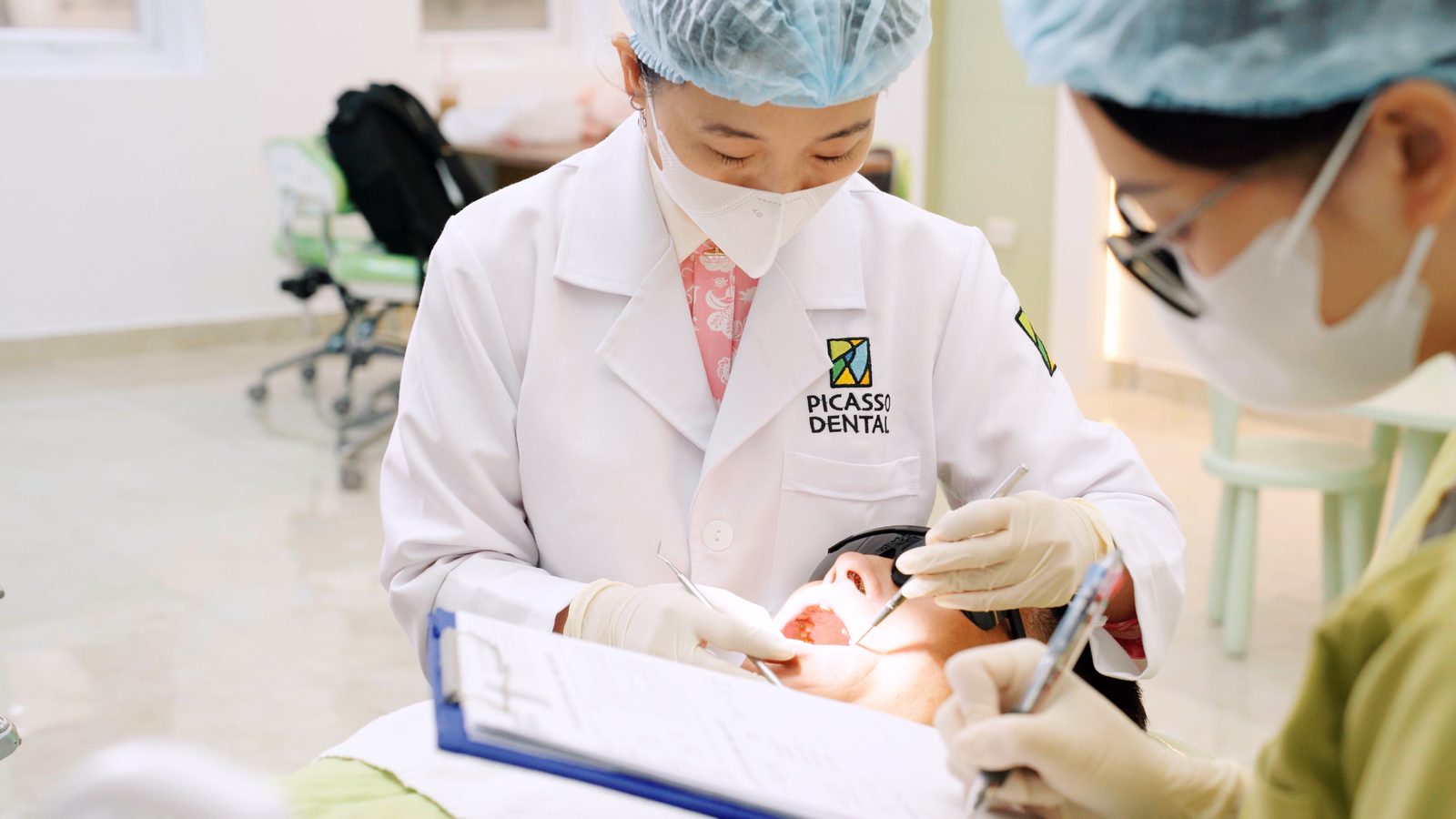
Picasso Dental Hanoi Old Quarter. Where most international Emax cases are planned and finalised.
International Journey
The International Emax Journey
Most cosmetic patients finish Emax veneers in a single trip. Two paths depending on whether you want to start the design before you fly.
One Trip, Start to Finish.
Photographs and a video call before you fly. Everything from final design to bonding in a single 10 to 14 day stay.
Photographs & Video Consult
Send three smile photos over WhatsApp. Dr. Rosie reviews and replies with a recommended Emax variant, number of veneers and a written quote within 24 hours.
Scan, Design, Mock-Up
iTero scan, Digital Smile Design preview, physical wax-up, and a temporary mock-up you wear in your mouth for 24 to 48 hours.
Preparation & Lab Time
Minimal enamel preparation, temporaries fitted. Ivoclar-certified labs press your final Emax veneers. Time to enjoy Vietnam between visits.
Bonding & Fly Home
Each Emax veneer checked, bonded, polished. Post-bonding photographs and your full case file (iTero scan, shade record, warranty card) before you fly.
Two Trips, For Bigger Cases.
Photographs, scan and mock-up on Trip 1. Preparation and bonding on Trip 2 once design is finalised at home.
4 to 5 days
Design & Mock-Up
Photographs, iTero scan, Digital Smile Design, physical wax-up. Mock-up sent home with you to live with for 4 to 6 weeks.
4 to 6 weeks
Live With the Design
Photograph yourself, ask family for opinions, request adjustments over WhatsApp. The design is locked only when you are happy.
7 to 10 days
Preparation & Bonding
Final iTero scan, preparation, lab time, bonding. Full case file delivered before you fly home.
Risks
Risks & Success Rates: Honestly
Emax is well-documented in the long-term clinical literature. Here is what the studies report, what can go wrong, and how Picasso minimises every avoidable risk.
Documented Longevity
Layton and Walton (2012) reported approximately 94% survival of pressed-ceramic veneers at 10 years and 67% at 20 years. Pieger et al. (2014), in a systematic review of lithium disilicate restorations, reported high success rates for both veneers and crowns. Most Emax veneers eventually need replacement; few last a lifetime untouched.
What Can Go Wrong
Debonding (the veneer comes off the tooth, usually re-cementable). Fracture (the Emax chips or cracks, typically from trauma or unprotected grinding). Marginal staining (colour pickup at the bond line over years). Sensitivity (typically transient, in the weeks after preparation).
How We Minimise Risk
Conservative 0.3 to 0.5mm preparation only. Digital Smile Design and physical mock-up before bonding. iTero digital impressions for sub-30-micron fit. Bite assessment and nightguard recommendation for grinders. Ivoclar-documented Emax with traceable batch records.
If a Veneer Fails Within Warranty
Within the 7-year warranty period and under normal use, Emax replacement is covered. We retain your digital impression files so a duplicate can be pressed quickly without re-scanning. Re-cementing a debonded veneer is quoted as a small lab fee.
The Irreversibility Tradeoff
Conventional Emax Press veneers require a small amount of enamel removal, that enamel does not regrow. Once you commit, the tooth will always need a veneer or crown to seal the prepared surface. Non-prep Emax veneers preserve all enamel and are reversible in principle.
What We Will Say No To
If your case really needs orthodontics, a crown, or whitening rather than Emax veneers, we will say so, even if it loses us the immediate work. Veneers placed on the wrong patient look beautiful for a year and fail expensively after that. We are not interested in that outcome.
FAQ
Frequently Asked Questions
What is an Emax veneer?
An Emax veneer is a thin shell of pressed lithium disilicate ceramic, manufactured by Ivoclar Vivadent in Liechtenstein, bonded to the front of a tooth. Emax is the trade name; the material is highly translucent and strong (around 360 to 400 MPa flexural strength for Emax Press), and it is the standard veneer ceramic used by top cosmetic clinics worldwide.
How long do Emax veneers last?
Long-term clinical literature including Layton and Walton (2012) reports approximately 94% survival of pressed-ceramic veneers at 10 years and 67% at 20 years. Picasso provides a 7-year material warranty. With good hygiene, regular check-ups and a nightguard if you grind, well-bonded Emax veneers commonly last 10 to 15+ years before needing replacement.
Is Emax Press the same as Lisi?
Both are pressed lithium disilicate veneers, but they come from different manufacturers. Emax Press is Ivoclar Vivadent's pressed lithium disilicate from Liechtenstein. Lisi (GC Group, Japan) is a premium pressed ceramic offered at a higher price point for showcase makeovers where every nuance of translucency and surface texture matters.
How strong is Emax compared to zirconia?
Emax Press has a flexural strength of approximately 360 to 400 MPa. Zirconia (zirconium dioxide) is significantly stronger at roughly 900 to 1200 MPa, but it is also more opaque. For front-tooth aesthetics, Emax wins on translucency. For high-load posterior crowns or heavy grinders, zirconia wins on raw strength. We use Emax for front veneers and zirconia for posterior crowns at Picasso.
Will Emax stain?
Emax is a glazed ceramic, so the veneer surface itself resists staining far better than natural teeth or composite. The bond margin between veneer and tooth can pick up colour over years of coffee, tea, red wine and tobacco, which is one reason we recommend 6-month hygiene visits.
Can you do an Emax veneer over a dark tooth?
Sometimes, but it is harder. Because Emax is naturally translucent, very dark underlying teeth can show through unless the veneer is made thicker or more opaque, which compromises its main advantage. For severely discoloured teeth, internal whitening, a more opaque material like zirconia (used as a crown), or a different layering protocol may be the better answer. We assess this with photographs and shade tabs at consultation.
Do I need a nightguard with Emax veneers?
If you grind or clench, yes. Bruxism is the single biggest avoidable cause of veneer fracture. We assess wear patterns at consultation and recommend a custom nightguard for any patient with signs of grinding. The nightguard cost is separate from the veneer cost.
Can Emax break?
Yes. Emax is strong but not unbreakable. Reported failure modes include debonding (often re-cementable), fracture (usually from trauma or grinding), and marginal staining over time. Within the 7-year warranty period and under normal use, replacement is covered.
How is Emax different from regular porcelain?
Older porcelain restorations were typically feldspathic porcelain layered onto a metal substructure (PFM, around 100 MPa for the porcelain layer). Emax is monolithic pressed lithium disilicate, no metal, much stronger (around 360 to 400 MPa), and far more translucent. There is no layered porcelain on an Emax veneer to chip off.
Will my real tooth be ground down for an Emax veneer?
For Emax Press, we remove 0.3 to 0.5mm of enamel from the front and edge of the tooth, a fraction of what crowns require. For non-prep Emax, we remove no enamel at all. We do not endorse the more aggressive preparation styles you sometimes see online.
What is the difference between an Emax veneer and an Emax crown?
An Emax veneer covers only the front (and edge) of the tooth, requires 0.3 to 0.5mm of enamel reduction, and is purely cosmetic. An Emax crown covers the entire tooth, requires 1.0 to 1.5mm of reduction all around, and is used when the tooth is structurally compromised by decay, large fillings or fracture. Both use the same lithium disilicate material; the difference is coverage. For full coverage, see porcelain crowns.
Can I get Emax veneers as an international patient?
Yes. Most Emax cases finish in two to three clinic visits within roughly two weeks, which fits a single dental tourism trip. We plan the case digitally before you fly, so the wax-up, mock-up and impressions can be sequenced into your stay. See our international patient guide for details.
Pricing
Itemised Emax Pricing
For published rate cards across Emax Press, Emax Press Plus, non-prep Emax and Lisi premium, plus inlays, onlays and full smile-makeover packages, see the dedicated cosmetic dentistry cost guide.
See the Cosmetic Dentistry Cost Guide →
Looking for full-arch smile design? See smile makeover or Hollywood smile. For the broader veneer comparison, see porcelain veneers.
Patient Video Testimonial

Start Here
Send Three Photos of Your Smile.
Get a Written Emax Plan in 24 Hours.
Three photos and a sentence about what you'd like to change is enough to start. Dr. Rosie reviews every cosmetic request personally and replies with a recommended Emax variant, the number of veneers, a treatment timeline and a written, itemised quote, at no cost and with no obligation. Most international patients hear back within a few hours.
No obligation · Replies from a licensed dentist, not a bot · Since 2013