Orthodontics · Specialist Orthodontists Only · Last reviewed May 2026
Dental Braces From Specialist Orthodontists.
Picasso Dental offers the full range of fixed orthodontic appliances in Vietnam: traditional metal, self-ligating metal, traditional ceramic and self-ligating ceramic, with five complexity tiers per bracket type. Every case is delivered by a specialist orthodontist: Dr. Thuan Phung or Dr. Toan Le (Dr. Mathew), across our six branches in Hanoi, Da Nang, HCMC and Da Lat.

Bracket Types
Four bracket options, one specialist team.
Traditional metal, self-ligating metal, traditional ceramic and self-ligating ceramic. Every option is supported across the group so we can match the right bracket to the right case, not push a single product.
Traditional Metal
The classic option. Small stainless steel brackets with elastic ties holding the archwire. Most durable, most visible. Strongest for complex extraction cases. The most affordable bracket type.
Self-Ligating Metal
Metal brackets with a built-in clip rather than elastic ties, meaning easier hygiene, generally fewer adjustment visits, and a slightly less cluttered appearance. Metal durability, reduced visit frequency.
Traditional Ceramic
Tooth-coloured brackets, far less visible than metal. Slightly more brittle, requires more careful handling. The aesthetic option for adults. Elastic ties can pick up staining between visits (replaced every 4 to 8 weeks).
Self-Ligating Ceramic
Tooth-coloured brackets with the built-in clip, combining maximum aesthetics with the visit-frequency benefits of self-ligating. No elastic ties to stain. The premium fixed-brace option.
Adjuncts & Accessories
Many cases use additional appliances: miniscrews, transpalatal arch, expanders, Forsus Class II correctors, Twin Block. All quoted at planning. See the full pricing index.
Invisalign Available If Better Suited
Picasso is also a Platinum Elite Invisalign Provider. If your case is genuinely better suited to clear aligners, your orthodontist will say so. We are not in the business of selling braces to patients who would do better with Invisalign.
The Orthodontists
Specialist-led, not general dentist-led.
Every braces case at Picasso is delivered by a specialist orthodontist. Specialist training translates to better case planning, faster treatment, and fewer compromises.
 Head of Orthodontics
Orthodontist
Dr. Duong Ho
DDS, UMP HCMC (2008). Master's, Maxillofacial Orthopedic Surgery, Université Paris Descartes (Paris 5), 2009–2014. Clinical experience at Hôpital Necker and Hôpital Victor Dupouy, France. Member, HCMC Society for Maxillofacial Orthopedics.
"Orthodontics is occlusion first, appearance second. Done right, the smile is the by-product."
 Fixed & Aligner Lead
Specialist Orthodontist
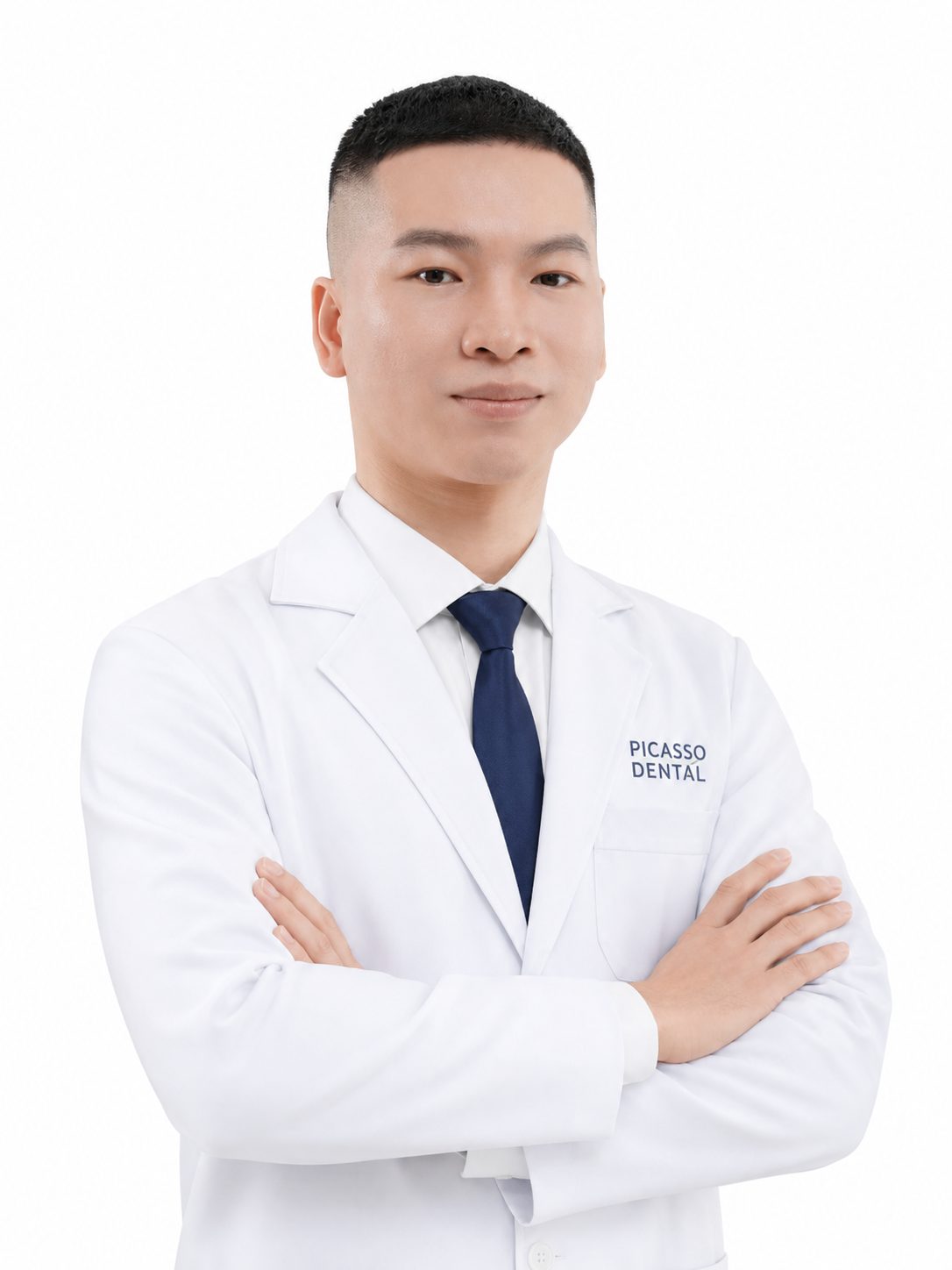
Dr. Thuan Phung
Specialist orthodontist with comprehensive experience across metal, ceramic, self-ligating, lingual and Invisalign systems. Platinum Elite Invisalign Provider. Treats mild to severe cases across the full fixed-brace spectrum.
"Ceramic brackets are nicer to look at but slightly more brittle and more expensive. We tell you which combination genuinely suits your case."
 Adult Orthodontics
Specialist Orthodontist
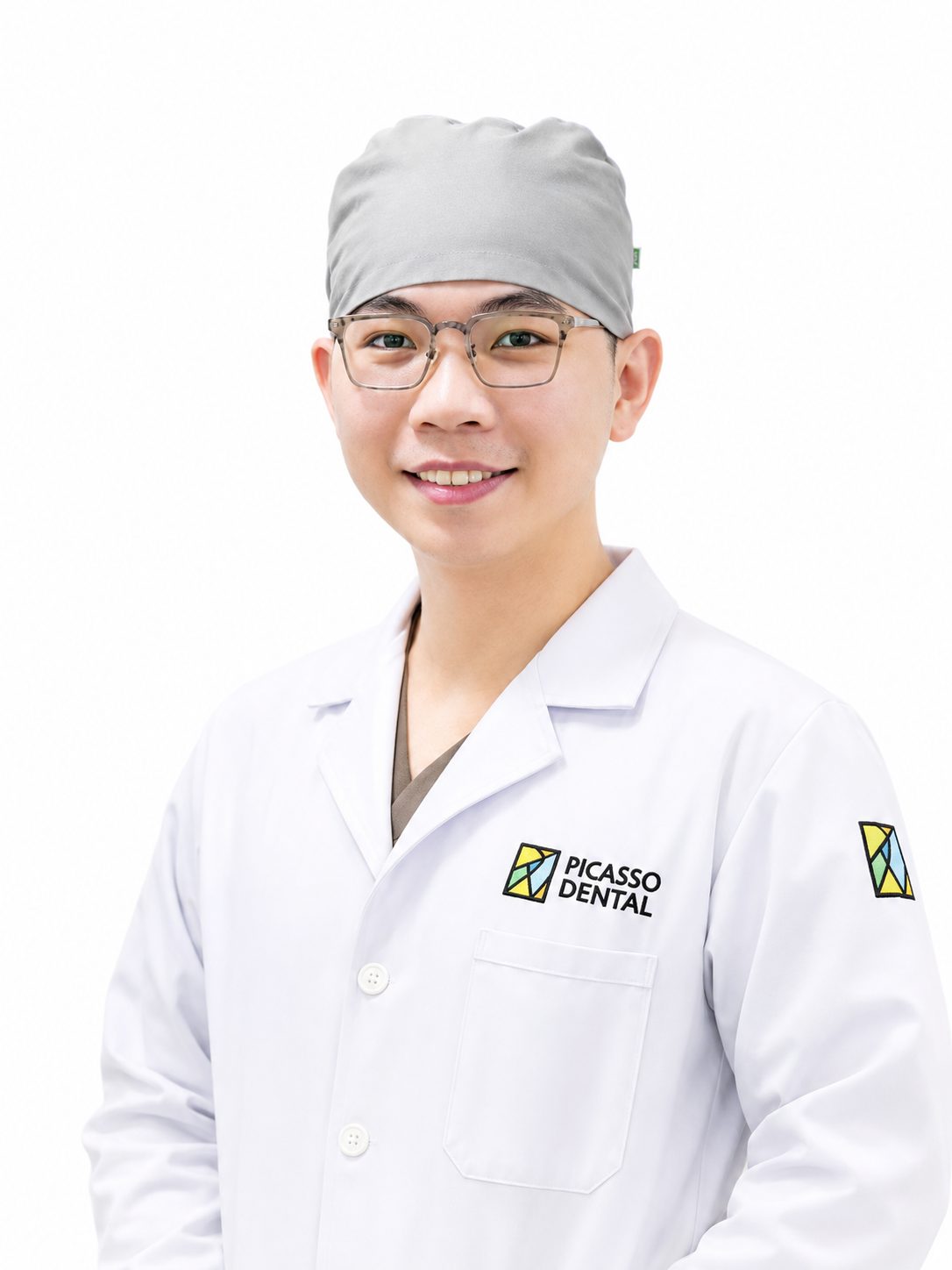
Dr. Toan Le (Dr. Mathew)
Specialist orthodontist with broad experience across fixed and clear-aligner systems. Platinum Elite Invisalign Provider. Adult and teen treatment, with particular focus on case selection and treatment timeline planning.
"From mild to complex, every bracket type has a published rate card across all five tiers. You receive a written, itemised quote before any clinical work."
The Process
Five stages from consultation to final retainer.
Most cases involve adjustment visits every 4 to 8 weeks. International patients plan visit windows around travel.
1. Specialist Consultation
An orthodontist examines your bite, takes OPG and Cephalometric X-rays, photographs, impressions or iTero scan, and discusses your goals. First visit.
2. Treatment Planning
Your orthodontist plans the case, bracket type, treatment sequence, and whether extractions, expansion or other appliances are needed. Estimated timeline confirmed in writing.
3. Bracket Bonding
Brackets are bonded to each tooth and connected with the first archwire. Hygiene instructions and dietary advice given at the bonding visit.
4. Adjustment Visits
Every 4 to 8 weeks, your orthodontist adjusts the wire, changes elastic ties (for traditional) and tracks progress against the treatment plan.
5. Removal + Retention
Brackets removed once teeth are in final position. Retainers, fixed, removable or Vivera, preserve the result long-term. Nightly wear indefinitely is recommended.
Duration by Case
Mild: 12–18 months. Light to moderate crowding, simple spacing, mild rotations.
Moderate: 18–24 months. Moderate crowding, mild bite correction, more complex tooth movements.
Severe / Complex: 24–36 months. Severe crowding, bite correction, extraction cases, complex finishing.
Adult vs Adolescent: Adult bone remodels somewhat more slowly, so adult treatment may take slightly longer for the same case complexity.
Honest Assessment
Who fixed braces work for, and who they don't.
Fixed braces handle a wider range of orthodontic cases than any other appliance, but they are not always the right answer.
You're a Strong Candidate If
You have crowding, spacing, rotations or bite issues that an orthodontist confirms can be corrected.
You have severe rotations, complex extraction cases or significant bite correction needs (fixed braces handle these more predictably than aligners).
You can attend adjustment visits every 4 to 8 weeks for the duration of treatment.
Your gums are healthy and any decay has been treated first.
You can adapt to careful brushing and flossing around brackets.
You will wear retainers nightly afterwards to hold the result.
Braces May Not Be Right If
You have severe skeletal bite problems requiring surgical orthodontics (braces are part of the plan but jaw surgery may come first).
You have active untreated gum disease or extensive decay (both must be resolved first).
Your case is mild and discreet treatment matters more than cost (Invisalign may be the better tool).
You cannot commit to attending adjustment visits regularly.
You are unwilling to wear retainers afterwards (teeth will drift back).
Risks & Tradeoffs
What can go wrong, and how we prevent it.
Fixed orthodontics is well-documented and predictable in suitable cases. It is not free of side effects.
Discomfort During Treatment
Pressure or tightness for 2 to 3 days after bonding and after each adjustment is normal, managed with over-the-counter pain relief. The cheeks and lips may feel rubbed for the first 1 to 2 weeks until tissue adapts. Wax helps. It is not painless, teeth are being moved.
Hygiene Demands
Brackets and wires trap plaque. Without careful brushing and flossing around brackets, patients can develop white-spot lesions (decalcification marks) that remain after braces are removed. We provide hygiene instruction and fluoride support.
Bracket Debonding
Brackets occasionally come off, usually after biting hard food, sport injury, or grinding. Re-bonding and full bracket replacement are quoted as small lab fees. Avoid hard, sticky or chewy foods to minimise this.
Root Resorption
A small amount of root shortening can occur with any orthodontic treatment. It is usually not clinically significant. Patients with predisposing factors are screened on X-ray before and during treatment.
The Retention Tradeoff
Teeth drift naturally throughout life, especially in the first year after braces are removed. Results are not permanent without retainers. Picasso supplies retainers (clear, Hawley, fixed or Vivera) and recommends nightly wear indefinitely. Stop wearing them, and teeth will move back.
What We Will Tell You No To
If your case is genuinely better suited to Invisalign or to surgical orthodontics, we will say so. If your gum health makes immediate orthodontics inadvisable, we will treat the gums first. We are not interested in starting orthodontic treatment that should not start yet.
Letters from Patients
Patients who completed braces here.
Real Google reviews and video testimonials from patients who completed orthodontic treatment at Picasso. Quoted verbatim, published with names as submitted.
"
I just finished my orthodontic treatment at Picasso Dental Clinic and I'm truly very satisfied with the results and the service. From the first consultation to the removal of my braces, I always felt the dedication and professionalism of the medical team, who explained each step of the treatment in detail. After more than 18 months of orthodontic treatment, I have a completely new smile. My teeth are much straighter and more beautiful.
&Docirc;ng Bùi

Ms. Viloria's Adult Braces
Ms. Viloria · Adult Braces · HCMC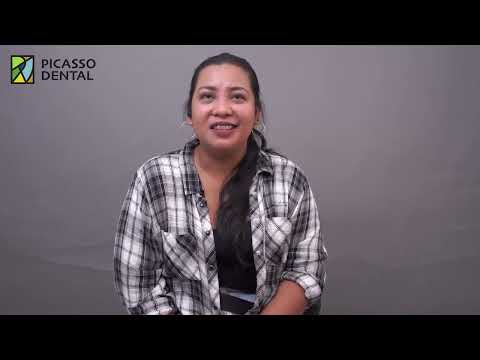
Aubrey's Braces
Aubrey Salvador · Braces · HCMC
Hanna Mae's Braces
Hanna Mae · BracesCommon Questions
The questions, answered.
If yours is not here, our clinical team replies to every online consultation within twenty-four hours.
How long does braces treatment take?
Mild cases typically take 12 to 18 months. Moderate cases 18 to 24 months. Severe and complex cases 24 to 36 months. Durations are estimates and confirmed in your treatment plan after a specialist orthodontic assessment.
What is the difference between traditional and self-ligating braces?
Traditional brackets hold the archwire with elastic ties that need changing at each adjustment visit. Self-ligating brackets have a built-in clip that holds the wire, generally meaning fewer adjustments, easier hygiene, and a cleaner appearance. Self-ligating is more expensive but often preferred by adults.
Should I choose metal or ceramic braces?
Ceramic brackets are tooth-coloured and far less visible than metal, preferred by adults and image-conscious patients. Metal brackets are smaller, slightly stronger and significantly less expensive. Both work equally well clinically; the choice is aesthetic and budget-driven.
Are braces or Invisalign better?
Both are effective. Invisalign is more discreet and removable, but requires self-discipline (20 to 22 hours wear daily) and is not suited to every case. Fixed braces handle severe rotations, complex extraction cases and certain bite corrections more predictably. Our specialist orthodontists recommend honestly based on your case.
Will braces hurt?
Most patients experience pressure or tightness for 2 to 3 days after the initial bonding and after each adjustment visit. Over-the-counter pain relief is enough for most patients. The cheeks and lips may also feel rubbed for the first 1 to 2 weeks until tissue adapts. It is not painless, teeth are being moved, but it is manageable.
Can adults have braces?
Yes, there is no upper age limit. Adult orthodontics is a major part of our practice. Bone remodelling is somewhat slower in adults than children, so treatment may take slightly longer, but outcomes are equally predictable. Many adults choose ceramic or self-ligating ceramic for aesthetics.
Will I need to wear retainers afterwards?
Yes, long-term. Teeth naturally drift, especially in the first year after braces are removed. Picasso supplies a range of retainers: clear, Hawley, fixed and Vivera. Nightly wear indefinitely is recommended. For itemised retainer pricing, see the full pricing index.
How much do braces cost in Vietnam?
The fee depends on bracket type (traditional metal, self-ligating metal, traditional ceramic or self-ligating ceramic) and case complexity (mild, moderate, moderate+, severe or complex). After your consultation we provide a written, itemised quote. For published rate cards across all four bracket types and five tiers, see the full pricing index.
Start Here
Meet a specialist orthodontist. Get a real treatment plan.
Book a consultation with Dr. Thuan Phung or Dr. Toan Le (Dr. Mathew). We will examine your bite, take records, recommend the right bracket type, or honestly tell you if Invisalign is the better tool, and quote you in writing before any clinical work.