
Teeth Whitening
Zoom Whitening Side Effects: What to Expect and Who Should Avoid Treatment
Temporary tooth sensitivity is normal and predictable. Here is an honest account of what actually happens, how long it lasts, and which patients should not proceed.

Key Takeaways
- Sensitivity to cold and air affects about 60% of patients and resolves within 24 to 72 hours.
- Gum irritation is rare when the protective barrier is applied carefully before any gel contacts soft tissue.
- Enamel damage does not occur with properly applied professional whitening at approved peroxide concentrations.
- Pregnant women, patients with active decay or gum disease, and children under 16 should not proceed.
- Using desensitising toothpaste for one week before treatment significantly reduces post-treatment discomfort.
Why Sensitivity Happens
The Zoom whitening gel contains hydrogen peroxide at concentrations between 25% and 40%. The peroxide penetrates enamel and releases oxygen molecules that break the chemical bonds in chromogen compounds embedded in the tooth structure. This chemistry temporarily increases enamel permeability, meaning that cold air, water, and temperature changes reach the nerve more easily than they normally would.
The result is the characteristic sharp, fleeting sensation when breathing cold air or drinking cold water. Most patients describe it as zingy rather than painful. It peaks within the first 24 hours and resolves completely as the enamel remineralises and permeability returns to baseline, usually within 48 to 72 hours.
Serious complications are extremely rare when proper protocols are followed. The hydrogen peroxide gel used in professional Zoom treatments is safe when applied by trained clinicians. In over a decade of performing Zoom whitening at Picasso Dental Clinic, I have not seen a single case of permanent enamel damage or irreversible nerve injury from the procedure itself.
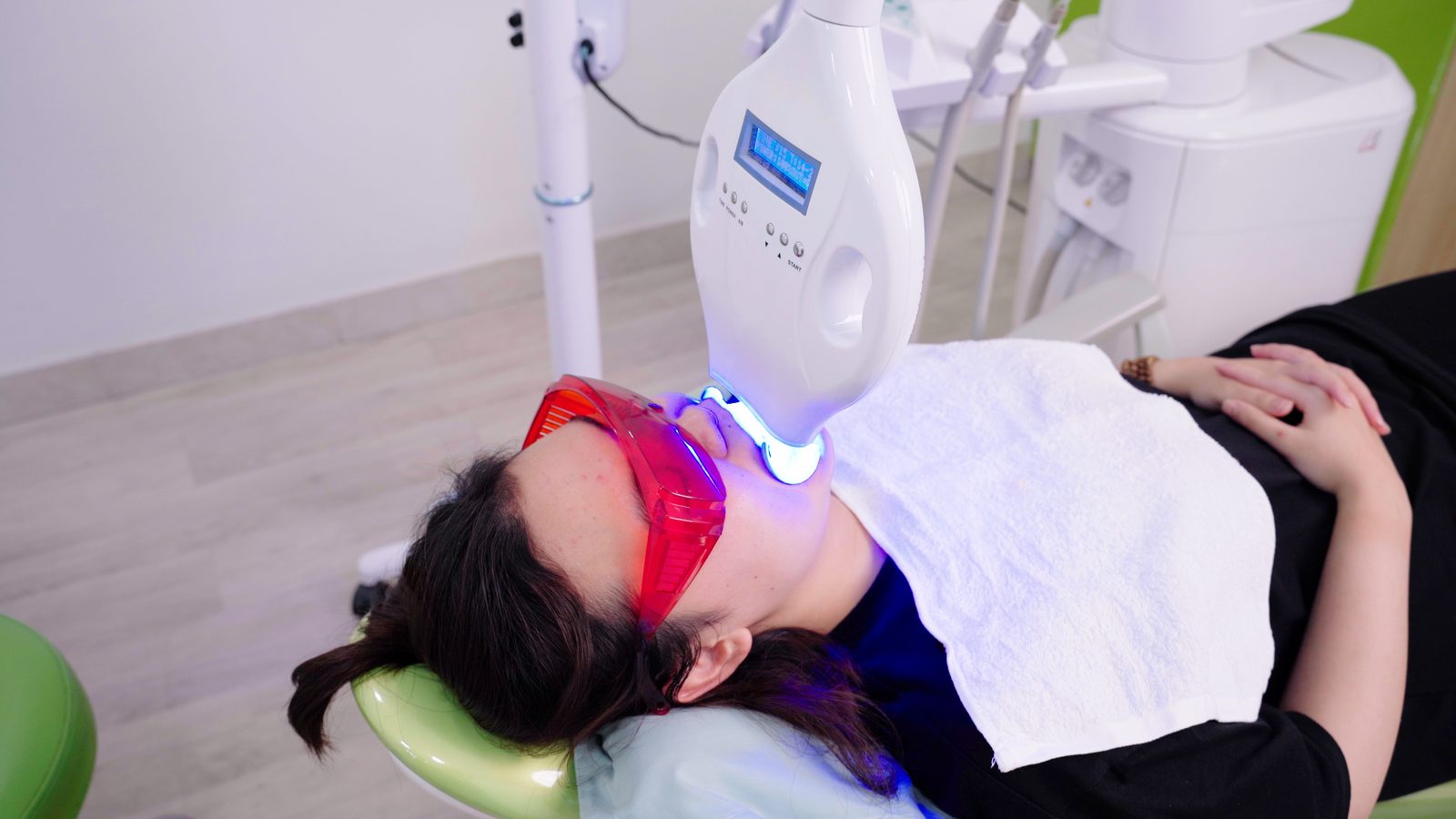
The Three Common Side Effects
Tooth sensitivity
This is the most prevalent side effect, affecting roughly 60% of patients to some degree. The sensation ranges from mild awareness of cold to brief sharp twinges. It typically peaks at hour 12 to 24 and is largely gone by hour 48. Patients who pre-treat with desensitising toothpaste (containing potassium nitrate or stannous fluoride) for one week before their appointment almost universally report a much more comfortable experience.
Gum irritation
Whitening gel that contacts the gum tissue causes a chemical burn, which presents as white patches and soreness lasting one to three days. This happens when the protective rubber dam or resin barrier does not seal perfectly at the gum margin. At Picasso Dental Clinic, we take extra time seating the barrier before applying any gel, and gum irritation remains uncommon in our practice. When it does occur, it resolves without any lasting effects.
Colour changes and dehydration whiteness
Teeth often appear an unnaturally bright, chalky white immediately after treatment. This is dehydration, not the final colour. The enamel loses water during the procedure and rehydrates over the following 24 to 48 hours. The final shade settles to a natural-looking white that is genuinely the result. Photographing your result two days after treatment gives a more accurate picture than immediately post-treatment.
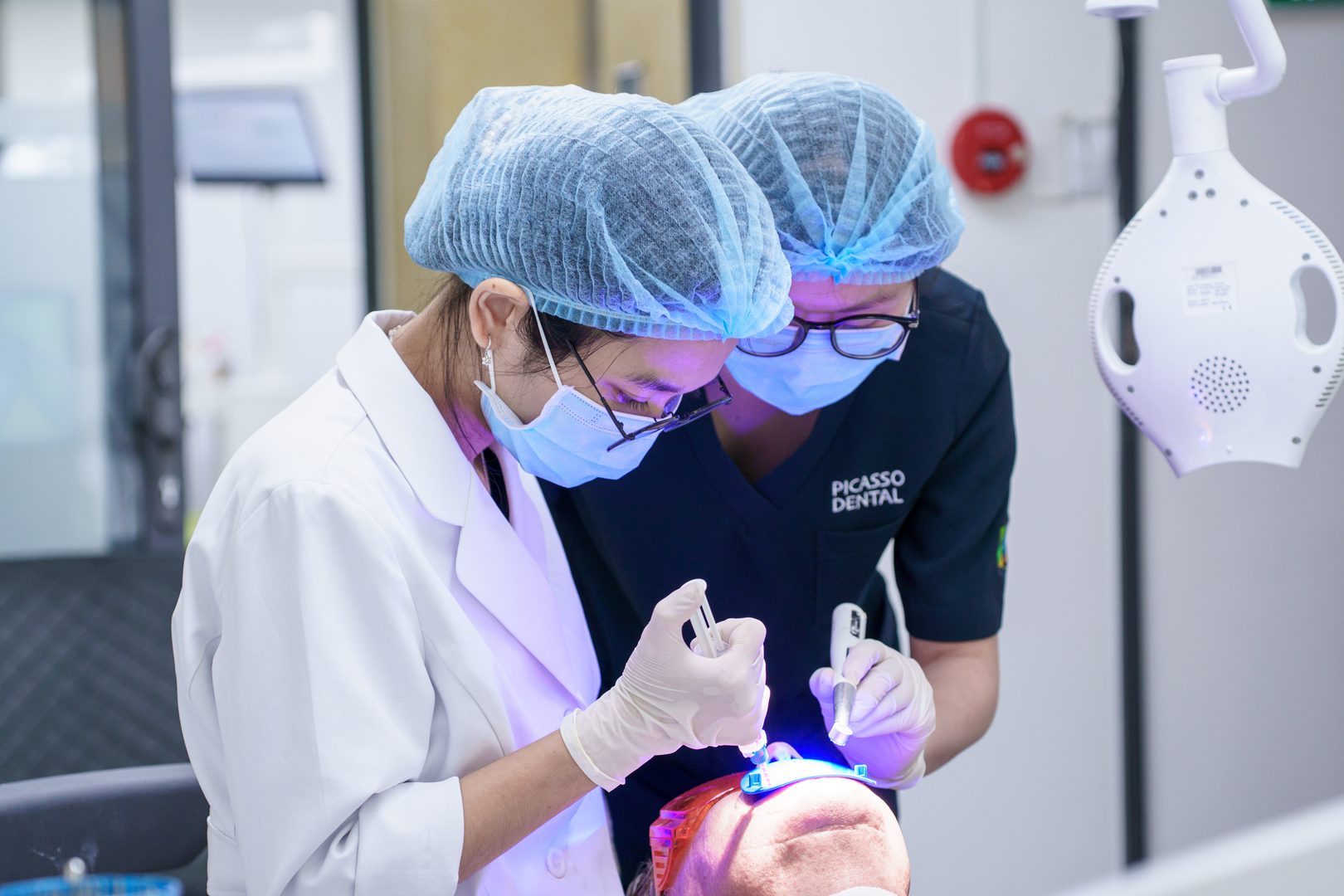
Who Should Not Have Zoom Whitening
Good candidates
- Healthy teeth and gums, no active decay
- Age 16 or older
- Not pregnant or breastfeeding
- No crowns, veneers, or composite fillings in the smile zone
- Realistic expectations: 4 to 8 shades lighter on average
Not suitable for
- Pregnant or breastfeeding women
- Active decay or untreated gum disease (treat these first)
- Children under 16: enamel still maturing
- Extreme pre-existing sensitivity
- Existing crowns, veneers, or fillings in visible teeth (these will not whiten)
Patients with crowns or composite restorations in the smile zone face a specific issue: the whitening gel lightens natural tooth structure but cannot change the shade of porcelain or resin. After treatment, the natural teeth become lighter while the restorations stay the same, creating a visible mismatch. If you have existing restorations in the front teeth, discuss replacement timing with your dentist before whitening.
Check if you are a good candidate
Managing Sensitivity
Before treatment: Use a desensitising toothpaste containing potassium nitrate or stannous fluoride twice daily for at least seven days. Apply it and allow it to sit on your teeth for a minute or two before rinsing. This saturates the dentinal tubules and blunts the sensitivity response during and after treatment. Take ibuprofen 600mg about one hour before your appointment if you have no contraindications.
After treatment: Avoid temperature extremes in food and drink for the first 48 hours. Continue the desensitising toothpaste for several days. If sensitivity develops, take ibuprofen or paracetamol at the first sign rather than waiting for it to intensify. Sensitivity that is manageable with over-the-counter medication is expected. Sensitivity that prevents eating, wakes you at night, or worsens beyond 48 hours is not, and warrants a call to the clinic.
"The whitening caused some sensitivity at first, but they gave me pain relief and now everything feels great. My teeth are whiter and I feel more confident."
Thomas Wallace, Da Nang, Google review
When to Contact the Clinic
Call us if any of the following occur after whitening: sensitivity that worsens after 48 hours instead of improving; pain severe enough that ibuprofen and paracetamol together do not provide relief; swelling or pain localised to one specific tooth rather than general sensitivity across multiple teeth; or gum soreness that has not improved after three days.
Prolonged sensitivity focused on a single tooth sometimes indicates a pre-existing issue the whitening process has revealed, such as a micro-crack or early pulp irritation. Identifying this early leads to simpler treatment.
Frequently Asked Questions
How long does sensitivity last after Zoom whitening?
Sensitivity after Zoom whitening typically peaks within 24 hours and resolves within 48 to 72 hours. The whitening gel temporarily increases enamel permeability, allowing cold air and liquids to reach the nerve more easily. This reverses completely as the whitening chemistry clears. Patients who use desensitising toothpaste for one week before treatment tend to experience significantly milder and shorter-lived sensitivity.
Is Zoom whitening safe for tooth enamel?
Yes, when applied correctly by a trained professional. Clinical research consistently shows that professional whitening at approved peroxide concentrations does not damage healthy enamel. Problems arise only from overuse, DIY misapplication, or whitening on teeth with active decay or exposed root surfaces, which is why a pre-treatment examination matters.
Can I take painkillers before Zoom whitening to prevent sensitivity?
Yes. Taking ibuprofen 600mg about one hour before your appointment can reduce sensitivity during and after treatment. Combined with using desensitising toothpaste for the week leading up to treatment, this is one of the most effective ways to manage the procedure comfortably. If you have any contraindications to ibuprofen, discuss alternatives with your dentist at the pre-treatment consultation.
Why do my teeth look chalky white immediately after whitening?
The chalky appearance immediately after Zoom whitening is caused by dehydration. The gel and the activation light process cause teeth to lose water temporarily. The colour is not the final result. Within 24 to 48 hours, teeth rehydrate and the shade settles to a more natural-looking white. Photographing results two days after treatment gives a more accurate picture than immediately after the appointment.
Who should not get Zoom whitening?
Zoom whitening is not appropriate for: pregnant or breastfeeding women; patients with untreated active decay or gum disease; children under 16 whose enamel is still maturing; patients with extreme baseline sensitivity; and patients who have crowns, veneers, or composite fillings in the smile zone, as these materials do not whiten and will create a colour mismatch. A clinical examination before treatment identifies any of these contraindications.
How long do Zoom whitening results last?
With proper maintenance, Zoom whitening results typically last 12 to 24 months. Longevity depends on diet, the frequency of consuming staining foods and drinks (coffee, red wine, tea, dark sauces), smoking status, and oral hygiene habits. Using a whitening toothpaste and doing periodic at-home touch-ups with custom trays extends the result significantly.
What should I eat after Zoom whitening?
For the first 48 hours after Zoom whitening, follow a white diet: avoid anything that would stain a white shirt. This means no coffee, tea, red wine, tomato sauce, soy sauce, berries, or dark sodas. Suitable foods include chicken, fish, rice, pasta without red sauce, white bread, bananas, apples, and still water. After 48 hours, normal eating can resume, though limiting staining foods and drinks extends results.
Founding Clinical Director, Picasso Dental Clinic
Not Sure if Zoom Is Right for You?
A pre-whitening consultation checks your teeth, gums, and existing restorations and gives you a realistic shade expectation. No deposit, no obligation.
No obligation · Since 2013