
Root Canal Treatment
Why You Need a Crown After Root Canal Treatment: the honest math
Without a crown, a root canal-treated molar has a 15 to 30 percent chance of fracturing within 5 years. With a crown, that drops to 1 to 2 percent. Skipping the crown to save 7 million VND usually costs 25 to 45 million VND later.

Key Takeaways
- The root canal saves the tooth by removing the infected pulp. The crown keeps the tooth by protecting the weakened structure.
- A molar without a crown has a 15 to 30 percent 5-year fracture risk. With a crown: 1 to 2 percent.
- A vertical root fracture is usually unrestorable. The tooth is extracted and replaced with an implant at 2 to 3 times the cost of the crown.
- The maximum safe interval between root canal and crown is 6 to 8 weeks. International patients complete both in one 2 to 3 week trip.
<h2>Why the Tooth Is Weaker After a Root Canal</h2>

<p>Root canal treatment saves a tooth from extraction by removing the infected pulp and sealing the canal system. However, the same procedure leaves the tooth structurally compromised in three specific ways that make a crown necessary for long-term survival.</p>

<h3>The access cavity removes chewing-surface structure</h3>
<p>To reach the pulp chamber and the canal openings, the dentist drills an access hole through the centre of the chewing surface. On a molar with three or four canals, this access cavity removes a substantial portion of the central tooth structure. The remaining tooth is essentially a hollow wall under full biting force.</p>

<h3>Canal shaping removes internal dentin</h3>
<p>Cleaning the canal system requires shaping each canal with progressive files so the filling material can seal it completely. This removes dentin from the inner walls of each root. The deeper and wider the canals are prepared, the thinner the remaining root walls become.</p>

<h3>Loss of internal hydration changes the dentin</h3>
<p>A vital tooth receives moisture and small nutrients through tubules connecting the pulp to the dentin. Once the pulp is removed, that supply ends. Over months and years, the dentin gradually dries out and becomes more brittle. Published bench studies and clinical follow-up both show measurable changes in the fracture toughness of root canal-treated dentin compared to vital dentin.</p>

<p>When pre-existing decay, old fillings, or fractures are also present (which is usually the case, since these are often why the tooth needed a root canal in the first place), the available tooth structure is even more compromised. The access cavity plus the pre-existing damage plus the dehydrated dentin creates a tooth that needs a crown to survive.</p>

<figure class="art-photo">
  <img src="/images/clinics/hanoi-old-quarter/treatment-room.jpg" alt="Crown preparation at Picasso Dental Clinic" loading="lazy" decoding="async">
  <figcaption>Crown preparation and cementation at our Hanoi Old Quarter branch. International patients complete the full root canal plus crown sequence in a single 2 to 3 week trip.</figcaption>
</figure>

<h2>The Fracture Risk Numbers</h2>

<p>The fracture statistics for root canal-treated teeth without a crown are drawn from published endodontic outcome studies and Picasso clinical records. They are not ambiguous.</p>

<ul class="art-checklist">
  <li>
    <div>
      <strong>Upper incisor or canine, minimal previous filling</strong>
      <span>5-year fracture risk without crown: 3 to 8 percent. With crown: approximately 1 percent. Risk reduction: 3 to 8 times lower.</span>
    </div>
  </li>
  <li>
    <div>
      <strong>Upper incisor or canine, large existing filling</strong>
      <span>5-year fracture risk without crown: 10 to 20 percent. With crown: 1 to 2 percent. Risk reduction: 10 times lower.</span>
    </div>
  </li>
  <li>
    <div>
      <strong>Premolar (any)</strong>
      <span>5-year fracture risk without crown: 15 to 25 percent. With crown: 1 to 2 percent. Risk reduction: 10 to 15 times lower.</span>
    </div>
  </li>
  <li>
    <div>
      <strong>Molar (any)</strong>
      <span>5-year fracture risk without crown: 15 to 30 percent. With crown: 1 to 2 percent. Risk reduction: 10 to 15 times lower.</span>
    </div>
  </li>
  <li>
    <div>
      <strong>Patient with bruxism or heavy clenching</strong>
      <span>5-year fracture risk without crown: roughly double the above for each tooth type. With crown plus night guard: 2 to 4 percent. Both crown and night guard required.</span>
    </div>
  </li>
</ul>

<p>The fracture differential widens further at 10 and 15 years. A crown distributes biting force over the entire tooth instead of concentrating it on weakened walls. Without it, cumulative microcracks in dehydrated dentin eventually propagate the length of the root.</p>

<div class="art-callout">
  <strong>The critical point about vertical root fracture:</strong> When a root canal tooth without a crown fails, the fracture almost always runs vertically from the access cavity down through the root. Vertical root fractures cannot be repaired. The tooth is extracted. The bone resorbs. An implant is required. Avoiding a 7,000,000 VND Zirconia crown is the most expensive saving in dentistry.
</div>

<a href="https://wa.me/84989067888" class="art-cta-inline"><p><strong>Already had a root canal?</strong> If your crown has not been placed yet, send us a recent X-ray and we will confirm the crown indication and quote the material and price within 24 hours.</p><span>Book a consultation →</span></a>

<h2>The Lifetime Cost Comparison</h2>

<p>At current Picasso pricing, the math is straightforward.</p>

<h3>Root canal plus Zirconia crown (the recommended path)</h3>
<p>Root canal: 5,000,000 VND. Zirconia crown: 7,000,000 VND. Total: 12,000,000 VND (~USD 480). A well-maintained crowned tooth typically lasts 15 to 20 years or longer. This is the path that protects the investment of the root canal procedure.</p>

<h3>No crown, tooth fractures, extraction plus Osstem implant</h3>
<p>Extraction: 1,500,000 VND. Osstem implant combo (fixture plus abutment plus crown): 25,000,000 VND. Total: 26,500,000 VND (~USD 1,060). This is the cheapest replacement path. It costs 2.2 times the crown-protected root canal, and the patient loses the natural tooth permanently.</p>

<h3>No crown, tooth fractures, extraction plus Nobel Biocare implant</h3>
<p>Extraction: 1,500,000 VND. Nobel Biocare or Straumann implant combo: 40,000,000 to 45,000,000 VND. Total: 41,500,000 to 46,500,000 VND (~USD 1,660 to USD 1,860). This is 3.5 to 4 times the cost of the crown-protected root canal. For international comparison, the equivalent root canal plus crown in Australia costs roughly AUD 3,500 to 5,000. The Zirconia crown at Picasso is one-tenth the cost of the implant it prevents, and one-fifth the cost of the same crown in Australia.</p>

<figure class="art-photo">
  <img src="/images/general-dentistry/treatment.jpg" alt="Crown cementation procedure" loading="lazy" decoding="async">
  <figcaption>Crown cementation at Picasso Dental Clinic. International patients typically complete the root canal plus crown sequence in a 2 to 3 week visit.</figcaption>
</figure>

<h2>Crown Materials: Which One for Which Tooth</h2>

<p>Crown selection for a root canal tooth depends on three factors: tooth position, bite force, and aesthetic requirements.</p>

<h3>Posterior teeth (molars and premolars)</h3>
<p>Zirconia at 7,000,000 VND is the recommended balance of strength, longevity, and cost for most posterior root canal teeth. It handles molar bite forces reliably, has excellent sealing properties, and a 5-year warranty at Picasso. Porcelain-fused-to-titanium at 5,000,000 VND is a budget-conscious alternative with slightly lower long-term aesthetics but similar functional performance.</p>

<h3>Front teeth (incisors and canines)</h3>
<p>Emax (lithium disilicate) at 9,000,000 VND provides the best combination of aesthetics and adequate strength for front root canal teeth. Lava at 11,000,000 VND is the premium option for smile-line teeth where appearance is the priority. Both materials have better translucency and colour matching than zirconia for visible anterior positions.</p>

<h2>Timing: When the Crown Goes On</h2>

<p>The crown is not placed on the same day as the root canal in most cases. The standard sequence at Picasso is as follows.</p>

<p><strong>Day 0:</strong> Root canal completed and temporary filling placed. The tooth is functional for soft chewing but should not bear full biting load on the temporary.</p>

<p><strong>Days 7 to 10:</strong> Crown preparation and impression appointment. The tooth is reshaped to accept the crown, a digital scan is taken, shade is matched, and a temporary crown is placed while the permanent one is fabricated in the laboratory.</p>

<p><strong>Days 14 to 21:</strong> Permanent crown cementation. The crown is tried in, adjusted for bite, and cemented. From this point the tooth is fully protected.</p>

<p>The maximum safe interval between root canal and crown is 6 to 8 weeks. Beyond that window, the temporary filling degrades, the brittle tooth is exposed to full chewing force without protection, and fracture risk climbs sharply. If you cannot return within that window, tell us before the root canal so the timeline can be adjusted.</p>

<h2>When a Crown Is Not Mandatory</h2>

<p>For honesty: there are cases where a crown after root canal is genuinely optional. They are narrower than most patients hope.</p>

<div class="art-signal-grid">
  <div class="art-signal-col art-signal-col--good">
    <h4>Crown recommended, not optional</h4>
    <ul>
      <li>Any molar after root canal treatment</li>
      <li>Any premolar after root canal treatment</li>
      <li>Front tooth with previous large filling or fracture</li>
      <li>Lower front tooth (thinner and more vulnerable)</li>
      <li>Any tooth in a patient with bruxism</li>
      <li>Any tooth that has had a previous root canal retreatment</li>
    </ul>
  </div>
  <div class="art-signal-col art-signal-col--bad">
    <h4>Crown may be optional</h4>
    <ul>
      <li>Upper incisor with no previous filling</li>
      <li>Access cavity small and sealed with high-strength composite</li>
      <li>Patient with light bite, no bruxism</li>
      <li>Tooth at the back of the arch with minimal visibility (onlay may suffice)</li>
    </ul>
  </div>
</div>

<p>If you fall into the "may be optional" category, we will say so explicitly at the consultation. If we recommend a crown and you decline, that decision is yours, but we document the fracture-risk discussion in your chart. For most posterior root canal teeth, declining the crown is a decision to lose the tooth on a probability schedule rather than a clinical strategy.</p>

<figure class="art-photo">
  <img src="/images/clinics/da-nang-hoang-dieu/reception.jpg" alt="Picasso Dental Clinic Da Nang" loading="lazy" decoding="async">
  <figcaption>Crown consultations are available at all six Picasso Dental Clinic locations, including our Da Nang branch inside Vinmec International Hospital.</figcaption>
</figure>
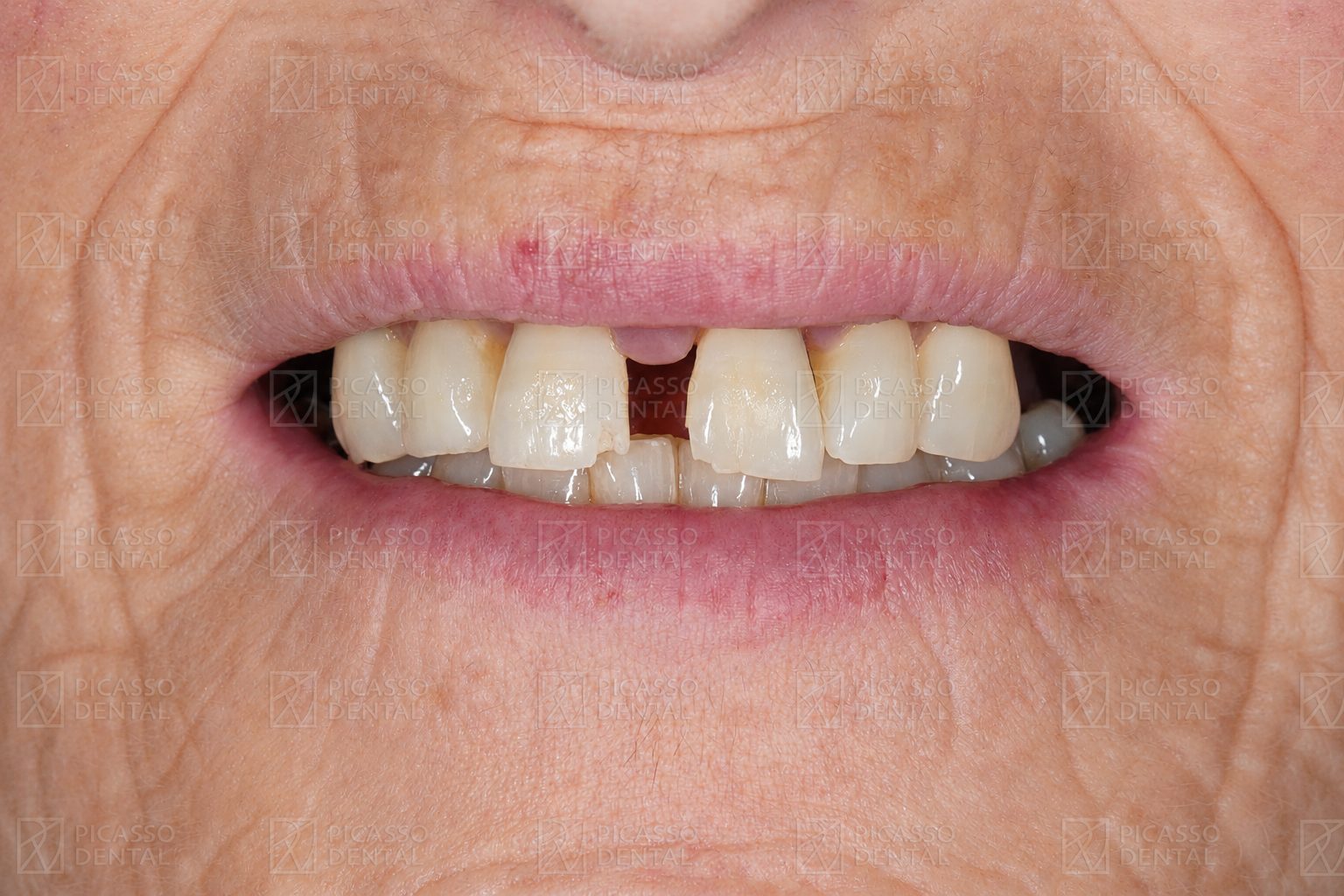 Before
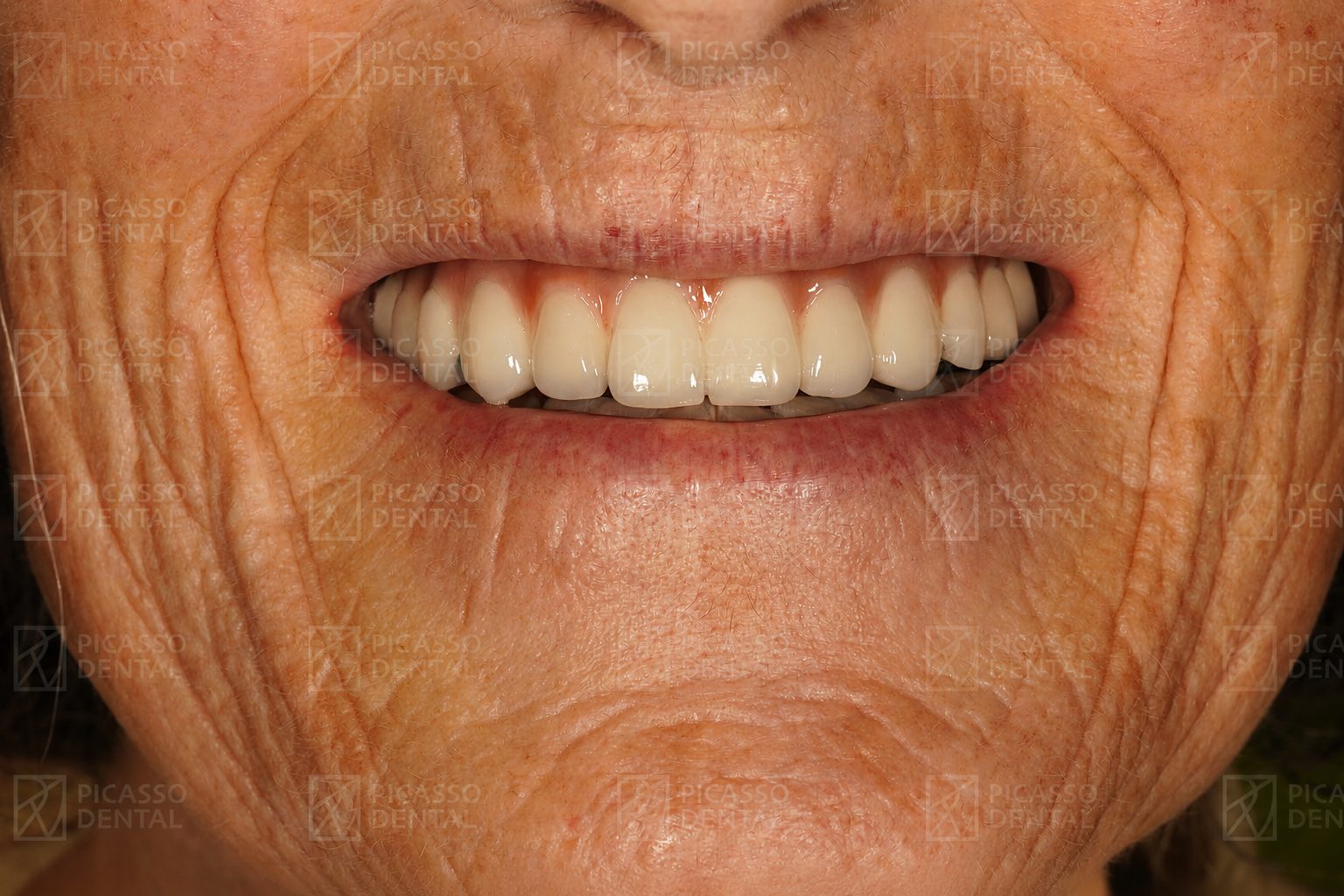 After
AfterMolar root canal plus Zirconia crown. Natural tooth retained and protected from fracture.
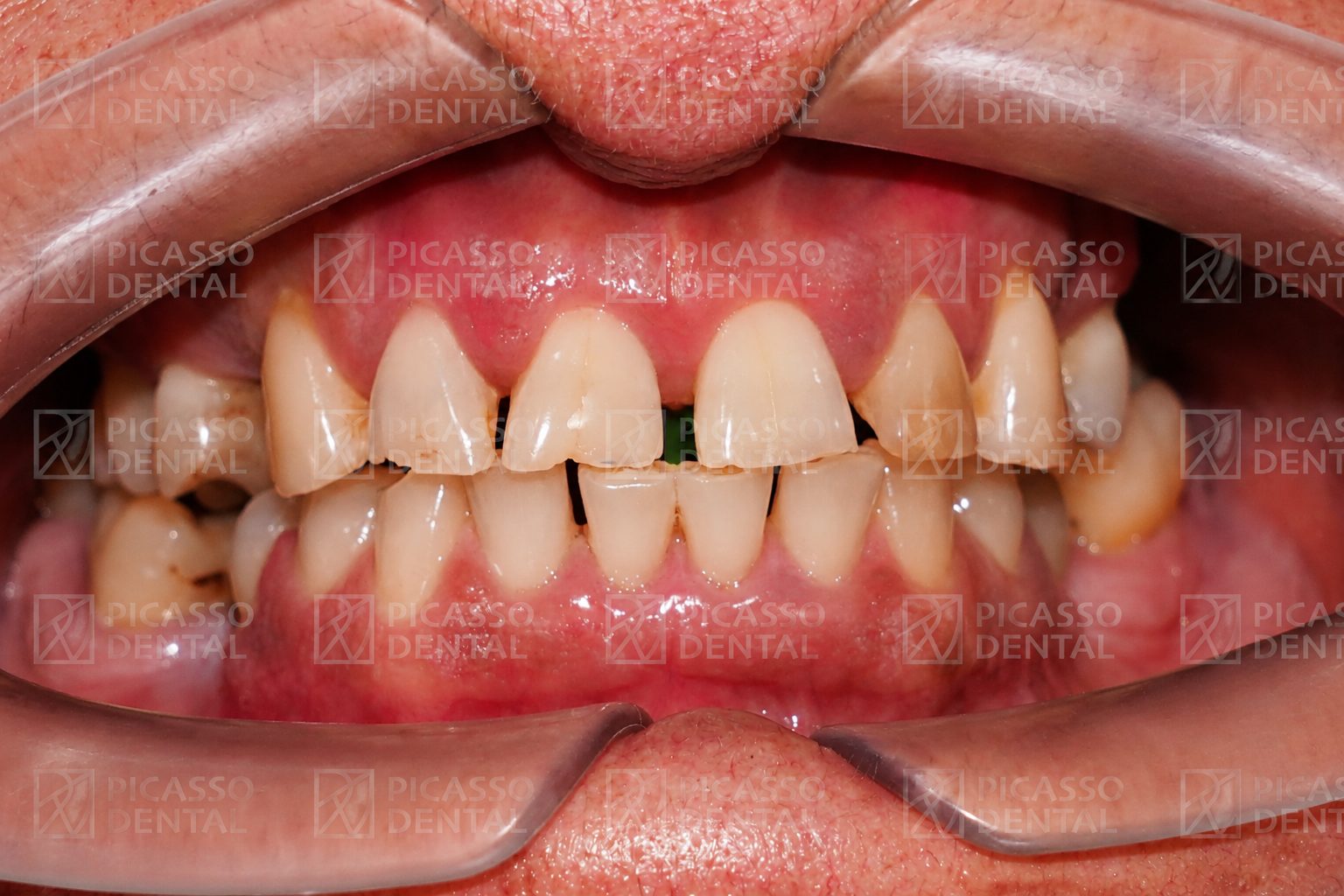 Before
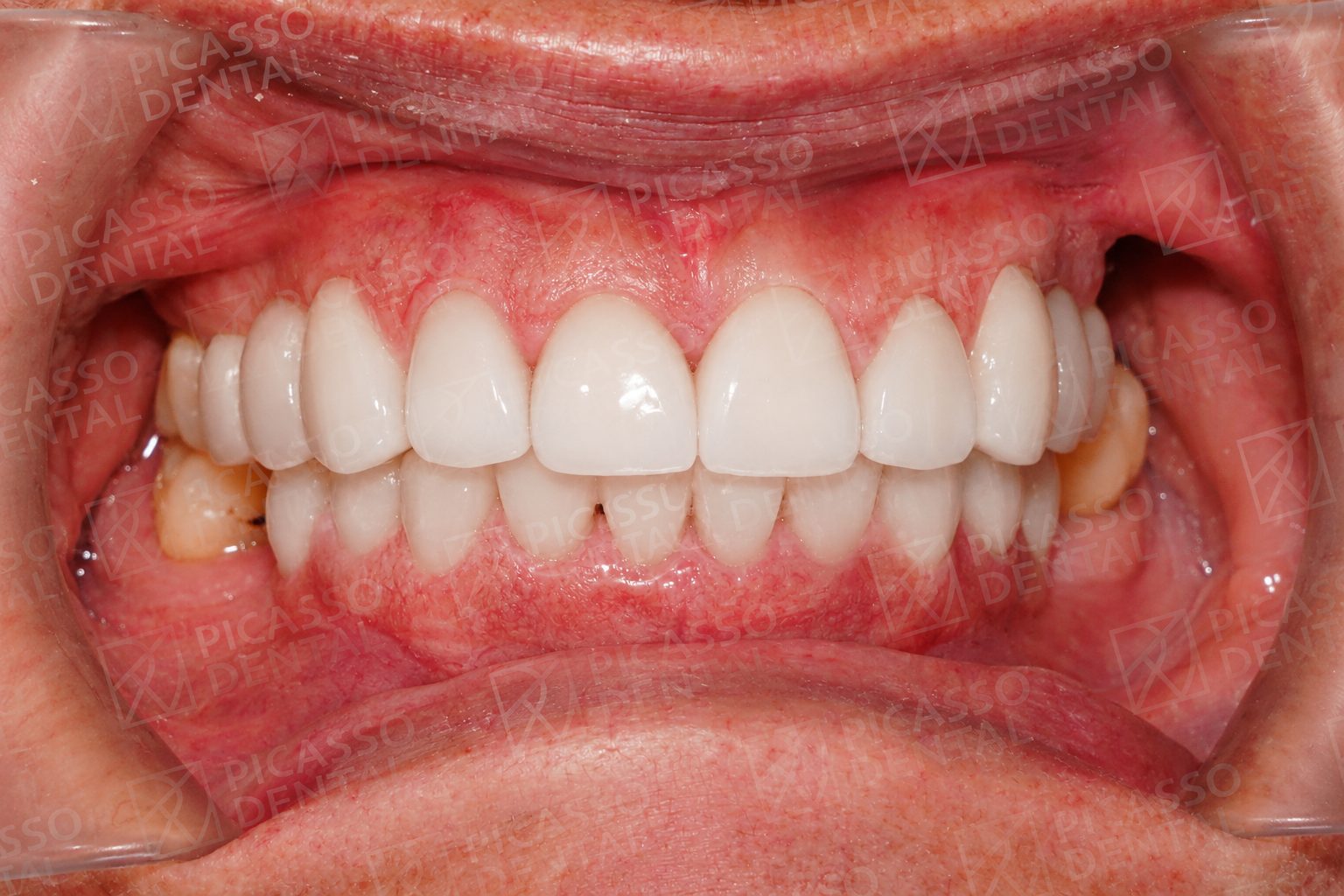 After
AfterPremolar root canal plus Zirconia crown. Full chewing function and fracture protection restored.
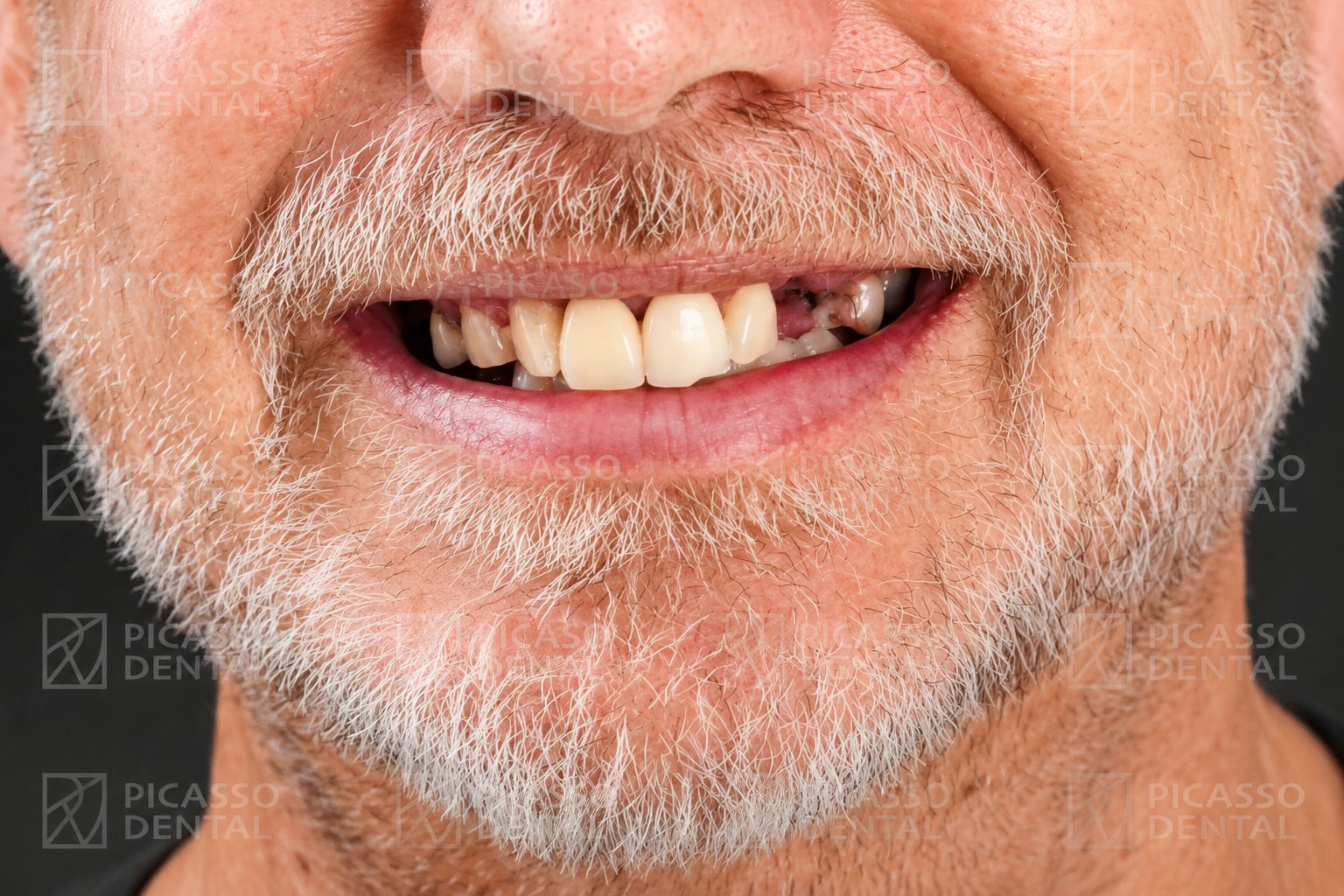 Before
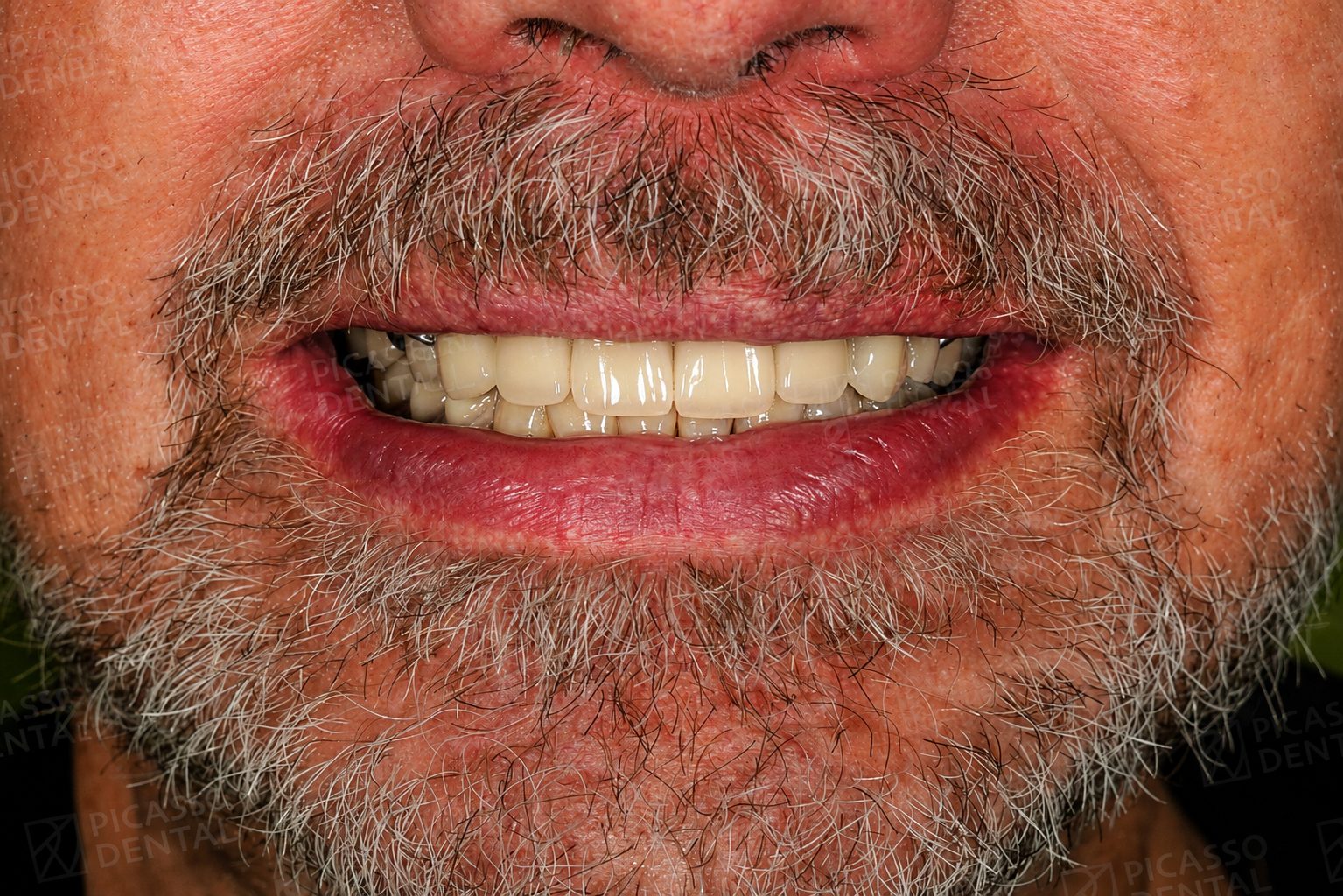 After
AfterFront tooth root canal plus Emax crown for an aesthetic and structurally sound result.
Frequently Asked Questions
<details itemscope itemprop="mainEntity" itemtype="https://schema.org/Question">
  <summary itemprop="name">Do I really need a crown after a root canal?</summary>
  <div itemprop="acceptedAnswer" itemscope itemtype="https://schema.org/Answer">
    <p itemprop="text">For molars and premolars, yes. The published 5-year fracture rate for a root canal-treated molar without a crown is 15 to 30 percent. With a crown, it drops to 1 to 2 percent. For front teeth (incisors, canines) with minimal previous damage, a crown is sometimes optional, but most posterior root canal teeth require one to survive long term.</p>
  </div>
</details>

<details itemscope itemprop="mainEntity" itemtype="https://schema.org/Question">
  <summary itemprop="name">Why is a root canal tooth more likely to fracture than a normal tooth?</summary>
  <div itemprop="acceptedAnswer" itemscope itemtype="https://schema.org/Answer">
    <p itemprop="text">A root canal-treated tooth has had its pulp removed, so it no longer receives moisture or nutrients from the bloodstream. Over time the dentin becomes more brittle. The procedure also requires creating an access hole through the chewing surface, which removes structural tooth material. A crown holds the remaining structure together and distributes biting force over the entire tooth rather than concentrating it on weakened walls.</p>
  </div>
</details>

<details itemscope itemprop="mainEntity" itemtype="https://schema.org/Question">
  <summary itemprop="name">How much does a crown cost at Picasso compared to a single implant?</summary>
  <div itemprop="acceptedAnswer" itemscope itemtype="https://schema.org/Answer">
    <p itemprop="text">At Picasso, <a href="/dental-crowns/">crown pricing</a> ranges from 5,000,000 VND for porcelain-fused-to-titanium to 12,000,000 VND for Lava Plus. A single implant combo package starts at 25,000,000 VND for Osstem and reaches 40,000,000 to 45,000,000 VND for Nobel Biocare or Straumann. The crown is between one-fifth and one-eighth the cost of replacing the tooth with an implant.</p>
  </div>
</details>

<details itemscope itemprop="mainEntity" itemtype="https://schema.org/Question">
  <summary itemprop="name">How long can I wait before getting the crown placed?</summary>
  <div itemprop="acceptedAnswer" itemscope itemtype="https://schema.org/Answer">
    <p itemprop="text">The standard window is 2 to 4 weeks after the root canal. Waiting beyond 6 to 8 weeks substantially raises the fracture risk because the temporary filling degrades and the brittle tooth is exposed to full biting force without protection. Delays of months put the tooth at high risk of fracturing through the root, which makes it unrestorable and requires extraction.</p>
  </div>
</details>

<details itemscope itemprop="mainEntity" itemtype="https://schema.org/Question">
  <summary itemprop="name">Which crown material is best after a root canal?</summary>
  <div itemprop="acceptedAnswer" itemscope itemtype="https://schema.org/Answer">
    <p itemprop="text">For back teeth (molars, premolars), Zirconia or porcelain-fused-to-titanium handle the chewing load best. Zirconia is the most common choice at Picasso for posterior root canal teeth. For front teeth (incisors, canines), Emax or Lava give the best aesthetics with adequate strength. The choice depends on tooth position, bite force, and aesthetic needs, decided at the consultation.</p>
  </div>
</details>

<details itemscope itemprop="mainEntity" itemtype="https://schema.org/Question">
  <summary itemprop="name">Can I skip the crown if the root canal was on a front tooth?</summary>
  <div itemprop="acceptedAnswer" itemscope itemtype="https://schema.org/Answer">
    <p itemprop="text">Sometimes. A small access hole on an otherwise intact upper incisor can be restored with a high-strength composite filling instead of a crown, particularly in patients with no bruxism or heavy bite. This is a case-by-case clinical decision based on remaining tooth structure, bite force, and aesthetic appearance. Lower front teeth and any tooth with previous large fillings still benefit from a crown.</p>
  </div>
</details>

<details itemscope itemprop="mainEntity" itemtype="https://schema.org/Question">
  <summary itemprop="name">What is the lifetime cost difference between a crown and an implant replacement?</summary>
  <div itemprop="acceptedAnswer" itemscope itemtype="https://schema.org/Answer">
    <p itemprop="text">A root canal plus Zirconia crown at Picasso totals roughly 12,000,000 VND and a well-maintained crowned tooth typically lasts 15 to 20 years or longer. If the tooth fractures and is extracted, the cheapest replacement path (extraction plus Osstem implant) totals around 26,500,000 VND. For Nobel Biocare or Straumann the total reaches 41,500,000 VND. The crown is the most cost-effective single decision after a root canal.</p>
  </div>
</details>
Start Here
Start with a brief.
Already had a root canal and weighing whether to crown the tooth? Send us a recent X-ray and we will confirm the crown indication and quote the material and price.