Dental Implants
Why No Dairy After a Dental Implant? What the evidence actually says
The dairy restriction after implant surgery is a decades-old precautionary tradition with limited clinical evidence. What actually matters for healing is adequate nutrition, soft texture, and cool temperature in the first 48 hours.
Key Takeaways
- The dairy restriction is a traditional precaution, not a finding from controlled clinical trials. At Picasso, we do not categorically prohibit dairy.
- What actually matters after implant surgery: soft texture, cool temperature, adequate protein, and avoiding mechanical trauma to the site.
- Plain yoghurt, cool smoothies, and milk-based protein drinks are appropriate post-operative foods for most patients.
- Smoking and alcohol have far stronger evidence for increasing implant failure risk than any food category restriction.
<h2>Where the Dairy Restriction Comes From</h2>

<p>The advice to avoid dairy products after dental implant surgery has been passed through clinical practice for decades. The traditional reasoning runs along two lines. First, dairy products contain bacteria that may interact with the post-operative wound environment. Second, dairy consumption can stimulate nausea when combined with certain antibiotics or anaesthetic medications, increasing the risk of vomiting and disrupting the surgical site.</p>

<p>A related concern is that lactic acid in fermented dairy products might theoretically affect the pH environment around the implant site during the critical early healing window. None of these concerns are entirely without basis in theory, but none are supported by robust controlled clinical evidence either.</p>

<p>The restriction appears to have originated as a blanket precaution rather than a protocol derived from outcome data. When a precaution persists for decades without strong evidence to anchor it, the responsible clinical approach is to examine it critically rather than repeat it by habit.</p>

<figure class="art-photo">
  <img src="/images/clinics/hanoi-old-quarter/reception.jpg" alt="Picasso Dental Clinic consultation area" loading="lazy" decoding="async">
  <figcaption>Post-operative care instructions at Picasso are based on current evidence, not inherited clinical tradition. Every patient receives written aftercare guidance at the end of their implant appointment.</figcaption>
</figure>

<h2>What the Evidence Actually Shows</h2>

<p>There is no robust clinical trial demonstrating that dairy consumption increases implant failure rates or post-operative infection risk. The concern about bacterial contamination from dairy is not well-supported by the actual microbiology of the implant healing environment, where the primary infection risk comes from oral bacteria already present in the mouth, not from ingested food.</p>

<p>What is well-established is that nutrition matters significantly for healing. Protein is essential for soft tissue repair. Calcium and phosphorus are critical for bone healing and osseointegration, which is the process by which the titanium implant bonds to the jawbone. Vitamin D facilitates calcium absorption and plays a role in immune regulation. Dairy products are a convenient source of all three of these nutrients.</p>

<p>Ironically, strictly avoiding dairy without substitution could theoretically impair the very healing the restriction is intended to protect. A patient who under-eats or reduces nutrient intake in an attempt to be cautious is not doing their osseointegration any favours.</p>

<div class="art-callout">
  <strong>The practical reality:</strong> Cold plain yoghurt in the first 48 hours after implant surgery fits the post-operative dietary requirements very well. It is soft, requires no chewing, is cool in temperature (which reduces local swelling), and provides protein, calcium, and probiotics. We include it in our recommended foods for most implant patients at Picasso.
</div>

<h2>What Actually Matters for Post-Implant Healing</h2>

<p>The dietary guidelines that have genuine evidence behind them focus on texture, temperature, and specific substances rather than food categories like dairy.</p>

<h3>Texture: soft and non-abrasive</h3>
<p>The most important dietary consideration in the first 2 weeks is avoiding foods that require significant chewing near the implant site, or that could mechanically disturb the clot and tissue forming at the surgical site. Hard, crunchy, chewy, or sticky foods create forces that can disrupt the early wound healing process and stress the implant before osseointegration is established. Soft, smooth foods require no chewing effort and present no mechanical risk.</p>

<h3>Temperature: cool to room temperature</h3>
<p>Very hot foods and drinks should be avoided for at least 24 hours after surgery. Heat causes vasodilation, which can promote bleeding and increase swelling at the surgical site. Cool foods and drinks are more comfortable and reduce local inflammation. This is a genuine evidence-based restriction, unlike the dairy concern.</p>

<h3>Smoking: the restriction with the strongest evidence</h3>
<p>Smoking is the dietary and lifestyle factor with the most compelling evidence for impairing implant healing and increasing failure risk. Nicotine reduces blood flow to the healing site, impairs immune function, reduces the availability of growth factors needed for tissue repair, and increases the risk of peri-implantitis over the long term. If there is one restriction to take seriously after implant surgery, it is smoking. We advise patients to stop for at least 8 weeks after surgery and ideally permanently.</p>

<h3>Alcohol: avoid for 72 hours</h3>
<p>Alcohol should be avoided for at least 72 hours after implant surgery. It impairs healing, increases bleeding tendency, and interacts with any prescribed antibiotics or pain medication. This restriction is supported by clear pharmacological reasoning.</p>

<figure class="art-photo">
  <img src="/images/clinics/hanoi-old-quarter/treatment-room.jpg" alt="Dental implant treatment room" loading="lazy" decoding="async">
  <figcaption>The implant treatment suite at our Hanoi Old Quarter branch. Post-operative instructions are reviewed in detail at the end of every implant appointment.</figcaption>
</figure>

<h2>The Antibiotic-Dairy Interaction</h2>

<p>There is one specific, legitimate dairy-related concern: certain antibiotics interact with calcium in ways that reduce their absorption. Tetracycline-class antibiotics (including doxycycline and minocycline) should not be taken simultaneously with calcium-rich foods or supplements because calcium chelates (binds) to the antibiotic molecule and reduces its bioavailability by up to 50 percent.</p>

<p>However, tetracyclines are not routinely prescribed for dental implant surgery. The antibiotics most commonly prescribed post-implant at Picasso are amoxicillin (and amoxicillin-clavulanate) or clindamycin for penicillin-allergic patients. These antibiotics do not have a significant calcium or dairy interaction.</p>

<p>If you are prescribed an antibiotic after your implant and have questions about food interactions, read the specific patient information leaflet that accompanies your prescription. If you are prescribed a tetracycline for any reason, separate the dose from calcium-rich foods by at least 2 hours.</p>

<a href="https://wa.me/84989067888" class="art-cta-inline"><p><strong>Planning implant treatment and have aftercare questions?</strong> We provide complete written post-operative instructions to every patient. Any questions about specific foods or medications are addressed at the consultation.</p><span>Book a consultation →</span></a>

<h2>Evidence-Based Post-Operative Nutrition at Picasso</h2>

<p>Our post-operative instructions are evidence-informed rather than tradition-based. The practical recommendations for the first 2 weeks after implant surgery are as follows.</p>

<ul class="art-checklist">
  <li>
    <div>
      <strong>Days 1 to 2: soft, cool, nutrient-dense foods</strong>
      <span>Plain yoghurt, smoothies with protein powder, scrambled eggs, mashed vegetables, soft fish, rice porridge, cool soup. Avoid anything requiring chewing near the surgical site. Prioritise protein intake for tissue repair.</span>
    </div>
  </li>
  <li>
    <div>
      <strong>Avoid very hot foods and drinks for 24 hours</strong>
      <span>Heat promotes bleeding and swelling at the surgical site. Allow hot drinks to cool to warm or room temperature before consuming.</span>
    </div>
  </li>
  <li>
    <div>
      <strong>Avoid alcohol for 72 hours</strong>
      <span>Alcohol impairs healing and interacts with prescribed medications. Wait at least 3 full days before resuming any alcohol consumption.</span>
    </div>
  </li>
  <li>
    <div>
      <strong>Avoid seeds and small particles</strong>
      <span>Small particles can lodge in the wound and cause irritation or localised inflammation. Avoid seeded bread, sesame, rice dishes where individual grains could reach the site, and similar foods in the first week.</span>
    </div>
  </li>
  <li>
    <div>
      <strong>Days 4 to 14: gradual progression</strong>
      <span>Progress to slightly firmer foods as comfort allows, still avoiding anything hard, crunchy, or chewy near the implant side. Most foods can be reintroduced by the end of the second week.</span>
    </div>
  </li>
  <li>
    <div>
      <strong>Weeks 3 to 12: avoid very hard foods near the implant</strong>
      <span>Osseointegration takes 3 to 6 months. During this period, avoid habitually chewing very hard foods (bone, hard candy, ice) directly on the implant side. Normal diet is otherwise unrestricted.</span>
    </div>
  </li>
</ul>

<p>Staying well nourished is not optional for good healing. Patients who under-eat after surgery out of excessive caution often have slower tissue repair and more post-operative discomfort. The body needs adequate protein, micronutrients, and calories to rebuild tissue and mount an effective immune response. Eat enough.</p>

<figure class="art-photo">
  <img src="/images/clinics/da-nang-hoang-dieu/reception.jpg" alt="Picasso Dental Clinic Da Nang" loading="lazy" decoding="async">
  <figcaption>Post-operative follow-up care is available at all six Picasso Dental Clinic locations. International patients receive written aftercare instructions in English before they travel home.</figcaption>
</figure>

<h2>Post-Operative Care: What Matters Most</h2>

<p>To put the dairy question in context: the interventions with the greatest impact on implant success after surgery are not dietary restrictions. They are avoiding smoking, maintaining meticulous oral hygiene around the implant site, attending all scheduled follow-up appointments, and not placing premature mechanical load on the implant during the osseointegration period.</p>

<p>The difference between a 95 percent success rate and a 90 percent success rate at a quality clinic is almost entirely explained by smoking status, oral hygiene compliance, and attendance at follow-up appointments. Food category restrictions like the dairy rule are at the margins of what actually drives outcomes.</p>

<p>If you have specific dietary questions relevant to your particular medical history, medications, or the antibiotic you have been prescribed, bring them to the consultation. Every patient's situation is different, and personalised guidance is always more useful than blanket restrictions applied to everyone.</p>

<figure class="art-photo">
  <img src="/images/general-dentistry/consultation.jpg" alt="Implant consultation at Picasso Dental Clinic" loading="lazy" decoding="async">
  <figcaption>Pre-operative and post-operative guidance is provided at every implant consultation. We answer all aftercare questions before your procedure date.</figcaption>
</figure>
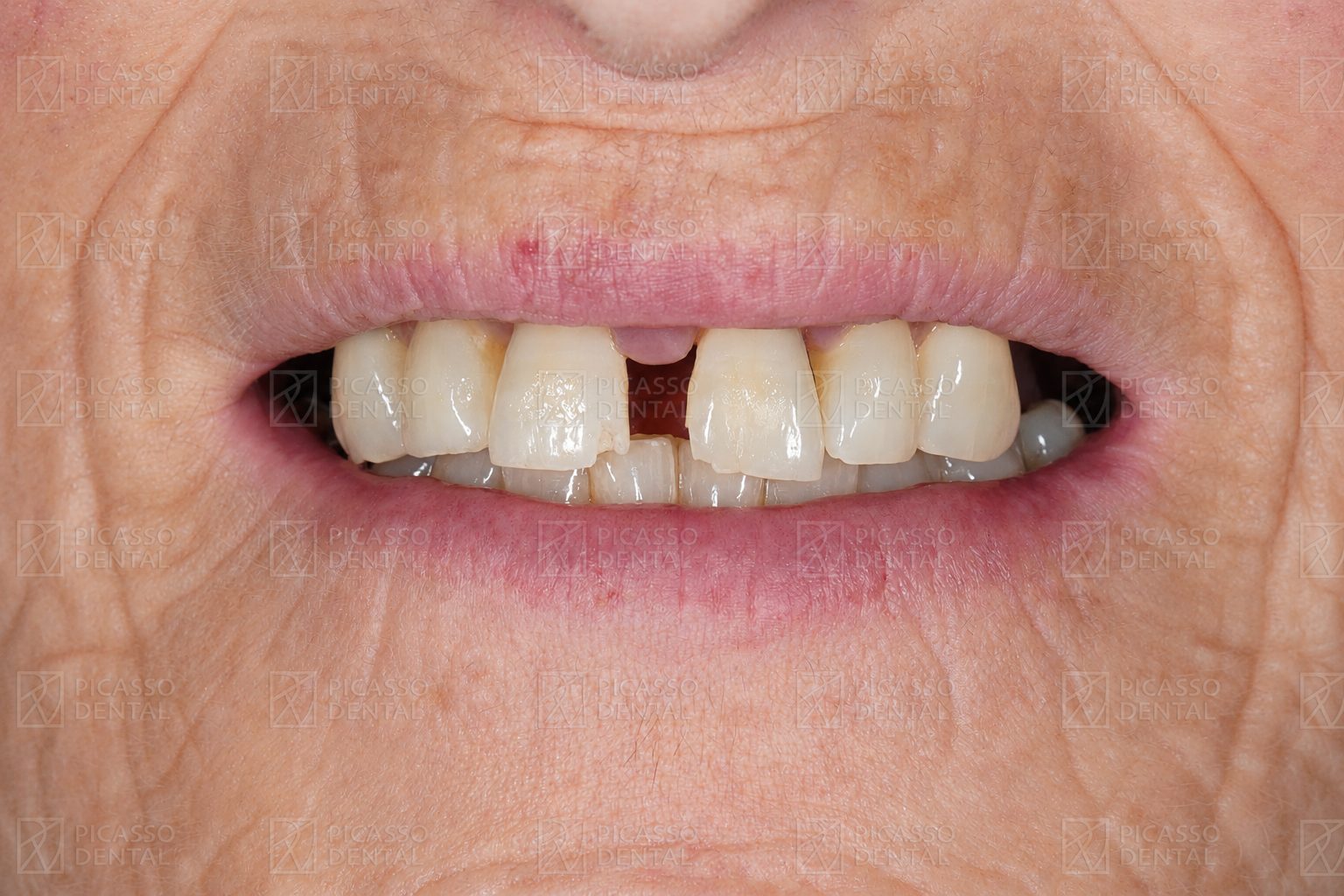 Before
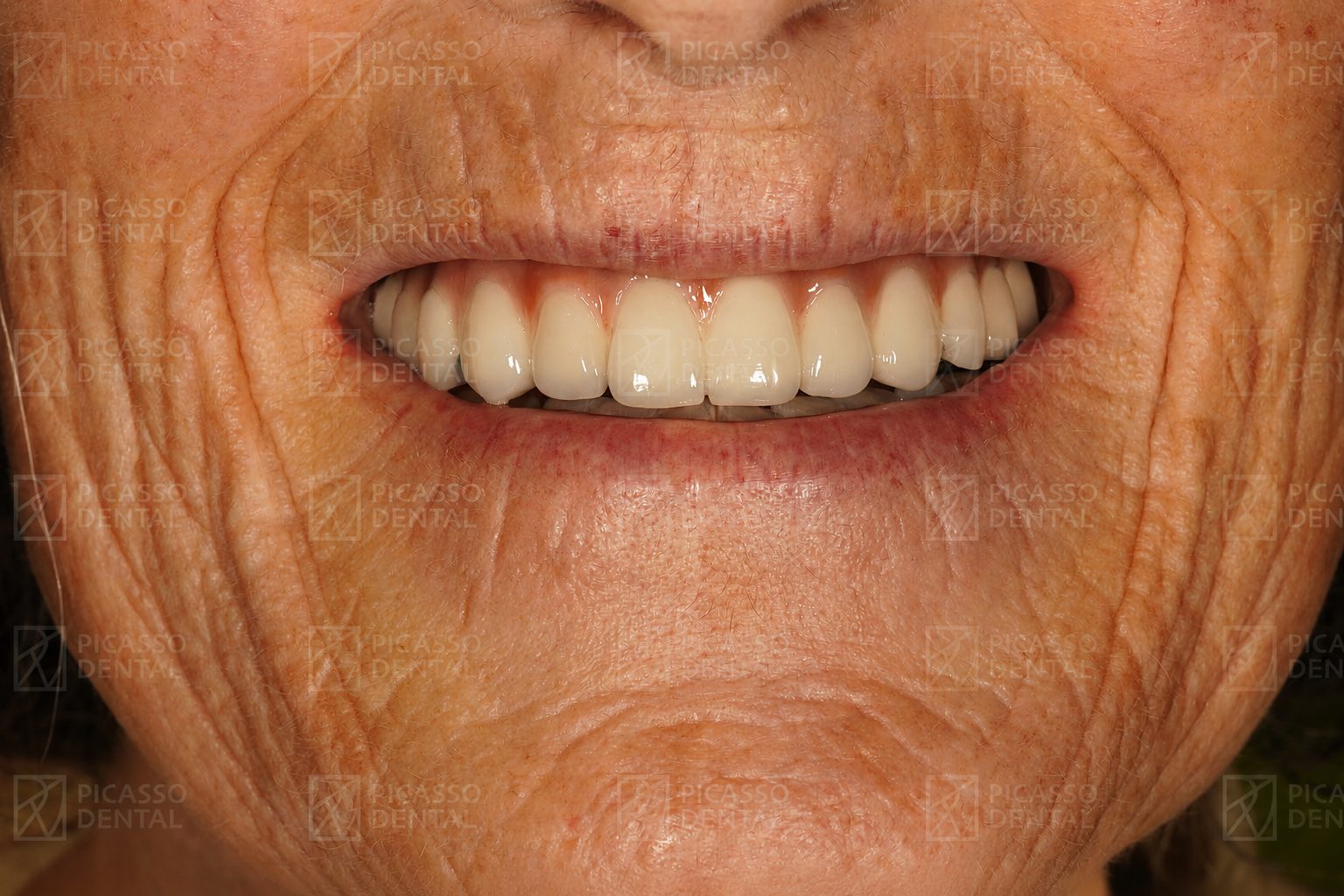 After
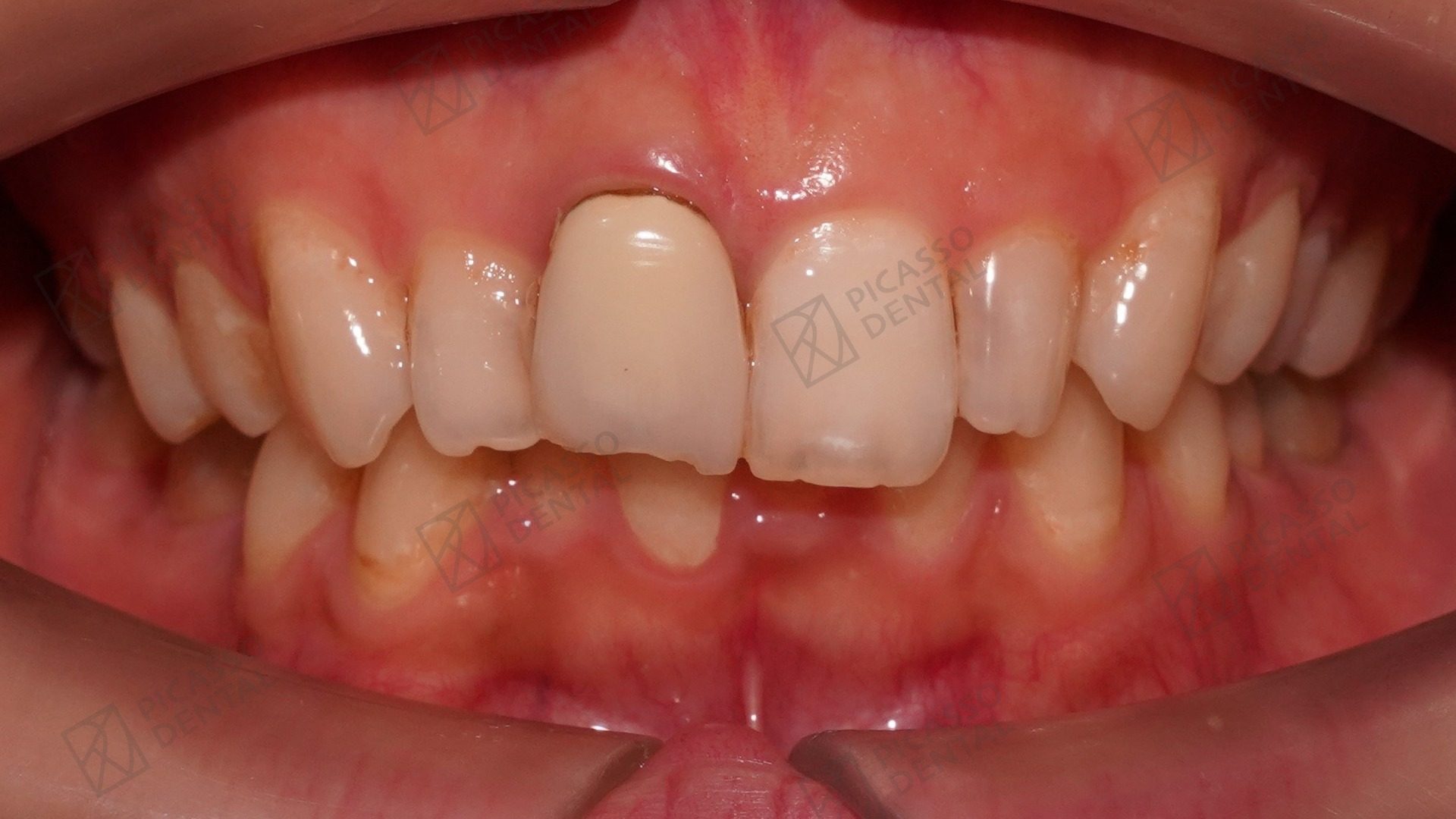
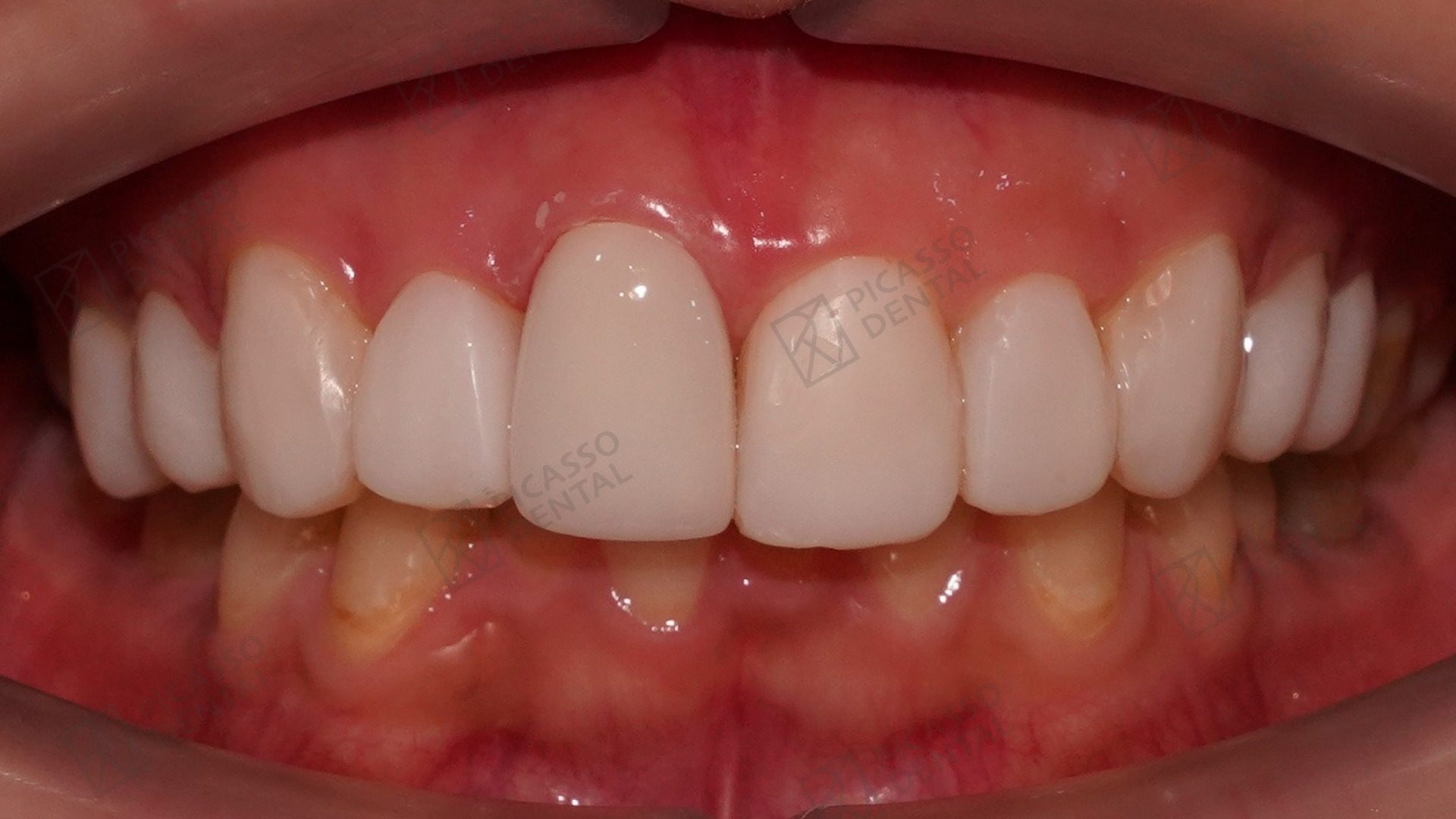
AfterSingle implant with zirconia crown. Patient followed evidence-based post-operative dietary guidance.
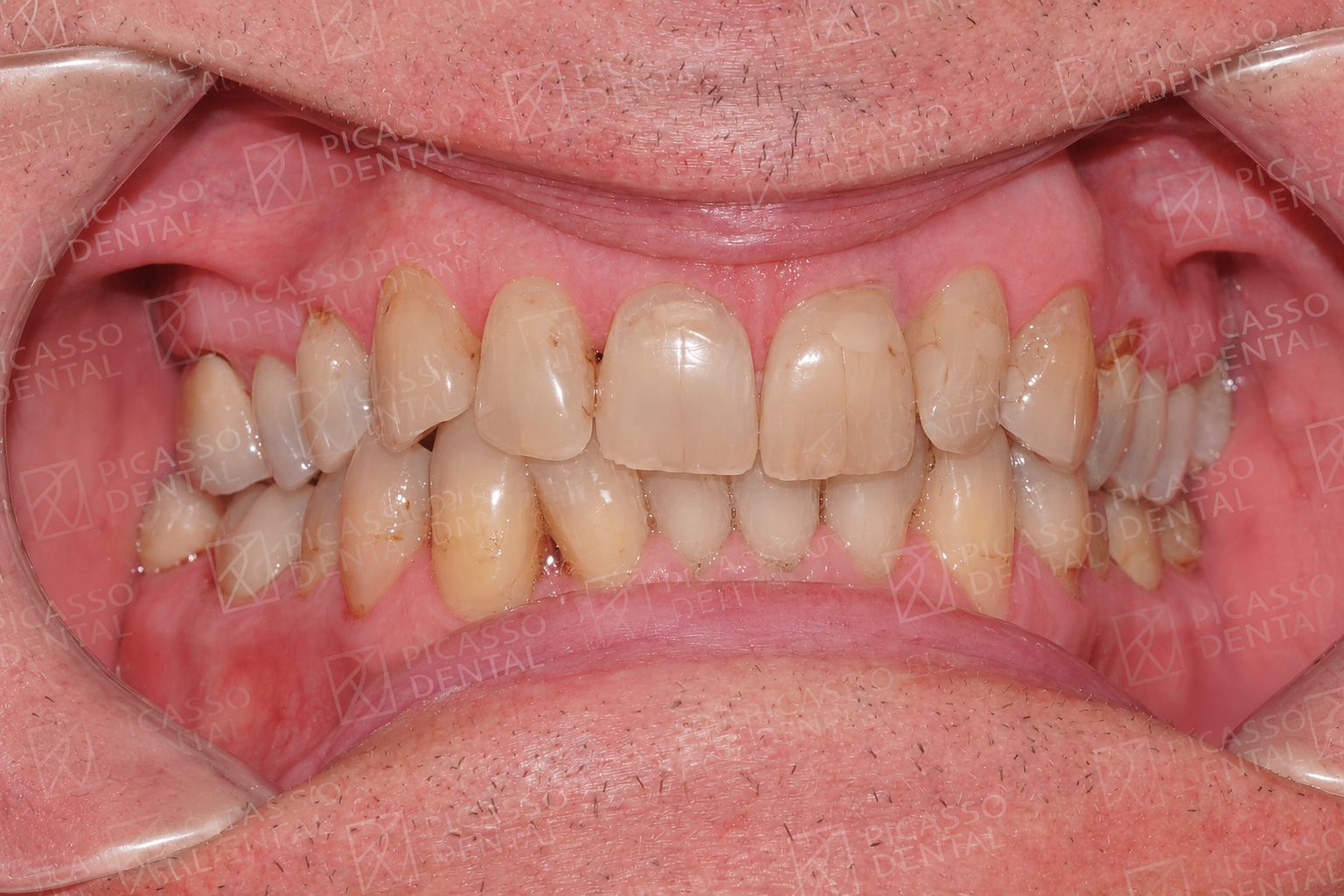 Before
 After
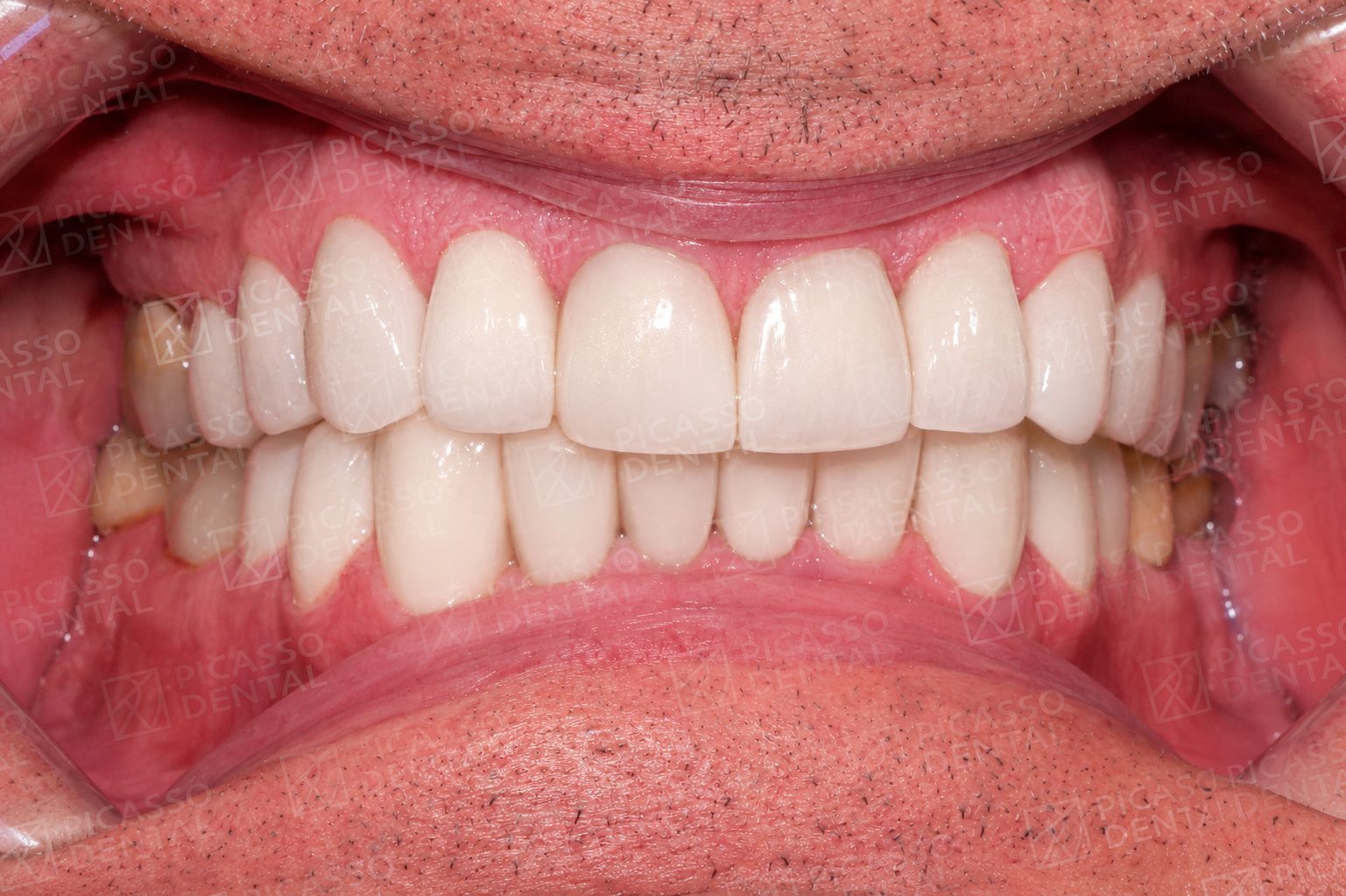
AfterFull arch implant rehabilitation with successful osseointegration at 6-month review.
 Before
 After
AfterImplant-supported crowns restoring posterior teeth. Full dietary function restored at 3 months.
Frequently Asked Questions
<details itemscope itemprop="mainEntity" itemtype="https://schema.org/Question">
  <summary itemprop="name">Why do dentists say no dairy after a dental implant?</summary>
  <div itemprop="acceptedAnswer" itemscope itemtype="https://schema.org/Answer">
    <p itemprop="text">The dairy restriction is a precautionary tradition rather than a finding from controlled clinical trials. The reasoning typically involves concerns about bacteria in dairy interacting with the wound, or nausea from dairy combined with post-operative medications. Neither concern is strongly supported by published evidence. At Picasso we do not categorically prohibit dairy after implant surgery.</p>
  </div>
</details>

<details itemscope itemprop="mainEntity" itemtype="https://schema.org/Question">
  <summary itemprop="name">Is it safe to eat yoghurt after dental implant surgery?</summary>
  <div itemprop="acceptedAnswer" itemscope itemtype="https://schema.org/Answer">
    <p itemprop="text">Yes, plain cool yoghurt is actually well-suited for the post-implant diet. It is soft, requires no chewing near the surgical site, is cool in temperature (which reduces swelling), and provides protein and calcium that support healing. We include yoghurt in our recommended post-operative foods for most patients.</p>
  </div>
</details>

<details itemscope itemprop="mainEntity" itemtype="https://schema.org/Question">
  <summary itemprop="name">What should I eat after dental implant surgery?</summary>
  <div itemprop="acceptedAnswer" itemscope itemtype="https://schema.org/Answer">
    <p itemprop="text">For the first 48 hours: soft, cool or room-temperature foods that require no chewing near the implant site. Good choices include yoghurt, smoothies with protein powder, scrambled eggs, mashed vegetables, soft fish, soup, and rice porridge. Avoid hard, crunchy, chewy, or very hot foods for the first 2 weeks. Stay well nourished since under-eating slows healing.</p>
  </div>
</details>

<details itemscope itemprop="mainEntity" itemtype="https://schema.org/Question">
  <summary itemprop="name">What must I absolutely avoid after a dental implant?</summary>
  <div itemprop="acceptedAnswer" itemscope itemtype="https://schema.org/Answer">
    <p itemprop="text">Hard or crunchy foods that could place force on the implant site during osseointegration; alcohol for at least 72 hours as it impairs healing and interacts with any prescribed antibiotics; smoking for as long as possible (ideally permanently) as it significantly increases implant failure risk; very hot foods and drinks for the first 24 hours; and seeds or small particles that could lodge in the wound.</p>
  </div>
</details>

<details itemscope itemprop="mainEntity" itemtype="https://schema.org/Question">
  <summary itemprop="name">Does dairy affect antibiotic absorption after implant surgery?</summary>
  <div itemprop="acceptedAnswer" itemscope itemtype="https://schema.org/Answer">
    <p itemprop="text">This concern applies specifically to tetracycline-class antibiotics, which should not be taken simultaneously with calcium-rich foods as calcium can reduce their absorption. However, tetracyclines are not routinely prescribed for dental implant surgery. The antibiotics commonly prescribed post-implant (amoxicillin, clindamycin) do not have a significant calcium interaction. Read the specific instructions with your prescription.</p>
  </div>
</details>

<details itemscope itemprop="mainEntity" itemtype="https://schema.org/Question">
  <summary itemprop="name">When can I eat normally after a dental implant?</summary>
  <div itemprop="acceptedAnswer" itemscope itemtype="https://schema.org/Answer">
    <p itemprop="text">By day 4 to 7, most patients can comfortably eat a wider range of foods, progressing as comfort allows. By 2 weeks, diet is generally unrestricted except for very hard foods that could place excessive force on the implant during the osseointegration period (typically 3 to 6 months). Your clinician will advise on the specific timeline based on your case.</p>
  </div>
</details>

<details itemscope itemprop="mainEntity" itemtype="https://schema.org/Question">
  <summary itemprop="name">How important is nutrition for implant success?</summary>
  <div itemprop="acceptedAnswer" itemscope itemtype="https://schema.org/Answer">
    <p itemprop="text">Very important. Protein is essential for tissue repair. Calcium and phosphorus are critical for bone healing and osseointegration. Vitamin D facilitates calcium absorption and plays a role in immune regulation. Patients who under-eat after surgery often have slower recovery. A well-nourished patient who avoids mechanical trauma to the site has the best conditions for successful osseointegration.</p>
  </div>
</details>
Start Here
Start with a brief.
Have questions about implant aftercare before your procedure? Our team provides complete, evidence-based post-operative guidance for every patient.