General Dentistry
Why Does My Tooth Hurt
When I Bite Down?
Five causes — and what to do
Pain when chewing can signal anything from a simple high filling to a cracking tooth or an infected nerve. Here is how to read the signals, when to act, and what treatment usually looks like.

The short version
- Pain only when biting, gone when you release almost always means a cracked tooth. Pain that lingers points to an inflamed or infected nerve.
- Five common causes: cracked tooth, decay under an old filling, a high filling or crown, gum inflammation, and sinus pressure affecting upper molars.
- Sharp electric pain that lasts a second is different from a dull ache that lingers for minutes. That distinction guides diagnosis before any test is done.
- Progressively worsening pain, swelling, or pain that wakes you at night needs same-week attention. Do not wait it out.
- Early treatment is almost always simpler and less expensive than the same problem treated after weeks of delay.
What I hear most often in clinic
"Every time I chew on the left side, I get this sharp pain." Marcus, a teacher from Singapore, sat in our Hanoi clinic trying to describe what had been bothering him for three weeks. "It is not constant. Just when I bite down on something. Is it serious?"
I am Dr. Emily Nguyen, Principal Dentist at Picasso Dental Clinic. Since 2013, I have examined thousands of patients across our Vietnam locations with this exact complaint. What surprises most people is that pain when biting can signal everything from a minor adjustment to something requiring immediate care. The cause is often not the one patients expect.
The five most common causes of bite pain
- Cracked tooth These cracks are often invisible to the naked eye and sometimes do not appear on X-rays initially. A crack running vertically through a molar causes intense pain when the two parts of the tooth flex slightly during biting, irritating the nerve inside. The hallmark is pain that arrives the moment you bite and disappears the moment you release.
- Decay beneath an old filling You might have a filling that looks fine from the outside, but underneath, bacteria have been working for months or years. When you bite, pressure pushes the weakened structure against the nerve. At our Da Nang clinic we use advanced diagnostic tools to catch decay that standard X-rays miss.
- High filling or crown If you have had a filling or crown placed in the last few weeks and it sits slightly too high, every bite puts extra force on that one tooth. This is the easiest problem to fix, usually a five-minute adjustment with a polishing tool. Most patients feel relief the same appointment.
- Gum inflammation or periodontal disease Inflammation around the tooth root means biting creates pressure that aggravates the already-irritated tissue. This often presents as a duller ache rather than sharp pain. Cleaning the pockets around the root and, where needed, a short course of antibiotics usually resolves it.
- Sinus pressure affecting upper molars Your upper back molars sit directly beneath the maxillary sinuses. When those cavities fill with pressure, it can feel like several upper teeth hurt when you bite. I see this frequently during Hanoi's rainy season and after a cold. A bite test on individual teeth quickly tells me whether the source is dental or sinus.
What your pain pattern is telling me
Before I even examine you, the way you describe your pain gives me useful diagnostic clues.
Sharp, electric pain that lasts a second usually points to a crack or exposed nerve. When you bite and release, the pain disappears almost instantly. This tells me the nerve is being mechanically stimulated but is not yet inflamed.
A dull, throbbing ache that lingers suggests inflammation. The nerve inside the tooth is already irritated, and pressure from biting makes it worse. A patient with this pattern often also reports the pain keeping them awake. This presentation frequently requires root canal treatment.
Pain that spreads to several upper teeth simultaneously often indicates a sinus infection rather than a dental problem. Targeted bite testing and an X-ray can rule out dental causes quickly.
Pain in exactly the same spot every time is what I call reproducible pain. This is actually helpful. At our Ho Chi Minh City clinic, I use a tooth sleuth, a small bite stick that lets me test each cusp individually. If you can point to exactly where it hurts and I can recreate that pain, the diagnosis follows quickly.
"She found that a tooth had a crack. The last two weeks were fantastic without pain or discomfort."
Johan Reit, Da Nang, Google review

When bite pain signals something serious
Not all bite pain requires emergency treatment, but some situations need attention within days rather than weeks.
Pain that is getting progressively worse should not wait. This usually means an infection is spreading or a crack is deepening. I had a patient from Thailand who delayed treatment for two months. What started as mild discomfort when chewing evolved into an abscess requiring more extensive treatment than if we had caught it early.
Swelling around the tooth or jaw combined with bite pain is a red flag. This suggests infection has moved beyond the tooth into surrounding bone or soft tissue.
Sensitivity spreading to hot drinks is a concerning change. If your bite pain is now accompanied by heat sensitivity that lingers after you swallow, the nerve is likely dying or infected. This will not heal without intervention.
Any sudden onset after biting something hard deserves evaluation. If you bit down on a popcorn kernel, a bone, or even a fork and the pain started immediately, you may have cracked the tooth in that moment.
Not sure how urgent your pain is? Send us a message. A dentist replies within 24 hours with an honest assessment of whether you need to come in soon.
Get a dentist's opinion on WhatsApp →How we diagnose bite pain
When you come to any Picasso Dental Clinic, the diagnostic process is systematic.
First, I listen. When did the pain start? What were you eating? Does anything make it better or worse? These details often point me in the right direction before I look in your mouth.
Visual examination comes next. I am looking for obvious cracks, chips, or discoloration around existing fillings or at the gum margin.
The bite test tells me a lot. I have you bite on a tooth sleuth to isolate which cusp hurts and whether the pain occurs during biting or releasing. Cracked teeth often hurt more when you release the bite, as the crack closes and pinches the nerve.
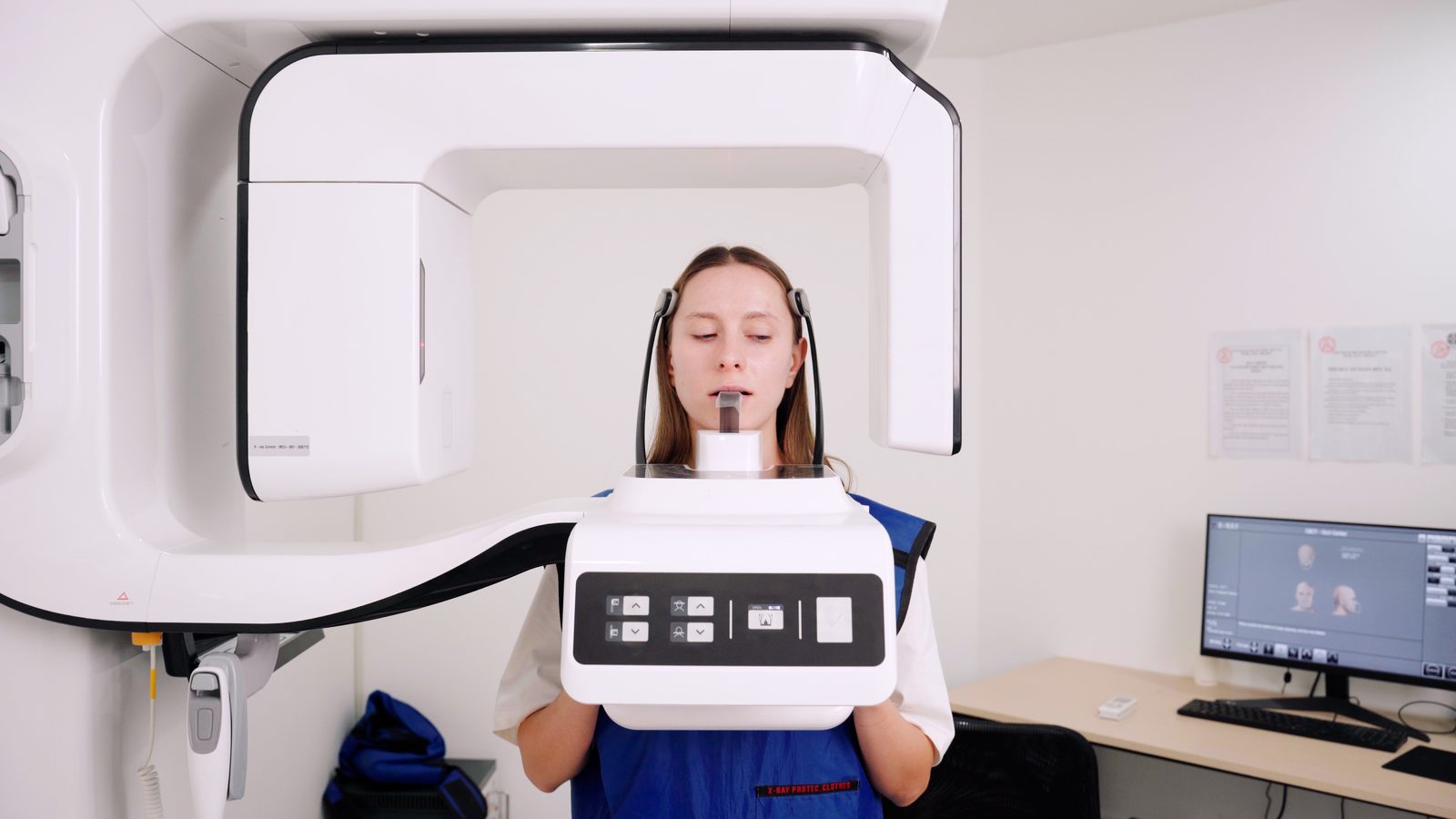
X-rays reveal what we cannot see directly. Digital X-rays show decay, bone loss, and sometimes large cracks. But many cracks do not appear on standard X-rays. That is when I use transillumination, shining a special light through the tooth to make cracks visible as darker lines in the enamel.
Thermal testing completes the picture. If I suspect nerve involvement, I test your response to cold or heat. A lingering response to cold, pain that persists for more than a few seconds after the stimulus is removed, often indicates irreversible nerve damage that requires root canal treatment.

"I had been dealing with immense pain due to a broken tooth with exposed nerve. She performed a root canal and they placed a porcelain crown. I have been pain free since!"
Garrett Lee, Hanoi Old Quarter, Google review
What treatment usually looks like
For a cracked tooth
Treatment depends on the crack's extent. Small cracks may need only a filling or onlay. Larger cracks usually require a crown to hold the tooth together and protect the nerve from further stimulation. Vertical cracks that extend below the gum line sometimes mean extraction is necessary, but this is rare when the tooth is caught early. Most cracked teeth, seen before the nerve is damaged, are saved.
For decay under an old filling
I remove the old filling, clean out the decay, and place a new restoration. If the decay is extensive and close to the nerve, a root canal may be needed first to prevent future infection. If caught before it reaches the nerve, a new filling or crown is all that is required.
For a high filling or crown
Adjustment takes minutes. I mark the high spots with coloured articulating paper, make small adjustments with a polishing disc, and have you test your bite again. Most patients feel immediate relief. If the pain persists more than two weeks after a new restoration, a nerve evaluation is the next step.
For gum-related bite pain
Treatment focuses on reducing inflammation through deep cleaning (scaling and root planing) and, where infection is present, antibiotics. Once the tissue around the tooth root is healthy, the pressure pain resolves.

"Finally there is no pain in my tooth or the right side of my face after receiving his expert care."
Maria Holland, Da Nang, Google review
What to do right now if biting hurts
Do this
- Stop chewing on that side immediately
- Note when the pain started and what triggers it
- Observe whether it is getting better or worse
- Book an appointment if pain has lasted more than three days
- Mention any recent dental work at your consultation
- Note whether hot drinks or cold air affect it
Avoid this
- Testing the tooth with very hot or very cold drinks
- Chewing hard food on the affected side
- Delaying if pain is worsening or spreading
- Ignoring swelling around the tooth or jaw
- Assuming it will resolve on its own after more than three days
Frequently asked questions
Why does my tooth hurt when I bite down?
The most common causes are a cracked tooth, decay beneath an existing filling, a crown or filling sitting slightly too high, gum inflammation around the tooth root, or an infected nerve. Each cause produces a slightly different pattern of pain, which helps a dentist narrow down the diagnosis before doing any tests.
Can a cracked tooth cause pain only when biting?
Yes. A vertically cracked tooth often causes pain exclusively during biting or chewing, with no discomfort at rest. When you bite down, the two halves flex slightly and stimulate the nerve inside. When you release, the pain disappears almost instantly. This is one of the hallmarks of a cracked tooth and distinguishes it from other causes.
Does a tooth that hurts when I bite always need a root canal?
Not always. If the nerve is mechanically irritated but not yet inflamed or infected, treatment might be as simple as adjusting a high filling or placing a crown. A root canal becomes necessary when the nerve is already inflamed, dying, or infected, which is usually indicated by lingering pain after stimulation, spontaneous throbbing, or heat sensitivity that lasts more than a few seconds.
How does a dentist figure out which tooth is causing the pain?
A tooth sleuth is a small bite stick that lets the dentist test each cusp individually so you can identify exactly where the pain originates. Thermal testing checks nerve response. Digital X-rays reveal decay and bone changes. Many cracks are invisible on standard X-rays and require transillumination (a special light shone through the tooth) to become visible.
Can a sinus infection cause tooth pain when I bite?
Yes. The roots of the upper back molars sit directly beneath the maxillary sinuses. When those sinuses are congested or infected, the pressure can feel exactly like multiple upper teeth hurting when you bite. If several upper molars ache simultaneously and you have nasal congestion or a recent cold, a sinus infection is likely. A dentist can rule out dental causes quickly with targeted bite tests and X-rays.
When should I see a dentist for tooth pain when biting?
Book an appointment if the pain has lasted more than three days, is getting progressively worse, is preventing you from eating normally, is accompanied by swelling around the tooth or jaw, wakes you at night, or has spread to include sensitivity to hot drinks that lingers after swallowing. Any of these signs indicates a condition that will not resolve on its own.
Why did my tooth start hurting after a filling or crown?
If a new filling or crown sits even slightly too high, it takes more force than all your other teeth on every bite. That extra stress irritates the nerve and causes bite pain that typically starts within a day or two of the appointment. The fix is a quick in-chair adjustment. If the pain persists more than two weeks after a new restoration, a nerve evaluation is the next step.
What happens if I ignore tooth pain when biting?
Ignoring bite pain almost always leads to more complex treatment. A small crack that causes mild discomfort can extend below the gum line over weeks, making the tooth unsalvageable. Decay beneath an old filling that causes pressure pain can reach the nerve, turning a simple filling replacement into a root canal. If it hurts when you bite and the pain has lasted more than three days, get it checked.
Not Sure What Is Causing Your Pain? Ask a Dentist.
Describe your symptoms. A licensed dentist replies within 24 hours with an honest assessment. No deposit, no obligation.
No obligation · Since 2013