Porcelain Veneers
Who Should Not Get Porcelain Veneers?
Saying no to a patient who wants veneers is sometimes the most responsible clinical decision. Here are the contraindications that disqualify a patient, and why treating them anyway guarantees failure.

Key Takeaways
- Active decay or gum disease must be fully treated before veneers are considered. No exceptions.
- Bruxism is a major contraindication. Veneers require a properly fitted and consistently worn night guard to survive.
- Insufficient enamel, severe misalignment, and age under 25 are additional disqualifying factors.
- Patients with unrealistic expectations or demonstrated poor oral hygiene are poor candidates regardless of anatomy.
<h2>Patients With Active Dental Disease</h2>

<p>Veneers cannot be placed on unhealthy teeth. This is not a preference or a policy; it is clinical reality. A veneer bonded over an active cavity seals the bacteria in and allows the decay to continue spreading inside the tooth, invisible to both patient and clinician until it has caused significant damage. The same principle applies to gum disease: inflamed gums will recede after veneer placement, exposing the tooth-veneer margin and creating an aesthetic and hygiene problem that requires correction.</p>

<p>The sequence is always disease treatment first, then cosmetic work. Patients who have cavities treated, their gum disease resolved, and a period of demonstrated oral health stability become excellent candidates. Patients who want to skip that sequence are not candidates and should not be treated as though they are.</p>

<p>At Picasso, a clinical examination and X-rays are mandatory before any veneer consultation proceeds to treatment planning. We regularly find existing decay or periodontal issues that the patient was unaware of. Treating these is always the first recommendation.</p>

<figure class="art-photo">
  <img src="/images/clinics/hanoi-old-quarter/reception.jpg" alt="Picasso Dental Clinic Hanoi consultation area" loading="lazy" decoding="async">
  <figcaption>Every veneer consultation at our Hanoi Old Quarter branch includes a full clinical examination and X-ray review before any treatment planning begins.</figcaption>
</figure>

<h2>Heavy Grinders and Clenchers</h2>

<p>Bruxism is one of the most common reasons we decline veneer treatment at the consultation stage. The forces generated during nighttime grinding and clenching can exceed normal chewing forces by a factor of five or more. Porcelain veneers, while strong, are not designed for that level of repeated impact loading. The result is chipping, cracking, or debonding of the veneer, often within 2 to 3 years.</p>

<p>A custom-fitted night guard is the standard protective measure for bruxism patients who want veneers. However, the guard only works if it is worn consistently. If you grind and have tried night guards but cannot tolerate them, or if you consistently forget to wear one, veneers are not appropriate for you until this is resolved.</p>

<p>Wear patterns on existing teeth are objective evidence of grinding regardless of what patients self-report. Flat biting surfaces, shortened teeth, and exposed dentin in the wrong locations indicate bruxism. These patterns are assessed at the examination. Patients with documented bruxism are counselled about the elevated risk of veneer failure and the requirement for a night guard before proceeding.</p>

<div class="art-callout">
  <strong>Important for bruxism patients:</strong> If you grind and want veneers, the correct sequence is: fabricate a custom night guard, wear it for 3 to 6 months to demonstrate compliance, confirm the bruxism is controlled, then proceed with veneer planning. Rushing this process produces veneers that fail early.
</div>

<h2>Patients With Insufficient Enamel</h2>

<p>Veneer bonding chemistry relies on etching and bonding to tooth enamel. The bond to enamel is predictable and durable. The bond to dentin is weaker and less predictable. When enamel is too thin, or when a significant portion of the tooth surface is dentin rather than enamel, veneer retention becomes unreliable and long-term outcomes suffer.</p>

<p>Several conditions deplete enamel: genetic thin enamel, chronic acid erosion from diet or reflux, years of aggressive brushing with abrasive toothpaste, and previous dental procedures that required enamel removal. Patients with large existing fillings on the target teeth are similarly affected. When the filling material constitutes more than half the tooth surface, a crown typically provides better support and longevity than a veneer.</p>

<h3>Assessing enamel thickness</h3>
<p>Enamel thickness cannot be reliably assessed from clinical examination alone. Transillumination, probing, and sometimes CBCT or sectional X-rays contribute to the assessment. If enamel volume is borderline, we advise the patient of the higher risk of bond failure and the possibility that the veneer may need replacement sooner than average.</p>

<figure class="art-photo">
  <img src="/images/general-dentistry/consultation.jpg" alt="Veneer consultation at Picasso Dental Clinic" loading="lazy" decoding="async">
  <figcaption>Detailed clinical photography and shade assessment are part of every veneer consultation at Picasso Dental Clinic.</figcaption>
</figure>

<h2>Patients With Significant Misalignment</h2>

<p>Veneers are an additive cosmetic treatment. They work with existing tooth positions, making minor adjustments to shape, colour, and contour. They are not a substitute for orthodontics. A veneer placed on a severely rotated tooth must be made unnaturally thick to appear straight, which creates a bulky, unnatural-looking result and concentrates biting forces on the wrong surfaces.</p>

<p>Attempting to correct severe crowding with veneers requires grinding the teeth down aggressively, which contradicts the fundamental advantage of veneers over crowns (minimal tooth reduction). The result is a tooth preparation closer to a crown preparation without the structural protection a crown provides.</p>

<p>Patients with significant misalignment are referred for orthodontic treatment first, whether fixed braces or clear aligners. Once the teeth are in the correct positions, veneers achieve a genuinely excellent result with minimal tooth preparation. The sequence of orthodontics followed by veneers produces far better long-term outcomes than trying to do both in one step.</p>

<a href="https://wa.me/84989067888" class="art-cta-inline"><p><strong>Not sure if you need orthodontics before veneers?</strong> A clinical examination with photographs will give you a clear answer. We do not proceed with veneer treatment if alignment needs to be addressed first.</p><span>Book a consultation →</span></a>

<h2>Young Teenagers and Patients Under 25</h2>

<p>Tooth development continues into the early twenties. The pulp chambers of younger teeth are larger, the enamel is thinner relative to the adult tooth, and the final gum-line position has not fully stabilised. Placing permanent veneers on a 17-year-old commits developing teeth to decades of restoration at a time when the underlying anatomy is still changing.</p>

<p>Even if the veneer placement is technically successful at age 19, the gum line continues to position itself over the following years. A veneer placed with a specific margin position may end up with the margin exposed as the gum recedes naturally with age, creating a visible step between the veneer and the natural tooth.</p>

<p>We are extremely conservative about veneers for anyone under 25 and will generally not place them on patients under 18. Composite bonding is sometimes appropriate for younger patients who want cosmetic improvement without permanent tooth reduction, as it can be reversed or replaced as the teeth mature.</p>

<h2>Patients With Poor Oral Hygiene</h2>

<p>Veneers do not protect against decay at the margins or gum disease around the teeth. Patients who do not brush thoroughly twice daily and floss between their teeth are at high risk of developing problems around the veneer margins that lead to early failure. A veneer on a tooth with recurring decay at the gum line is likely to require replacement within 5 to 7 years instead of lasting 15 or 20.</p>

<p>During consultations, we assess oral hygiene by looking at plaque levels, gum inflammation, and the history of previous dental work. Patients who have experienced multiple cavities in recent years are asked to demonstrate a period of improved hygiene and cavity-free recall appointments before veneer treatment is offered. This is not punitive. It is a clinical judgment that the treatment is more likely to succeed when the patient has the oral hygiene habits to support it.</p>

<figure class="art-photo">
  <img src="/images/clinics/hcmc-thao-dien/reception.jpg" alt="Picasso Dental Clinic Ho Chi Minh City" loading="lazy" decoding="async">
  <figcaption>Veneer candidacy assessments are available at all six Picasso Dental Clinic locations across Vietnam.</figcaption>
</figure>

<h2>Who Is a Good Veneer Candidate</h2>

<ul class="art-checklist">
  <li>
    <div>
      <strong>No active decay or gum disease</strong>
      <span>All cavities treated, gum health stable for at least 6 months before the veneer appointment.</span>
    </div>
  </li>
  <li>
    <div>
      <strong>Adequate enamel volume</strong>
      <span>Sufficient enamel on the target teeth to support a durable bond. No large existing restorations covering the bonding surface.</span>
    </div>
  </li>
  <li>
    <div>
      <strong>Mild to moderate cosmetic concerns only</strong>
      <span>Minor discolouration, small chips, slight spacing, or subtle shape irregularities. Not severe crowding, deep bite, or significant misalignment.</span>
    </div>
  </li>
  <li>
    <div>
      <strong>No bruxism, or bruxism controlled with a night guard</strong>
      <span>Either no grinding history, or documented compliance with a custom night guard for at least 6 months.</span>
    </div>
  </li>
  <li>
    <div>
      <strong>Age 25 or older</strong>
      <span>Tooth development complete, gum line stable, realistic expectations about long-term maintenance.</span>
    </div>
  </li>
  <li>
    <div>
      <strong>Good oral hygiene history</strong>
      <span>Consistent brushing, flossing, and regular dental check-ups for the previous 12 to 24 months.</span>
    </div>
  </li>
</ul>

<figure class="art-photo">
  <img src="/images/clinics/da-nang-hoang-dieu/reception.jpg" alt="Picasso Dental Clinic Da Nang consultation" loading="lazy" decoding="async">
  <figcaption>Our Da Nang team conducts full smile assessments including photography, shade matching, and digital smile design before any veneer commitment.</figcaption>
</figure>
 Before
 After
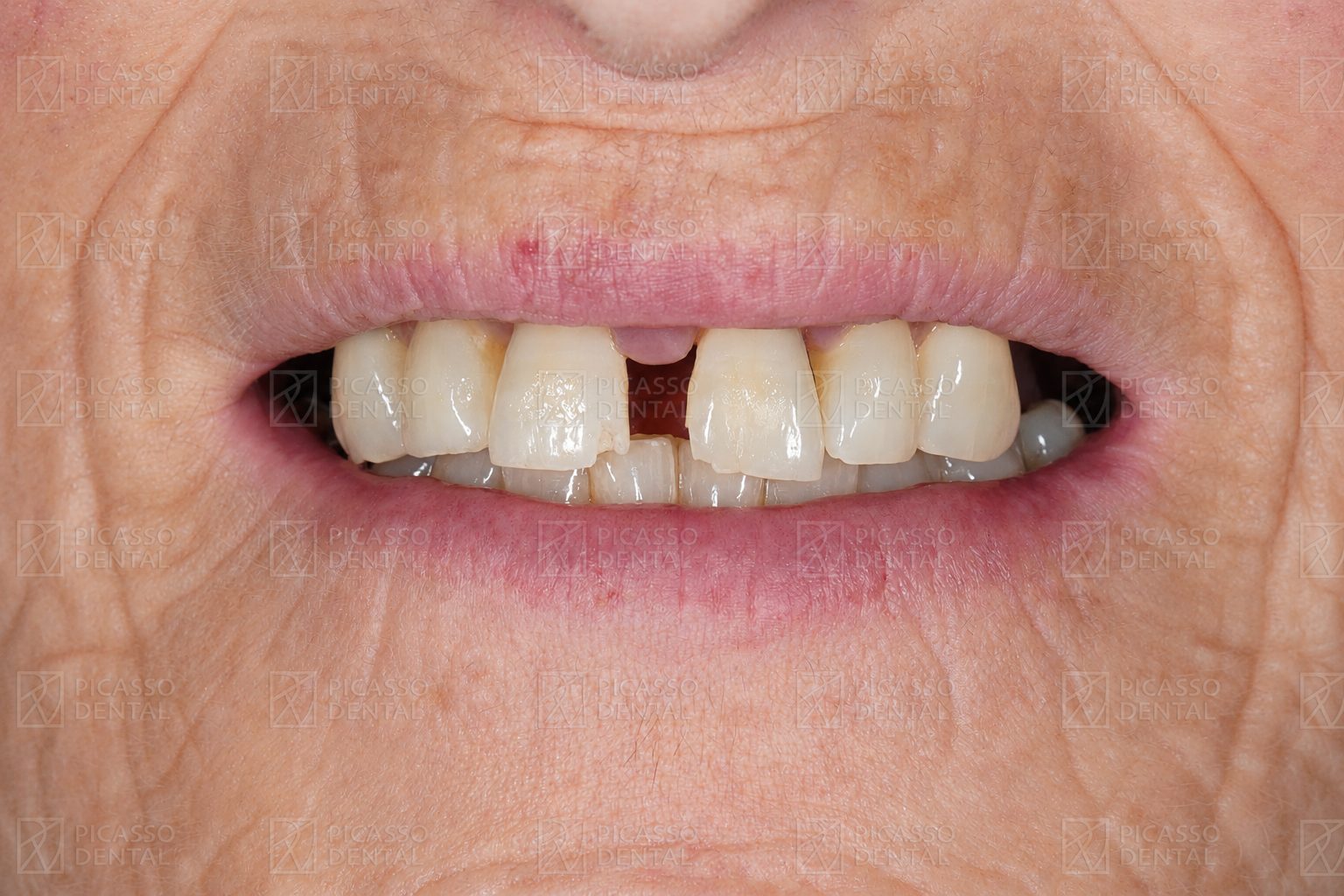
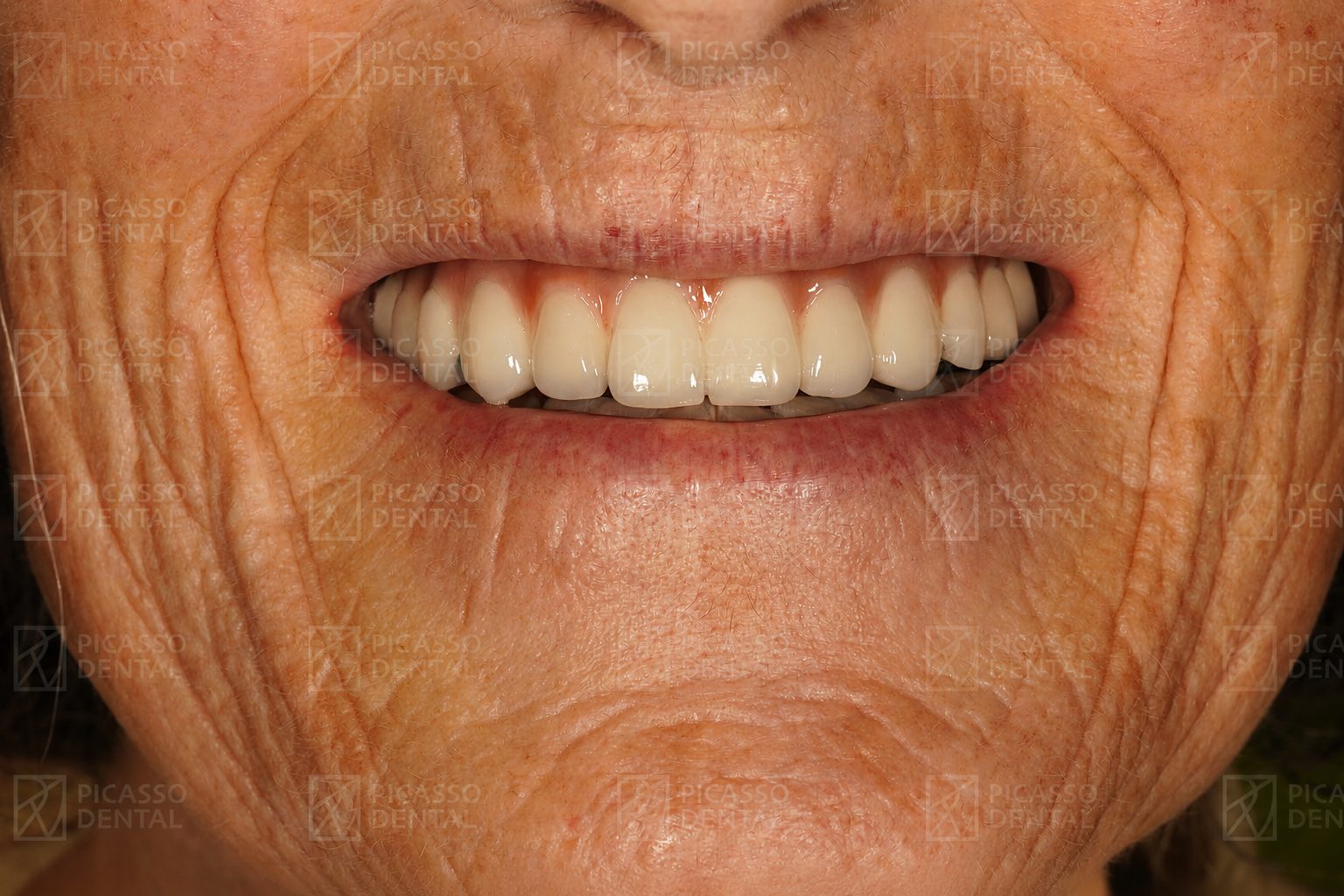
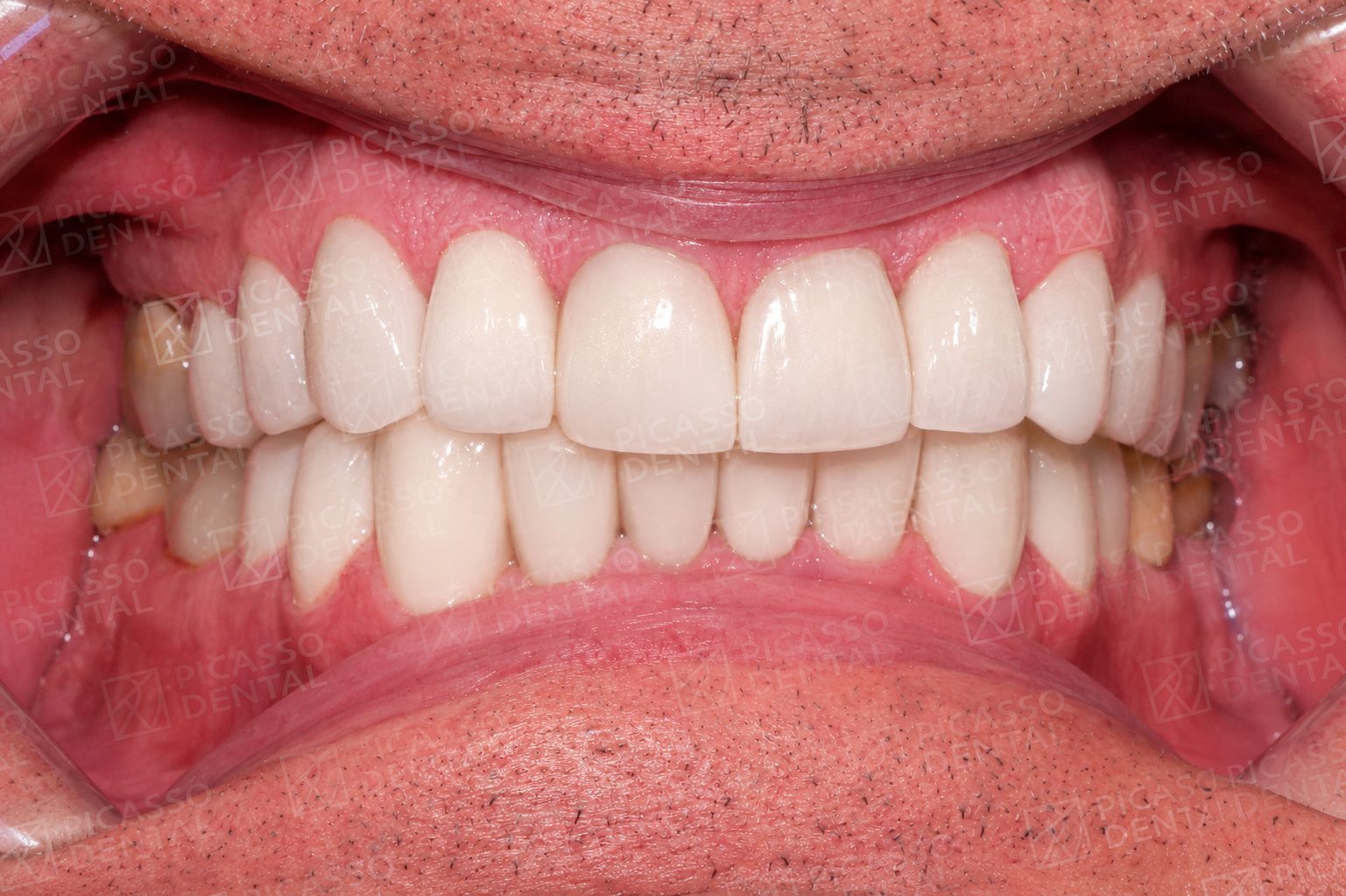
AfterEmax veneers on a suitable candidate: no decay, adequate enamel, normal bite.
 Before
 After
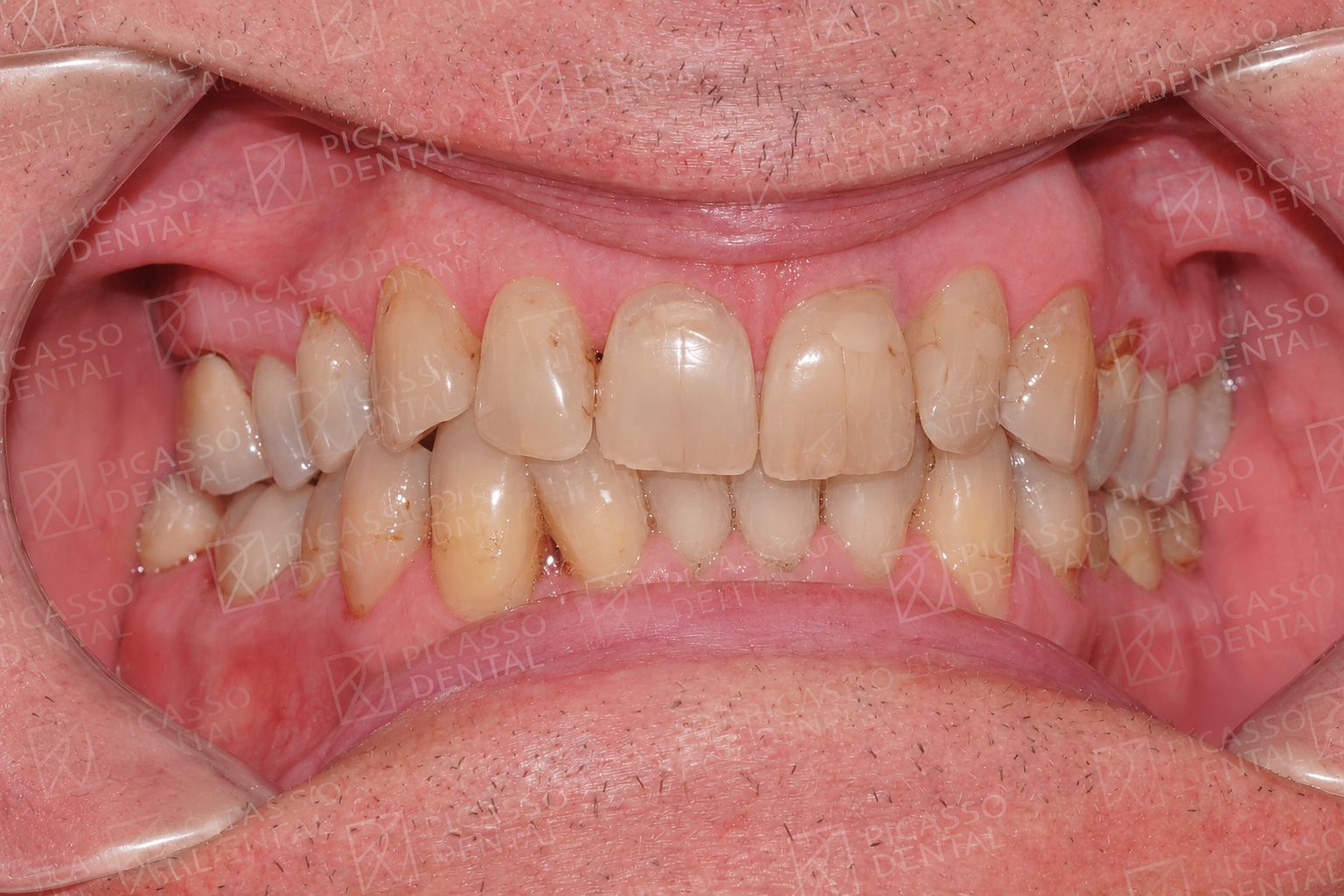
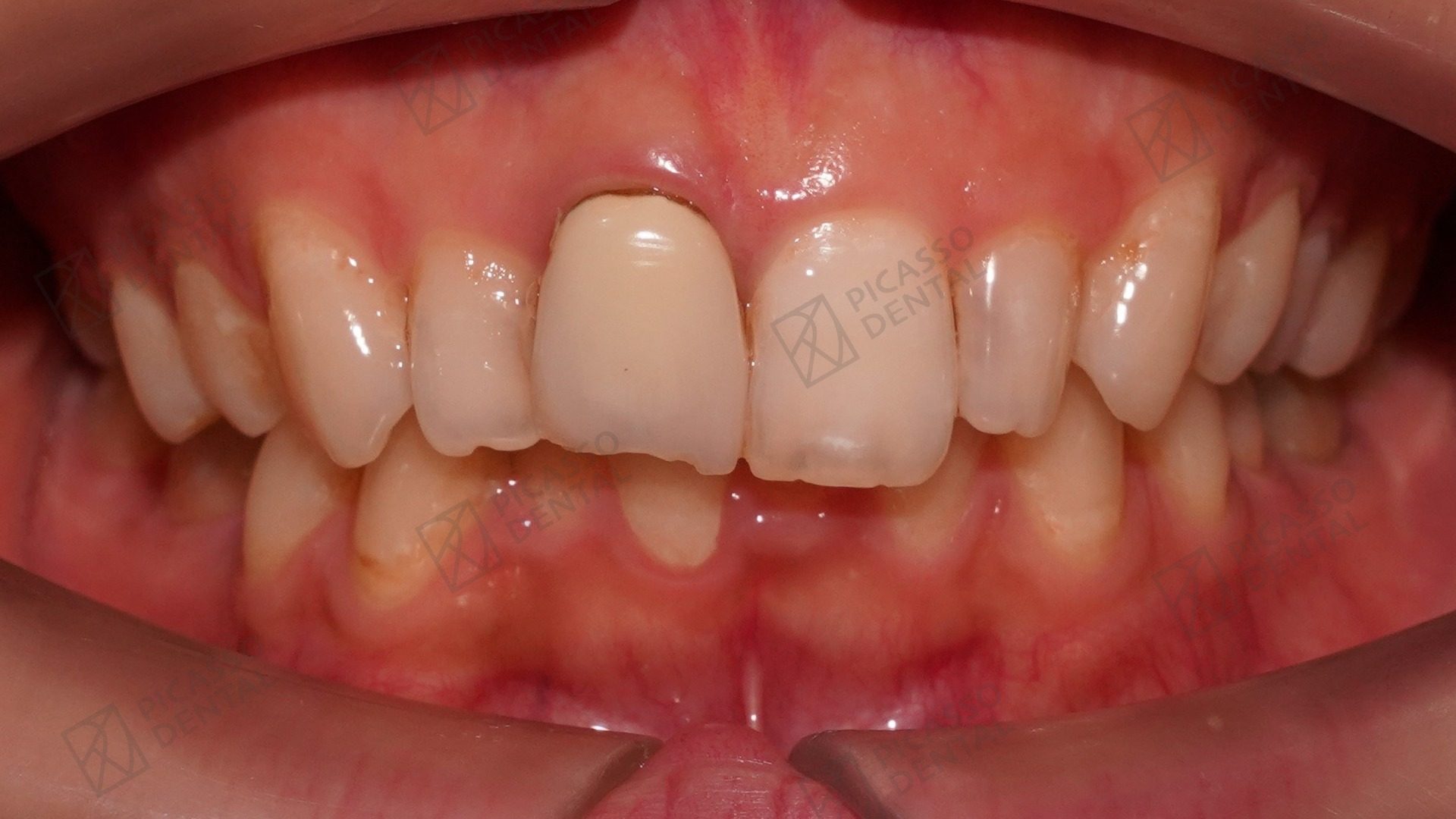
AfterFull smile makeover with porcelain veneers following completed orthodontic treatment.
 Before
 After
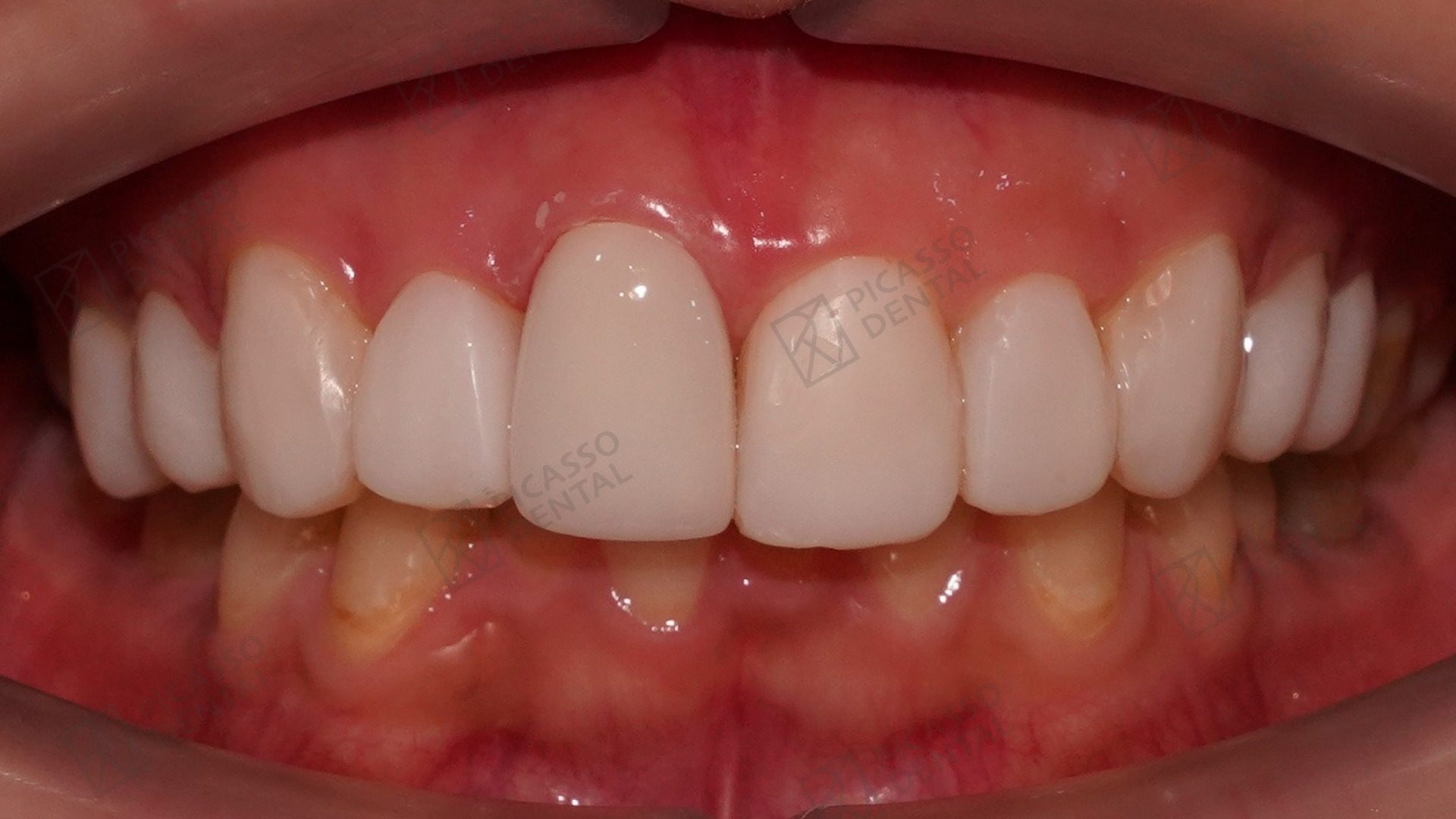
AfterConservative veneer preparation on healthy enamel with minimal tooth reduction.
Frequently Asked Questions
<details itemscope itemprop="mainEntity" itemtype="https://schema.org/Question">
  <summary itemprop="name">Can I get veneers if I have cavities?</summary>
  <div itemprop="acceptedAnswer" itemscope itemtype="https://schema.org/Answer">
    <p itemprop="text">No. Active decay must be completely treated before veneers are placed. Placing a veneer over untreated decay allows the cavity to continue spreading underneath the veneer, eventually destroying the tooth. Gum disease must also be resolved first, as it causes bone loss and recession that compromises veneer stability and appearance.</p>
  </div>
</details>

<details itemscope itemprop="mainEntity" itemtype="https://schema.org/Question">
  <summary itemprop="name">Can I get veneers if I grind my teeth?</summary>
  <div itemprop="acceptedAnswer" itemscope itemtype="https://schema.org/Answer">
    <p itemprop="text">Grinding (bruxism) is a significant contraindication. The forces generated during grinding far exceed normal chewing forces and can crack or debond porcelain veneers. A custom night guard is mandatory for bruxism patients considering veneers. If you grind heavily and cannot consistently wear a night guard, veneers are not appropriate until the grinding is controlled.</p>
  </div>
</details>

<details itemscope itemprop="mainEntity" itemtype="https://schema.org/Question">
  <summary itemprop="name">What age is too young for veneers?</summary>
  <div itemprop="acceptedAnswer" itemscope itemtype="https://schema.org/Answer">
    <p itemprop="text">Tooth development continues into the early twenties. Placing permanent veneers on teenagers commits developing teeth to lifelong restoration and requires irreversible enamel reduction that cannot be undone. We are extremely conservative about veneers for anyone under 25 and will generally not place them on patients under 18.</p>
  </div>
</details>

<details itemscope itemprop="mainEntity" itemtype="https://schema.org/Question">
  <summary itemprop="name">Can veneers fix severe crowding or misalignment?</summary>
  <div itemprop="acceptedAnswer" itemscope itemtype="https://schema.org/Answer">
    <p itemprop="text">No. Veneers can mask minor rotations and small spacing issues, but they cannot correct severe crowding, significant rotations, or major bite problems. Attempting to use veneers instead of orthodontics creates both aesthetic and functional failures. Patients with significant misalignment are referred for orthodontic treatment before any veneer consideration.</p>
  </div>
</details>

<details itemscope itemprop="mainEntity" itemtype="https://schema.org/Question">
  <summary itemprop="name">What happens if I do not have enough enamel for veneers?</summary>
  <div itemprop="acceptedAnswer" itemscope itemtype="https://schema.org/Answer">
    <p itemprop="text">Veneers bond to tooth enamel. Without adequate enamel, the bond is weak and veneer retention becomes unpredictable. Patients with thin enamel from genetics, acid erosion, or aggressive brushing, and patients whose teeth already have large fillings, may be better candidates for <a href="/dental-crowns/">crowns</a> than veneers.</p>
  </div>
</details>

<details itemscope itemprop="mainEntity" itemtype="https://schema.org/Question">
  <summary itemprop="name">What are the alternatives to veneers for patients who are not candidates?</summary>
  <div itemprop="acceptedAnswer" itemscope itemtype="https://schema.org/Answer">
    <p itemprop="text">Depending on the reason for disqualification, alternatives include: treating decay and gum disease first, then reassessing; orthodontics to correct misalignment before cosmetic work; crowns for teeth with insufficient enamel or large existing restorations; composite bonding as a reversible, less invasive option for minor improvements; and laser whitening for patients whose main concern is tooth colour.</p>
  </div>
</details>

<details itemscope itemprop="mainEntity" itemtype="https://schema.org/Question">
  <summary itemprop="name">How do I know if I am a good veneer candidate?</summary>
  <div itemprop="acceptedAnswer" itemscope itemtype="https://schema.org/Answer">
    <p itemprop="text">The candidacy assessment at Picasso Dental Clinic evaluates enamel thickness, gum health, existing restorations, bite force, bruxism history, and alignment. No assessment can be done accurately from photos alone. A clinical examination with X-rays is the minimum required to make a reliable candidacy determination.</p>
  </div>
</details>
Patient Video Testimonial

Start Here
Start with a brief.
An honest candidacy assessment tells you whether veneers are right for you now, or what needs to be addressed first.