
Wisdom Tooth Extraction
When do wisdom teeth need to be removed, and what is recovery like?
Most people's jaws cannot accommodate their third molars. Here is how to know when extraction is necessary, what the procedure involves, and how to heal comfortably in 3 to 7 days.

Key Takeaways
- Wisdom teeth need removal when they are impacted, infected, or damaging neighbouring teeth. Many people will need at least one extracted in their lifetime.
- Impaction is the most common reason: when there is not enough jaw space, teeth grow at angles that trap food, press on adjacent teeth, and breed infection.
- Extraction is an outpatient procedure performed under local anaesthetic. The procedure itself takes 20 to 40 minutes per tooth and is not painful.
- Recovery takes 3 to 7 days. Swelling peaks on day two or three, then improves steadily with proper aftercare.
- Dry socket is the most common complication. It is almost entirely preventable by avoiding straws, smoking, and forceful rinsing for the first week.
- Contact the clinic immediately for fever above 38C, bleeding that does not slow, or severe pain starting two to four days post-surgery.
Wisdom teeth are the last molars to develop, usually appearing between ages 17 and 25. For most people, the jaw simply does not have room for them. The result is impaction: teeth that cannot fully emerge through the gum and cause a cascade of problems ranging from mild discomfort to serious infection. I am Dr. Emily Nguyen, Principal Dentist at Picasso Dental Clinic, and I have been guiding patients through wisdom tooth extractions across our Hanoi, Da Nang, Ho Chi Minh City, and Da Lat locations for over a decade. This guide explains what I look for when deciding whether extraction is necessary and exactly what you can expect before, during, and after the procedure.
Why wisdom teeth cause problems
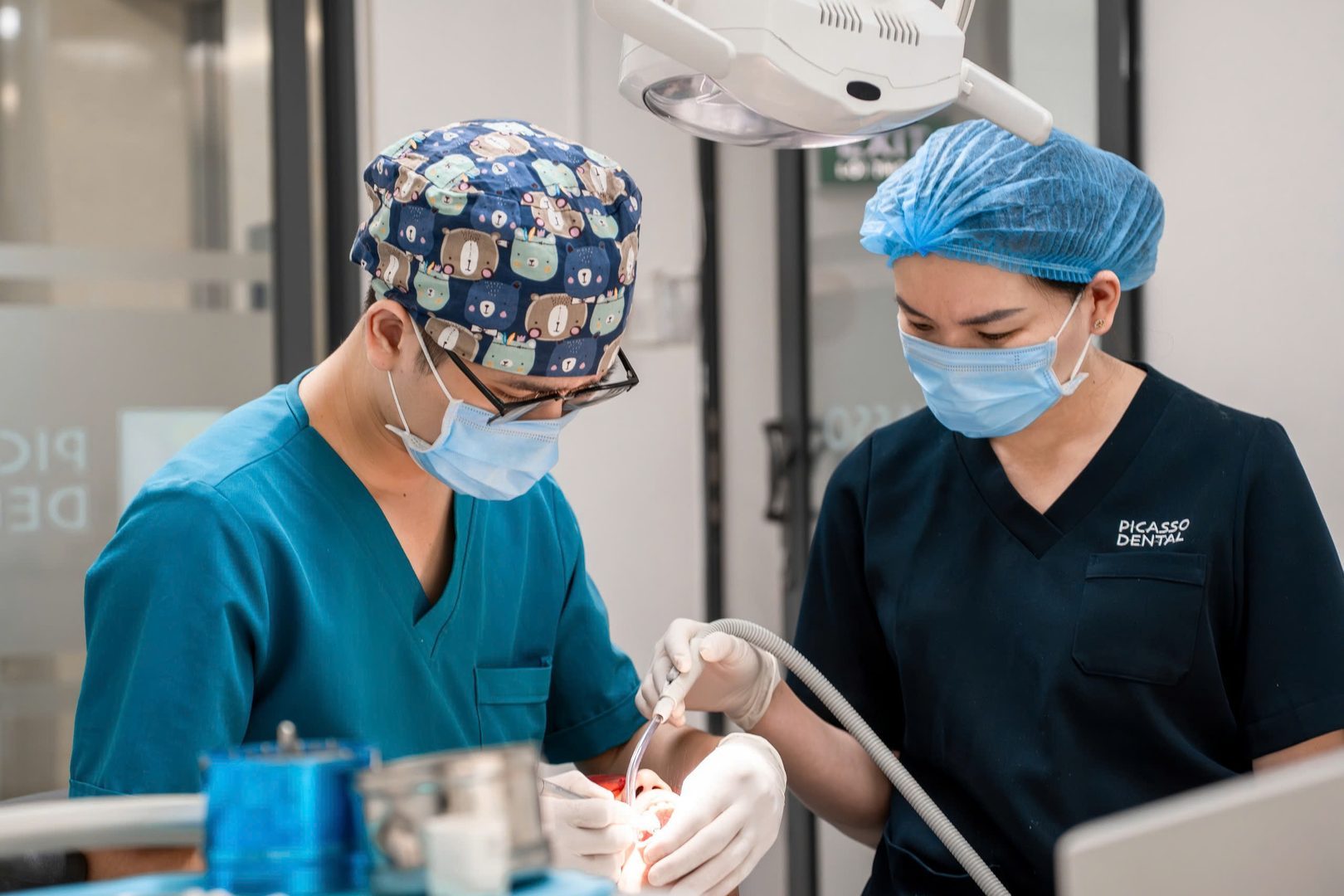
Human jaws have become smaller over thousands of years of evolution while the number of teeth has stayed the same. Wisdom teeth arrived late in evolutionary history and often simply have nowhere to go. When a tooth cannot erupt fully, it becomes impacted inside the jawbone or just beneath the gum surface.
Partial eruption creates a gum flap called an operculum that traps food and bacteria. Even diligent brushing cannot reach beneath that flap, so infection (pericoronitis) becomes a recurring problem. Horizontally or mesially impacted teeth press directly against the roots of the second molars, causing bone loss and sometimes permanent damage. Deeply impacted teeth occasionally develop cysts that silently erode jawbone over months or years, visible only on X-ray.
Wisdom teeth that can stay
- Fully erupted and properly aligned
- Easy to clean with normal brushing
- No pressure on adjacent teeth
- No cysts or pathology on X-ray
Wisdom teeth that need removal
- Partially or fully impacted
- Causing recurring gum infection
- Pushing or damaging the second molar
- Associated with cysts on X-ray
Signs your wisdom teeth need to come out
Some patients come to us with obvious symptoms. Others are surprised when a routine X-ray reveals a problem they have not yet felt. Here are the signs I look for.
- Pain or tenderness at the back of the mouth, especially when chewing or opening wide
- Swelling and redness in the gum tissue around a partially erupted tooth
- Recurring infections or a persistent bad taste despite good hygiene
- Jaw pain or stiffness, particularly in the morning
- Other teeth shifting or becoming crowded without clear cause
- Cysts, lesions, or unusual darkening around tooth roots on X-ray
Even without any symptoms, impacted wisdom teeth detected on X-ray are often best removed before problems develop. Extraction in your late teens or early twenties is technically simpler because the roots are shorter and the surrounding bone is more flexible. Waiting until symptoms are severe makes the procedure and recovery harder.
What happens during extraction
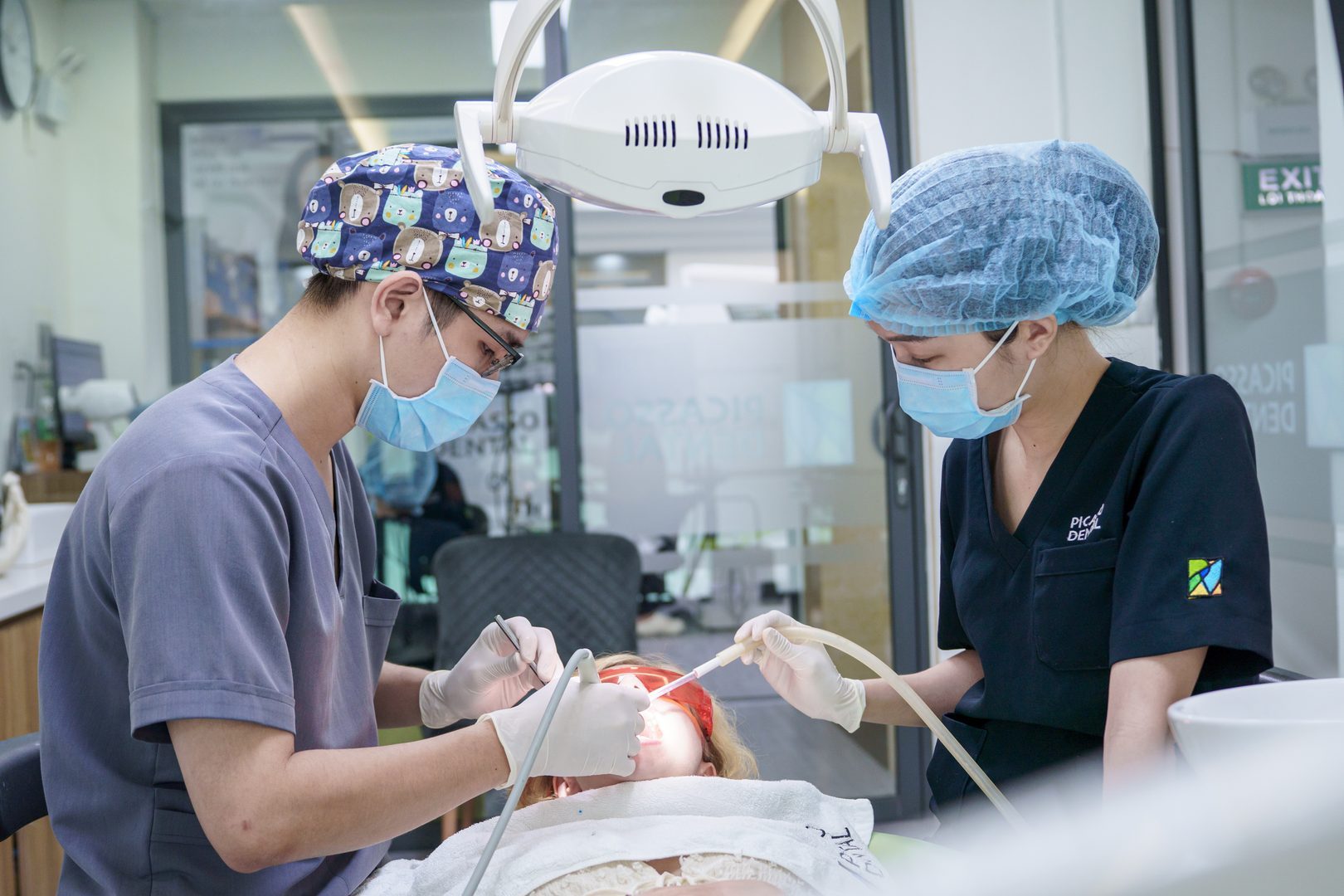
Wisdom tooth extraction is an outpatient procedure. You arrive, we numb the area, and you go home the same day. Here is the sequence.
Anaesthetic and sedation
We start with local anaesthetic injected into the gum and jaw. Within a few minutes the entire area is numb. For anxious patients or cases involving multiple simultaneous extractions, we offer intravenous sedation so you remain comfortable and relaxed throughout. General anaesthesia is rarely necessary for routine cases.
Accessing the tooth
For fully impacted teeth, we make a small incision in the gum to expose the tooth and the overlying bone. A small amount of bone is removed if it is blocking access to the root. For partially erupted teeth, the incision is minimal or sometimes unnecessary.
Removing the tooth
We loosen the tooth from the surrounding ligament with a specialized instrument, then lift it free. If the tooth is large or its roots are curved, we divide it into two or three pieces first. This makes removal easier and reduces pressure on surrounding structures. You will feel pressure and hear sounds during this stage, but there should be no sharp pain.
Closing the socket
After the tooth is out, we clean the socket thoroughly, smooth any irregular bone edges, place dissolving stitches if needed, and pack the area with gauze. The whole process typically takes 20 to 40 minutes per tooth.
"I had extensive dental work done here by Dr Adrian which included removal of 3 wisdom teeth, a crown, teeth cleaning and 3 fillings. From the start I could not have been happier with the service. Everything was clearly explained including time frame, price and what to expect at every appointment." — Ruth, Hanoi Old Quarter
Book a wisdom tooth consultation
Recovery: what to expect day by day
Recovery from wisdom tooth extraction follows a predictable pattern. Knowing what is normal helps you stay calm and care for yourself well.
Day 1: the first 24 hours
Bleeding, swelling, and throbbing are all normal on the day of surgery. Keep biting firmly on the gauze pad placed by your dentist for the first hour. Do not rinse, spit forcefully, or use a straw, as these actions can dislodge the blood clot that forms the foundation of healing. Apply an ice pack to the outside of your cheek for 20 minutes on and 20 minutes off throughout the day. Take prescribed pain medication before the anaesthetic wears off completely, rather than waiting for pain to peak.
Days 2 to 3: swelling peaks
Swelling and bruising typically peak on the second or third day. Your face may look noticeably puffy. This is entirely normal. After the first 24 hours, switch from ice packs to warm compresses to encourage circulation and reduce swelling faster. Continue soft foods and pain medication as needed. Rinse gently with warm salt water after every meal.
Days 4 to 7: steady improvement
Most patients feel significantly better by day four. Pain should be decreasing rather than increasing. If you notice pain worsening around day three or four, contact us, as this can signal dry socket. By the end of the first week, most people return to normal activities. Avoid vigorous exercise until then, as elevated blood pressure can reopen the extraction site.

Complications to watch for
Dry socket
Dry socket (alveolar osteitis) is the most common complication, affecting roughly 2 to 5 percent of simple extractions and up to 30 percent of lower impacted wisdom teeth. It occurs when the blood clot is dislodged or dissolves before the socket has healed, leaving bare bone exposed to air and food. The main symptom is intense, throbbing pain starting two to four days after extraction, often radiating to the ear or jaw. Treatment involves placing a medicated dressing in the socket to relieve pain while the tissue heals beneath it. Prevent it by avoiding straws, smoking, and spitting for the first week.
Infection
Signs of infection include increasing (not decreasing) swelling after day three, fever above 38C, discharge of pus from the socket, and worsening pain despite medication. Take prescribed antibiotics exactly as directed for their full course. Contact us immediately if you notice any of these signs.
Nerve effects
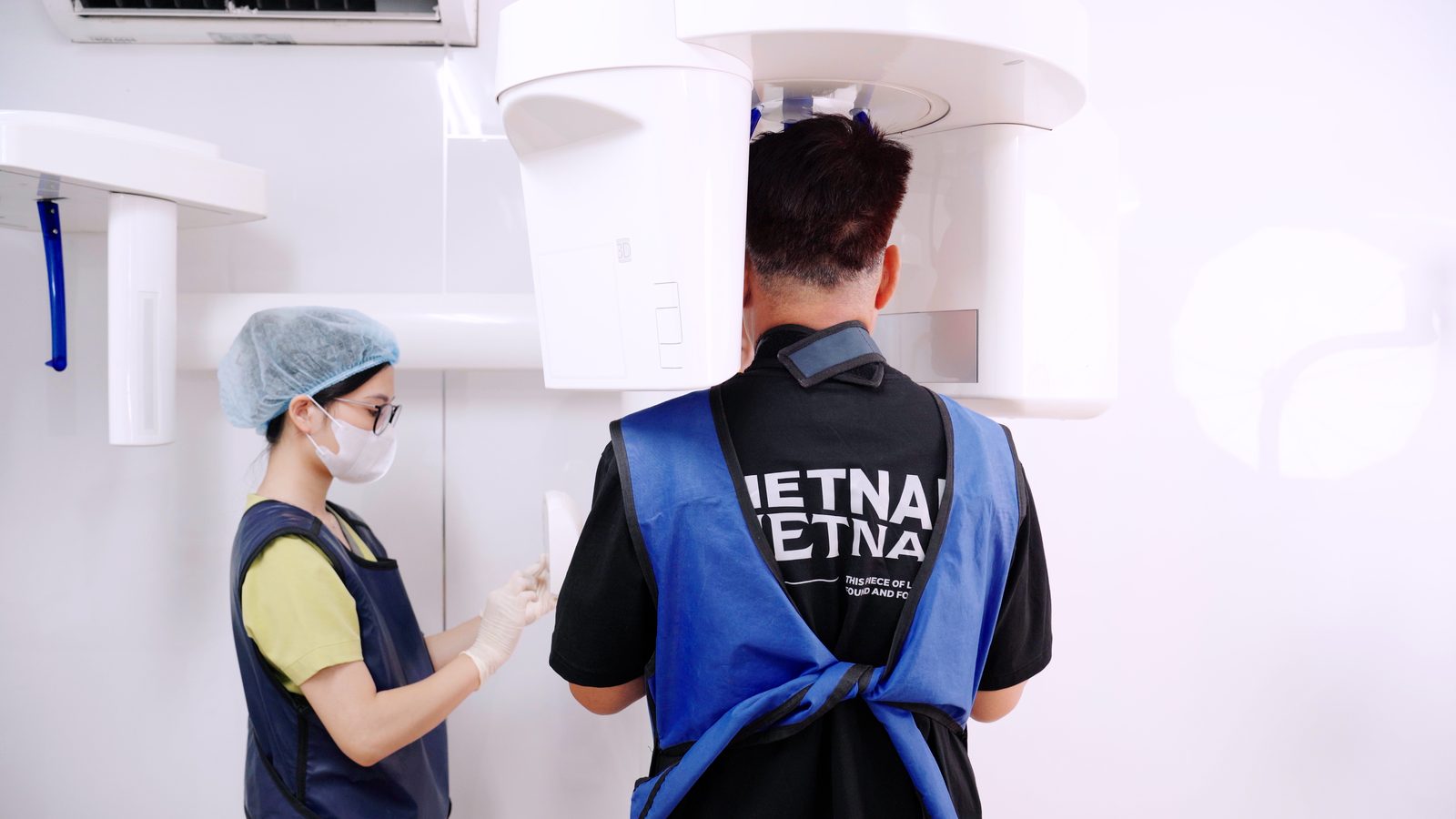
Lower wisdom teeth sit close to the inferior alveolar nerve and lingual nerve. Temporary altered sensation (numbness, tingling) in the lip, tongue, or chin occurs in a small number of cases and almost always resolves within weeks to months. Permanent nerve damage is rare. We review your X-rays and, where indicated, use cone-beam CT scanning before surgery to map root proximity to nerves and minimise risk.
Recovery care checklist
- Bite firmly on gauze for the first hour; replace if saturated but do not remove prematurely
- Avoid straws, spitting, and smoking for a full week to protect the clot
- Ice packs (20 on, 20 off) for the first 24 hours, then switch to warm compresses
- Soft diet for 3 to 5 days: yogurt, mashed potato, scrambled eggs, smooth soups
- Rinse gently with warm salt water starting 24 hours after surgery, after every meal
- Take all prescribed antibiotics for the full course, even if you feel fine
Frequently Asked Questions
Do all wisdom teeth need to be removed?
No. Wisdom teeth that erupt fully, align properly, and can be kept clean with normal brushing do not need removal. Extraction is recommended when teeth are impacted, causing recurring infection, damaging adjacent teeth, or when X-rays reveal cysts or concerning pathology around the roots.
At what age should wisdom teeth be removed?
Most extractions happen between ages 17 and 25, when roots are not yet fully formed and the surrounding bone is more pliable, making removal technically easier and recovery faster. That said, wisdom teeth can be safely removed at any age when symptoms or risks arise. We do not recommend waiting simply because there are no symptoms if X-rays show a high-risk position.
Is wisdom tooth extraction painful?
The procedure itself is not painful because the area is fully numbed with local anaesthetic before we begin. You will feel pressure and movement, but no sharp pain. Post-operative discomfort is managed with prescribed pain medication and peaks on day one or two before improving steadily. The vast majority of patients describe the experience as far less uncomfortable than they anticipated.
How long does recovery take?
Most patients feel significantly better after three days and return to normal activities within a week. Complete soft-tissue closure takes two to four weeks, while the bone socket fills in fully over several months. Healing is faster in younger patients and for simpler erupted extractions compared with deeply impacted cases.
What is dry socket and how do I avoid it?
Dry socket occurs when the blood clot that forms in the extraction socket is dislodged or dissolves prematurely, exposing the underlying bone. It causes intense, throbbing pain beginning two to four days after surgery and often radiates to the ear. It is almost entirely preventable: avoid straws, smoking, and forceful rinsing or spitting for the first week. If you suspect dry socket, contact us promptly as it is easily treated with a medicated dressing.
Can I eat normally after wisdom tooth removal?
Stick to soft foods for the first three to five days: yogurt, mashed potatoes, scrambled eggs, smooth soups, and smoothies drunk without a straw. Avoid hot, spicy, crunchy, or sticky foods until the site is well healed. You can gradually reintroduce more solid foods as comfort allows, usually from day five onward. Staying well nourished supports healing, so do not skip meals entirely.
When should I contact Picasso Dental after extraction?
Contact us immediately if you experience: fever above 38C; bleeding that does not slow after an hour of firm, constant gauze pressure; severe pain starting two to four days after surgery (possible dry socket); increasing swelling after day three rather than decreasing; numbness that persists beyond a few days; or pus discharge from the socket. Our team is reachable through the contact page and we treat post-operative concerns as urgent.
If your wisdom teeth are causing pain, recurring infection, or concern on an X-ray, the right time to act is before the problem grows. Our surgical teams across Hanoi, Da Nang, Ho Chi Minh City, and Da Lat are ready to assess your situation and walk you through every step.
Book a consultation at Picasso Dental