Porcelain Veneers
What Foods Should I Avoid
With Veneers?
Most foods are completely fine with porcelain veneers. The key is how you eat certain foods, not whether you can eat them at all. Here is the complete guide from the dental chair.

Key Takeaways
- The biggest risk is concentrated biting force on hard foods with front veneered teeth, not staining. Cut hard foods into pieces and use back teeth.
- Porcelain itself does not stain. Coffee, tea, and wine will not discolour veneers. Marginal cement staining is a minor, manageable issue.
- Night grinding causes more veneer damage than any food choice. A night guard is the most important protective measure.
- The diet modification is small: cutting rather than biting hard foods, and not using front teeth as tools. Most patients adapt within two weeks.
The principle: it is how you eat, not what you eat
This is one of the most practical questions I get from patients right after placing their veneers. My answer usually surprises them: you do not need to eliminate any food category. The adjustment is mechanical, not dietary. The question is not whether to eat hard foods, but how to eat them.
The front teeth carry veneers. The back molars and premolars do not (in most cases). The back teeth are designed for crushing and grinding force. The front teeth are designed for biting and tearing. The simple rule: redirect hard foods to back teeth. Cut rather than bite. This one adjustment protects veneers from the only food-related risk that actually matters.

Foods that need the cut-first modification
Hard fruits and vegetables: Raw carrots, apples, and celery eaten whole require biting into them with the front teeth, which concentrates force on the veneer edges. The solution: cut them into bite-sized pieces and chew with back teeth. You can eat all of these foods. The modification takes ten seconds with a knife.
Crusty bread: Tearing off a piece of baguette with your front teeth puts stress on the veneer bond at the incisal edge. Cutting bread into portions eliminates the tearing motion entirely.
Corn on the cob: The natural eating motion involves biting and pulling with front teeth. Either cut the kernels off the cob before eating, or accept that eating corn traditionally is one of the few genuine inconveniences that comes with veneers.
Tough meats: Beef jerky, dried meats, and similarly resistant items that require tearing and pulling apply sideways force to veneer bonds. Cut these into small pieces and use back teeth. Cooked meat of all varieties cut into pieces is completely safe.
Ice: This is the one item worth treating categorically. Do not chew ice under any circumstances. The hardness combined with cold temperature makes porcelain brittle and the impact force often exceeds what the material can handle. Drink cold beverages through a straw if you are concerned about contact.

Staining: what is actually at risk
Porcelain is highly stain-resistant. The veneer surface will not absorb coffee, tea, red wine, or turmeric the way natural enamel does. Veneers will not yellow or discolour over time from normal dietary staining agents.
The only staining concern is the cement at the veneer margin, the thin line where the veneer edge meets the natural tooth. This cement can absorb stain slowly over many years of heavy consumption. For most patients with normal coffee or tea habits, marginal staining is either unnoticeable or minimal and is polished away at 6-monthly recall appointments.
Practical steps if you drink significant amounts of staining beverages: rinse with water after coffee or tea, drink through a straw when practical to reduce contact with veneer margins, and attend 6-monthly recalls consistently.
What is actually more dangerous than food
Habits cause more veneer damage than dietary choices. In my clinical experience at Picasso Dental, the cases where veneers failed prematurely were rarely due to food. They were due to habits.
- Night grinding (bruxism) By far the most common cause of premature veneer failure. Grinding generates sustained force across the chewing surfaces during sleep at levels far exceeding normal eating force. A custom-fitted night guard is the single most important protective measure for any veneer patient who grinds. If you grind, the night guard is not optional; it is part of the treatment plan.
- Using teeth as tools Opening packaging, removing tags from clothing, holding items while your hands are full, uncapping pens. These activities create lateral and torsional forces that veneers were not designed to handle. The forces are unpredictable and often applied directly to the incisal edge where veneer fracture begins.
- Nail biting Repetitive nail biting creates irregular micro-forces at the veneer-tooth junction over thousands of repetitions. This fatigues the bond adhesive. Nail biting is one of the more reliable routes to debonding a veneer that would otherwise last 15 years.
- Biting on hard candy Sucking hard candy until it dissolves is completely safe. Biting down hard on a piece of hard candy or a lollipop applies a single high-impact force that risks chipping porcelain. The distinction matters: it is the biting action, not the candy.
What you can eat freely
The following require no modification and pose no risk to properly placed porcelain veneers: all cooked vegetables, pasta, rice, noodles, all soft breads (when cut rather than torn with front teeth), soft fruits (bananas, berries, melon, cooked fruit), all dairy products, eggs, all cooked fish, all poultry and red meat (cut into pieces), soft cheese, yoghurt, soup, and soft desserts.
This is the vast majority of a normal diet. The modification from veneer placement is small: cutting hard items, not biting into hard foods with front teeth, and eliminating ice chewing. Most patients report these adjustments become entirely automatic within two weeks and cease to feel like a restriction at all.
For the full picture on veneer care and what to expect over the full lifespan, see the porcelain veneers service page. For questions about existing veneers, book a recall appointment at any Picasso branch.
Considering veneers or have questions about existing ones? Our team can assess your specific case and give you tailored guidance at consultation.
Book a consultation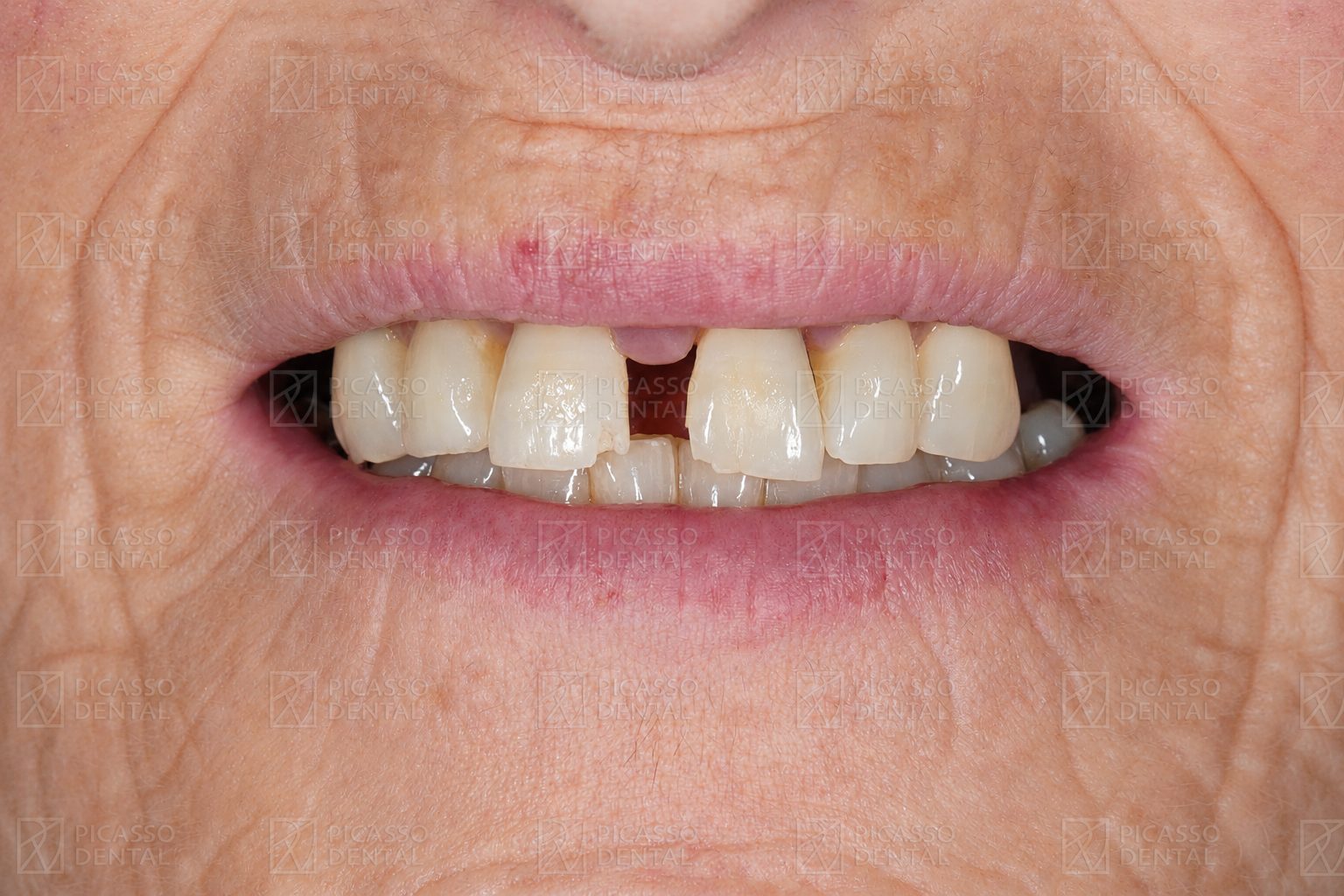 Before
 After
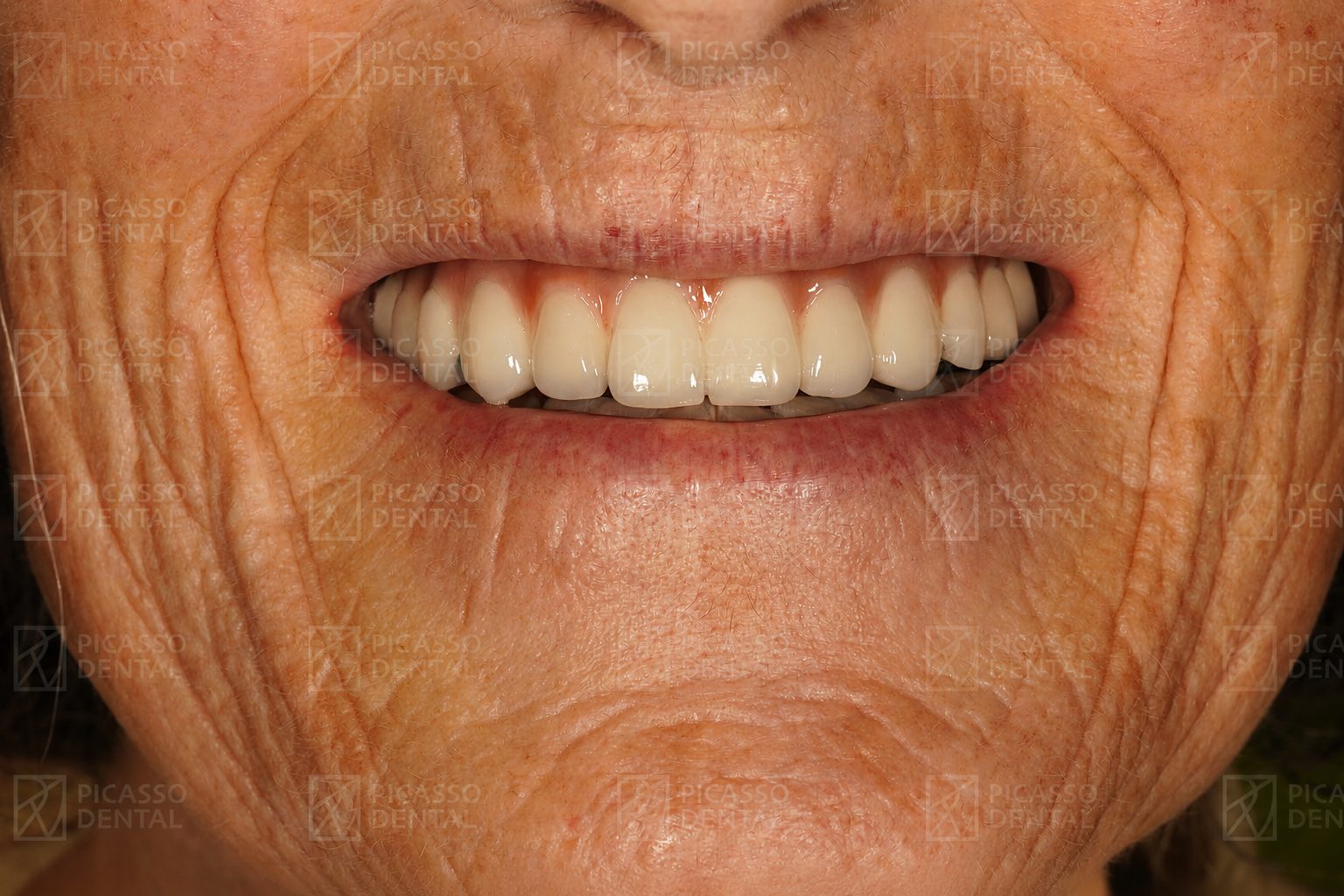
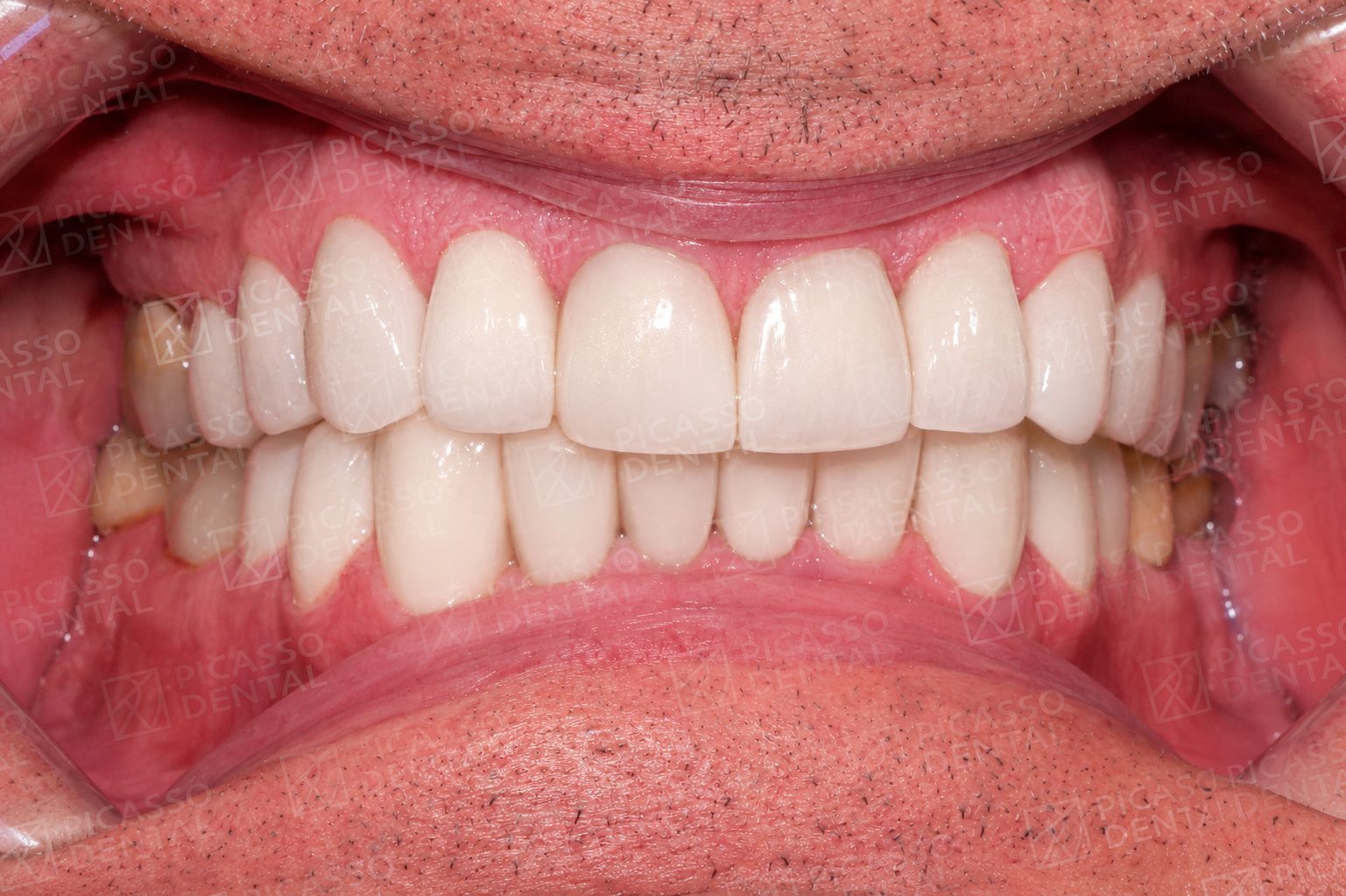
After8 Emax veneers, 3 years post-placement. Patient drinks coffee daily and reports no colour change on the veneers.
 Before
 After
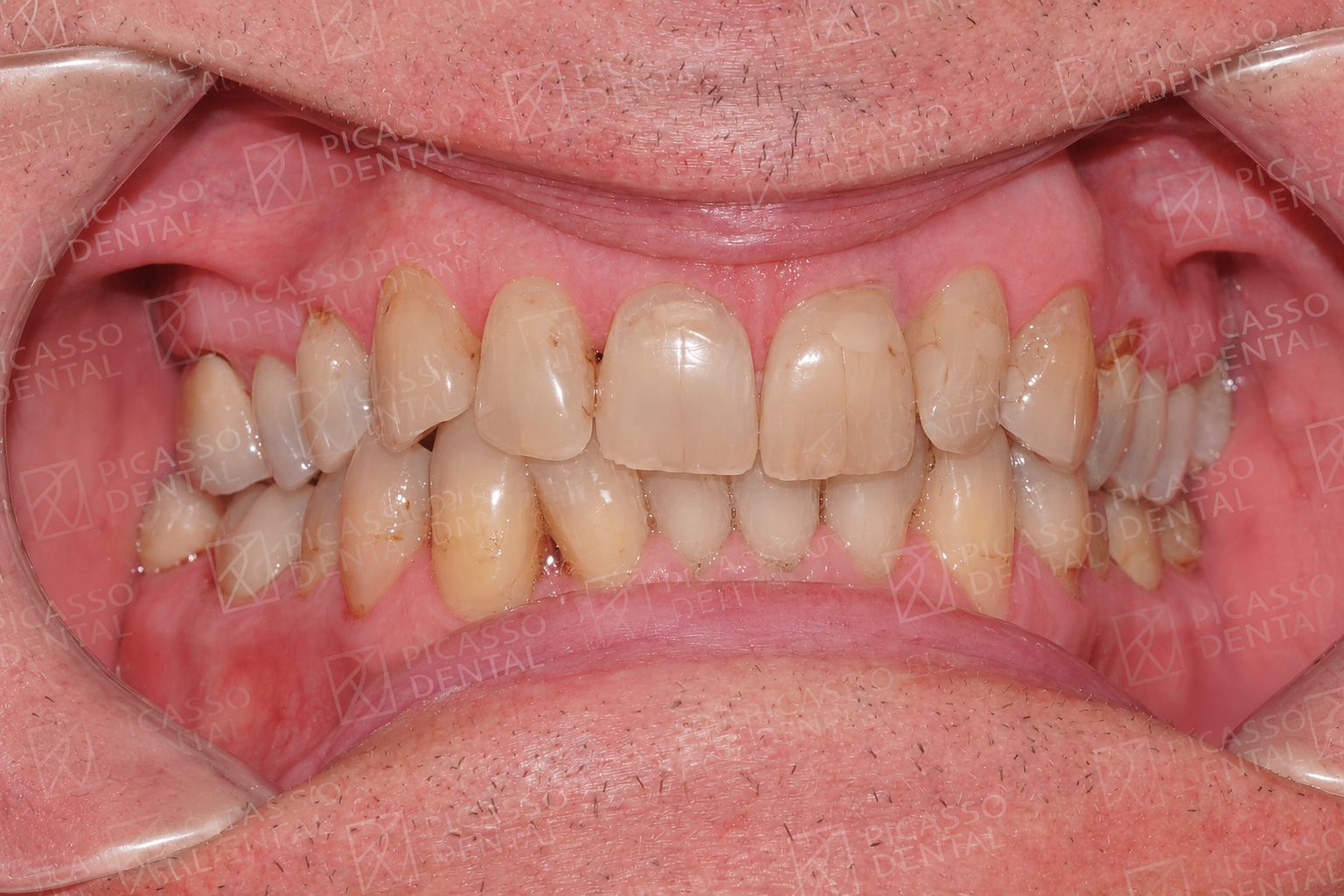
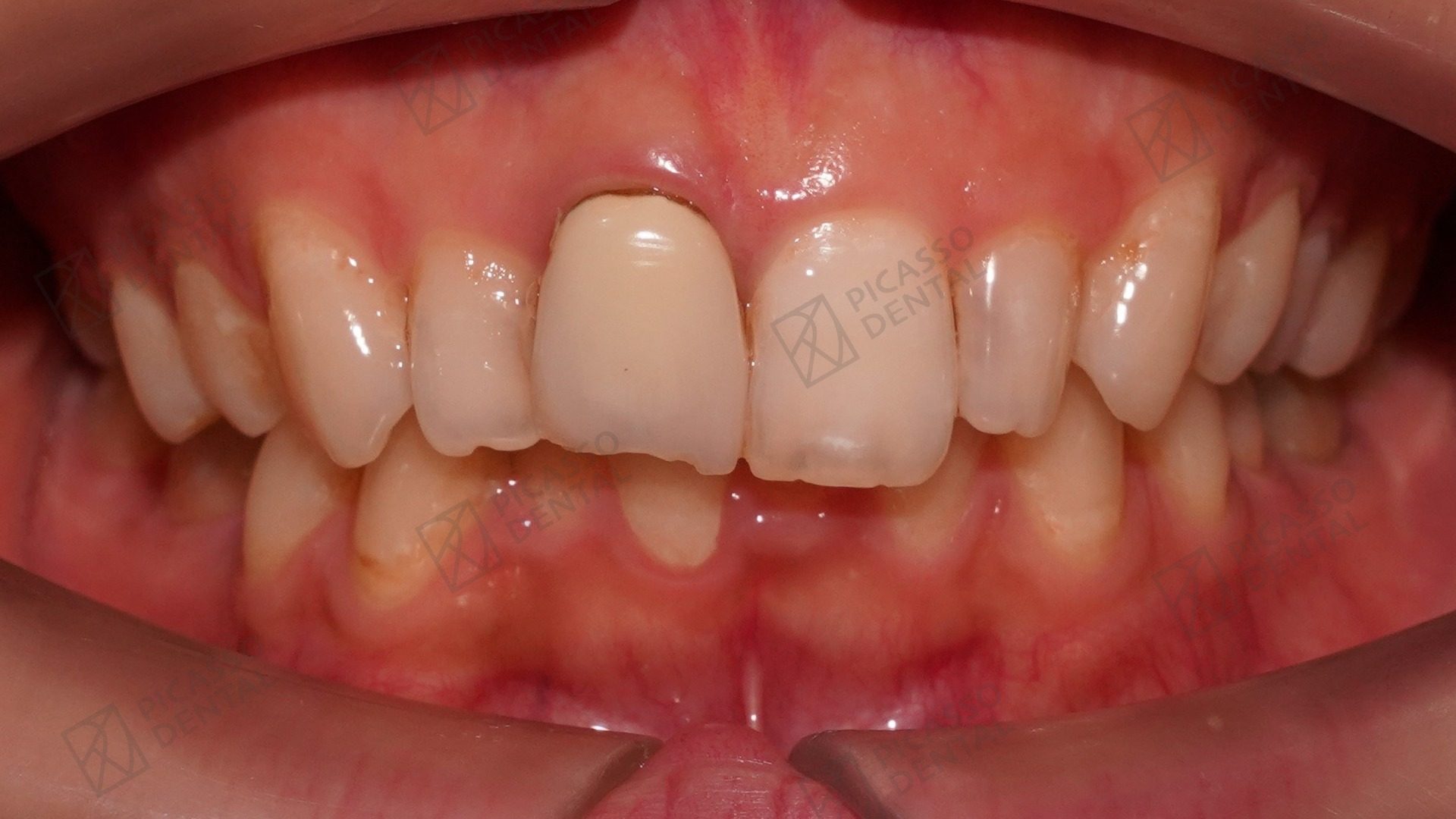
After6 veneers with night guard provided at time of placement. Patient grinds; veneers remain intact 2 years later with night guard compliance.
 Before
 After
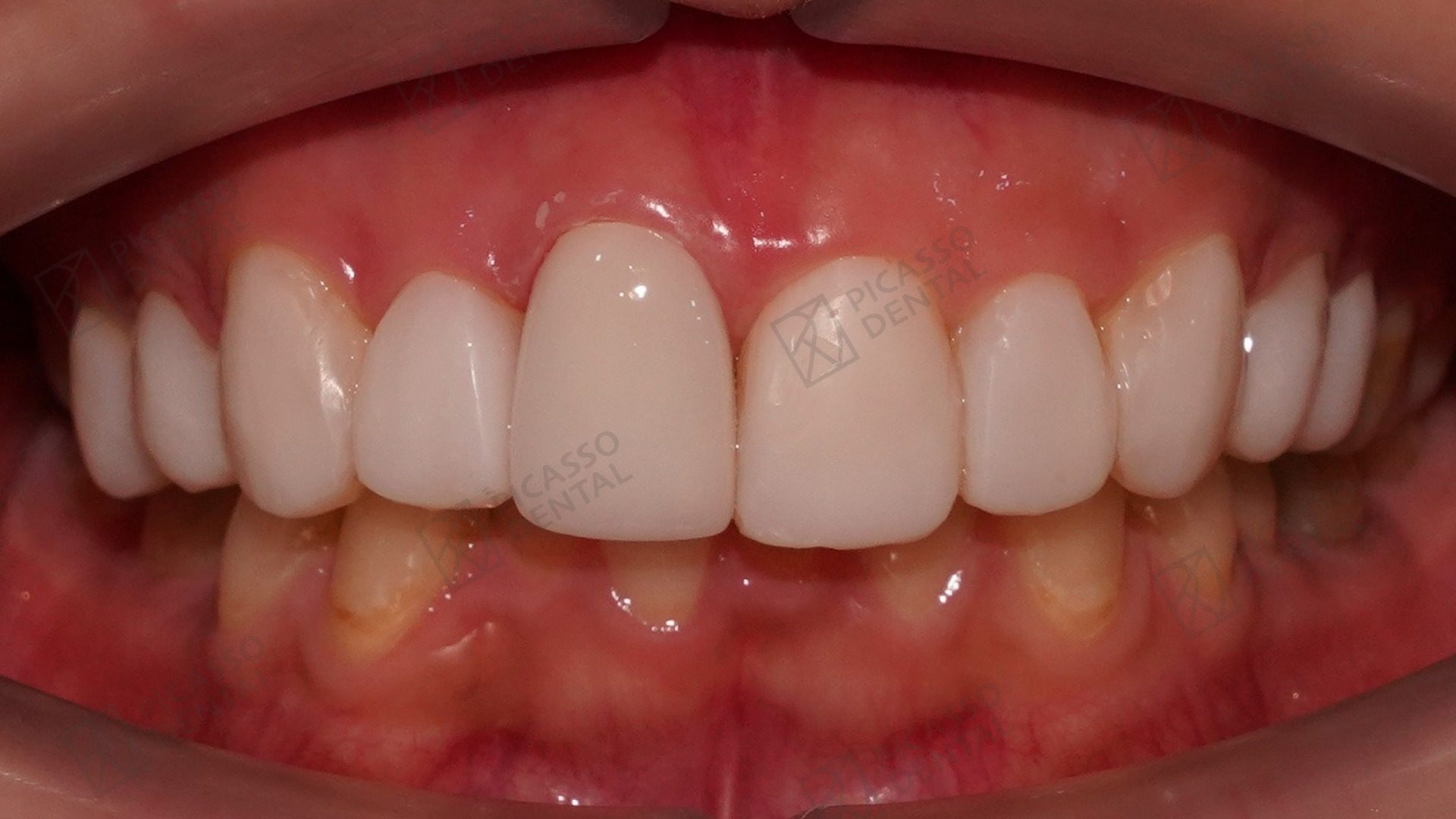
After10 upper and lower veneers. Patient attends 6-monthly recall; marginal polishing at each appointment maintains clean margins.
Frequently Asked Questions
What foods should I avoid with porcelain veneers?
Avoid biting directly into hard foods (ice, hard candy, raw carrots, whole apples, crusty bread) with veneered front teeth. The problem is not the food itself but the concentrated force of biting with front teeth. Cut hard foods into pieces and use back teeth. Avoid chewing ice entirely. Sticky foods (caramel, toffee) should be eaten with back teeth. Tearing or ripping motions with front teeth (beef jerky, corn on the cob) stress veneer bonds and should be avoided.
Do veneers stain from coffee or wine?
The porcelain veneer itself is highly stain-resistant and does not discolour from coffee, tea, or red wine. The dental cement at the veneer margin can stain over years of heavy consumption. Rinsing with water after drinking coffee or tea and maintaining 6-monthly polishing appointments minimises marginal staining. Porcelain veneers will not yellow the way natural teeth do.
Can I drink coffee with veneers?
Yes. You do not need to eliminate coffee. The veneer surface itself resists coffee staining. The only concern is marginal staining at the cement line over many years of heavy consumption. Practical steps: rinse with water immediately after coffee, and attend 6-monthly recalls where margins are polished.
How soon after veneer placement can I eat normally?
After the permanent veneers are bonded, most patients can eat normally within a few hours once the cement has fully set. For the first 24 hours, it is sensible to avoid anything extremely hard or sticky while you are adjusting to the new feel. By day 2 post-bonding, normal eating with the cut-first modifications is appropriate.
What is the biggest threat to veneer longevity?
Night grinding (bruxism) is by far the most common cause of premature veneer failure, more damaging than any food choice. A custom-fitted night guard worn during sleep distributes grinding force across a protective plastic surface and is the single most important preventive measure for veneer patients who grind.
Can I eat meat and hard cheeses with veneers?
Yes. Cooked meat cut into bite-sized pieces is completely safe. Hard cheeses are also fine in normal portions. The modification needed is cutting meat rather than tearing it with front teeth, and biting cheese rather than ripping it from a block with front teeth. These are minor adjustments that become habitual quickly.
Do I need to change my diet significantly after getting veneers?
No. The majority of a normal diet requires no modification. Cooked vegetables, pasta, rice, bread, soft fruits, dairy products, eggs, fish, and most prepared meats are all completely safe. What changes is how you eat certain specific foods: cutting rather than biting into hard items, and using back teeth for anything requiring significant force. Most patients report these adjustments become automatic within two weeks.
Patient Video Testimonial

Start Here
Start with a brief.
Questions about veneer care or considering veneers for the first time? Book a consultation and we will walk you through what to expect before and after placement.