General Dentistry Guide
What causes tooth neck wear?
Most patients do not notice cervical abrasion until sensitivity starts or a notch becomes visible. By then, enamel that cannot grow back has already been lost. Here is what causes it and how to stop it.

Key Takeaways
- Aggressive brushing is the most common cause: too much pressure, the wrong brush, or horizontal scrubbing creates wedge-shaped notches at the gumline.
- Acid erosion softens enamel before brushing, amplifying the damage significantly. Wait 30 to 60 minutes after acidic food or drink before you brush.
- Teeth grinding (bruxism) creates flexing stress at the tooth neck that fractures enamel away. A custom night guard stops this mechanism.
- Gum recession exposes the softer root surface, which wears much faster than enamel under any brushing force.
- Composite resin fillings restore notched lesions in a single appointment and protect the exposed dentine from further damage.
- Cervical restorations in Vietnam cost a fraction of equivalent treatment in Australia, the UK, or the United States.
What is tooth neck wear?
I am Dr. Emily Nguyen, Founding Clinical Director of Picasso Dental Clinic. Since 2013, I have treated more than 70,000 patients from 65 nationalities across six branches in Hanoi, Da Nang, Ho Chi Minh City, and Da Lat. Tooth neck wear, known clinically as cervical abrasion or abfraction, is one of the most consistently underdiagnosed conditions I see in new patients, especially those arriving from countries where dental visits are infrequent.
The tooth neck is the narrow zone where the crown meets the root, right at the gumline. This area is anatomically vulnerable: the enamel is thinnest here, tapering to almost nothing at the cemento-enamel junction. Below the gumline, the root surface is covered by cementum, a tissue far softer than enamel. Once gums recede even slightly, this softer surface is directly exposed to brushing forces and acid attack.
The damage appears as a notch or groove at the gumline, often yellowish because the underlying dentine is visible. Patients describe sensitivity to cold water, cold air, sweet foods, or the touch of a toothbrush on that spot. In severe cases, the notch can reach the pulp and require root canal treatment to save the tooth.
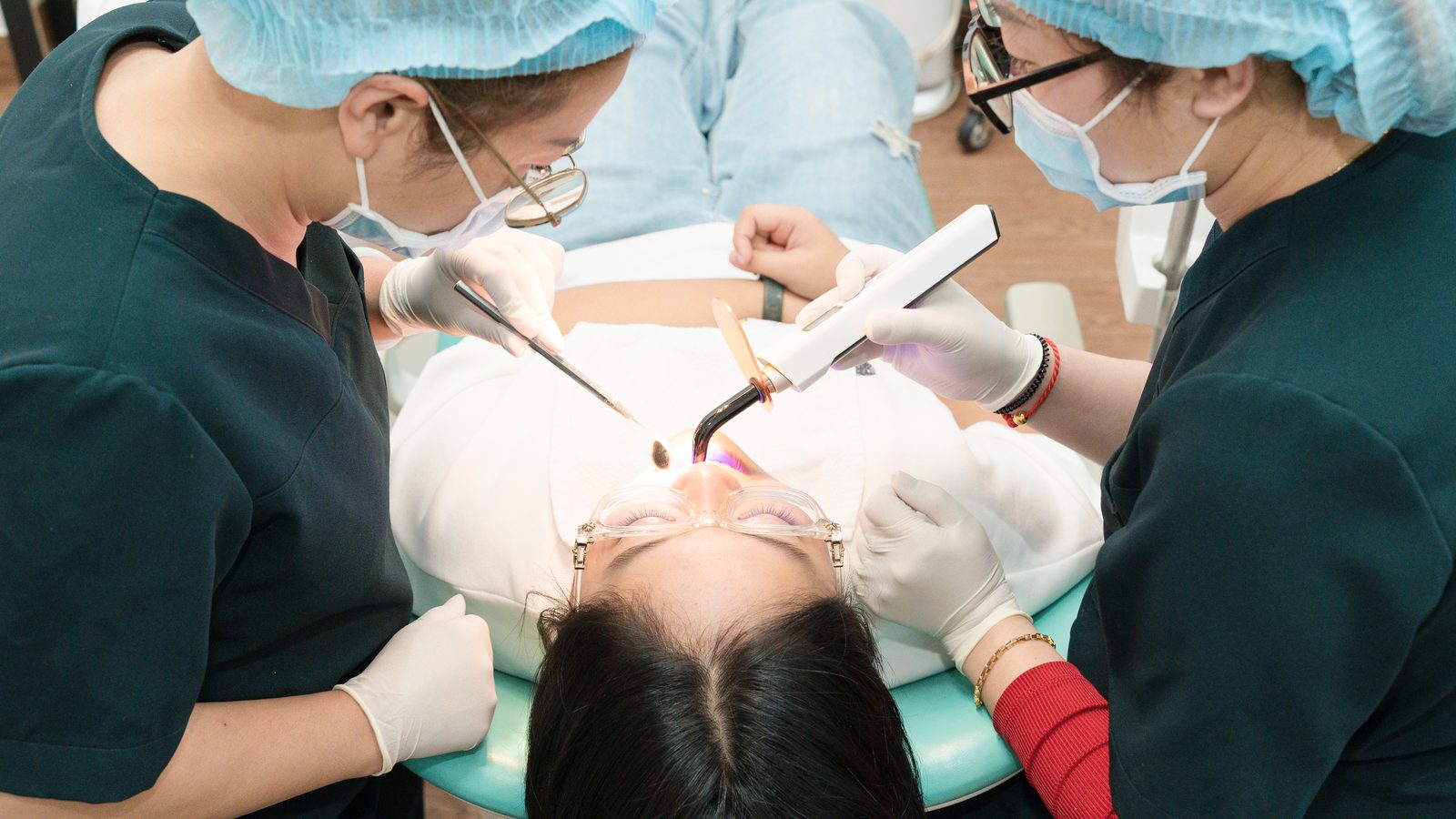
The four causes of tooth neck wear
1. Aggressive brushing
Aggressive brushing is by far the most common cause I see across all six branches. Many patients believe vigorous scrubbing equals cleaner teeth. The opposite is true at the gumline. Plaque is soft and requires only light mechanical disruption to remove. What firm horizontal scrubbing does is abrade the very enamel and cementum you are trying to protect.
The pattern of damage from aggressive brushing is distinctive: wedge-shaped notches on the buccal (cheek-facing) surfaces of teeth, most pronounced on the canines and premolars on the dominant-hand side. Right-handed brushers typically show more wear on the upper-left and lower-left teeth, where the brush hand crosses with maximum leverage.
2. Acid erosion as a contributing factor
Acid erosion does not cause tooth neck wear on its own, but it dramatically amplifies brushing damage. Acidic foods and drinks lower the pH of the oral environment, causing temporary softening of enamel through a process called demineralisation. In this softened state, the enamel at the gumline is far more susceptible to mechanical removal by bristles.
Common sources of acid exposure include citrus fruits, fizzy drinks, sparkling water, wine, vinegar, and even apparently healthy habits like lemon water or kombucha in the morning. Patients who start the day with an acidic drink and then brush immediately are compounding the erosive and abrasive damage in a single routine. The 30-minute rule changes outcomes measurably: waiting 30 to 60 minutes after acid exposure allows saliva to remineralise the softened enamel before brushing contacts it.
3. Teeth grinding and clenching (bruxism)
Bruxism creates a different mechanical pathway to tooth neck wear. When teeth grind or clench, the jaw generates enormous forces relative to the size of individual teeth. These forces produce lateral bending stress at the tooth neck, the narrowest and therefore most mechanically stressed part of the tooth. This repeated flexing causes microscopic fatigue fractures in the enamel at the gumline, a lesion type called abfraction.
Once enamel is fractured at the microscopic level, normal brushing forces are sufficient to remove the weakened fragments progressively. Patients with bruxism often develop cervical lesions on multiple teeth simultaneously and symmetrically, which distinguishes the pattern from brushing-only damage. Morning jaw soreness, flattened or chipped incisal edges, and sensitivity on multiple non-adjacent teeth are signs that grinding is contributing to the wear you are seeing.
A custom-fitted occlusal splint (night guard) worn during sleep interrupts the grinding forces before they reach the tooth neck. Combined with addressing the brushing technique, this stops the combined mechanism in most patients. Generic over-the-counter mouthguards do not provide the same precision of fit and do not fully interrupt the flexing stress pattern.
"Emily and the team were amazing and so patient with me. Not once did I feel in pain or discomfort. By far one of the best dentists I have ever been to."
Mina Scott, Hanoi Old Quarter, Google review
4. Gum recession exposing the root surface
Gum recession changes the vulnerability of the tooth neck fundamentally. Above the gumline, the root is protected by enamel. Once gums recede, the cementum-covered root surface is directly exposed. Cementum is softer than enamel by a significant margin: it wears under normal brushing forces at a rate that enamel does not. Even a patient with a gentle technique will develop cervical grooves on exposed root surfaces over time if the recession is not addressed.
Gum recession itself has multiple causes: periodontal disease, aggressive brushing, genetic factors, and the natural ageing process. This creates a compounding effect. Aggressive brushing causes both the cervical abrasion and the gum recession that makes the area more vulnerable to further abrasion. Treating one without addressing the other produces incomplete results.

How to stop tooth neck wear progressing
- Switch to a soft-bristled brush immediately Medium and hard bristles cause direct enamel loss at the gumline regardless of pressure. Soft or extra-soft bristles, used with correct technique, clean as effectively and do not abrade. If your current brush is medium or hard, replace it before the next brushing session.
- Adopt the modified Bass technique Hold the brush at 45 degrees to the tooth surface so the bristle tips sit at the gum margin. Use small circular or vibrating strokes. Do not scrub horizontally. Move slowly through all four quadrants. The goal is two minutes of light contact, not friction.
- Wait before brushing after acid exposure After citrus, fizzy drinks, wine, or any acidic food or beverage, wait a minimum of 30 minutes before brushing. Rinse with plain water immediately after acid exposure to neutralise the oral environment and accelerate remineralisation.
- Wear a night guard if you grind If you wake with jaw soreness, notice flattened tooth surfaces, or have been told by a partner that you grind at night, request a custom occlusal splint. A properly fitted night guard eliminates the abfraction mechanism and protects all cervical surfaces simultaneously.
- Use an electric brush with a pressure sensor Oscillating-rotating and sonic electric toothbrushes with pressure sensors stop or alert you when brushing force exceeds a safe threshold. For patients who have developed excessive pressure as a habit, this external feedback is far more effective than consciously trying to reduce pressure.
- Address gum recession at the source If recession is causing rapid cementum wear, the gum position needs to be stabilised, not just the brushing technique corrected. Periodontal assessment determines whether recession is active and what intervention is appropriate.
Noticed a notch or sensitivity at the gumline? Our team assesses cervical lesions same-day and provides a written treatment estimate before any procedure begins.
Book a dental assessment →Warning signs versus safe habits
Protective habits
- Soft or extra-soft bristled brush
- Light pressure, circular strokes
- Wait 30+ min after acidic food before brushing
- Custom night guard if grinding is present
- Electric brush with pressure sensor
- Regular professional check-ups every 6 months
Damaging habits
- Medium or hard bristled brush
- Horizontal scrubbing with heavy pressure
- Brushing immediately after lemon water or juice
- No night guard despite known grinding
- Ignoring early sensitivity or visible notching
- Using whitening toothpastes on exposed root surfaces
Treatment: what happens when wear has already occurred
Once a cervical lesion has formed, prevention alone cannot restore the lost structure. The exposed dentine must be covered to reduce sensitivity, prevent further wear, and protect the pulp from chemical irritation and bacterial ingress.
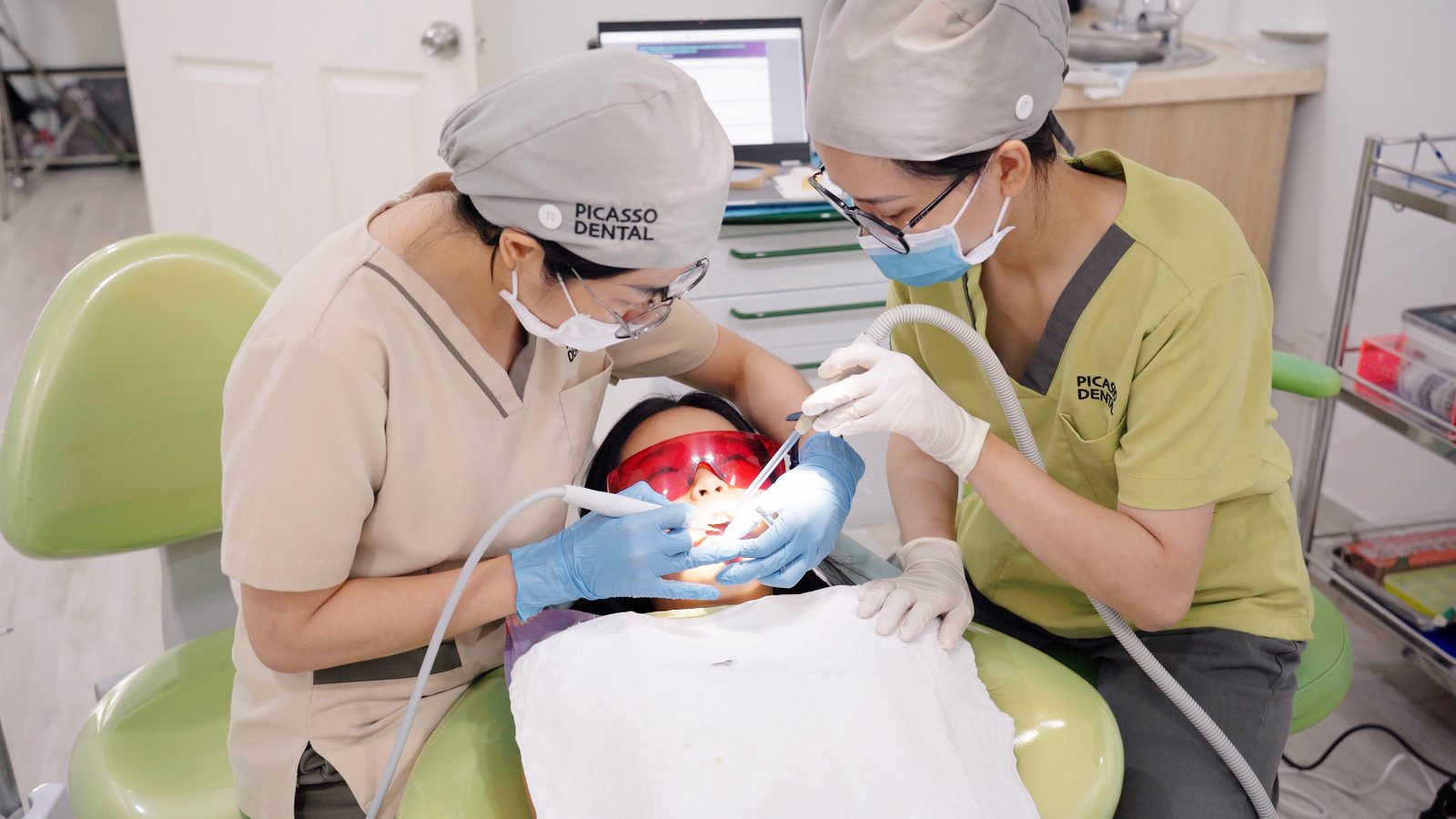
The standard treatment is a tooth-coloured composite resin restoration bonded directly to the notched area. The procedure does not require drilling in most cases because the lesion shape provides adequate mechanical retention. Local anaesthesia is often unnecessary for shallow lesions, though I offer it for any patient who experiences sensitivity during the procedure. The restoration is shaped to match the tooth anatomy, polished, and adjusted for bite. Most patients notice an immediate reduction in cold sensitivity.
For lesions that are very deep, very wide, or located on teeth with significant recession, I may recommend a different approach: glass ionomer cement, which bonds chemically to dentine and releases fluoride to support the surrounding root surface. Some cases also benefit from addressing the gum recession directly before or alongside the restorative work, to create a stable, protected environment for the restoration.
"No more food traps from my own teeth due to age, wear and tear, no recessed gumline, I imagine less sensitivity due to how well they fit at my gum line. I feel a million dollars."
Susie Miller, HCMC Thao Dien, Google review
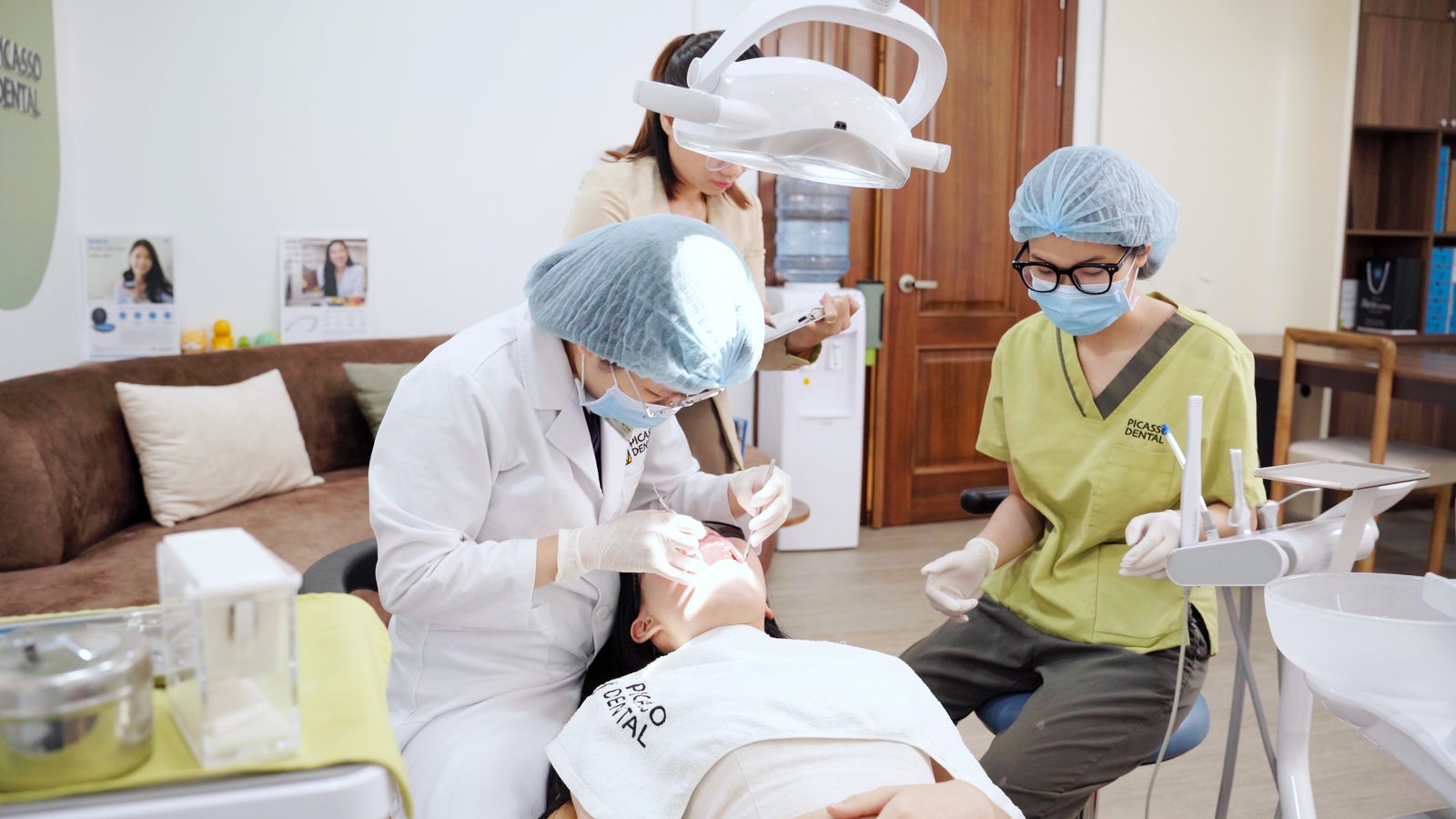
Cost of cervical abrasion treatment: Vietnam versus international
Tooth neck wear is one of the most cost-sensitive treatments in restorative dentistry. Because many patients require multiple restorations simultaneously, across several teeth, the total cost at home-country rates can be substantial. Vietnam offers significant savings without any change in material quality.
| Treatment | Vietnam (Picasso Dental) | Australia | United Kingdom | United States |
|---|---|---|---|---|
| Composite resin cervical restoration (per tooth) | USD 30 to 80 | AUD 200 to 400 | GBP 100 to 250 | USD 150 to 350 |
| Full dental examination and X-rays | USD 20 to 40 | AUD 80 to 200 | GBP 50 to 120 | USD 75 to 200 |
| Custom occlusal splint (night guard) | USD 80 to 150 | AUD 500 to 900 | GBP 300 to 600 | USD 400 to 800 |
| Professional scaling and clean | USD 25 to 60 | AUD 150 to 350 | GBP 60 to 150 | USD 100 to 300 |
All figures are approximate. Picasso Dental provides written cost estimates before any treatment begins. Patients with multiple cervical lesions commonly complete all restorations in a single visit, eliminating the need for multiple appointments.
Frequently asked questions
What is tooth neck wear?
Tooth neck wear, clinically called cervical abrasion, is the loss of tooth structure at the junction where the tooth meets the gum. This area is vulnerable because the enamel is thinnest there and the underlying dentine and cementum are softer. The damage typically appears as a wedge-shaped notch or groove at the gumline and may cause sensitivity to cold, hot, sweet, or acidic foods.
What is the most common cause of tooth neck wear?
Aggressive brushing is the most common cause seen in clinical practice. Patients who press too hard, use a medium or hard-bristled brush, or scrub horizontally cause progressive enamel loss at the gumline. The damage is typically worst on the canines and premolars on the dominant-hand side of the mouth, where the most brushing pressure is applied.
Can tooth neck wear be repaired?
Yes. Tooth-coloured composite resin fillings bond directly to the notched area and restore both function and appearance in a single appointment. The restoration protects the exposed dentine, reduces sensitivity, and prevents further structural loss. It is colour-matched to the surrounding tooth and is not visible in normal conversation. For deep lesions, glass ionomer cement or combined gum treatment may be recommended.
Does acid erosion cause tooth neck wear?
Acid erosion is a significant contributing factor rather than a standalone cause. Acidic foods and drinks soften enamel temporarily, making it far more vulnerable to removal by brushing. Patients who consume citrus, carbonated drinks, or vinegar-based foods and then brush within 30 minutes accelerate enamel loss at the gumline substantially. Waiting 30 to 60 minutes before brushing after acid exposure reduces this combined damage significantly.
Does teeth grinding cause tooth neck wear?
Yes. Teeth grinding and clenching create lateral stress forces at the tooth neck called abfraction. These cyclic flexing forces produce microfractures in the enamel at the gumline, which then fracture away during brushing. Patients who grind at night often develop cervical lesions on multiple teeth simultaneously. A custom-fitted night guard prevents the grinding forces from reaching the gumline and stops this mechanism of wear.
What toothbrush should I use if I have tooth neck wear?
Use a toothbrush with soft or extra-soft bristles only. Medium and hard bristles cause measurable enamel and cementum loss at the gumline over time. An electric toothbrush with a pressure sensor is ideal because the sensor stops the brush when you apply too much force, which is especially useful for patients who have developed aggressive brushing as a habit.
How much does treating tooth neck wear cost in Vietnam compared to Australia?
A composite resin restoration for cervical abrasion at Picasso Dental Clinic in Vietnam typically costs USD 30 to 80 per tooth depending on the size of the lesion. In Australia the same procedure costs AUD 200 to 400 per tooth, and in the United Kingdom from GBP 100 to 250. International patients visiting Vietnam commonly have multiple cervical lesions restored in a single visit at a fraction of the cost they would pay at home.
How do I know if I have tooth neck wear?
Tooth neck wear often begins without symptoms. The first signs are usually visual: a visible notch or groove at the gumline, often yellowish because the underlying dentine is exposed. Sensitivity to cold drinks, cold air, sweet foods, or toothbrushing at the gumline is a later symptom. Small lesions are straightforward to restore. Deep lesions require more complex treatment and in rare cases may affect the dental pulp.
Noticed a notch or sensitivity at the gumline?
Our team assesses cervical wear same-day and provides a written treatment estimate before any procedure begins.
No obligation · Since 2013