
Porcelain Veneers
What Can Porcelain Veneers Fix
and Am I a Good Candidate?
Veneers address chips, stains, gaps, shape problems, and minor irregularities in the front teeth visible when you smile. Good candidacy depends on gum and tooth health, sufficient enamel, and realistic expectations about what the treatment can and cannot change.

Key Takeaways
- Veneers fix intrinsic staining, chips, gaps, uneven lengths, misshapen teeth, and minor irregularities. They do not move teeth or fix bite problems.
- Good candidacy requires healthy gums, no active decay, adequate remaining enamel, and realistic expectations.
- Active gum disease, severe grinding, very little remaining enamel, or significant misalignment rule out veneers until those issues are resolved.
- If whitening addresses your concern, try that first. Veneers are irreversible. Whitening is not.
What porcelain veneers can fix
Porcelain veneers are one of the most versatile tools in cosmetic dentistry because a single treatment can address multiple issues simultaneously. Patients often come in with one concern they have identified and discover at consultation that the veneers can resolve two or three things at once.
Intrinsic staining: Staining from tetracycline antibiotics taken during childhood, fluorosis, or developmental trauma sits inside the tooth structure. Professional whitening cannot reach these stains because bleach penetrates only to a limited depth. Veneers cover intrinsic staining completely and do not discolour over time themselves.
Chips and cracks on front teeth: A chipped front tooth changes the proportions and symmetry of your smile. Veneers restore the original tooth shape exactly, or improve on the original if the proportion was not ideal to begin with.
Gaps between front teeth: Central diastema (the gap between upper central incisors) and smaller gaps throughout the smile can be closed with veneers. For small to moderate gaps on otherwise well-aligned teeth, veneers are significantly faster than orthodontics.

Uneven tooth lengths: Teeth that are different heights, making the smile look irregular and asymmetric, can be brought to uniform length with veneers. This is one of the most dramatically visible improvements veneers achieve.
Congenitally misshapen teeth: Peg lateral incisors (small, pointed teeth flanking the central incisors) are a common indication. Veneers build these teeth to normal proportions that match the rest of the smile.
Tooth wear from grinding: Bruxism gradually wears teeth shorter. Veneers can rebuild worn teeth to their correct length and proportion, provided the grinding is then managed with a night guard to protect the veneers.
What veneers cannot fix
Veneers are a front-surface cosmetic treatment. They do not change the position of teeth, correct bite problems, or add structural strength to a tooth with significant internal damage.
Significant misalignment or crowding should be addressed with Invisalign or braces before veneers. Placing veneers over crooked teeth requires unusually thick ceramic to compensate, which looks artificial and adds excessive bulk. The correct sequence is alignment correction first, then veneers for any remaining cosmetic concerns.
Bite problems such as deep overbite, underbite, or significant open bite require orthodontic or sometimes surgical correction. Veneers can be placed after bite correction, but they cannot substitute for it.
Severe structural damage to a tooth (large cavity, root canal on a molar, cracked tooth at risk of fracture) calls for a crown rather than a veneer. A crown wraps the entire tooth and provides structural support. A veneer covers only the front face and provides none.
Good candidacy: what we assess
Good candidate
- Healthy gums with no active disease
- No untreated decay on candidate teeth
- Adequate enamel remaining for bonding
- Specific cosmetic concern veneers can address
- Teeth reasonably well aligned or post-orthodontics
- Realistic expectations about the outcome
- Commitment to maintenance and 6-monthly recalls
- Night guard if grinding is present or suspected
Not ready yet for veneers
- Active gum disease (treat first)
- Untreated cavities (fill first)
- Very little enamel remaining (crowns instead)
- Significant misalignment (Invisalign first)
- Severe unmanaged grinding (protect first)
- Expecting veneers to fix bite problems

The enamel question
Veneer bonding requires a sufficient enamel surface. The dental adhesive bonds to enamel far more reliably than to dentine (the layer beneath enamel). Patients who have had significant enamel erosion from acid reflux, frequent vomiting, or years of acidic beverage consumption may not have adequate enamel for reliable veneer bonding. In these cases, the dentist needs to assess whether enough enamel remains and may recommend crowns instead.
The grinding question
Bruxism (night grinding) does not automatically rule out veneers, but it must be managed. A custom night guard worn during sleep distributes grinding forces across a protective plastic surface rather than on the veneers. Patients with documented heavy grinding who are unwilling to wear a night guard are not suitable veneer candidates because the veneers will chip and fracture prematurely. For patients who accept the night guard as part of the plan, veneers are achievable with normal lifespans.
Not sure if you qualify? A smile assessment at Picasso includes clinical examination, X-rays, and a digital smile preview. We will tell you directly whether veneers are the right treatment for your specific teeth.
Book a smile assessmentWhat happens at a candidacy consultation
The consultation at Picasso Dental Clinic covers several components that together determine whether veneers are appropriate and what the treatment plan would look like.
Photographs from multiple angles capture your current smile from the front, left, right, and at close range. These photos are used in digital smile design to preview the expected veneer outcome. You can review the digital preview before any preparation is scheduled and request adjustments to shade, shape, or length.
Clinical examination assesses gum health, the presence of decay, the amount of enamel on the candidate teeth, and the bite relationship. X-rays confirm the health of the tooth roots and surrounding bone.
A discussion of your specific concerns and the outcome you want determines how many teeth need veneers. Many patients need fewer veneers than they expect: if only 6 teeth show prominently when you smile, placing 8 or 10 veneers serves no additional purpose.
Written pricing is provided after the consultation, specifying the number of teeth, the material (typically Emax), and the all-in cost. No preparation is scheduled until you have had time to review the plan and decide to proceed.
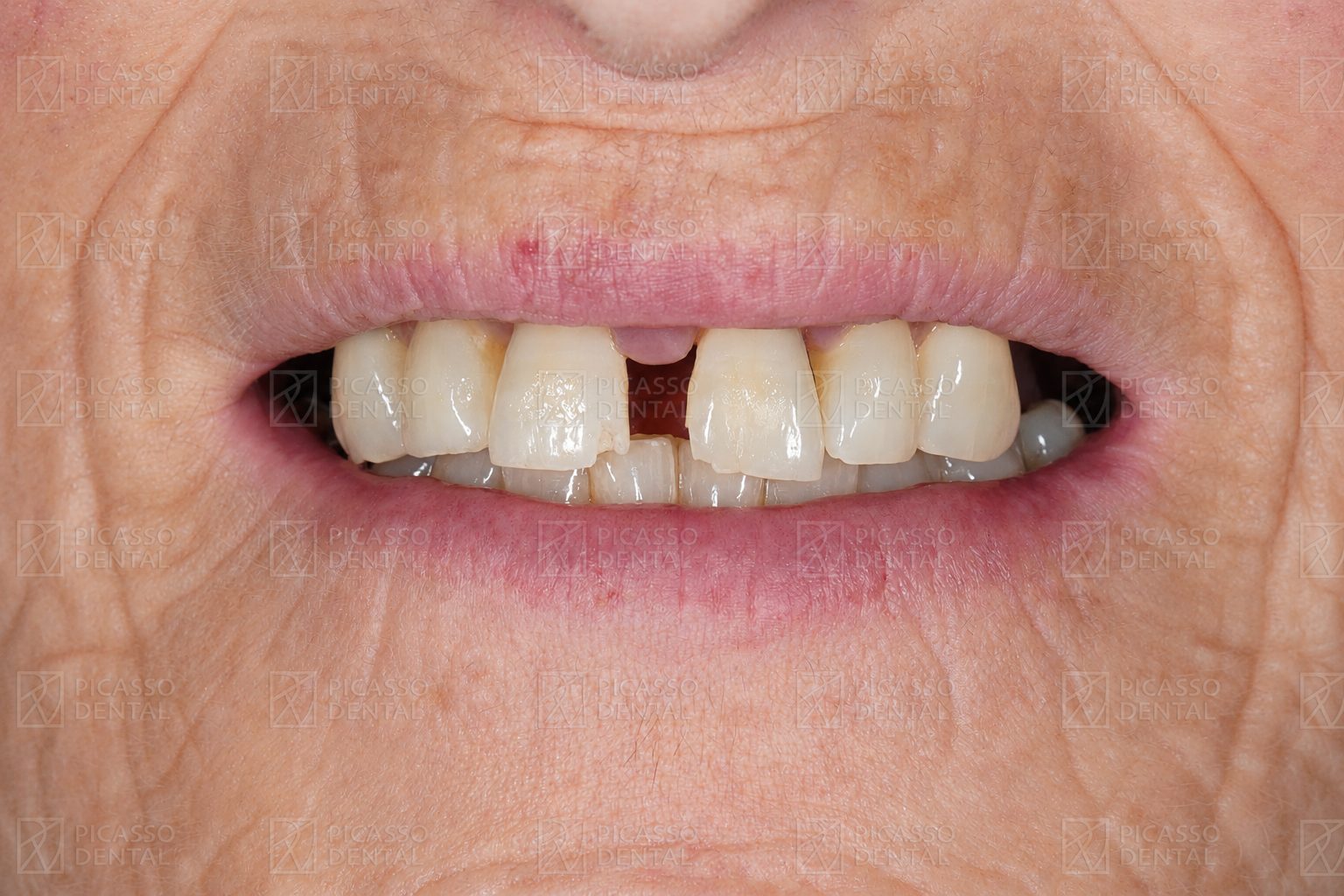 Before
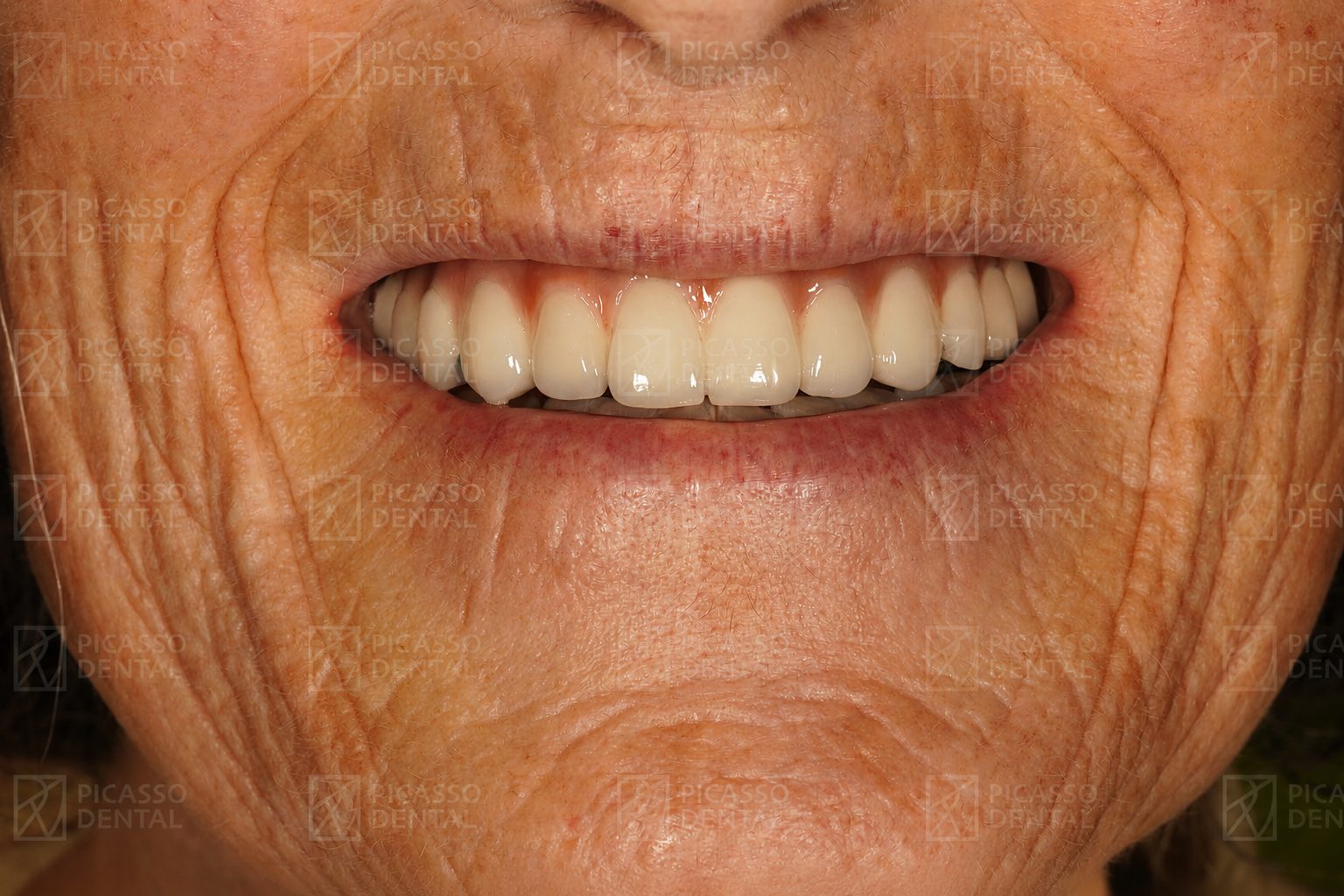 After
AfterIntrinsic fluorosis staining on 8 upper teeth. Good candidate: healthy gums, sufficient enamel, no alignment issues. 8 Emax veneers.
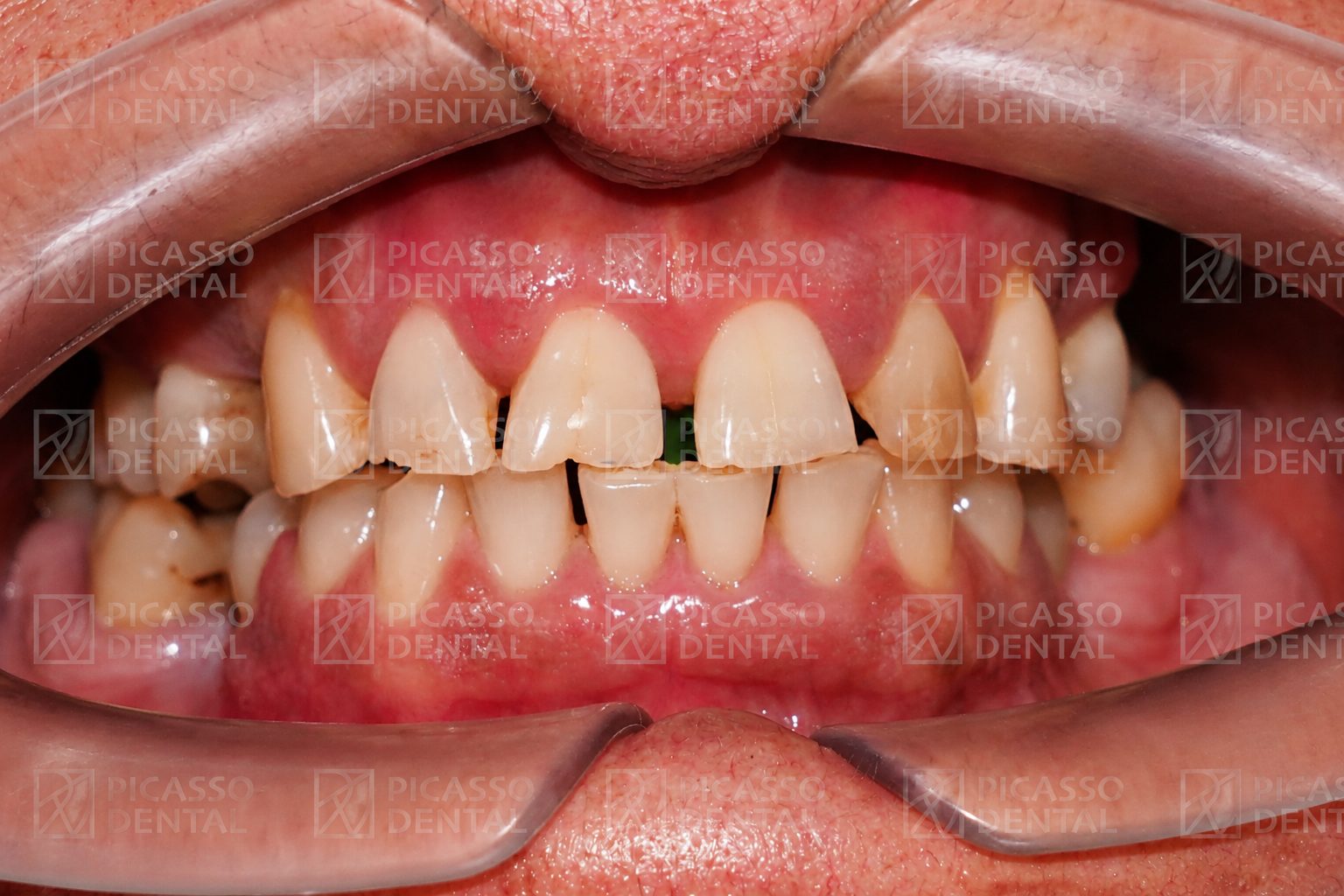 Before
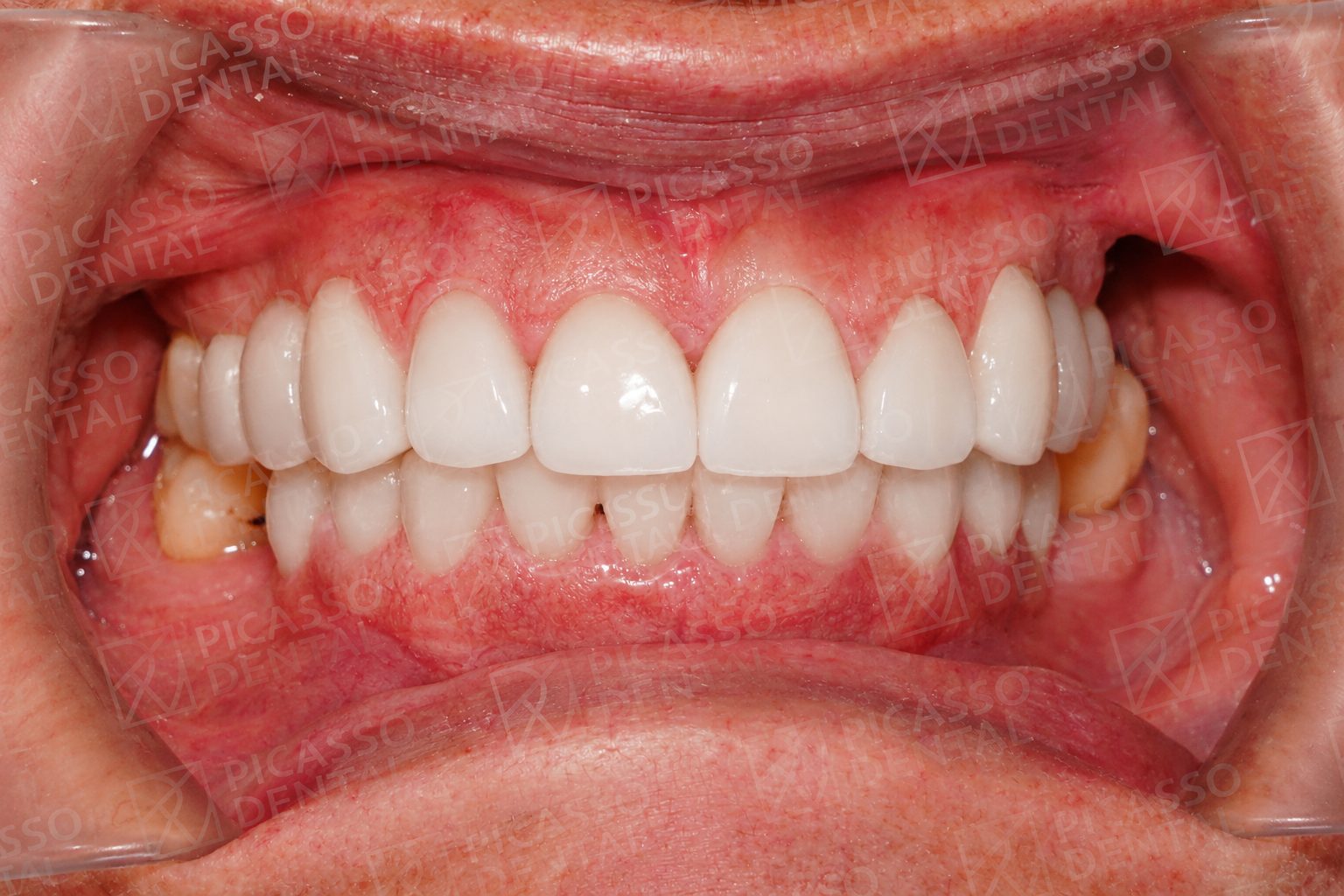 After
AfterCentral diastema and uneven lengths. 6 veneers closed the gap and balanced the smile without any orthodontic treatment.
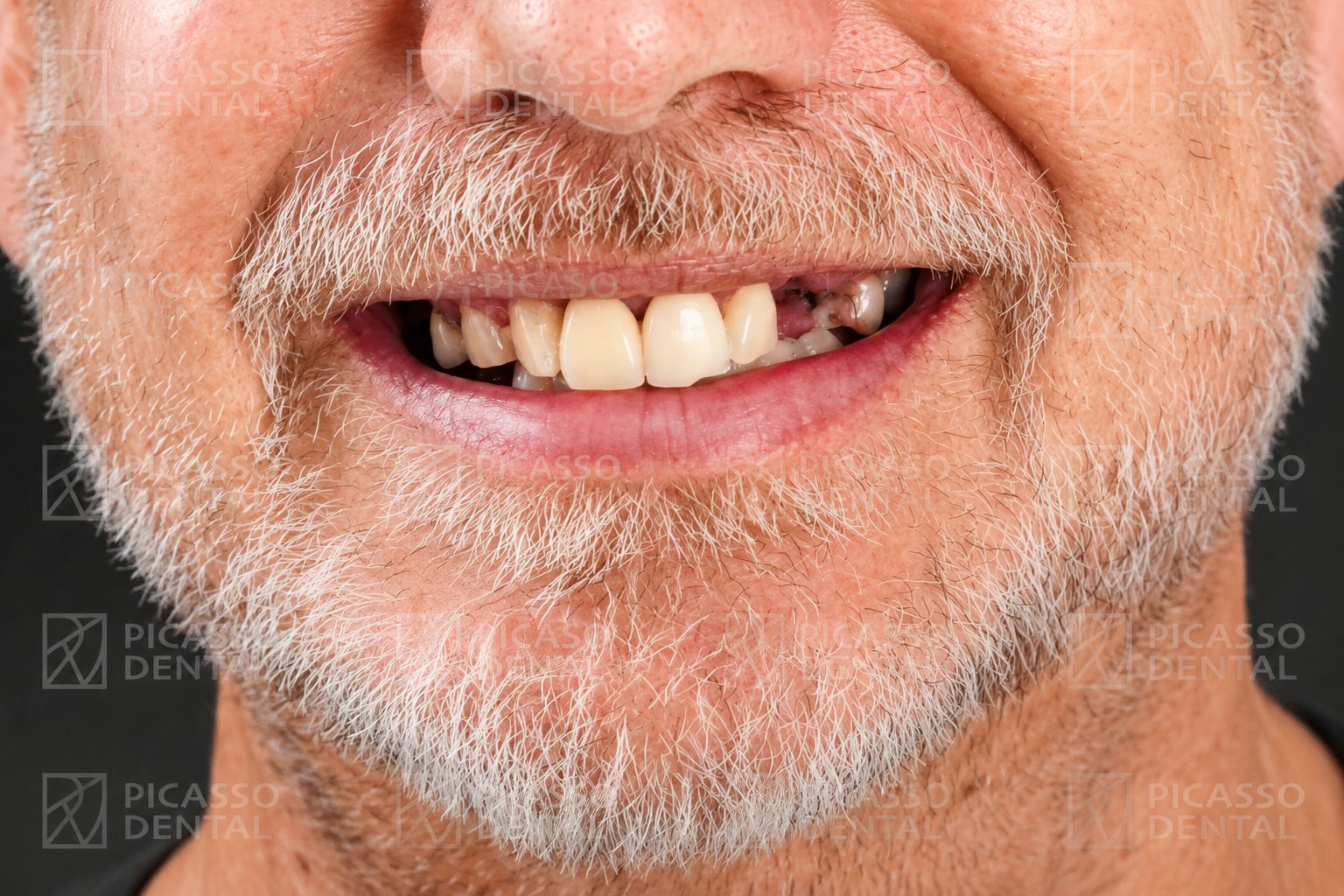 Before
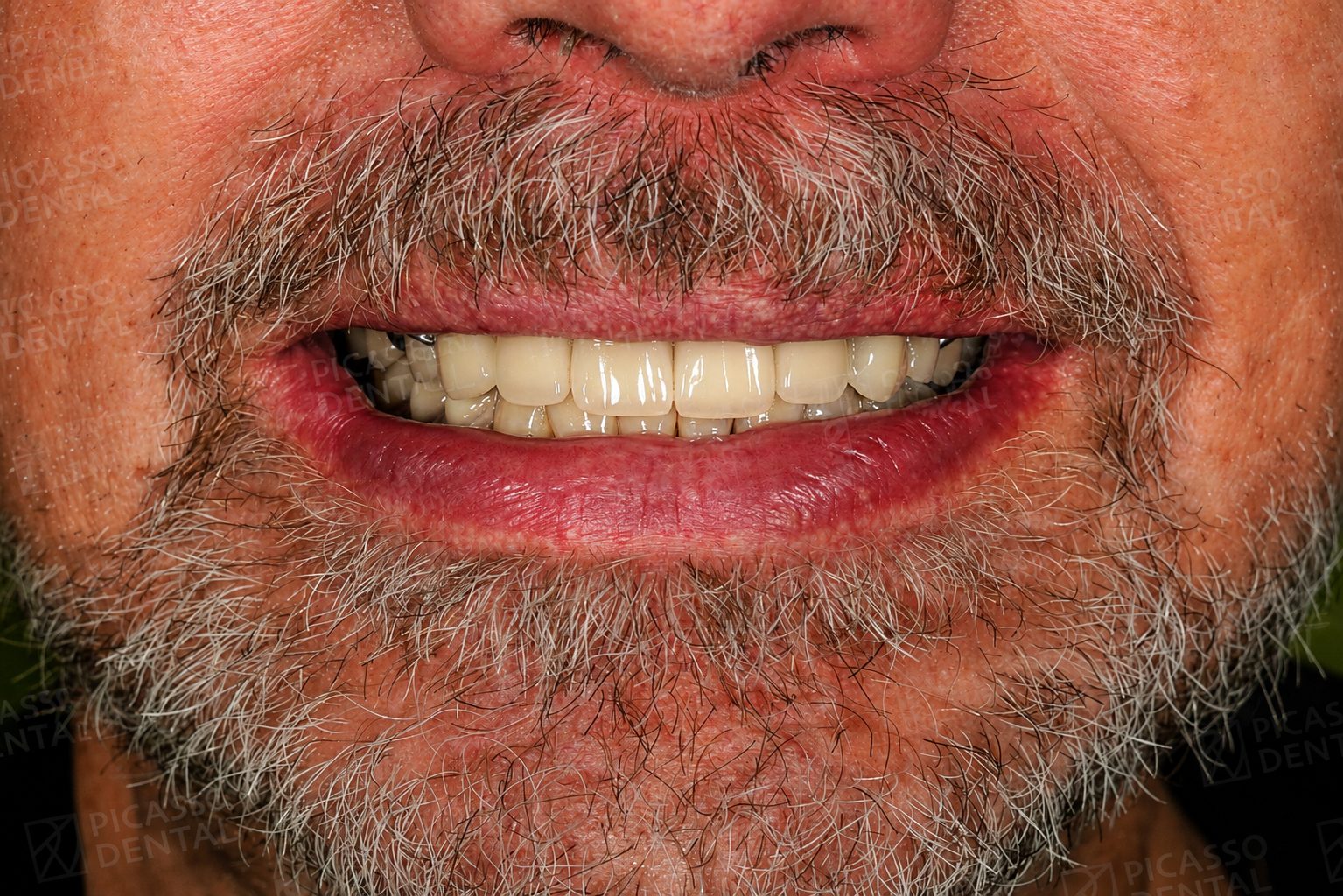 After
AfterSevere wear from grinding. Night guard prescribed and fitted first. 8 veneers rebuilt to correct length with stable bite confirmed beforehand.
Frequently Asked Questions
What cosmetic problems can porcelain veneers fix?
Porcelain veneers address: intrinsic tooth staining from tetracycline or fluorosis that whitening cannot reach, chips and cracks on front teeth, gaps between front teeth, mildly uneven or differently sized teeth, congenitally small or misshapen teeth (such as peg lateral incisors), and tooth wear from grinding. They work best on the front 6 to 10 teeth visible when smiling. They do not correct underlying bite problems or significant misalignment.
Who is a good candidate for porcelain veneers?
Good candidates have: healthy teeth and gums with no active decay or gum disease, adequate remaining enamel (sufficient to bond the veneers), specific cosmetic concerns that veneers can address, realistic expectations about the outcome, and commitment to maintenance including 6-monthly recalls and a night guard if they grind. Adults with fully developed teeth are better candidates than teenagers whose teeth and jaws are still maturing.
Who is not a good candidate for veneers?
Veneers are not appropriate for patients with: active gum disease or untreated decay (these must be resolved first), severely worn teeth where very little enamel remains (crowns are needed instead), significant bite problems or heavy grinding that would fracture veneers without adequate protective treatment, teeth that are severely misaligned (Invisalign should come first), or unrealistic expectations about what veneers can and cannot change.
If I have gum disease, can I still get veneers?
Not immediately. Gum disease must be treated and stabilised before any cosmetic work. Active gum disease causes bone and tissue loss that changes the gum line over time, which would affect the appearance of veneers placed on an unstable gum foundation. Once gum disease is under control and the periodontist confirms the gums are stable, veneers can be planned.
Can veneers fix crooked teeth?
Veneers can create the appearance of straighter teeth for mild irregularities, such as one tooth slightly shorter than its neighbours. For genuinely crooked or crowded teeth, veneers placed without orthodontic correction first will look artificial because the ceramic must be made unusually thick to compensate for the underlying position. For significant misalignment, Invisalign or braces should be completed first.
How much enamel is removed for veneers?
Typically 0.3 to 0.5 millimetres of enamel is removed from the front face of each tooth. This creates space for the veneer so the tooth does not look bulkier than before. The amount removed is approximately the thickness of a contact lens. Modern ultra-thin veneer designs sometimes require even less removal. However, any enamel removal is permanent and irreversible.
Can I whiten my teeth instead of getting veneers?
Whitening is the first option to consider for patients whose only concern is colour. Professional whitening removes extrinsic stains effectively and is reversible, requires no enamel removal, and is significantly less expensive. Whitening does not work on intrinsic staining (from tetracycline, fluorosis, or trauma), tooth wear, chips, shape problems, or gaps. If whitening addresses your concern, it is the better first step.
Patient Video Testimonial

Start Here
Start with a brief.
Tell us what you want to change and we will confirm whether veneers are the right treatment, or whether whitening, Invisalign, or another option is better suited.