
Porcelain Veneers
What Are Porcelain Veneers
and How Do They Transform a Smile?
Thin custom-made ceramic shells bonded to the front of your teeth. They fix discolouration, chips, gaps, and shape irregularities that whitening and orthodontics cannot address, in two appointments over two to three weeks.

Key Takeaways
- Porcelain veneers are thin ceramic shells (0.3 to 0.7 mm) bonded to the front surface of teeth. They are cosmetic, not structural.
- They fix staining that whitening cannot remove, chips, gaps, minor irregularities, and misshapen teeth in 2 to 3 weeks.
- Enamel removal is required and permanent. Veneered teeth need ongoing coverage for life.
- With proper care, Emax porcelain veneers last 10 to 15 years. Composite veneers last 5 to 7 years.
What porcelain veneers actually are
A porcelain veneer is a thin custom-made ceramic shell, typically 0.3 to 0.7 millimetres thick, that is bonded permanently to the front surface of a tooth. The veneer covers only the visible front face of the tooth. It does not wrap around the tooth (that would be a crown), and it does not move the tooth (that would be orthodontics). Its purpose is purely cosmetic: to change what the tooth looks like from the front.
The analogy most patients find useful is a high-quality facing on a wall: it does not change the structure behind it, but it completely transforms what you see. Because the veneer is made from translucent porcelain that reflects light similarly to natural tooth enamel, properly placed veneers are visually indistinguishable from natural teeth. Most patients find that friends and colleagues notice they look better without being able to articulate exactly why.

What problems veneers solve
Veneers are exceptionally versatile for cosmetic problems that other treatments cannot address adequately:
Intrinsic staining: Staining from tetracycline antibiotics taken during childhood, fluorosis (excess fluoride during tooth development), or trauma creates discolouration inside the tooth structure that whitening bleaches cannot reach. Veneers cover these stains completely and permanently.
Chips and cracks on front teeth: A chipped incisor changes the proportions of your smile immediately. Veneers restore the original shape and length precisely, and the chip disappears entirely.
Gaps between teeth: Diastema (space between the two upper front teeth) can be closed with veneers without orthodontics. For small to moderate gaps, this is a significantly faster solution than braces or Invisalign.
Minor irregularities: Teeth that are slightly uneven in length, mildly rotated, or differently sized can be made to appear uniform and balanced with veneers. This is cosmetic correction, not structural correction, so it works only for cases where the underlying alignment is acceptable.
Congenitally misshapen teeth: Peg lateral incisors (teeth that are naturally pointed or undersized) are a common indication. Veneers build them to proper proportions to match the rest of the smile.
The difference between porcelain and composite veneers
Two main veneer materials exist and they are not equivalent. At Picasso Dental, we use Emax (lithium disilicate) porcelain as our standard veneer material because it produces results that consistently satisfy patients long-term.
Porcelain veneers (Emax): Fabricated in a dental laboratory over 7 to 10 days. Extremely stain-resistant. Translucency closely mimics natural enamel. Lifespan 10 to 15 years. Require two appointments. Cost more than composite.
Composite veneers: Applied directly to the tooth in a single appointment using tooth-coloured resin. Faster and less expensive. However, they stain more easily than porcelain, have less natural translucency, and typically last only 5 to 7 years before replacement is needed. For patients who want a preview of the result before committing to porcelain, composite veneers can serve as a temporary test.
For a full smile makeover intended to last a decade or more, porcelain is the correct choice. The additional cost is offset by the longer lifespan and the quality of the result.

The two-visit placement process
The standard veneer process at Picasso takes two appointments separated by 7 to 10 days while the porcelain veneers are being fabricated in the laboratory.
- Consultation and smile design Digital photographs from multiple angles, X-rays to confirm underlying tooth health, and a shade selection discussion. Digital smile design software previews the expected result so you can request adjustments before any preparation begins. This sets the aesthetic brief for the ceramist.
- Preparation appointment (approximately 90 minutes) Local anaesthetic is applied. A thin layer of enamel (typically 0.3 to 0.5 mm) is removed from the front of each tooth to create space for the veneer. An impression or digital scan is taken. Shade is confirmed. Temporary veneers are fitted to protect the prepared teeth and allow you to evaluate the shape and size before committing to the permanent veneers.
- Bonding appointment (approximately 60 minutes) Temporary veneers are removed. Each permanent veneer is tried in to confirm fit, colour, and shape. Minor adjustments are made if needed. Once both dentist and patient are satisfied, the veneers are bonded permanently with light-cured dental adhesive. Excess adhesive is cleaned from the margins. Bite is checked and adjusted.
For international patients, both visits fit within a 14-day trip. Many choose Da Nang as their base, combining the preparation appointment and lab-wait phase with beach recovery time and a day trip to Hoi An. See the international patients page for trip planning guidance.
Ready to see what your smile could look like? We can show you a digital preview at your consultation before any preparation begins.
Book a consultationThe permanent commitment: what you need to understand before proceeding
The enamel removed during preparation does not grow back. This is the most important fact about veneers. Once you have veneers, those teeth will need some form of coverage for the rest of your life. After 10 to 15 years when the original veneers need replacement, you will need new veneers. This is not a problem if you are happy with the outcome, but it is a commitment that should be understood clearly before the preparation appointment.
This is not a reason to avoid veneers if you have genuine cosmetic concerns that they can address. It is a reason to be certain about your decision and to choose a clinic and clinician you trust to get the aesthetic result right. Poorly made veneers are expensive to redo and can cause significant patient dissatisfaction. At Picasso, the digital smile design step exists specifically to align expectations before any irreversible work is done.
Caring for your veneers
Veneer care is almost identical to natural tooth care, with a few specific adjustments that become habitual quickly:
Brush twice daily and floss once daily. Porcelain itself does not stain, but the cement at the veneer margin can stain over time with heavy coffee or tea consumption. Rinsing with water after staining beverages minimises marginal staining.
Use back teeth for hard foods. Cutting raw carrots, apples, and crusty bread into pieces before eating prevents the concentrated biting force on veneered front teeth that risks chipping porcelain. Cooked vegetables, soft fruits, fish, and pasta require no modification at all.
If you grind teeth at night, a night guard is essential. Bruxism is the single most common cause of veneer fracture and is largely preventable with a custom-fitted night guard.
Attend 6-monthly dental recalls. At each recall, veneer margins, bite, and condition are checked. Catching a small marginal issue early takes minutes to address. Left unattended, the same issue can require a full veneer replacement.
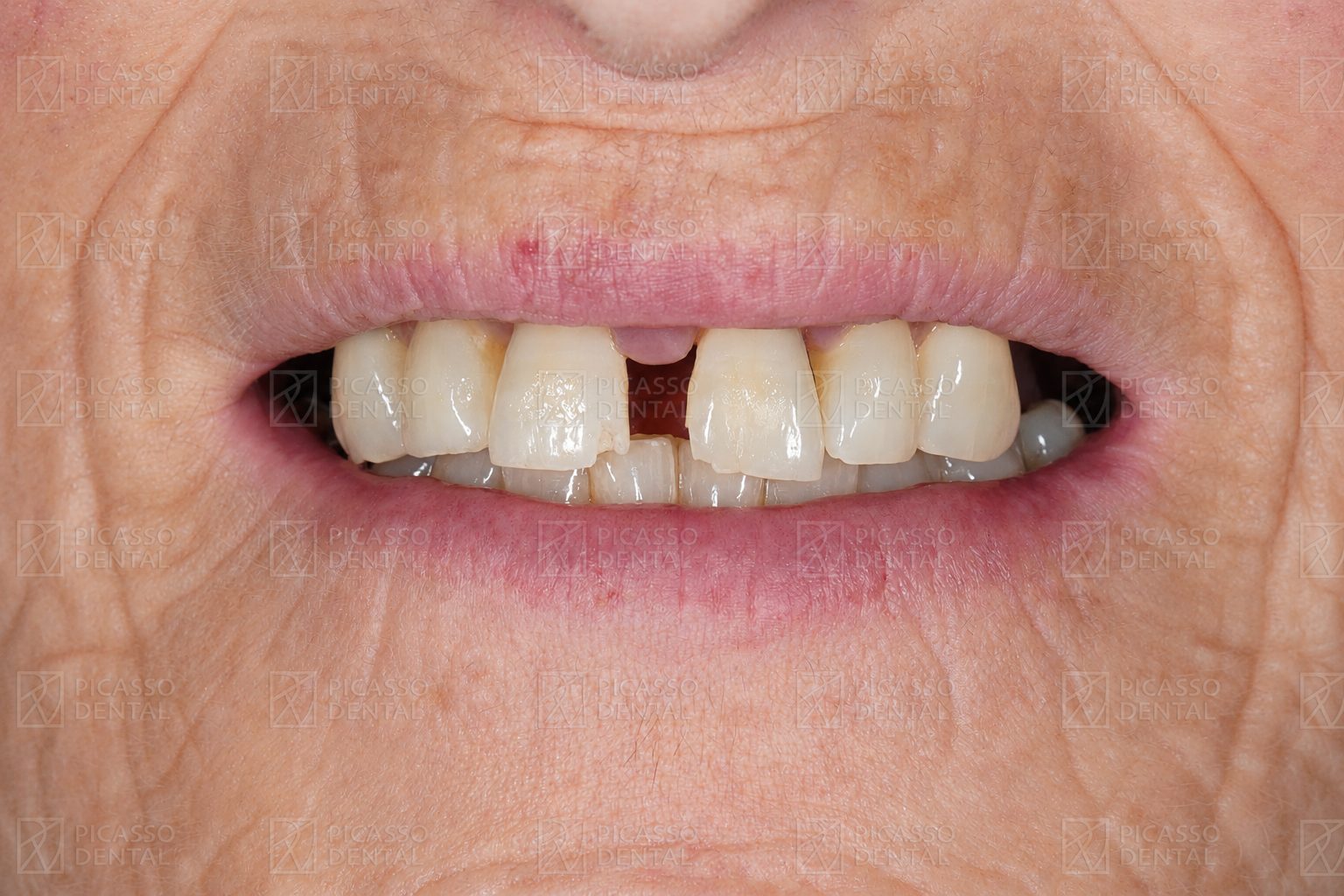 Before
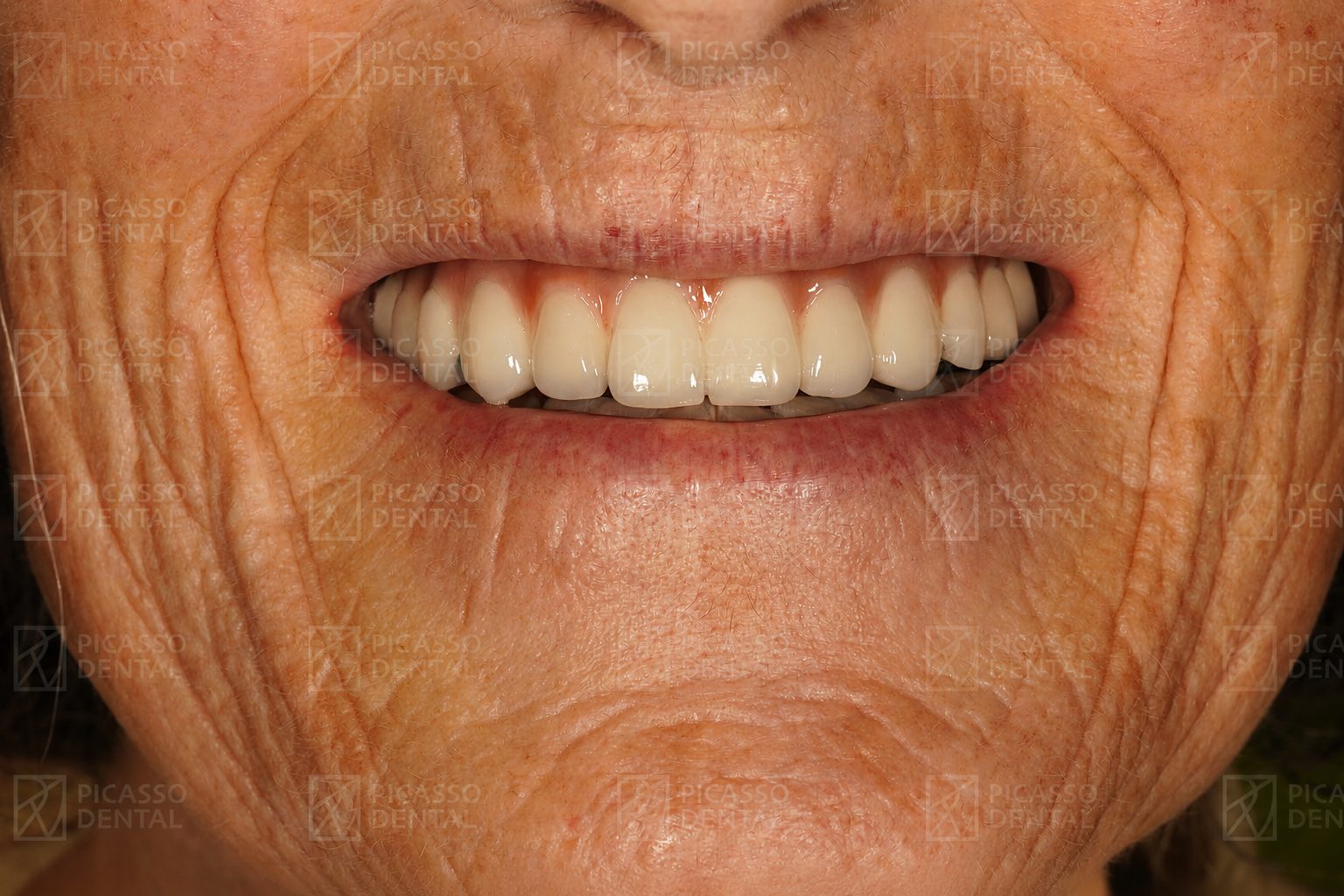 After
After8 Emax veneers on upper teeth. Tetracycline staining covered completely. Proportions balanced across the smile.
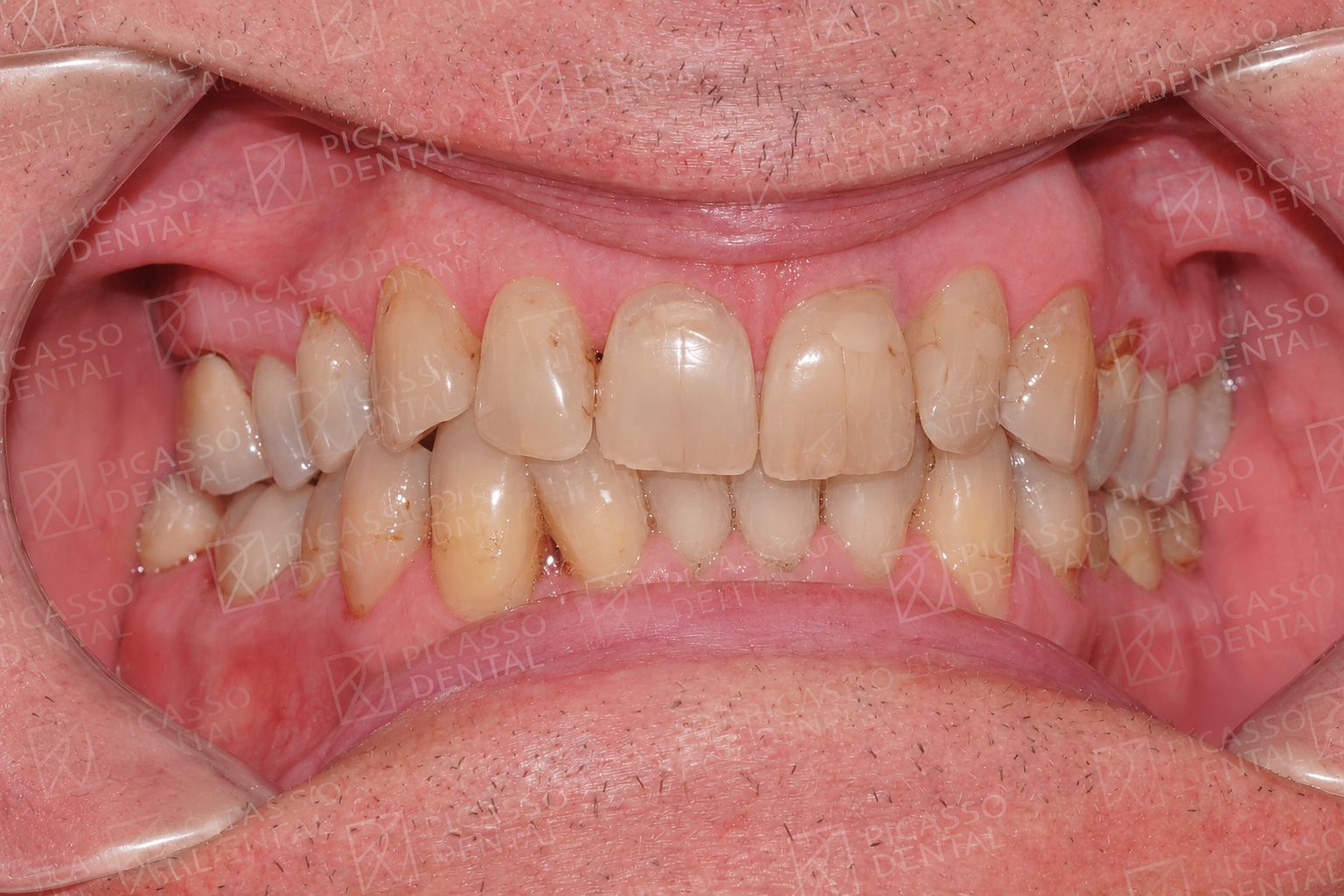 Before
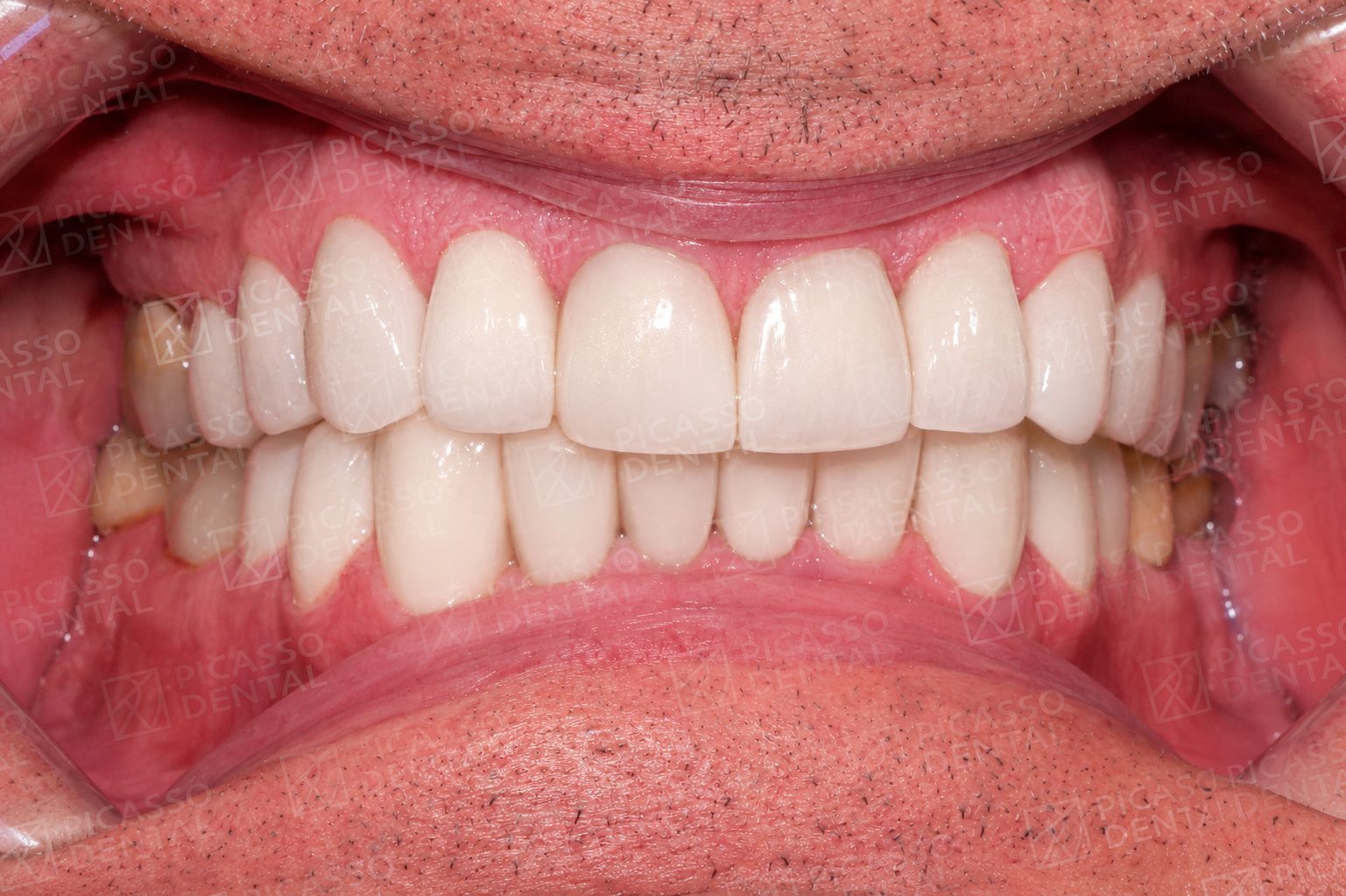 After
After6 upper veneers closing central diastema and evening uneven tooth lengths. No orthodontics needed.
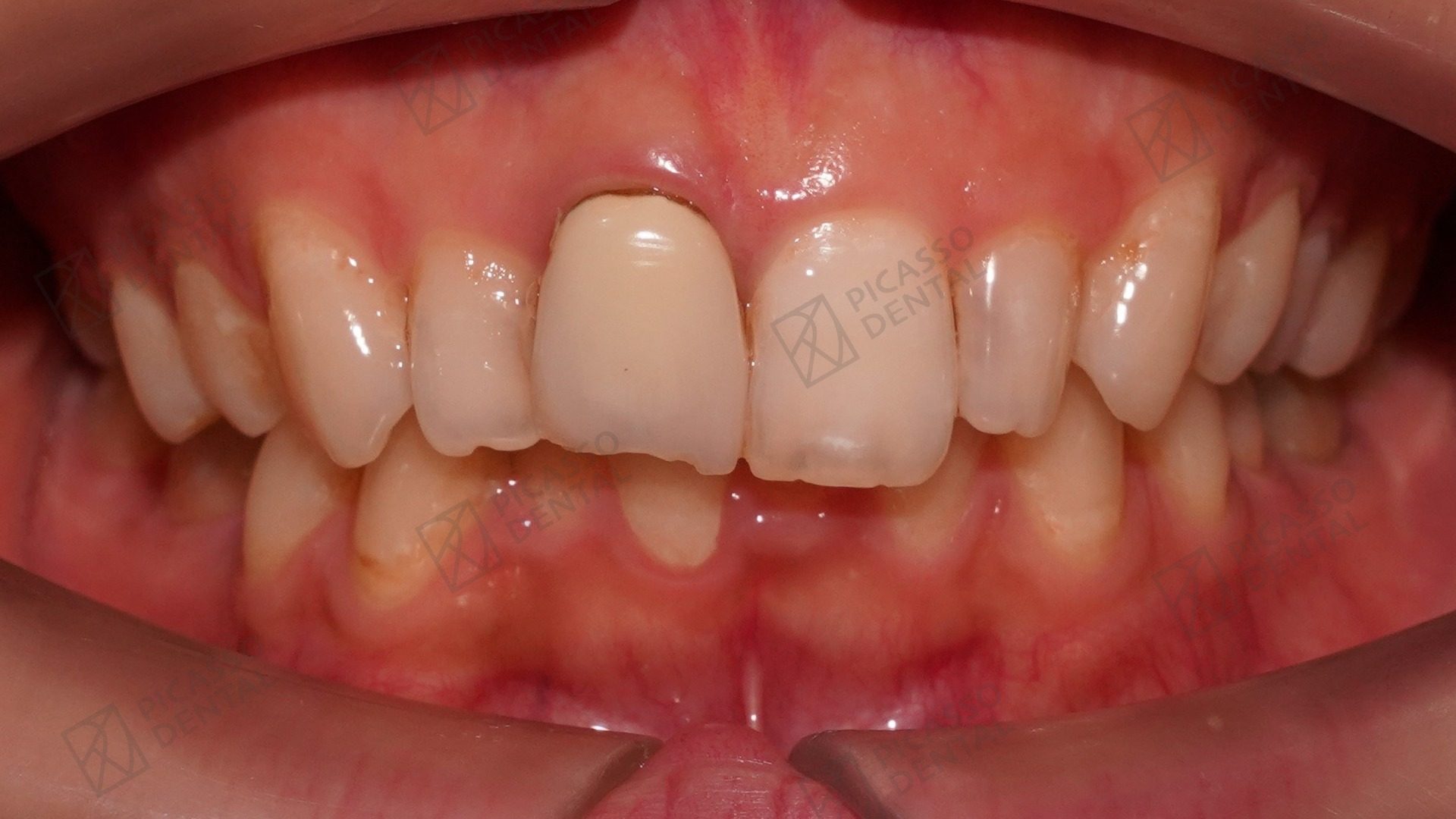 Before
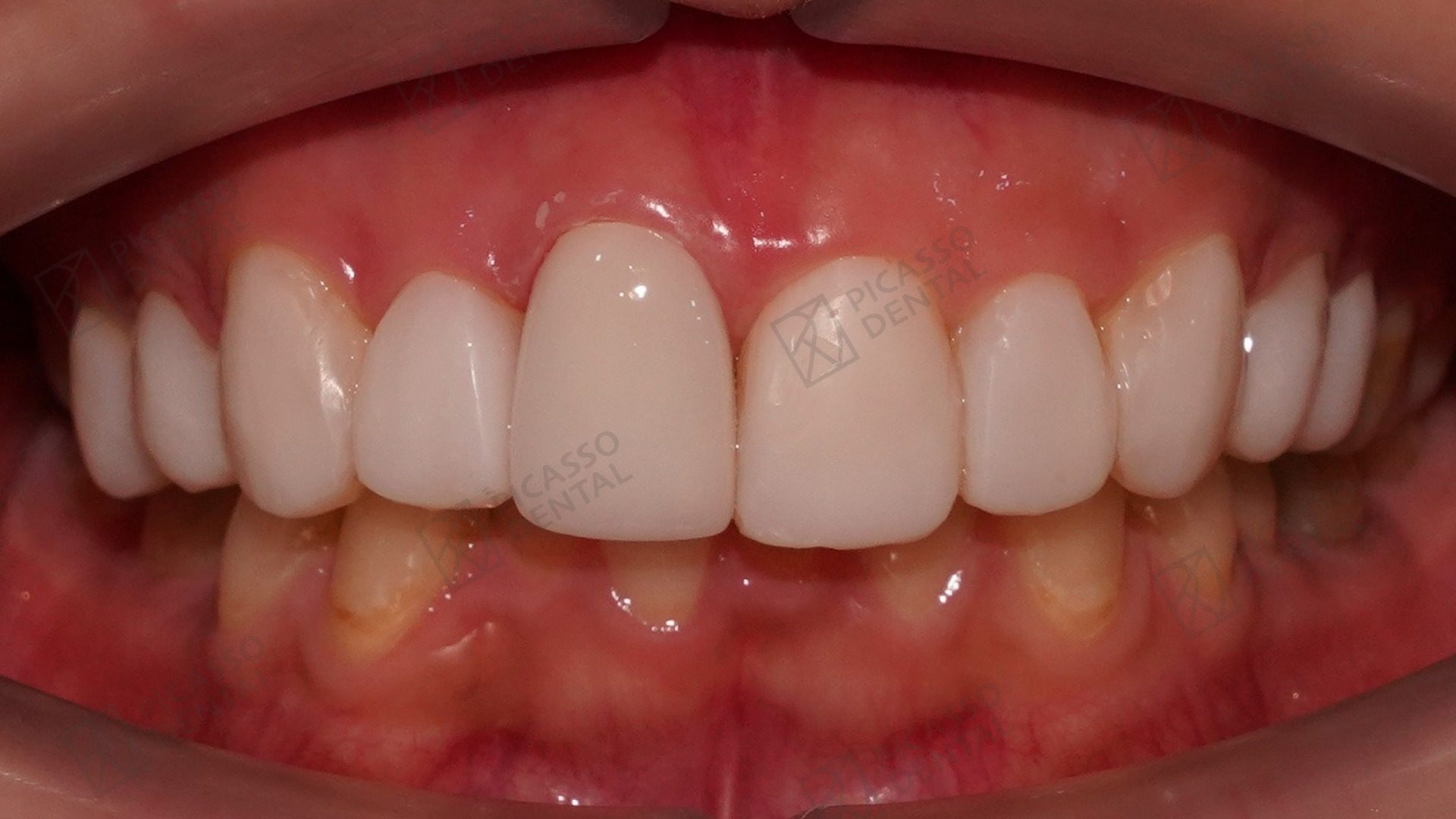 After
After10 upper and lower veneers. Worn and chipped surfaces rebuilt to full length. Da Nang 14-day trip.
Frequently Asked Questions
What are porcelain veneers?
Porcelain veneers are thin custom-made ceramic shells bonded to the front surface of teeth to improve their appearance. They are typically 0.3 to 0.7 millimetres thick, made from Emax (lithium disilicate) or other high-quality porcelain, and cover discolouration, chips, gaps, minor crowding, and shape irregularities. They do not move teeth and provide no structural support, so they are a cosmetic treatment for front teeth that are healthy but visually imperfect.
What problems can porcelain veneers fix?
Veneers address: intrinsic tooth staining from tetracycline or fluorosis that whitening cannot remove, chips and cracks on front teeth, gaps between teeth, mildly uneven or differently sized teeth, congenitally small or misshapen teeth, and worn-down teeth. They are most effective on the front 6 to 10 upper teeth visible in a full smile. If the primary concern is alignment or bite, Invisalign should be considered before or instead of veneers.
How long do porcelain veneers last?
With proper care, Emax porcelain veneers last 10 to 15 years or longer. Composite veneers typically last 5 to 7 years. Key factors affecting lifespan: whether you grind teeth at night (a night guard is essential for grinders), how rigorously you avoid biting hard objects with veneered front teeth, and whether you maintain 6-monthly dental recalls.
Are veneers permanent?
The placement process requires removing a thin layer of enamel (typically less than 1 millimetre) from the front of each tooth. This is permanent and irreversible. Once you have veneers, the treated teeth will need veneers or other coverage for the rest of your life because the enamel does not grow back. This is the most important commitment to understand before proceeding. The veneers themselves are not permanent and will need replacement after 10 to 15 years.
How many veneers do I need for a full smile transformation?
Most patients achieve a full smile transformation with 6 to 8 upper teeth veneered (from canine to canine or including the first premolars). Some patients with wide smiles showing more teeth need 10. The number depends on your lip line, smile width, and which teeth show when you smile naturally. Photographs from multiple angles during consultation determine the correct number. Veneering teeth that are not visible wastes money and serves no cosmetic purpose.
Does veneer placement hurt?
The preparation appointment is done under local anaesthetic. You will feel no pain during the procedure. Some patients experience sensitivity for 3 to 5 days after preparation, particularly to cold, which is normal as the prepared teeth are covered by temporary veneers. By the time the permanent veneers are cemented, sensitivity has typically resolved completely.
Can I eat normally with veneers?
Most foods are completely safe with porcelain veneers. The key adjustments: use back teeth for hard foods (apples, raw carrots) by cutting them into pieces rather than biting in with front teeth. Avoid biting ice. Avoid using front teeth to open packaging or perform tasks other than eating. These adjustments become automatic quickly and do not affect diet meaningfully.
What is the cost of porcelain veneers at Picasso Dental Clinic?
Veneer pricing at Picasso depends on the material and number of teeth. Emax veneers, which are the standard at Picasso, start at approximately 9,000,000 VND per unit. A set of 8 upper Emax veneers costs approximately AUD $4,600 for Australian patients, versus AUD $20,000 to $28,000 for the same treatment in Sydney. Exact pricing for your case requires a consultation and smile assessment.
Patient Video Testimonial

Start Here
Start with a brief.
Tell us what you want to change about your smile and we will show you a digital preview of the veneer outcome before any preparation is done.