Dental Crowns
What Is a Porcelain Crown
and When Do I Need One?
A crown caps the entire visible tooth when more than half of it has been damaged or weakened. Here is what each material offers, the two-visit placement process, and how to make crowns last their full lifespan.

Key Takeaways
- A crown covers the entire visible tooth. A veneer covers only the front face. A filling repairs the inside. Each serves a different structural purpose.
- Crown is indicated when more than 50 percent of the tooth structure is lost, after root canal on any back tooth, or when the tooth is cracked and at risk of fracture.
- Material choice depends on tooth position: Zirconia for back teeth, Emax or Lava for front teeth where aesthetics matter most.
- Two visits, 1 to 2 weeks apart. Lifespan 10 to 25 years depending on material and care.
What a crown actually is
A porcelain crown is a custom-made ceramic cap that covers the entire visible portion of a tooth above the gumline. It sits over the prepared tooth like a thimble over a finger. The underlying tooth is shaped down by 1 to 2 millimetres on all sides to create space for the crown. The crown then becomes the visible chewing and biting surface. From the outside the tooth looks completely normal; structurally, the crown is doing the work the original tooth used to do.
The key distinction from other restorations: a crown is the only option that provides 360-degree structural coverage. A filling repairs damage from the inside. A veneer covers only the front face of a tooth. A crown wraps the entire tooth, which is why it is the appropriate solution when a significant portion of the original structure is gone.

When you need a crown (and when you do not)
The clinical threshold is straightforward: when more than 50 percent of the tooth structure has been lost or weakened, a filling will not hold under chewing force. The tooth will eventually fracture. A crown is necessary to prevent that outcome.
Crown is indicated
- After root canal on any molar or premolar
- Cavity larger than 50% of the tooth
- Cracked or fractured tooth (holding pieces together)
- Severe grinding wear (rebuilding lost height)
- Severe discolouration whitening cannot correct
- Anchoring a dental bridge
- Restoring a dental implant
Crown is not the right answer
- Small to moderate cavity (filling is correct)
- Cosmetic improvement on a sound front tooth (veneer is correct)
- Colour change on healthy teeth (whitening is correct)
- Minor chip on a healthy tooth (composite bonding is correct)
The root canal situation is worth expanding. When a root canal is performed on a molar or premolar, the tooth becomes brittle because the nerve and blood supply have been removed. These back teeth handle significant chewing forces. Without a crown, a root-canal-treated molar has a high probability of fracturing, often catastrophically, within a few years. A crown after root canal on any back tooth is not optional, it is a required step to protect the investment you made in saving the tooth.

The four crown materials at Picasso
Four material categories cover the range from budget-practical to premium-aesthetic. The choice is made at consultation based on tooth position, bite force, your aesthetic priorities, and budget.
- PFM (Porcelain fused to Titanium): 5,000,000 VND A metal substructure (titanium) with porcelain layered on top. Strong and durable for posterior teeth. Can show a thin grey line at the gumline over time as gums recede slightly. Best for back teeth where aesthetics are secondary to strength. Lifespan 10 to 15 years.
- Zirconia (full ceramic): 7,000,000 VND The most commonly chosen material at Picasso for molars and premolars. Full ceramic with no metal, strong enough for high-force posterior positions, good aesthetics. The best balance of strength, aesthetics, and cost. Lifespan 12 to 20 years.
- Emax (lithium disilicate): 9,000,000 VND Glass-ceramic with exceptional translucency that mimics natural tooth enamel. Best for front teeth where the crown must blend invisibly with surrounding teeth. Not recommended for high-force back positions. Lifespan 10 to 15 years on front teeth.
- Lava: 11,000,000 VND Premium full-ceramic with the most natural optical properties. The top choice for highly visible front teeth where the patient prioritises the most natural-looking result. Combines strength with the best aesthetics in the range. Lifespan 15 to 25 years.
For international patients: the same crown in Australia costs AUD $1,200 to $2,500 depending on material. At Picasso, the same materials cost AUD $200 to $440 equivalent. The savings are structural (lower operating costs in Vietnam) not quality-related. See the full comparison on the dental crowns service page.
Need a crown or a second opinion? Send us a recent X-ray and a photo of the tooth. A licensed dentist reviews and replies within 24 hours with the material recommendation and pricing for your specific case.
Book a consultationThe two-visit placement process
Crown placement follows a consistent two-visit sequence separated by 1 to 2 weeks while the permanent crown is fabricated in the dental laboratory. For international patients, both visits fit comfortably within a 10 to 14 day trip.
Visit 1: preparation and impression (approximately 60 minutes)
The tooth is numbed with local anaesthetic. 1 to 2 millimetres of tooth structure is gently reshaped around all sides to create space for the crown. A detailed impression or digital scan is taken. Shade matching is done against the surrounding teeth. A temporary crown is fitted to protect the prepared tooth while the permanent crown is made. You leave with a fully functional temporary and resume normal activities the same day.
Visit 2: try-in and cementation (approximately 30 minutes)
The temporary crown is removed. The permanent crown is tried in to confirm fit, colour, and bite. Small adjustments are made if needed. Once both dentist and patient are satisfied, the crown is cemented permanently with high-strength dental cement. You can eat normally on the crown within 30 to 60 minutes after the cement sets.

How to make your crown last its full lifespan
Crown longevity is almost entirely within the patient's control after placement. The crown itself cannot decay. What can fail is the natural tooth structure underneath, the cement seal at the margin, or the crown can crack under excessive force.
- Floss daily at the crown margin The natural tooth beneath the crown can develop decay where the crown meets the tooth at the gumline. Daily flossing at that exact point is the single most important maintenance habit for any crowned tooth.
- Brush with a soft brush and fluoride toothpaste Twice daily, two minutes each time. Soft bristles protect the gum tissue at the crown margin. Fluoride strengthens the surrounding enamel adjacent to the crown edge.
- Avoid hard objects on crowned teeth Ice, hard candy, popcorn kernels, opening packages. Modern porcelain is strong but concentrated impact force can chip any ceramic. Hard foods (nuts, apples) eaten with controlled biting force are fine; brittle objects bitten forcefully are not.
- Wear a night guard if you grind Bruxism is the most common cause of premature crown failure. A custom night guard (2.5 to 3.5 million VND at Picasso) extends the life of every crown in your mouth. The cost of one avoided replacement pays for many years of night guards.
- Attend 6-monthly recall appointments At the recall, we check the crown margin for any gap or early sign of decay on the underlying tooth, and the chewing surface for wear. Catching marginal issues at 6 months takes 5 minutes to resolve. Catching them at 5 years means a full crown replacement.
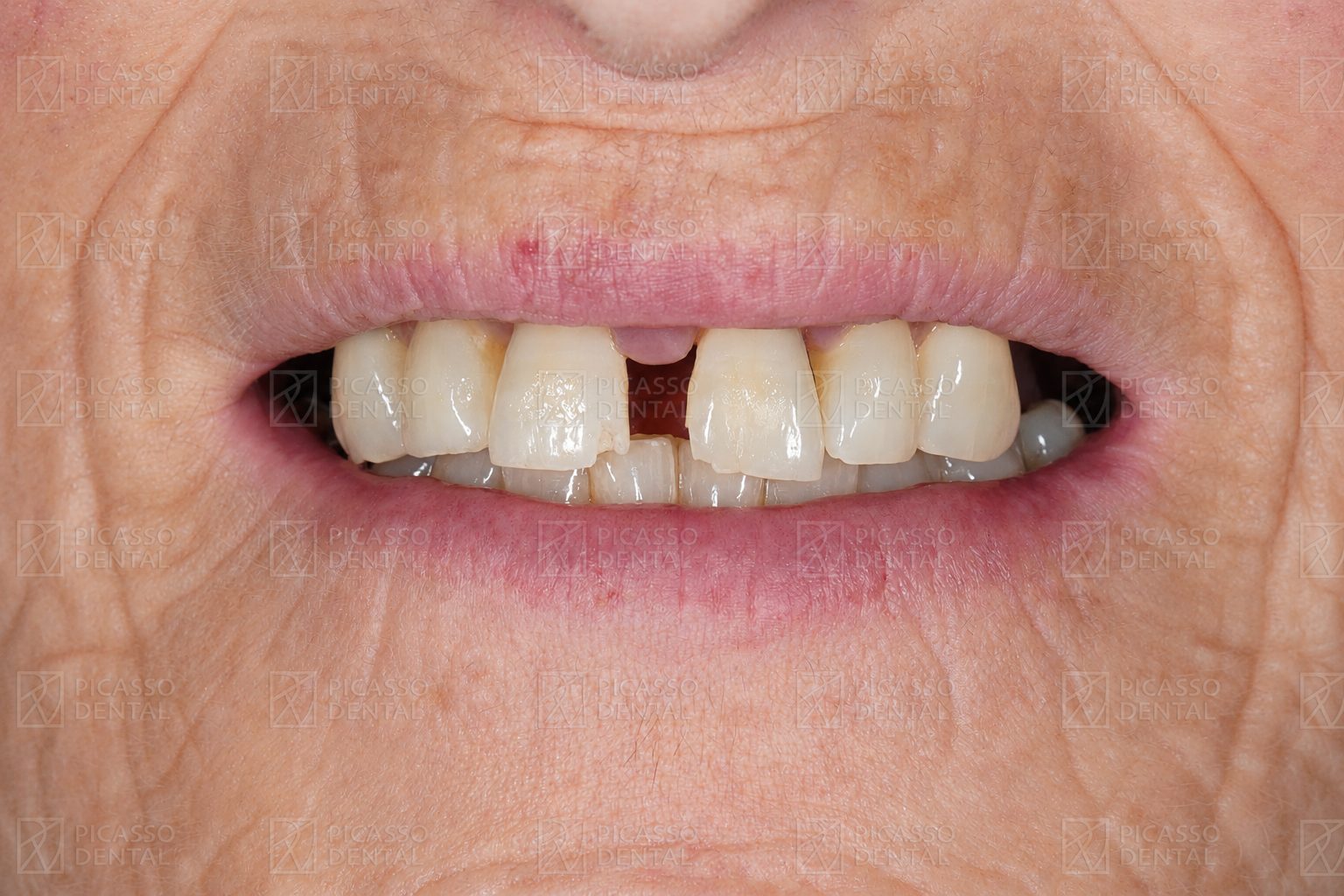 Before
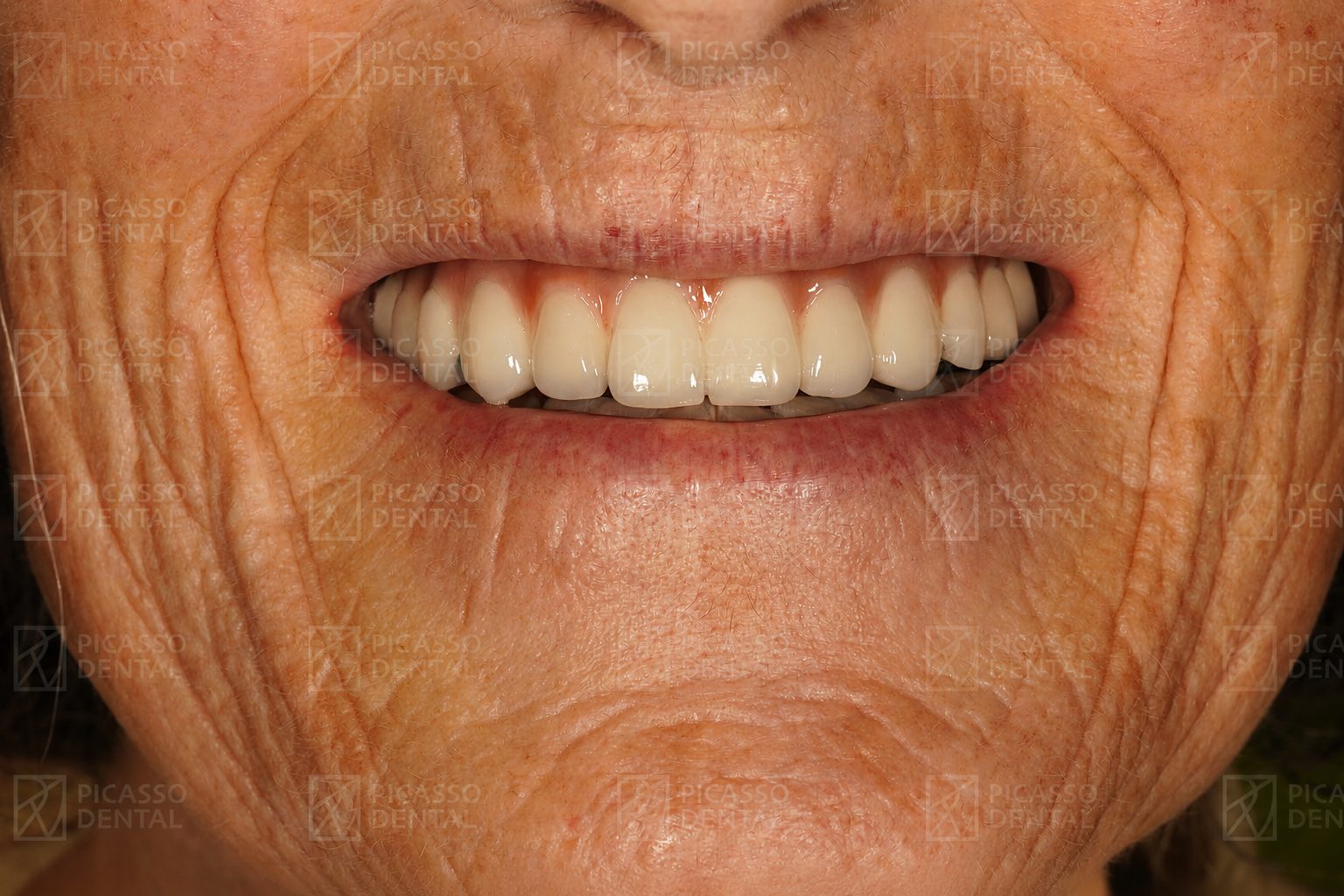 After
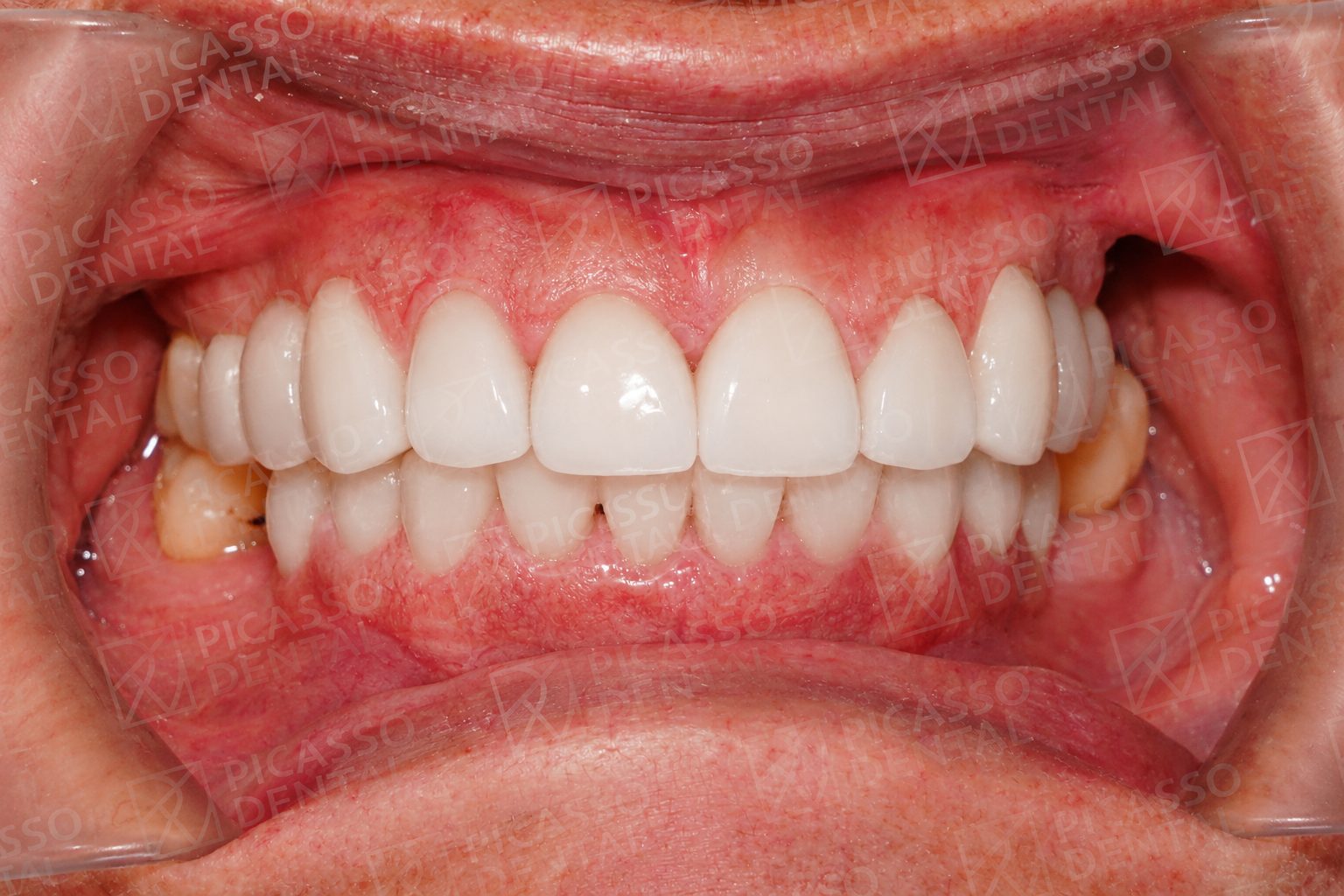
AfterMultiple Zirconia crowns on posterior teeth. Patient from Australia, 10-day trip to Hanoi Old Quarter.
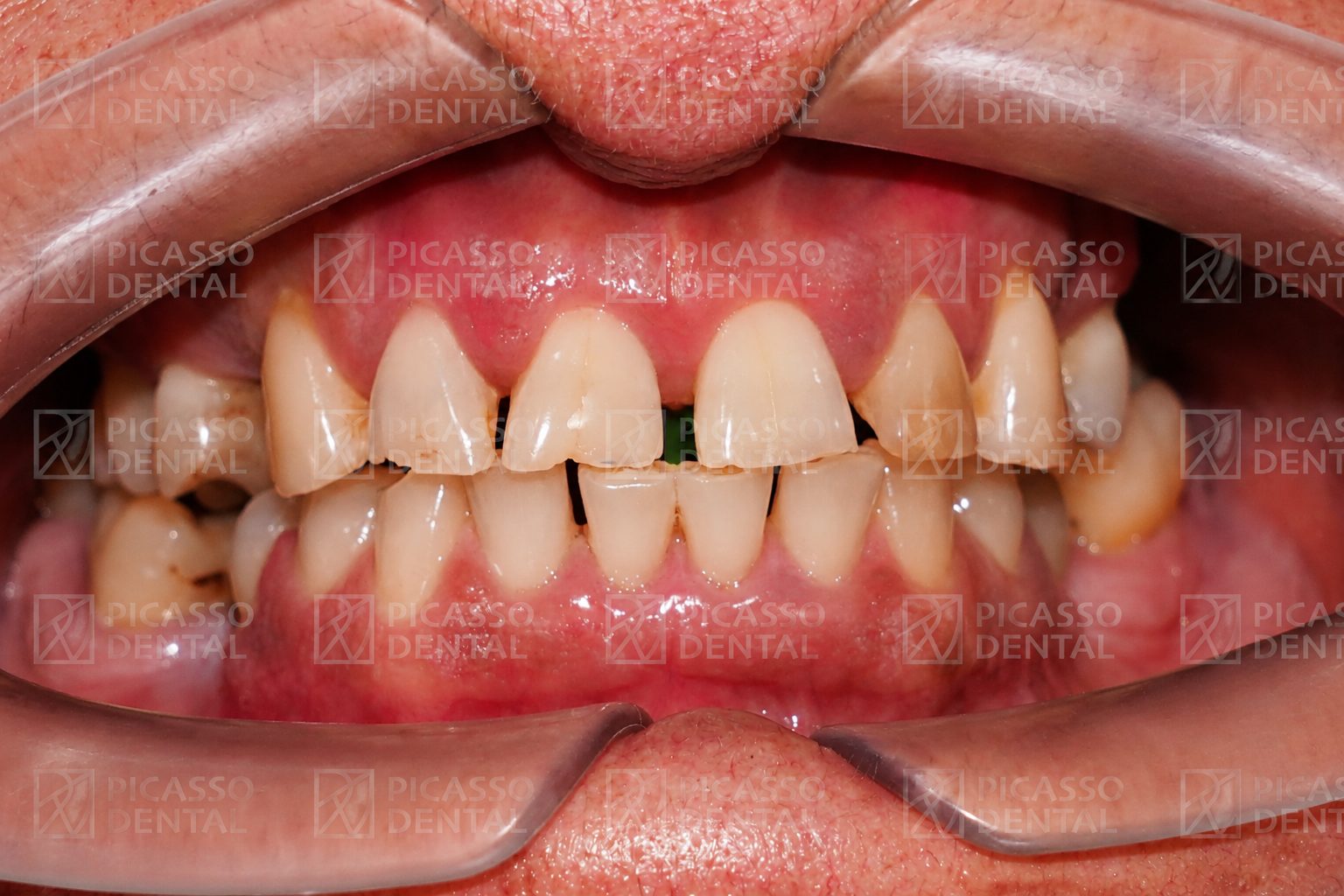 Before
 After
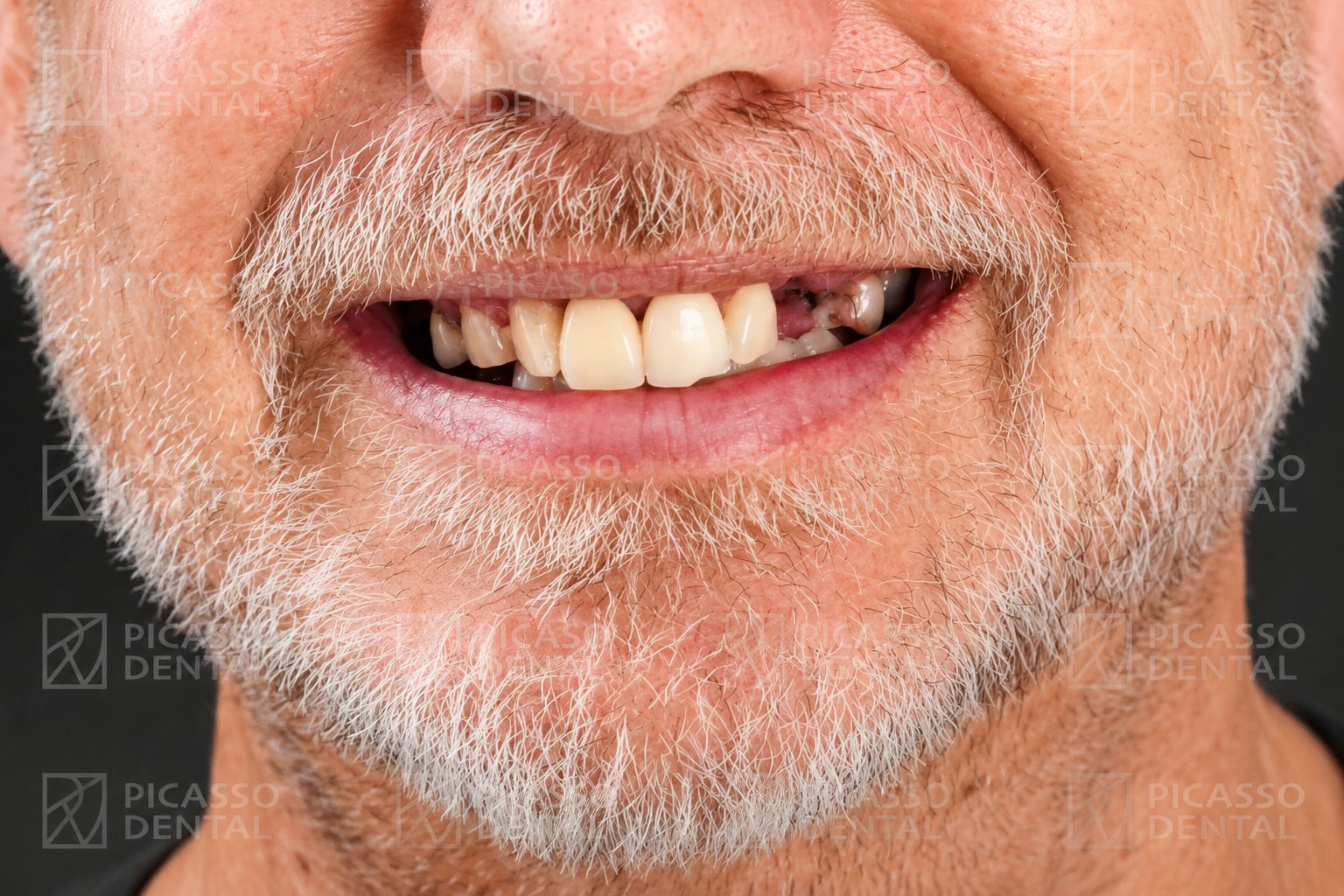
AfterEmax crowns on upper front teeth, replacing failing old PFM crowns that had visible grey margins at the gumline.
 Before
 After
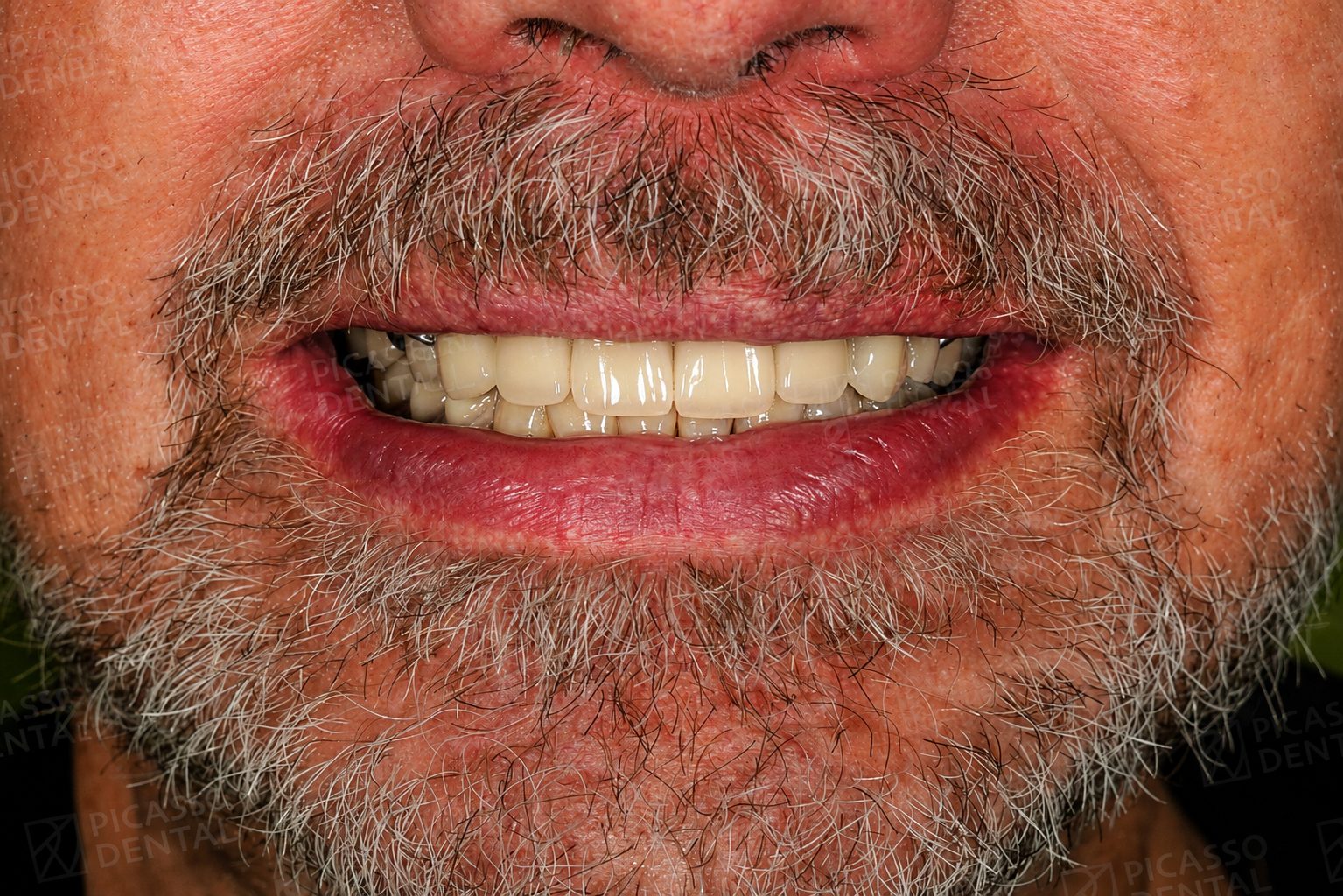
After22 crowns across upper and lower arches. Mix of Zirconia (posterior) and Lava (anterior). Two-trip treatment plan over 3 weeks.
Frequently Asked Questions
What is a porcelain crown?
A porcelain crown is a custom-made cap that covers the entire visible part of a tooth above the gumline. It restores the tooth's shape, strength, and appearance when the original tooth structure has been significantly compromised. Crowns are made from ceramic materials including porcelain-fused-to-metal, Zirconia, Emax, and Lava. The crown bonds to the prepared tooth and functions as the tooth for chewing, biting, and aesthetics.
When do I need a porcelain crown?
A crown is indicated when more than 50 percent of the tooth structure has been lost or weakened. Common situations include: after a root canal on any molar or premolar (to prevent fracture), a cavity too large for a filling, a cracked tooth that needs holding together, severe wear from grinding, severe discolouration that whitening cannot correct, anchoring a dental bridge, or restoring a dental implant. Front teeth with smaller damage are often candidates for veneers instead.
What is the difference between a crown and a veneer?
A veneer covers only the front surface of a tooth and is a cosmetic solution for front teeth that are still structurally sound. A crown covers the entire visible tooth and is required when more than 50 percent of the tooth is damaged or when the tooth needs structural reinforcement after root canal treatment. Veneers cannot substitute for crowns when structural integrity is the concern.
Which porcelain crown material should I choose?
For back teeth (molars, premolars) where chewing force is high, Zirconia is the most common choice: strong, full-ceramic, and mid-range in price. For front teeth where aesthetics are the priority, Emax (lithium disilicate) or Lava give the most natural translucency and appearance. PFM (porcelain fused to metal) is the budget option suitable for posterior teeth. The choice depends on tooth position, bite force, aesthetic priorities, and budget, and is confirmed at consultation.
How long does a porcelain crown last?
Lifespan depends on material, tooth position, bite force, and oral hygiene. PFM: 10 to 15 years. Zirconia: 12 to 20 years. Emax: 10 to 15 years on front teeth. Lava: 15 to 25 years. Many crowns last beyond their warranty period when patients attend 6-monthly recalls, floss daily at the crown margin, and avoid biting hard objects.
How is a porcelain crown placed?
Two visits. Visit 1 (approximately 60 minutes): the tooth is numbed, 1 to 2 millimetres of tooth structure is reshaped around all sides, an impression or digital scan is taken, shade matching is done, and a temporary crown is fitted. Visit 2 (approximately 30 minutes), 1 to 2 weeks later: the temporary is removed, the permanent crown is tried in, fit and bite are adjusted, and the crown is cemented permanently.
How do I care for a porcelain crown?
Crown care is the same as for natural teeth with specific attention to the gumline. Brush twice daily with a soft brush and fluoride toothpaste. Floss daily at the crown margin because the natural tooth beneath can still develop decay if plaque accumulates there. Avoid biting ice, hard candy, or other very hard objects. If you grind at night, wear a custom night guard. Attend 6-monthly recall appointments.
What does a porcelain crown cost at Picasso Dental Clinic?
Per-unit pricing at Picasso: PFM 5,000,000 VND (approximately $200 USD), Zirconia 7,000,000 VND (approximately $280 USD), Emax 9,000,000 VND (approximately $360 USD), Lava 11,000,000 VND (approximately $440 USD). All-inclusive: preparation, impression, lab fabrication, fitting, and cementation. Australian equivalent for the same materials is AUD $1,200 to $2,500 per crown. See the dental crowns service page for full pricing detail.
Start Here
Start with a brief.
Send us your X-ray and we will confirm whether a crown is necessary, which material suits your tooth position, and what the all-in price would be.