
Porcelain Veneers
Veneers vs Invisalign:
Which Is Right for Your Smile?
These two treatments are not competitors. They are different tools for different problems, and knowing which one you actually need saves you time, money, and unnecessary tooth preparation.

Key Takeaways
- Invisalign moves teeth into correct positions. Veneers cover existing teeth to change their appearance. They solve different problems.
- If your teeth are crooked, crowded, or have bite issues, Invisalign should come first. It preserves natural tooth structure.
- If your teeth are well aligned but have stubborn stains, chips, or shape problems, veneers deliver results in 2 to 3 weeks.
- Many patients benefit from both: Invisalign first to correct alignment, then selective veneers for remaining cosmetic concerns.
What each treatment actually does
This comparison comes up constantly at our Hanoi and Ho Chi Minh City clinics, usually from patients who have been researching online and feel overwhelmed by conflicting advice. After treating patients from 65 nationalities over more than a decade, I can tell you clearly: these treatments are not really competitors. They are different tools for different jobs.
Invisalign physically moves your teeth through a series of clear plastic aligners worn 22 hours per day. The aligners apply gentle pressure to gradually shift teeth into new positions over six to eighteen months. This changes your actual dental structure and can correct bite problems that affect long-term oral health.
Veneers are thin shells of porcelain bonded to the front surface of your teeth. They do not move anything. Instead, they cover imperfections and create the appearance of a perfect smile. Think of veneers as highly refined, permanent coverage that transforms what you see without changing the underlying alignment.

One way I explain it to patients at Picasso Dental: Invisalign is like renovating the foundation of a house, while veneers are like adding beautiful new cladding. Sometimes you need the foundation work, sometimes you just need the cosmetic update, and sometimes you genuinely need both in sequence.
When Invisalign is the better choice
If your teeth are crooked, crowded, or have significant gaps, Invisalign should be your first consideration. Orthodontic movement preserves your natural tooth structure, which is always preferable to covering healthy teeth with porcelain restorations that require removing enamel and will need maintenance or replacement over time.
I have seen patients at our Da Nang clinic who had veneers placed elsewhere specifically to cover crooked teeth. The result looked artificial because the dentist had to make the veneers unnaturally thick to compensate for the underlying misalignment. The better approach is always straightening first with Invisalign, then reassessing whether veneers are actually needed.
Invisalign also corrects bite problems: overbites, underbites, crossbites, and open bites. These functional issues cause jaw pain, uneven tooth wear, and difficulty chewing. Veneers do nothing for bite problems and can actually make them worse by altering how upper and lower teeth contact each other.

Who is a strong Invisalign candidate
Patients who benefit most from Invisalign have teeth that are properly formed and healthy but positioned incorrectly. They want genuine structural correction rather than cosmetic masking. They are prepared for a treatment timeline of six to eighteen months and the commitment of wearing aligners 22 hours daily. Younger patients especially benefit from choosing Invisalign, since they are investing in their natural teeth for decades.
When veneers are the better choice
Veneers excel at cosmetic problems that orthodontics cannot fix. If your teeth are already straight but you have intrinsic stains from tetracycline or fluorosis, veneers provide immediate transformation that whitening cannot achieve. These deep stains are inside the tooth structure and no bleaching agent reaches them.
Veneers work exceptionally well for teeth with significant chips, cracks, or surface wear. A patient visited our Ho Chi Minh City clinic with severe tooth wear from grinding. Her teeth were properly aligned but ground down to short, flat surfaces. Invisalign could not restore lost tooth structure, but a full set of veneers rebuilt her smile beautifully and gave her back proper vertical dimension.
Veneers also address congenitally small or misshapen teeth. Some patients naturally have peg-shaped lateral incisors or teeth with unusual proportions. No amount of orthodontic movement changes tooth shape, but veneers can create ideal, balanced proportions across the smile.
The important caveat: placing veneers requires removing a thin layer of enamel from each tooth. This is permanent. Once veneered, those teeth will need coverage for the rest of the patient's life. The preparation is minimal with modern ultra-thin veneers, but patients must understand the long-term commitment before proceeding.
Not sure which treatment you need? A smile assessment at Picasso Dental takes the guesswork out of it. We examine your alignment, bite, tooth condition, and aesthetic goals to give you a clear recommendation.
Book a consultationWhy many patients benefit from both
In my years at Picasso Dental Clinic, I have learned that the best smile results often come from combining treatments in the correct sequence. Straighten with Invisalign first, then enhance with selective veneer placement on teeth that need additional cosmetic improvement after alignment is achieved.
For example, a patient might have moderately crowded teeth plus one darkly stained front tooth. We use Invisalign to correct the crowding, then place a single veneer on the discolored tooth to match the surrounding whitened natural teeth. This combination gives exceptional results that neither treatment alone could achieve.
Sometimes completing Invisalign creates small black triangles between teeth as they move into correct positions. The gum tissue does not always fill in completely between newly straightened teeth. Strategic veneer placement on two to four front teeth can close these triangles while keeping the remaining natural teeth untouched.

The sequencing matters
Always complete Invisalign before placing veneers. If veneers go first and you then attempt to move those teeth with aligners, the aligners may not fit correctly over the veneers and the veneers can debond or crack as the teeth shift. The sequence is non-negotiable: alignment first, cosmetic coverage second.
At our Da Lat clinic, I typically suggest that patients complete Invisalign, live with their new smile for three to six months, then decide whether they want veneers. Many patients discover they are completely satisfied with their straightened natural teeth and skip veneers entirely, saving money and tooth structure. That outcome is always the best one.
How to decide what you actually need
Start with a comprehensive evaluation rather than deciding in advance which treatment you want. I regularly see patients who have convinced themselves they need veneers when Invisalign would serve them better, and vice versa. Coming in with a fixed decision can mean missing the treatment that actually matches your situation.
- Identify your primary concern Are your teeth misaligned, crowded, or spaced? That points toward Invisalign. Are they well aligned but discolored, chipped, or poorly shaped? That points toward veneers. Both? Start with Invisalign.
- Consider your timeline If you need results in weeks for a specific event, veneers are the only option. If you have 12 to 18 months and want the most conservative approach, Invisalign preserves more natural tooth structure.
- Bring photos of smiles you admire This helps the consultation focus on your actual aesthetic goals rather than abstract descriptions. Sometimes the smile you want is achievable with Invisalign alone; sometimes it requires veneers.
- Ask about functional bite correction If you have jaw pain, uneven wear, or bite problems, those need to be factored into the plan. Veneers alone will not resolve these and may worsen them if placed without addressing alignment first.
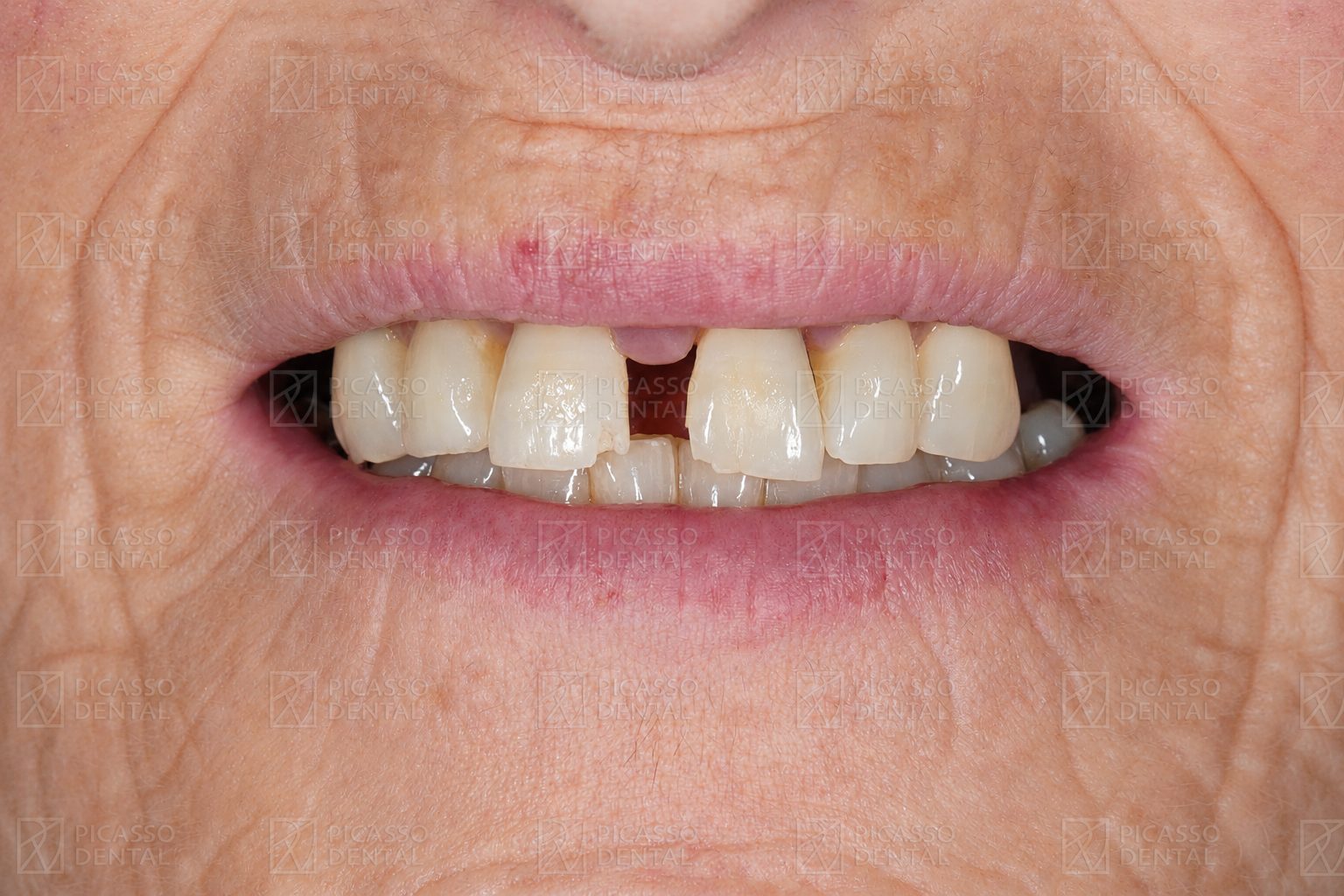 Before
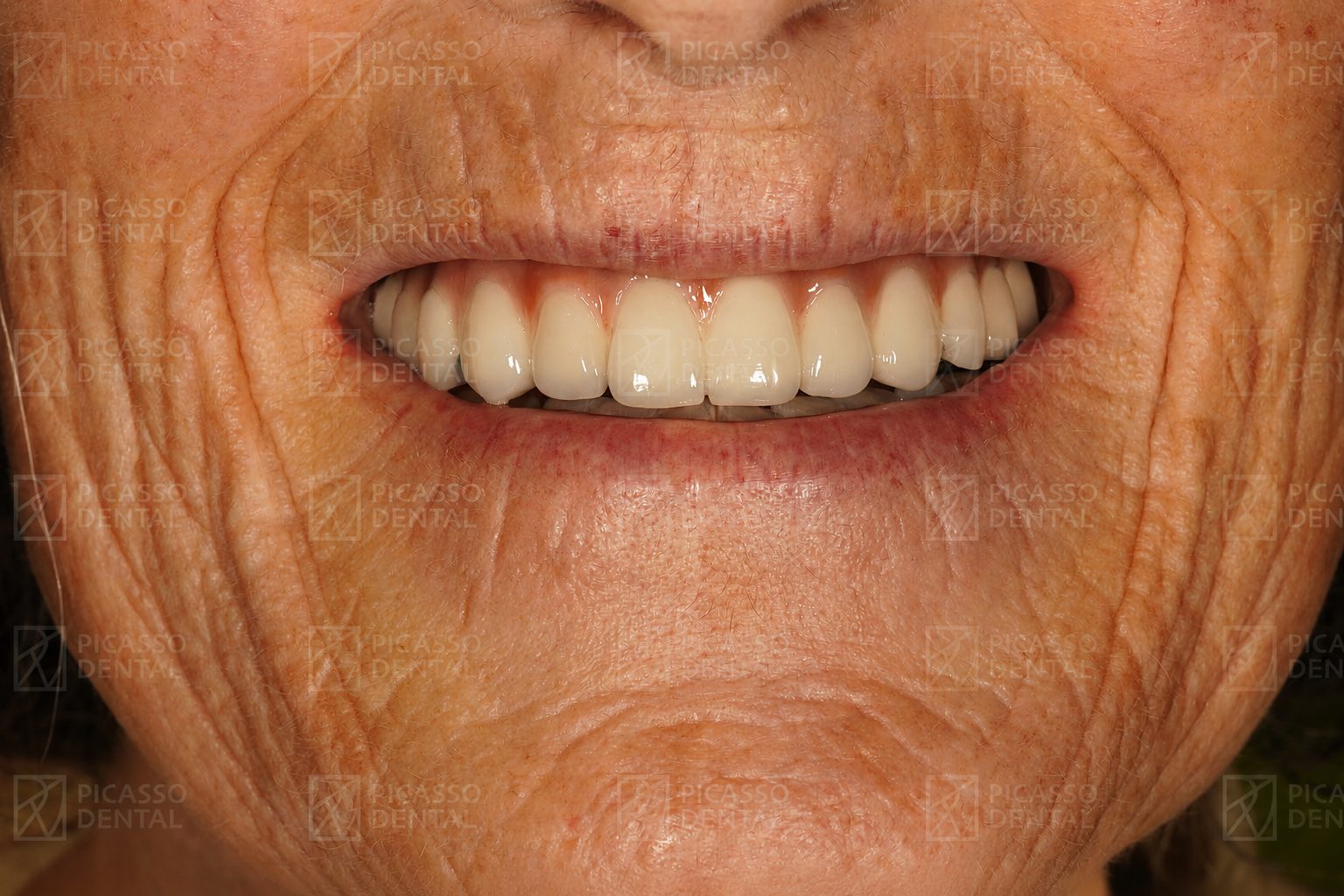 After
AfterPorcelain veneers on upper 8 teeth. Teeth were already aligned; veneers addressed discolouration and proportion.
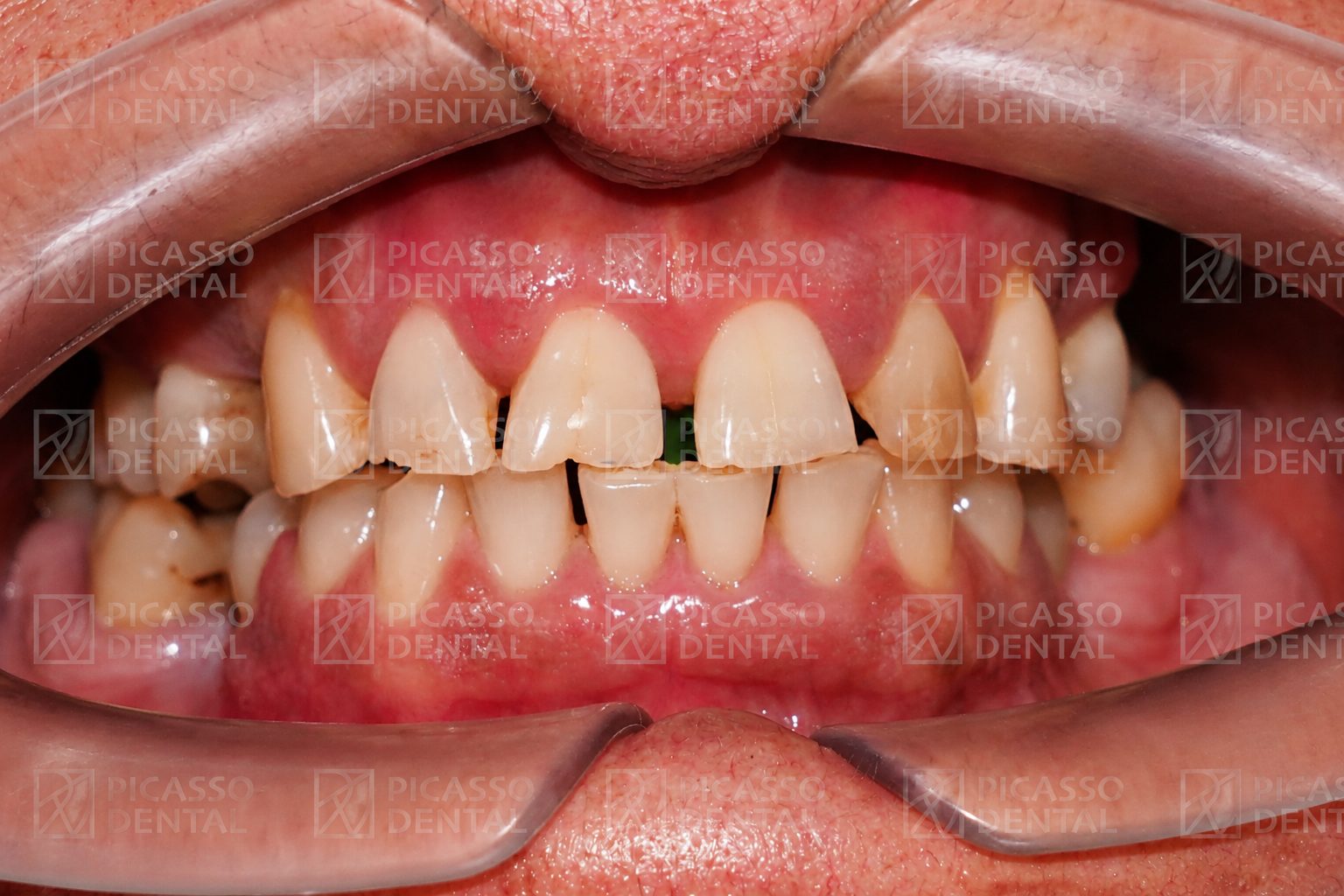 Before
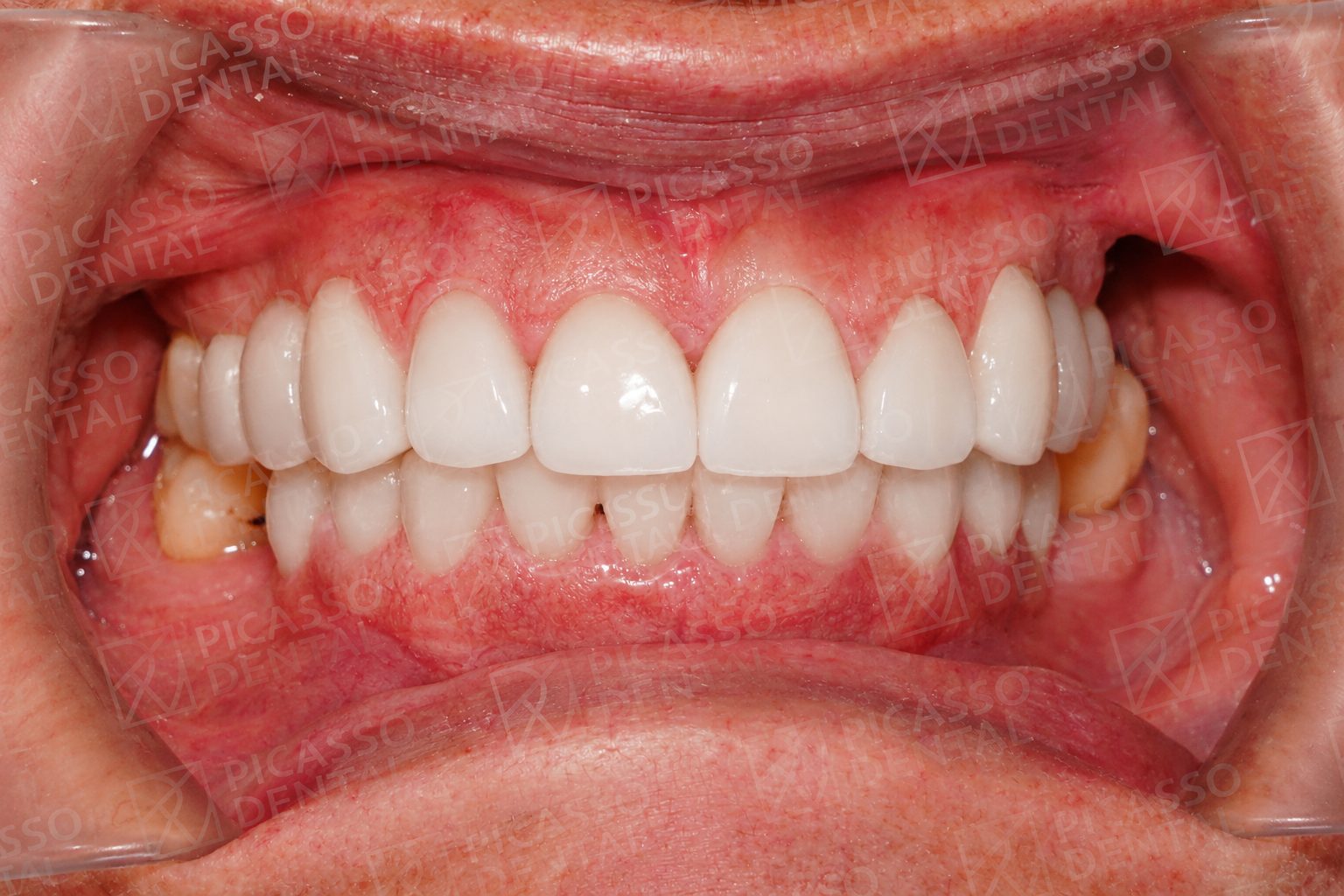 After
AfterFull smile makeover combining teeth whitening and 6 upper veneers. Invisalign was completed prior to veneer placement.
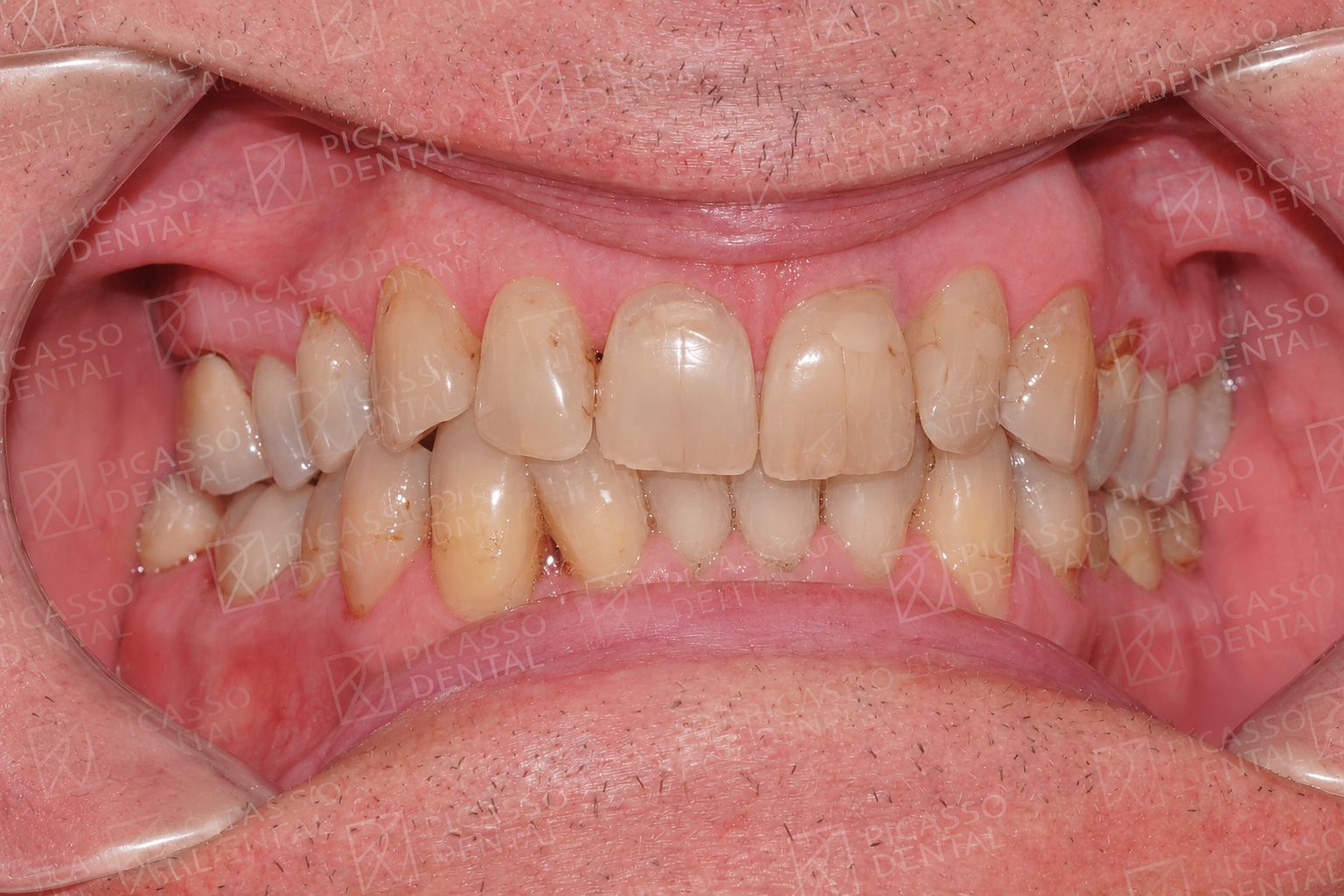 Before
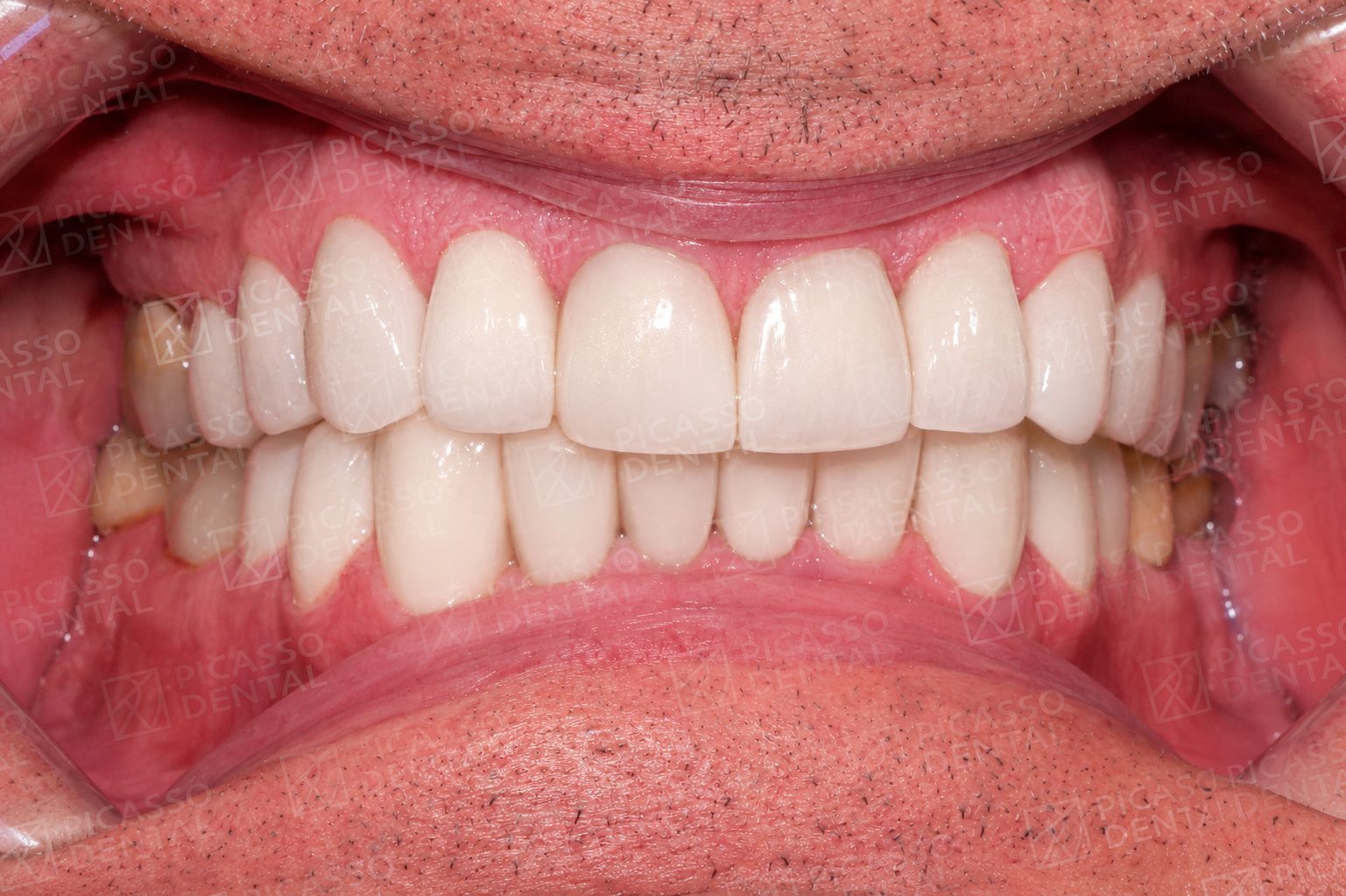 After
AfterSevere staining and uneven tooth length corrected with Emax veneers. Alignment was satisfactory without orthodontics.
Frequently Asked Questions
What is the core difference between veneers and Invisalign?
Invisalign physically moves teeth into new positions using clear removable aligners worn 22 hours per day over 6 to 18 months. Veneers are thin porcelain shells bonded to the front surface of teeth to cover cosmetic imperfections. Invisalign corrects your dental structure; veneers improve appearance without changing underlying alignment. One analogy: Invisalign renovates the foundation, veneers add beautiful new cladding.
When is Invisalign the better choice?
Invisalign is the better choice when teeth are crooked, crowded, or have significant gaps. Orthodontic movement preserves natural tooth structure, which is always preferable to covering teeth with veneers. Invisalign also corrects bite problems such as overbites, underbites, and crossbites. These functional issues cause jaw pain and uneven wear that veneers cannot address and can actually worsen by changing tooth contact angles.
When are veneers the better choice?
Veneers are the better choice when teeth are already well aligned but have stubborn stains from tetracycline or fluorosis that whitening cannot remove, significant chips or cracks, severe wear from grinding, or congenitally small or misshapen proportions. Treatment time is also much faster: permanent veneers in 2 to 3 weeks versus 6 to 18 months for Invisalign.
Can I have both Invisalign and veneers?
Yes, and the combination is often the best outcome for patients with both alignment and cosmetic concerns. The correct sequence is always Invisalign first, then veneers. Completing Invisalign before veneers ensures the aligners fit correctly and the veneers are placed on correctly positioned teeth. Reversing the sequence can cause veneers to debond or crack as teeth move.
Do veneers damage natural teeth?
Placing veneers requires removing a thin layer of enamel, typically less than 1 millimetre, from the front surface of each tooth. This is permanent and irreversible. Once you have veneers, the teeth will need veneers or other coverage for the rest of your life. The preparation is minimal with modern ultra-thin veneers, but patients should understand the commitment before proceeding.
How much do Invisalign and veneers cost at Picasso Dental Clinic?
Costs vary by case complexity. For veneers, pricing depends on the number of teeth and material chosen. For Invisalign, pricing depends on the complexity of tooth movement required. Both treatments at Picasso cost a fraction of equivalent work in Australia, the UK, or the US. A consultation and smile assessment determines the exact treatment plan and pricing for your specific case.
How do I decide which treatment I need?
A comprehensive clinical evaluation is the only reliable way to determine which treatment suits your smile goals. During consultation at Picasso Dental Clinic, the dentist assesses alignment, bite, tooth condition, and your aesthetic goals. Bringing photos of smiles you admire helps communicate the outcome you want. Many patients decide between options only after seeing what each treatment can and cannot achieve for their specific teeth.
Patient Video Testimonial

Start Here
Start with a brief.
Tell us whether your concern is alignment, appearance, or both, and we will recommend the right treatment path for your specific teeth.