Dental Implants
Smile Reborn: Nobel BioCare Implant with LAVA Ceramic Crown
Five years without a front tooth. A removable denture that never felt right. One carefully planned implant later, a result undetectable from natural teeth.

Key Takeaways
- Delayed implant placement creates additional clinical challenges: five years without a tooth root produced moderate bone loss requiring careful implant positioning and bone augmentation at placement.
- Nobel BioCare Active implants achieve excellent primary stability in the softer bone of the upper front jaw, making them a preferred choice for aesthetic single-tooth cases.
- LAVA zirconia-ceramic crowns replicate the translucency, colour gradients, and surface character of natural teeth in a way that simpler monolithic crowns cannot.
- Acting sooner after tooth loss produces a simpler procedure and better long-term bone preservation; waiting compounds the clinical difficulty and cost.
Background: Five Years of Postponed Treatment
Our patient, a woman in her 40s, had lost an upper front tooth five years before she came to see us at Picasso Dental. At the time of the original tooth loss, she had been fitted with a removable partial denture as a temporary measure. That temporary measure had remained in place for five years because she kept postponing the definitive treatment, unsure where to go, uncertain about the cost, and apprehensive about the surgical complexity of implants.
During those five years, she had avoided smiling in photographs, become selective about what she ate, and grown deeply self-conscious about the denture. She was referred to Picasso Dental by a colleague who had been treated at our clinic. She came in hesitant, prepared for bad news about the bone, and hoping the situation had not become unmanageable.

The Clinical Challenge: Five Years of Bone Resorption
When a tooth root is absent, the jawbone that used to surround it no longer receives stimulation from chewing forces. Without that stimulation, the bone resorbs: it loses density and volume in the area of the gap. This process begins within months of tooth loss and continues indefinitely. Five years is a long time.
Our 3D cone beam CT assessment revealed moderate bone loss at the site, as expected. The buccal plate (the thin wall of bone on the lip side of the site) had reduced noticeably, and the overall bone width was narrower than at adjacent sites. However, sufficient volume remained to place an implant with careful three-dimensional positioning.
We did not require a major bone graft in this case. We did place a small amount of particulate bone augmentation material around the implant at the time of placement to reinforce the buccal wall and provide a buffer against further resorption during the healing period. This is a standard precaution for aesthetic cases in the upper front jaw where the buccal plate is thin.
Why Nobel BioCare for This Case
Nobel BioCare is a Swiss manufacturer with over 60 years of clinical research supporting their implant systems. They are considered premium tier and are used by leading implant specialists worldwide. For this case, we selected the Nobel BioCare Active implant design.
The Active design features a tapered body and an aggressive self-cutting thread pattern. These characteristics allow it to achieve excellent primary stability even in softer bone, which is characteristic of the upper front jaw. Primary stability, the initial mechanical engagement between the implant and surrounding bone immediately after placement, is critical for aesthetic cases. When stability is high, the risk of micro-movement during early healing is minimised, and the soft tissue contour around the healing implant remains predictable.
For this particular case, working in a site with five years of bone loss, achieving reliable primary stability required both careful implant selection and precise three-dimensional positioning. Computer-guided surgical planning placed the implant at the angle and depth where bone density was highest within the available volume.

The LAVA Ceramic Crown: Why Aesthetics at This Level Require Premium Materials
For the final restoration, we specified a LAVA zirconia-based ceramic crown fabricated in our certified laboratory. LAVA is a 3M product combining a high-strength zirconia framework veneered with feldspathic porcelain. The zirconia core provides the structural strength needed to withstand biting forces in the upper front jaw, while the feldspathic porcelain overlay delivers the optical qualities that make the crown look like a natural tooth.
Natural teeth are not uniformly white. They are more translucent at the cutting edges, slightly more saturated and opaque near the gum line, and have subtle internal colour variations that change how light passes through and reflects from the tooth. A monolithic zirconia crown, pressed to a single shade throughout, cannot replicate this. LAVA, with its layered porcelain construction, can.
The laboratory technician worked from standardised chairside photographs taken under controlled lighting, physical shade records using the Vita scale, and custom shade notes describing the specific character of the adjacent teeth. The goal was not to produce a generically white crown, but to produce a crown that matched this specific patient's dentition in all its natural variation.
Treatment Timeline and Outcome
The implant placement appointment took approximately 60 minutes. Local anaesthesia ensured the patient felt nothing during the procedure. The implant was positioned using guided surgery. Bone augmentation material was placed around the buccal aspect and the site was closed. The patient left the clinic with minimal post-operative discomfort, which resolved within a few days.
- Day 1: Implant placement Nobel BioCare Active implant placed under local anaesthesia using guided surgery. Bone augmentation material placed at buccal aspect. Healing abutment fitted. Temporary removable retainer provided for aesthetics during healing.
- Week 2: Review Healing confirmed. No signs of infection or complication. Soft tissue contour developing as planned. Impressions taken for temporary crown fabrication.
- Week 4: Temporary crown placed Temporary crown fitted on a provisional abutment. This serves both aesthetic function and guides the soft tissue into the correct emergence profile shape around the eventual permanent crown.
- Month 3: Osseointegration confirmed Periapical radiograph and clinical stability check confirmed successful osseointegration. Final crown fabrication commenced. Laboratory photographs and shade records sent.
- Month 3.5: LAVA crown seated Final LAVA crown tried in, adjusted for occlusion, examined under natural and artificial light, and permanently cemented. Shade match confirmed excellent. Emergence profile matches adjacent natural teeth.
At the final appointment, the LAVA crown was examined carefully in natural and artificial light. The shade match was excellent. The emergence profile, the way the crown rises from the gum, replicated that of a natural tooth. Even at close range, the implant was undetectable.
Missing a front tooth or postponing an implant? Send your X-rays and our team will assess the bone situation and provide a treatment plan within 24 hours.
Book an assessmentKey Takeaways from This Case
Delayed implant treatment always creates additional challenges. The bone loss that accumulated over five years made this procedure more technically demanding than it would have been if the implant had been placed within six months of the original tooth loss. The bone augmentation step added procedure time and cost that would not have been necessary with prompt treatment. Earlier intervention is almost always the better choice, clinically and economically.
The choice of implant system and crown material matters for aesthetic cases in the front of the mouth. Not all implants and crowns are equal in their capacity to deliver results that are genuinely undetectable. A premium system from an established manufacturer, combined with skilled laboratory work using premium ceramic materials, produces outcomes that simpler alternatives cannot reliably match. For a front tooth visible every time the patient smiles, the investment in quality at this level is justified.

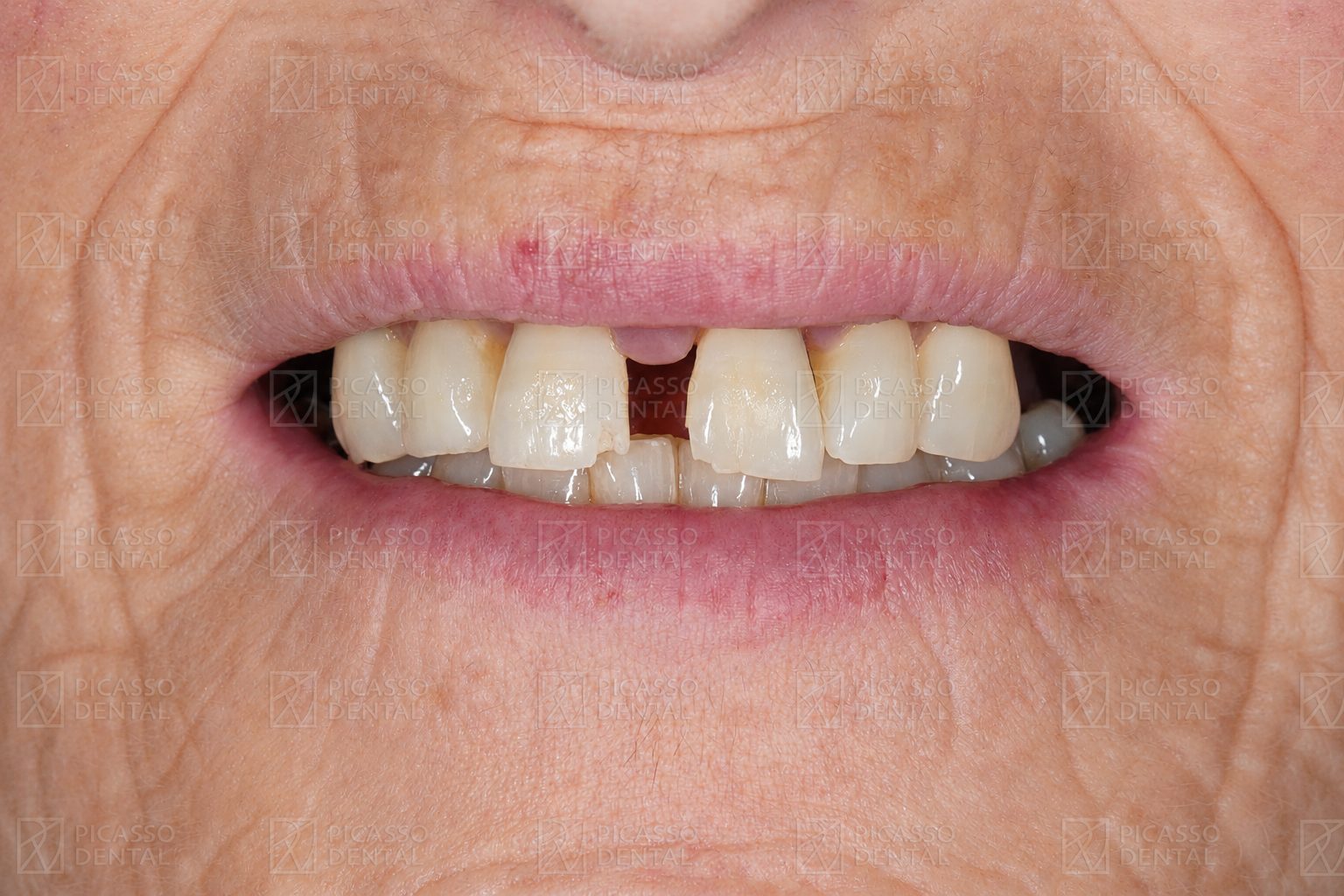 Before
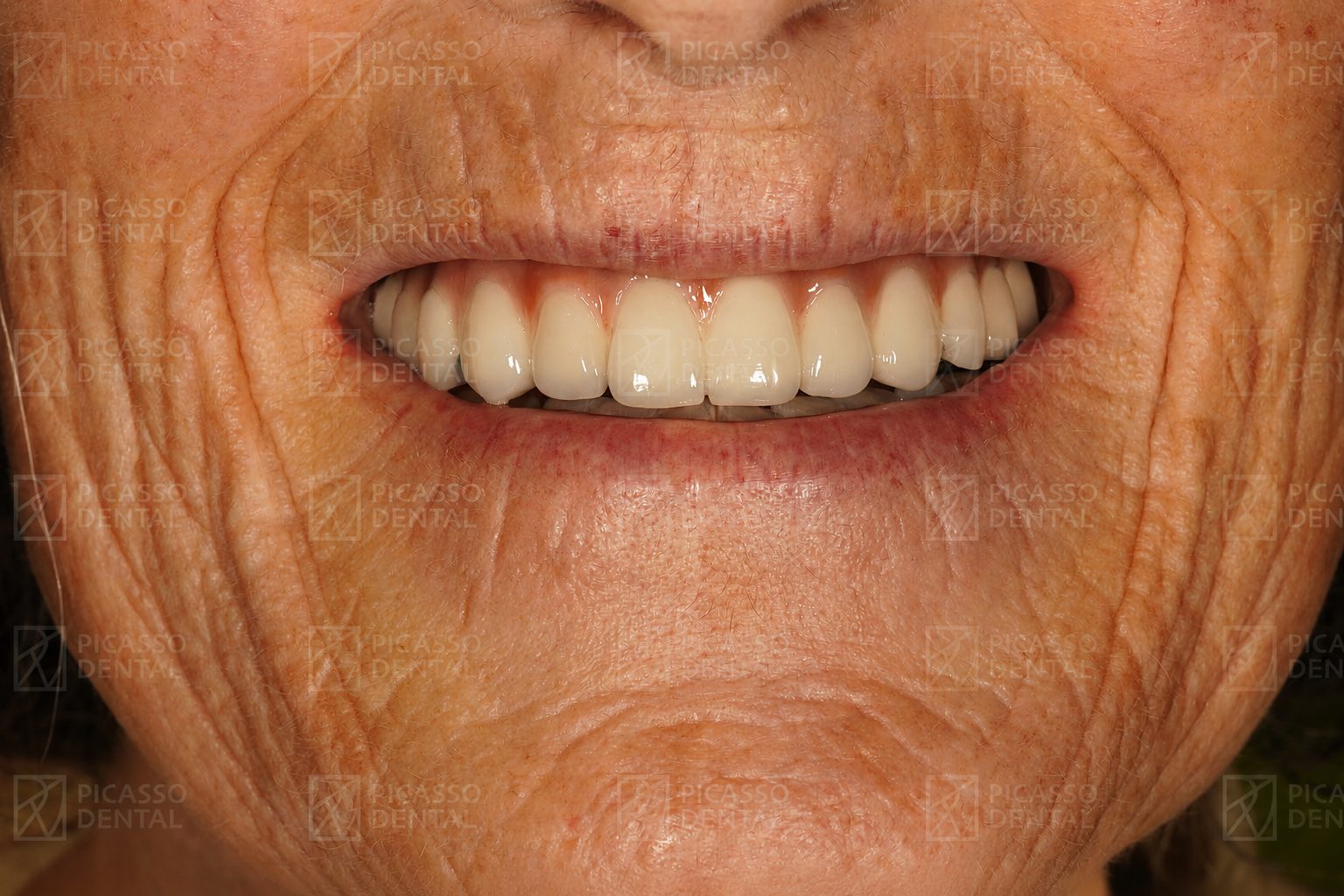 After
AfterUpper central incisor replaced with Nobel BioCare implant and LAVA ceramic crown.
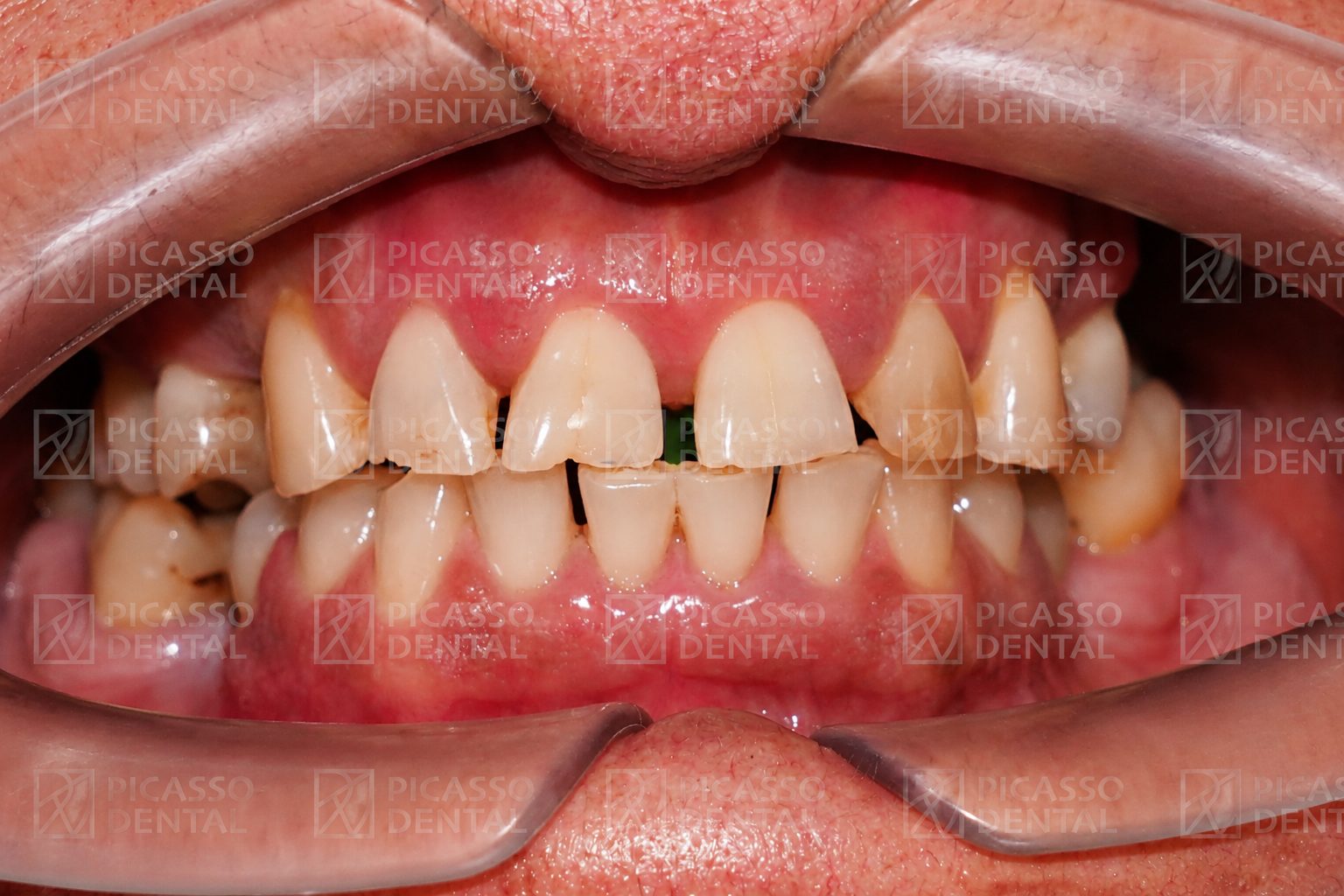 Before
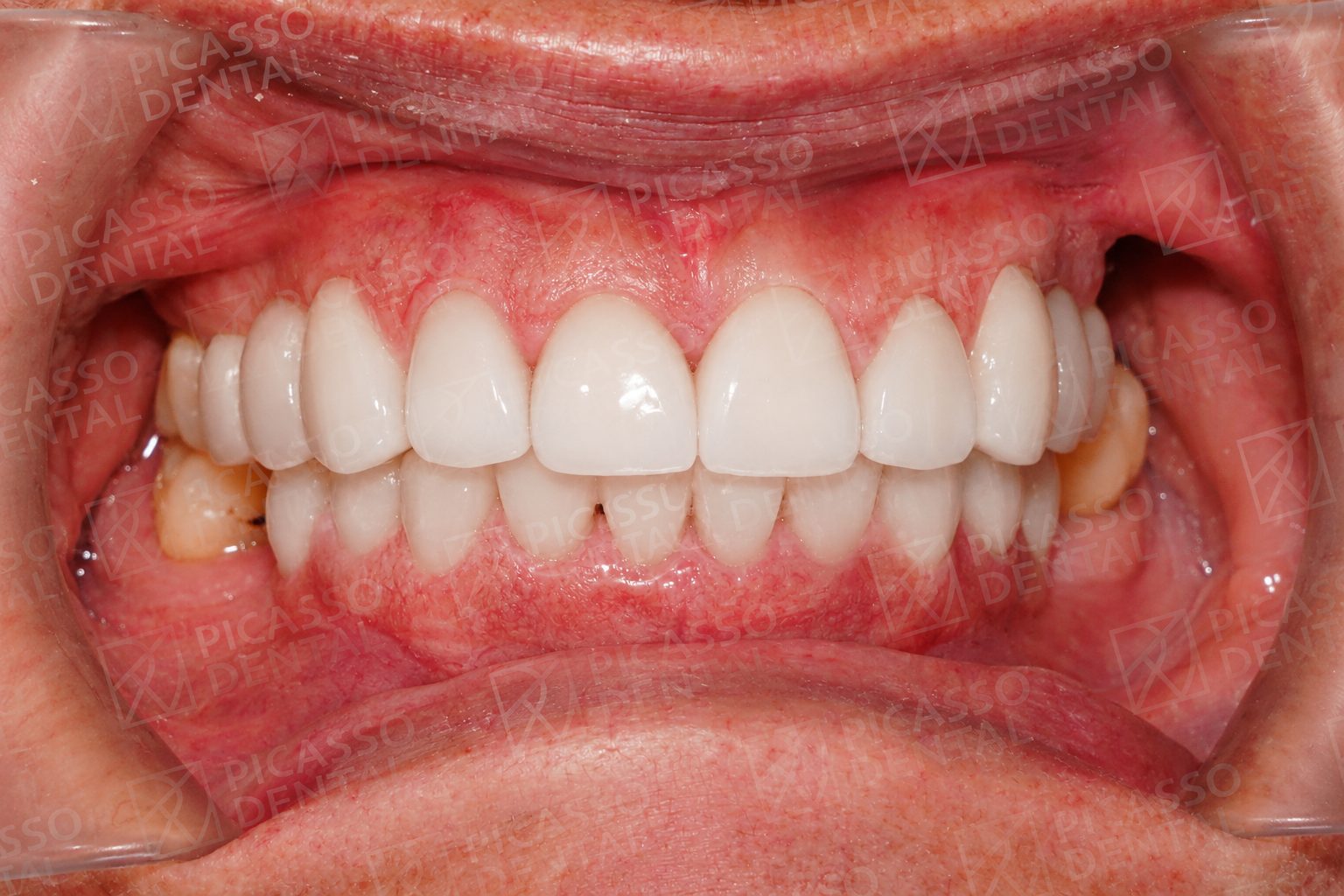 After
AfterLateral incisor implant with bone augmentation following three years of bone loss at the site.
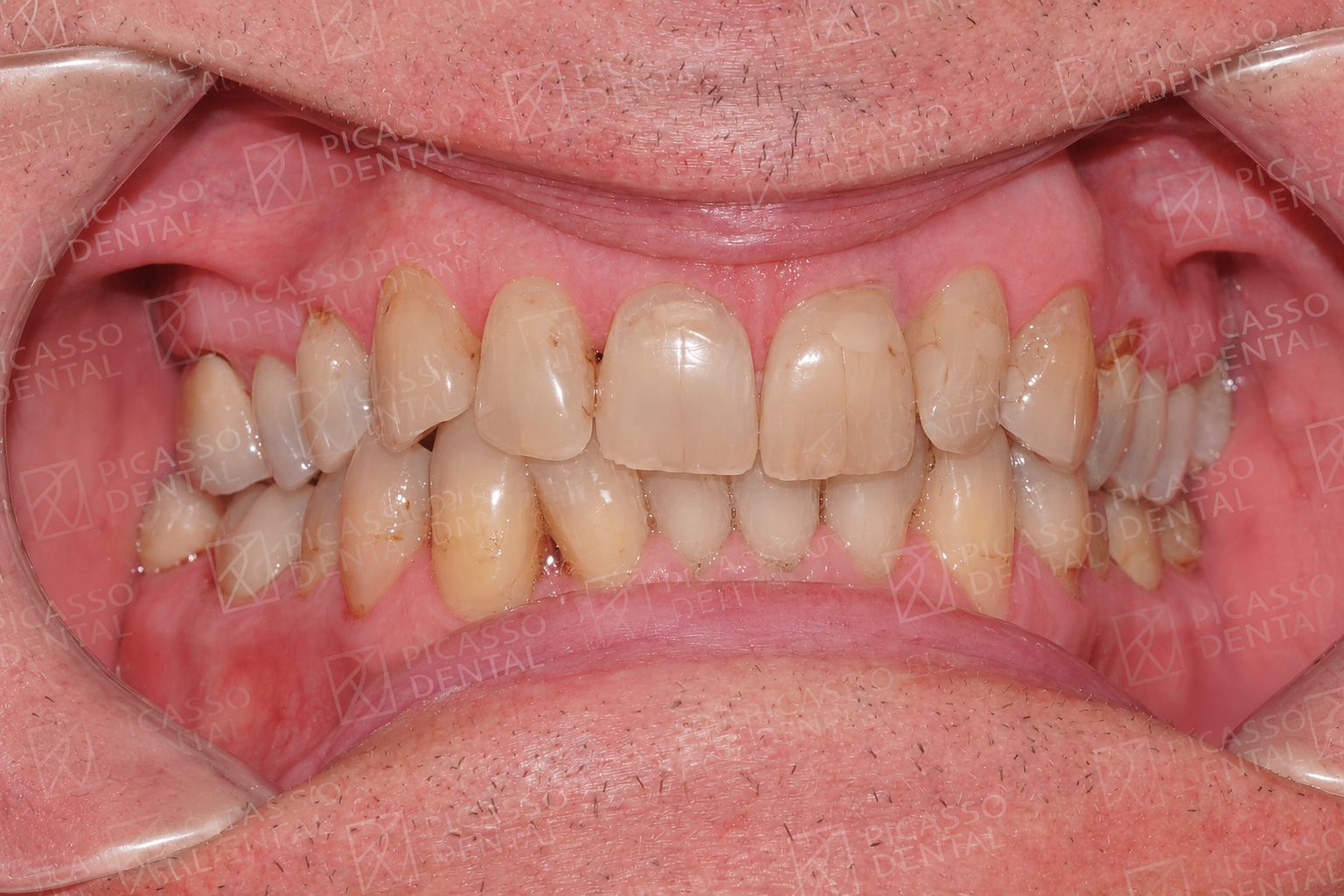 Before
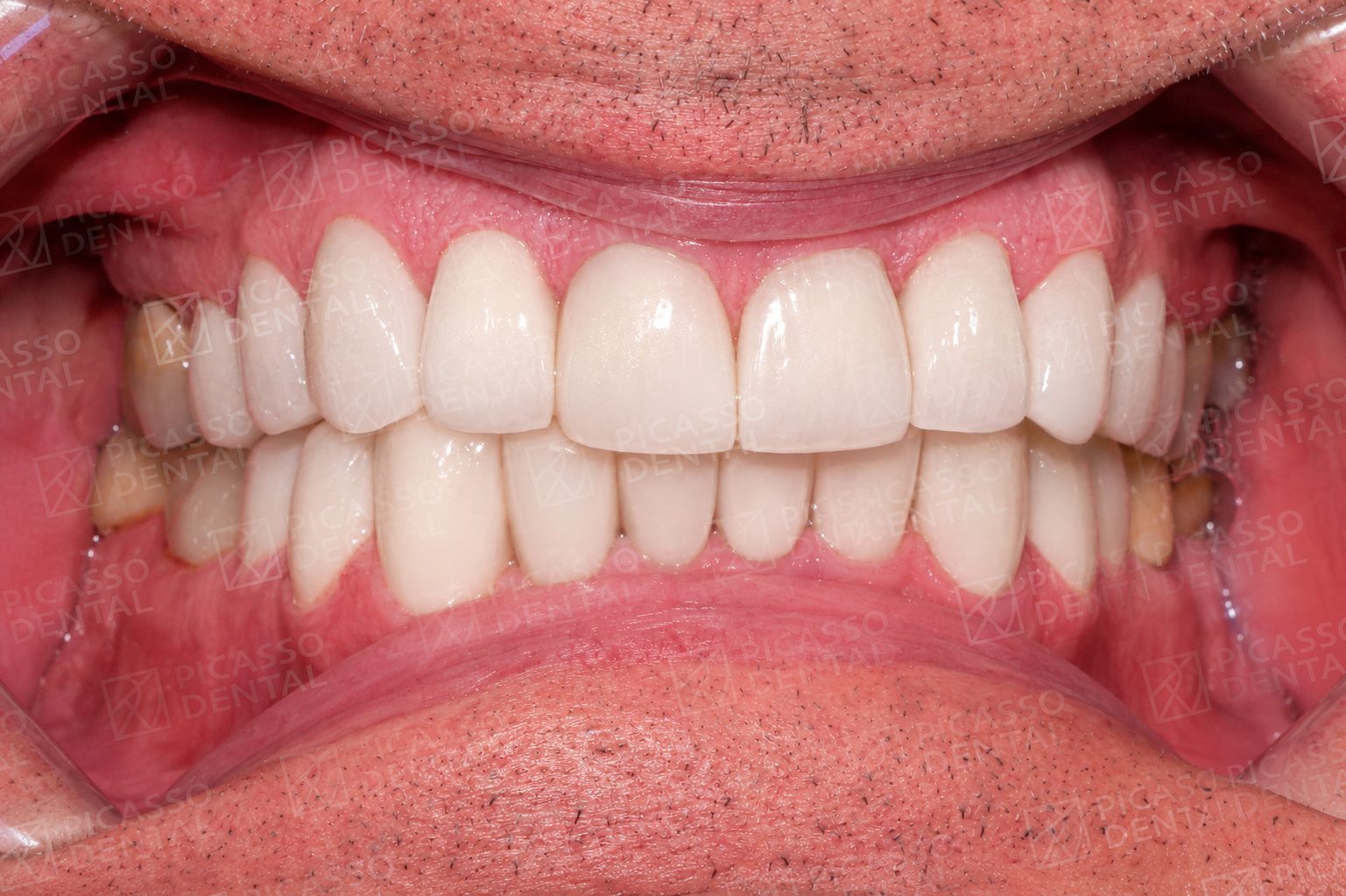 After
AfterTwo adjacent upper front teeth: Nobel BioCare implants with Emax pressed ceramic crowns.
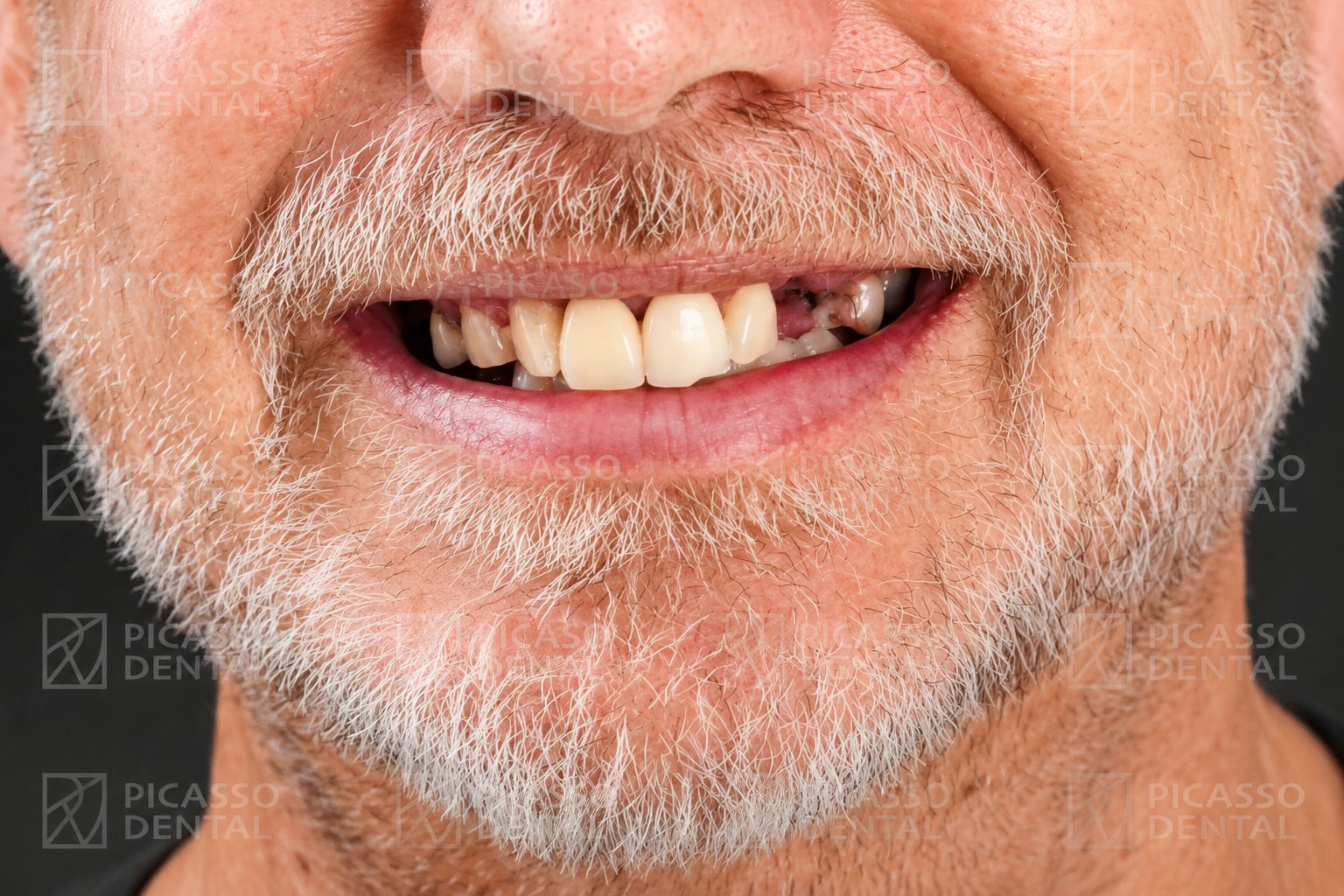 Before
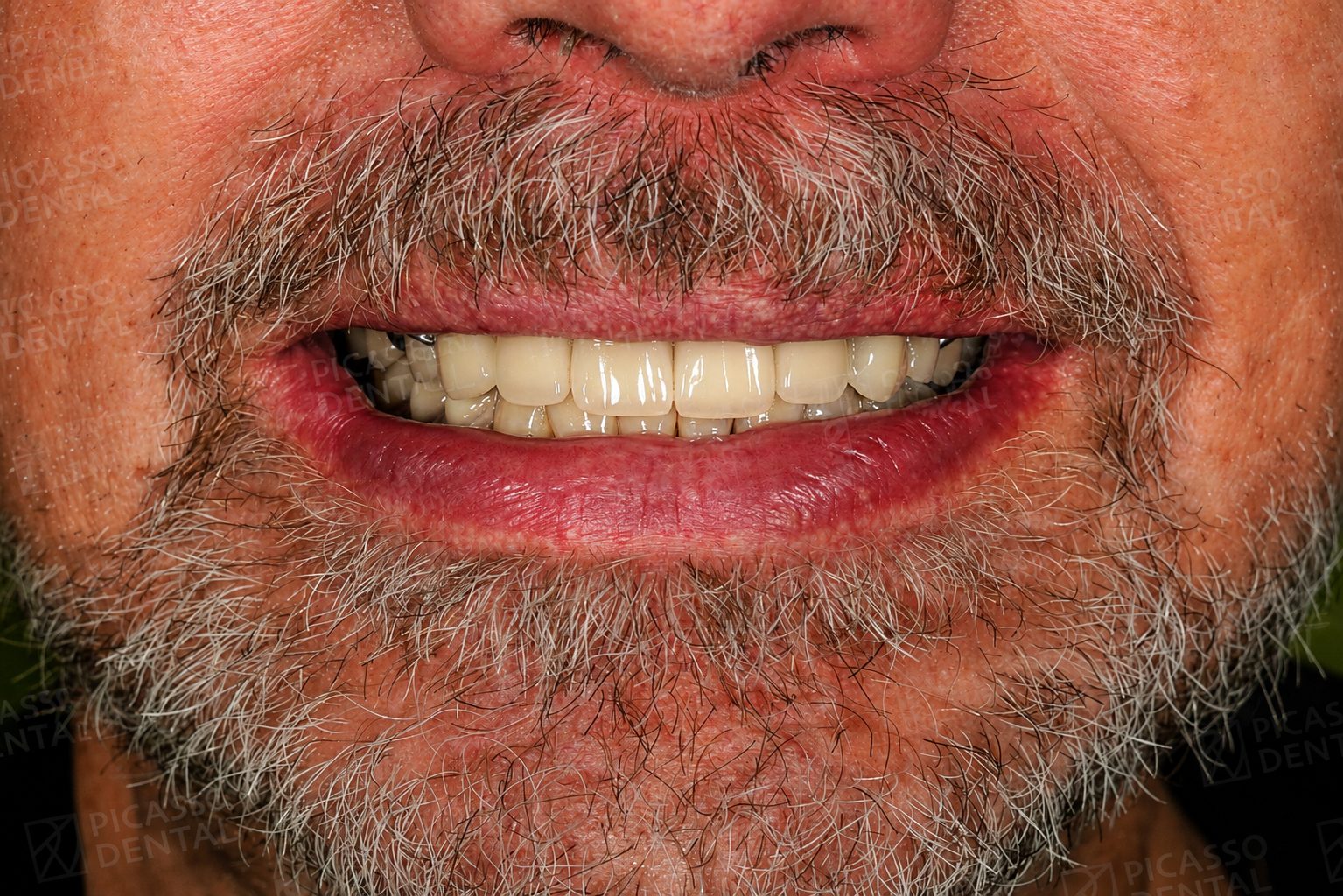 After
AfterImmediate implant into fresh extraction socket: post and provisional crown placed on the day of extraction.
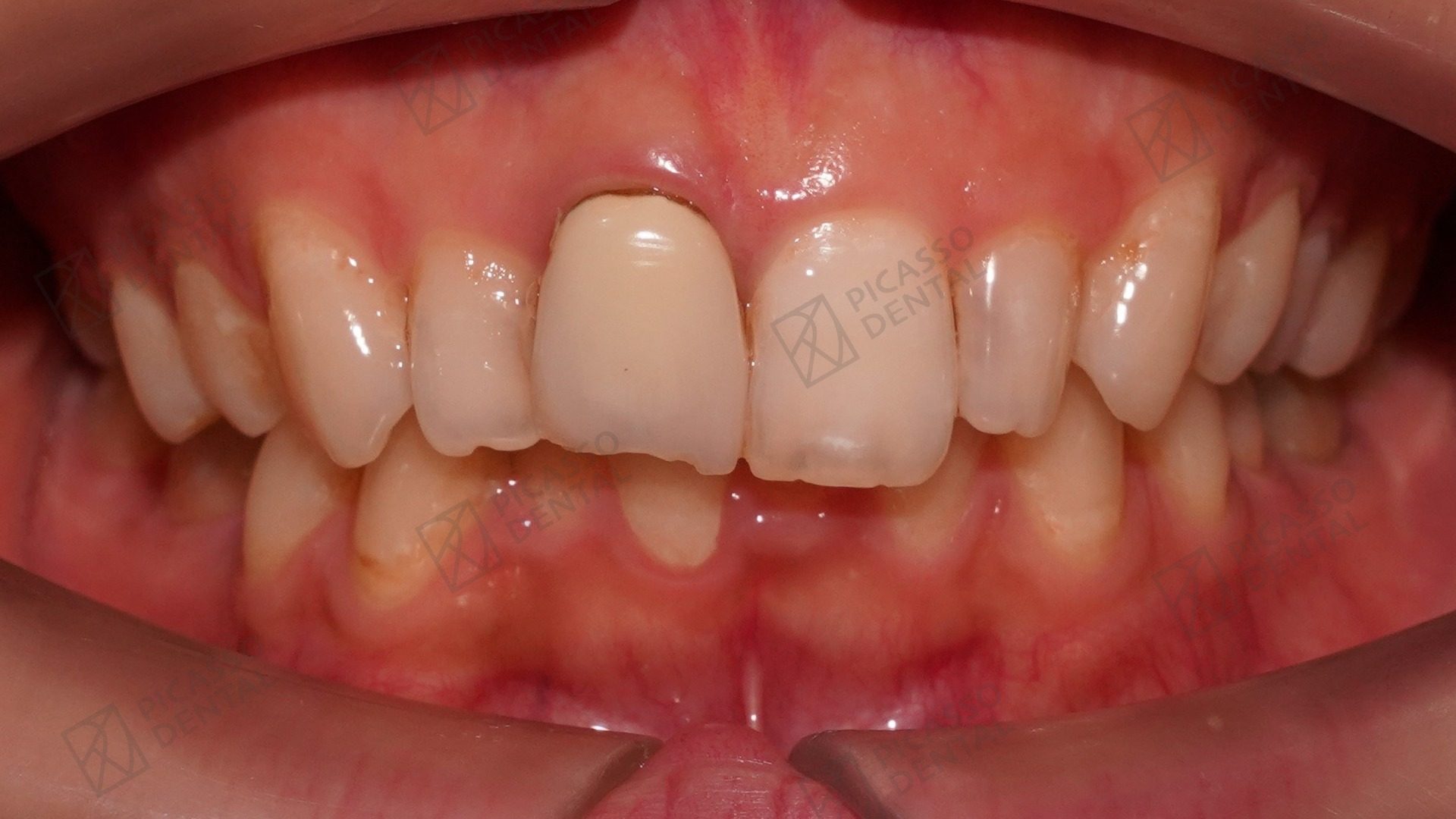 Before
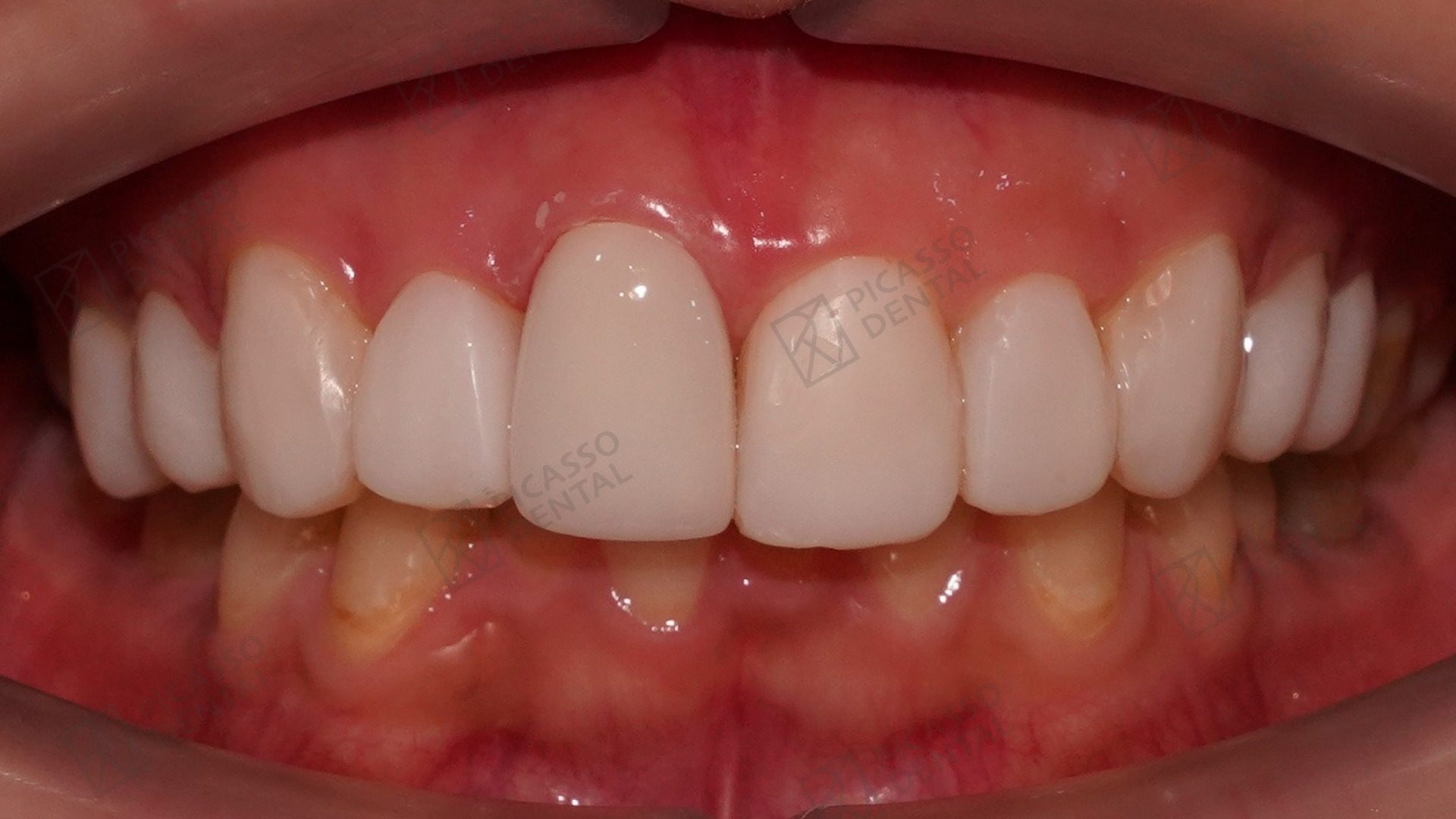 After
AfterStraumann implant with bone graft and Lava crown for a patient with significant buccal bone loss.
Frequently Asked Questions
What is a Nobel BioCare implant?
Nobel BioCare is a Swiss manufacturer with over 60 years of clinical research behind their implant systems. Their implants are considered premium tier and are used by leading implant specialists worldwide. The Active implant design features a tapered body and aggressive thread pattern that achieves excellent primary stability, particularly useful in the upper front jaw where bone density is lower. Picasso Dental uses Nobel BioCare for cases where aesthetic precision and long-term predictability are paramount.
What is a LAVA ceramic crown?
LAVA is a 3M product using a high-strength zirconia framework veneered with feldspathic porcelain. The zirconia core provides strength to withstand biting forces while the porcelain overlay delivers the translucency, layered colour variation, and surface characterisation that makes a crown look like a natural tooth. LAVA is particularly valued for front teeth where aesthetics are critical.
Why is front tooth implant placement more challenging than back teeth?
Front tooth implants are more challenging because the aesthetic demands are far higher: the gum contour, emergence profile, and shade must all match adjacent natural teeth closely enough to be undetectable. The upper front jaw also tends to have softer bone than posterior areas, requiring careful implant positioning to achieve adequate primary stability. Additionally, patients see this tooth every time they smile, so any imperfection in the result is immediately obvious.
What happens to the jawbone when a front tooth is missing for years?
When a tooth root is absent, the bone no longer receives stimulation from chewing forces and begins to resorb. Volume loss begins within months and continues over years. A patient who has been missing a front tooth for five years may have lost significant bone width and height at the site. This makes implant placement more technically demanding and sometimes requires bone augmentation at the time of placement to create a stable foundation.
How long does a single tooth implant procedure take?
The surgical placement appointment takes approximately 60 minutes. A temporary crown is worn during the osseointegration period of approximately 3 months. The final LAVA crown is placed at a follow-up appointment after integration is confirmed. Total treatment from placement to final crown is typically 3 to 4 months. For qualifying patients with sufficient bone density, same-day protocols allow a provisional crown on the day of surgery.
Is the result truly undetectable?
With a premium implant system, high-quality ceramic crown, and skilled laboratory work, front tooth implants are routinely undetectable at conversational distance and often undetectable even at close inspection. The key factors are the shade match, the emergence profile (how the crown rises from the gum), and the gum contour around the implant. All three require careful planning and execution.
Why is early implant placement better than waiting?
Placing an implant shortly after tooth loss preserves bone volume at the site. Every month without a tooth root, bone resorbs. A patient who places an implant within 6 months of tooth loss typically has adequate bone without grafting. A patient who waits 5 years may have lost enough bone to require augmentation, making the procedure more complex and more expensive. Acting promptly after tooth loss is almost always the better clinical and financial decision.
What maintenance does a dental implant crown require?
Implant crowns are maintained with standard oral hygiene: brushing twice daily, flossing around the crown base, and professional cleanings every six months. The crown does not decay, but the gum and bone around the implant can be affected by plaque accumulation (peri-implantitis). Good daily hygiene and regular professional maintenance prevent this. The titanium post itself requires no special care.
Start Here
Start with a brief.
Send your X-rays and we will assess the bone situation, confirm which implant system suits your case, and provide a written quote within 24 hours.