Dental Implants
Single Tooth Implants vs Bridges: Which Is Better?
Both options replace a missing tooth. They work differently, last for different lengths of time, and have very different effects on the jaw and neighbouring teeth.

Key Takeaways
- An implant replaces the tooth root; a bridge does not. Only an implant stops the jawbone loss that begins within months of tooth loss.
- Implants last 25 years or more; bridges last 7 to 15 years and require grinding down two healthy neighbouring teeth.
- An implant costs more upfront but is typically more economical over a 25-year period when bridge replacement and support tooth risk are factored in.
- Bridges make sense for patients who cannot have surgery, need faster treatment, or whose adjacent teeth already require crowns.
How Each Option Works
Dental Implant
A dental implant is a titanium post placed surgically into the jawbone where the missing tooth root used to be. Over 3 to 6 months, the bone grows around and integrates with the post through a process called osseointegration. Once the implant is stable, an abutment and custom crown are attached. The implant stands completely independently. It does not touch neighbouring teeth, does not require altering any adjacent tooth, and transmits chewing forces into the jawbone exactly as a natural root would.
Dental Bridge
A dental bridge spans the gap left by a missing tooth by suspending a false tooth (called a pontic) between two crowns fitted onto the teeth on either side of the gap. Those two adjacent teeth, called abutment teeth, must be permanently reduced by removing enamel to create the supports for the bridge crowns. Once cemented, the bridge is fixed. It requires no surgery and can be completed in 2 to 3 weeks, but the preparation of the neighbouring teeth is irreversible.

The Bone Loss Difference: The Most Important Factor
When a tooth is lost, the jawbone that used to support its root no longer receives stimulation from chewing forces. Without that stimulation, the bone begins to resorb: it loses volume and density in the area of the gap. This process begins within months and continues indefinitely unless a tooth root replacement intervenes.
A dental implant is the only tooth replacement option that stops bone resorption. The titanium post functions like a natural root, transmitting chewing forces through the jawbone and maintaining bone density. Areas with implants retain full bone height and width long-term.
A bridge does not stop bone loss. The false tooth in the middle sits above the gum with no connection to the bone beneath. The bone under the pontic continues to resorb over years. Eventually, a visible gap may appear between the bridge and the gum. The bone loss also changes the facial contour around the mouth over time, contributing to an aged or sunken appearance around the jaw.
Key Differences Side by Side
Dental Implant
- Lifespan: 25 years or more
- Prevents jawbone loss
- Adjacent teeth untouched
- Brush and floss normally
- Surgery required
- 3 to 6 months (standard); 1 to 7 days (same-day)
- Higher upfront cost
Dental Bridge
- Lifespan: 7 to 15 years
- Bone loss continues under pontic
- Two healthy teeth permanently ground down
- Special floss threader needed
- No surgery
- 2 to 3 weeks
- Lower upfront cost
The Adjacent Teeth Problem with Bridges
This is one of the most consequential aspects of the implant vs bridge decision, and it is often underestimated. To place a bridge, the two teeth flanking the gap are permanently reduced by removing healthy enamel. These teeth, which were healthy before, are now prepared crowns. They are permanently more vulnerable to decay, fracture, and sensitivity.
If one of those abutment teeth develops decay or a fracture at some point in the future, the entire bridge is compromised. What started as a single missing tooth becomes a three-tooth problem requiring a more complex and expensive solution. I have seen many patients over the years whose bridge abutment teeth eventually failed, turning a straightforward replacement into a situation requiring implants, bone grafting, and multiple crowns.
An implant leaves the neighbouring teeth completely untouched. Their natural structure is preserved. Cleaning is easier because you can floss normally around an implant crown without threading under a false tooth. This preservation of healthy tooth structure becomes increasingly important as patients live longer and need their teeth to last for 40 or 50 years rather than 20.

Long-Term Cost: Implant vs Bridge
The initial cost of an implant is higher than a bridge. However, when you look at the full picture over 25 years, the calculus often reverses. A bridge lasts 7 to 15 years before requiring replacement. Each replacement involves preparation of the abutment teeth again and fabrication of a new bridge. The abutment teeth accumulate damage from each preparation cycle and remain at risk of decay and failure.
An implant, once integrated, rarely needs more than eventual crown replacement every 10 to 15 years. The titanium post itself typically lasts the patient's lifetime. The cost per year of function averaged over 25 years is usually more favourable for an implant, even before accounting for the cascading treatment costs if a bridge abutment tooth fails.
Considering implant vs bridge in Vietnam? Send your X-rays for an assessment. Dr. Tran will give you an honest comparison of both options for your specific case.
Send for assessmentWhen a Bridge Makes More Sense
Bridges are the right choice in several specific situations. Patients who are medically unsuitable for implant surgery (severe uncontrolled systemic disease, recent major chemotherapy, severe bone deficiency requiring extensive grafting first) may find a bridge the only available fixed option. Patients who need a definitive restoration quickly, within 2 to 3 weeks rather than months, may choose a bridge for timing reasons. Patients whose adjacent teeth already need crowns for other reasons sometimes find a bridge a logical dual-purpose solution, replacing the missing tooth while restoring the neighbours simultaneously.
Budget is also a factor for some patients. The upfront cost of an implant is higher, and for patients who cannot or prefer not to make that investment now, a well-made bridge provides a functional, aesthetic result for its lifespan. Revisiting the implant option later when bone conditions are assessed again is always possible, though bone loss over the intervening years may complicate the eventual implant placement.
Vietnam as a Destination for Implant Treatment
The cost difference between implant and bridge is less dramatic in Vietnam than in Australia or the US. Both options at Picasso Dental cost 70 to 80 percent less than their equivalents in Western countries, using the same premium implant brands (Nobel Biocare, Straumann, NeoDent) and the same ceramic crown materials (Lava, Emax, zirconia). For international patients visiting Vietnam, the economic case for choosing the implant over the bridge is particularly strong because the lifetime cost advantage of the implant is preserved while the upfront premium is significantly reduced.

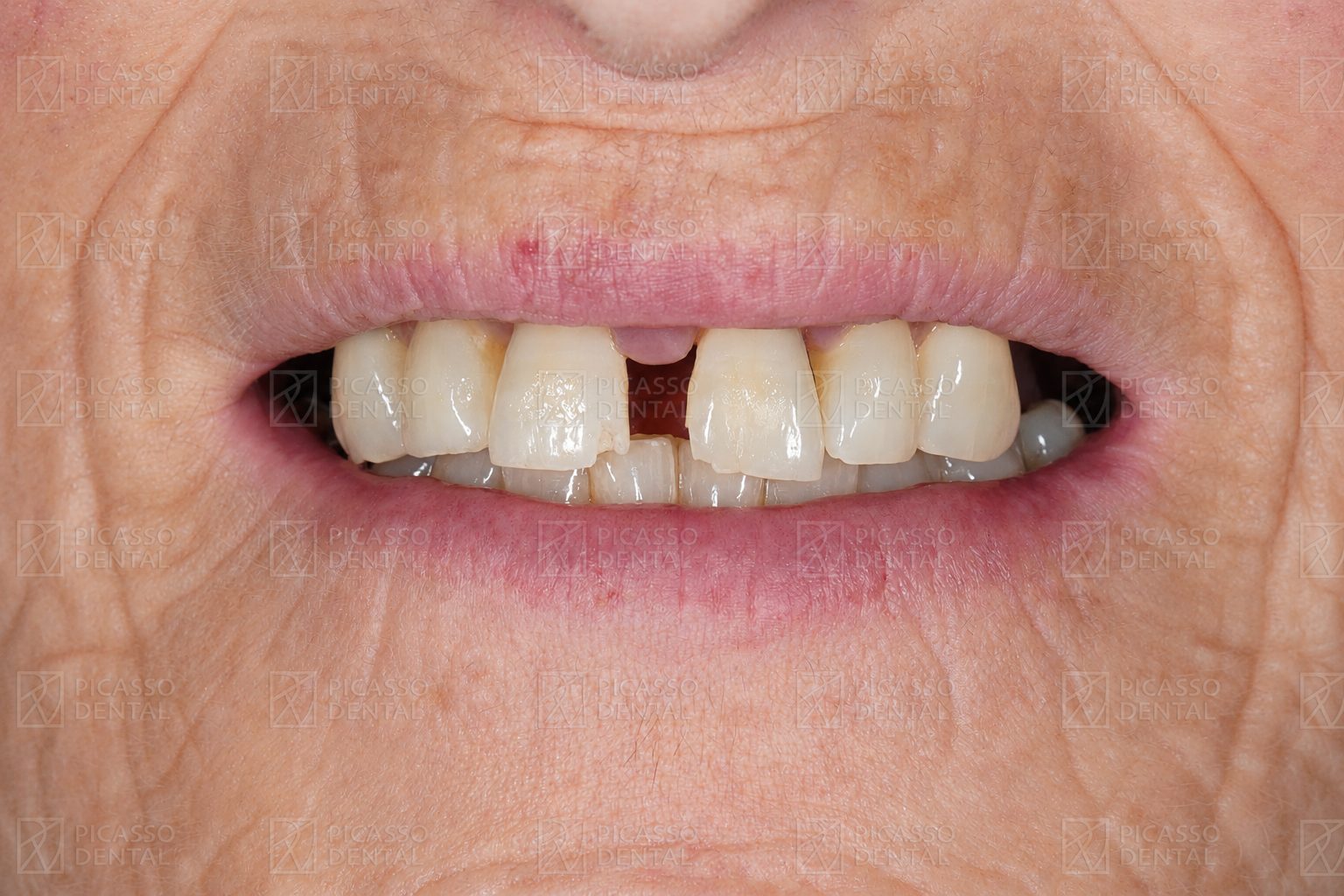 Before
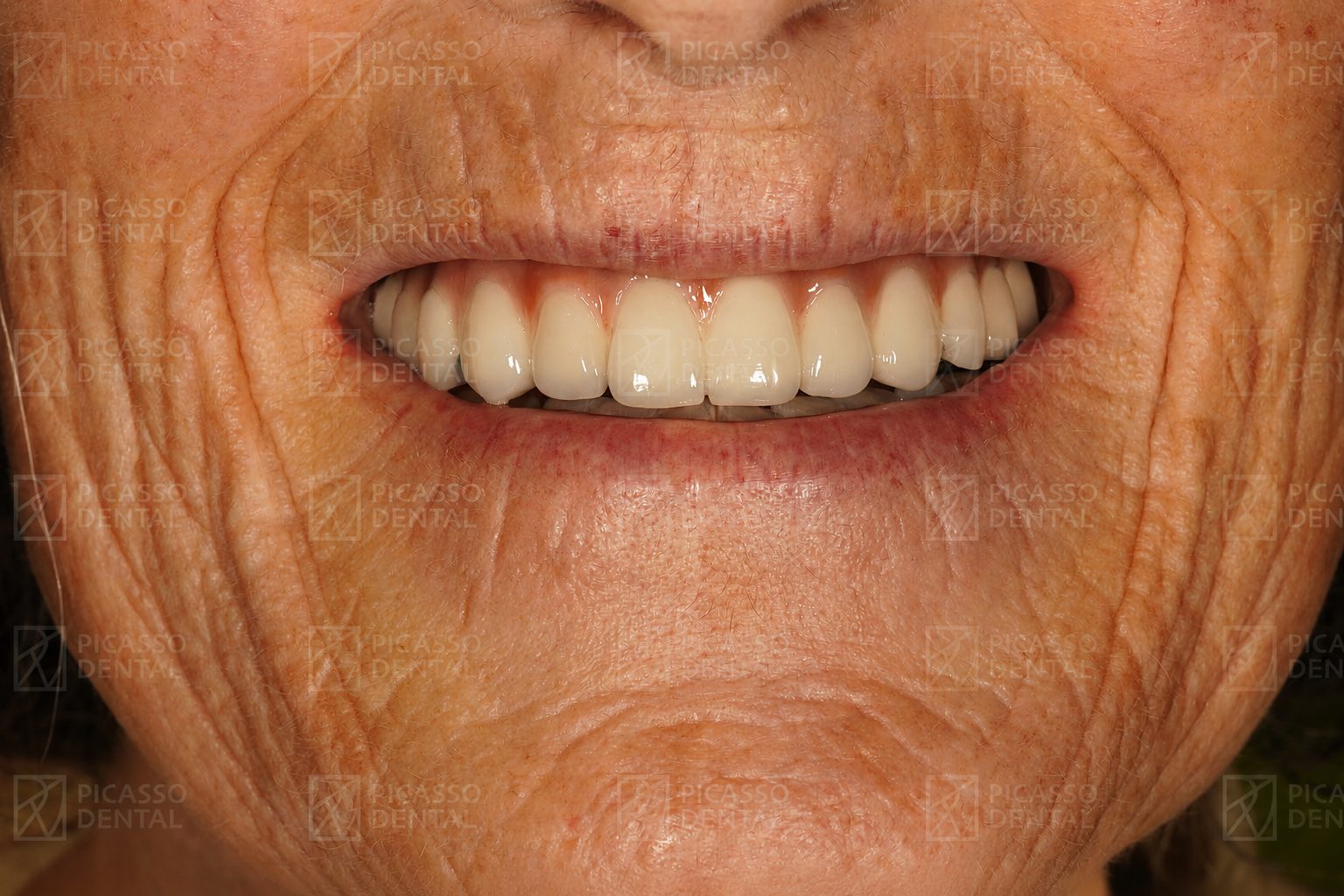 After
AfterSingle missing molar replaced with Nobel Biocare implant and Lava ceramic crown.
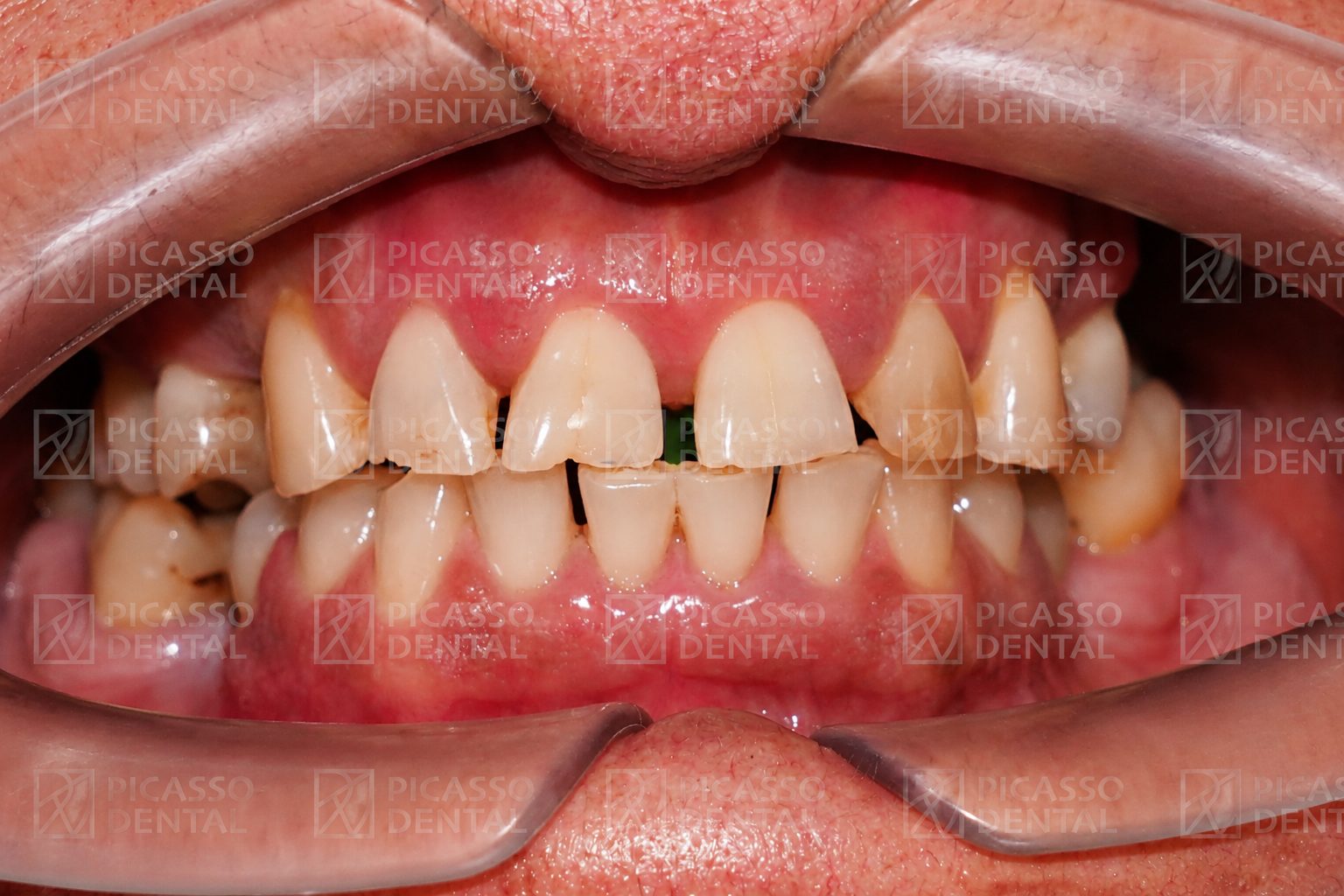 Before
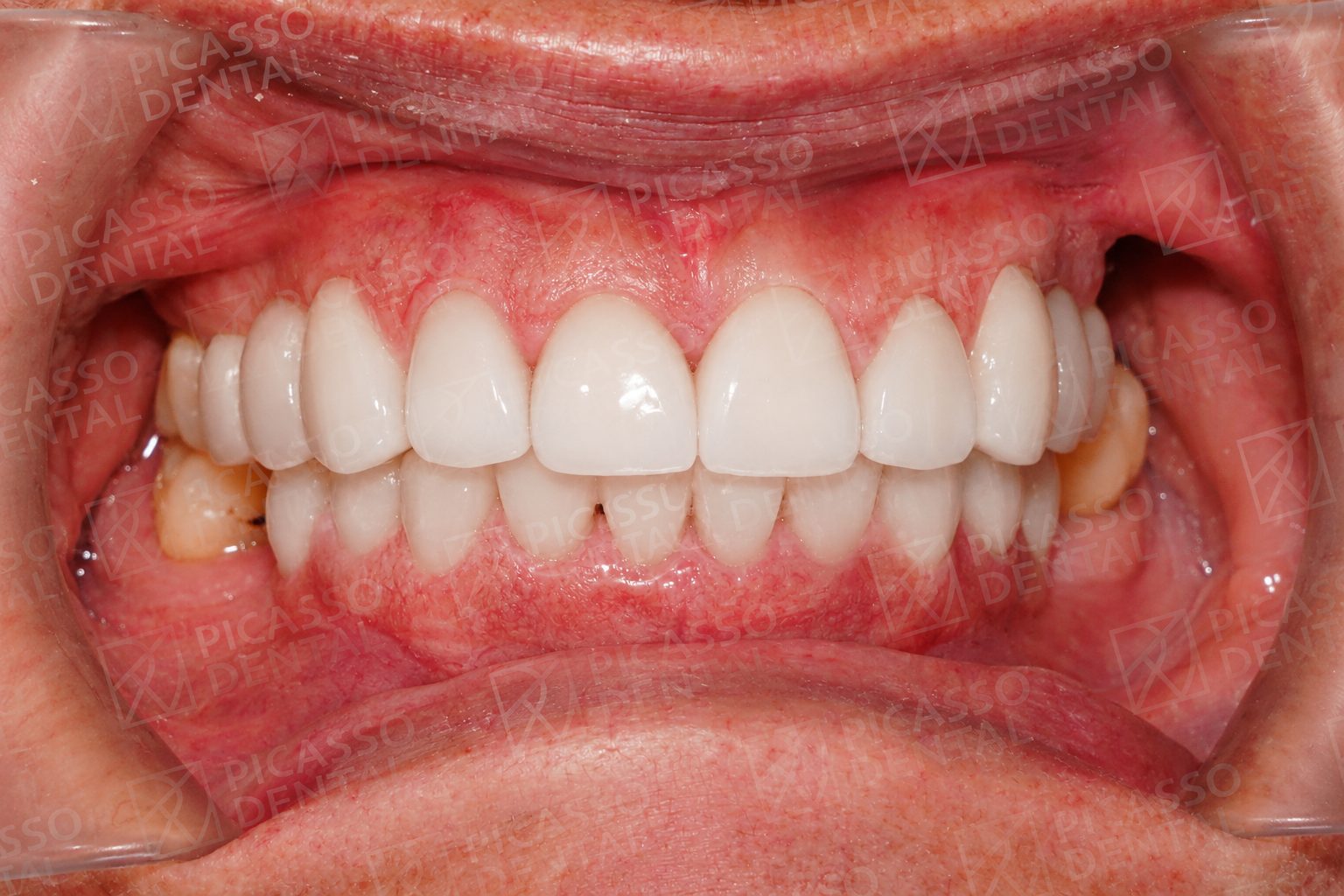 After
AfterFront tooth lost after trauma: implant chosen over bridge to preserve neighbouring healthy teeth.
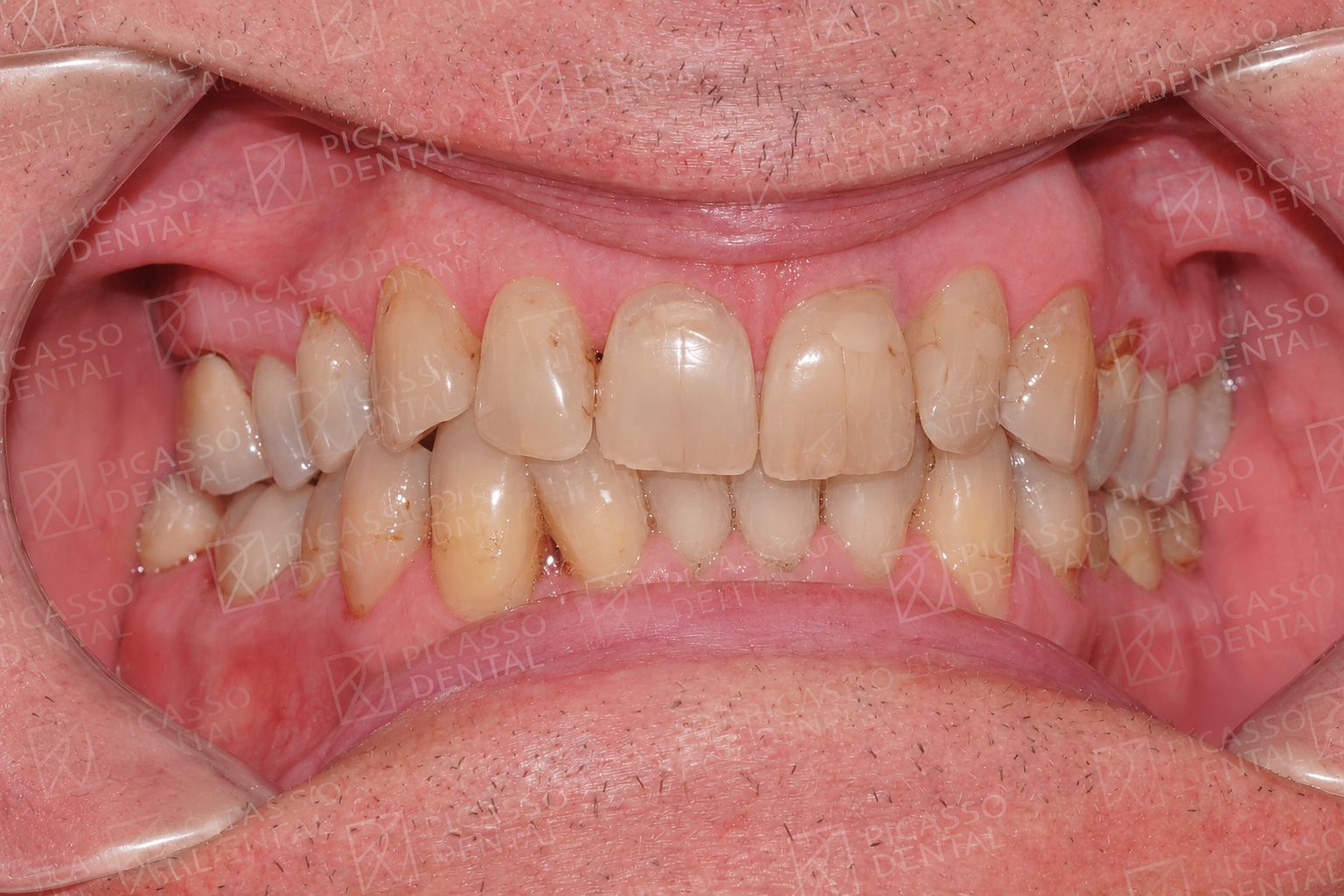 Before
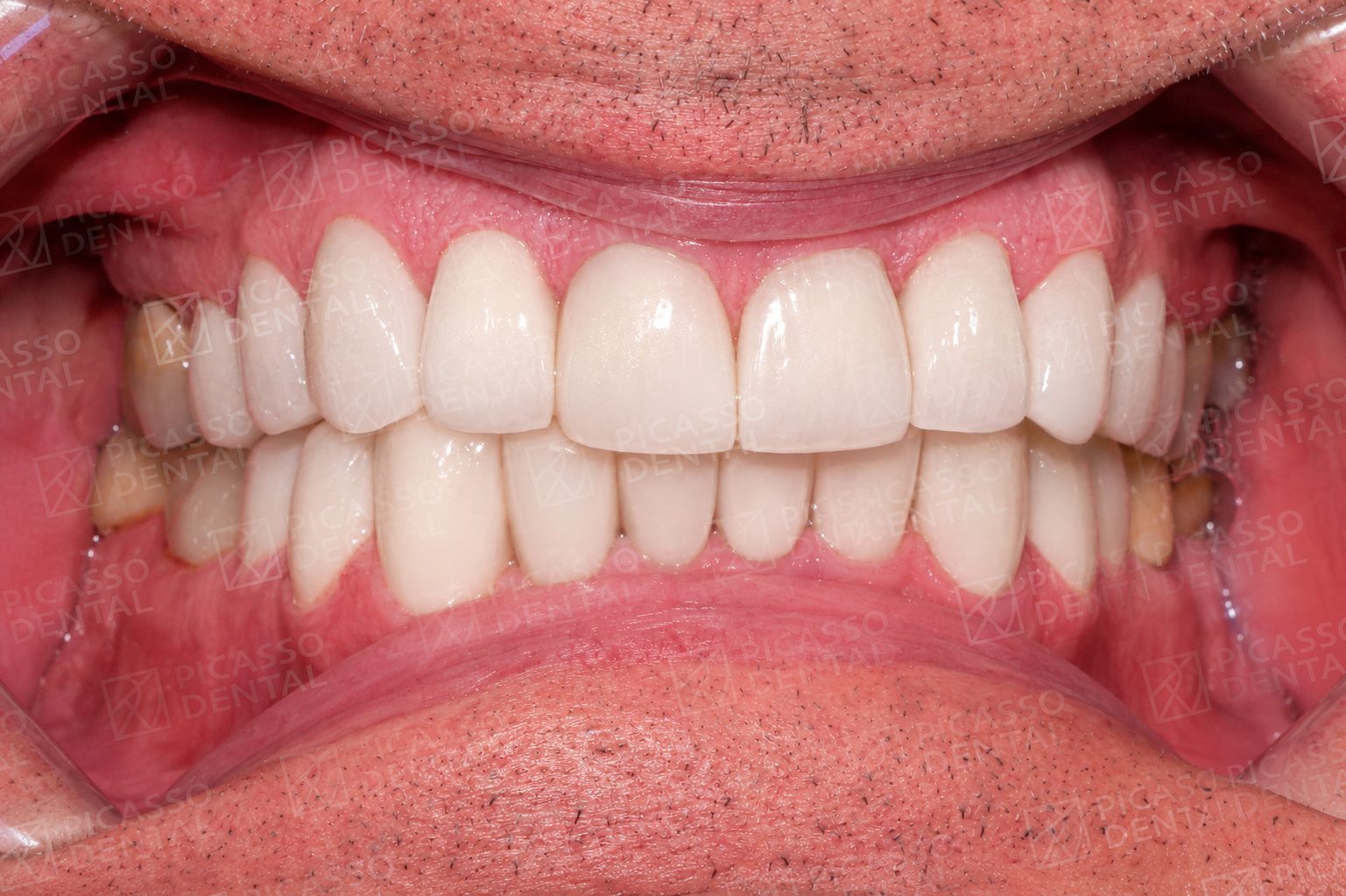 After
AfterPatient converted from failed bridge to implant after abutment tooth fracture; bone graft included.
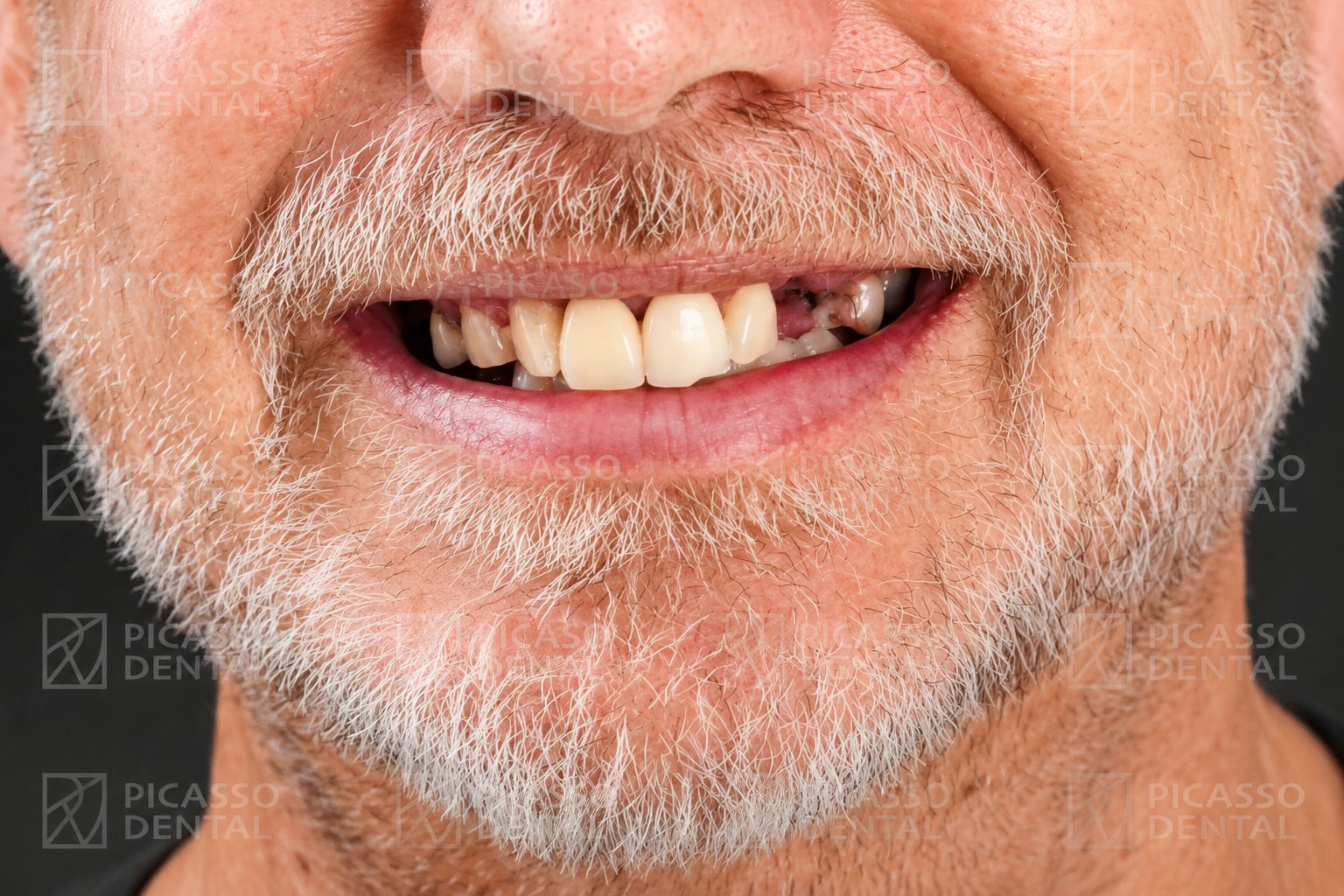 Before
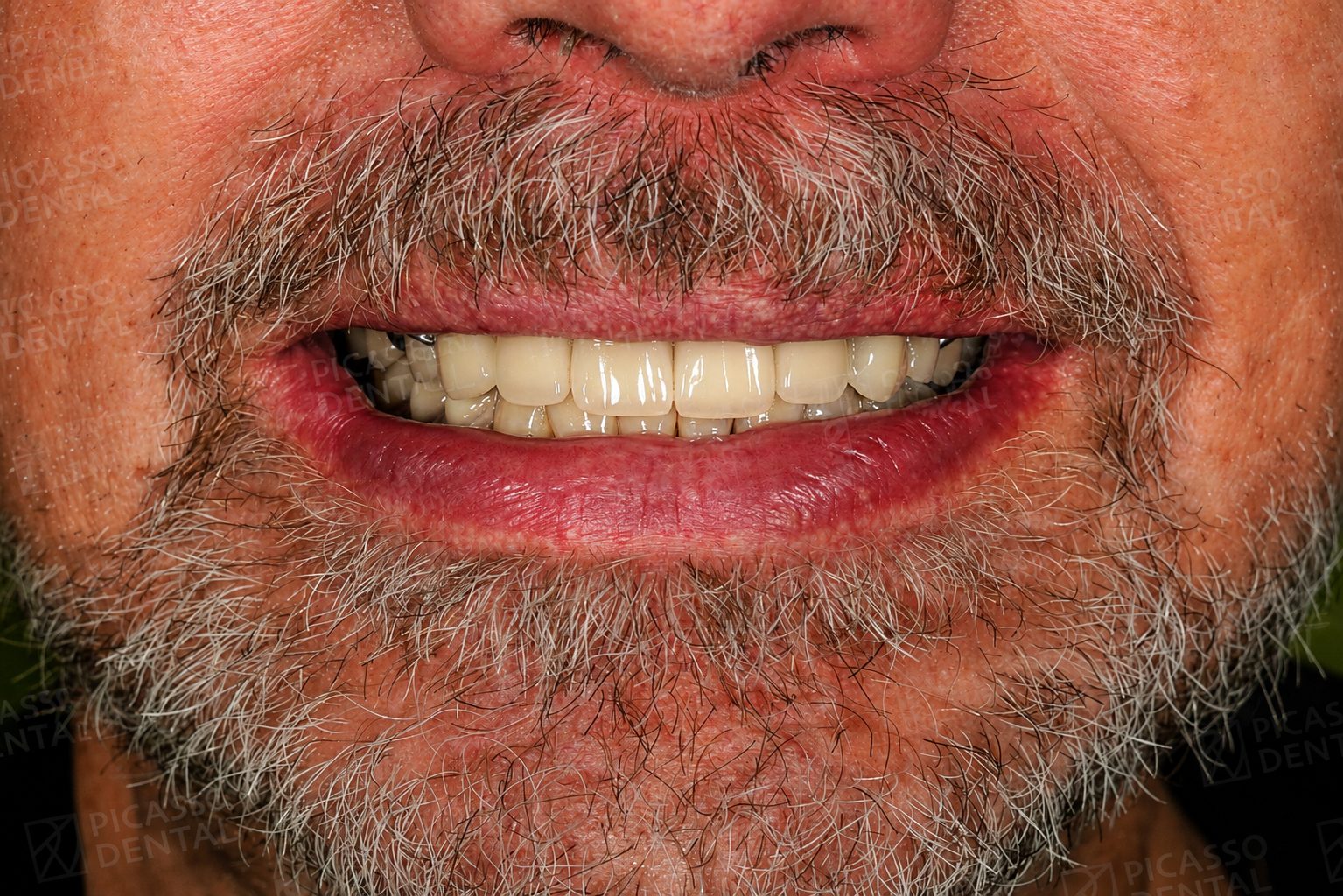 After
AfterTwo adjacent missing teeth replaced with two independent implants rather than a four-unit bridge.
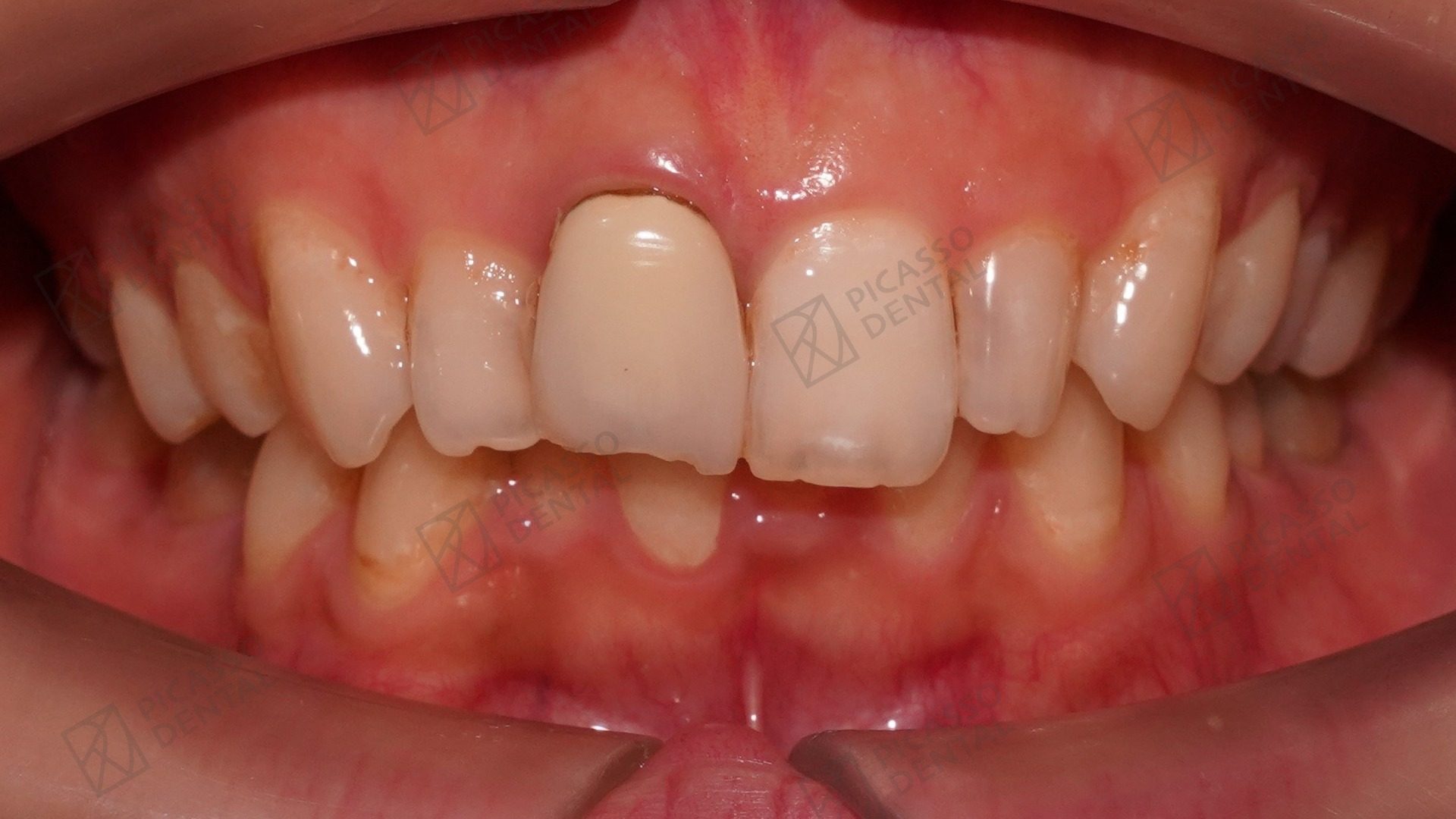 Before
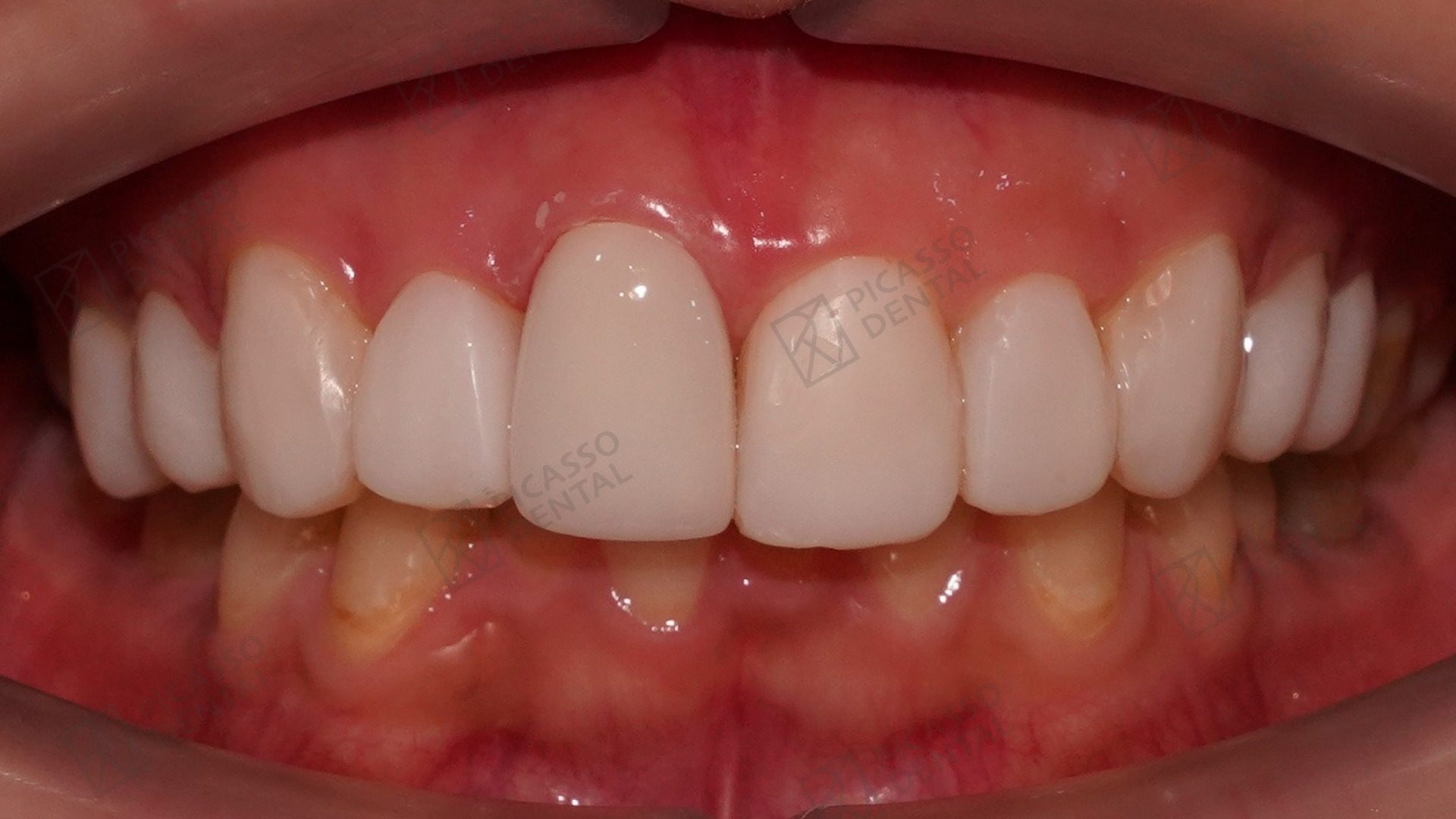 After
AfterSame-day implant placed immediately after extraction: implant post and provisional crown in one session.
Frequently Asked Questions
What is the main difference between an implant and a bridge?
A dental implant replaces the missing tooth root with a titanium post that integrates with the jawbone, then supports a crown on top. It is completely independent and does not touch neighbouring teeth. A bridge suspends a false tooth between two crowns fitted over the adjacent teeth on either side of the gap. A bridge requires permanently grinding down two healthy neighbouring teeth and does not replace the tooth root, so bone loss continues under the false tooth.
Which lasts longer: an implant or a bridge?
A dental implant lasts 25 years or more with proper care, and many function for life. The titanium post itself rarely fails once integrated. The crown on top may need replacement every 10 to 15 years due to normal wear. A traditional bridge typically lasts 7 to 15 years before needing replacement, and the prepared support teeth remain vulnerable to decay and can fail over time.
Does a bridge cause bone loss?
Yes. A bridge does not replace the tooth root, so the jawbone in the gap area continues to lose volume from lack of stimulation. This process is called bone resorption and begins within months of tooth loss. Over years, the bone shrinks noticeably, and eventually a visible gap may appear under the bridge. A dental implant is the only replacement option that stops bone resorption by transmitting chewing forces into the bone.
Is an implant more expensive than a bridge?
An implant costs more upfront than a bridge. However, when you factor in the lifespan difference (25 years vs 7 to 15 years), the cost of bridge replacement, and the risk of the bridge support teeth failing and requiring additional treatment, an implant is often more economical over the long term. At Picasso Dental in Vietnam, both options cost 70 to 80 percent less than equivalent treatment in Australia or the US.
Does a bridge damage the adjacent teeth?
Yes. A bridge requires removing enamel from the two teeth on either side of the gap to create supports for the bridge crowns. This is irreversible. The prepared teeth become permanently vulnerable to decay and sensitivity, and if they fail in the future, the entire bridge fails with them. This turns a single missing tooth into a three-tooth problem.
Who is a good candidate for a dental implant?
Good candidates have sufficient jawbone volume and density, healthy gums, good general health, and no active conditions that impair healing such as uncontrolled diabetes or recent chemotherapy. Non-smokers or patients willing to quit during healing are preferred. Bone assessment with 3D CBCT imaging confirms whether implant placement is feasible.
When does a bridge make more sense than an implant?
Bridges make more sense when the patient cannot or does not want surgery, when treatment must be completed quickly (a bridge takes 2 to 3 weeks versus 3 to 6 months for a standard implant), when the adjacent teeth already require crowns making the bridge a dual-purpose solution, or when bone loss or medical conditions make implant placement difficult or impossible.
How long does implant treatment take?
Standard implant treatment takes 3 to 6 months from placement to final crown because of the osseointegration healing period. For qualifying patients with sufficient bone density, same-day implants allow both the post and a provisional crown to be placed in a single appointment, with the permanent crown fitted 1 to 2 weeks later. A bridge can be fitted in 2 to 3 weeks from preparation to final cementation.
Start Here
Start with a brief.
Send your X-rays and we will tell you whether an implant or bridge is the better fit for your specific bone condition, budget, and timeline, with no obligation.