Dental Crowns
Porcelain vs Ceramic Crowns: The real material question.
Porcelain is a type of ceramic. The comparison is a category error. The actual clinical choice is PFM (metal core) versus all-ceramic (no metal). Here is the full material comparison, lifespan table, and the four factors that determine which crown belongs on which tooth.

Key Takeaways
- Porcelain is a type of ceramic. The "porcelain vs ceramic" framing is technically incorrect; all dental crowns are ceramic.
- The real clinical choice is PFM (metal core, porcelain outer, 10-15y) versus all-ceramic (no metal, 10-25y depending on the specific type).
- Within all-ceramic, Emax has the best front-tooth aesthetics, Zirconia handles the highest bite forces, and Lava/Lava Plus offer the longest lifespan.
- Tooth position is the strongest single factor: front teeth need translucency, back teeth need strength.
<h2>Clearing Up the Terminology</h2>

<p>When patients ask about porcelain versus ceramic crowns, they are usually asking a reasonable question based on confusing terminology. In everyday language, porcelain crown and ceramic crown are often used as if they describe different things. In clinical reality, they do not. Ceramic is the broad family of inorganic, non-metallic, high-fired materials used in modern dentistry. Porcelain is one specific kind of dental ceramic. Zirconia, lithium disilicate (Emax), and layered ceramics such as Lava are other types of ceramic. Every modern tooth-coloured crown is ceramic.</p>

<p>The reason this matters is that framing the choice as porcelain versus ceramic leads patients to research the wrong question. The actual clinical decision at Picasso Dental Clinic and in modern dentistry broadly is: PFM (porcelain-fused-to-metal) versus all-ceramic (a crown with no metal component whatsoever). Within all-ceramic, there are then several distinct materials with meaningfully different properties. Understanding these distinctions is what enables an informed decision at consultation.</p>

<figure class="art-photo">
  <img src="/images/clinics/hanoi-old-quarter/reception.jpg" alt="Picasso Dental Clinic Hanoi Old Quarter" loading="lazy" decoding="async">
  <figcaption>Crown consultations at Picasso Dental include a material recommendation based on tooth position, bite force, aesthetic requirements, and patient budget.</figcaption>
</figure>

<h2>PFM Crowns: What They Are and When They Make Sense</h2>

<p>A PFM crown has a thin metal substructure (typically titanium or chromium-cobalt alloy) with dental porcelain bonded over the visible surfaces. The metal provides strength; the porcelain provides the tooth-coloured appearance. PFM crowns have been used in dentistry for over 50 years and have a long, well-documented clinical track record.</p>

<p>PFM crowns remain appropriate for posterior teeth (molars and premolars) where the crown is not prominently visible during normal smiling and where high chewing forces benefit from the metal core's structural properties. They are also the most affordable crown option. For patients on a budget who need a molar crown, PFM delivers sound clinical performance at the lower price point.</p>

<div class="art-callout">
  <strong>The grey-line problem:</strong> The most common reason patients with older PFM crowns seek replacement is the grey line at the gum margin. Over 10 to 20 years, normal gum recession can expose the metal collar at the crown margin, creating a visible dark line where the crown meets the receded gum. This is a cosmetic issue, not a clinical failure. All-ceramic crowns have no metal and cannot develop this problem regardless of how much gum recession occurs.
</div>

<h2>All-Ceramic Crowns: The Materials and Their Properties</h2>

<p>All-ceramic crowns have no metal whatsoever. The entire crown structure from inside to outside is ceramic. This eliminates the grey-line risk and allows light to pass through the crown in a way that closely mimics natural tooth enamel. However, not all all-ceramic crowns are equivalent. The different ceramic subtypes have distinct properties that make each appropriate for different clinical situations.</p>

<h3>Zirconia</h3>

<p>Zirconia is the toughest all-ceramic material. It handles heavy chewing forces and resists fracture very well, making it the default choice for molars and premolars. Its relative opacity compared to Emax means it is less ideal for upper incisors where translucency is most visible, but for posterior teeth this opacity is clinically irrelevant. Zirconia crowns typically last 12 to 20 years.</p>

<h3>Emax (Lithium Disilicate)</h3>

<p>Emax has exceptional translucency, allowing light to pass through in a way that closely mimics natural enamel. For front teeth (incisors and canines), this translucency is what makes Emax the first-choice material: placed next to natural neighbours, an Emax crown is very difficult to distinguish even under close examination. Emax is strong enough for front teeth and premolars but is less indicated for molars where bite forces are highest. Emax crowns average 10 to 15 years.</p>

<h3>Lava and Lava Plus</h3>

<p>Lava crowns combine a zirconia core with a layered ceramic exterior. The zirconia core provides long-term structural durability comparable to full zirconia, while the ceramic overlay achieves translucency and colour depth close to Emax. This makes Lava and Lava Plus the premium option for patients who want the best combination of longevity and aesthetics. Lava and Lava Plus typically last 15 to 25 years, the longest lifespan of any crown material currently available.</p>

<h3>High-Translucency Zirconia (CERCON HT, Ceramill Zolid)</h3>

<p>These are engineered zirconia variants with improved translucency compared to standard zirconia. They bridge the gap between the strength of zirconia and the aesthetics of Emax, and are commonly used for premolars and canines where a balance of both properties is needed. Lifespan is similar to standard zirconia at 12 to 20 years.</p>

<figure class="art-photo">
  <img src="/images/clinics/hanoi-old-quarter/treatment-room.jpg" alt="Crown preparation at Picasso Dental Clinic" loading="lazy" decoding="async">
  <figcaption>Material selection is confirmed at the preparation appointment, with the dentist explaining the recommendation for each tooth position and the patient making the final choice.</figcaption>
</figure>

<h2>The Four-Factor Decision Matrix</h2>

<p>Crown material selection at Picasso Dental Clinic is guided by four factors. No single factor overrides all others; the right choice balances all four for each individual patient and each individual tooth.</p>

<ul class="art-checklist">
  <li>
    <div>
      <strong>Tooth position</strong>
      <span>The most important factor. Upper front teeth (central and lateral incisors) demand translucency: Emax or Lava are standard. Upper canines and premolars: Emax or high-translucency zirconia. Molars: full zirconia or PFM. This single factor rules out certain materials immediately for any given tooth.</span>
    </div>
  </li>
  <li>
    <div>
      <strong>Bite force</strong>
      <span>Patients with bruxism (teeth grinding) subject their crowns to forces far exceeding normal chewing. This shortens the lifespan of any material and particularly affects Emax, which is slightly more brittle than zirconia under repeated impact. Bruxers need zirconia or Lava for durability, plus a night guard to protect the investment.</span>
    </div>
  </li>
  <li>
    <div>
      <strong>Aesthetic priority</strong>
      <span>For highly visible teeth in patients who prioritise the most natural possible appearance (often relevant for patients in the public eye or those with high aesthetic standards), Emax or Lava Plus is the recommendation. For patients where function is the primary concern and aesthetics secondary, zirconia or PFM may be entirely appropriate.</span>
    </div>
  </li>
  <li>
    <div>
      <strong>Budget</strong>
      <span>Crown pricing ranges from PFM (lowest) through zirconia to Emax and Lava Plus (highest). All options are clinically sound for their appropriate indications; higher price reflects better aesthetics and/or longer lifespan rather than clinical superiority in all situations. The right material for the budget may not be the premium option, but it can still be the correct clinical choice for that tooth.</span>
    </div>
  </li>
</ul>

<div class="art-cta-inline">
  <p><strong>Need a crown and not sure which material is right?</strong> Tell us which tooth needs the crown and we will give you a material recommendation with the rationale before any treatment begins.</p>
  <a href="https://wa.me/84989067888">Book a consultation</a>
</div>

<h2>PFM versus All-Ceramic: When Each Is the Right Choice</h2>

<div class="art-signal-grid">
  <div class="art-signal-col art-signal-col--good">
    <h4>PFM is still appropriate for</h4>
    <ul>
      <li>Posterior molars on a budget</li>
      <li>Long-span bridges needing maximum strength</li>
      <li>Patients who prefer PFM after seeing both options</li>
      <li>Implant crowns in some posterior cases</li>
    </ul>
  </div>
  <div class="art-signal-col art-signal-col--bad">
    <h4>All-ceramic is preferred for</h4>
    <ul>
      <li>Any visible front tooth</li>
      <li>Patients with thin gum tissue (recession risk)</li>
      <li>Replacing older PFM with grey-line problem</li>
      <li>Patients prioritising 15 or more year lifespan</li>
      <li>High-aesthetic cases where translucency matters</li>
    </ul>
  </div>
</div>

<p>PFM has not been made obsolete by all-ceramic options. It remains clinically sound and continues to be placed at our clinics for appropriate cases. The choice is not about whether PFM is old technology: a 10 to 15 year lifespan in the correct clinical setting is entirely acceptable. The choice is about matching the material to the tooth, the bite, and the patient's priorities.</p>

<figure class="art-photo">
  <img src="/images/clinics/da-nang-hoang-dieu/reception.jpg" alt="Picasso Dental Clinic Da Nang" loading="lazy" decoding="async">
  <figcaption>Crown consultations at Picasso Dental Da Nang follow the same material decision protocol used across all branches.</figcaption>
</figure>

<h2>Lifespan Summary by Material</h2>

<p>The following summarises typical lifespan for each material under normal conditions with good oral hygiene and regular maintenance. These figures reflect aggregate outcomes; individual results vary based on bite force, hygiene, and whether protective measures such as night guards are used where indicated.</p>

<p><strong>PFM:</strong> 10 to 15 years. <strong>Zirconia:</strong> 12 to 20 years. <strong>CERCON HT / high-translucency zirconia:</strong> 12 to 20 years. <strong>Emax (lithium disilicate):</strong> 10 to 15 years. <strong>Lava:</strong> 15 to 25 years. <strong>Lava Plus:</strong> 15 to 25 years.</p>

<p>No single material is optimal in all situations. The right crown is the one that matches the tooth position, bite force, aesthetic requirements, and budget while being placed by a skilled clinician to an accurate fit. A perfectly fitted PFM molar crown will outlast a poorly fitted Lava crown regardless of material quality.</p>

<figure class="art-photo">
  <img src="/images/general-dentistry/consultation.jpg" alt="Consultation at Picasso Dental Clinic" loading="lazy" decoding="async">
  <figcaption>Pre-crown consultation includes presenting all suitable material options with their respective lifespans and pricing before the patient makes the final choice.</figcaption>
</figure>
 Before
 After
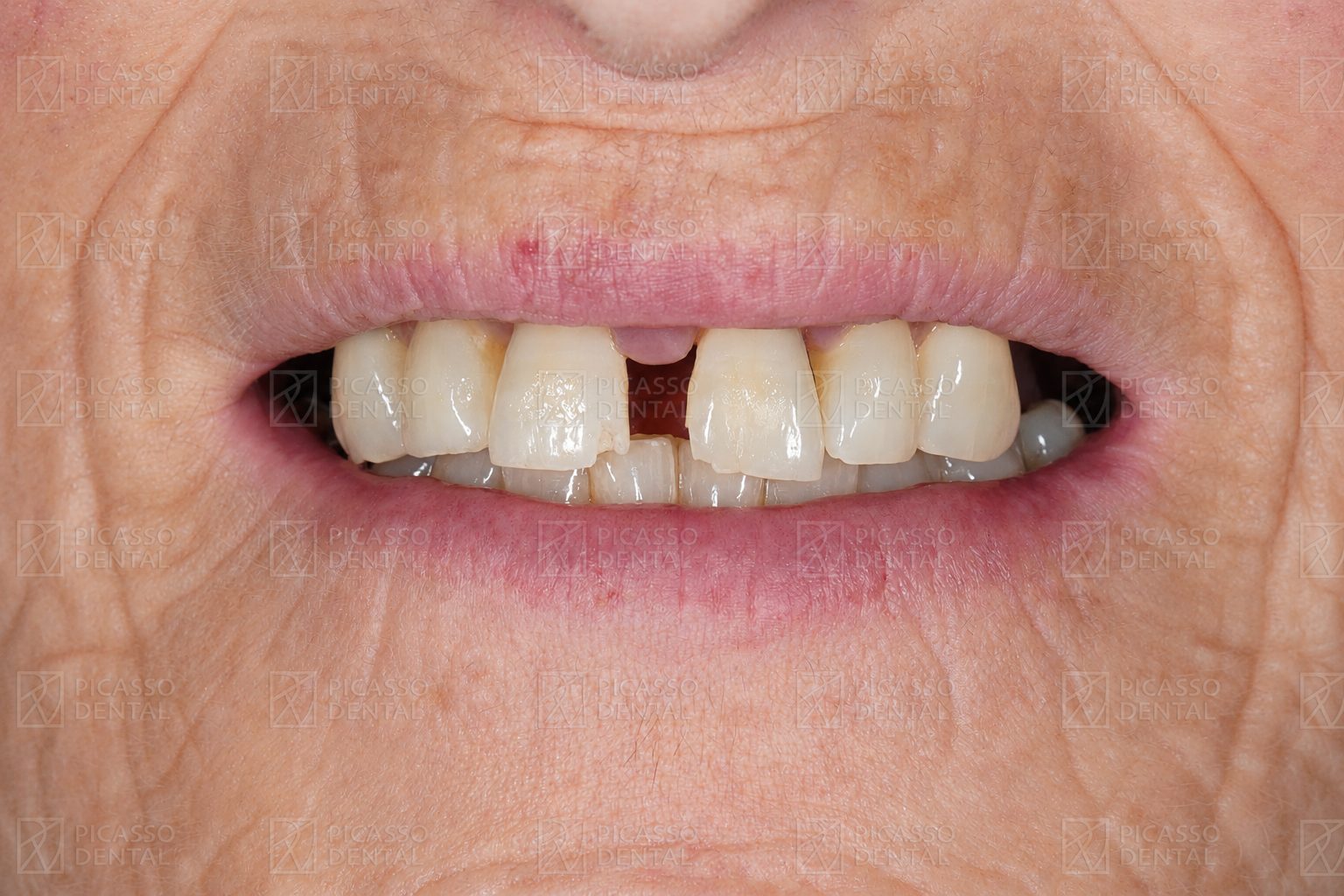
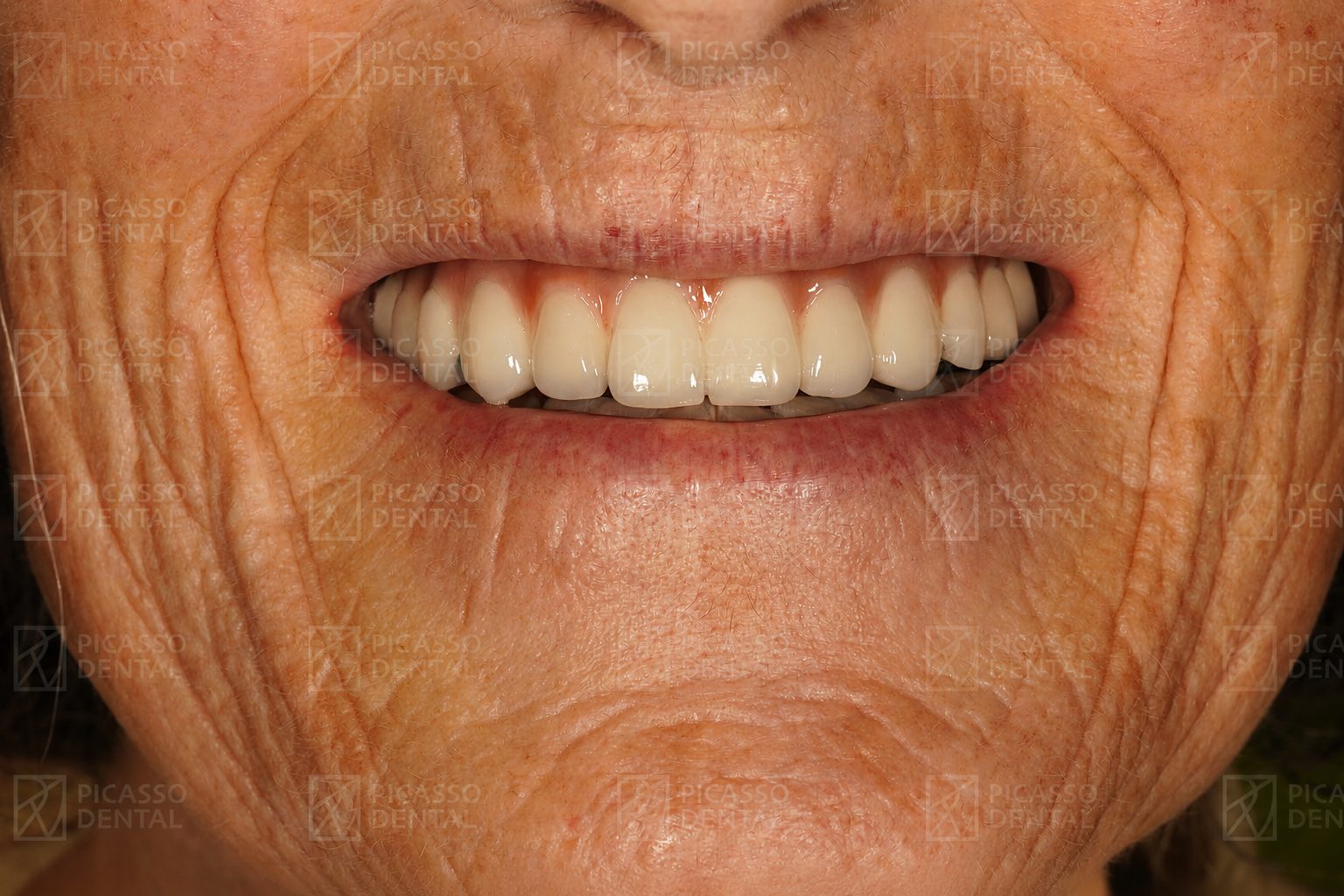
AfterCase 38420: Emax crown on upper central incisor; older PFM with grey-line problem replaced.
 Before
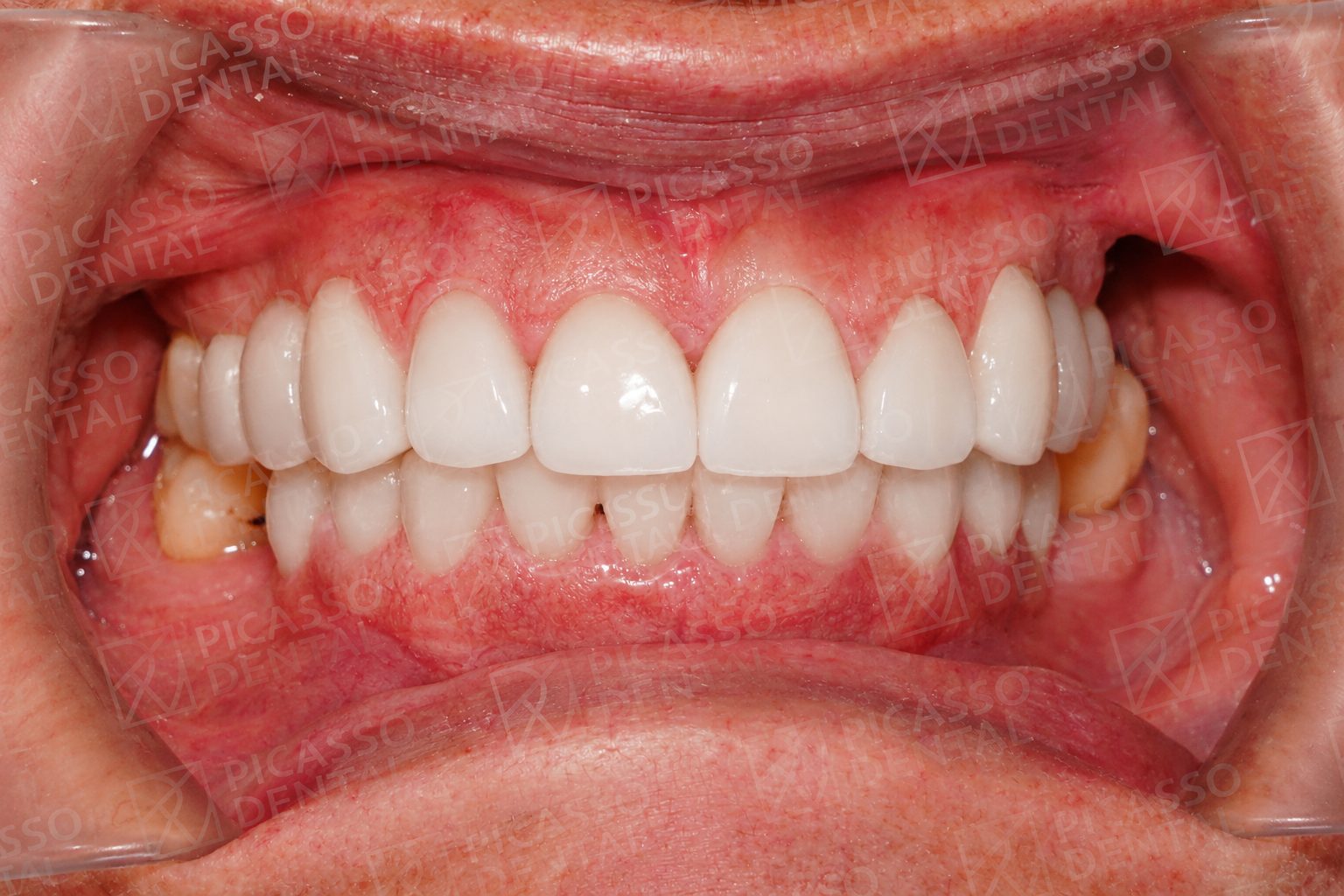 After
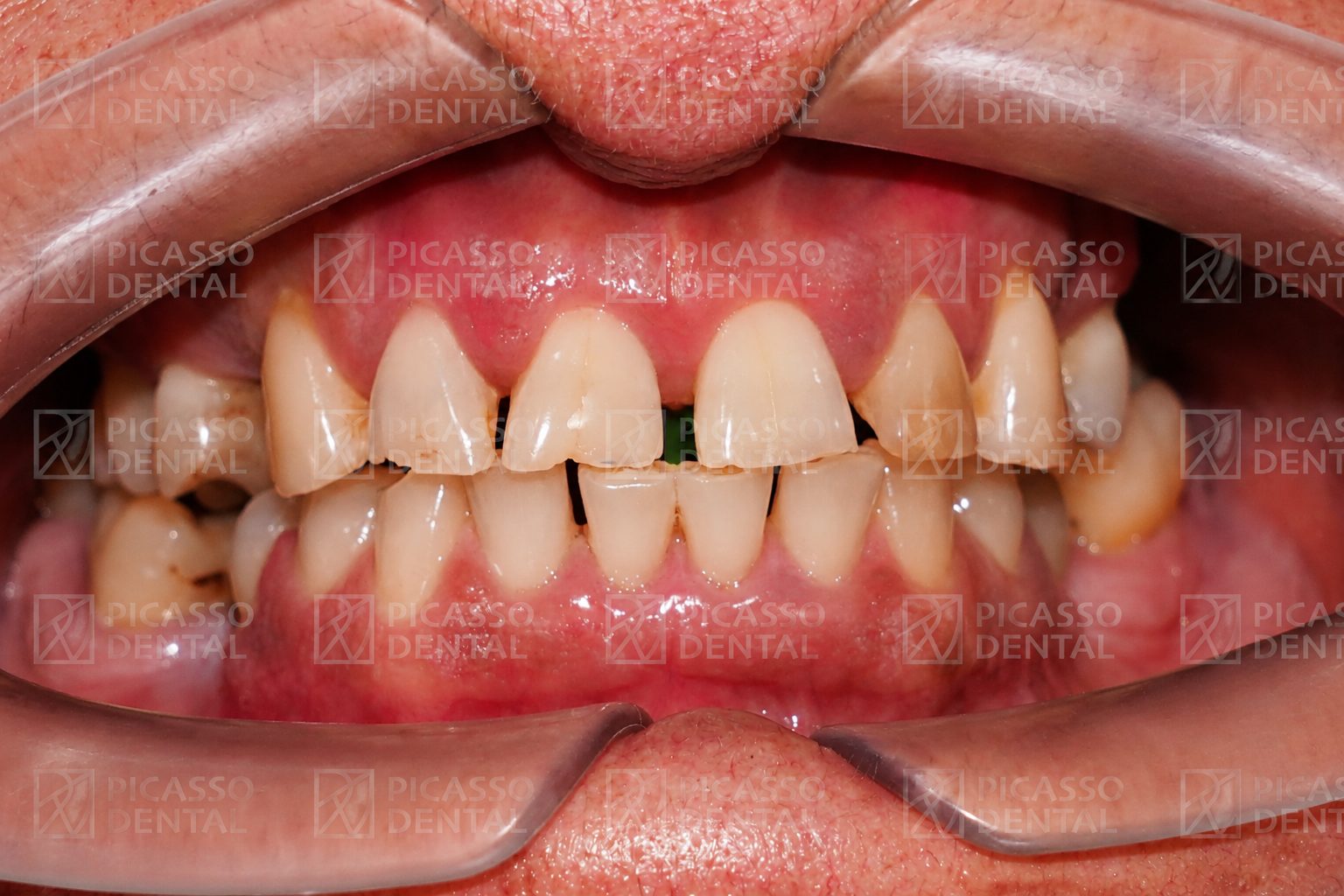
AfterCase 40179: Full upper arch, six Lava crowns on anterior teeth and zirconia on premolars and molars.
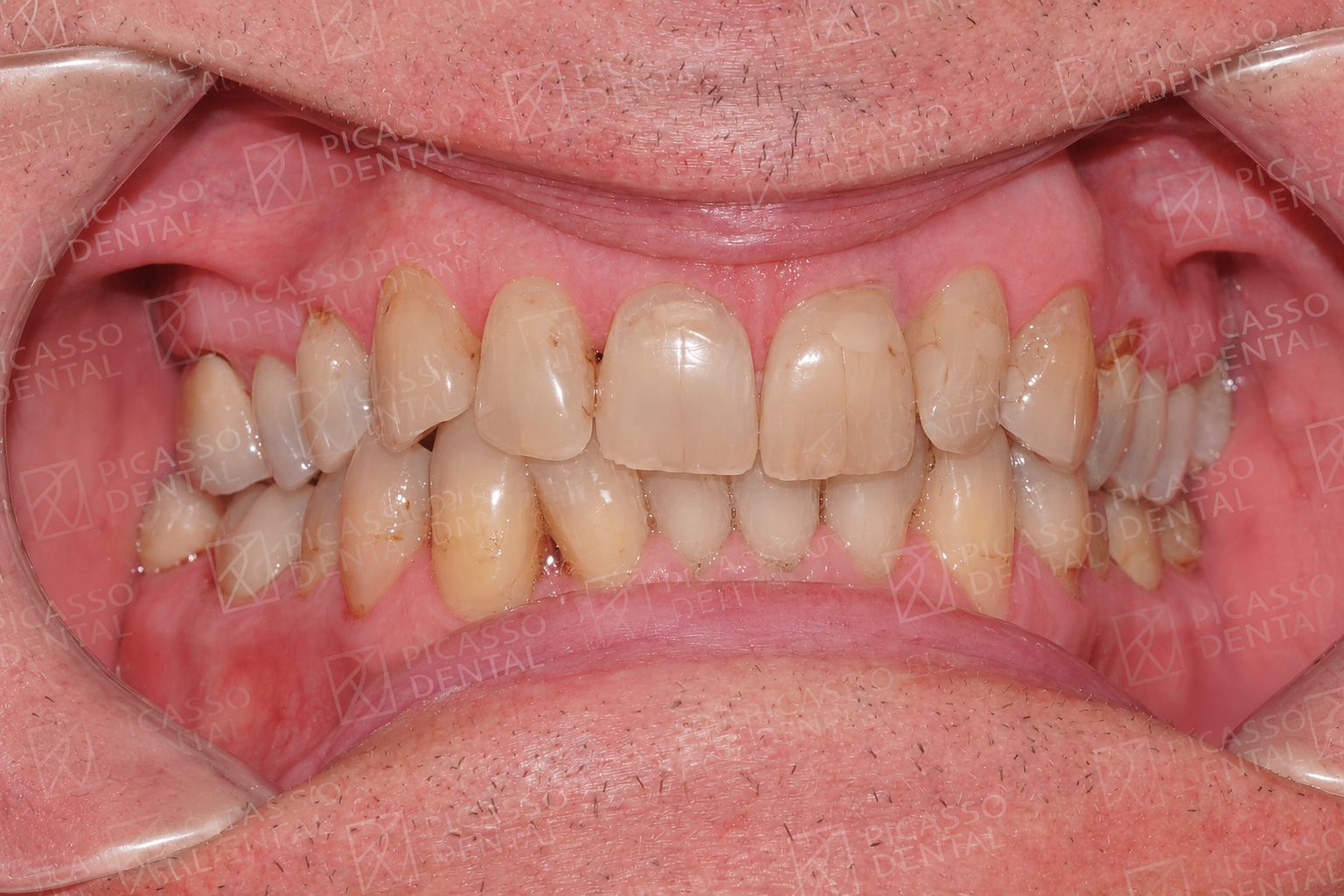 Before
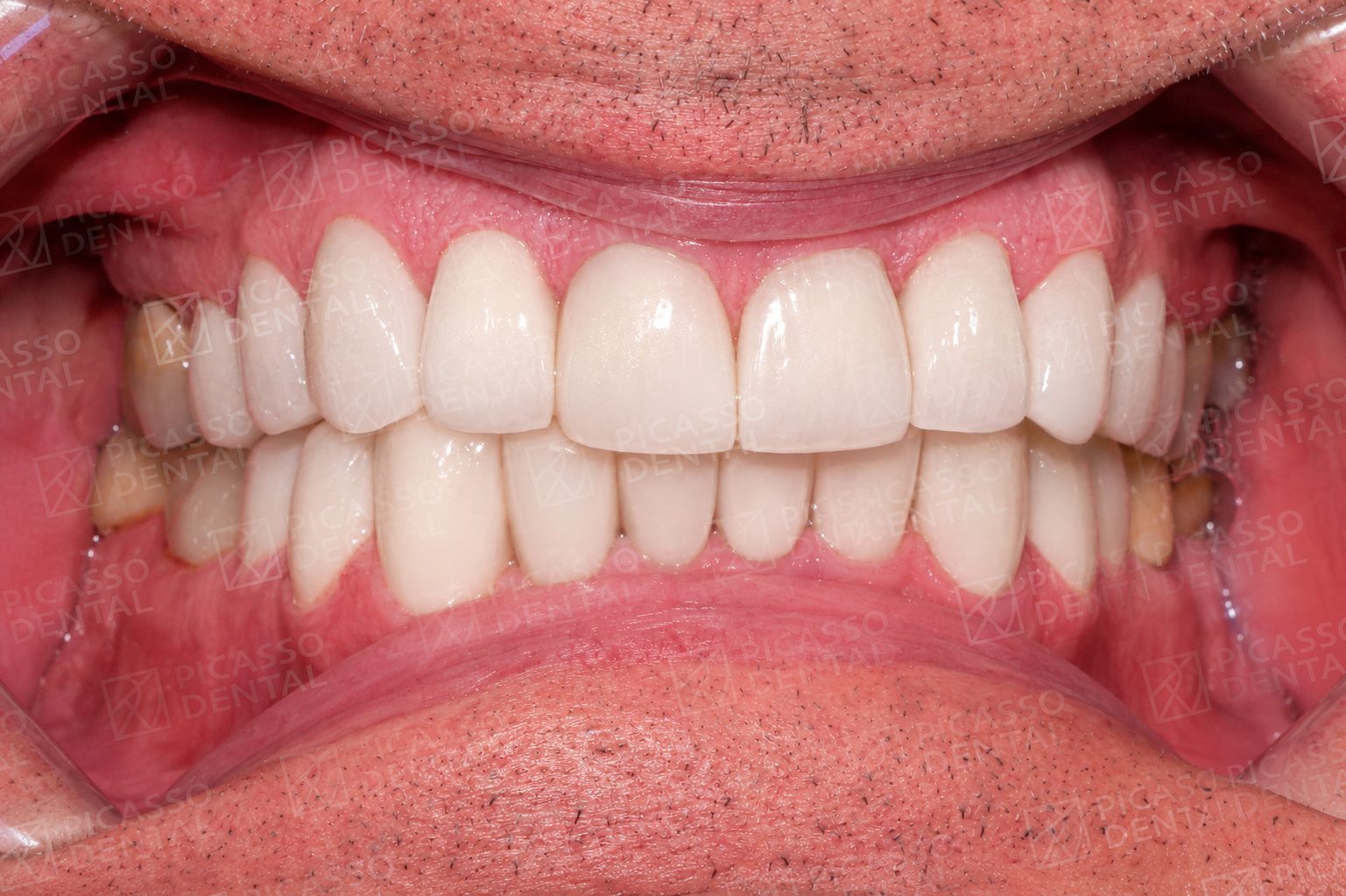 After
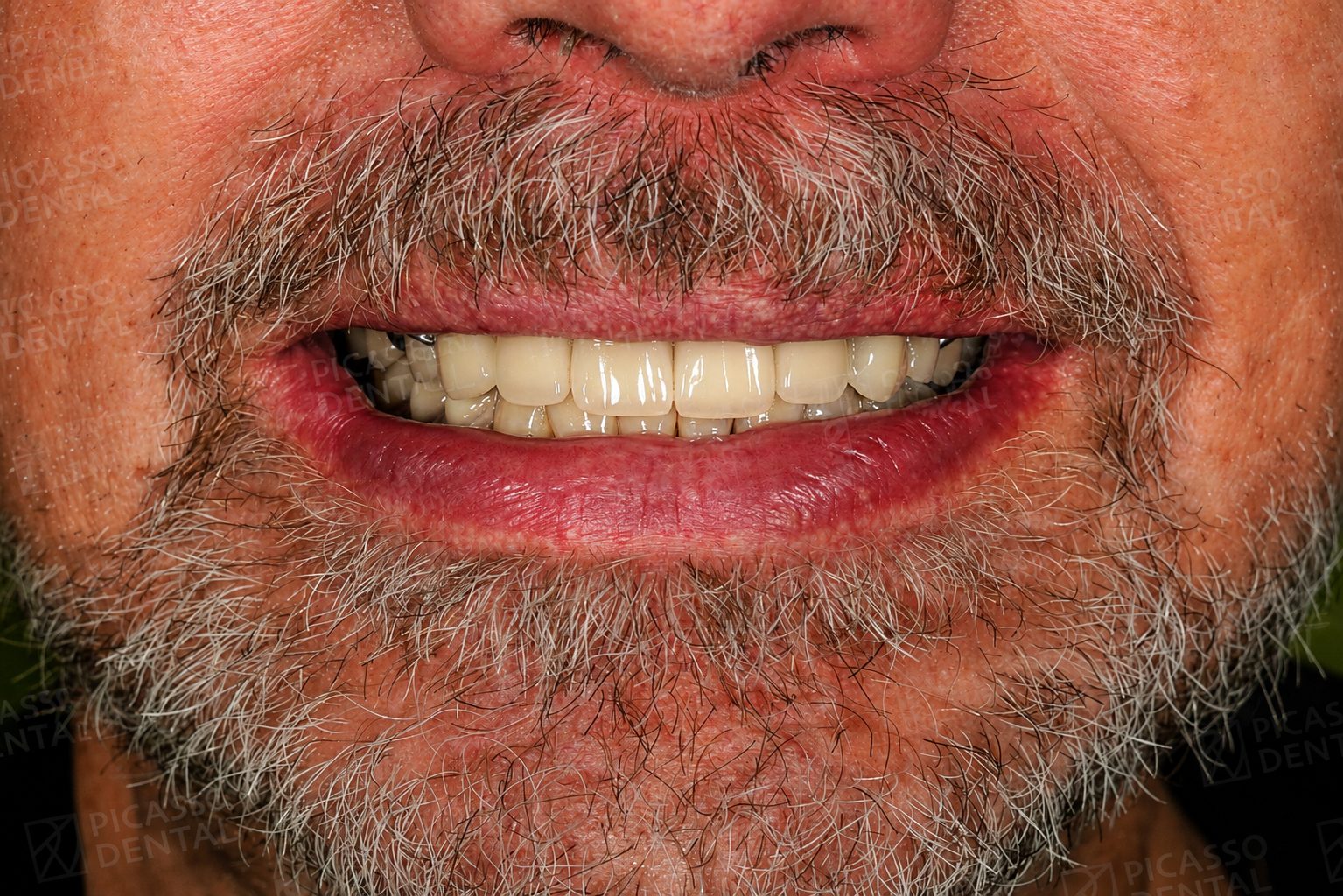
AfterCase 41400: International patient, combination of Emax front crowns and zirconia posterior crowns.
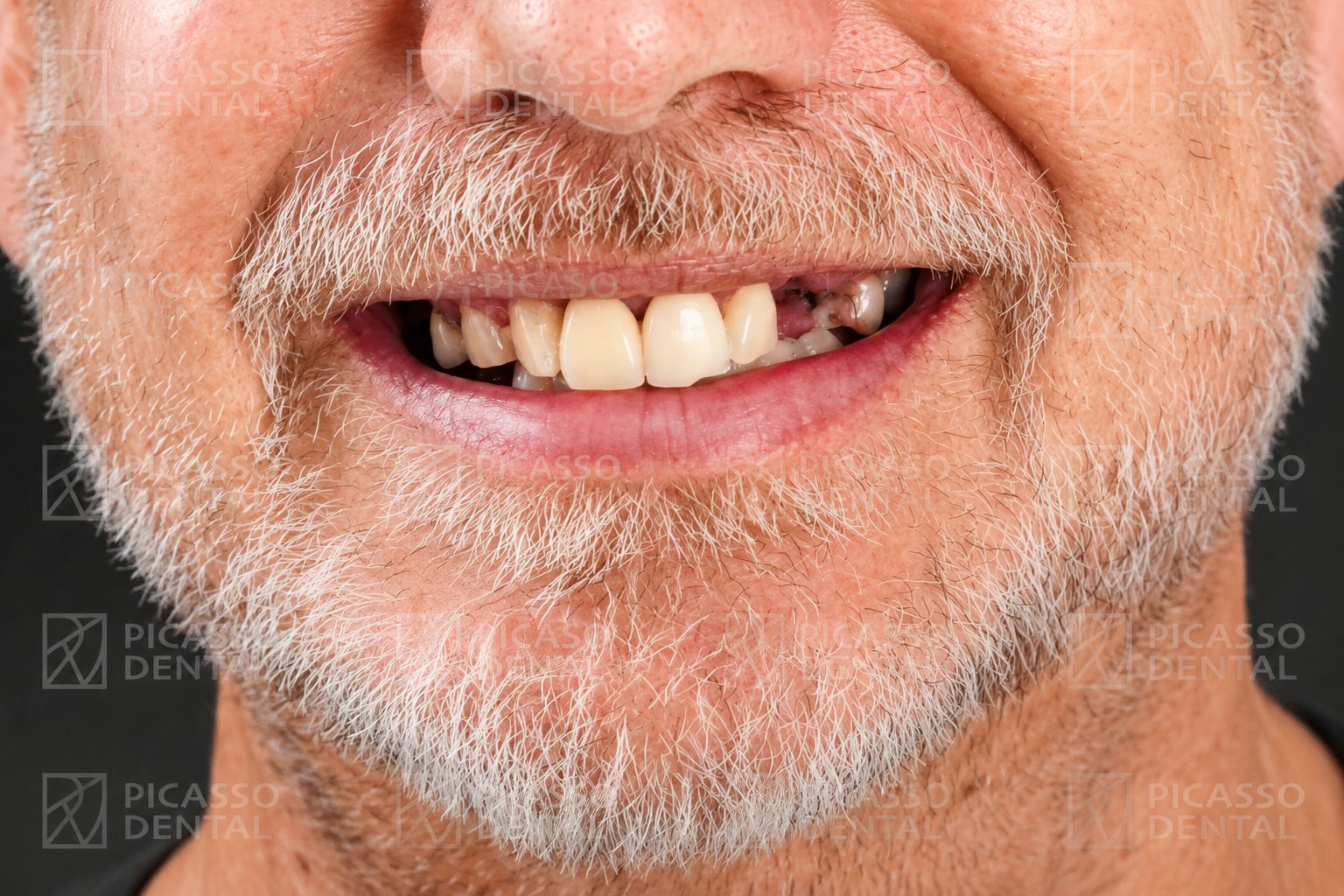 Before
 After
AfterCase 42840: PFM crowns on lower molars; budget-appropriate choice for posterior teeth not visible in the smile line.
 Before
 After
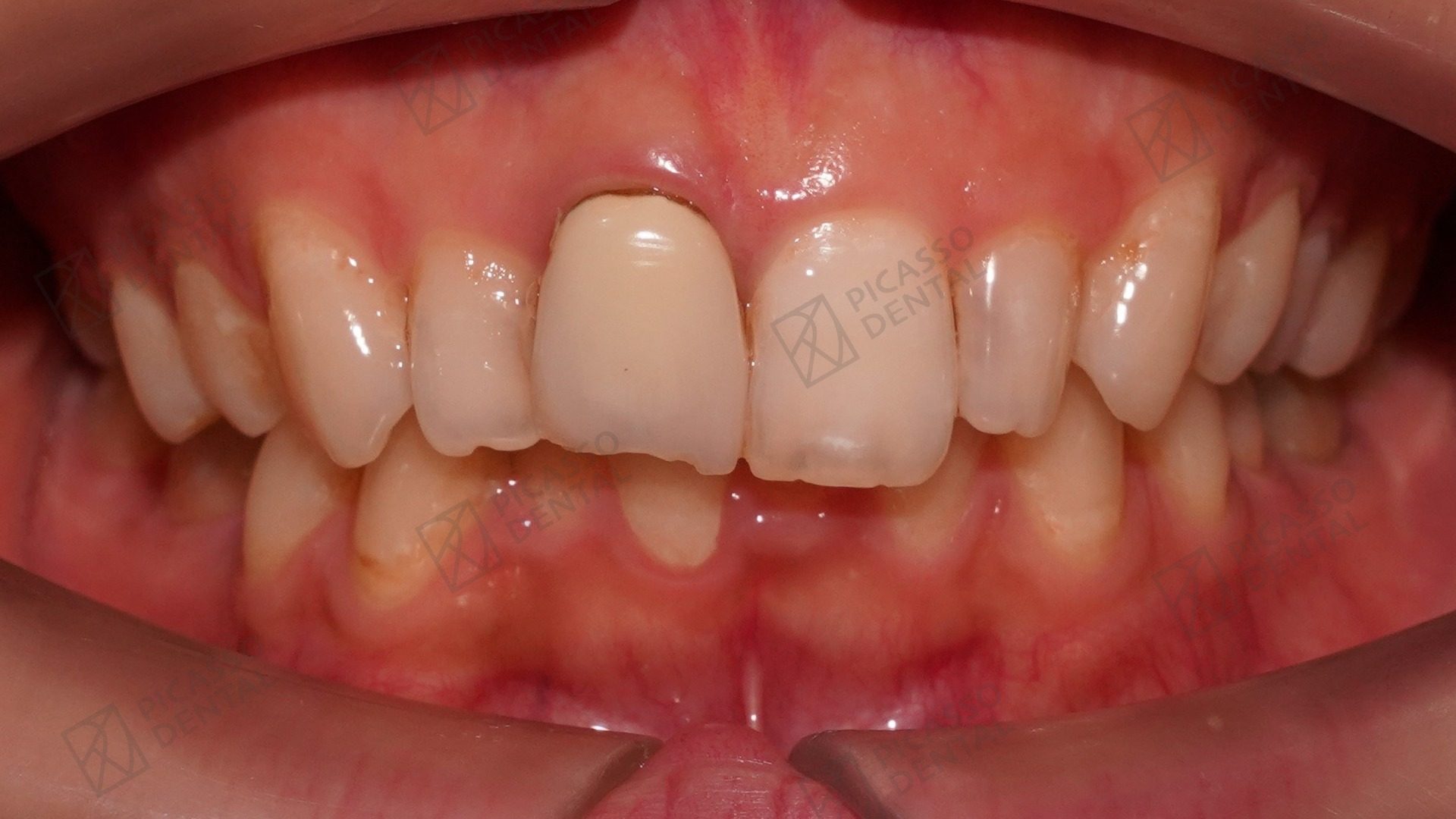
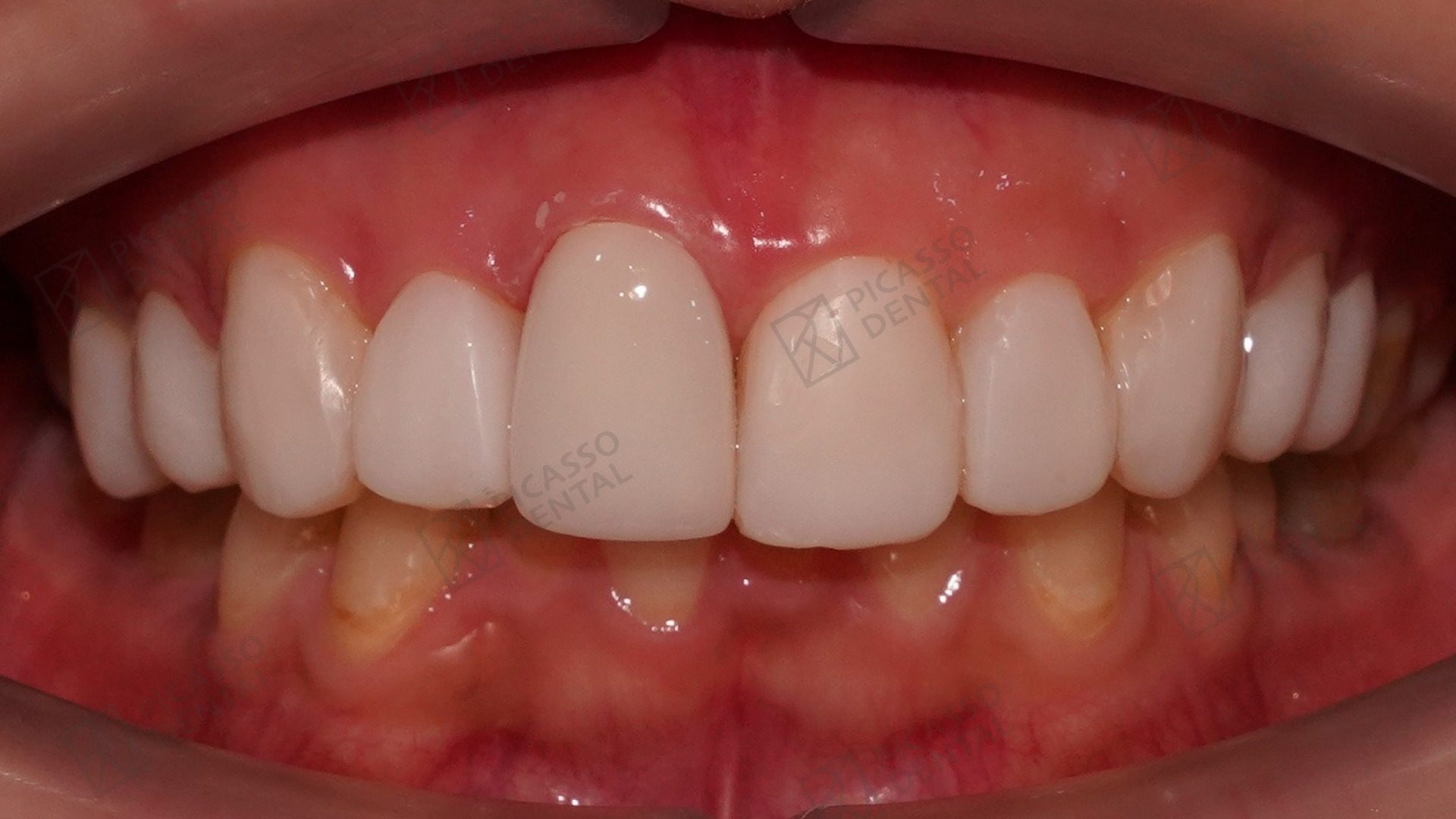
AfterCase 46229: Lava Plus crowns on four upper anterior teeth for international patient prioritising longevity.
Frequently Asked Questions
What is the difference between porcelain and ceramic crowns?
They are essentially the same thing. Porcelain is a specific type of dental ceramic. Ceramic is the broader family that includes porcelain, zirconia, lithium disilicate (Emax), and layered ceramics such as Lava. The clinical question is not porcelain versus ceramic but rather PFM (metal core with porcelain over it) versus all-ceramic (no metal at all). Each has specific indications and trade-offs.
What is a PFM crown?
PFM stands for porcelain-fused-to-metal. The crown has a thin metal substructure, typically titanium or chromium-cobalt alloy, with porcelain bonded over the visible surfaces. The metal provides strength and the porcelain provides the tooth-coloured appearance. PFM crowns last 10 to 15 years and are most commonly used for posterior teeth where chewing force is high and aesthetics are less critical.
What is an all-ceramic crown?
An all-ceramic crown has no metal at all. It is made entirely from a high-strength ceramic such as zirconia, lithium disilicate (Emax), or layered ceramic over a zirconia core (Lava). All-ceramic crowns transmit light similarly to natural enamel, giving a more natural appearance especially for front teeth. There is no risk of a grey line at the gum margin if gums recede over time.
Which crown material lasts the longest?
Lava and Lava Plus have the longest typical lifespan at 15 to 25 years. Zirconia and CERCON follow at 12 to 20 years. PFM and Emax average 10 to 15 years. Lifespan depends on tooth position, bite force, and oral hygiene. With proper care, any modern crown should outlast its typical warranty period.
What is the grey line problem with PFM crowns?
PFM crowns have a metal coping that ends at the crown margin near the gum line. If the gum recedes over years, the metal collar becomes visible as a thin dark line at the gum. This is a cosmetic issue rather than a clinical failure, but it is the most common reason patients with older PFM front crowns seek replacement. All-ceramic crowns have no metal and cannot develop this problem.
Which crown is best for front teeth?
All-ceramic materials are the standard for front teeth. Emax (lithium disilicate) is often the first choice for incisors and canines due to its exceptional translucency. Lava and Lava Plus are premium choices offering longer lifespan with excellent aesthetics. Full zirconia works well for premolars but is slightly more opaque than Emax for central incisors.
Which crown is best for molars?
Zirconia is the most common choice for molars. It handles heavy chewing forces, is highly fracture-resistant, and the slight opacity does not matter on back teeth. PFM is the budget alternative and remains clinically sound for posterior teeth. Emax is less common for molars because it is slightly more brittle than zirconia under repeated heavy bite forces.
Start Here
Start with a brief.
Tell us which tooth needs a crown and we will recommend the right material based on position, bite, and your priorities.