
Porcelain Veneers
Porcelain Veneers in Vietnam: A real case from Hanoi.
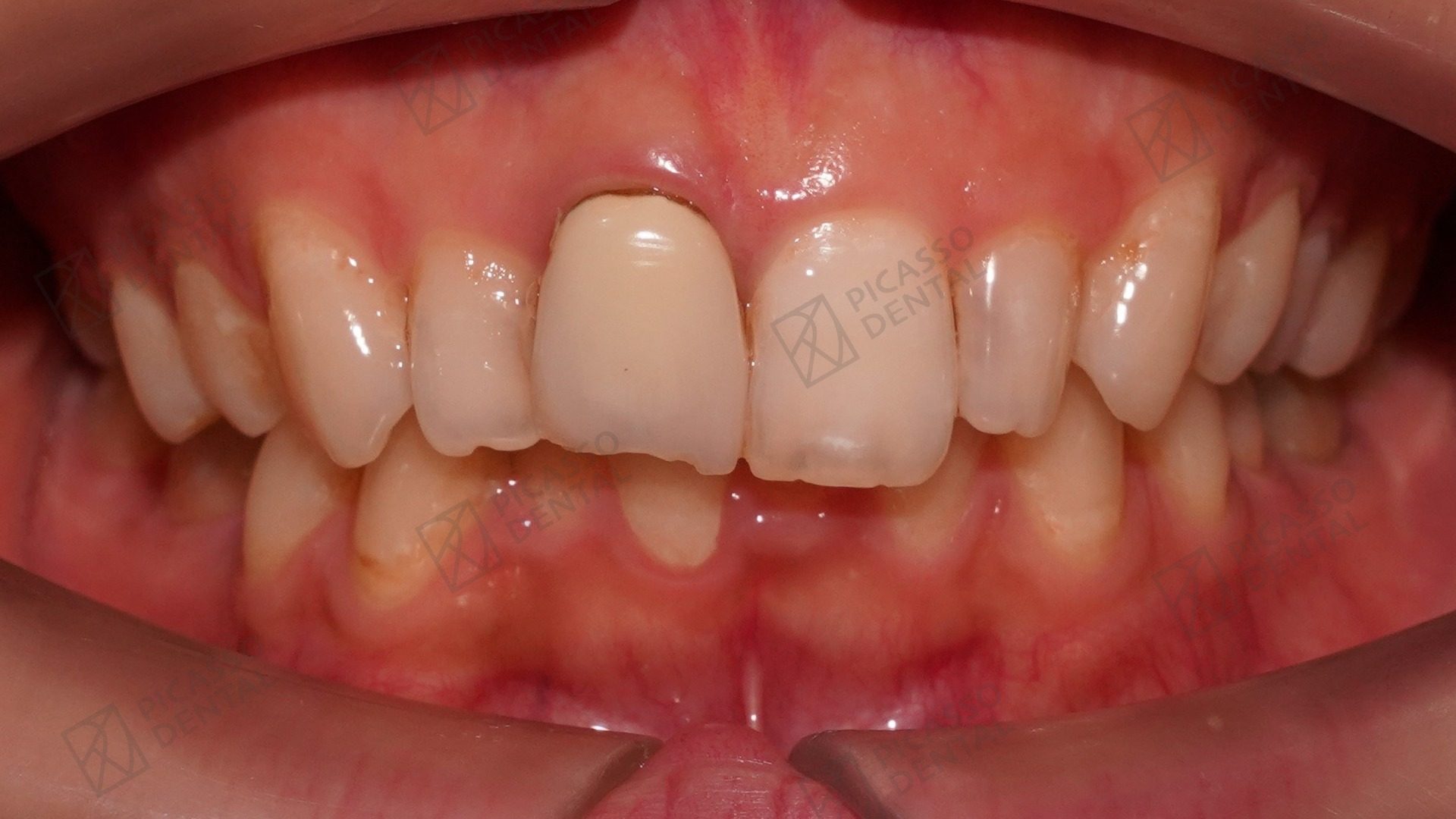
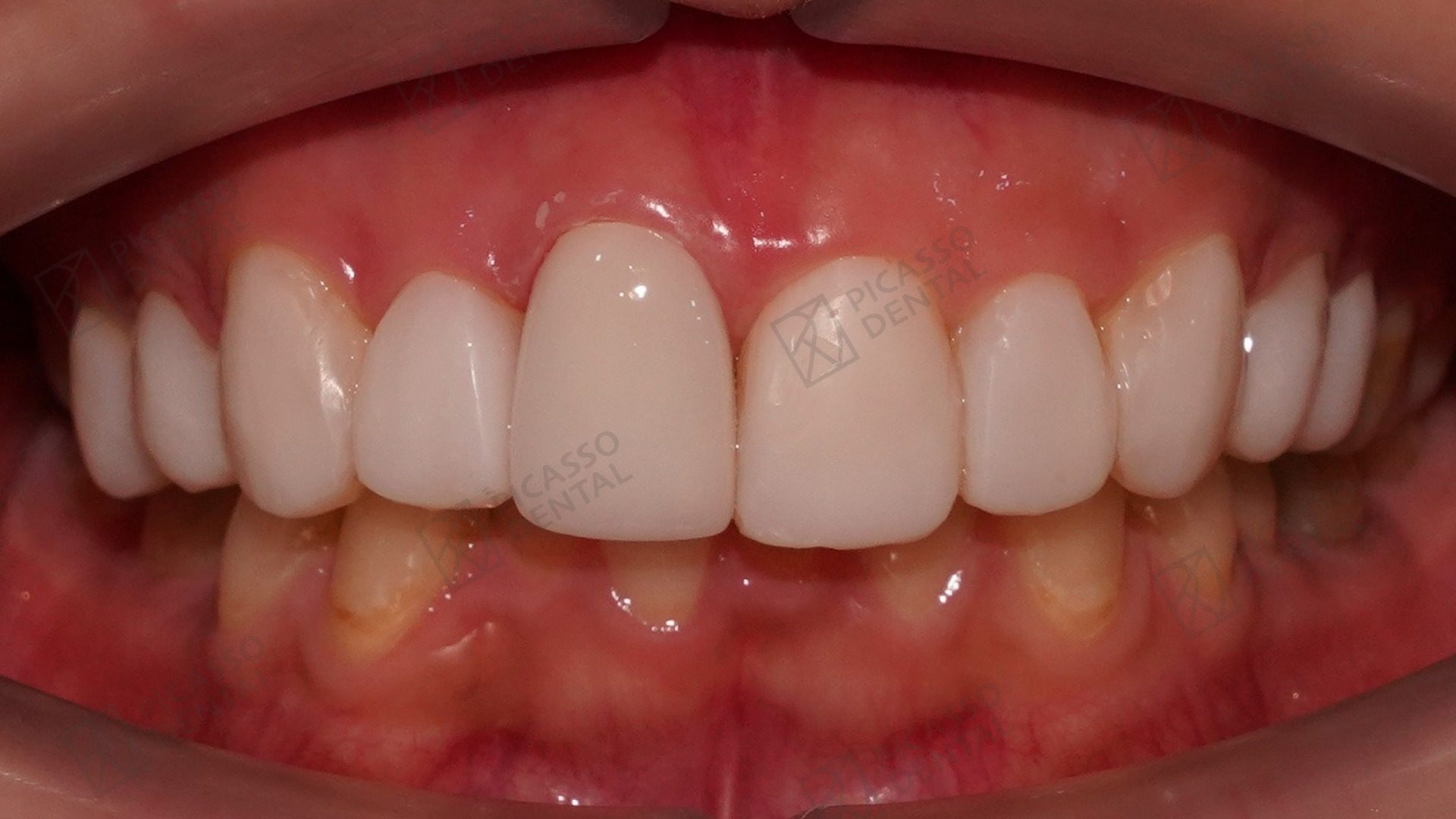
Mr. Eyssautier arrived with stained composite bonding from a previous accident repair. Three days later, he left with porcelain veneers that changed how he felt about his smile. Here is the full story and what it means for patients considering similar treatment.

Key Takeaways
- Porcelain veneers are the definitive solution when composite bonding has become stained, chipped, or visibly different from natural tooth colour.
- The ceramic surface of porcelain is non-porous and will not absorb stains from coffee, tea, or wine, maintaining its colour for 15 to 20 years.
- International patients visiting Hanoi can complete the full veneer process in three to five days with two clinical appointments.
- Treatment cost in Vietnam is significantly lower than in Western countries while using the same internationally available porcelain materials.
<h2>The Patient and the Problem</h2>

<p>Mr. Eyssautier arrived at our Hanoi clinic in his early thirties, visiting Vietnam with friends from New Zealand. He had chipped his front teeth years earlier in an accident and had them repaired at the time with composite bonding, which had been a sensible and affordable solution. The bonding had worked well initially, restoring the appearance of his teeth and his confidence.</p>

<p>But the years had taken their toll. Composite resin is slightly porous at a microscopic level. Despite regular brushing and good oral hygiene, the material had gradually absorbed pigment from coffee, tea, and normal dietary exposure. By the time Mr. Eyssautier visited us, the bonding was noticeably discoloured compared to his surrounding natural teeth. Small chips had also developed at the edges where the bonding met the natural enamel. He described feeling self-conscious when smiling in photographs and increasingly reluctant to show his teeth in social situations.</p>

<p>This presentation is one we see regularly from international patients visiting our clinics. Composite bonding done in the 20s typically needs replacing or upgrading by the late 20s or early 30s. The question at that point is not whether to replace it, but what to replace it with.</p>

<figure class="art-photo">
  <img src="/images/clinics/hanoi-old-quarter/reception.jpg" alt="Picasso Dental Clinic Hanoi Old Quarter reception" loading="lazy" decoding="async">
  <figcaption>Mr. Eyssautier's consultation and treatment took place at our Hanoi Old Quarter clinic, where international patients are seen regularly.</figcaption>
</figure>

<h2>Why Composite Bonding Eventually Fails</h2>

<p>Understanding why composite bonding stains helps patients appreciate why the upgrade to porcelain is the logical next step. Composite resin works beautifully when first placed: it matches the tooth colour well, the surface is smooth and polished, and the result looks natural. The problem unfolds slowly over years.</p>

<p>The porosity of composite resin means that every cup of coffee, every glass of red wine, and every curry sauce leaves a microscopic trace of pigment in the material. Individually, each exposure is imperceptible. Over years, the accumulation becomes visible. The bonded surface develops a yellow or brown cast that differs from the surrounding natural enamel. Professional polishing can improve the appearance temporarily, but it cannot reverse the absorbed staining.</p>

<div class="art-callout">
  <strong>The key limitation:</strong> Natural tooth enamel can be whitened professionally. Composite resin cannot. Once composite bonding is stained, the only solution is replacement. For patients who want a long-term result that will not require this cycle, porcelain is the answer.
</div>

<p>Chipping is the other failure mode. Composite resin is softer than porcelain and more susceptible to edge fractures at the margins where the bonding meets the natural tooth. Over time, small chips develop, creating rough edges and inconsistent surface texture that stand out against the smooth surface of natural enamel.</p>

<h2>Why Porcelain Veneers Were the Right Solution</h2>

<p>For Mr. Eyssautier, <a href="/porcelain-veneers/">porcelain veneers</a> were the clear recommendation for several reasons that apply broadly to patients in similar situations.</p>

<p><strong>Porcelain is non-porous.</strong> The ceramic surface of a quality veneer is dense and completely impermeable to staining from food or drinks. The colour selected on placement day is the colour maintained for the lifetime of the veneer, typically 15 to 20 years. Mr. Eyssautier could continue drinking his daily coffee without any concern about veneer discolouration.</p>

<p><strong>Porcelain provides complete surface coverage.</strong> A veneer covers the entire visible front surface of the tooth, creating uniform colour, shape, and texture. Unlike composite bonding, which covers only the chipped or damaged area, a veneer addresses the whole tooth surface as a unified restoration.</p>

<p><strong>Porcelain achieves natural translucency.</strong> The ceramic material allows light to penetrate slightly and reflect back with the depth and subtle colour variation that characterises real tooth enamel. When placed on a front tooth next to natural neighbours, a well-crafted porcelain veneer is indistinguishable from natural enamel in normal lighting.</p>

<figure class="art-photo">
  <img src="/images/clinics/hanoi-old-quarter/treatment-room.jpg" alt="Treatment room at Picasso Dental Clinic Hanoi" loading="lazy" decoding="async">
  <figcaption>The treatment suite where Mr. Eyssautier's preparation and final placement appointments took place.</figcaption>
</figure>

<h2>Mr. Eyssautier's Treatment Journey</h2>

<p>The full treatment was completed across two main appointments over three days, a timeline that works well for international patients visiting Hanoi for a week or more.</p>

<ul class="art-checklist">
  <li>
    <div>
      <strong>Day 1: Consultation and assessment</strong>
      <span>The team examined Mr. Eyssautier's front teeth, evaluated the existing composite bonding, assessed the health of the underlying teeth and his bite alignment, and discussed his aesthetic goals. Digital photographs were taken from multiple angles. A clear treatment plan was agreed.</span>
    </div>
  </li>
  <li>
    <div>
      <strong>Day 1: Tooth preparation and impressions</strong>
      <span>The old composite bonding was carefully removed. A very thin layer of enamel (0.5 to 0.7 millimetres) was prepared from the front surface of each tooth to create space for the porcelain shell. Detailed impressions were taken for the laboratory. Temporary veneers were placed immediately to protect the prepared teeth and give Mr. Eyssautier a preview of the result.</span>
    </div>
  </li>
  <li>
    <div>
      <strong>Days 2 to 3: Laboratory fabrication</strong>
      <span>The impressions went to the dental laboratory where skilled ceramists hand-crafted Mr. Eyssautier's porcelain veneers. This typically takes two to three working days. During this time, Mr. Eyssautier and his friends continued exploring Hanoi.</span>
    </div>
  </li>
  <li>
    <div>
      <strong>Day 4: Try-in and final placement</strong>
      <span>When the veneers returned from the laboratory, they were placed temporarily for evaluation before any permanent bonding. Mr. Eyssautier assessed the colour, shape, and overall appearance. Once he confirmed his complete satisfaction, the veneers were permanently bonded using specialist dental cement. The final appointment took approximately 90 minutes.</span>
    </div>
  </li>
</ul>

<div class="art-cta-inline">
  <p><strong>Visiting Vietnam and considering veneers?</strong> We plan treatment around your travel dates. Share your current smile photos and we will give you a treatment timeline and cost estimate before you arrive.</p>
  <a href="https://wa.me/84989067888">Book a consultation</a>
</div>

<h2>The Vietnam Advantage for International Patients</h2>

<p>Quality porcelain veneers in Vietnam typically cost 60 to 70 percent less per tooth than equivalent treatment in Australia, the UK, or North America. Even when travel expenses are included in the calculation, the total cost of combining a Vietnam visit with veneer treatment is generally significantly lower than having the same work done at home.</p>

<p>The materials are not a compromise. Picasso Dental uses the same porcelain available internationally, from established manufacturers whose products are used in dental clinics worldwide. The difference is in the cost of clinical labour and laboratory work in Vietnam, not in material quality. For patients who do the research and choose an established clinic with documented experience treating international patients, the value equation is compelling.</p>

<p>Communication is not a barrier at our clinics. Our team works in English daily with patients from Australia, New Zealand, the UK, Canada, and the United States, among many other countries. For current pricing information, see our <a href="/cosmetic-dentistry-cost-vietnam/">cosmetic dentistry cost guide</a>.</p>

<figure class="art-photo">
  <img src="/images/clinics/da-nang-hoang-dieu/reception.jpg" alt="Picasso Dental Clinic Da Nang" loading="lazy" decoding="async">
  <figcaption>International patients visiting Vietnam can access Picasso Dental clinics in Hanoi, Da Nang, Ho Chi Minh City, and Da Lat.</figcaption>
</figure>

<h2>When Porcelain Veneers Are the Right Choice</h2>

<p>Based on cases like Mr. Eyssautier's and the many similar presentations we see from international patients, the situations where porcelain veneers make clear sense include: composite bonding that has become stained and requires replacement; multiple aesthetic issues on the same teeth (chips plus discolouration); teeth with intrinsic staining that whitening cannot adequately address; and patients who want a long-term solution they will not need to revisit for 15 to 20 years.</p>

<p>Composite bonding may still be the appropriate choice when the patient has a single small chip on an otherwise perfect tooth, when budget constraints make veneers currently inaccessible, or when the patient prefers to avoid any tooth preparation. Understanding the real-world lifespan and limitations of each material is the foundation of making the right decision for your specific situation.</p>

<figure class="art-photo">
  <img src="/images/general-dentistry/consultation.jpg" alt="Consultation at Picasso Dental Clinic" loading="lazy" decoding="async">
  <figcaption>Every veneer case begins with a thorough consultation to assess the current condition of the teeth and discuss realistic expectations before treatment begins.</figcaption>
</figure>
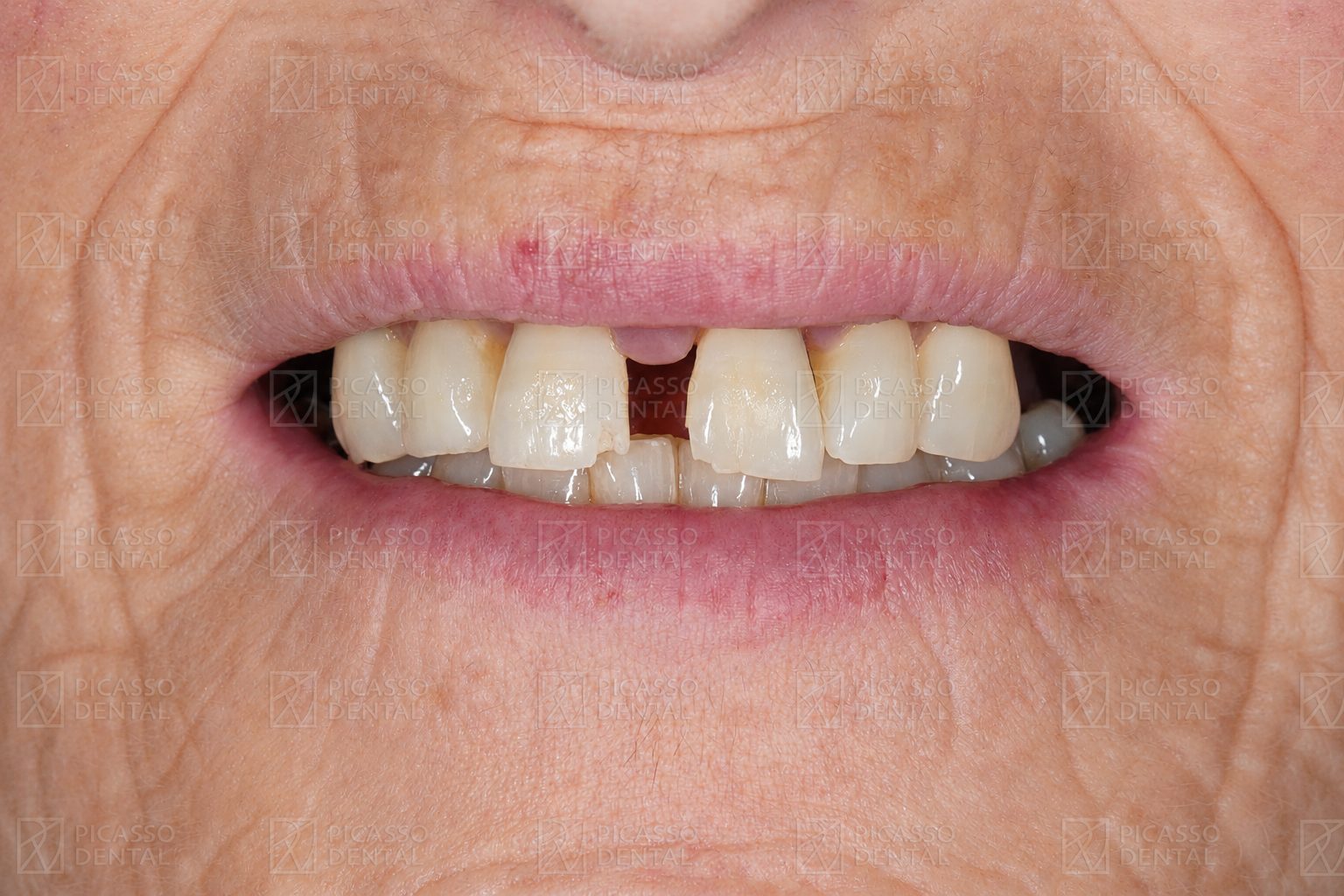 Before
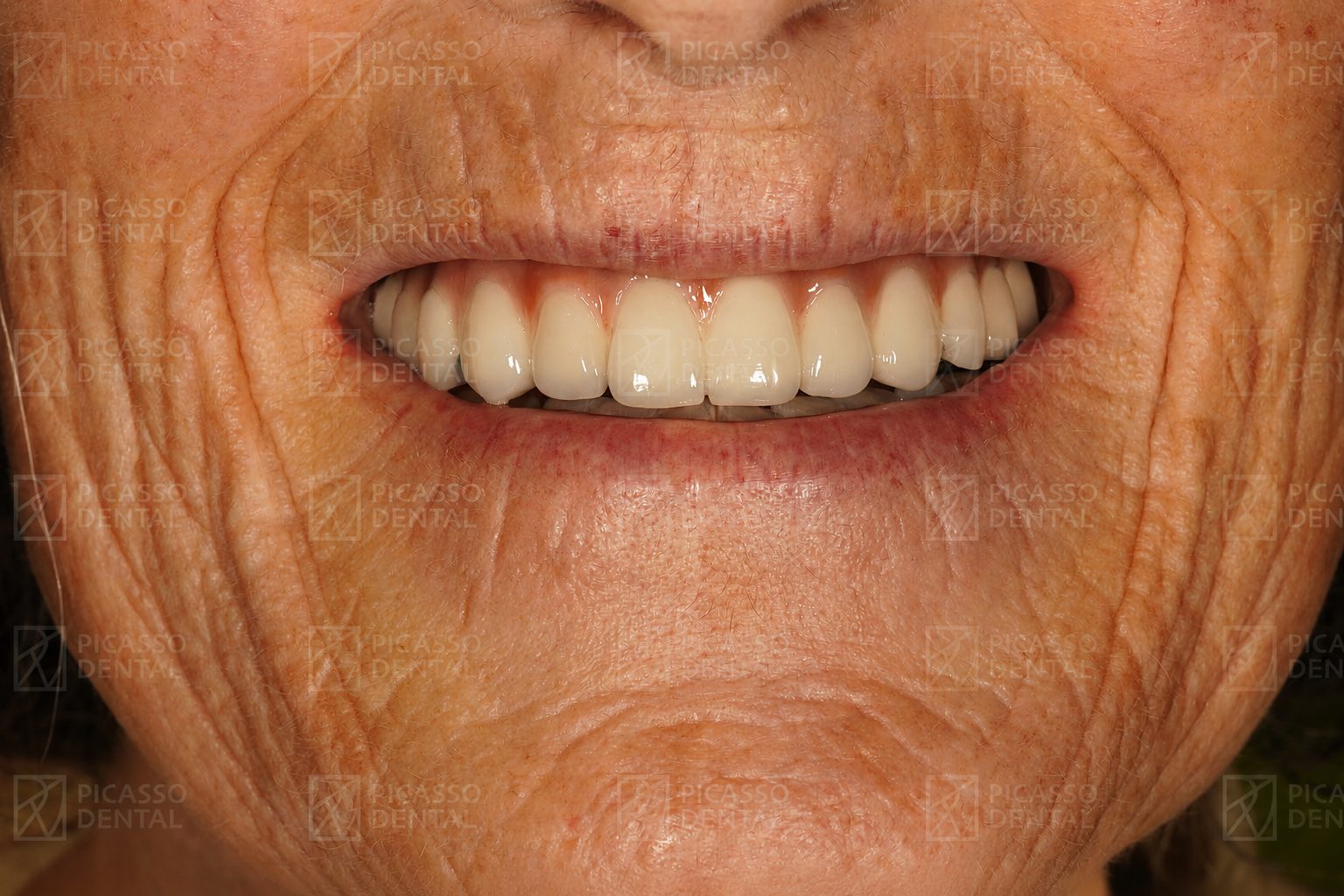 After
AfterCase 38420: Stained composite bonding on upper front teeth replaced with E-max porcelain veneers.
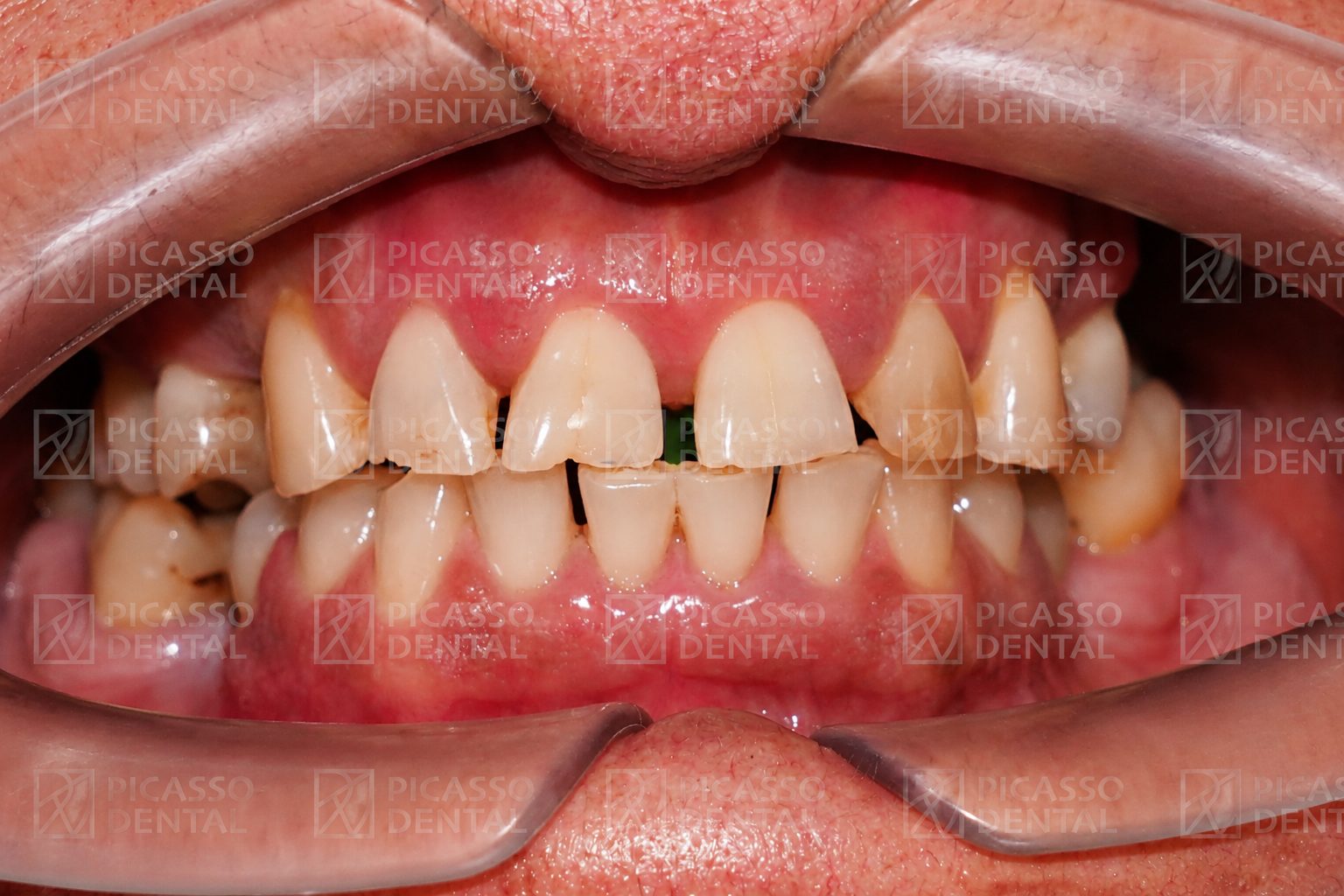 Before
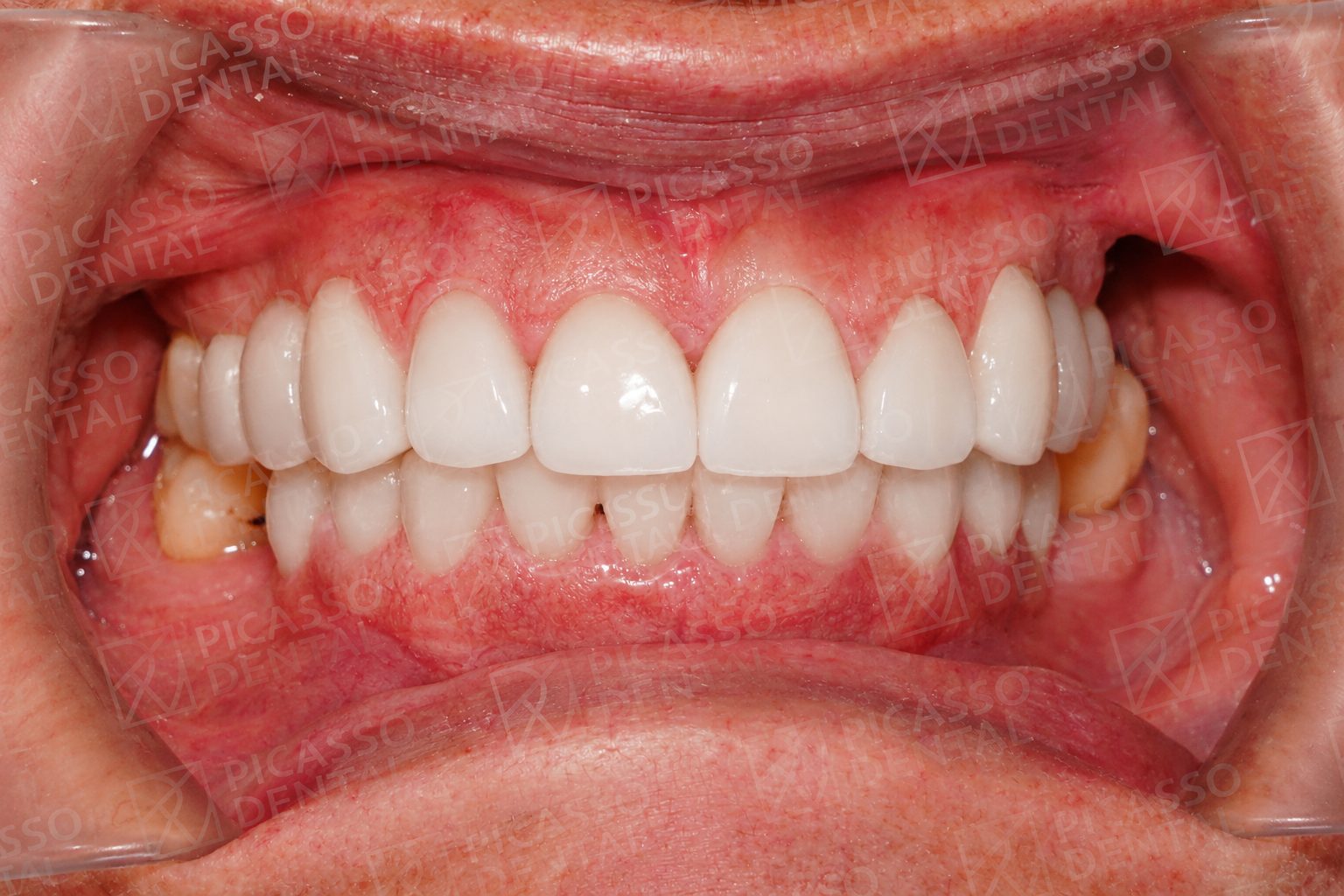 After
AfterCase 40179: International patient, four upper veneers replacing old bonding, natural shade selected.
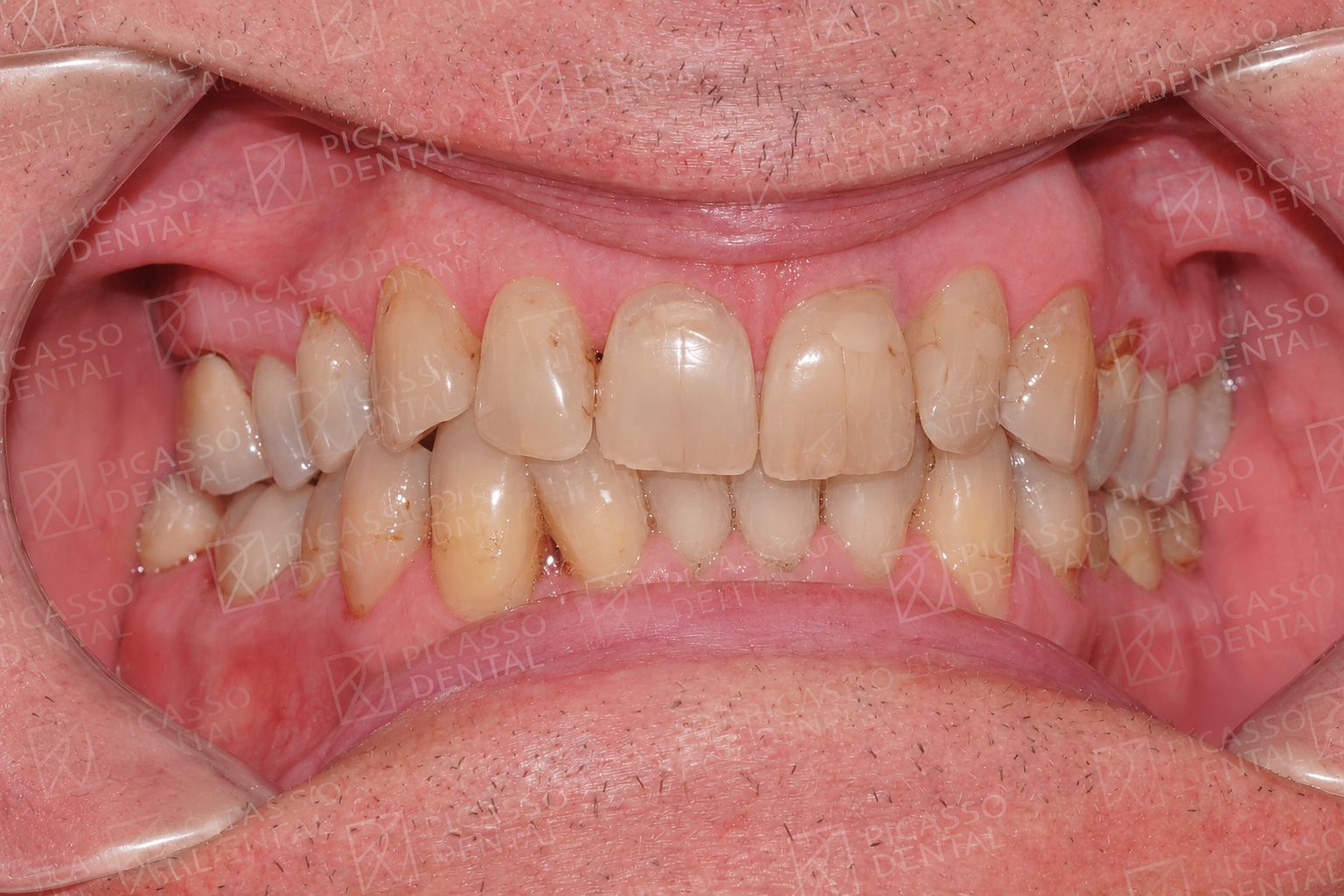 Before
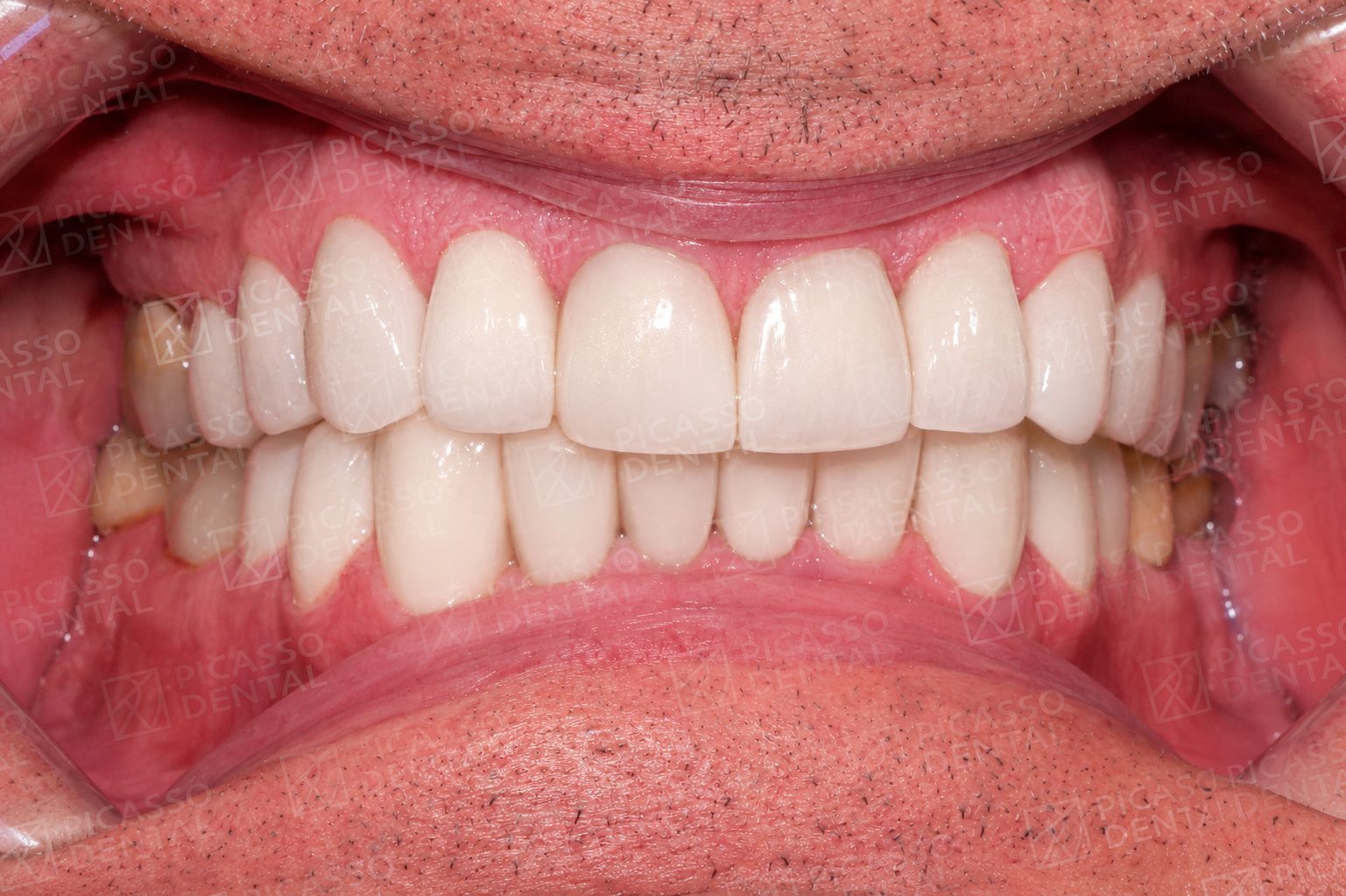 After
AfterCase 41400: Six upper veneers for a patient from New Zealand, completed during a 5-day Hanoi visit.
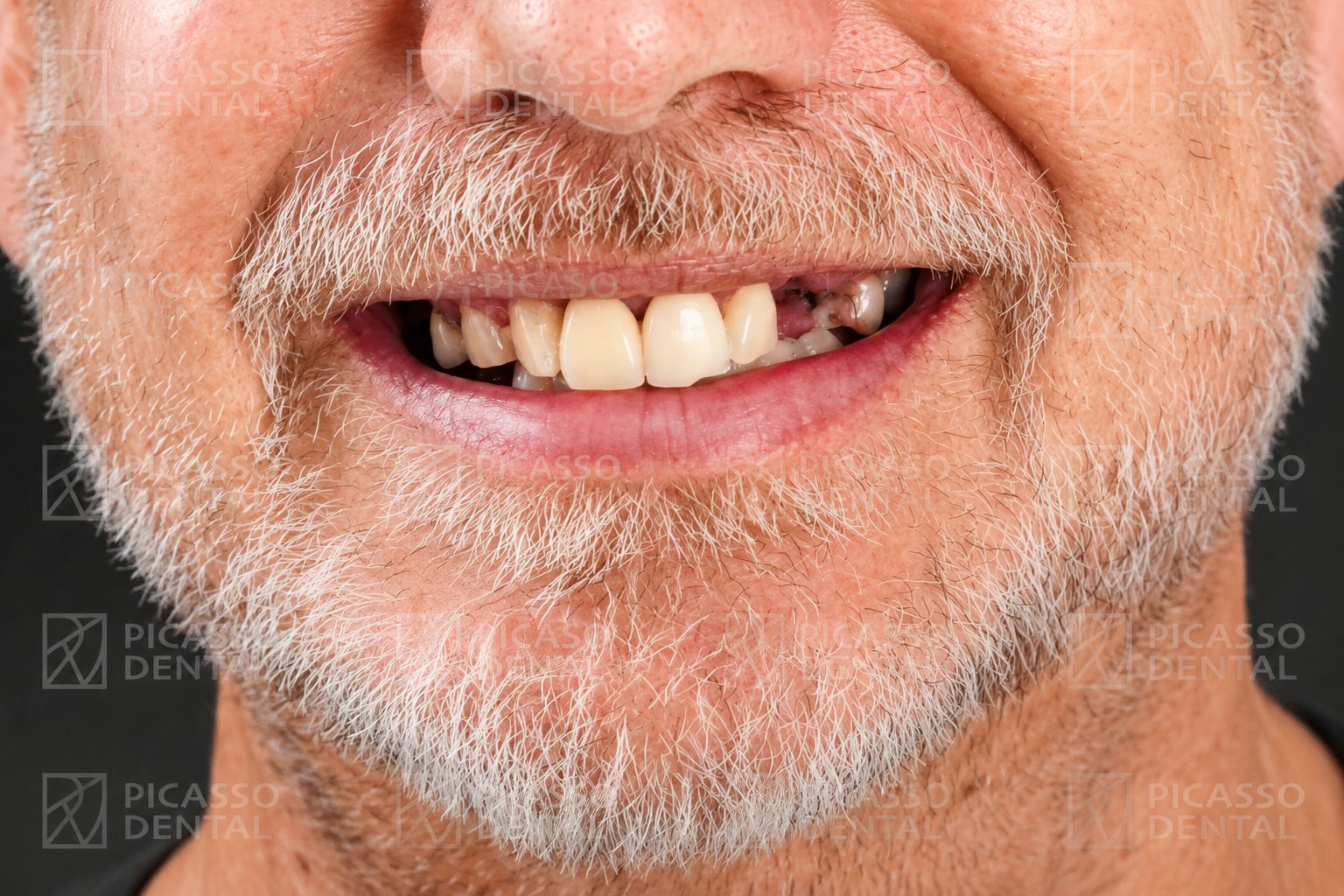 Before
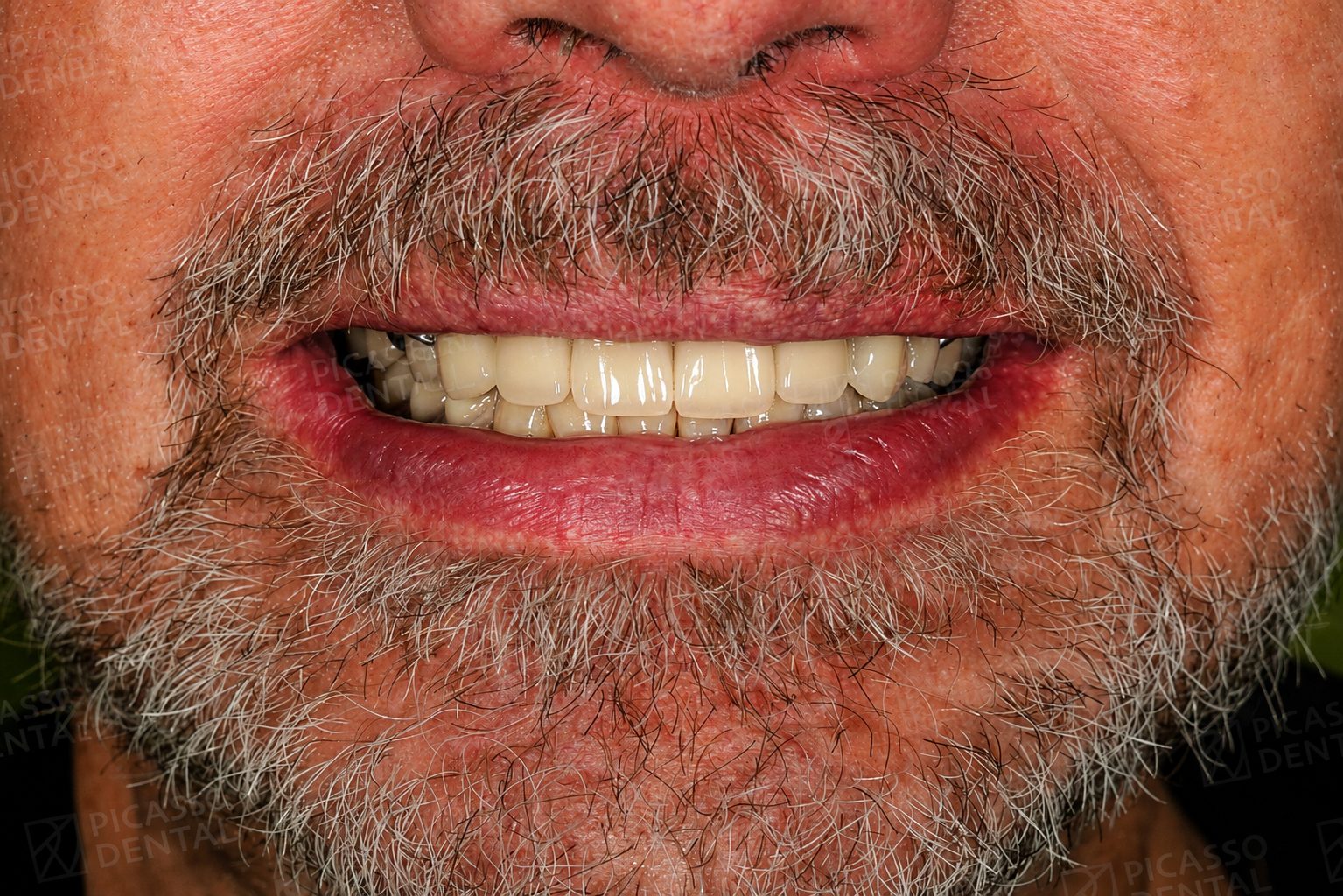 After
AfterCase 42840: Chipped and yellowed bonding on four incisors replaced with porcelain veneers for a patient in his 30s.
 Before
 After
AfterCase 46229: Upper six veneers, patient from Australia, three-day treatment window in Hanoi.
Frequently Asked Questions
Can porcelain veneers fix chipped front teeth?
Yes. Porcelain veneers cover the entire front surface of a tooth, including any chipped edges or areas of damaged composite bonding. The veneer provides a new, uniform surface that is both aesthetically consistent and structurally sound. For teeth with existing composite bonding that has become stained or damaged, veneers are a definitive long-term solution.
Why does composite bonding fail over time?
Composite resin is slightly porous at a microscopic level and gradually absorbs pigment from coffee, tea, red wine, and other staining sources. It also chips more readily than porcelain ceramic and cannot be whitened once stained. Patients who had composite bonding placed in their 20s typically find it needs replacing or upgrading by their late 20s or early 30s.
How long does veneer treatment take for an international patient visiting Vietnam?
For international patients visiting Hanoi, the process typically takes three to five days. The consultation and preparation happen on the first or second day, the laboratory fabricates the veneers over two to three days, and the final placement appointment completes the treatment. This timeline works well for patients traveling through Vietnam on a visit of a week or longer.
Is the quality of porcelain veneers in Vietnam comparable to Western countries?
At established clinics serving international patients, the materials and laboratory standards are equivalent to what patients would find in Australia, the UK, or North America. Picasso Dental uses the same porcelain materials available internationally. The primary difference is cost, with veneer treatment in Vietnam typically costing 60 to 70 percent less per tooth than equivalent work in Western countries.
What is the difference between composite bonding and porcelain veneers?
Composite bonding is completed in a single appointment, uses resin material applied directly to the tooth, and typically lasts 5 to 10 years before staining or wear becomes noticeable. Porcelain veneers require two to three appointments over several days, involve laboratory fabrication of a ceramic shell, last 15 to 20 years, and are completely stain-resistant. Porcelain costs more initially but often provides better long-term value.
Do veneers require removing a lot of tooth structure?
The tooth preparation for porcelain veneers involves removing a very thin layer of enamel, typically 0.5 to 0.7 millimetres from the front surface. For teeth with existing composite bonding, the bonding is removed first, which reduces the additional enamel preparation needed. The preparation is minimal but permanent, which is one reason the decision to get veneers requires careful consideration.
How do I care for porcelain veneers after placement?
Porcelain veneers require the same care as natural teeth: brushing twice daily with a soft-bristled brush, flossing daily, and attending regular professional cleaning appointments. Non-abrasive toothpaste is recommended to avoid dulling the veneer surface. Avoid using teeth as tools and protect veneers with a night guard if you grind your teeth. With proper care, veneers maintain their appearance for 15 to 20 years.
Patient Video Testimonial

Start Here
Start with a brief.
Share your current smile photos and your travel dates, and we will confirm whether porcelain veneers can be completed during your Vietnam visit.