Dental Crowns
Porcelain Crowns for Front Teeth: A complete guide.
Front tooth crowns require a higher level of aesthetic precision than back teeth. Here is everything you need to know before starting treatment, from material selection to the two-appointment process.

Key Takeaways
- All-ceramic crowns (E-max, Lava) are the standard for front teeth because they transmit light naturally and carry no risk of grey-line discolouration at the gum margin.
- The two-appointment process includes preparation with a temporary crown, then final placement after laboratory fabrication (one to two weeks between visits).
- E-max is the most common choice for incisors and canines due to its exceptional translucency. Lava and Lava Plus offer longer lifespan at a higher price point.
- With proper care, porcelain crowns on front teeth last 10 to 20 years depending on material.
<h2>What Are Porcelain Crowns and When Are They Used on Front Teeth?</h2>

<p>A dental crown is a custom-made restoration that covers and protects the entire visible portion of a tooth above the gum line. Unlike a filling or veneer, a crown encases the whole tooth structure, providing protection and restoring both function and appearance. For front teeth (anterior teeth, meaning incisors and canines), the aesthetic result is as important as structural protection because these teeth are visible whenever you speak or smile.</p>

<p>Porcelain crowns are indicated for front teeth in several situations. Cosmetic enhancement is one: crowns can cover teeth affected by deep staining, significant chips, or discolouration that whitening cannot correct. Tooth restoration is another: teeth damaged by decay, trauma, or fracture that cannot be adequately repaired with a filling alone require crown coverage. Crowns are also placed after root canal treatment on front teeth, as root-canal-treated anterior teeth become brittle over time and are at significant fracture risk without a crown to protect them. Bridge construction uses crowns on anchor teeth to support a restoration spanning a gap, and a crown can replace an unstable large filling that can no longer hold securely.</p>

<figure class="art-photo">
  <img src="/images/clinics/hanoi-old-quarter/reception.jpg" alt="Picasso Dental Clinic Hanoi Old Quarter" loading="lazy" decoding="async">
  <figcaption>Picasso Dental Clinic Hanoi Old Quarter has placed thousands of anterior crowns for patients from Vietnam and abroad since 2013.</figcaption>
</figure>

<h2>Crown Material Options for Front Teeth</h2>

<p>Material choice is the most consequential decision in anterior crown treatment because the visible position of front teeth means both aesthetics and longevity matter equally. The following are the materials used at Picasso Dental Clinic for anterior cases.</p>

<h3>E-max (Lithium Disilicate)</h3>

<p>E-max is the most widely chosen material for front teeth in modern cosmetic dentistry, and for good reason. Lithium disilicate ceramic has exceptional translucency, allowing light to penetrate slightly and reflect back with the subtle colour variations that characterise natural tooth enamel. When placed on an incisor next to adjacent natural teeth, a well-fabricated E-max crown is very difficult to distinguish from the real thing even under close inspection. The material is also very strong relative to its thickness, meaning less tooth preparation is required to create space for the crown. E-max crowns at Picasso last approximately 10 to 15 years.</p>

<h3>Lava and Lava Plus</h3>

<p>Lava crowns combine a zirconia core with a layered ceramic outer surface, giving both strength and excellent aesthetics. The zirconia core provides long-term structural durability while the ceramic overlay achieves the translucency and colour depth that all-zirconia alone cannot match. Lava and Lava Plus typically last 15 to 25 years, making them the premium long-term choice for patients prioritising longevity. For patients in their 30s and 40s who want a crown that will realistically last decades, Lava is worth the higher investment.</p>

<h3>Full Zirconia</h3>

<p>Full-zirconia crowns are extremely durable and handle chewing forces well, but they are slightly more opaque than E-max or Lava. For upper central incisors, where translucency is most noticeable, full zirconia is often less ideal. It works well for premolars, where the balance of strength and reduced visibility makes opacity less of a concern. High-translucency zirconia variants (such as CERCON HT or Ceramill Zolid) bridge the gap somewhat and may be appropriate for canines or upper laterals where the aesthetic demands are slightly lower than for central incisors.</p>

<h3>Porcelain-Fused-to-Metal (PFM)</h3>

<p>PFM crowns have a long track record and are still used at our clinics where patients specifically request them for cost reasons. However, for visible front teeth, all-ceramic options are the default recommendation. The reason is the grey-line risk: the metal substructure of a PFM crown ends at the gum margin. If gum tissue recedes over the coming years (a common age-related change), the metal collar becomes visible as a thin dark line at the gum. This is a cosmetic issue rather than a clinical failure, but it is the most common reason patients with older PFM front crowns request replacement.</p>

<div class="art-callout">
  <strong>Summary recommendation for front teeth:</strong> Upper central incisors and lateral incisors: E-max as first choice, Lava or Lava Plus for premium longevity. Upper canines: E-max or high-translucency zirconia. Premolars: zirconia or CERCON. All front teeth: all-ceramic preferred over PFM unless cost is a limiting factor.
</div>

<figure class="art-photo">
  <img src="/images/clinics/hanoi-old-quarter/treatment-room.jpg" alt="Crown preparation at Picasso Dental Clinic" loading="lazy" decoding="async">
  <figcaption>Crown preparation takes place in a fully equipped treatment suite with digital imaging and shade assessment under controlled lighting conditions.</figcaption>
</figure>

<h2>The Two-Appointment Crown Process</h2>

<p>Anterior crown treatment is completed over two main appointments, typically one to two weeks apart.</p>

<ul class="art-checklist">
  <li>
    <div>
      <strong>First appointment: preparation and impressions</strong>
      <span>The dentist removes any damaged tooth structure and reshapes the remaining tooth to accept the crown. The amount of tooth reduction varies by material (E-max requires less preparation than PFM due to its strength-to-thickness ratio). Impressions or digital scans capture the exact dimensions of the prepared tooth and bite. Shade mapping is completed for communication with the laboratory ceramist.</span>
    </div>
  </li>
  <li>
    <div>
      <strong>Temporary crown placement</strong>
      <span>A temporary crown is fitted immediately after preparation to protect the exposed tooth, maintain the gum position, and give the patient a cosmetically acceptable appearance while the permanent crown is being made. Temporary crowns are made chairside from a different material and are attached with temporary cement.</span>
    </div>
  </li>
  <li>
    <div>
      <strong>Laboratory fabrication</strong>
      <span>The impressions go to a skilled dental ceramist who hand-crafts the permanent crown over one to two weeks. For E-max and Lava, this involves precise layering and firing of the ceramic material to achieve the target shade, translucency, and characterisation.</span>
    </div>
  </li>
  <li>
    <div>
      <strong>Second appointment: try-in and final placement</strong>
      <span>The temporary crown is removed and the permanent crown is tried in for fit, colour, and bite. The patient can evaluate the result from multiple angles and under different lighting. Once both patient and dentist are satisfied, the crown is permanently cemented. Small bite adjustments can be made during this appointment.</span>
    </div>
  </li>
</ul>

<div class="art-cta-inline">
  <p><strong>Need a crown on a front tooth?</strong> Shade matching and material selection for anterior crowns benefit from a clinical assessment. Book a consultation to discuss your specific case.</p>
  <a href="https://wa.me/84989067888">Book a consultation</a>
</div>

<h2>Shade Matching for a Single Front Tooth Crown</h2>

<p>Getting the colour right on a single anterior crown is one of the most technically demanding aspects of cosmetic dentistry. Natural teeth are not uniformly one shade: they are darker at the gum line, lighter toward the middle, and slightly translucent at the cutting edge. They also have characterisation, subtle white spots, orange tints, or surface texture variations that differ from tooth to tooth.</p>

<p>When placing a crown on a single incisor next to healthy natural neighbours, the ceramist must match all of these qualities simultaneously. We take multiple photographs under different lighting conditions, use a shade guide to communicate the base colour, and provide detailed written notes on characterisation and translucency. For particularly demanding cases, we may ask the patient to visit the laboratory so the ceramist can make direct observations.</p>

<p>This level of attention is one area where anterior crown work differs substantially from posterior crown work, where a close-enough shade on a back molar is perfectly acceptable. For visible front teeth, precision matters significantly.</p>

<figure class="art-photo">
  <img src="/images/clinics/da-nang-hoang-dieu/reception.jpg" alt="Picasso Dental Clinic Da Nang" loading="lazy" decoding="async">
  <figcaption>Picasso Dental Da Nang handles anterior crown cases for patients from central Vietnam and international visitors.</figcaption>
</figure>

<h2>How Long Do Anterior Porcelain Crowns Last?</h2>

<p>With proper care, porcelain crowns on front teeth last 10 to 20 years depending on material and patient factors. E-max and PFM crowns average 10 to 15 years. Lava and Lava Plus typically achieve 15 to 25 years. These figures assume good oral hygiene, regular check-ups to catch any developing issues early, and absence of significant risk factors such as tooth grinding.</p>

<p>Bruxism (teeth grinding) is the most common factor that shortens crown lifespan. Patients who grind at night subject their crowns to forces far exceeding normal chewing loads. If bruxism is present, a night guard worn over the restored teeth significantly extends the lifespan of any crown material.</p>

<p>Regular dental check-ups are important for crown maintenance. A dentist can detect early signs of margin breakdown, wear on the bite surface, or cement failure long before these issues become clinically significant, allowing straightforward intervention rather than full crown replacement.</p>

<figure class="art-photo">
  <img src="/images/general-dentistry/treatment.jpg" alt="Crown placement in progress at Picasso Dental Clinic" loading="lazy" decoding="async">
  <figcaption>The final crown placement appointment is typically comfortable and takes approximately 45 to 60 minutes for most anterior cases.</figcaption>
</figure>
 Before
 After
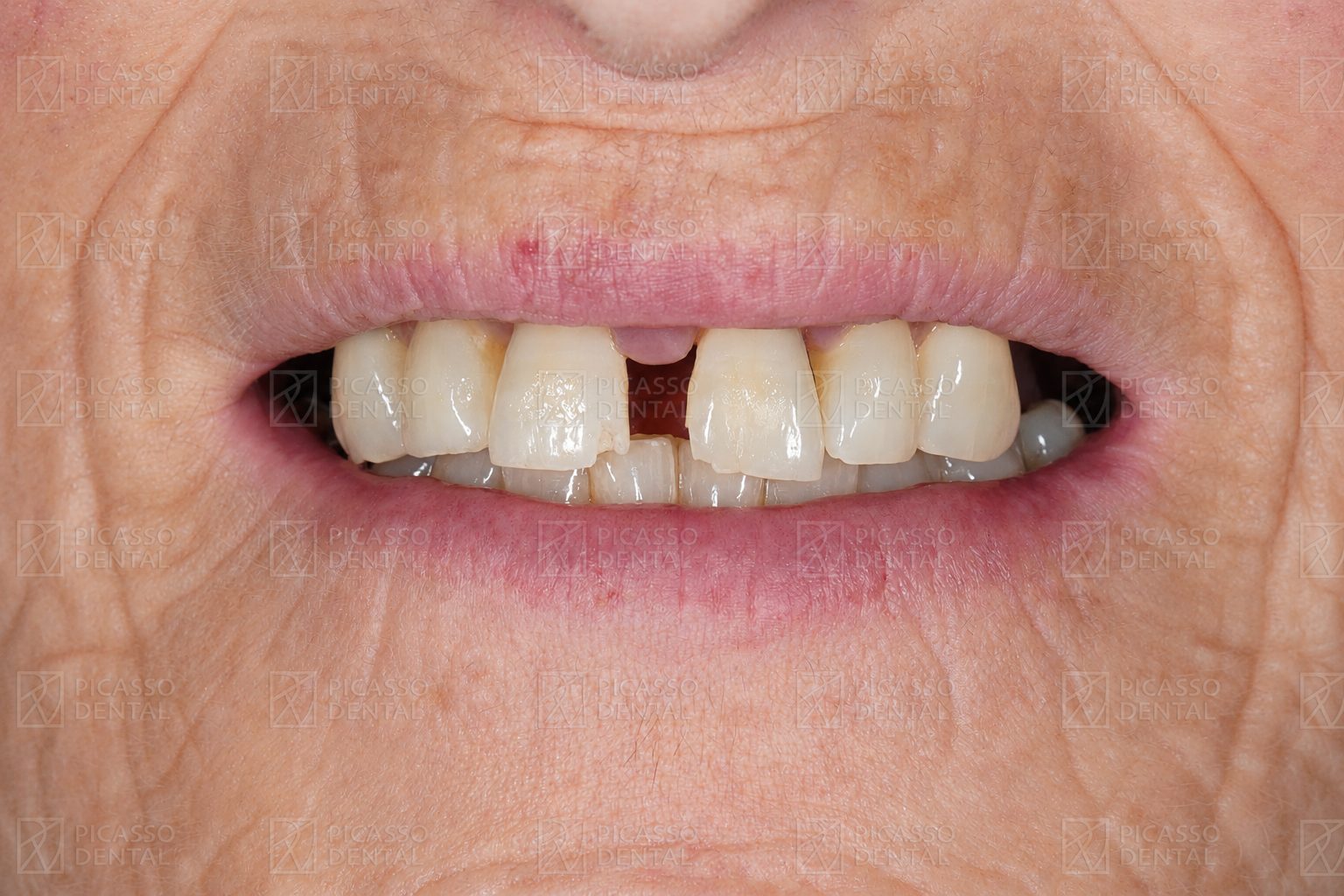
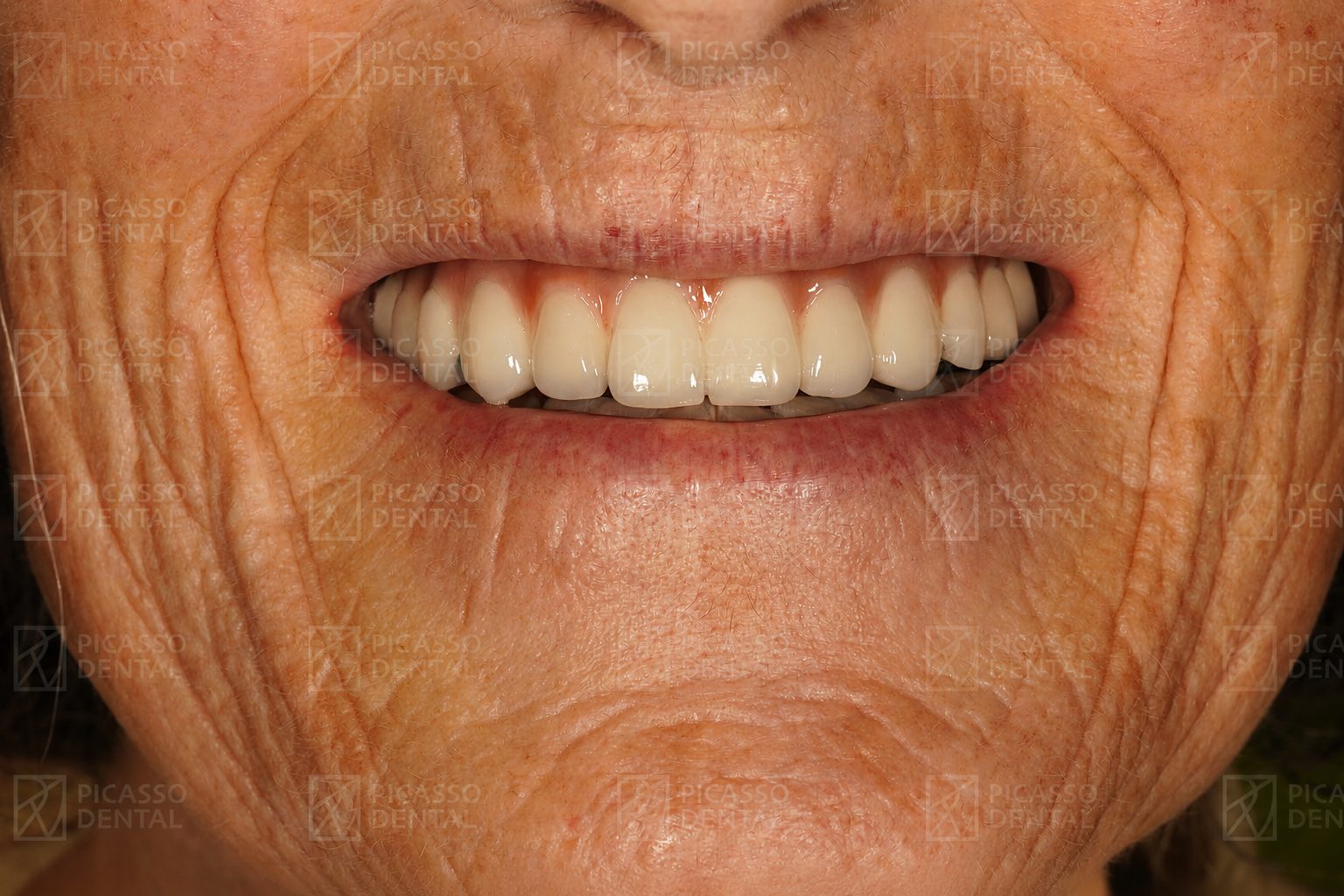
AfterCase 38420: E-max crown on upper central incisor following trauma, shade-matched to adjacent natural teeth.
 Before
 After
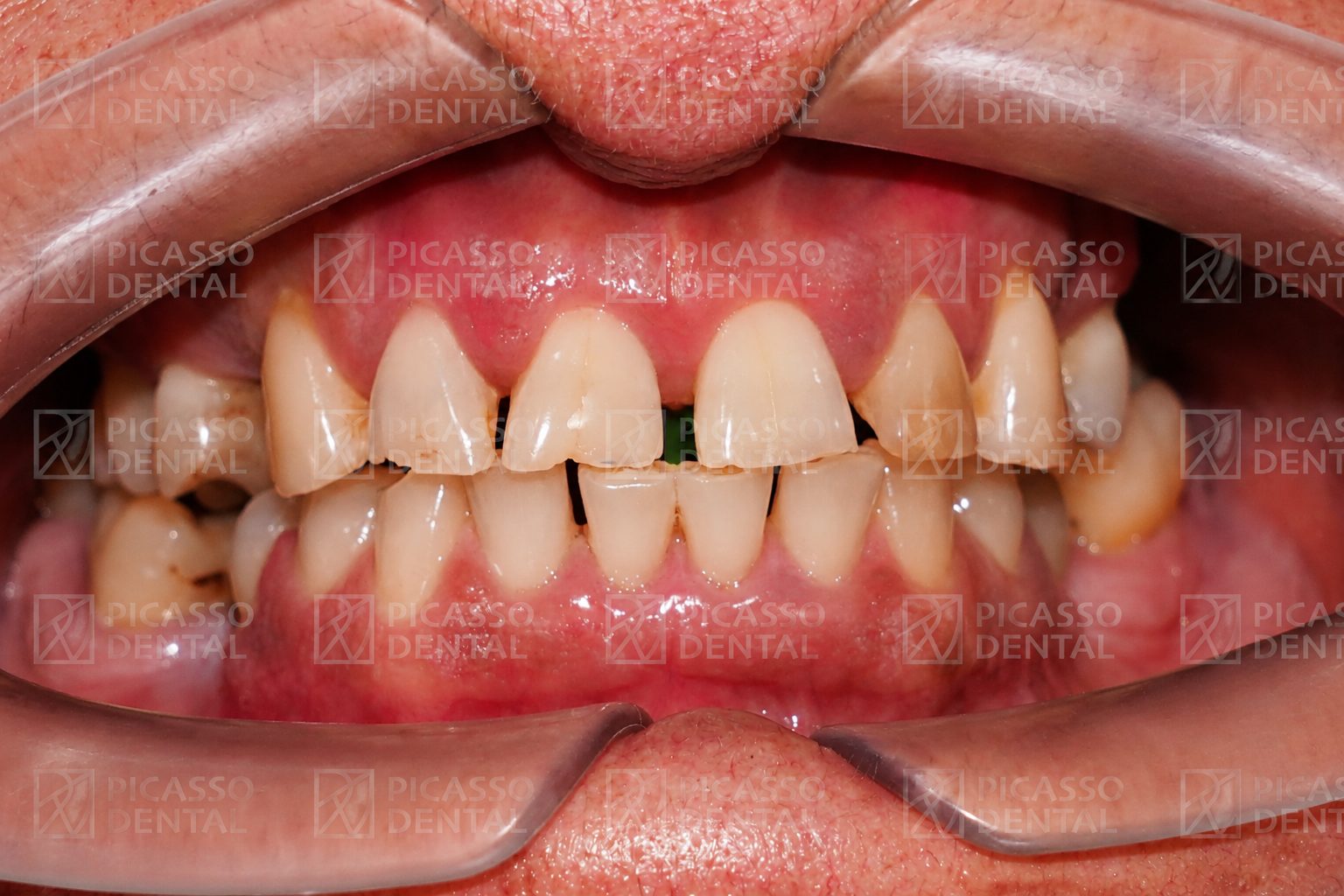
AfterCase 40179: Post-root-canal crown on upper left central incisor, E-max material selected for translucency match.
 Before
 After
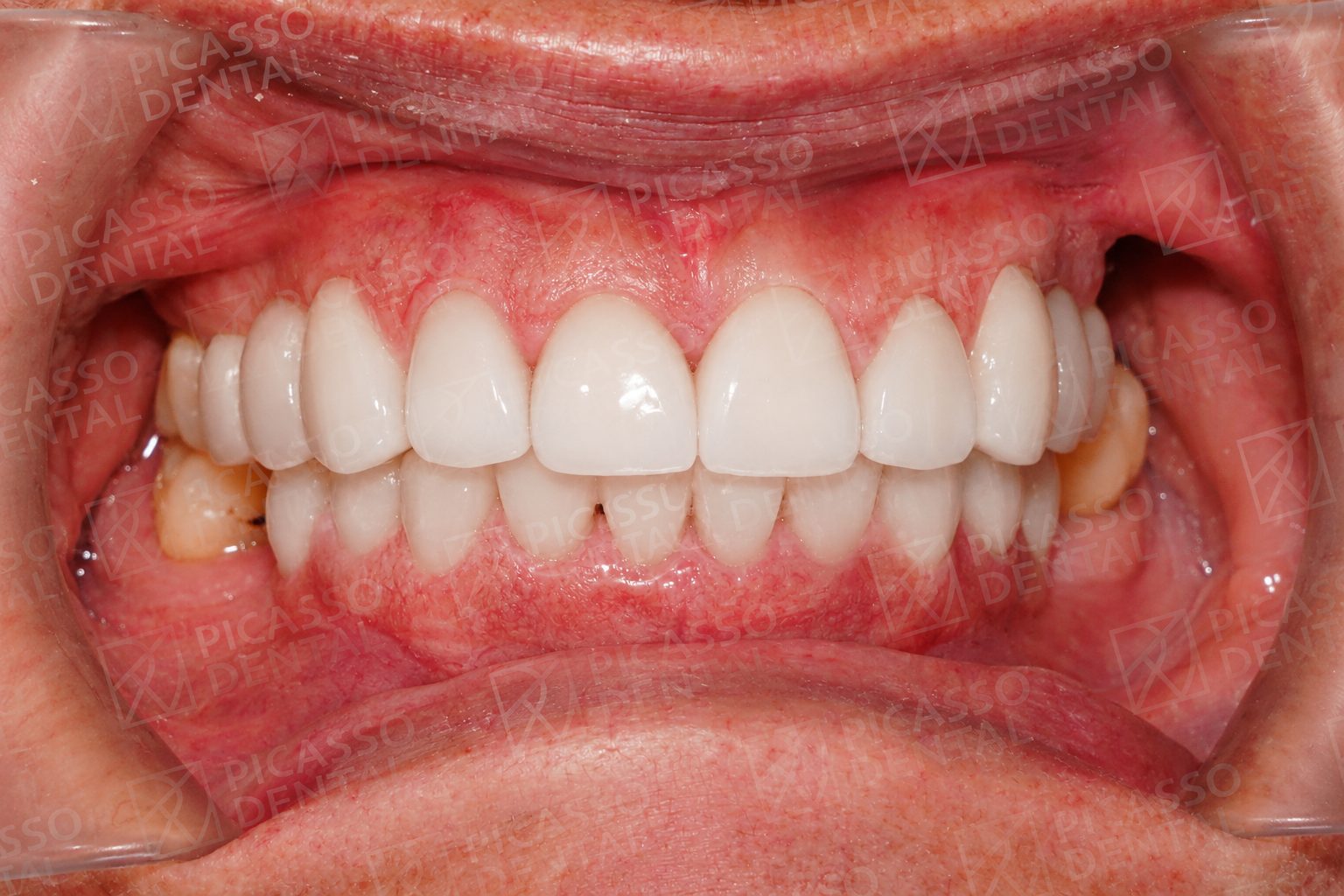
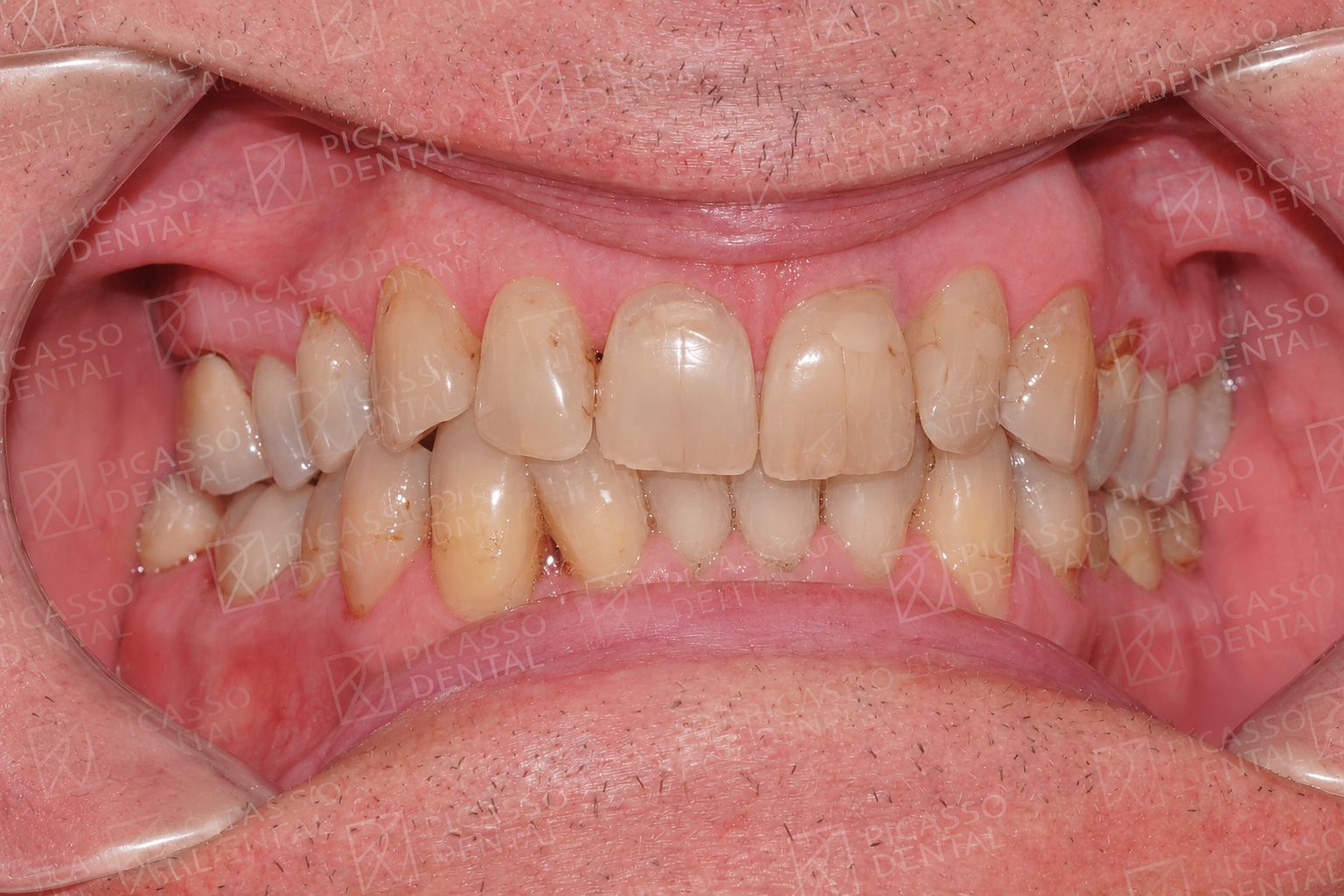
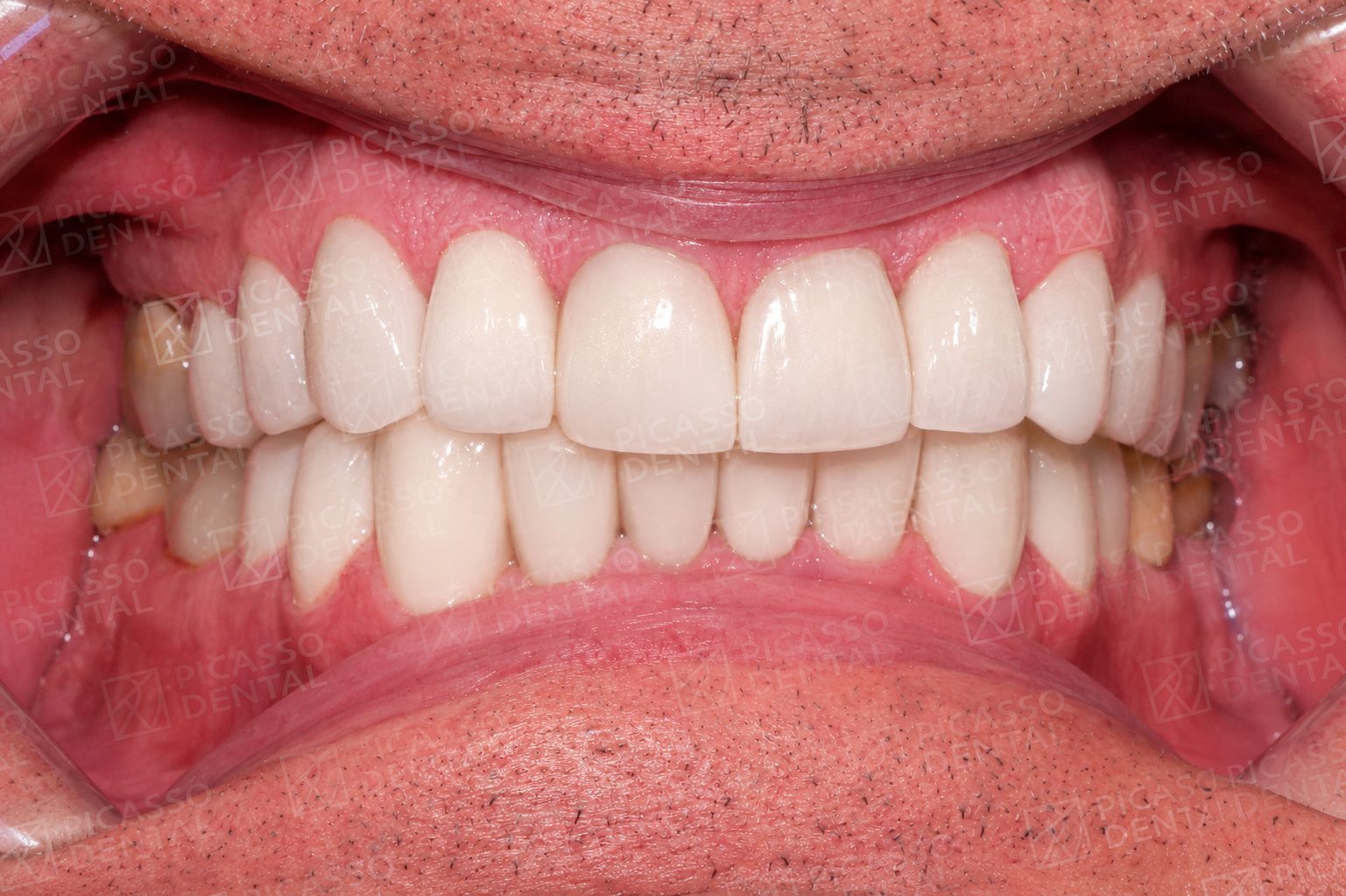
AfterCase 41400: Upper six anterior crowns, Lava material, comprehensive smile restoration for international patient.
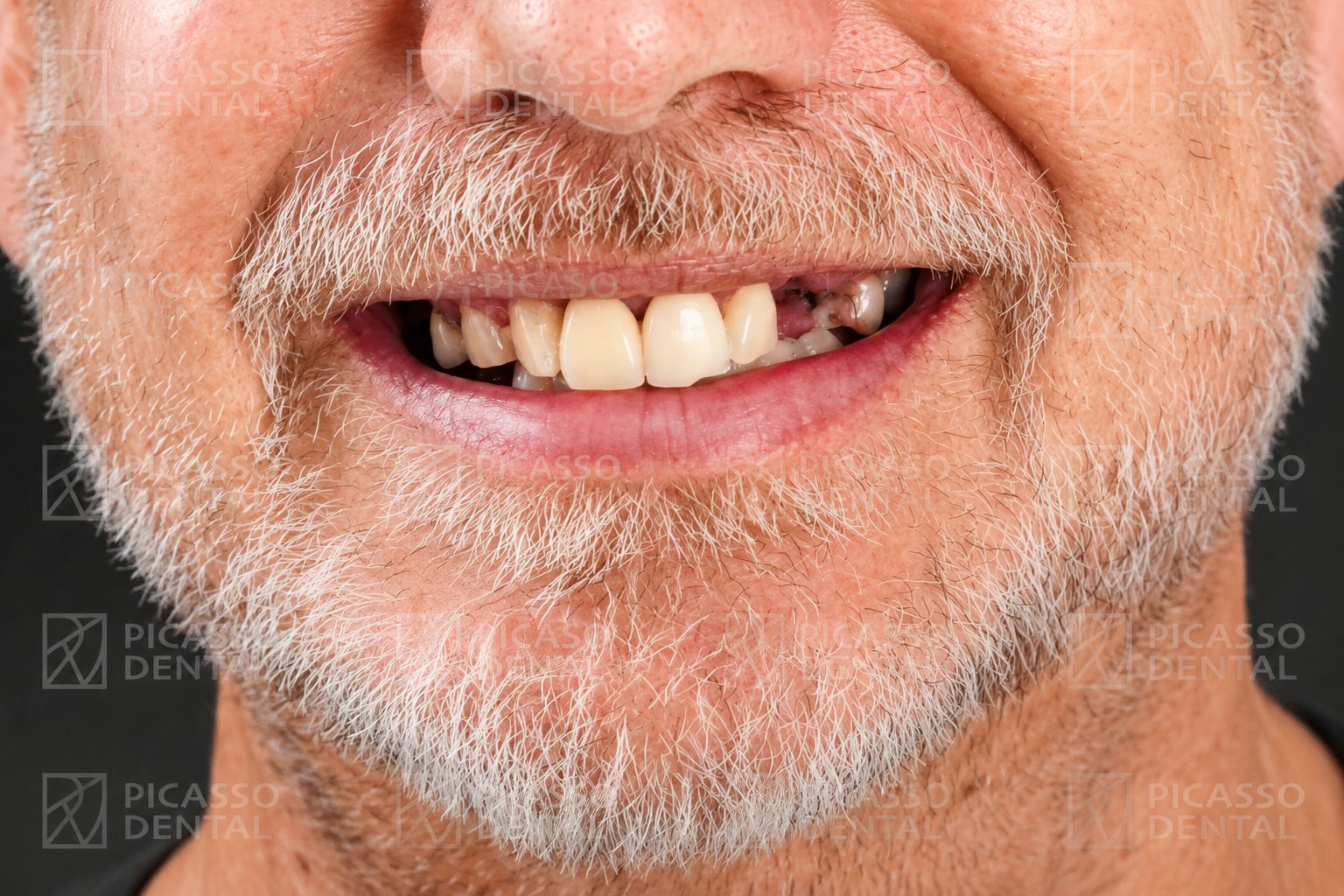 Before
 After
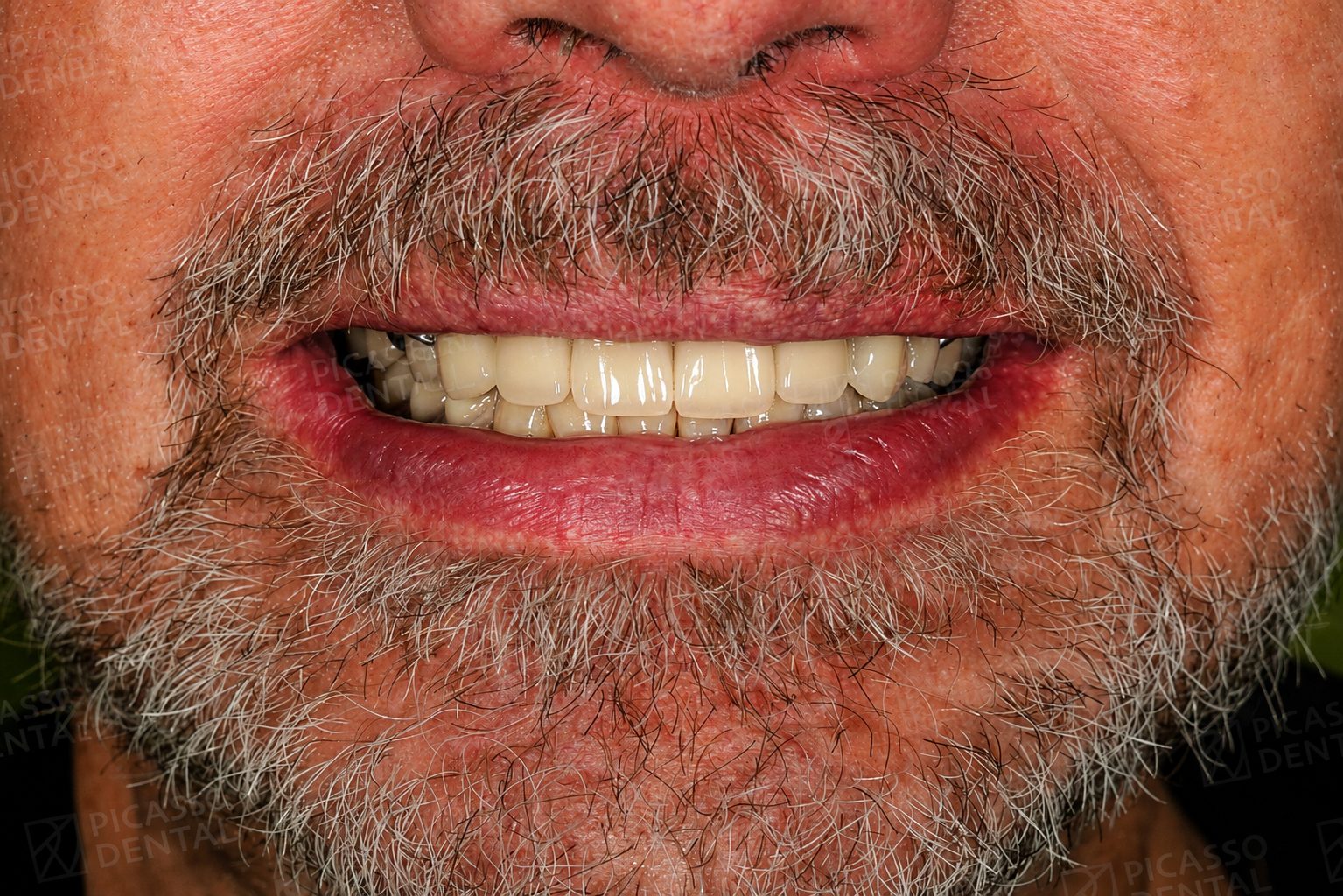
AfterCase 42840: PFM-to-E-max replacement on four upper front teeth, eliminating the grey line at the gum margin.
 Before
 After
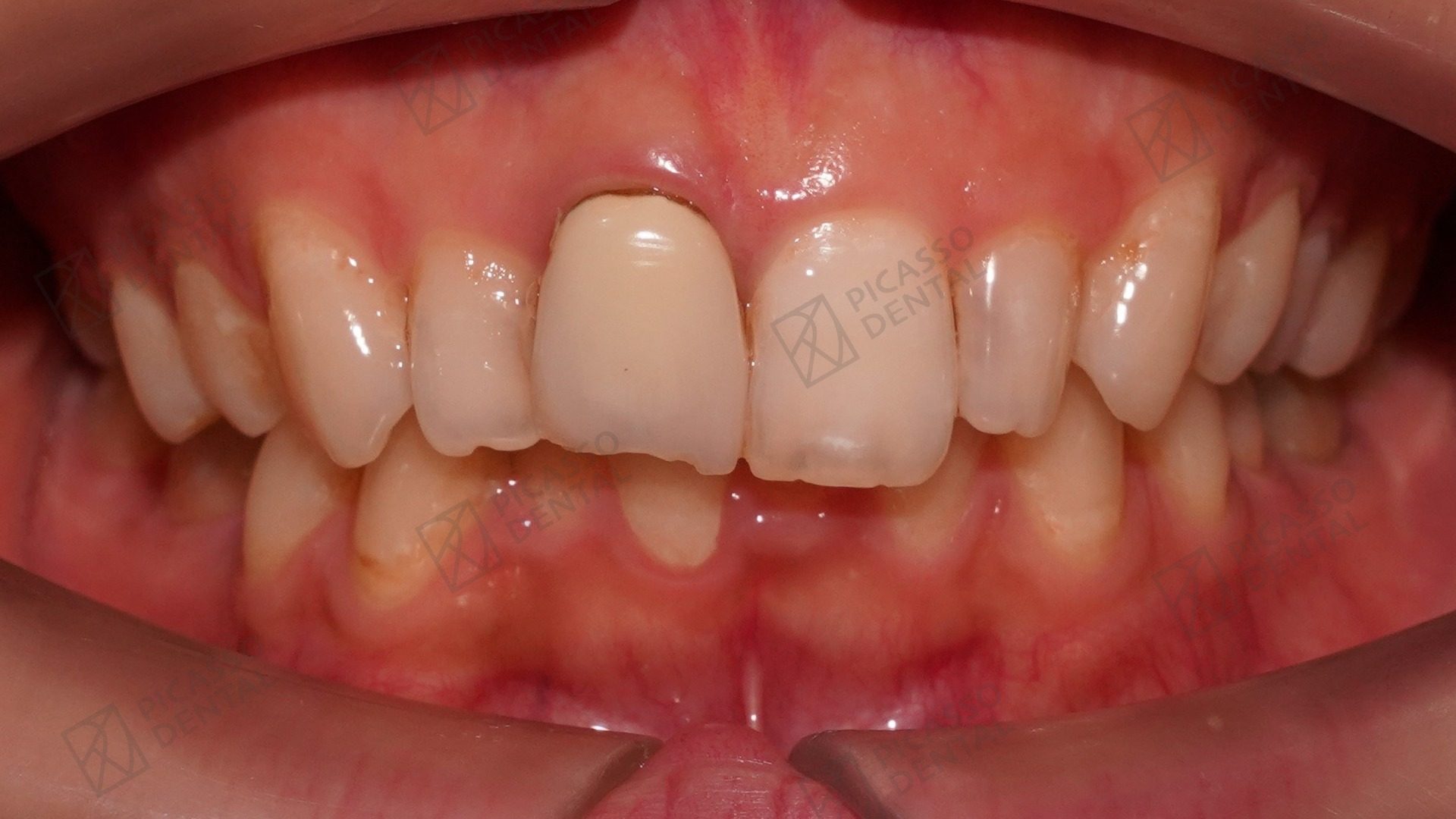
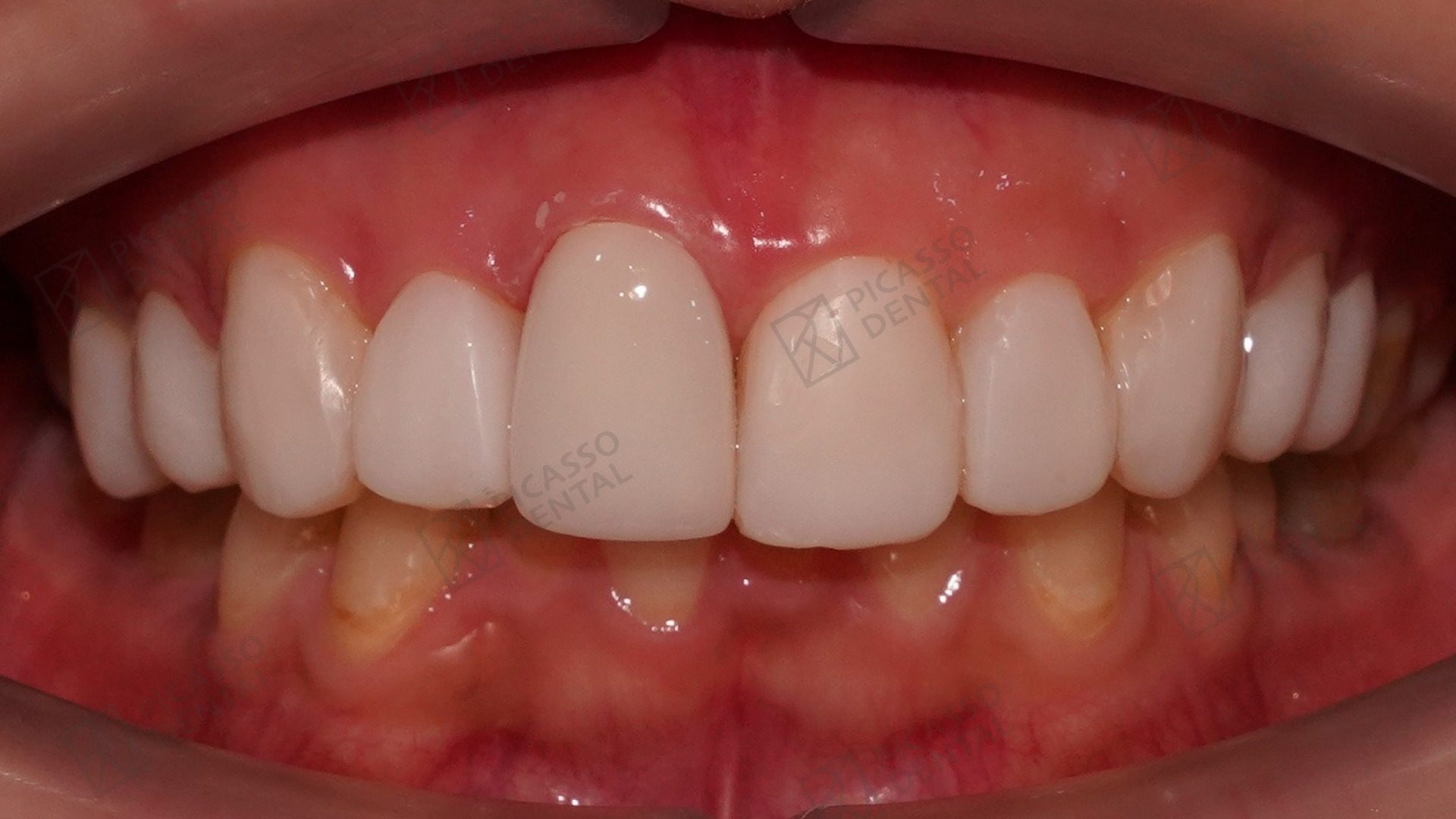
AfterCase 46229: Single crown on upper left lateral incisor, five-day international patient visit.
Frequently Asked Questions
What is the best crown material for front teeth?
For front teeth, all-ceramic materials are the standard choice. E-max (lithium disilicate) is often preferred for incisors and canines because of its exceptional translucency, which allows light to pass through in a way that closely mimics natural enamel. Lava and Lava Plus are premium options combining zirconia strength with ceramic aesthetics for patients wanting maximum longevity. Full zirconia alone is slightly more opaque and better suited to premolars.
Why are porcelain-fused-to-metal crowns not ideal for front teeth?
PFM crowns have a metal substructure that can create a grey or dark line at the gum line if gums recede over years. This cosmetic issue is the most common reason patients with older PFM front crowns seek replacement. All-ceramic crowns have no metal, so even if gums recede over time, the crown remains tooth-coloured throughout its life.
How long do porcelain crowns on front teeth last?
With proper care, porcelain crowns on front teeth typically last 10 to 20 years depending on material. E-max and PFM average 10 to 15 years. Lava and Lava Plus typically achieve 15 to 25 years. Longevity depends on the quality of fit at placement, oral hygiene, and lifestyle factors such as tooth grinding. A night guard significantly extends crown lifespan for patients who grind.
What happens at the first crown appointment?
The dentist prepares the tooth by removing damaged structure and reshaping it to accept the crown. Impressions or digital scans are taken to capture exact dimensions. A temporary crown is placed immediately to protect the tooth while the permanent restoration is fabricated in the laboratory, typically taking one to two weeks.
Does getting a crown hurt?
The preparation appointment is performed under local anaesthesia, so no pain is felt during the procedure. Some post-procedure sensitivity or mild discomfort is normal for one to three days afterward. The final placement appointment involves removing the temporary crown and bonding the permanent one, which is generally comfortable.
Can a crown be placed on a front tooth after root canal treatment?
Yes, and this is one of the most common reasons for anterior crowns. A root-canal-treated front tooth becomes more brittle over time and is at significant fracture risk without crown protection. Placing an all-ceramic crown over the treated tooth restores its strength and appearance. The crown is fabricated to match the shade and translucency of adjacent natural teeth.
How is shade matching done for a single front tooth crown?
Shade matching for a single anterior crown is technically demanding because natural teeth have characterisation, depth, and translucency that vary across the tooth surface. We take photographs under different lighting, use a shade guide for the base colour, and provide detailed notes on characterisation to the laboratory ceramist. For particularly challenging cases, the patient may visit the laboratory so the ceramist can make direct observations before fabrication.
Start Here
Start with a brief.
Share the tooth position and what happened to it, and we will recommend the right crown material and walk you through the full treatment plan.