
Porcelain Veneers
Smile Transformation: Mr. O'Brien from Tasmania
A 57-year-old patient replaced years of aged composite bonding with porcelain veneers at Picasso Dental Clinic. Here is the full story, from initial concern to final result.

Key Takeaways
- Composite bonding is an excellent short-term solution but becomes stained and chipped over years; porcelain veneers are the long-term answer.
- Porcelain is non-porous and stain-resistant, maintaining its colour for 15 to 20 years without discolouring from coffee, tea, or wine.
- The veneer process involves two to three appointments: consultation and preparation, then final placement and bonding.
- A try-in appointment before permanent bonding allows full evaluation of colour, shape, and fit.
<h2>The Patient: Why Mr. O'Brien Came to Us</h2>

<p>Mr. O'Brien, 57 years old and from Tasmania, Australia, arrived at Picasso Dental Clinic with a clear and common concern: his smile no longer looked the way he wanted. Some years earlier, he had chipped several front teeth and had them repaired with composite bonding, a sensible and affordable solution at the time. The bonding had worked well initially, restoring the appearance of his teeth and allowing him to smile with confidence again.</p>

<p>But years had passed. Normal eating, drinking, and daily life had gradually changed the composite. The resin material, slightly porous at a microscopic level, had absorbed staining from coffee, tea, and red wine. The bonding no longer matched the surrounding natural tooth surfaces in colour or texture. Small chips and worn edges had developed at the margins. Mr. O'Brien described feeling self-conscious whenever he smiled and increasingly reluctant to show his teeth in photographs.</p>

<p>This pattern is one of the most common presentations we see from Australian and international patients visiting our clinics. Composite bonding typically performs well for five to ten years. When it starts to fail, the upgrade path is <a href="/porcelain-veneers/">porcelain veneers</a>, and for most patients in their 50s and beyond, this is the right long-term investment.</p>

<figure class="art-photo">
  <img src="/images/clinics/hanoi-old-quarter/reception.jpg" alt="Reception at Picasso Dental Clinic Hanoi Old Quarter" loading="lazy" decoding="async">
  <figcaption>Picasso Dental Clinic Hanoi Old Quarter, where Mr. O'Brien had his consultation and treatment. The clinic has been treating international patients since 2013.</figcaption>
</figure>

<h2>Why Porcelain Veneers Were the Right Choice</h2>

<p>Composite bonding served Mr. O'Brien well for its lifespan, but it had reached its limit. When we evaluated his teeth at consultation, the picture was clear: the bonding was discoloured and visibly different from the natural enamel on either side. Small edge chips were present. The texture of the bonded surfaces was duller and less reflective than the adjacent teeth.</p>

<p>Porcelain solves these problems at the material level. The ceramic used in quality veneers is extremely dense and non-porous. Stains cannot penetrate the surface regardless of what the patient eats or drinks. The colour selected on the day of placement is the colour maintained for the lifetime of the veneer, typically 15 to 20 years. For Mr. O'Brien at 57, this meant investing once in a solution that would serve him confidently through his 60s, 70s, and potentially beyond.</p>

<div class="art-callout">
  <strong>Material comparison at a glance:</strong> Composite resin absorbs staining over years and can chip at edges. Porcelain ceramic is non-porous, stain-resistant, and holds its polish and colour permanently. Porcelain also achieves a more natural translucency because light passes through the ceramic in a way that closely mimics natural tooth enamel.
</div>

<p>Beyond stain resistance, porcelain veneers provide complete surface coverage. A veneer covers the entire visible front surface of the tooth with a uniform, custom-crafted shell. This gives consistent colour, shape, and texture from one tooth to the next, creating the even, natural-looking result that made Mr. O'Brien's transformation so satisfying.</p>

<figure class="art-photo">
  <img src="/images/clinics/hanoi-old-quarter/treatment-room.jpg" alt="Treatment room at Picasso Dental Clinic Hanoi" loading="lazy" decoding="async">
  <figcaption>The treatment suite where veneer preparation and placement takes place under precise lighting to ensure accurate shade assessment.</figcaption>
</figure>

<h2>The Treatment Process Step by Step</h2>

<p>Mr. O'Brien's treatment followed the standard process we use for all veneer cases, adapted to his specific situation as a patient travelling from Australia.</p>

<ul class="art-checklist">
  <li>
    <div>
      <strong>Consultation and treatment planning</strong>
      <span>The team evaluated his existing bonding, the health of his underlying teeth, his bite alignment, and his aesthetic goals. Digital photographs were taken from multiple angles. We discussed the shade he wanted, the shape that would complement his facial features, and realistic expectations for the transformation.</span>
    </div>
  </li>
  <li>
    <div>
      <strong>Tooth preparation and impressions</strong>
      <span>The old composite bonding was carefully removed. A very thin layer of enamel was then prepared from the front surface of each tooth (typically 0.5 millimetres) to create space for the porcelain shell without making the final result look bulky. Detailed impressions were taken and sent to the laboratory.</span>
    </div>
  </li>
  <li>
    <div>
      <strong>Temporary veneers</strong>
      <span>Temporary veneers were placed immediately to protect the prepared teeth and give Mr. O'Brien an approximation of the final result to live with while the permanent veneers were being fabricated.</span>
    </div>
  </li>
  <li>
    <div>
      <strong>Try-in evaluation</strong>
      <span>When the permanent porcelain veneers returned from the laboratory, they were placed using a temporary gel so Mr. O'Brien could evaluate the colour, shape, and length before any permanent bonding. Only when he confirmed his complete satisfaction did we proceed.</span>
    </div>
  </li>
  <li>
    <div>
      <strong>Permanent bonding</strong>
      <span>The final bonding appointment used specialist dental cement to permanently fix each veneer. The entire final appointment took approximately 90 minutes. Mr. O'Brien left the clinic that afternoon with his completed smile transformation.</span>
    </div>
  </li>
</ul>

<div class="art-cta-inline">
  <p><strong>Travelling from Australia or another country for veneers?</strong> We work with international patients regularly and can plan your treatment around your visit dates.</p>
  <a href="https://wa.me/84989067888">Book a consultation</a>
</div>

<h2>The Outcome and What It Meant</h2>

<p>The result for Mr. O'Brien was a natural-looking smile that complemented his features without appearing artificial or over-brightened. We matched the shade to look natural for his age and colouring rather than selecting the whitest option available. Porcelain veneers can be made in any shade the patient chooses, and for patients in their 50s, a naturalistic result usually serves them better than maximum brightness.</p>

<p>The transformation went beyond aesthetics. Mr. O'Brien described feeling genuinely different in social situations: more willing to smile, more at ease in photographs, and more confident in professional settings. This outcome reflects what we see consistently across our veneer patients. A smile that looks natural and feels right has a measurable impact on how a person presents themselves and how they feel about doing so.</p>

<figure class="art-photo">
  <img src="/images/clinics/da-nang-hoang-dieu/reception.jpg" alt="Picasso Dental Clinic Da Nang" loading="lazy" decoding="async">
  <figcaption>Picasso Dental operates across six branches in Vietnam, making it accessible for patients travelling to different parts of the country.</figcaption>
</figure>

<h2>Planning a Similar Treatment as an International Patient</h2>

<p>International patients like Mr. O'Brien make up a significant proportion of our veneer patients. Australia, New Zealand, the UK, Canada, and the United States are among the most common origin countries. The combination of lower treatment costs, high clinical standards, and the opportunity to recover during a stay in Vietnam makes the arrangement work well for many people.</p>

<p>Quality porcelain veneers in Vietnam cost significantly less per tooth than equivalent treatment in Australia or Western countries. Even with travel expenses included in the calculation, the total investment is typically lower. More importantly, the quality of materials and laboratory work at established clinics serving international patients is equivalent to what patients would find at home.</p>

<p>For patients from Australia visiting Hanoi, we recommend planning for five to seven days to allow for consultation, preparation, and final placement with appropriate time between appointments. Patients are welcome to explore the city during the waiting period while the laboratory fabricates their veneers.</p>

<figure class="art-photo">
  <img src="/images/general-dentistry/consultation.jpg" alt="Consultation at Picasso Dental Clinic" loading="lazy" decoding="async">
  <figcaption>Every international patient case begins with a thorough consultation to assess the current condition of the teeth and agree on a treatment plan before any work begins.</figcaption>
</figure>
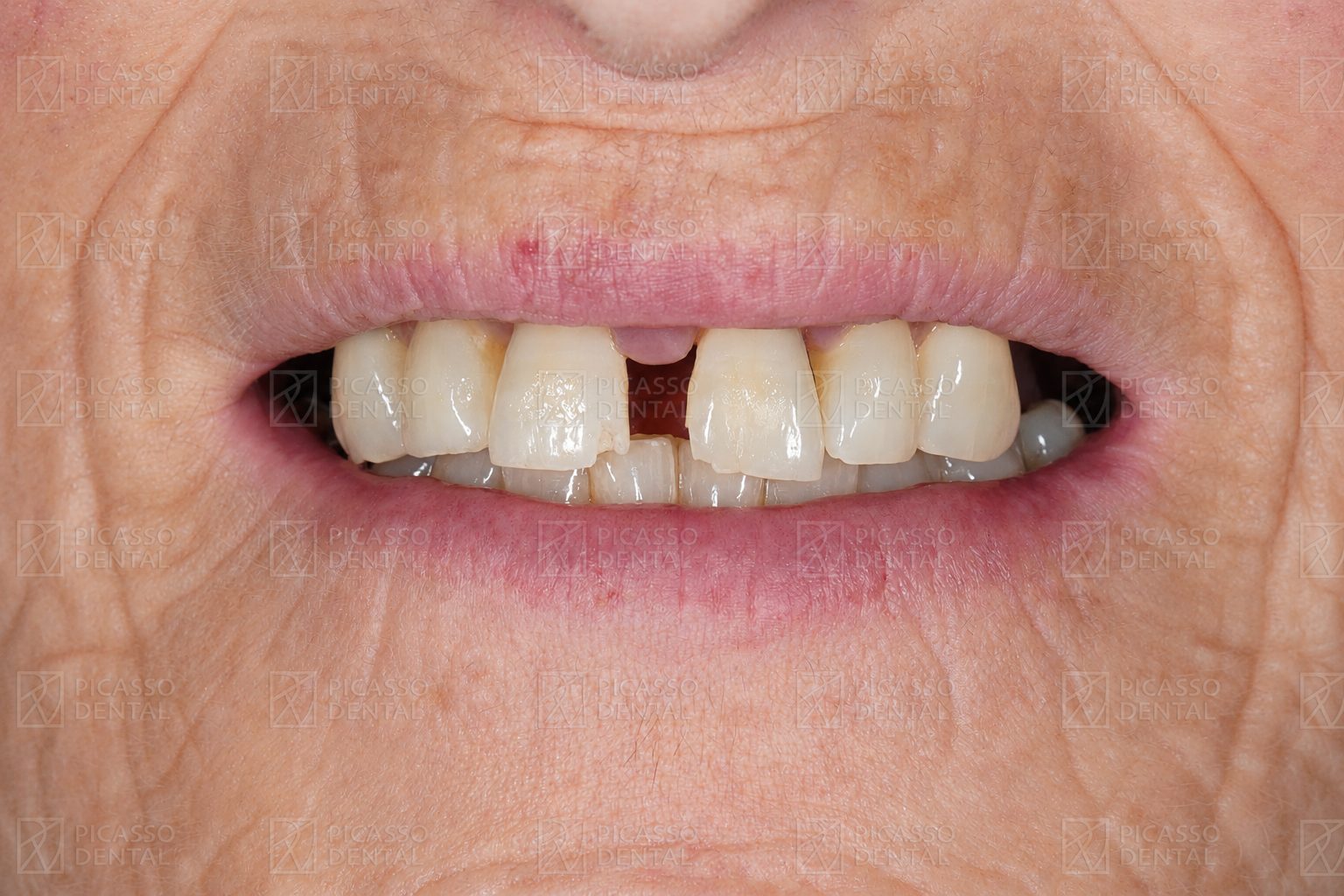 Before
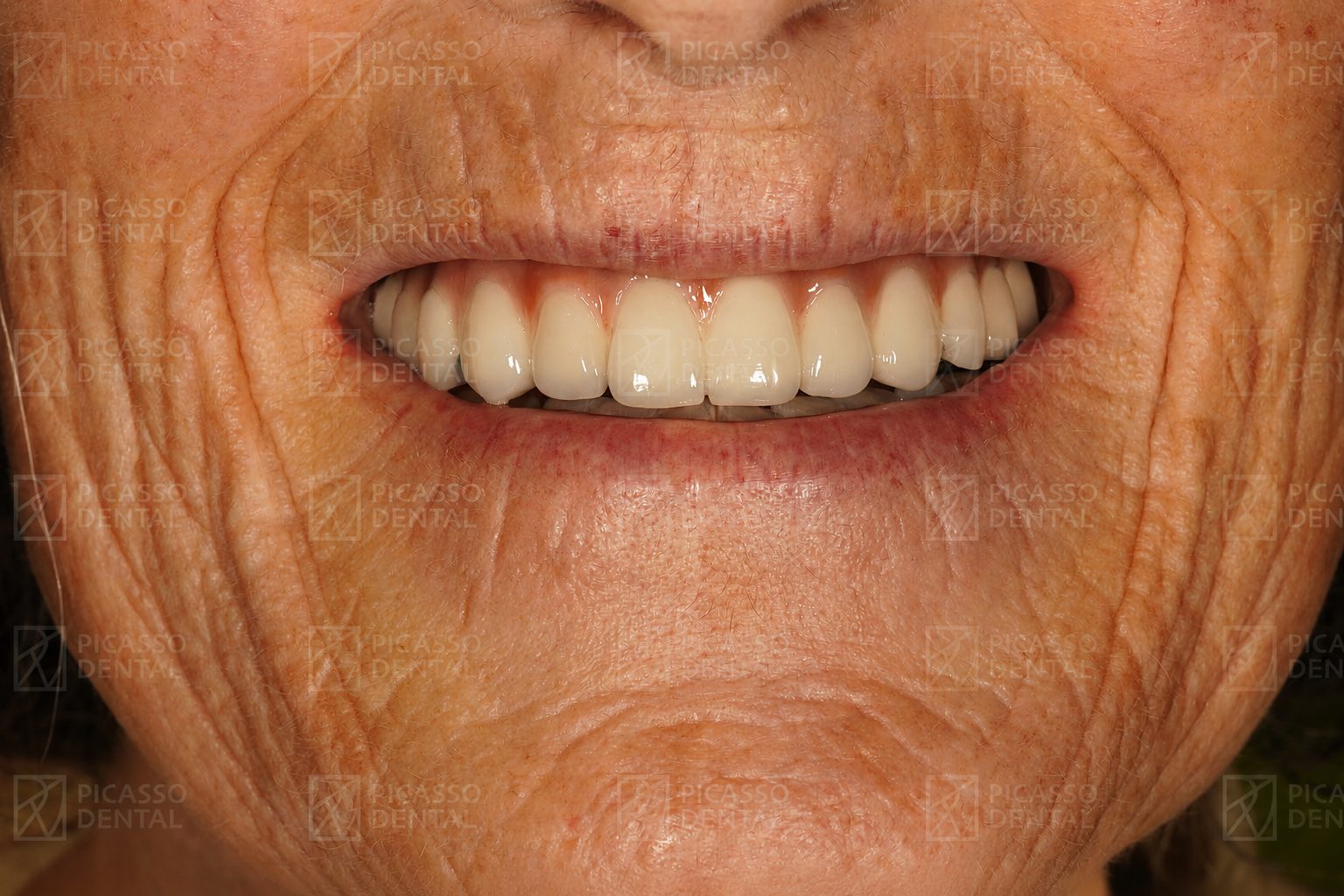 After
AfterCase 38420: Replacement of stained composite bonding with porcelain veneers across upper six teeth.
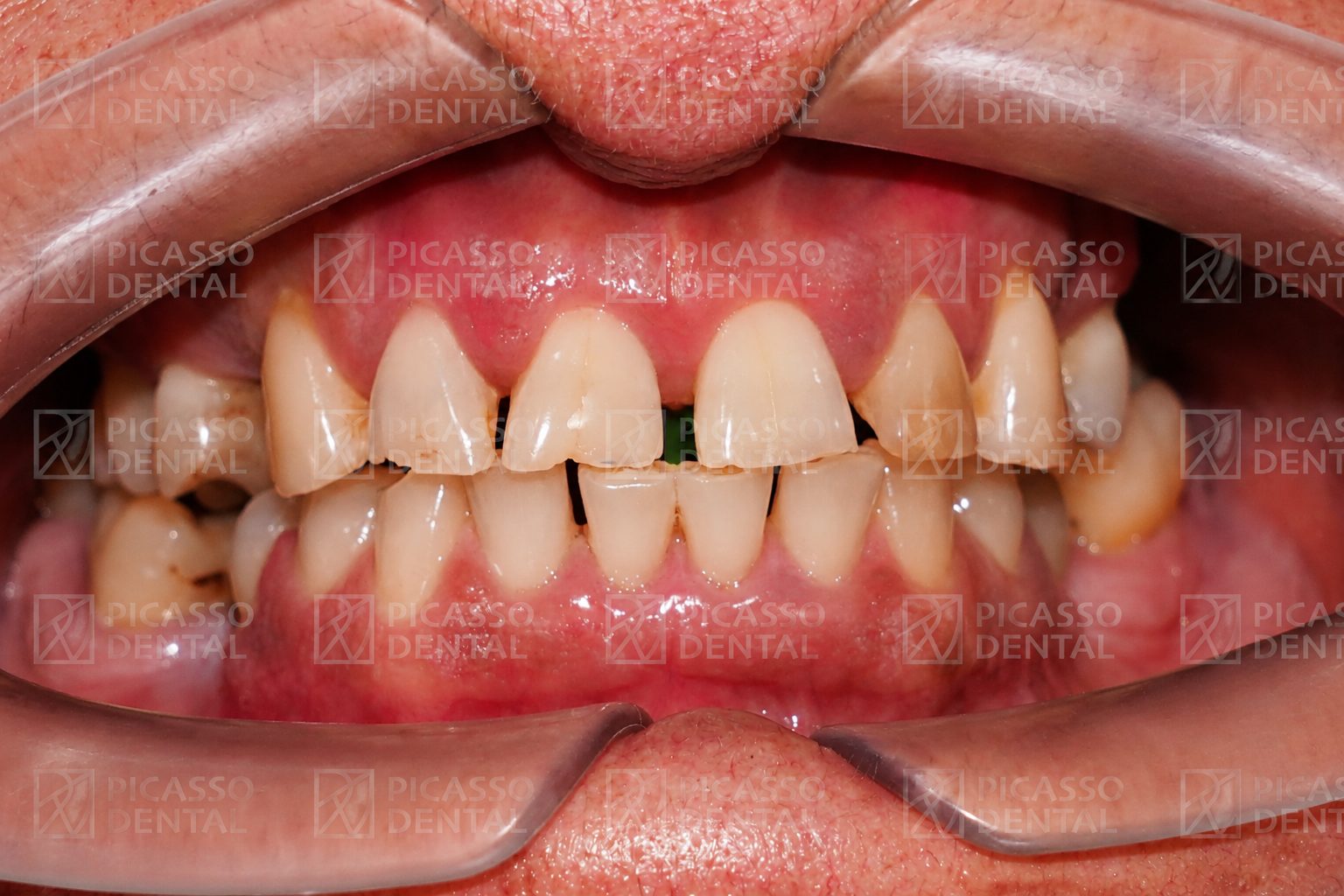 Before
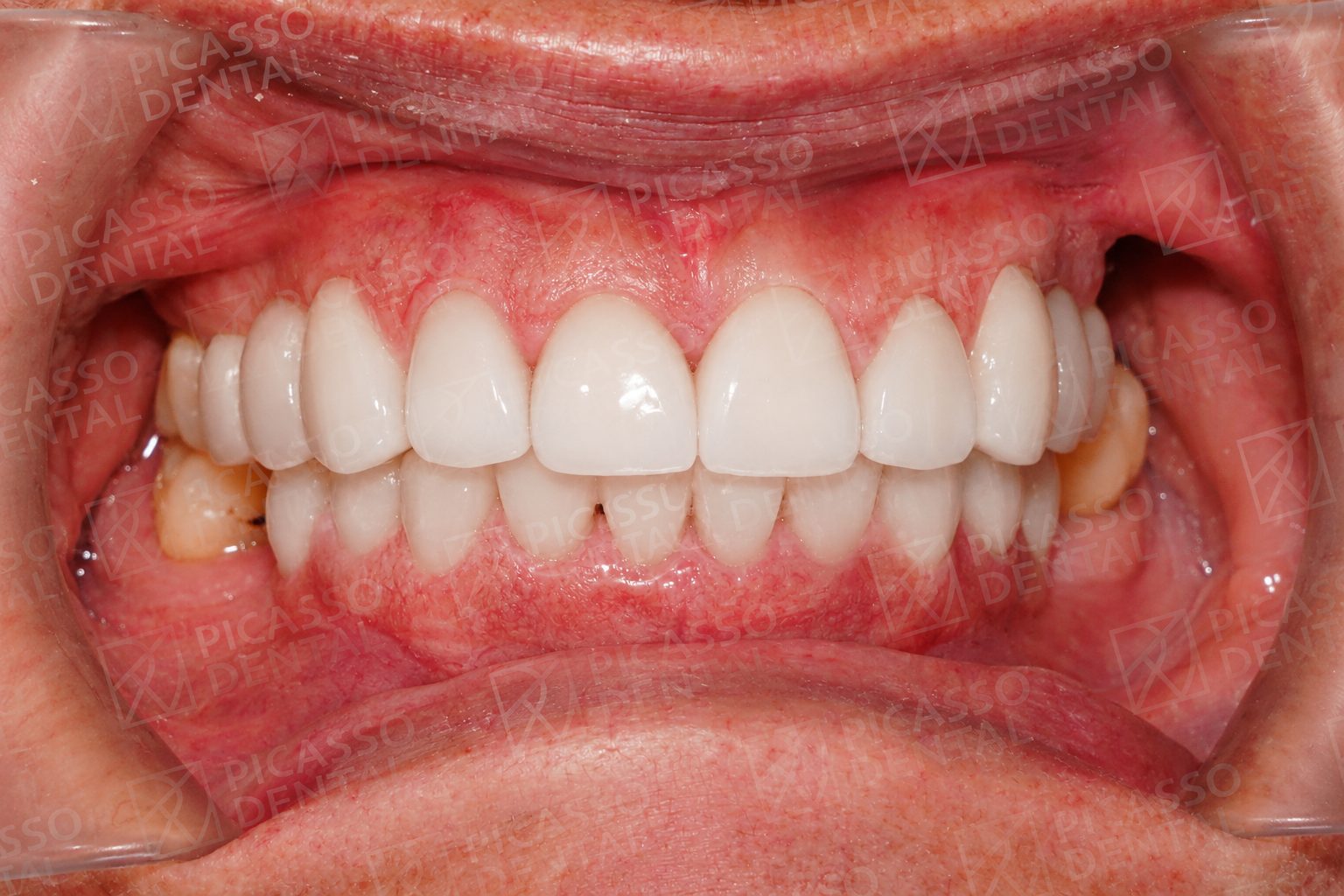 After
AfterCase 40179: Australian patient, discoloured bonding replaced with E-max porcelain veneers, natural shade selected.
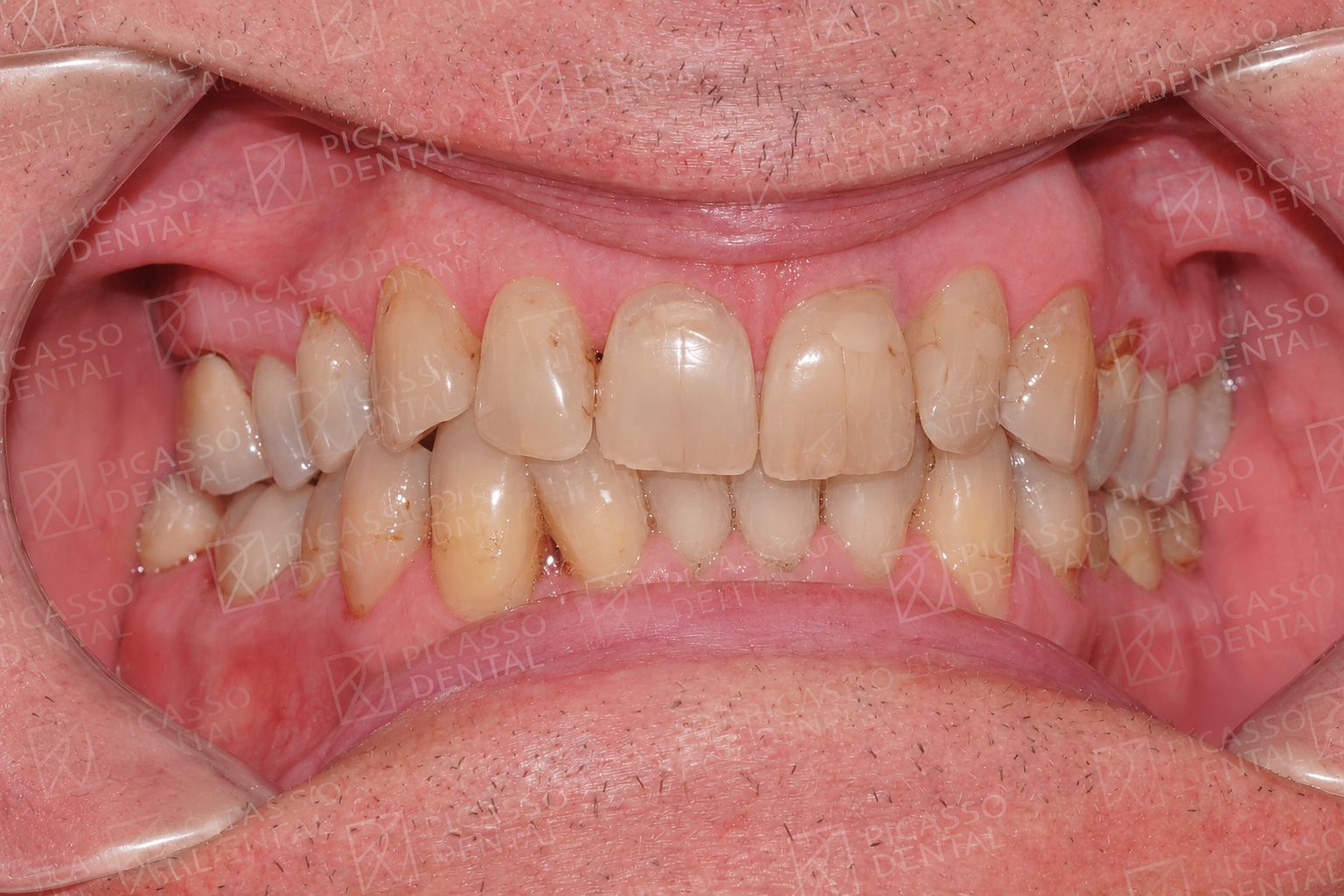 Before
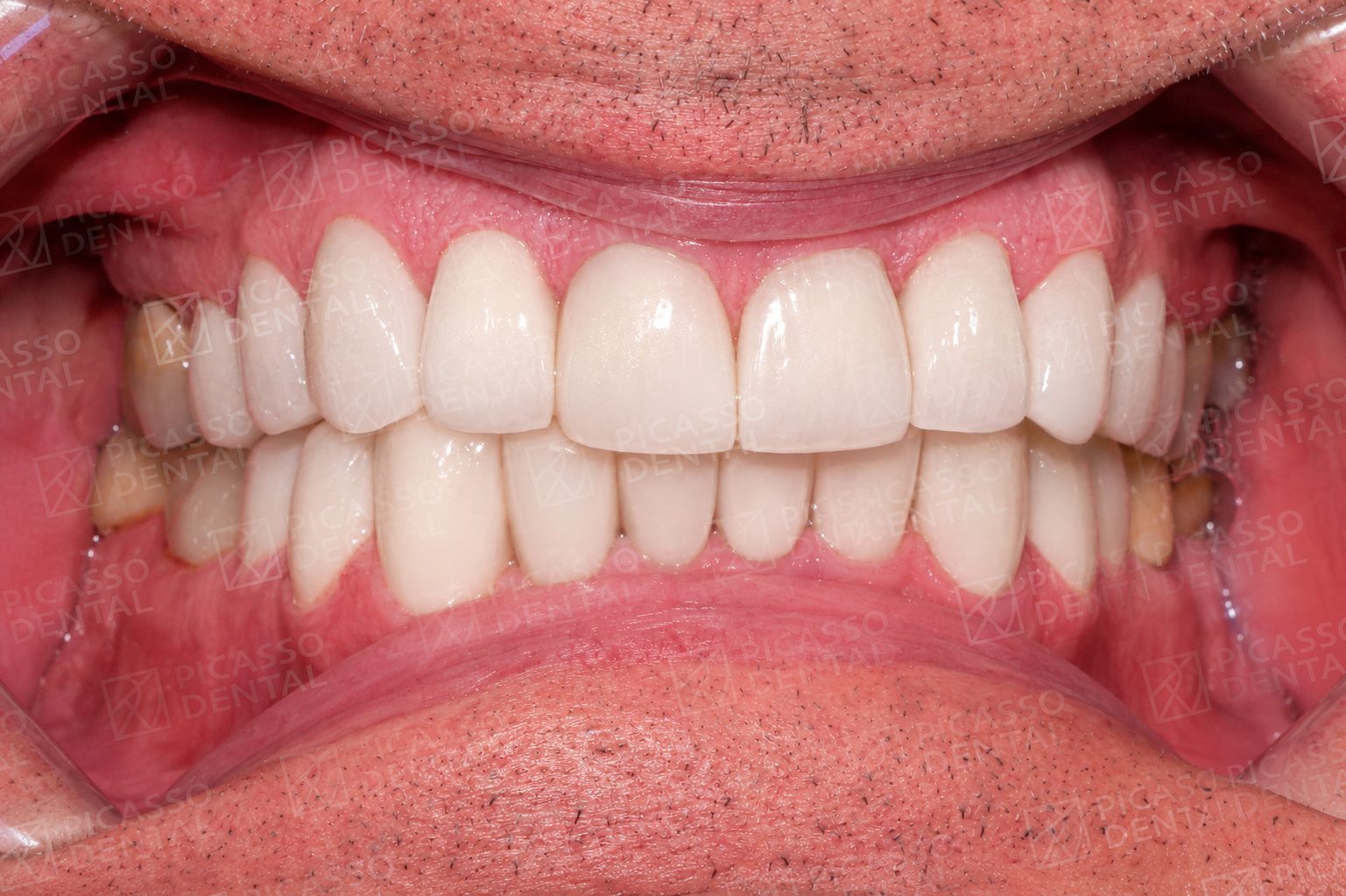 After
AfterCase 41400: Upper and lower front teeth, comprehensive smile redesign combining veneers and whitening.
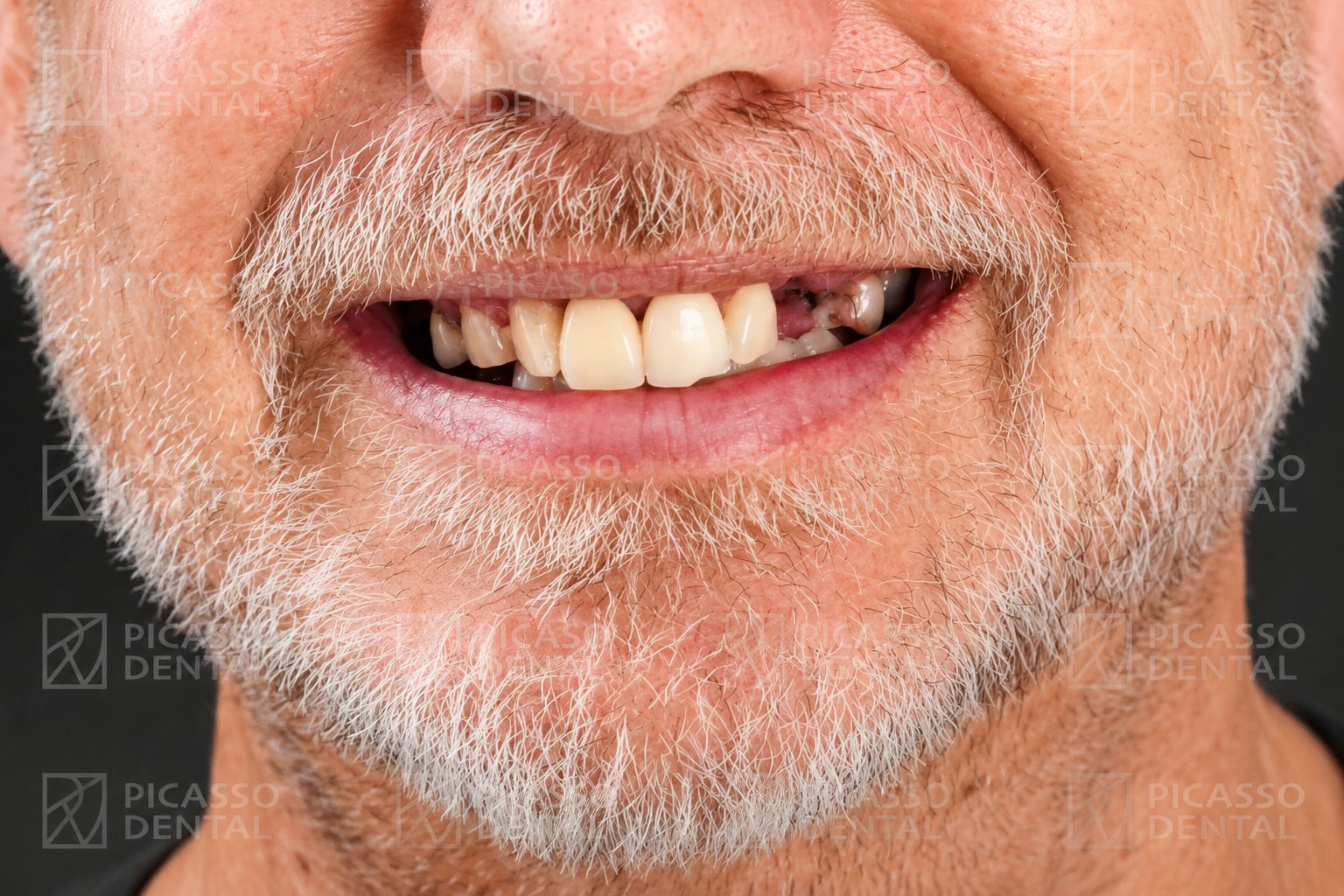 Before
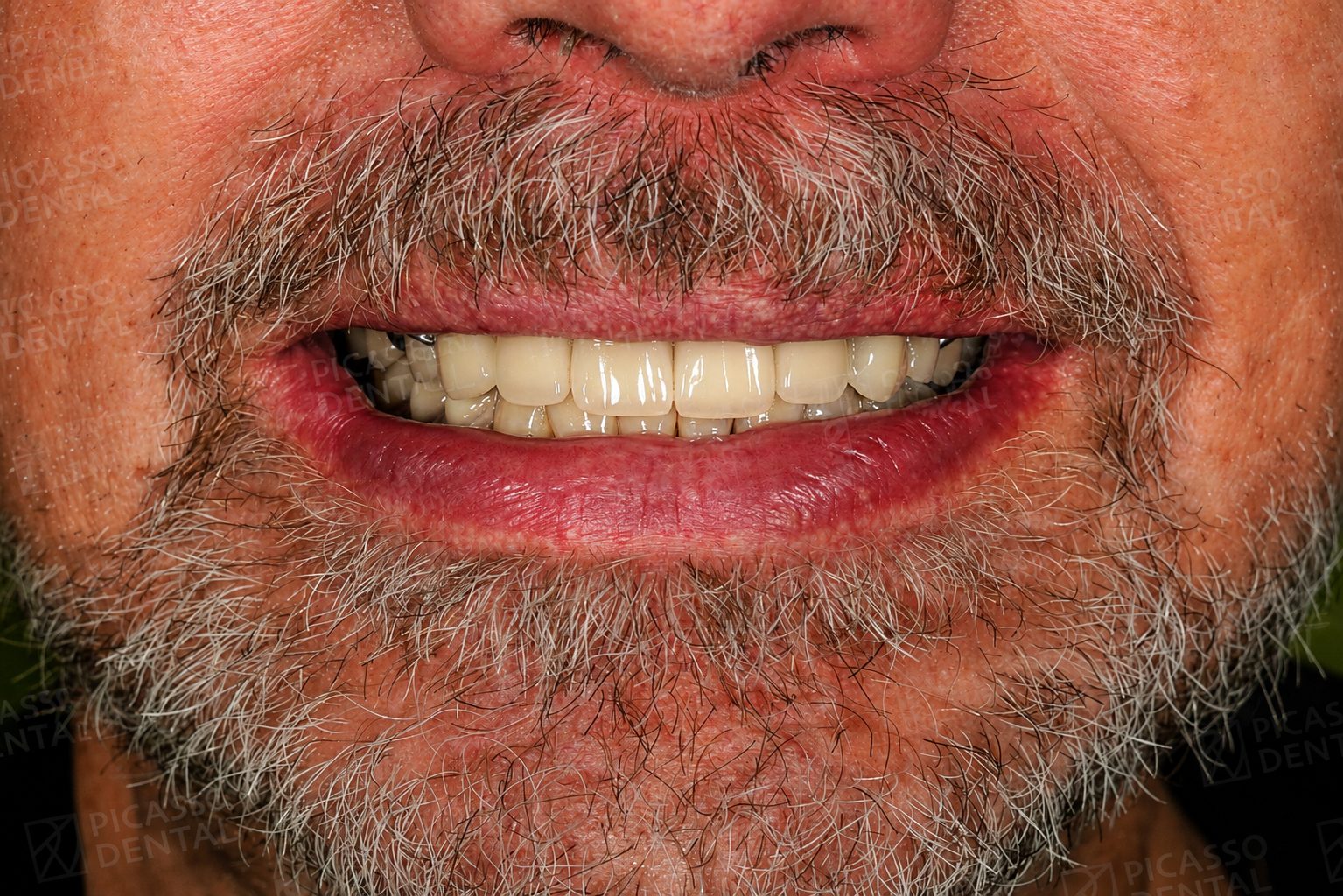 After
AfterCase 42840: Chipped and worn composite bonding on four upper incisors replaced with porcelain veneers.
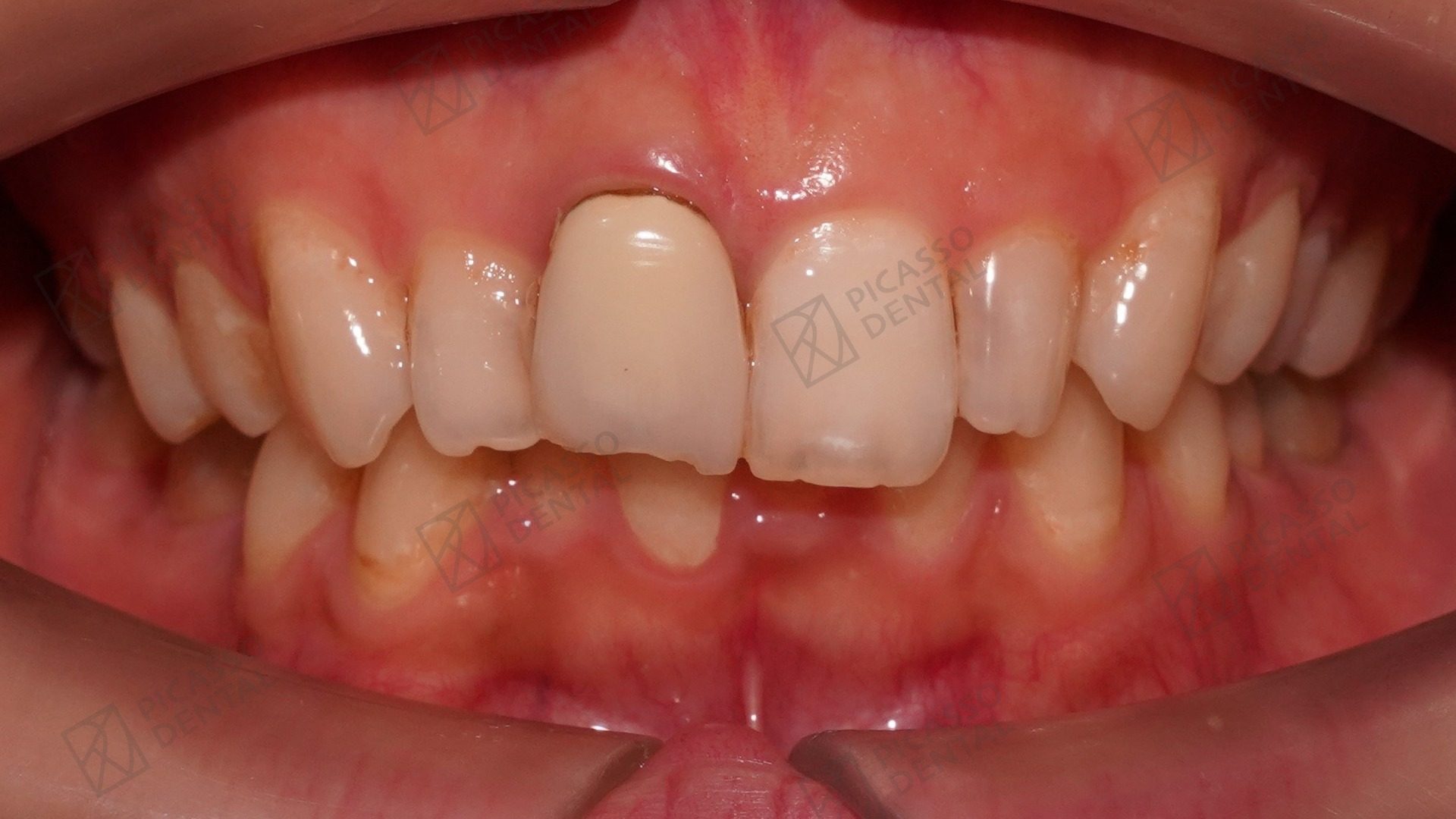 Before
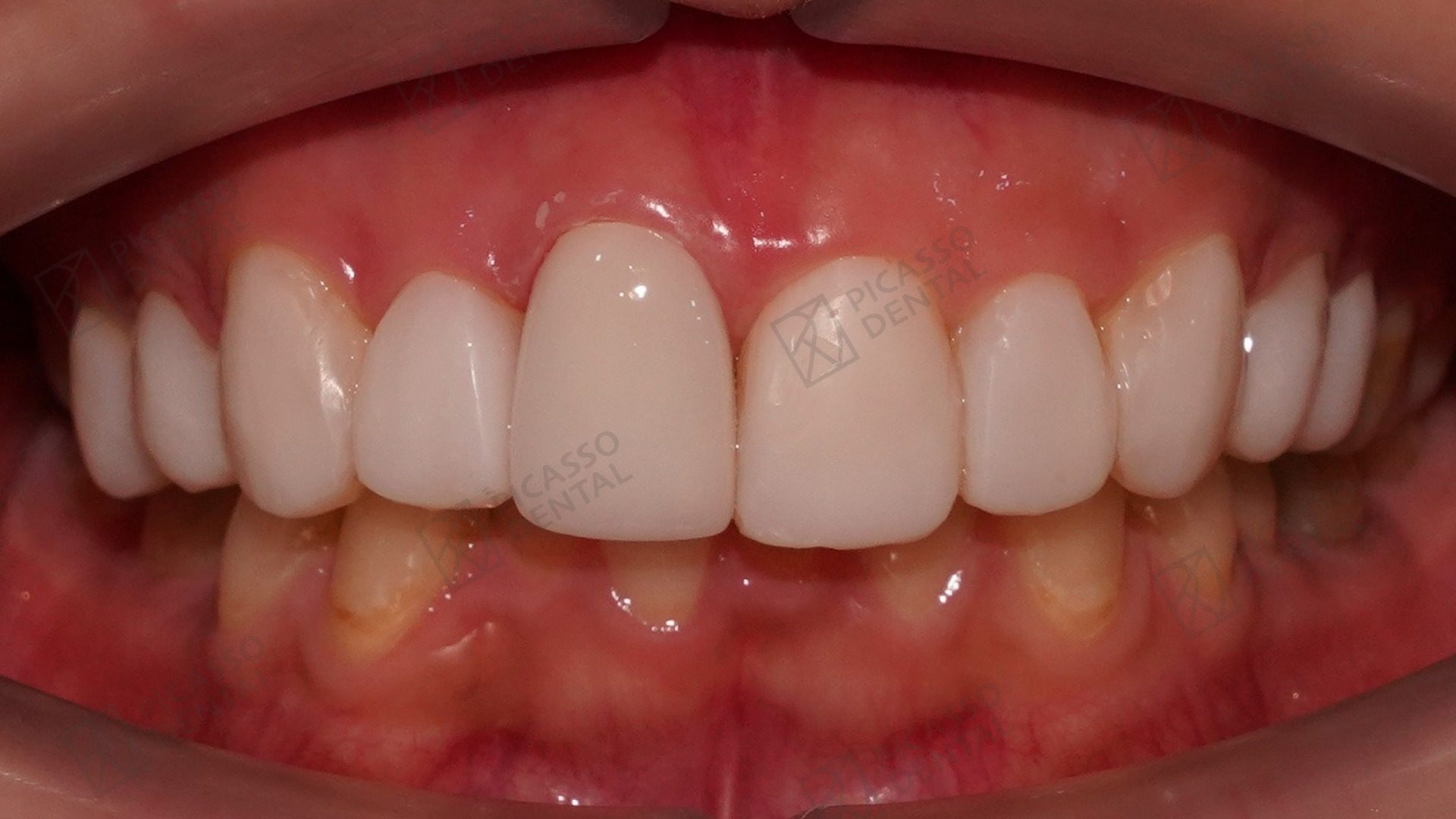 After
AfterCase 46229: International patient, six upper veneers completed over a 5-day visit to Hanoi.
Frequently Asked Questions
How long do porcelain veneers last compared to composite bonding?
Porcelain veneers typically last 15 to 20 years with proper care, sometimes longer. Composite bonding lasts 5 to 10 years before staining, chipping, or wear becomes noticeable. For older adults investing in a long-term smile solution, porcelain often provides better lifetime value despite the higher initial cost.
Why does composite bonding stain over time?
Composite resin is slightly porous at a microscopic level. Over years of normal eating and drinking, the material gradually absorbs pigment from coffee, tea, red wine, and other staining sources. Natural tooth enamel has some stain resistance and can be whitened professionally. Once composite bonding is stained, polishing provides only temporary improvement and replacement is ultimately required.
Can porcelain veneers stain?
No. The ceramic surface of porcelain veneers is non-porous and cannot absorb pigments from food or beverages. The colour selected on the day of placement is the colour maintained throughout the life of the veneers. This stain resistance is one of the primary reasons patients who previously had composite bonding upgrade to porcelain.
Does the veneer process require removing existing composite bonding?
Yes. The existing composite bonding is removed first, then a very thin layer of enamel (typically 0.5 millimetres) is prepared to create space for the porcelain shell. This preparation is minimal but permanent, which is why the decision to get veneers should be made with a clear long-term plan. Temporary veneers protect the teeth while the laboratory fabricates the permanent restorations.
How long does the full veneer process take?
From initial consultation to final placement, the process typically takes three to seven days depending on case complexity and laboratory turnaround. International patients visiting Vietnam for treatment often schedule two to three appointments over a five to seven day visit: consultation and preparation early in the visit, and final placement toward the end.
Is there a try-in before veneers are permanently bonded?
Yes, and this step is non-negotiable at Picasso Dental Clinic. When the veneers return from the laboratory, they are placed temporarily using a water-soluble gel so the patient can evaluate colour, shape, and length before permanent bonding. If any adjustments are needed, they are made at this stage. Permanent bonding only happens once the patient is completely satisfied.
What is the right age to get porcelain veneers?
There is no upper age limit for porcelain veneers, and many patients in their 50s, 60s, and beyond benefit greatly from the transformation. The main consideration for older patients is that veneers will outlast many other dental restorations, giving excellent value. For younger patients, we confirm that the underlying teeth are fully developed and that the patient understands the long-term commitment before proceeding.
Patient Video Testimonial

Start Here
Start with a brief.
Share photos of your current smile and tell us what you want to change, and we will let you know whether porcelain veneers are the right solution for your situation.