
Root Canal Treatment
Is Root Canal Treatment Painful? The Honest Answer.
No. Root canal treatment is not painful. You feel pressure and vibration, not pain. The severe ache patients associate with a root canal appointment is caused by the tooth infection before treatment, not the procedure itself.

Key Takeaways
- Modern local anaesthesia completely numbs the tooth before any instruments are used. You feel pressure, not pain.
- Post-treatment soreness is mild, peaks at 24 to 48 hours, and resolves within 2 to 3 days. Standard ibuprofen manages it.
- The severe pain patients remember is caused by the tooth infection before treatment. The root canal removes the source of that pain.
- The painful reputation comes from techniques used decades ago. It does not reflect modern dentistry.
- Leaving an infected tooth untreated is far more dangerous than the procedure. The infection will not resolve on its own.
What You Actually Feel During a Root Canal
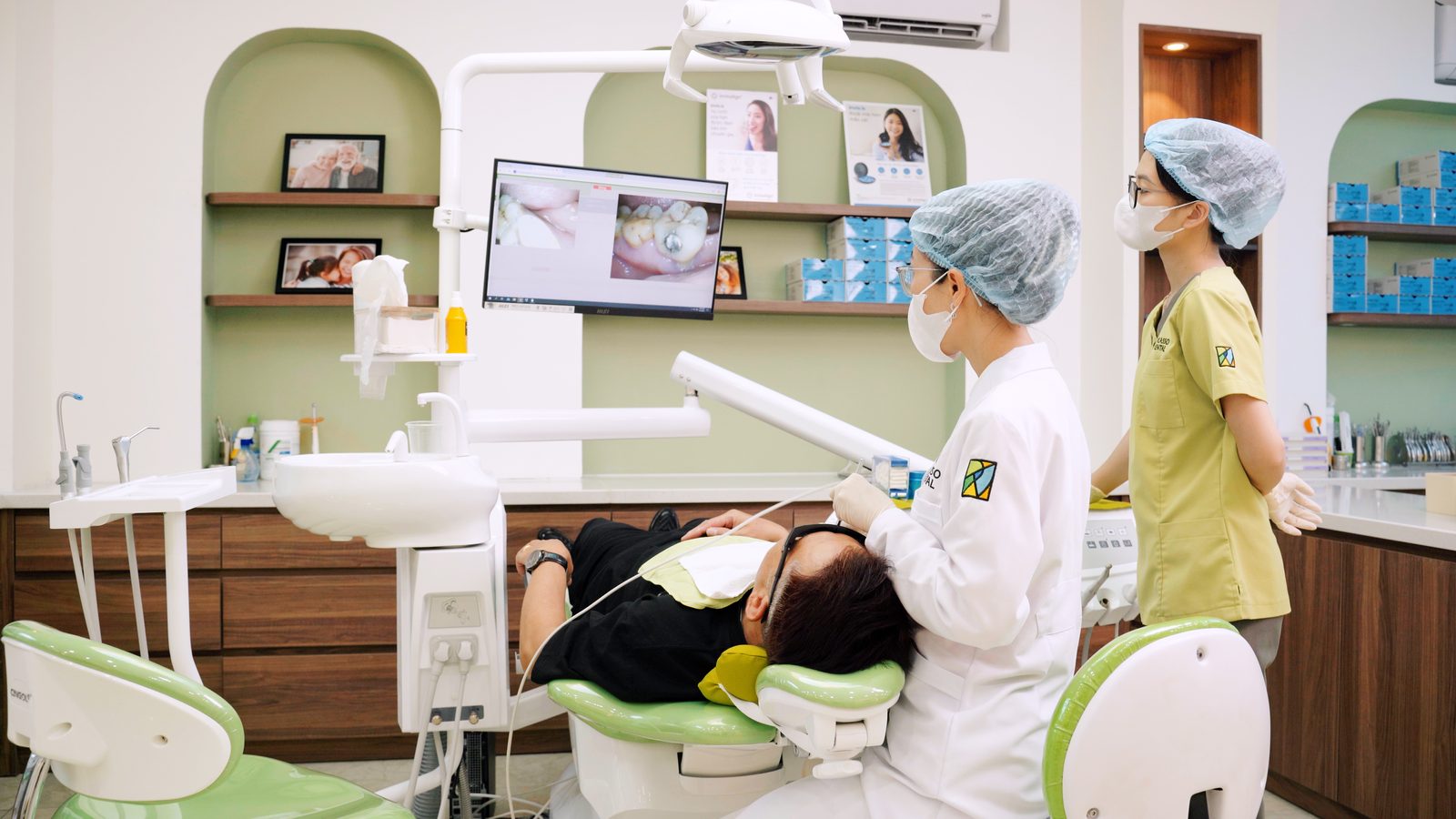
Once the anaesthetic takes effect, the tooth and surrounding tissue are completely numb. The dentist confirms numbness before beginning. From that point, you feel the pressure of instruments working inside the canal and the vibration of the handpiece. You hear sounds. You do not feel sharp or burning pain. If any sharpness breaks through, the dentist stops and adds more anaesthetic before continuing. Some patients fall asleep during the procedure.
The experience is closer to a long filling than anything frightening. Most first-time root canal patients leave saying some version of: "I had no idea it would be that straightforward."
After treatment: what is normal
When the anaesthetic wears off two to four hours after the appointment, you will feel soreness in the tooth and surrounding gum. This is normal inflammation from the procedure, not a sign that something went wrong. It peaks at 24 to 48 hours and resolves within 2 to 3 days. Over-the-counter ibuprofen (400 to 600 mg) or paracetamol manages it for the vast majority of patients. Most people return to normal activity the following day.
Why the Painful Reputation Exists, and Why It Is Outdated
The fear of root canals is real. The source of it is decades old. Three things created the reputation.
- Outdated anaesthesia techniques. Decades ago, anaesthetic formulations were weaker and injection techniques were cruder. Achieving complete numbness in an acutely infected tooth was genuinely difficult. Patients did experience pain, and those experiences passed into cultural memory.
- Confusing the infection with the treatment. Patients remember the worst dental pain of their life, caused by the infected tooth, and associate it with the root canal appointment. The pain before the procedure and the procedure itself become linked. In reality, the root canal ends the pain.
- Cultural reinforcement. Root canals appear in films and everyday language as shorthand for the worst thing imaginable. This messaging amplifies anxiety in patients who have never had the procedure. At our Hanoi and Da Nang clinics, the most common first-timer comment is: "That was nothing like I expected."
What Is Inside the Tooth, and What Gets Removed
The white outer surface of a tooth is enamel. Underneath is dentin. Inside is a hollow space called the pulp chamber, containing nerve tissue, blood vessels, and connective tissue. From the pulp chamber, narrow channels (the "root canals" the procedure is named for) run down through each root. A front tooth has one canal. Molars have three or four.
A root canal removes only the infected or dying pulp tissue. The enamel, dentin, and root structure all remain intact. The cleaned canals are filled with a rubber-like material called gutta-percha and sealed. The tooth stays in place. A crown is placed one to two weeks later to protect it long-term.
Why the infected pulp does not heal on its own: bacteria that reach the pulp are sealed off from the bloodstream by the surrounding tooth wall. The immune system cannot clear them, and oral antibiotics cannot reach a sealed pulp chamber in therapeutic concentration. Removing the infected tissue is the only treatment that works.

Normal vs. Not Normal After Treatment
Normal after a root canal
- Soreness in the tooth and gum for 2 to 3 days
- Sensitivity when biting on that side for up to a week
- Mild swelling in the gum near the treated tooth
- Discomfort that responds to ibuprofen or paracetamol
- Improving each day: worst on day 1, mostly gone by day 3 or 4
Contact your dentist if you have
- Severe pain that does not respond to painkillers
- Pain that is getting worse after day 3, not better
- Visible swelling in your face or neck
- Fever above 38 degrees Celsius
- The temporary filling falling out
Complications after root canal treatment are uncommon but do occur, most often from a missed canal or incomplete seal. Contact us if anything feels wrong. We respond to post-treatment concerns within hours.
When the Tooth Is Harder to Numb
A small percentage of root canal cases require extra steps to achieve complete numbness.
Severely infected or abscessed teeth. Active infection lowers the pH of surrounding tissue, which reduces anaesthetic effectiveness. The dentist uses supplemental techniques: intraligamentary injection (into the ligament around the tooth root), intraosseous injection (directly into the bone), or may prescribe a short antibiotic course first to reduce the infection before proceeding.
Lower molar teeth. The anatomy of the inferior alveolar nerve makes lower back teeth the most difficult to numb reliably. This is a known anatomical challenge, not a problem with your care. Always tell your dentist if you feel sharpness after the injection.
High-anxiety patients. Anxiety causes adrenaline release that temporarily counteracts local anaesthetic. Oral sedation is available at Picasso Dental Clinic for patients who need it. You remain conscious but in a relaxed, calm state throughout.
"I had four crowns, two cavities, and a root canal and it was as gentle and pain free as it could possibly be. More so than any dentist back in the states in my sixty years of seeing the dentist."
Kevin McCarthy, United States → Hanoi Old Quarter · Google review
Root Canal Cost: Vietnam vs. Australia, UK, and US

| Tooth type | Picasso (Vietnam) | Australia | UK | US |
|---|---|---|---|---|
| Incisor / canine (1 canal) | 2,500,000 VND / ~$100 USD | AUD $1,200–$1,600 | £500–£800 | USD $700–$1,100 |
| Premolar (2 canals) | 3,500,000 VND / ~$140 USD | AUD $1,500–$2,000 | £700–£1,000 | USD $900–$1,400 |
| Molar (3 to 4 canals) | 5,000,000 VND / ~$200 USD | AUD $1,800–$2,500 | £900–£1,300 | USD $1,000–$1,800 |
| Re-treatment (molar) | 5,500,000 VND / ~$220 USD | AUD $2,000–$2,800 | £1,000–£1,500 | USD $1,200–$2,000 |
| Crown (1 to 2 weeks later) | From 4,000,000 VND / ~$160 USD | AUD $1,500–$2,500 | £800–£1,500 | USD $1,000–$2,500 |
Vietnam pricing is roughly 75 to 90 percent lower than home-country pricing for the same treatment standard. International patients typically combine root canal and crown placement in a two-week trip. See the Vietnam dental tourism guide for itineraries.
Get a written quote before you book
The Real Danger: Leaving the Infection Untreated
An infected pulp will not heal. Bacteria are sealed inside the tooth, protected from the immune system and unreachable by oral antibiotics at therapeutic concentration. Untreated infection escalates: pus exits through the root tip into the surrounding jawbone, creating an abscess. From the jawbone it can extend into the facial tissues or, rarely, into the deeper neck spaces and bloodstream. Hospital admissions for severe dental infection do happen.
The root canal removes the source of infection and stops it. The procedure itself is not the risk. Avoiding it is.
Frequently Asked Questions
Is root canal treatment painful?
No. The procedure is performed under local anaesthesia that completely numbs the tooth before any instruments are used. Most patients feel pressure and vibration, not pain. If any sharpness is felt, more anaesthetic is added immediately. The severe pain patients associate with root canals is caused by the tooth infection before treatment, not the procedure itself.
What does a root canal feel like?
During treatment you feel pressure from instruments and vibration from the handpiece. You may hear equipment sounds. You will not feel sharp pain if the tooth is properly numb. Some patients fall asleep during the procedure. The experience is closer to a long filling than anything painful.
Is it normal to have pain after a root canal?
Mild soreness for 2 to 3 days is normal. The area was manipulated during cleaning and shaping, so mild inflammation is expected. Most patients manage it with over-the-counter ibuprofen or paracetamol. Severe, worsening pain after day 3 is not normal and should be assessed by your dentist.
Why do people say root canals are painful?
The reputation has two sources: outdated anaesthesia techniques from decades ago, and confusion between the severe pain caused by the tooth infection before treatment and the procedure itself. The infection causes the pain. The root canal removes the infected nerve and stops it.
Can a tooth be too infected to numb properly?
Severely infected teeth can be harder to anaesthetise because infection lowers tissue pH, reducing anaesthetic effectiveness. In these cases, dentists use supplemental injection techniques or prescribe a short antibiotic course first to reduce the infection, then proceed with the root canal once the tooth numbs properly.
How long does a root canal take?
A front tooth with one canal takes 60 to 90 minutes. Back molars with three or four canals take 90 minutes to 2 hours. Complex or retreatment cases may require two appointments. Your dentist will give a specific estimate after reviewing your X-rays.
How much does a root canal cost in Vietnam?
At Picasso Dental Clinic, root canal pricing is 2,500,000 VND (about $100 USD) for an incisor or canine, 3,500,000 VND (about $140 USD) for a premolar, and 5,000,000 VND (about $200 USD) for a molar. This is roughly 75 to 90 percent lower than equivalent treatment in Australia, the UK, or the US, at the same clinical standard.
Founding Clinical Director, Picasso Dental Clinic
Tooth pain that won't go away?
Send us a description and your X-ray if you have one. A licensed dentist reviews every enquiry and replies within 24 hours with an honest assessment. No deposit required to ask questions.
No obligation · Since 2013