
Cosmetic Dentistry
Is Professional Teeth Whitening Safe? What the science says.
Professional whitening is one of the most thoroughly studied cosmetic dental procedures. Here is the evidence-based answer on enamel safety, sensitivity, and who should wait.

Key Takeaways
- Professional whitening gel does not damage or remove enamel when applied correctly by a trained dentist.
- Temporary tooth sensitivity is the most common side effect and resolves within 48 to 72 hours.
- DIY whitening methods including charcoal and lemon juice can cause real enamel erosion, unlike clinical-grade peroxide.
- Certain patients including pregnant women, children under 16, and those with untreated gum disease should postpone treatment.
<h2>How Whitening Works on Your Enamel</h2>

<p>The whitening gel used in professional treatment contains hydrogen peroxide or carbamide peroxide, both bleaching agents with a long clinical track record. When applied to the tooth surface, these chemicals break down into oxygen molecules that penetrate the porous structure of enamel and reach stain molecules trapped inside. The oxygen reacts with the chromogenic (colour-producing) compounds, breaking the molecular bonds that give stains their colour.</p>

<p>This is a chemical reaction at the molecular level, not a mechanical one. No enamel is removed. No physical scrubbing takes place. The process is roughly analogous to bleaching a stained white shirt: the fabric itself remains intact while the discolouration disappears.</p>

<p>Enamel is the hardest biological substance in the human body, harder than bone. The peroxide concentrations used in professional whitening, even at professional-strength levels, cannot dissolve or structurally weaken it. Long-term clinical studies following patients for years after whitening consistently show no increase in decay rates, enamel fractures, or structural changes to tooth surfaces.</p>

<figure class="art-photo">
  <img src="/images/clinics/hanoi-old-quarter/treatment-room.jpg" alt="Whitening treatment room at Picasso Dental Clinic Hanoi Old Quarter" loading="lazy" decoding="async">
  <figcaption>The treatment suite at our Hanoi Old Quarter clinic, where whitening is performed under controlled conditions with full gum protection.</figcaption>
</figure>

<h2>Why Professional Whitening Is Safer Than DIY Alternatives</h2>

<p>The critical difference between professional whitening and over-the-counter products is not just concentration but supervision and fit. Before we begin any whitening treatment at Picasso Dental Clinic, we examine your teeth and gums to confirm there are no contraindications: no untreated cavities, no gum disease, no cracks or exposed dentine that would make whitening uncomfortable or inadvisable.</p>

<p>We then apply protective barriers to your gums, lips, and soft tissue before the gel touches your teeth. Professional-grade barriers are custom-shaped and far more effective than the tray edges on store-bought kits. This matters because the one area where peroxide gel can cause real harm is prolonged contact with soft tissue, which produces chemical burns and irritation. Under clinical conditions, that risk is eliminated.</p>

<div class="art-callout">
  <strong>The real danger with DIY whitening:</strong> Store-bought strips and trays are one-size-fits-all. Gel routinely contacts gums, causing irritation and occasional chemical burns. More importantly, genuinely harmful DIY methods circulate online: charcoal toothpaste is mechanically abrasive and wears enamel over time. Lemon juice and vinegar hacks are acidic and cause actual enamel erosion. These are not equivalent to professional-grade peroxide.
</div>

<p>Professional whitening gel is also regulated for dental use. The formulations are tested, the concentrations are calibrated, and the application times are evidence-based. A trained dentist knows the maximum safe exposure time for each concentration and adjusts the protocol for each patient.</p>

<figure class="art-photo">
  <img src="/images/general-dentistry/consultation.jpg" alt="Pre-whitening consultation at Picasso Dental Clinic" loading="lazy" decoding="async">
  <figcaption>Every whitening appointment begins with an examination to confirm suitability and establish a baseline shade for measuring results.</figcaption>
</figure>

<h2>Understanding and Managing Sensitivity</h2>

<p>Temporary tooth sensitivity is the most common side effect of whitening, occurring in a significant proportion of patients to varying degrees. The mechanism is well understood. During whitening, the peroxide temporarily increases the permeability of the enamel and dentinal tubules, allowing thermal stimuli (cold air, cold water) to travel more easily to the nerve.</p>

<p>This sensitivity resolves completely within one to three days in nearly all patients. It is not a sign of damage. It is a predictable, transient physiological response that diminishes as the enamel returns to its normal state.</p>

<ul class="art-checklist">
  <li>
    <div>
      <strong>Use desensitising toothpaste before treatment</strong>
      <span>Potassium nitrate and stannous fluoride formulas help occlude dentinal tubules before whitening begins, reducing the intensity of any sensitivity.</span>
    </div>
  </li>
  <li>
    <div>
      <strong>Ask about pre-treatment desensitising gel</strong>
      <span>We can apply a professional desensitising agent in-clinic before the whitening gel is placed, which significantly reduces sensitivity for most patients.</span>
    </div>
  </li>
  <li>
    <div>
      <strong>Take an OTC anti-inflammatory beforehand</strong>
      <span>Ibuprofen taken one hour before treatment can reduce post-whitening sensitivity, particularly for patients with a history of sensitive teeth.</span>
    </div>
  </li>
  <li>
    <div>
      <strong>Avoid temperature extremes for 24 to 48 hours</strong>
      <span>Ice-cold or very hot drinks are the most common triggers for post-whitening sensitivity. Avoiding them during the first two days makes the experience comfortable for most people.</span>
    </div>
  </li>
</ul>

<p>Patients with naturally sensitive teeth are not excluded from whitening. We take additional precautions, sometimes using lower concentrations over longer periods rather than maximum-strength gel in fewer sessions. The result is the same brightness achieved more gradually with less discomfort.</p>

<div class="art-cta-inline">
  <p><strong>Want to know if whitening is right for your teeth?</strong> Book a consultation and we will assess your enamel, existing restorations, and shade goals before recommending any treatment.</p>
  <a href="https://wa.me/84989067888">Book a consultation</a>
</div>

<h2>Who Should Avoid or Postpone Whitening</h2>

<p>Professional whitening is appropriate for the majority of adults, but several situations call for caution or deferral. Knowing these exclusions helps you have an informed conversation at your consultation.</p>

<div class="art-signal-grid">
  <div class="art-signal-col art-signal-col--good">
    <h4>Good candidates</h4>
    <ul>
      <li>Adults with healthy teeth and gums</li>
      <li>Yellow or brown surface staining from food and drink</li>
      <li>Age-related yellowing</li>
      <li>Patients with existing sensitive teeth (with precautions)</li>
      <li>Patients preparing for a special event</li>
    </ul>
  </div>
  <div class="art-signal-col art-signal-col--bad">
    <h4>Wait or discuss first</h4>
    <ul>
      <li>Pregnant or breastfeeding women</li>
      <li>Children and teenagers under 16</li>
      <li>Untreated cavities or active gum disease</li>
      <li>Many crowns or veneers in the smile line</li>
      <li>Severe tetracycline or fluorosis staining</li>
      <li>Known allergy to peroxide</li>
    </ul>
  </div>
</div>

<p>Patients with crowns, veneers, or extensive composite fillings in visible positions require particular consideration. Whitening gel affects only natural tooth structure, not restorations. If you whiten your natural teeth, any existing restorations will remain at their original shade and may become noticeably mismatched. We discuss this honestly at consultation so there are no surprises.</p>

<figure class="art-photo">
  <img src="/images/clinics/da-nang-hoang-dieu/reception.jpg" alt="Reception at Picasso Dental Clinic Da Nang" loading="lazy" decoding="async">
  <figcaption>Picasso Dental Da Nang, one of our six branches serving patients across Vietnam and internationally.</figcaption>
</figure>

<h2>Long-Term Safety and Repeated Whitening</h2>

<p>One of the questions patients ask most frequently is whether repeated whitening sessions over years cause cumulative damage. The research is reassuring. Multiple peer-reviewed studies tracking patients who have undergone repeated professional whitening over periods of five or more years show no measurable changes in enamel hardness, surface texture, or decay susceptibility compared to unwhitened control groups.</p>

<p>The key to safe repeated whitening is spacing and professional guidance. We generally recommend a minimum of six months between full in-clinic treatments. During the intervals, custom take-home trays with lower-concentration gel can maintain brightness without the cumulative exposure of repeated full treatments. This approach gives patients the sustained results they want without any theoretical cumulative risk.</p>

<figure class="art-photo">
  <img src="/images/clinics/hcmc-thao-dien/reception.jpg" alt="Picasso Dental Clinic Ho Chi Minh City Thao Dien" loading="lazy" decoding="async">
  <figcaption>Our Ho Chi Minh City Thao Dien branch serves patients from southern Vietnam and international visitors to HCMC.</figcaption>
</figure>

<h2>Protecting Your Results After Treatment</h2>

<p>The first 48 hours after whitening are the most critical for protecting results. During this window, the enamel is temporarily more porous and absorbs stains more readily than at baseline. Avoiding dark-coloured foods and beverages (coffee, tea, red wine, soy sauce, berries) and staining habits (smoking) during this period gives your results the best possible foundation.</p>

<p>After the initial 48 hours, returning to normal diet is fine. Long-term maintenance is largely about sensible habits: drinking staining beverages through a straw to reduce tooth contact, maintaining good oral hygiene, and attending regular professional cleaning appointments where surface staining is removed before it becomes established.</p>

<p>With these habits in place, professional whitening results realistically last one to three years before a touch-up becomes worthwhile. Some patients maintain results for longer; heavy coffee or red wine drinkers may notice colour returning sooner. Either way, a top-up session, being briefer and less intensive than the initial treatment, efficiently restores the original brightness.</p>

<figure class="art-photo">
  <img src="/images/general-dentistry/treatment.jpg" alt="Dental treatment in progress at Picasso Dental Clinic" loading="lazy" decoding="async">
  <figcaption>Treatment at Picasso Dental follows strict protocols developed over more than a decade of serving patients from 65 nationalities.</figcaption>
</figure>
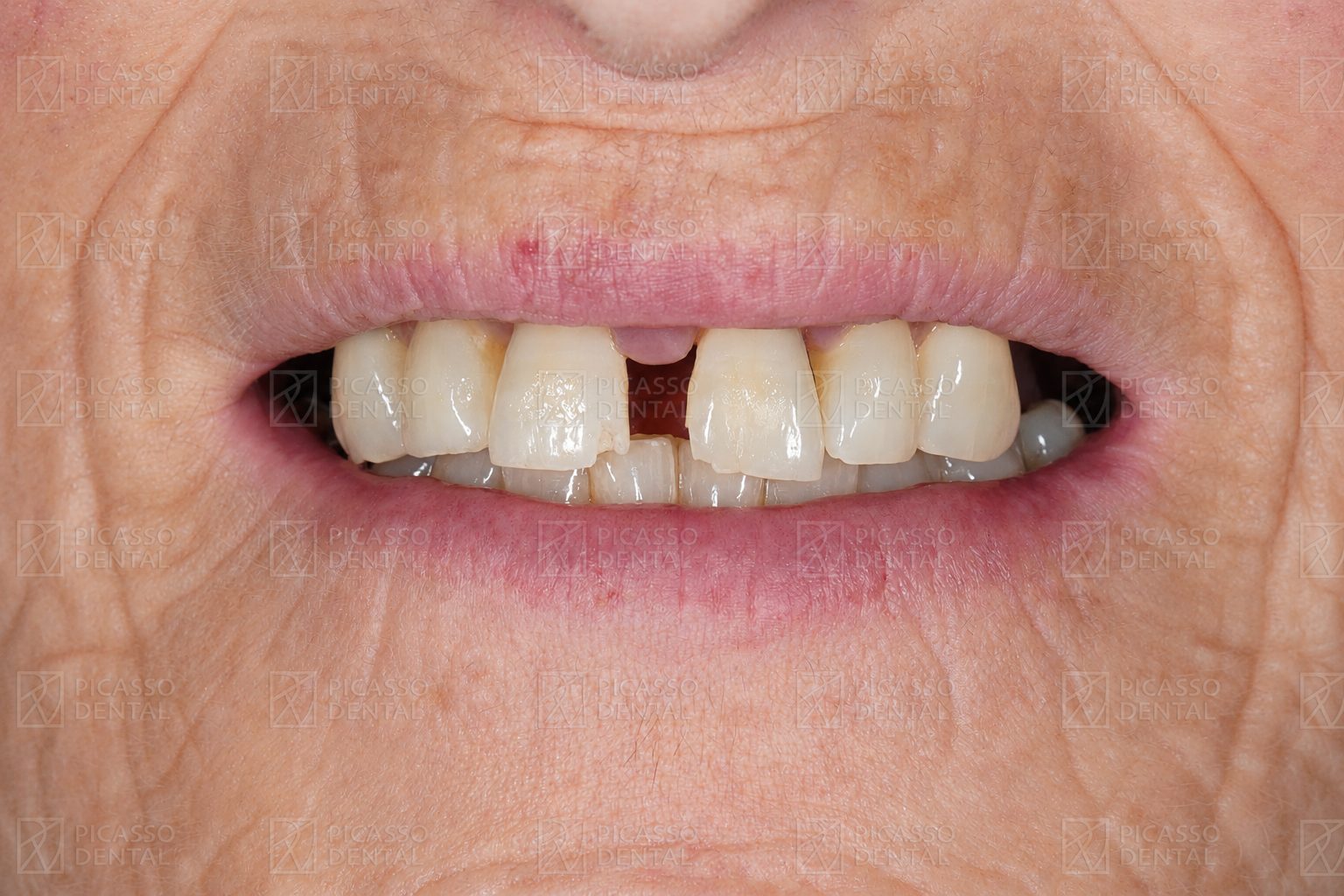 Before
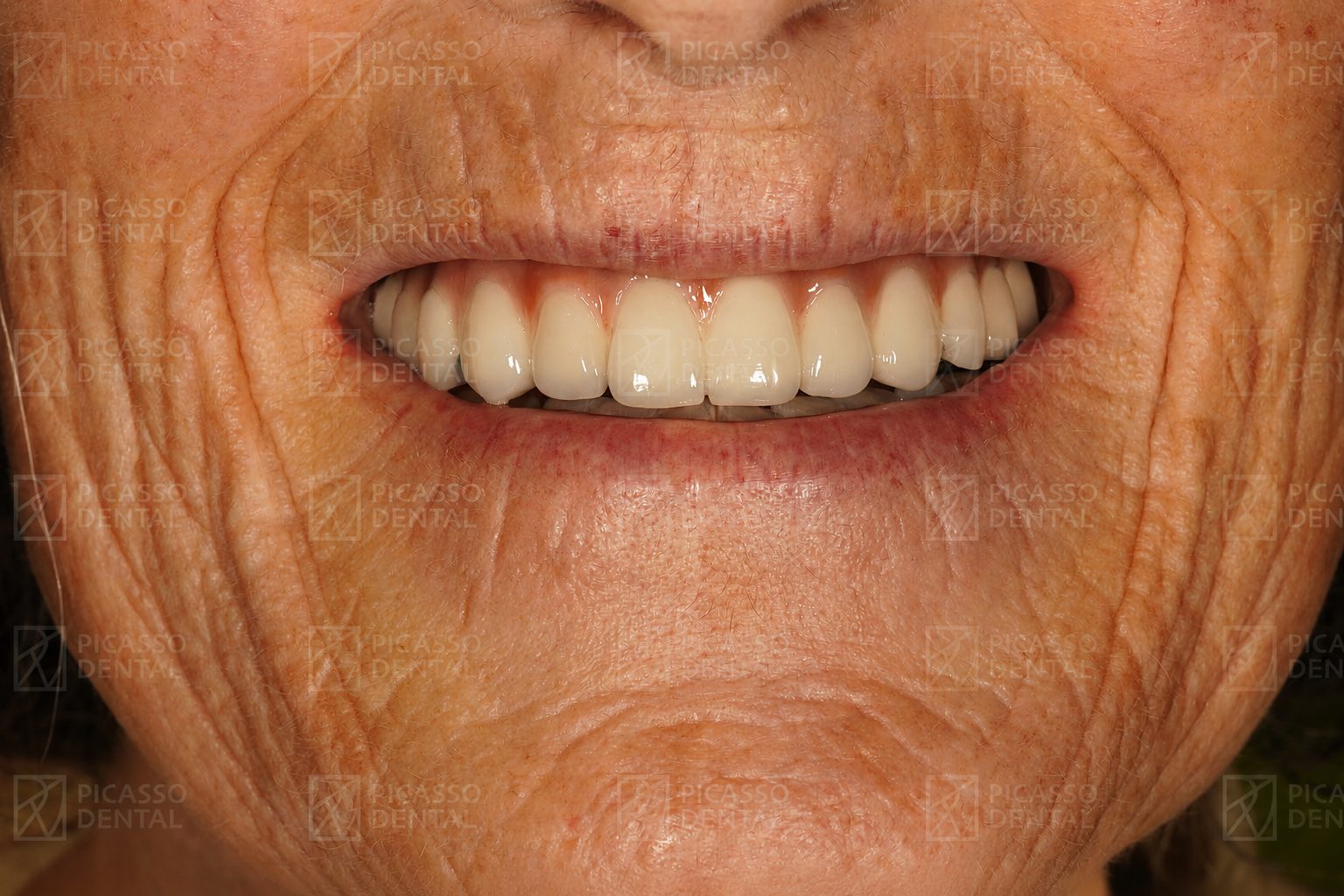 After
AfterCase 38420: In-clinic whitening, significant reduction in yellow staining from coffee and tea.
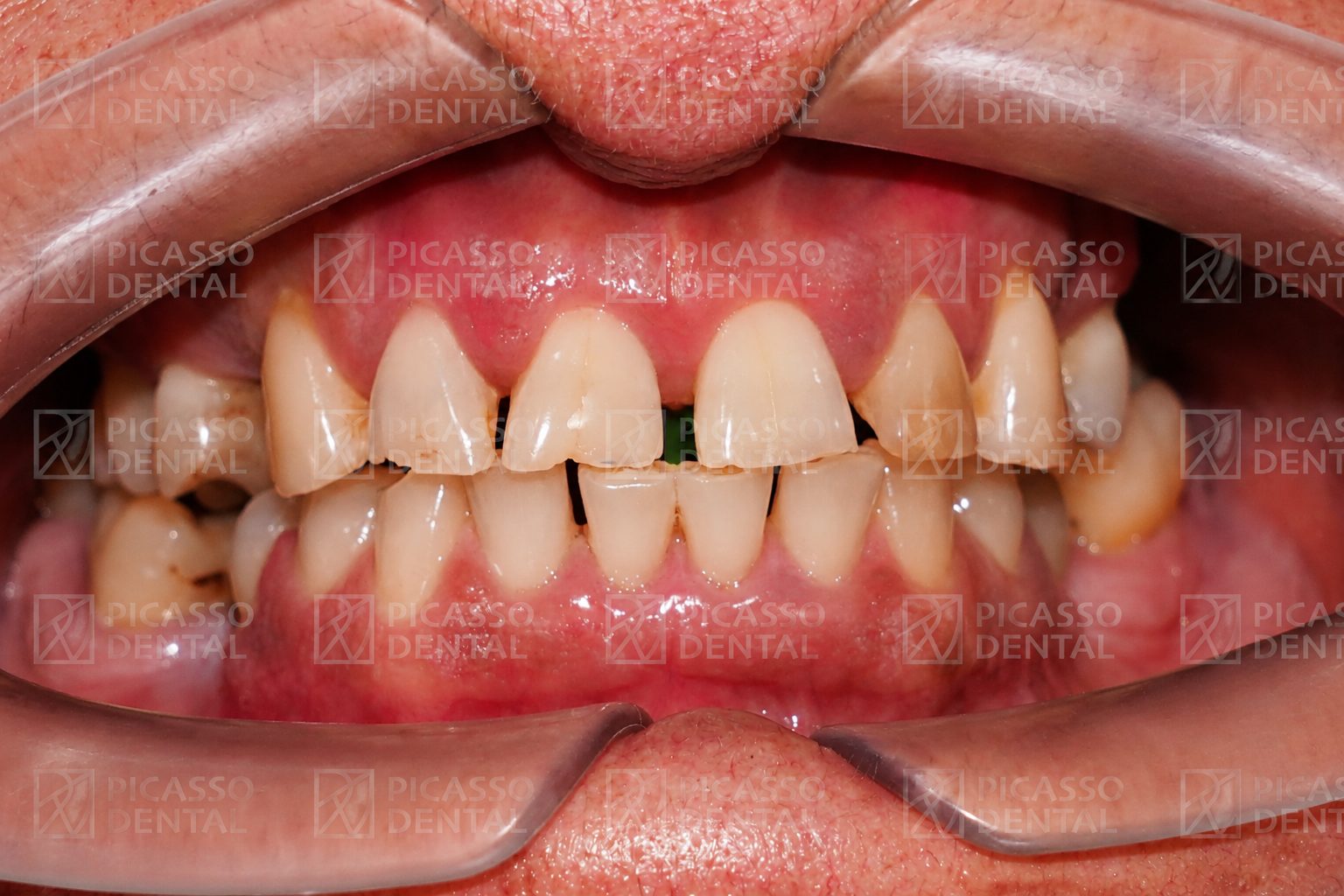 Before
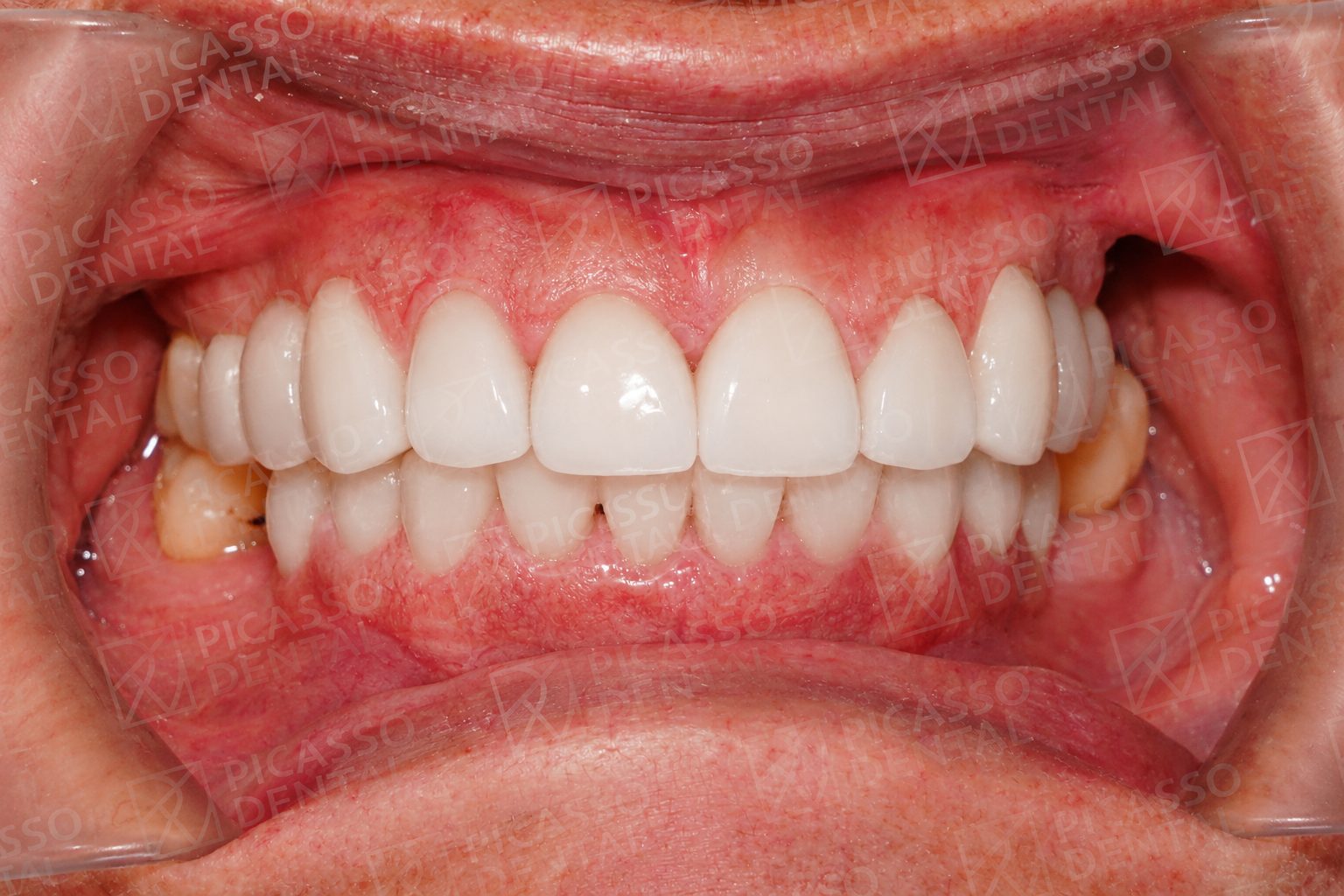 After
AfterCase 40179: Age-related yellowing treated with single in-clinic session, result maintained at 12-month review.
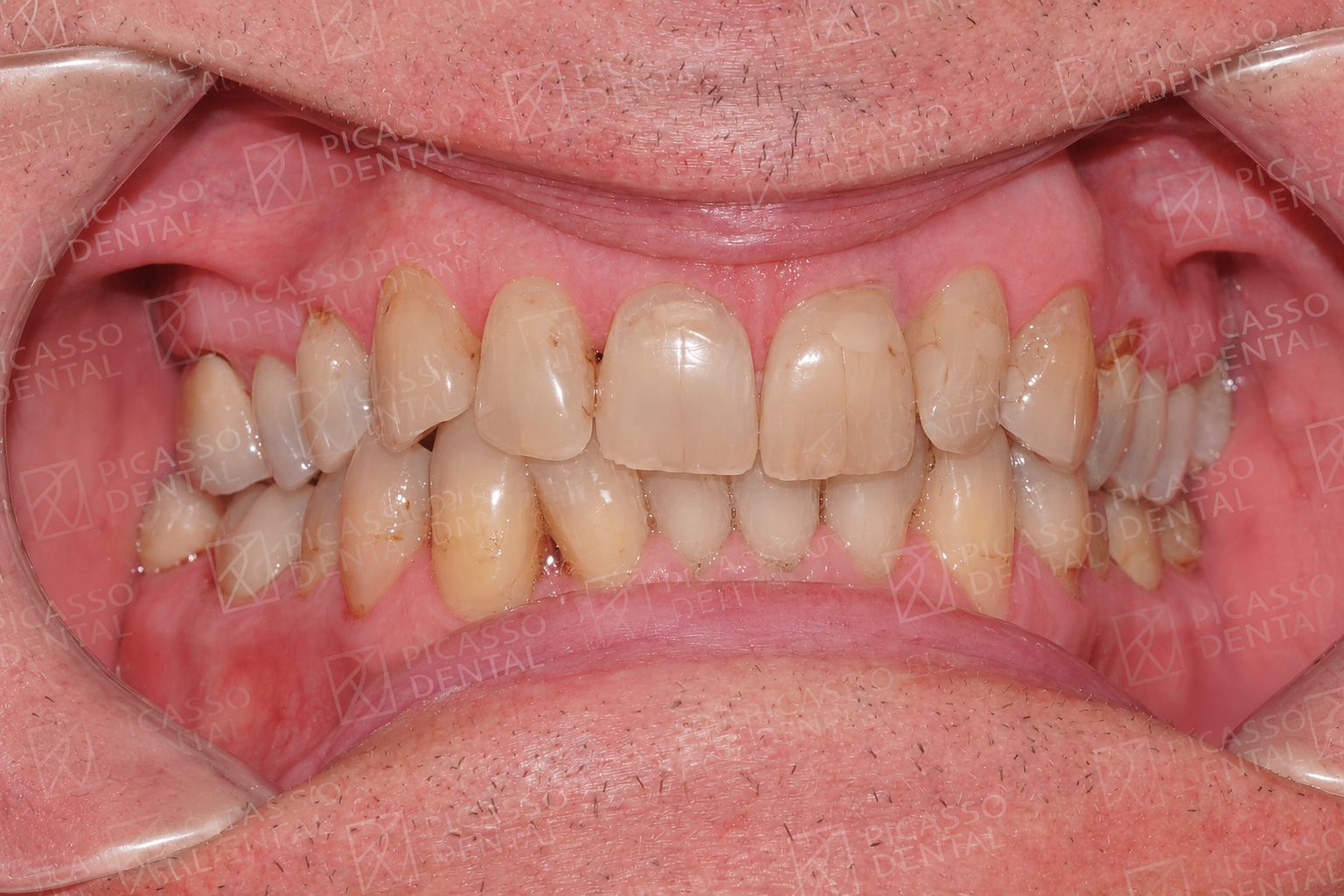 Before
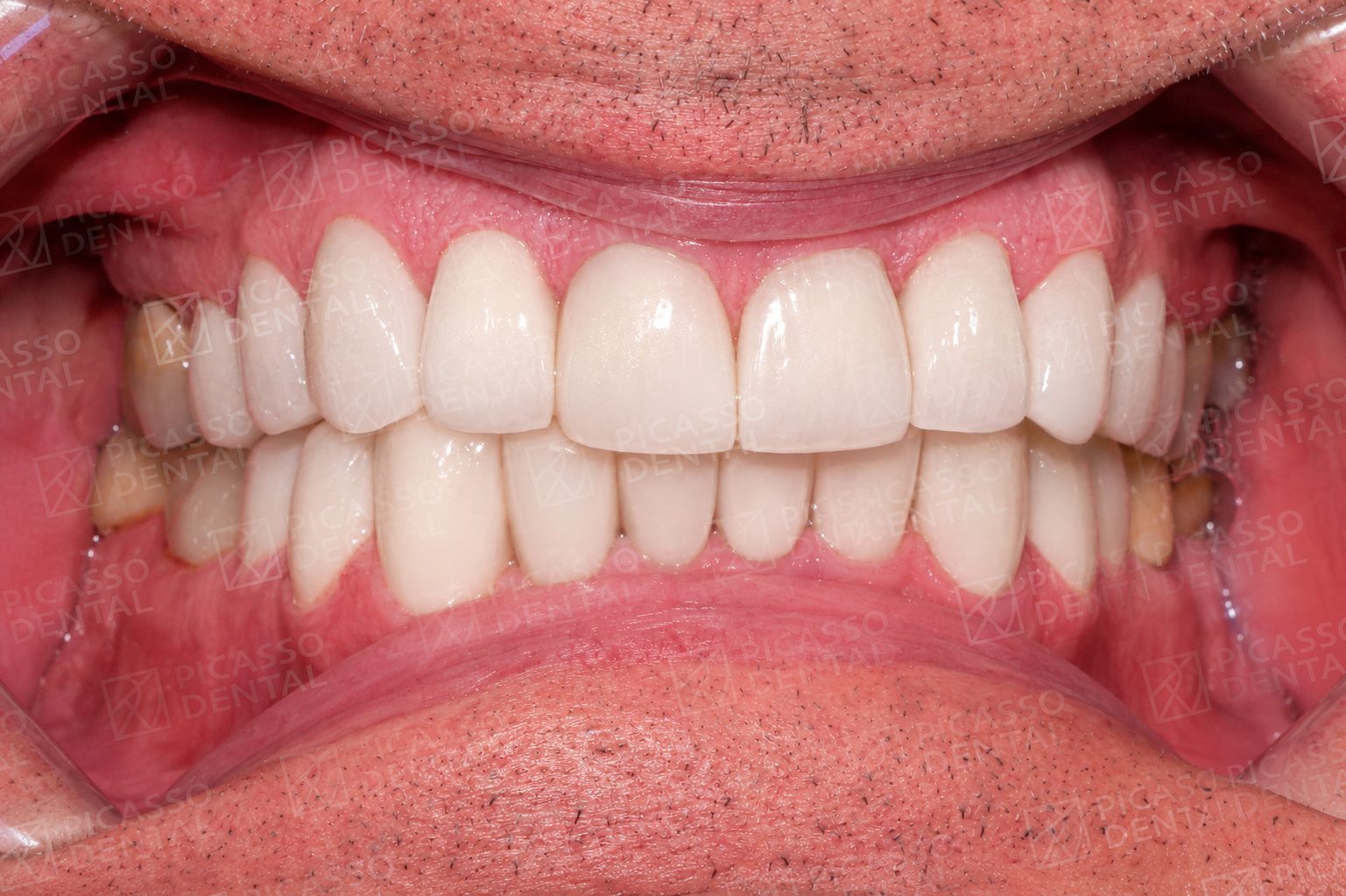 After
AfterCase 41400: Combined whitening and composite edge repairs for a comprehensive cosmetic result.
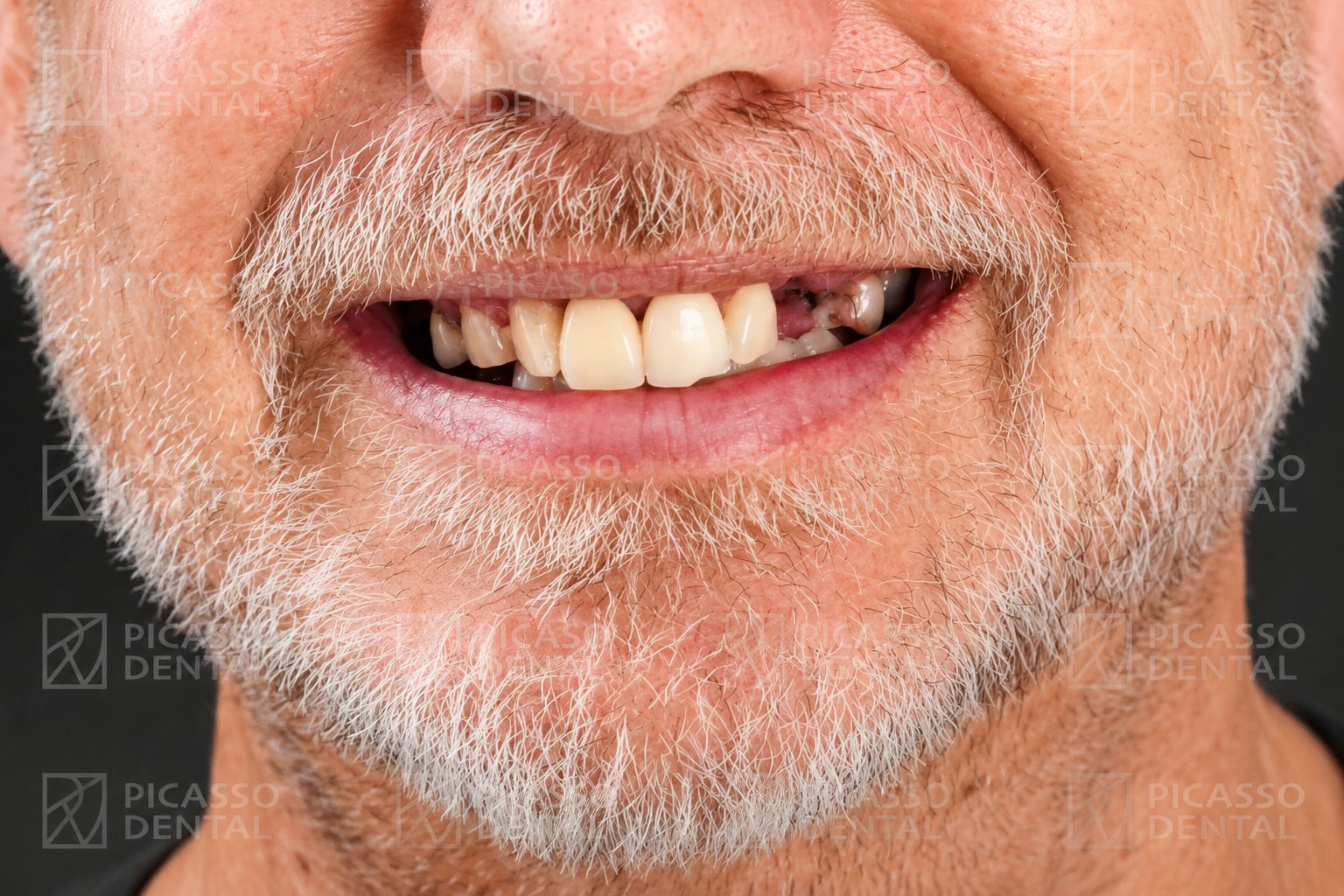 Before
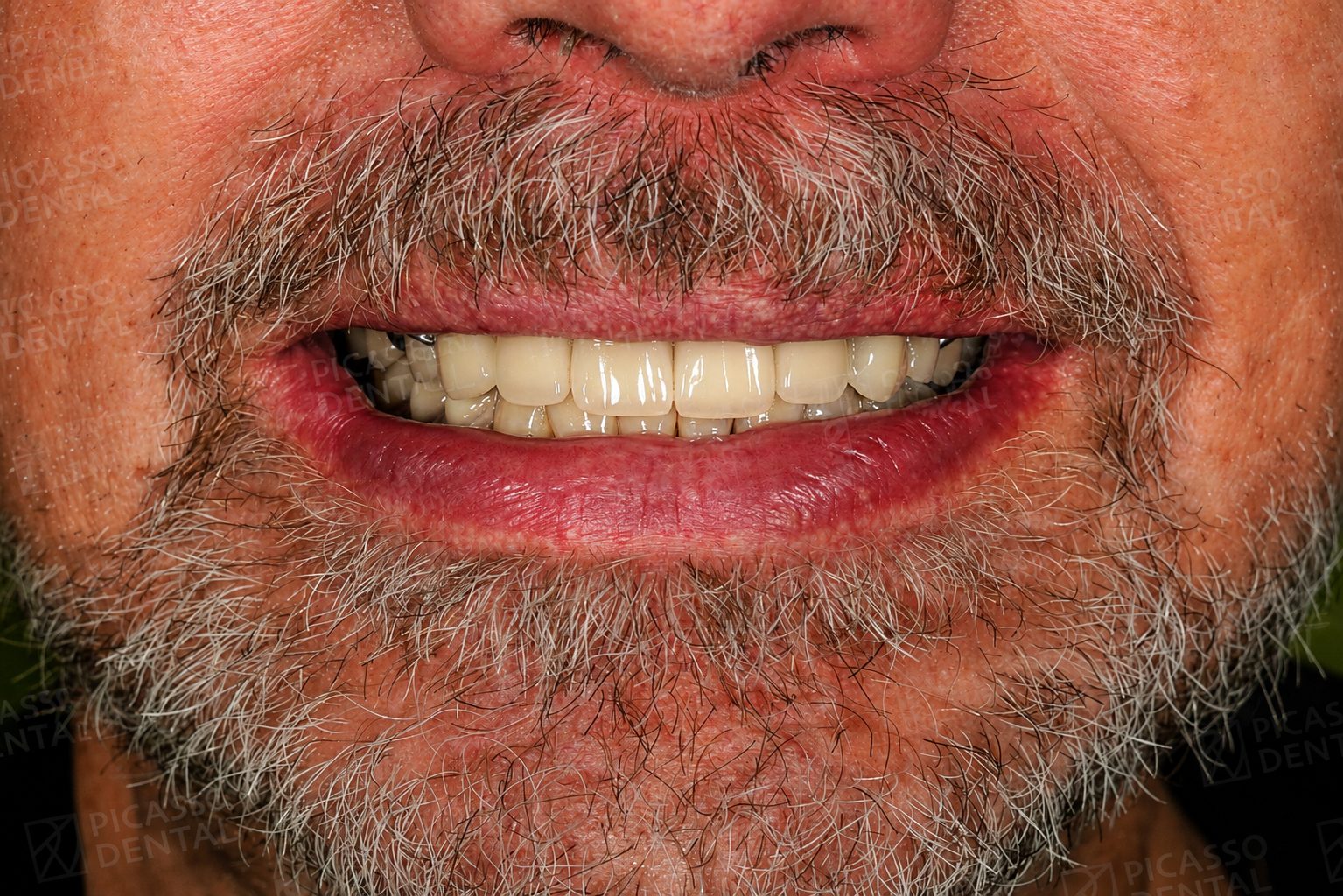 After
AfterCase 42840: Whitening prior to veneer consultation; patient decided whitening alone achieved the desired result.
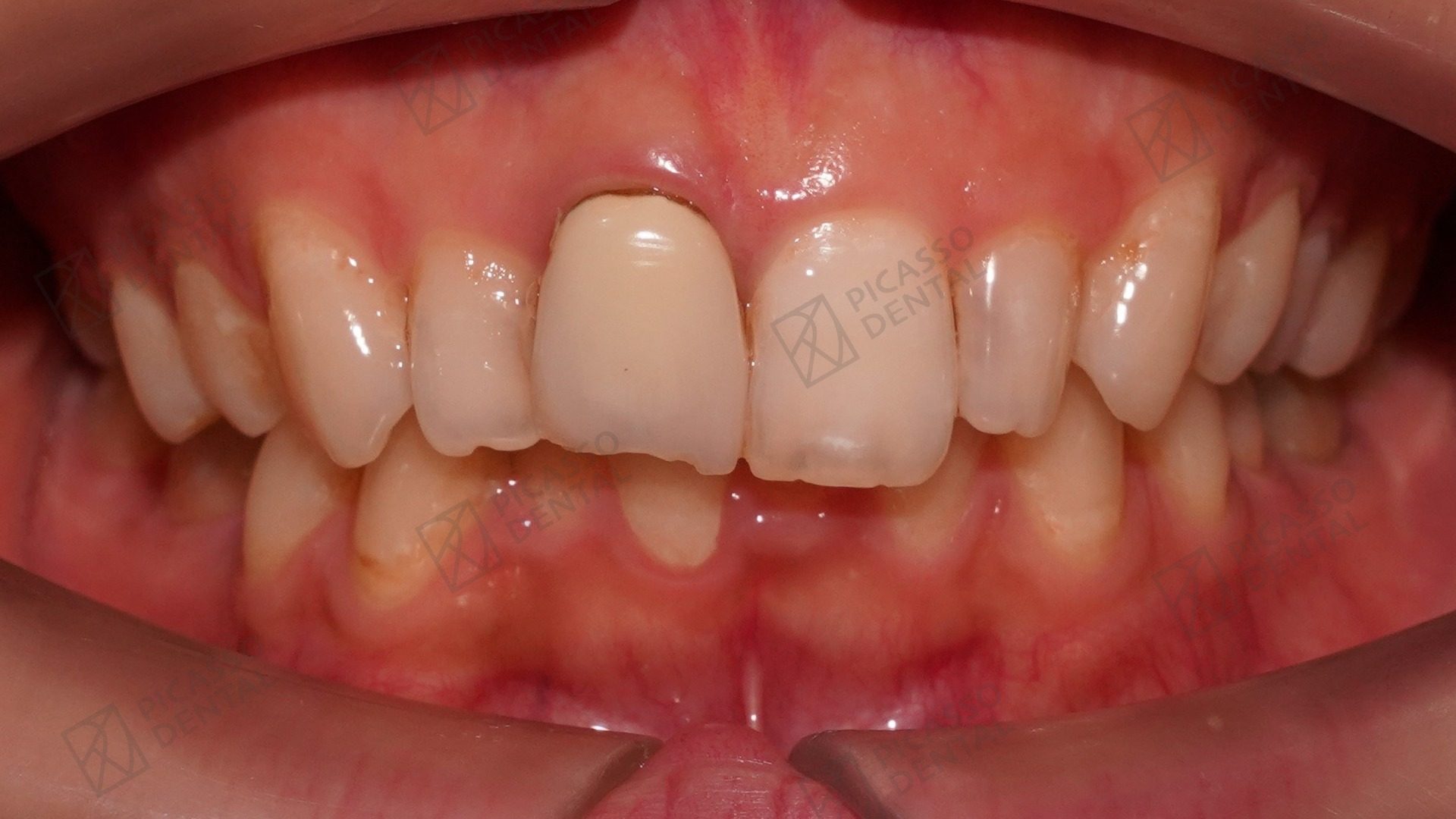 Before
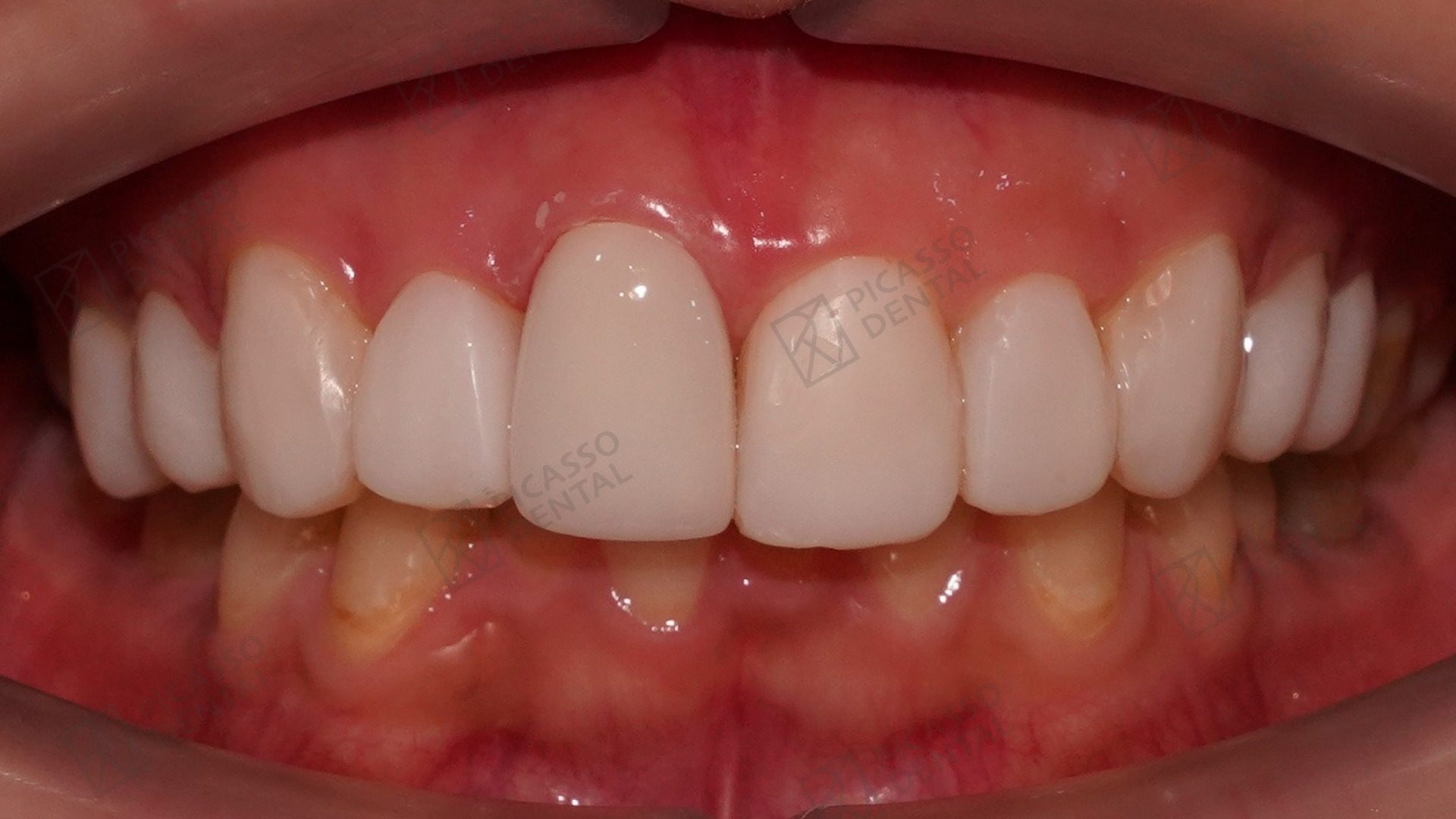 After
AfterCase 46229: International patient, single-visit whitening completed before travel home.
Frequently Asked Questions
Does professional teeth whitening damage enamel?
No. The hydrogen peroxide or carbamide peroxide used in professional whitening breaks apart stain molecules inside the enamel without removing or weakening the enamel itself. Long-term clinical research following patients for years after whitening shows no increased rate of decay, enamel fractures, or structural changes to tooth surfaces.
How long does tooth sensitivity last after whitening?
Most patients experience mild sensitivity to cold for one to two days after treatment. The sensitivity occurs because the whitening process temporarily increases enamel permeability, which resolves completely within 48 to 72 hours. Using desensitising toothpaste before and after treatment reduces discomfort significantly for most patients.
Who should avoid teeth whitening?
Pregnant and breastfeeding women, children under 16, patients with severely worn enamel, patients with many crowns or veneers in the smile line, those with untreated gum disease, anyone allergic to peroxide, and patients with severe tetracycline staining where whitening is unlikely to produce satisfactory results. A pre-treatment consultation identifies any contraindications.
How long do professional whitening results last?
Professional whitening results typically last one to three years depending on diet and lifestyle habits. Avoiding staining foods and beverages during the first 48 hours after treatment is important, as enamel is temporarily more porous during this period. Drinking staining beverages through a straw and maintaining regular professional cleaning appointments extends results further.
Is professional whitening safer than store-bought strips?
Yes. Professional whitening is performed after an examination confirming suitability, with protective barriers shielding gums and soft tissue. Store-bought strips are one-size-fits-all and frequently allow gel to contact gums, causing irritation. Genuinely harmful DIY methods circulate online, including charcoal toothpaste (mechanically abrasive, wears enamel) and lemon juice hacks (acidic, causes erosion). These are not equivalent to clinical-grade peroxide.
How often can I have professional whitening done?
We recommend a minimum of six months between full in-clinic whitening treatments. Between sessions, custom take-home trays with lower-concentration gel can maintain brightness without the intensity of repeated full treatments. This approach provides sustained results without any cumulative risk to enamel.
Can people with sensitive teeth get professional whitening?
Yes. Patients with naturally sensitive teeth can receive professional whitening with additional precautions. These include applying a desensitising agent before treatment, using lower concentration gel over a longer period rather than maximum-strength gel, recommending sensitive toothpaste for use in the days around treatment, and taking a mild anti-inflammatory beforehand. The result is the same brightness achieved more gradually with less discomfort.
Start Here
Start with a brief.
Tell us your current shade, your goal, and any sensitivity history, and we will plan the safest whitening protocol for your teeth.