
Orthodontics Guide
Invisalign vs Braces:
Which Is Right for You?
Neither option is universally better. The right choice depends on what your teeth actually need and how your lifestyle works. Here is how to think through it properly.

Key Takeaways
- Braces handle every case type, including complex bite problems and severe rotation. Invisalign handles most cases but not all.
- Invisalign requires 20 to 22 hours of daily wear. Treatment delays when patients wear aligners inconsistently.
- Braces typically cost 30 to 50 percent less than Invisalign for equivalent treatment at Picasso Dental.
- Comfort and aesthetics favour Invisalign. Control and versatility favour braces.
- A clinical assessment is the only reliable way to know which option works for your case. Schedule a consultation.
Why the question is harder than it looks
Patients regularly arrive at the consultation expecting a recommendation based on a quick look at their smile. The honest answer is that the recommendation depends on a clinical assessment, not a visual preference. Both Invisalign and braces can produce excellent results. The question is which produces excellent results for your specific case, and at what cost to your time, budget, and lifestyle.
I have treated patients who wanted Invisalign and needed braces because their case required vertical tooth movement that clear aligners cannot reliably achieve. I have also treated patients who assumed they needed braces and left with Invisalign after a scan showed the case was entirely straightforward. The only way to know is the assessment.
What follows is a framework for thinking through the decision, grounded in the five factors that actually drive the outcome: case complexity, compliance, cost, comfort, and treatment time.
Factor 1: Case complexity
This is the most important factor and the one most patients underweight when making the decision based on aesthetics alone.
Braces can address any type of malocclusion. Fixed appliances apply continuous force in three dimensions. The orthodontist can incorporate elastic bands, springs, auxiliary archwires, and power chains to manage severe rotation, significant overbite or underbite, vertical tooth eruption, and cases requiring tooth extraction as part of the overall treatment plan. This versatility makes braces the definitive option for complex cases.
Invisalign Comprehensive, available at Platinum Elite providers like Picasso Dental, addresses a wide range of complexity including moderate crowding, spacing, crossbite, and mild to moderate overbite. Where clear aligners have limitations is in controlling root torque precisely through significant movement, managing severely rotated teeth reliably, and correcting skeletal bite discrepancies where the jaw position itself is the primary factor.
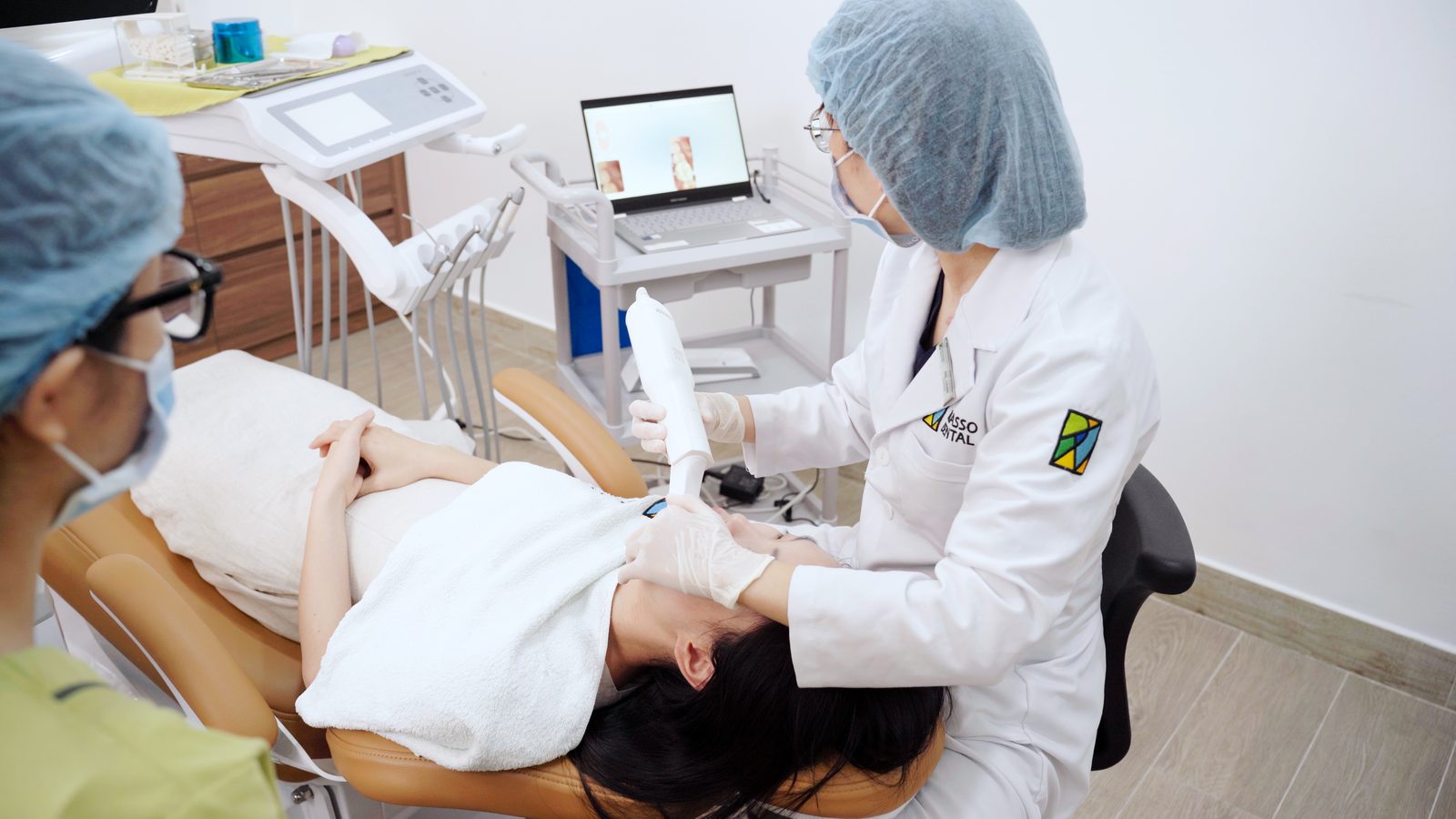
When a patient presents with a case that is on the boundary, I plan the ClinCheck treatment and show them the simulation. If the simulation requires movements that I expect the aligners to underexpress, I recommend braces instead. The simulation is a projection, not a guarantee, and a Platinum Elite provider is specifically better positioned to identify the gap between what the plan shows and what the aligners will actually achieve.
Invisalign handles well
- Mild to moderate crowding
- Spacing between teeth
- Mild crossbite
- Mild to moderate overbite
- Post-braces relapse
- Teen alignment with Mandibular Advancement
Braces are usually better
- Severe rotation
- Significant vertical movement
- Skeletal bite correction
- Complex extraction cases
- Severe crowding requiring significant arch expansion
- Coordination with jaw surgery
Factor 2: Compliance
This is the factor that trips up the most patients who choose Invisalign for the right clinical reasons but struggle with the behavioural requirement.
Invisalign aligners must be worn for 20 to 22 hours per day. The hours add up unforgivingly: if you remove aligners for three hours at lunch, take them out during a long work meeting, leave them out while watching television in the evening, and forget to put them back immediately after breakfast, you can easily drop below 20 hours without realising it.
When aligner wear drops, the teeth do not move as planned. The patient reaches the end of the aligner series and finds their teeth have not fully expressed the planned movements. This requires refinement aligners, which means additional fabrication, additional wait time, and additional appointments. In severe cases of non-compliance, the case needs to restart.
"I had my Invisalign treatment here successfully. Great care and friendly staff sending me reminders here and then."
Nin Tendo, Da Nang, Google review
Braces remove the compliance variable entirely. They are fixed to the teeth and cannot be removed. Treatment progresses on schedule regardless of patient motivation, memory, or circumstance. For patients who are honest with themselves about struggling with consistent habits, braces are the reliable choice even if Invisalign would otherwise suit their case.
Factor 3: Cost
Invisalign costs more than braces in every market. At Picasso Dental, the difference is typically 30 to 50 percent for an equivalent-duration case. The gap reflects the manufacturing cost of precision-fabricated aligner sets, the ClinCheck digital planning process, and the Align Technology licensing structure for Platinum Elite providers.
For a moderate adult alignment case, ceramic braces and Invisalign Moderate both produce excellent results. The ceramic braces cost less. If budget is a primary constraint and the case is suitable for both, braces represent better value. If aesthetics and convenience during treatment are priorities that justify the premium, Invisalign is the correct choice at a higher cost.
For cases where braces are clinically superior, the cost comparison is not relevant. A more expensive treatment that produces a less reliable result for your specific case is not good value at any price point.
Not sure which option fits your case? The consultation includes a free iTero scan and a written treatment plan with pricing for both options. No obligation to proceed.
Book a consultation →Factor 4: Comfort
Invisalign is more comfortable during treatment. The smooth plastic surface does not irritate the soft tissue of the cheeks, lips, or tongue the way metal brackets and archwires do. Soreness from a broken bracket or a wire end that has shifted out of position is a periodic inconvenience with fixed braces that Invisalign patients never experience.
Invisalign does cause pressure and mild discomfort for the first two to three days after switching to a new aligner set. This is the expected sensation of active tooth movement. It resolves as the tooth reaches the planned position. Braces cause similar discomfort after each adjustment appointment, typically for two to four days.
For patients with significant sensitivity, or anyone in performance, presenting, or social roles where mouth irritation is a practical concern, Invisalign's comfort advantage is meaningful.
Factor 5: Treatment time
For straightforward adult alignment cases, treatment duration is comparable with both options. Mild to moderate crowding or spacing typically resolves in 6 to 14 months with either Invisalign or braces, depending on the starting severity.
For complex cases, braces are often faster. Continuous fixed forces and the orthodontist's ability to apply targeted mechanics throughout treatment typically achieve complex tooth movements more efficiently than the stage-by-stage movement of clear aligners.
For Invisalign patients, treatment time is directly under their control in a way braces treatment is not. Consistent 22-hour wear achieves the projected timeline. Inconsistent wear extends it. Patients who travel frequently, have variable schedules, or work in roles that interfere with regular aligner wear should account for this variability when choosing between the two options.
How to make the decision
- Get the clinical assessment first Do not choose based on preference before knowing whether your case is actually suitable for Invisalign. A ClinCheck simulation after an iTero scan shows you exactly what the aligners are planned to do and lets the orthodontist identify any movements the plan may underexpress.
- Be honest about compliance If you know from experience that you struggle with consistent habits, or if your schedule makes 22-hour daily wear genuinely difficult to maintain, braces remove that variable. The best aligner treatment is the one that stays in your mouth.
- Set a budget before the consultation Ask for a written quote for both options at the consultation. If both are clinically suitable for your case, the cost comparison is relevant. If braces are recommended for clinical reasons, the comparison is not the deciding factor.
- Consider your treatment period priorities Invisalign is less visible, more comfortable, and imposes no dietary restrictions. Braces are more reliable for complex movements and have no compliance requirement. Both produce excellent outcomes for appropriate cases. The choice between them is partly clinical and partly personal.
- Ask about the combination approach Some cases benefit from starting with braces for the phase requiring maximum control and completing with Invisalign. Some cases require braces on one arch and Invisalign on the other. A qualified orthodontist can explain whether either approach applies to your specific situation.
Before and after: orthodontic cases at Picasso Dental
Results from orthodontic and smile rehabilitation cases treated at Picasso Dental across Vietnam.
<div class="art-case">
  <div class="art-case-panels">
    <div class="art-case-panel">
      <img src="/images/cases/38420/before.jpg" alt="Before orthodontic treatment at Picasso Dental" loading="lazy" decoding="async">
      <span class="art-case-label art-case-label--before">Before</span>
    </div>
    <div class="art-case-panel">
      <img src="/images/cases/38420/after.jpg" alt="After orthodontic treatment at Picasso Dental" loading="lazy" decoding="async">
      <span class="art-case-label art-case-label--after">After</span>
    </div>
  </div>
  <p class="art-case-caption">Full smile rehabilitation, Hanoi</p>
</div>

<div class="art-case">
  <div class="art-case-panels">
    <div class="art-case-panel">
      <img src="/images/cases/40179/before.jpg" alt="Before smile treatment at Picasso Dental" loading="lazy" decoding="async">
      <span class="art-case-label art-case-label--before">Before</span>
    </div>
    <div class="art-case-panel">
      <img src="/images/cases/40179/after.jpg" alt="After smile treatment at Picasso Dental" loading="lazy" decoding="async">
      <span class="art-case-label art-case-label--after">After</span>
    </div>
  </div>
  <p class="art-case-caption">Alignment and restoration, Da Nang</p>
</div>

<div class="art-case">
  <div class="art-case-panels">
    <div class="art-case-panel">
      <img src="/images/cases/41400/before.jpg" alt="Before treatment at Picasso Dental" loading="lazy" decoding="async">
      <span class="art-case-label art-case-label--before">Before</span>
    </div>
    <div class="art-case-panel">
      <img src="/images/cases/41400/after.jpg" alt="After treatment at Picasso Dental" loading="lazy" decoding="async">
      <span class="art-case-label art-case-label--after">After</span>
    </div>
  </div>
  <p class="art-case-caption">Smile restoration, HCMC Thao Dien</p>
</div>

<div class="art-case">
  <div class="art-case-panels">
    <div class="art-case-panel">
      <img src="/images/cases/42840/before.jpg" alt="Before smile makeover at Picasso Dental" loading="lazy" decoding="async">
      <span class="art-case-label art-case-label--before">Before</span>
    </div>
    <div class="art-case-panel">
      <img src="/images/cases/42840/after.jpg" alt="After smile makeover at Picasso Dental" loading="lazy" decoding="async">
      <span class="art-case-label art-case-label--after">After</span>
    </div>
  </div>
  <p class="art-case-caption">Crowns and alignment, Hanoi Westlake</p>
</div>

<div class="art-case">
  <div class="art-case-panels">
    <div class="art-case-panel">
      <img src="/images/cases/46229/before.jpg" alt="Before orthodontic case at Picasso Dental" loading="lazy" decoding="async">
      <span class="art-case-label art-case-label--before">Before</span>
    </div>
    <div class="art-case-panel">
      <img src="/images/cases/46229/after.jpg" alt="After orthodontic case at Picasso Dental" loading="lazy" decoding="async">
      <span class="art-case-label art-case-label--after">After</span>
    </div>
  </div>
  <p class="art-case-caption">Alignment case, Hanoi Old Quarter</p>
</div>
Orthodontic treatment at Picasso Dental
Picasso Dental holds Platinum Elite Invisalign Provider status, the highest designation globally, awarded for submitting more than 100 Invisalign cases per year to Align Technology. Orthodontic care is available across all branches in Hanoi, Da Nang, Ho Chi Minh City, and Da Lat.
Frequently asked questions
Is Invisalign or braces better for complex cases?
Braces are generally better for complex cases. Fixed appliances can apply forces in three dimensions, including vertical tooth movement, severe rotation, and jaw-related bite correction, that clear aligners cannot reliably replicate. Invisalign Comprehensive handles a wide range of cases, but when a case involves a significant skeletal component, extraction of multiple teeth, or severe vertical discrepancy, braces give the orthodontist greater precision and control.
How much more does Invisalign cost than braces in Vietnam?
At Picasso Dental, Invisalign typically costs 30 to 50 percent more than equivalent fixed braces treatment. The price gap reflects the manufacturing cost of the aligner sets and the ClinCheck digital planning process. For current pricing, see the Invisalign treatment guide or book a consultation for a written quote specific to your case.
Can Invisalign fix an overbite?
Yes, Invisalign can address overbite in many cases, particularly with Invisalign Comprehensive and the Mandibular Advancement feature available for teenage patients at Platinum Elite providers like Picasso Dental. Mild to moderate overbite caused by tooth position is addressable with clear aligners. Severe skeletal overbite, where the jaw position itself is the primary cause, often requires fixed braces combined with additional appliances, or orthognathic surgery in adult cases.
How many hours per day must Invisalign be worn?
Invisalign aligners must be worn for 20 to 22 hours per day to achieve the planned tooth movement on schedule. They are removed only for eating, drinking anything other than water, and brushing and flossing. Patients who consistently wear aligners for fewer than 20 hours per day will experience treatment delays, and in some cases the planned movements will not fully express before refinements are needed.
Are braces or Invisalign more comfortable?
Invisalign is generally more comfortable day-to-day. The smooth plastic surface does not irritate the soft tissue of the cheeks and lips the way metal brackets and archwires can. Invisalign does cause pressure and mild discomfort for the first two to three days after switching to a new aligner set, but this is typically less significant than the discomfort after a braces adjustment appointment.
Can I eat normally with Invisalign?
Yes. Because Invisalign aligners are removable, there are no dietary restrictions. You remove the aligners before eating or drinking anything other than water, eat normally, and then clean your teeth before replacing the aligners. With fixed braces, hard and sticky foods must be avoided throughout treatment to prevent bracket breakage and wire damage.
How do I know which orthodontic treatment is right for me?
A clinical assessment by a qualified orthodontist is the only reliable way to determine whether your case is suitable for Invisalign, fixed braces, or a combination of both. At Picasso Dental, the Invisalign consultation includes a free iTero digital scan and a ClinCheck simulation. If your case is better suited to braces, the orthodontist will tell you that directly. Book a consultation and arrive with questions about your specific malocclusion and treatment goals.
Is Invisalign treatment faster or slower than braces?
Treatment duration is comparable for straightforward adult alignment cases. Mild to moderate crowding or spacing cases typically complete in 6 to 14 months with either treatment. For complex cases, braces are often faster. Invisalign treatment duration is also directly affected by patient compliance: consistent 22-hour wear achieves the projected timeline, while inconsistent wear extends it.
Can teenagers get Invisalign?
Yes. Invisalign Teen is specifically designed for teenage patients and includes compliance indicators on the aligners and up to six replacement aligners in case of loss or damage. Picasso Dental holds Platinum Elite provider status, which includes access to the Mandibular Advancement feature for growing teen patients where bite correction is needed alongside alignment. Teen cases are assessed individually for suitability at the consultation.
What is the Invisalign consultation like at Picasso Dental?
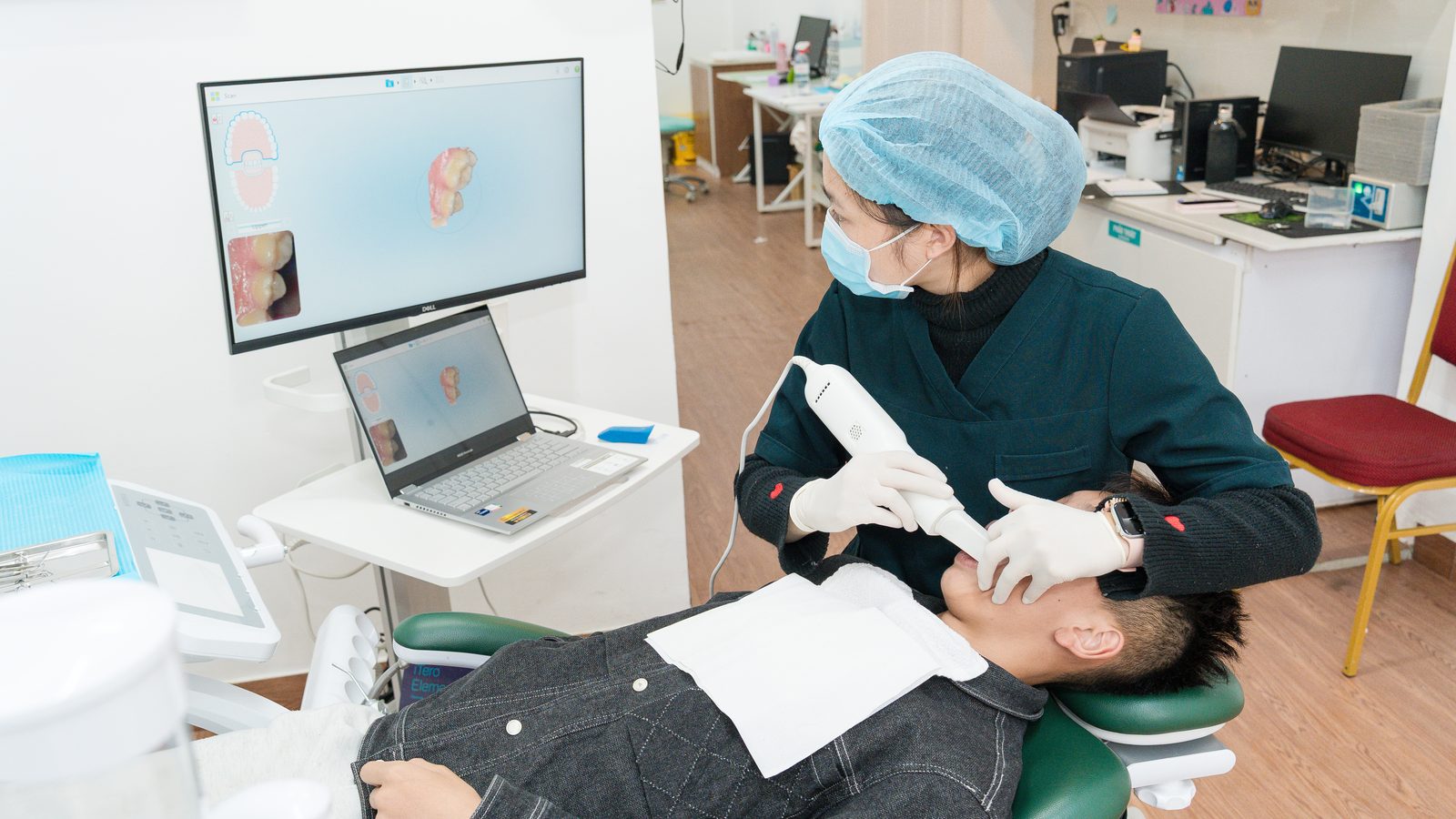
The consultation includes a free iTero digital scan of your teeth, a ClinCheck simulation showing your projected result, a clinical assessment of your malocclusion, a comparison of Invisalign versus braces for your specific case, and a written treatment plan with pricing. There is no obligation to proceed. See the full Invisalign treatment guide for more detail on what to expect.
Book Now
See Your Result
Before You Commit.
Free iTero scan and ClinCheck simulation at the consultation. Written treatment plan with pricing for both braces and Invisalign. No obligation to proceed.