Cosmetic Dentistry
How to Fix Space and
Shadowing Between Veneers
Spaces and dark triangles between veneers are a design or execution flaw, not a minor cosmetic quibble. This is what causes them, what actually fixes them, and how to prevent the problem with proper planning from the start.

Key Takeaways
- Spaces and dark triangles between veneers are caused by poor contact point design, inadequate gum-support contouring, or gum recession after placement.
- For minor gaps, composite bonding onto the veneer edge can close the space without full replacement, but rarely achieves the same visual quality.
- Significant spaces or persistent shadows require veneer replacement with corrected design and proper lab communication.
- When gum recession is the primary cause, periodontal gum grafting may resolve the triangles before any veneer changes are considered.
Understanding the two types of space problem
When patients describe spaces or shadows between their veneers, they are usually referring to one of two distinct problems, and distinguishing between them is important because the fixes are different.
The first is a physical gap: the veneers do not touch each other properly and there is a visible opening between them. This allows food to trap, collects staining, harbours bacteria, and feels wrong to the tongue. It is both a cosmetic and a functional problem.
The second is a dark triangle or shadow near the gumline, technically called a gingival embrasure defect or "black triangle." The veneers themselves may touch at the contact point, but the space between the teeth near the gum, which should be filled with healthy papilla tissue, is instead open. The result is a visible shadow that makes teeth look aged and longer than they should.
Patients often describe these issues as their veneers looking like "chiclets" or having triangles that "make my teeth look old." They are right to be concerned. These are not subjective preferences. They are measurable failures of contact point design or gum contour architecture.

Why spaces and shadows develop
Understanding the cause determines the correct fix. There are three primary mechanisms.
Poor contact point design at the laboratory stage
Contact points happen when the ceramist who fabricates the veneer does not create sufficient fullness at the interproximal area, the point where adjacent veneers should meet. Sometimes this is a communication failure between the dentist and the laboratory. Sometimes the try-in appointment is rushed and contact tightness is not evaluated carefully before the veneers are permanently bonded.
Ideally, veneers should have contact that is slightly tight on flossing. This creates the seal that prevents food trapping and supports adjacent soft tissue. Floss that falls through without any resistance indicates contacts that are too open.
Inadequate veneer contour for gum support
Natural teeth have subtle curves and convexities in their anatomy that support the gum papilla between adjacent teeth. Flat, straight-sided veneers that do not replicate this natural tooth anatomy allow gum tissue to recede more easily. Some providers use prefabricated or templated veneer shapes that do not account for individual patient anatomy. Custom design that respects each patient's specific gum architecture is what prevents these shadows from appearing.
Gum recession after placement
Even perfectly designed veneers can develop dark triangles if gum tissue recedes after placement. This can result from gum disease, overly aggressive brushing, the patient's inherent gum tissue type, or normal ageing. When the papilla tissue between two teeth shrinks back, the space it previously occupied becomes visible as a dark triangle regardless of how well the veneers were made.

The treatment options, from least to most invasive
- Periodontal assessment and gum grafting (when recession is the cause) Before any veneer changes are considered, assess whether the primary problem is gum recession. If it is, refer to a periodontist for gum grafting. Restoring the papilla tissue may resolve the dark triangles entirely without touching the veneers. After gum healing, any remaining veneer contouring issues can be addressed, often with minor chairside adjustments rather than full replacement.
- Composite addition to existing veneers (minor gaps only) For a small gap with accessible veneer edges, composite resin can be bonded to the veneer to close the space. The porcelain surface is etched and primed, composite is sculpted to fill the gap, and then polished smooth. This avoids the cost and recovery of veneer replacement. However, composite ages differently from porcelain, the colour match is rarely perfect over time, and the result is a visible repair rather than a seamless restoration. It is the right choice for minor gaps where the patient wants a conservative short-term fix.
- Full veneer replacement with corrected design For significant spaces, persistent shadows, or any case where the contact points were inadequate from the start, replacement is the only solution that addresses the root cause. The existing veneers are removed, the teeth are assessed and any preparation adjustments are made, and temporary veneers are placed while the new definitive veneers are fabricated. The try-in appointment with the new veneers is used to verify all contacts and contours before permanent bonding.

Have spaces or shadows between your veneers? Send us a close-up photo and we will assess whether correction is worthwhile and what the right approach is for your specific situation.
Book a consultation →Why prevention matters more than fixing
The reason veneer spaces and dark triangles are so frustrating is that they are entirely preventable with proper clinical process. The two checkpoints that catch these problems before they happen are the smile analysis during treatment planning and the try-in appointment before bonding.
During treatment planning
A thorough smile analysis includes clinical photographs from multiple angles, study models, and analysis of the patient's existing gum architecture. This stage should identify whether there are pre-existing signs of recession, whether the patient's tissue type is thin and prone to recession, and what contact and contour geometry is needed to support the gum papilla long-term.
At the try-in appointment
The try-in is the last quality check before the veneers are permanently bonded. At this appointment, contact point tightness must be evaluated with dental floss at every interproximal point, the gum margin response to each veneer shape should be observed, and shadows should be assessed from normal conversational distances, not just under clinical lighting. If anything is wrong, the case goes back to the laboratory. Rushing this step to avoid inconvenience produces exactly the kind of problem patients end up needing to correct later at greater cost and disruption.


When to seek correction and when to wait
If your veneers are relatively new and spaces or shadows are already apparent, addressing them sooner makes more sense than waiting. The cause is unlikely to resolve on its own and may worsen if gum health is a contributing factor.
If your veneers have been in place for 15 years and minor shadows have developed from gradual gum changes, planning for eventual replacement as part of normal veneer lifespan management is reasonable. Porcelain veneers typically last 10 to 20 years with good care. A functional veneer that has aged normally does not need to be replaced urgently unless the aesthetic concern is significant.
Be realistic about what correction involves. Minor composite additions can improve minor gaps but do not replicate the quality of new veneers. Significant problems require replacement, and replacement veneers should be approached with the same thorough planning process that should have been applied originally, including a proper try-in appointment before bonding.
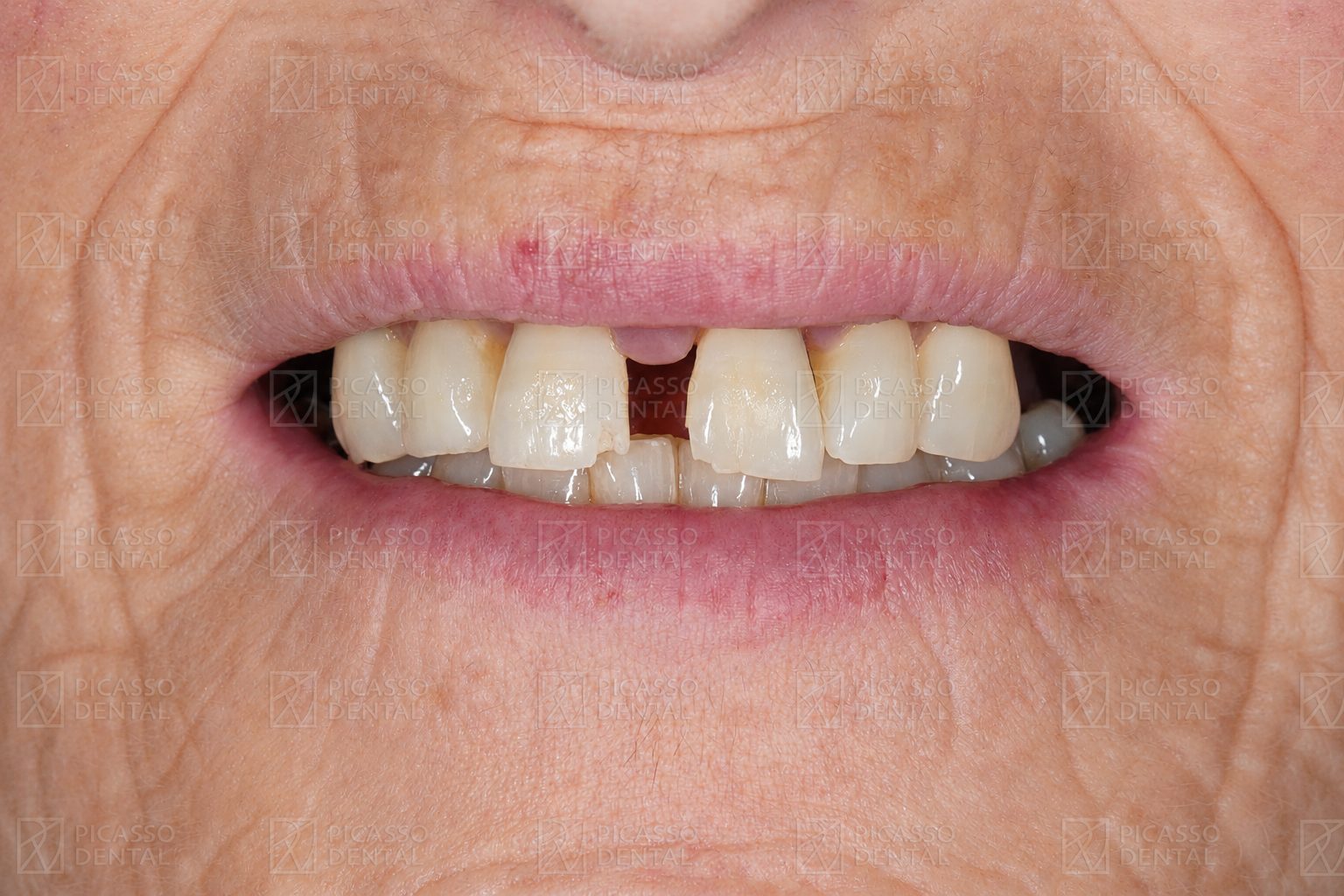 Before
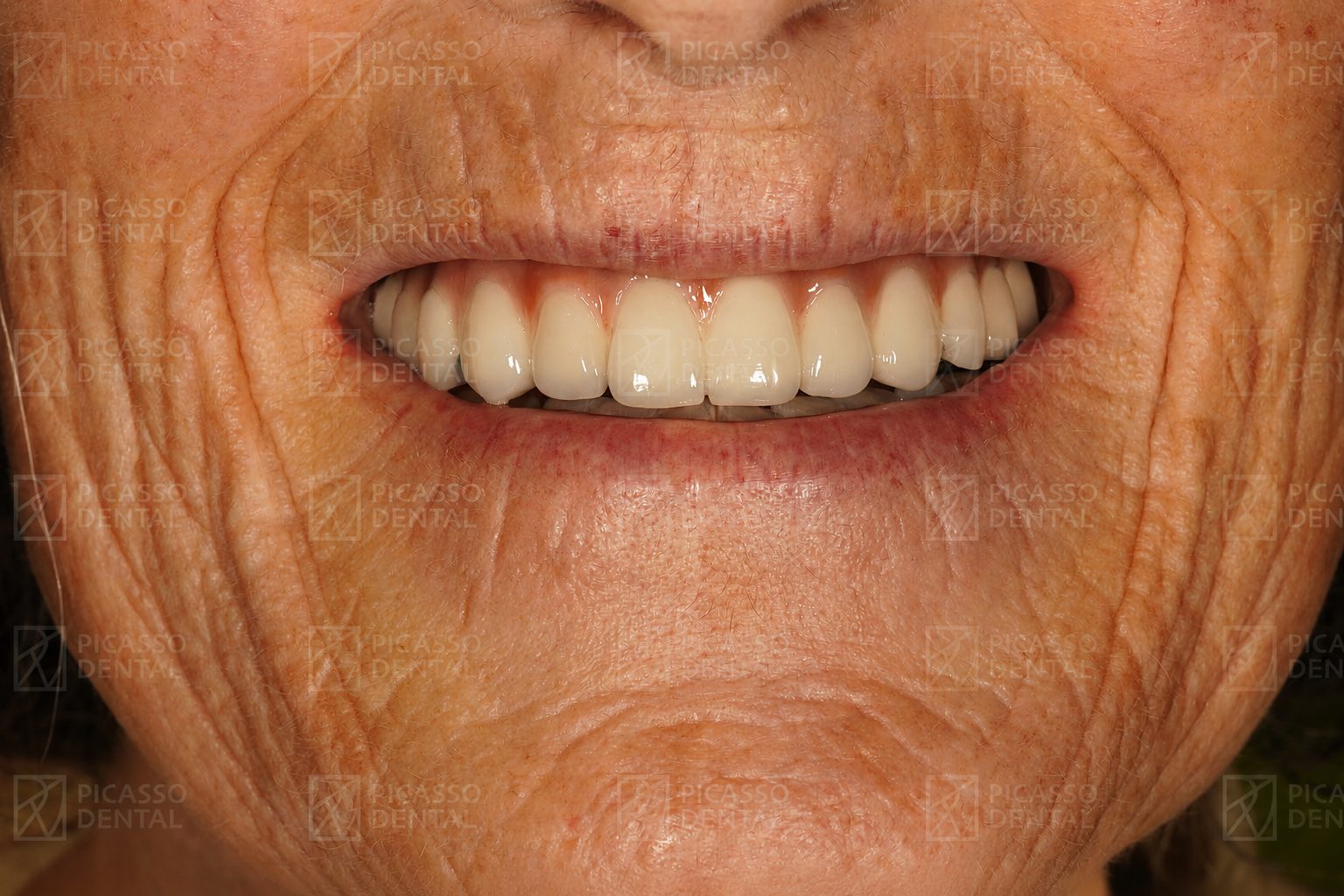 After
AfterFull smile rehabilitation, Hanoi Old Quarter
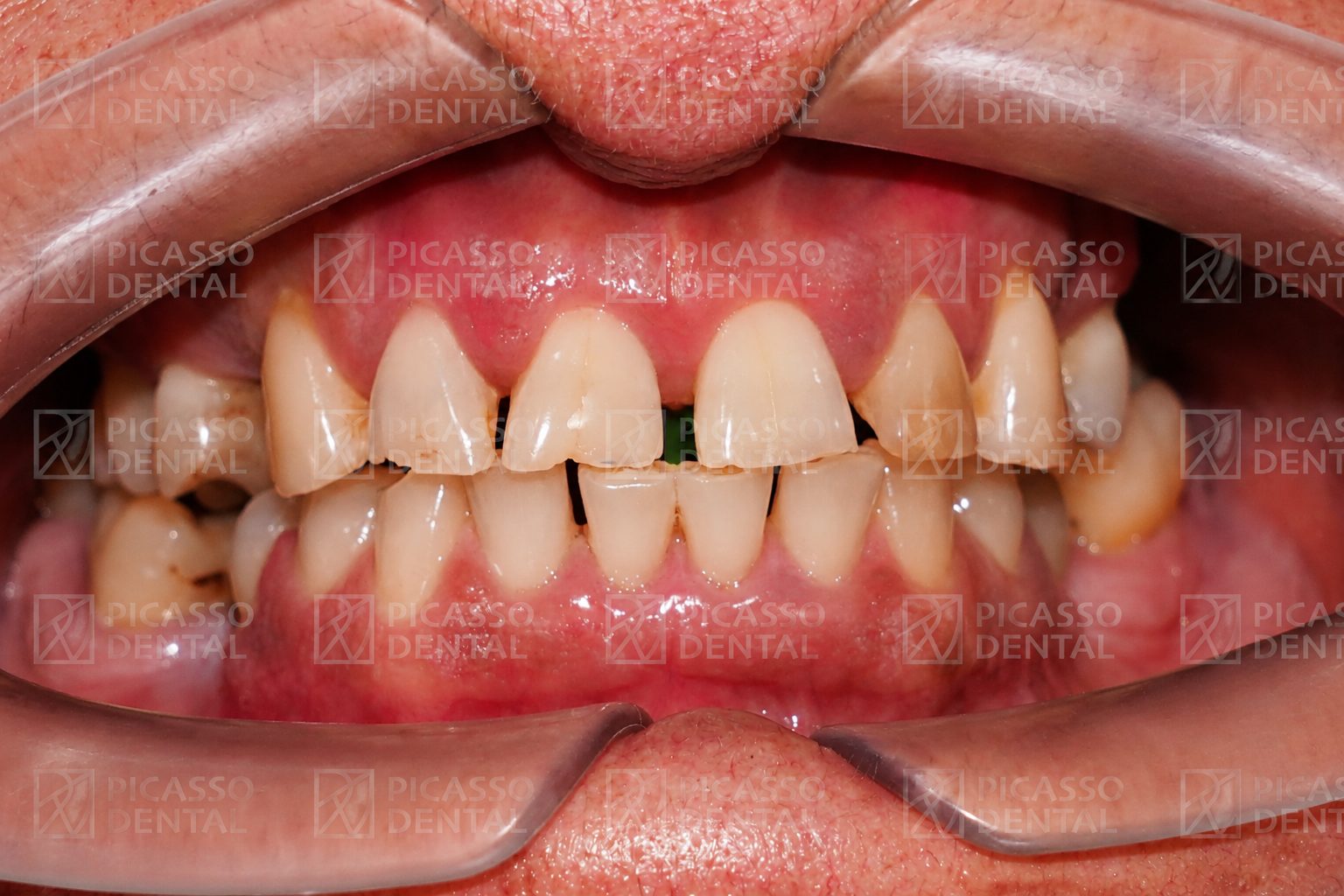 Before
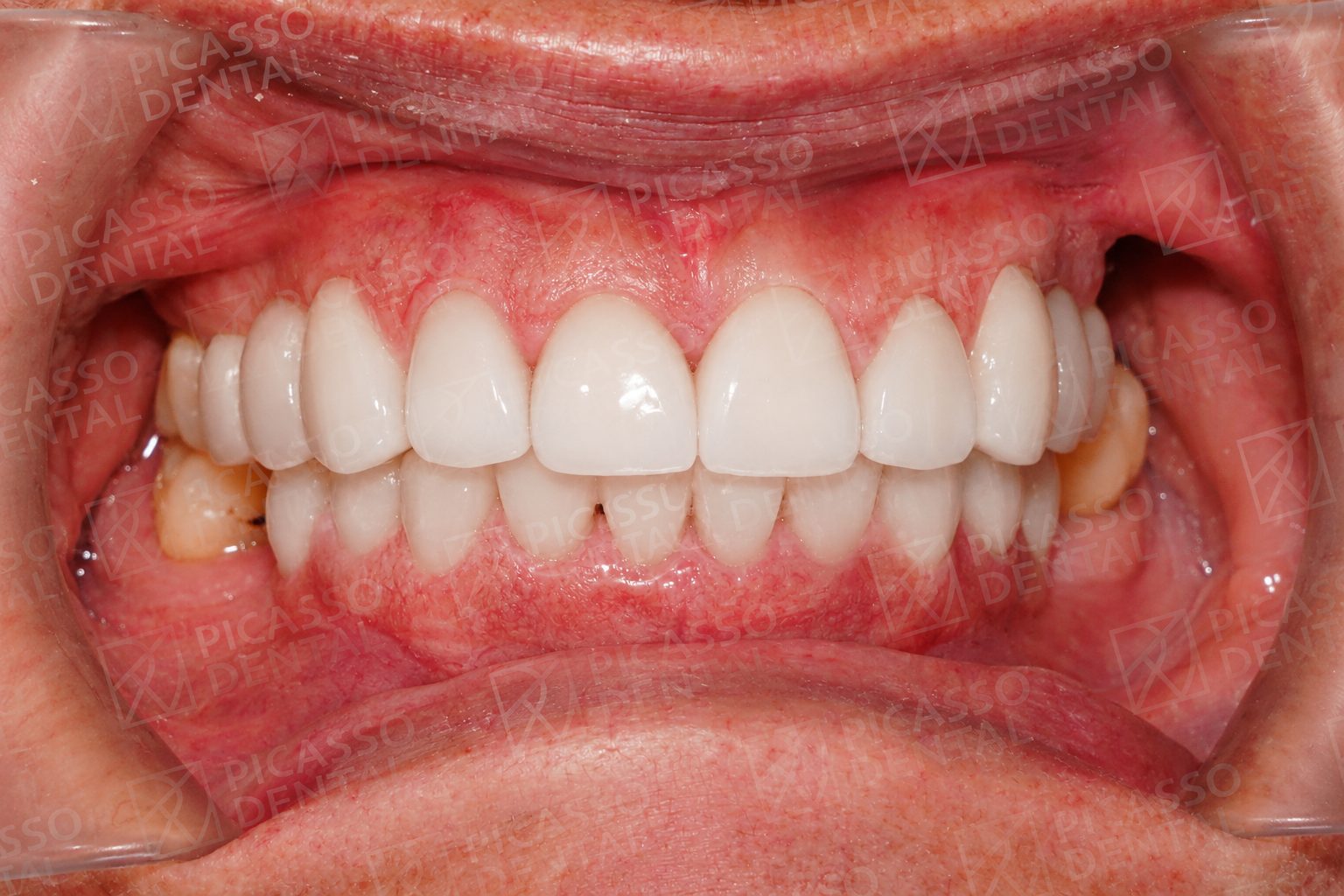 After
AfterPorcelain veneers, Da Nang
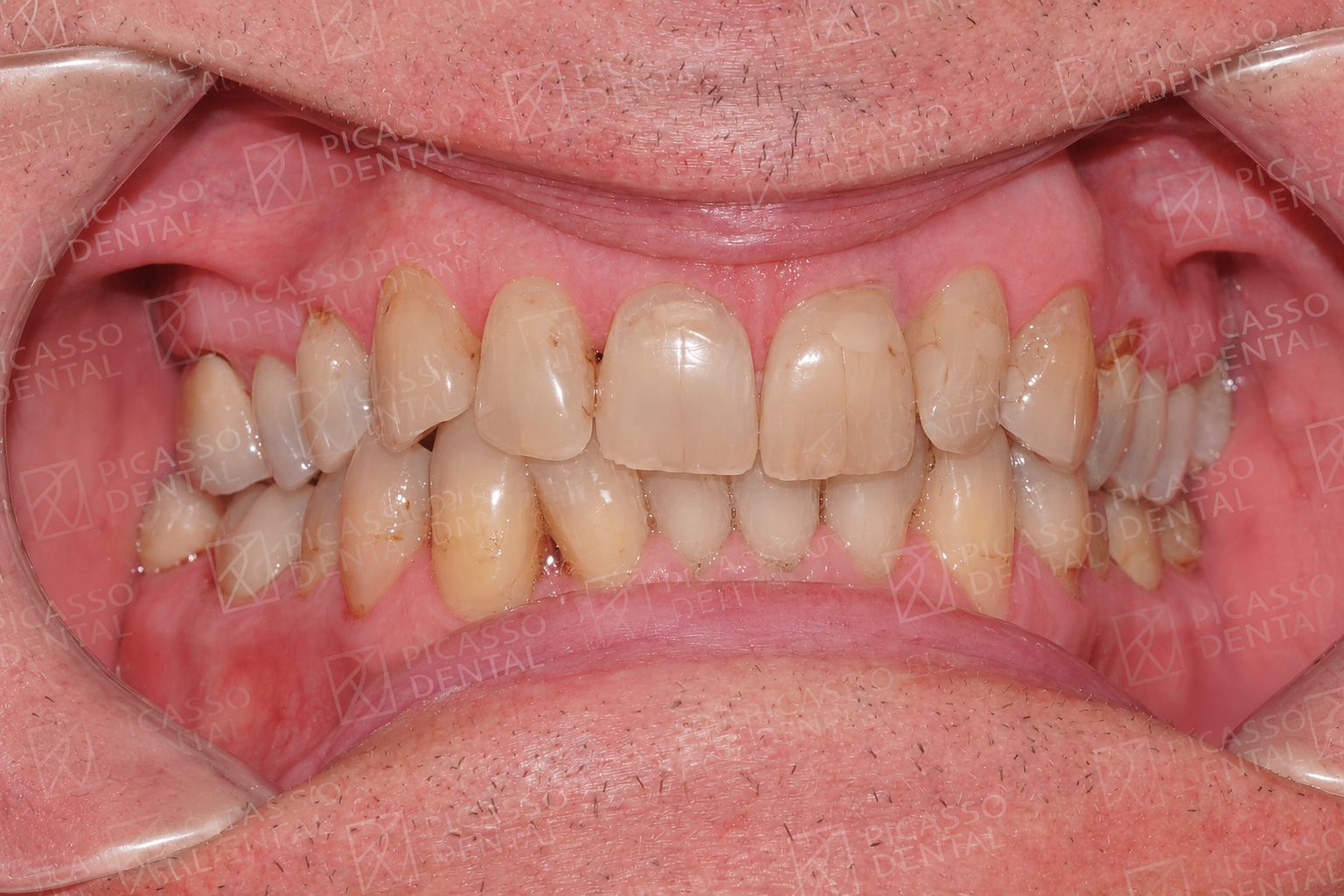 Before
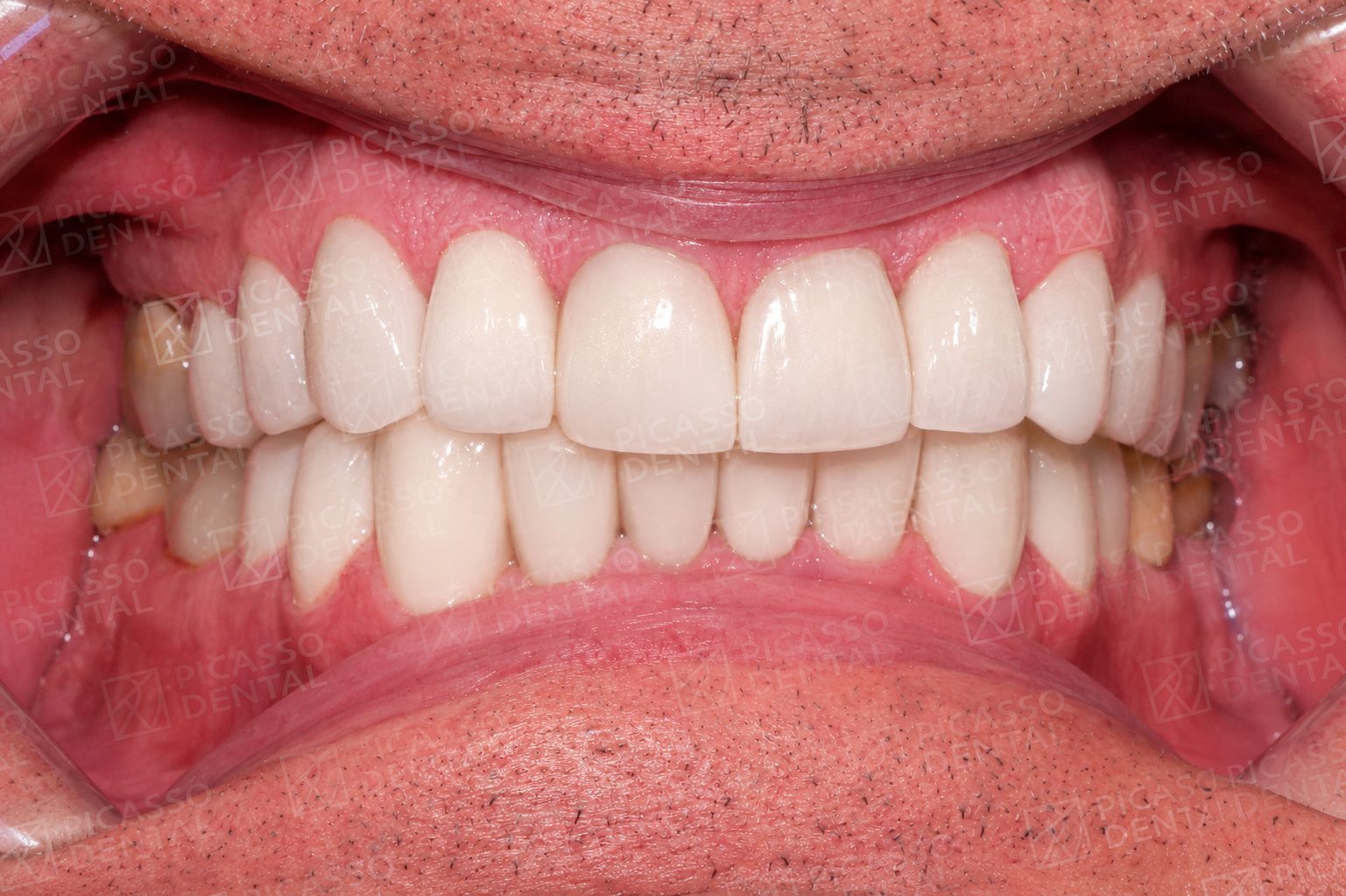 After
AfterSmile restoration, HCMC Thao Dien
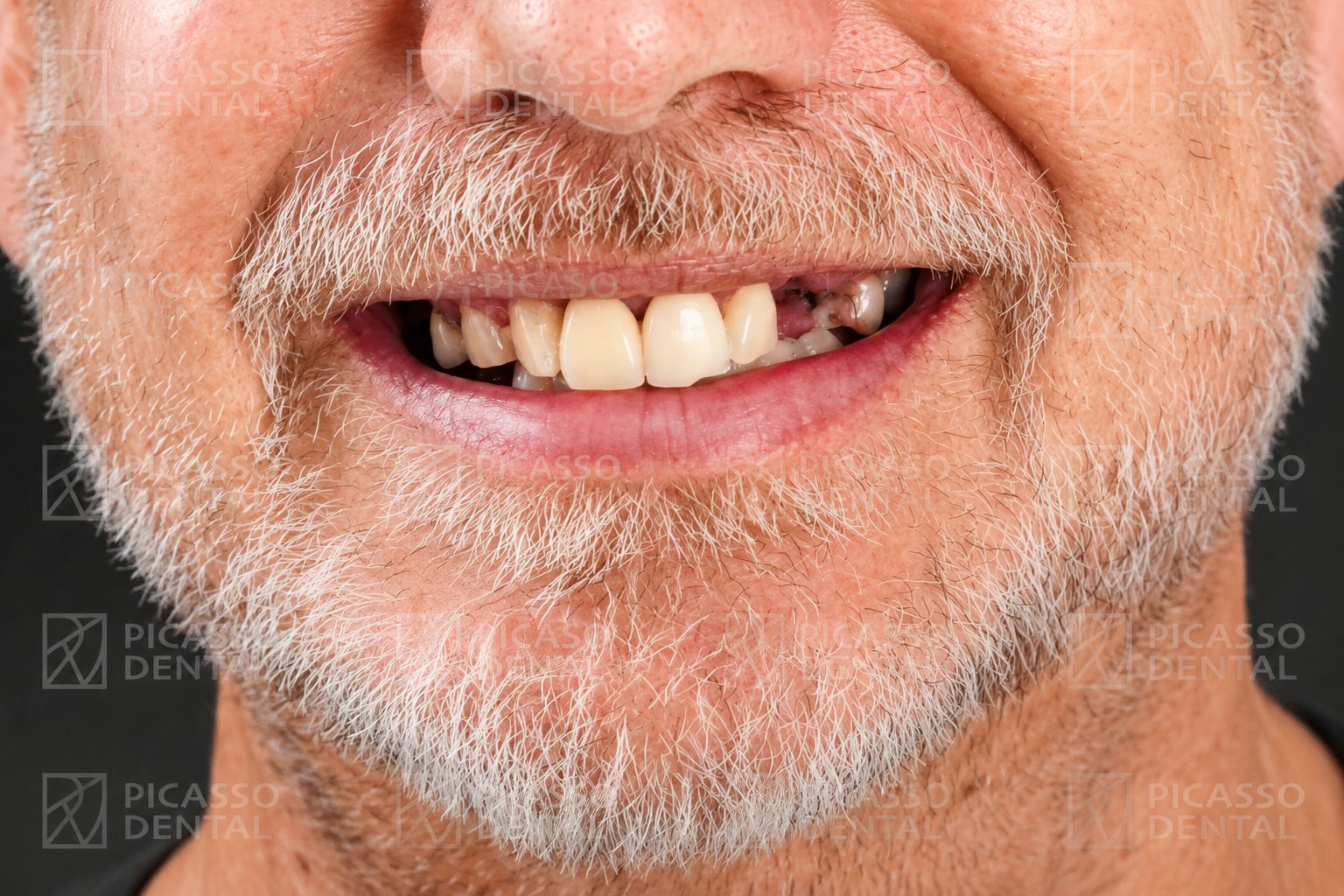 Before
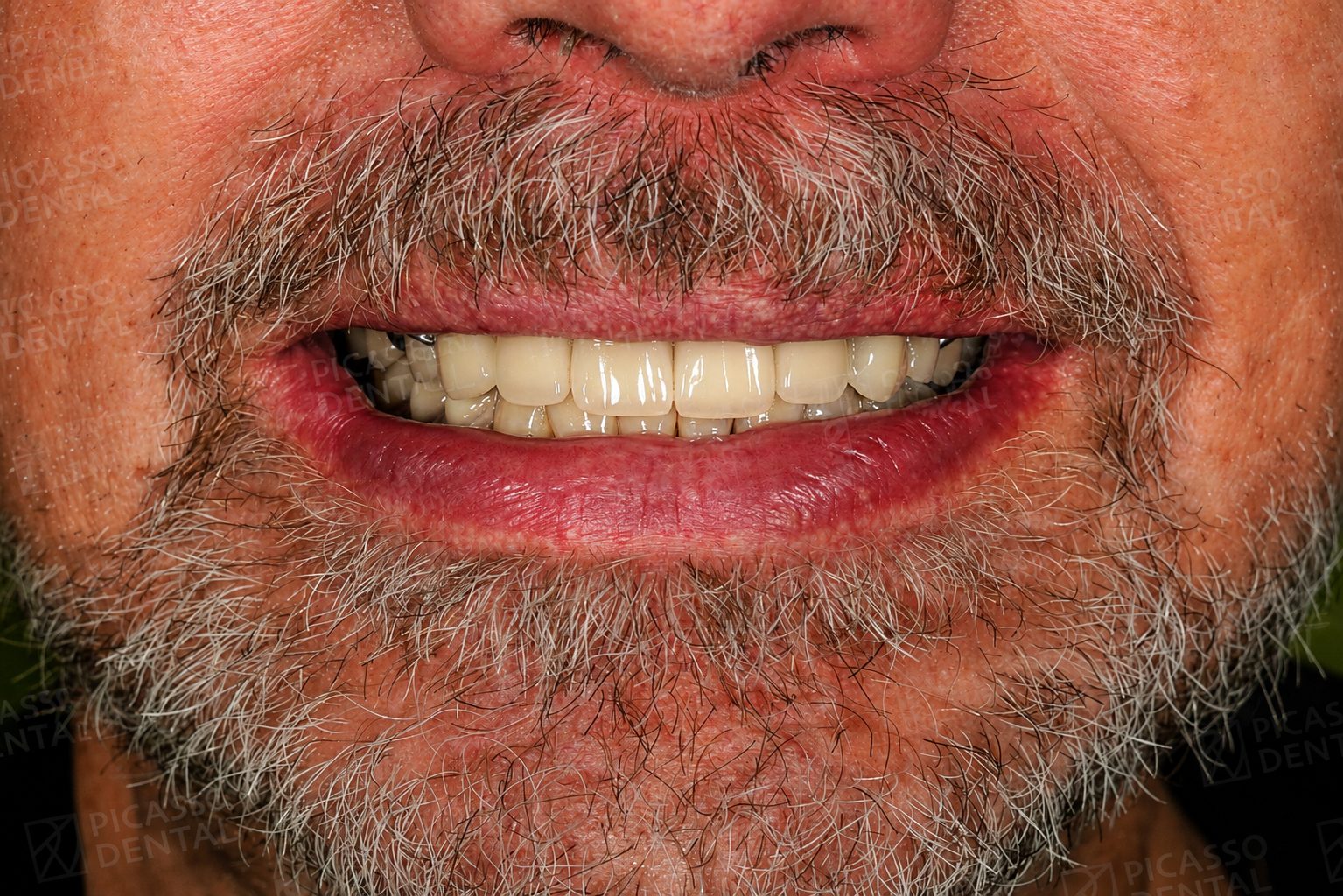 After
AfterCrown and veneer restoration, Hanoi Westlake
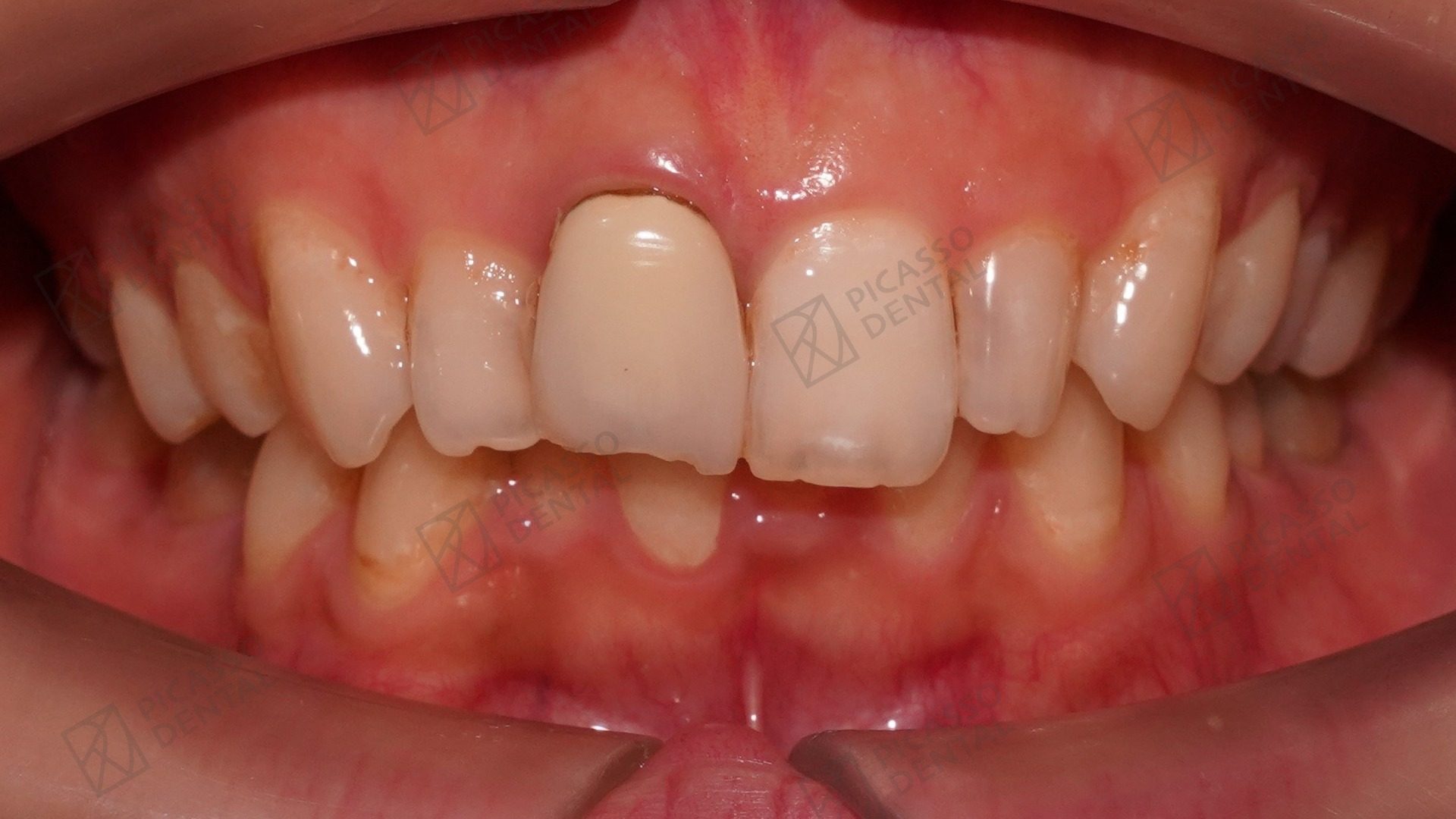 Before
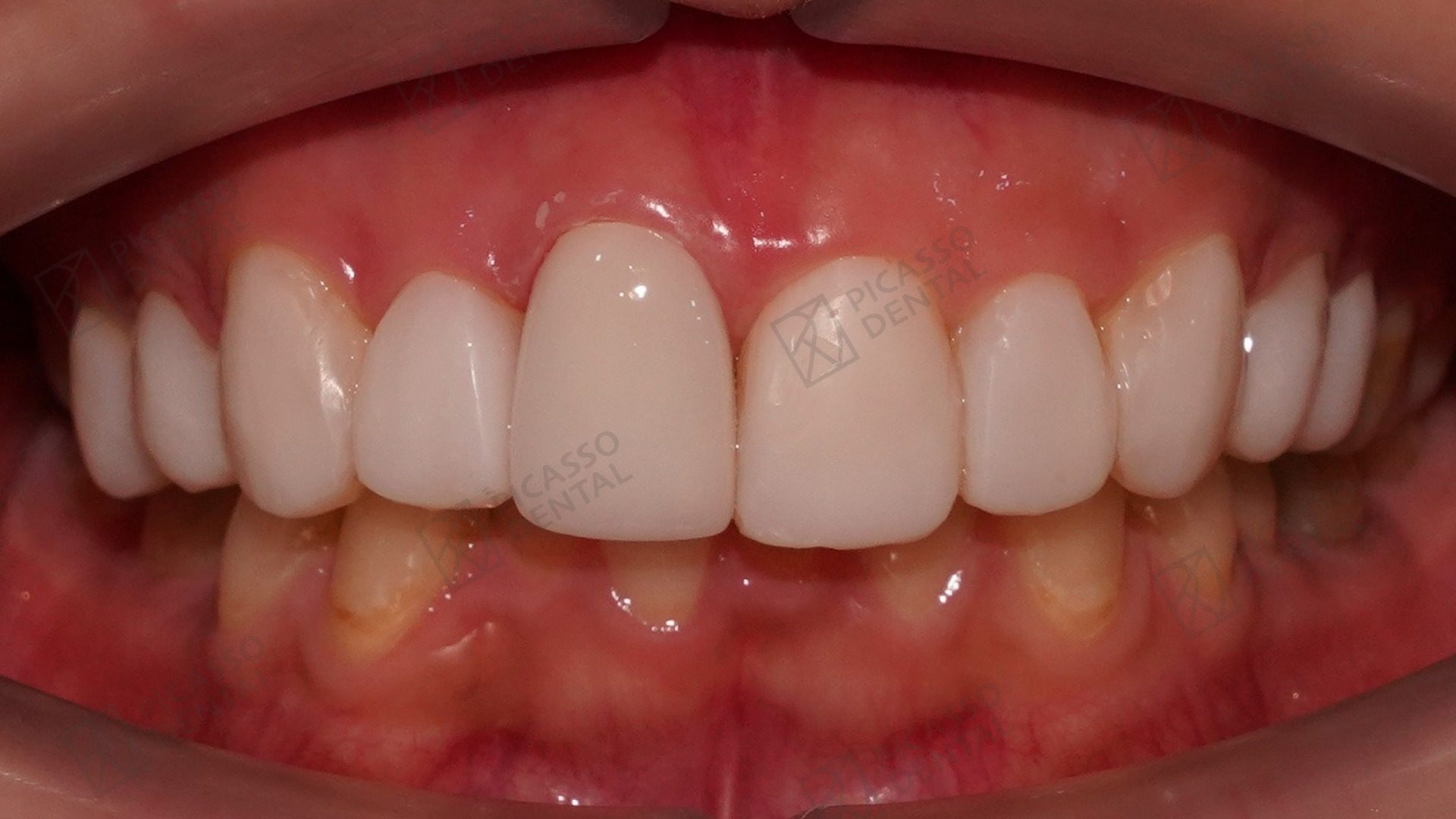 After
AfterSmile makeover, Da Nang
Frequently Asked Questions
What causes spaces or dark triangles between veneers?
Spaces and dark triangles between veneers are caused by poor contact point design, inadequate embrasure contouring, or gum recession. Poor contact points happen when the veneer lab or dentist does not create sufficient fullness where the veneers should meet. Even well-designed veneers can develop dark triangles if gum tissue recedes after placement, as the papilla no longer fills the space between adjacent teeth.
Can small gaps between veneers be fixed without replacing them?
For minor gaps, composite resin bonded to the edge of an existing veneer can close the space without full replacement. The porcelain surface is etched, composite is bonded and shaped to fill the gap, then polished. This is a compromise solution that avoids replacement cost and time but rarely achieves the same visual quality as properly designed new veneers. Larger gaps or persistent shadowing typically require veneer replacement.
Does gum grafting help fix dark triangles between veneers?
Yes, when gum recession is the primary cause. A periodontist performs a gum grafting procedure to restore lost papilla tissue between the teeth. Once the gum heals and fills the space, the dark triangles may resolve without any changes to the veneers. In some cases, the veneers also benefit from slight recontouring after the graft heals to optimise the final appearance.
How are spaces between veneers prevented in the first place?
Prevention requires proper attention at the try-in appointment before permanent bonding. The dentist evaluates contact tightness from every angle, checks that contours support gum tissue, and returns the case to the laboratory for modification if anything is wrong. Choosing an experienced cosmetic dentist who works with a skilled ceramics laboratory is the single most important factor.
What does the try-in appointment catch?
The try-in appointment is the critical quality check before permanent bonding. The dentist evaluates contact tightness with dental floss, checks the gum margin response to veneer contour, assesses whether any dark triangles or shadows are visible from multiple angles, and verifies overall smile proportions. If anything looks wrong at try-in, the veneers go back to the lab for correction before bonding.
Is it worth replacing veneers just for spaces or shadows?
It depends on the severity and functional impact. Significant spaces trap food and harbour bacteria, which is a health issue beyond aesthetics. Persistent dark triangles visible in conversation are a legitimate cosmetic concern worth addressing. Minor imperfections only visible to the patient on close inspection may not warrant the cost of full replacement. A consultation to assess the specific situation clarifies whether correction is worthwhile.
How long do replacement veneers take at Picasso Dental?
Veneer replacement typically requires two appointments: a preparation visit where existing veneers are removed, teeth are cleaned, and temporary veneers are placed; then a bonding appointment approximately one to two weeks later when the definitive porcelain veneers are fitted and permanently bonded. For international patients, treatment can be planned around travel dates.
Patient Video Testimonial

Start Here
Start with a brief.
Send us a photo of your existing veneers and we will assess whether correction, composite repair, or replacement is the right path for your situation.