Porcelain Veneers
How Many Veneers Do I Need?
Most patients need 4 to 8 upper veneers to cover the visible smile zone. The exact number depends on your smile width, the concerns you want to address, and the symmetry required for a natural result.

Key Takeaways
- Most patients need 4 to 8 upper veneers. Smile width is the primary determining factor.
- Symmetry is non-negotiable: veneers must always be done in even numbers on the upper front teeth.
- Lower veneers are less common but added when lower teeth show prominently or patients want full uniformity.
- Upper and lower veneers can be phased over two separate trips. Individual batches within the same arch cannot.
- Addressing one or two problem teeth may require fewer veneers, but adjacent teeth are included for symmetry.
- A photo consultation before travel gives a preliminary recommendation and written quote without a deposit.
The Most Common Veneer Numbers and Why
The number of veneers is not arbitrary. It is determined by which teeth are visible when you smile, how wide your smile is, and what you are trying to achieve. The most common configurations at Picasso Dental Clinic are four, six, or eight upper veneers, each corresponding to a progressively wider smile zone.
Four veneers
Four upper veneers cover the two central incisors (the two largest front teeth) and the two lateral incisors immediately adjacent to them. This is the minimum configuration for most full-smile makeovers and works when the concern is concentrated in the centre of the smile and the canines and premolars beyond them are in acceptable condition and colour. For patients with narrow smiles where only four teeth are visible, four veneers can produce a complete transformation.
Six veneers
Six upper veneers extend coverage to include the canines, the slightly pointed teeth on either side of the lateral incisors. Most natural wide smiles show six teeth prominently. This is a very common configuration for patients who smile widely and want the result to look natural across the full visible zone. Six veneers balance comprehensive coverage with a more conservative tooth count.
Eight veneers
Eight upper veneers include the first premolars in addition to all the teeth covered by a six-veneer plan. This is appropriate for patients with genuinely wide smiles where the premolars are clearly visible, for full smile makeovers where patients want consistent colour and shape across the entire smile zone, and for cases where tooth colour variation extends to the premolars and limiting treatment to six veneers would create a visible boundary between treated and untreated teeth.

How Smile Width Determines the Number
Smile width is assessed during the consultation by asking you to smile naturally and laugh. The dentist observes which teeth are visible, not just the teeth you can see in a mirror. What you see in a static mirror image is often narrower than what others see when you are animated. At Picasso Dental Clinic, photographs and sometimes short video clips are taken to capture your natural expressions. This matters because the goal of veneers is to improve how your smile looks to other people, not just in a static selfie.
There is no clinical benefit to veneering teeth that are not visible when you smile. If your canines disappear into shadow when you smile naturally, extending coverage to include them adds cost without adding visible impact. Conversely, if your premolars are clearly visible and their colour is noticeably different from the planned veneer shade, stopping at six veneers would leave an obvious colour boundary. Matching the treatment to your actual visible smile zone is the honest approach.
Symmetry Is Not Optional
The midline of the smile runs between the two central incisors. Everything on the right side of that midline should mirror the left side in terms of shape, colour, and the number of teeth treated. An odd number of veneers on the upper front teeth would create asymmetry at the midline, making the smile look unbalanced in a way that is difficult to unsee once noticed.
This is sometimes a source of difficulty when patients want to save cost by doing fewer veneers. If the honest assessment is that six veneers are needed for symmetry and adequate smile coverage, doing five does not save money effectively: it produces a result that will need correction. The dentist will always present the minimum number that produces a natural, balanced result, and explain why fewer would compromise the outcome.

Upper vs. Lower Veneers
Lower teeth show less during most smiles and conversations because they are largely obscured by the upper lip. Many patients veneer only the upper arch and are satisfied with the result. Lower veneers are added in cases where the lower teeth show prominently during speaking, where patients want complete uniformity across both arches, or where lower tooth colour is noticeably darker or more uneven than the planned upper veneer shade.
When lower veneers are done, six to eight lower veneers is typical to match the upper arch coverage. Upper veneers first, lower veneers on a second trip six to twelve months later, is a common and practical sequence for patients planning multiple trips to Vietnam. The ceramist can precisely match the shade of the second batch to the existing upper veneers.
Addressing Specific Problems vs. Complete Makeovers
Patients who want to fix one or two specific problem teeth, such as a chipped central incisor or a single discoloured tooth, often ask whether they need only those specific teeth veneered. The answer depends on how different the problem teeth are from their neighbours.
If a single front tooth is chipped and the adjacent teeth have similar colour and shape, a single veneer or even a direct composite restoration may be adequate. But if the problem tooth is noticeably darker or different in shape, matching it precisely to the adjacent teeth while leaving those teeth in their natural state is challenging. In that scenario, the adjacent teeth are included in the treatment to ensure a seamless result.
Complete smile makeovers, where the patient wants to change the overall colour, shape, and proportions of the smile comprehensively, typically require eight to ten upper veneers and sometimes eight lower veneers to address the full visible zone.
Not sure how many veneers you need? Send three photos of your smile and receive a written recommendation and itemised quote within 24 hours.
Book an assessmentPhasing Treatment Over Time
Budget considerations sometimes make patients want to phase treatment over multiple trips. Upper and lower arches can be treated separately without issue. Upper veneers first, lower veneers six to twelve months later, works well. The ceramist matches the second batch to the existing upper veneers.
What does not work well is dividing the upper arch into separate batches. Doing four veneers this year and adding two more next year creates a challenge for shade matching: ceramic batches produced at different times by different hands may look slightly different even with the same specification. Once you decide to veneer the upper front teeth, all teeth in the planned treatment zone should be done in one visit to ensure colour and shape consistency across the full result.
For full pricing details, see the veneer cost per tooth guide. For an overview of the procedure and materials, see the porcelain veneers service page.


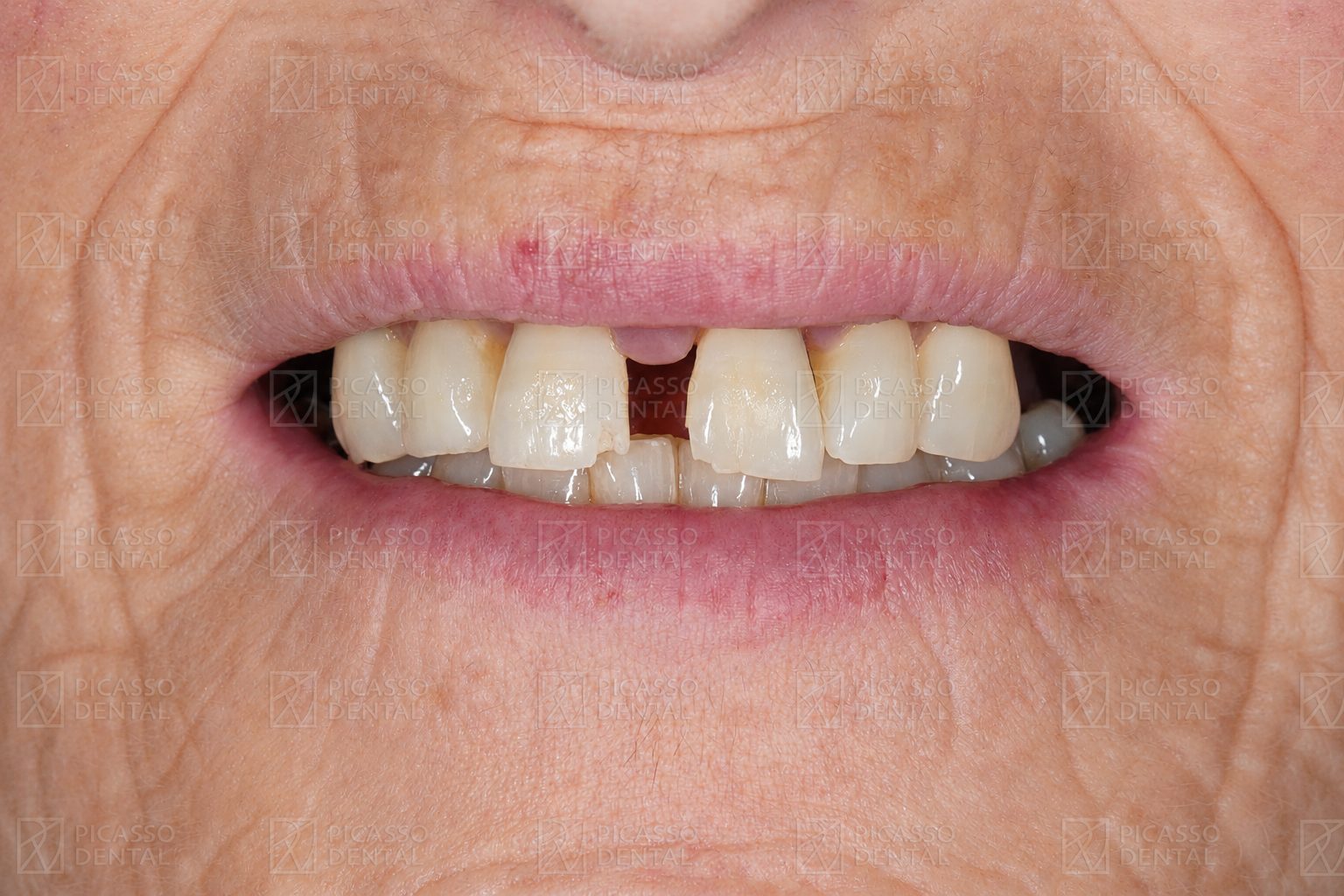 Before
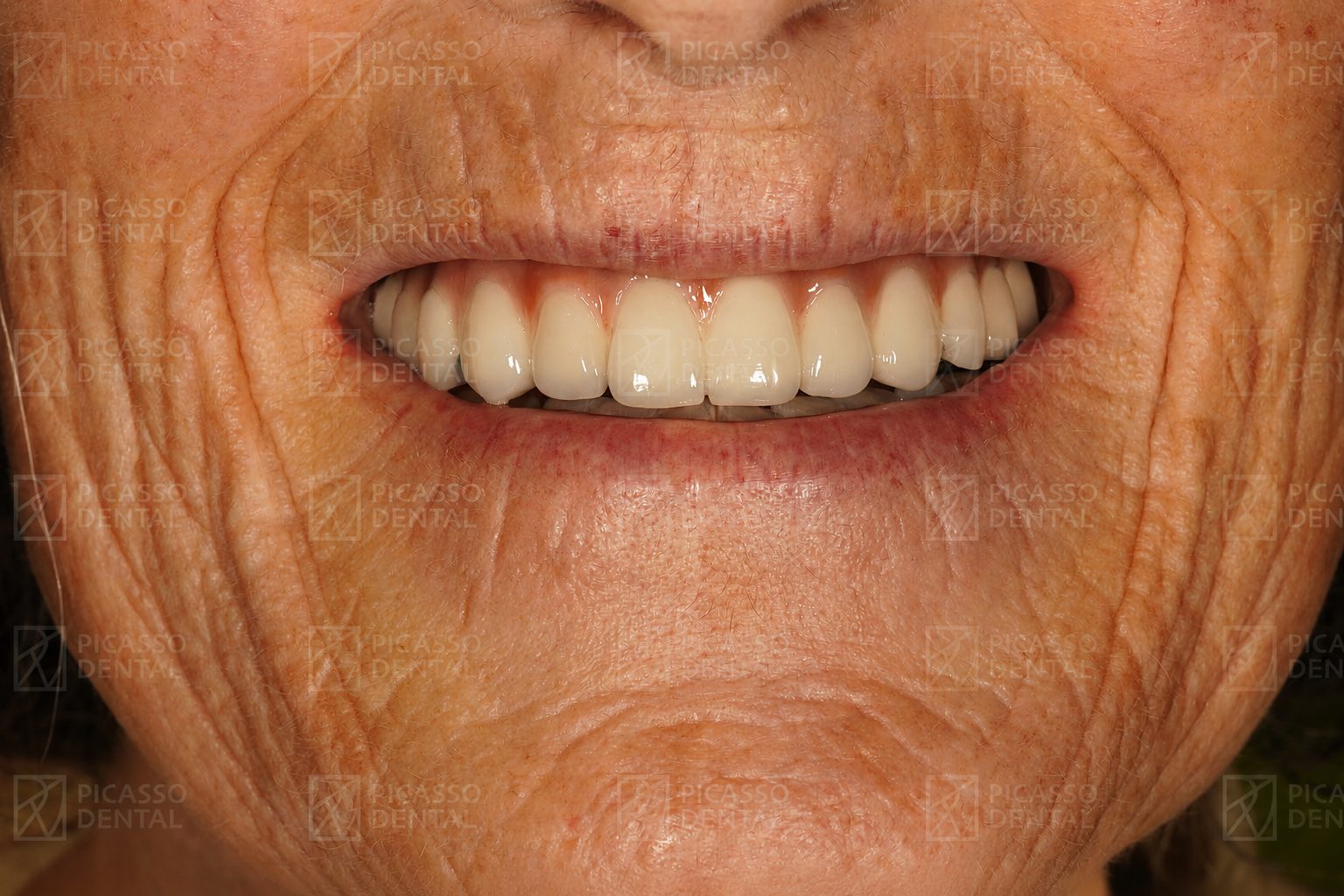 After
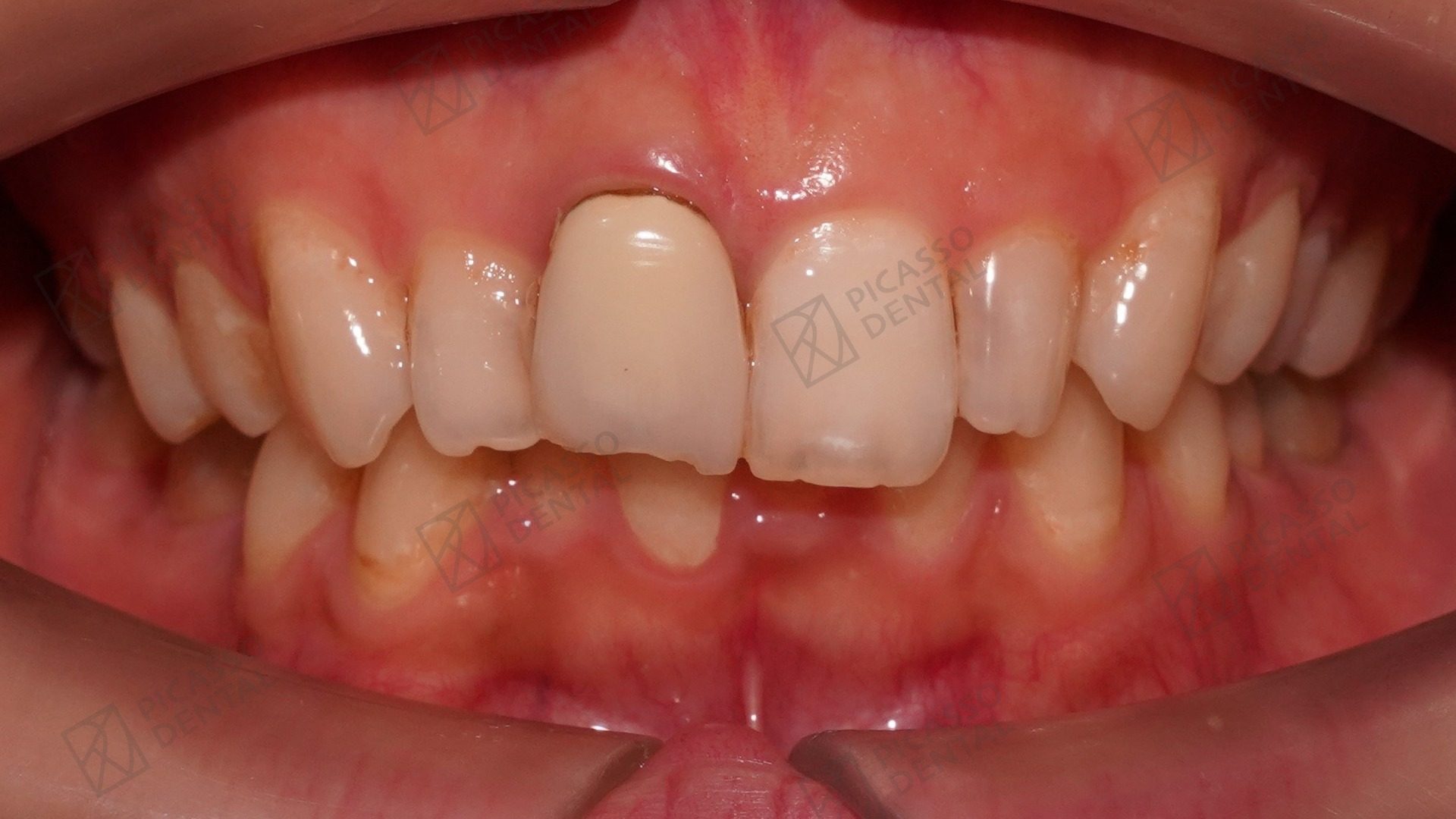
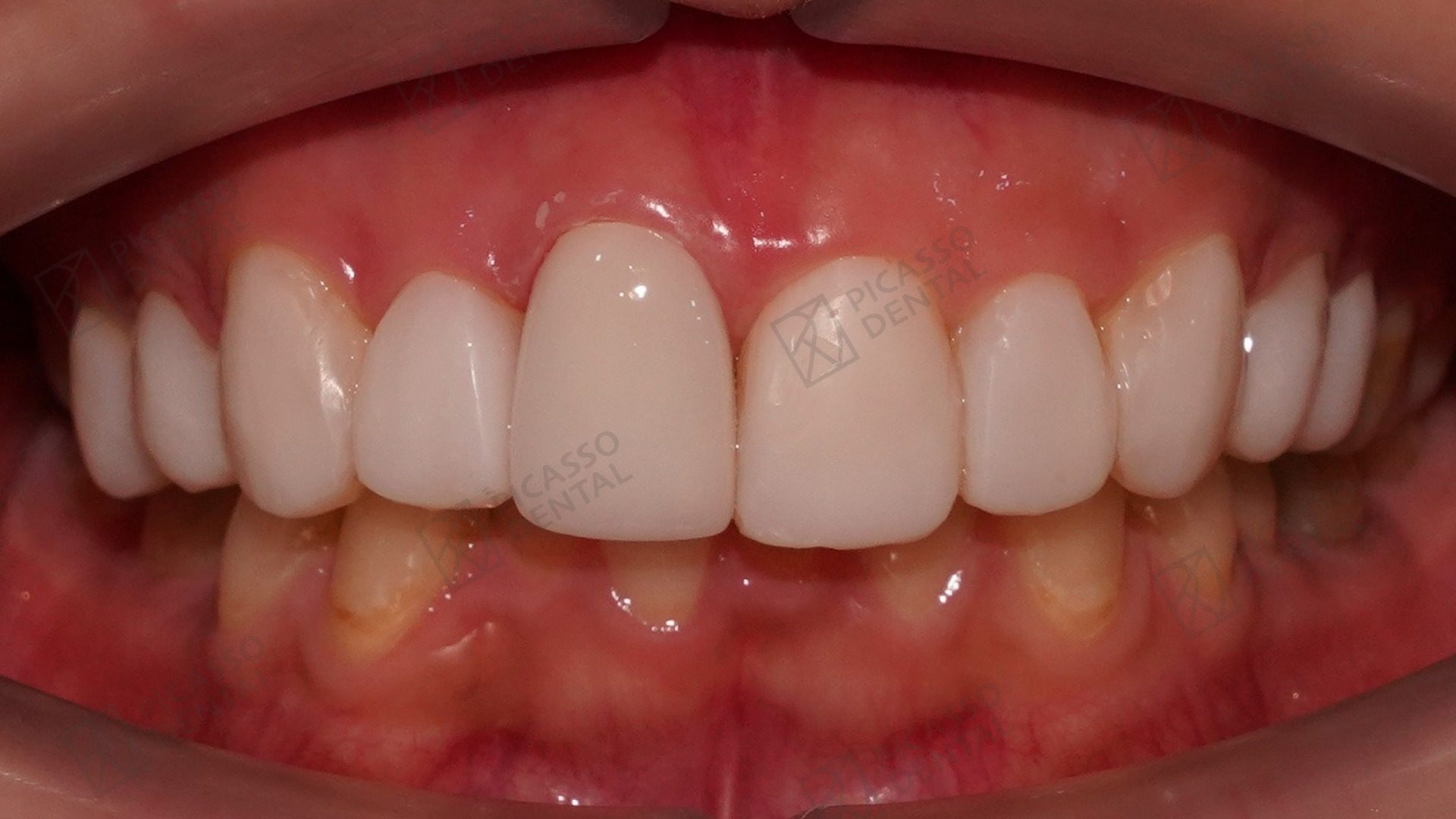
After6 upper Emax veneers covering the full smile zone for this patient
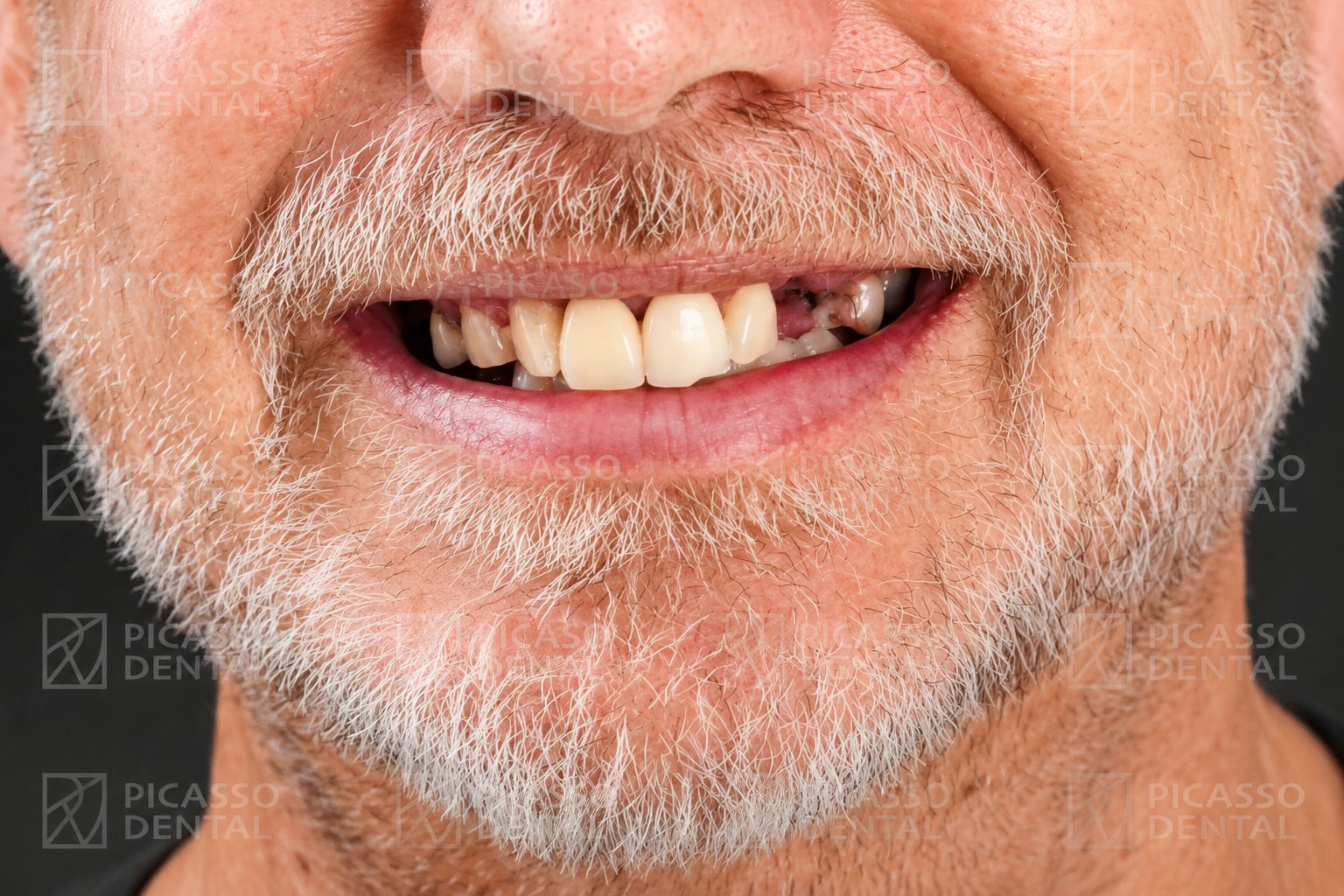 Before
 After
After8 upper veneers for a wide-smile patient with visible premolars
 Before
 After
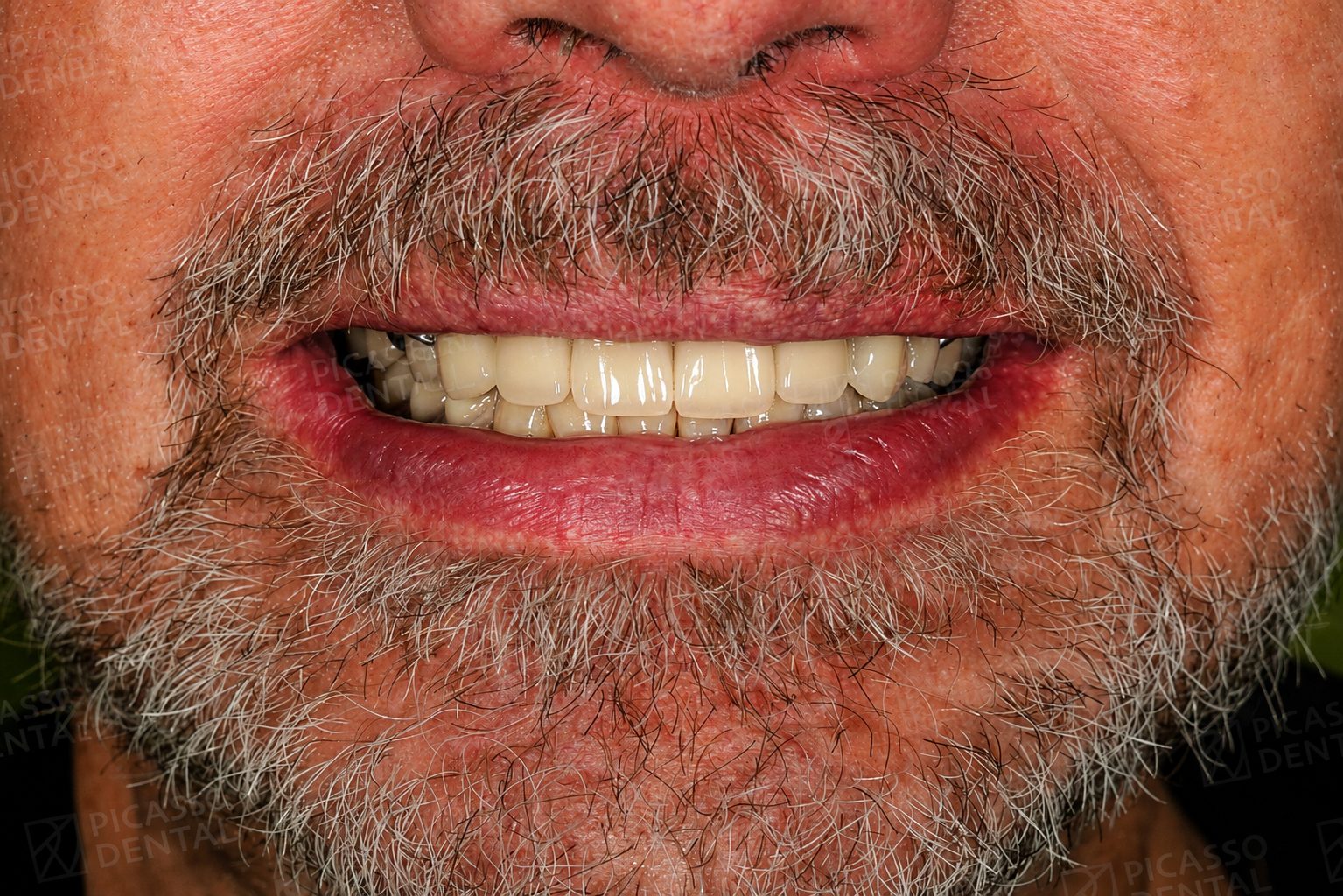
AfterFull smile makeover with upper and lower veneers at Picasso Dental Clinic
Frequently Asked Questions
How many veneers do I need?
Most patients need 4 to 8 upper veneers to cover the smile zone visible when smiling and talking. Four veneers cover the two central incisors and their immediate neighbours. Six veneers extend to the canines. Eight veneers include the first premolars. Your exact number depends on your smile width, specific concerns, and what you want to change.
Do I need the same number of veneers on top and bottom?
Not necessarily. Lower teeth show less during most smiles and conversations. Many patients veneer only the upper arch. Lower veneers are added when the lower teeth show prominently during speaking, or when patients want complete smile uniformity. When lower veneers are done, six to eight is typical to match the upper arch.
Can I get just two veneers?
Yes, if your concern is limited to two adjacent teeth and their natural neighbours have acceptable colour and shape. However, veneering just two front teeth can look unnatural if colour and shape are very different from the teeth on either side. A dentist will assess whether two veneers produce a natural result or whether adjacent teeth need to be included.
Why is an even number of veneers recommended?
The smile has a midline between the two front teeth, and symmetry on both sides of that midline is what makes a smile look natural and balanced. An odd number of veneers would create asymmetry at the midline. Even numbers (4, 6, 8, 10) allow equal coverage on each side and maintain the natural proportions of the smile.
Can I phase veneers over time to spread the cost?
Upper and lower veneers can be done in separate trips. Doing upper veneers first and adding lowers six to twelve months later works well. What does not work well is adding two veneers now and two more in a year: shade matching between ceramic batches made at different times is difficult and results are inconsistent. If you are doing upper veneers, do all of them in one treatment.
How does my smile width determine the number of veneers?
Smile width is observed during a natural smile and laugh to see which teeth are visible. Narrow smiles where only four to six teeth show need fewer veneers than wide smiles where eight to ten teeth are visible. Veneering teeth that are not visible when you smile adds cost without visible benefit. Photos and sometimes video are used during consultation to capture your natural expressions.
What is the cost difference between 4, 6, and 8 veneers?
The cost scales linearly with the number of veneers. At Picasso Dental Clinic, Emax Press veneers are $360 per tooth. Four veneers total $1,440. Six veneers total $2,160. Eight veneers total $2,880. Consultation and any preliminary treatment is quoted separately. A written itemised quote is provided before any work begins.
Is a consultation needed to determine how many veneers I need?
Yes, but a preliminary assessment can be done from photos before you travel. Send three photos (smile at rest, full smile, close-up of upper front teeth) and the cosmetic team will provide a recommendation and written quote within 24 hours. An in-person consultation confirms the assessment and allows digital smile design to visualise the planned result before any preparation begins.
Patient Video Testimonial

Start Here
Start with a brief.
Send three photos of your smile and a licensed cosmetic dentist will reply with the recommended number of veneers, material, and an itemised quote within twenty-four hours.