
Dental Crowns
Hairline Crack in a Porcelain Crown: Cosmetic, or Real Problem?
Most hairline lines on porcelain crowns are surface craze lines, not structural cracks. 30 to 40 percent of crowns develop some craze over 5 to 15 years. A true structural crack catches under a fingernail, grows over weeks, and lets bacteria reach the tooth underneath.

Key Takeaways
- 30 to 40 percent of older crowns develop surface craze lines over 5 to 15 years. These are cosmetic and need no treatment.
- A structural crack catches under a fingernail, grows over weeks, and allows bacteria to cause decay underneath the crown.
- Composite bonding repair lasts weeks to months at best. Crown replacement is the only durable fix for a structural crack.
- The replacement window is 6 to 12 months from detection. Waiting longer risks decay so advanced that root canal treatment or extraction becomes necessary.
- Picasso replacement cost: PFM 5M VND to Lava Plus 12M VND. Removal of the old crown is included in that price.
- A custom night guard (2.5 to 3.5M VND) is the single most effective way to prevent the next crown from cracking.
Craze vs Structural: The Core Difference
Not every line you see on a porcelain crown is a structural problem. The outer surface of porcelain accumulates tiny surface cracks over years of normal use, heat and cold cycling, and microscopic flexing. These are craze lines. They affect only the outermost glaze layer, do not penetrate the crown body, and do not create a pathway for bacteria to reach the underlying tooth. About 30 to 40 percent of crowns develop visible craze over a 5 to 15 year lifespan. Most patients with craze lines never need any treatment for them.
A structural crack is a different category entirely. It penetrates the full thickness of the crown body. It has a tactile feel under a fingernail. It propagates over weeks. It creates a microscopic channel between the oral environment and the natural tooth underneath. Bacteria and saliva enter that channel, and decay begins invisibly beneath the crown. By the time pain, sensitivity, or a visible problem appears, the decay has often progressed to a point where crown replacement alone is insufficient and root canal treatment becomes necessary.

Surface Craze: No Urgent Action
- Fingernail glides over the line smoothly
- Length stable over weeks and months
- No temperature sensitivity
- Does not reach the gum line
- No change in bite feel
- No food sticking at the site
Structural Crack: Book Within Days
- Fingernail catches even slightly
- Line growing week by week
- New hot or cold sensitivity
- Crack reaches the gum margin
- Bite feel has changed
- Food trapping started at this crown
The At-Home Self-Test: Six Checks in Two Minutes
These six checks will not replace a clinical exam with an explorer and X-ray, but they help you decide whether to call this week or wait for your next routine recall appointment.
- The fingernail test. Run a clean fingernail across the line slowly. A craze line feels smooth and the nail glides over it. A structural crack catches even slightly under the nail. If it catches at all, treat it as structural until a dentist confirms otherwise.
- The growth check. Take a phone photo today with the line clearly visible in good light. Take another photo in one week and another in three weeks. Compare under the same conditions. Craze lines stay the same length. Structural cracks lengthen, sometimes visibly within weeks.
- The temperature test. Drink something hot, then something cold. Notice whether that specific crowned tooth has new sensitivity that lingers for more than a few seconds. New temperature sensitivity in a previously comfortable crown suggests the crack may have reached the dentin layer of the underlying tooth.
- The gum-line check. Look at where the line ends. If it extends all the way to the gum margin, bacteria have the most direct access to the underlying tooth. Any visible line reaching the gum should be assessed within 2 to 4 weeks, even if the other checks look benign.
- The bite-feel check. Bite down normally and notice whether that crowned tooth feels different from before: higher than adjacent teeth, slightly angled, or just generally changed. A changed bite under an existing crown often means part of the crown structure has shifted or fractured.
- The food-sticking check. Does food now catch on or near that crown when it never did before? A structural crack creates a tiny step or shelf that traps food fibers. New food trapping at an existing crown is a reason for an exam, even if the crack is not yet visible.

Decision Tree: When to Come In
The table below is the same matrix Picasso clinicians use when a patient sends a crown photo for triage. Match your findings to the row and follow the action column.
| Findings on self-test | Most likely cause | Urgency | Action |
|---|---|---|---|
| Fingernail glides, no growth, no sensitivity | Surface craze line | Low | No treatment needed. Mention at next 6-monthly recall. |
| Fingernail glides, no growth, but visible at gum line | Deeper craze, possibly margin issue | Low to medium | Exam within 2 to 4 weeks for margin check. |
| Fingernail catches slightly, no growth, no symptoms | Early structural crack | Medium | Exam within 2 to 4 weeks. Replacement planning. |
| Fingernail catches, growing over weeks | Progressing structural crack | Medium to high | Exam within 1 to 2 weeks. Replacement within 3 months. |
| Crack + new hot or cold sensitivity | Crack reaching dentin | High | Same-week exam. Replacement within 1 to 2 months. |
| Crack + spontaneous toothache | Underlying decay or pulp involvement | Urgent | Same-week assessment. May need root canal treatment plus new crown. |
| Visible piece of crown chipped off | Fracture of crown body | Urgent | Same-day or next-day exam. Use the contact form at /contact/. |
| Crown feels loose or wobbly | Cement failure or root fracture | Urgent | Same-day assessment. Protect from coming off entirely. |
| Pain + swelling near crown | Infection beneath crown or PDL involvement | Emergency | Same-day. Send photo and description via contact form. May need antibiotic before exam. |
If you are uncertain which row applies, send a photo via the contact form. A licensed dentist reviews every message and tells you which row matches and what to do.
Repair vs Replace: Cost and Outcome Reality
Patients often ask whether the crack can be patched cheaply. For a surface craze line, the answer is usually no treatment at all. For a structural crack, composite bonding repair is sometimes offered as a short-term option, but it is not a durable fix. The bond between composite resin and porcelain is weaker than the original laboratory bond, and the repaired area breaks down within weeks to months under normal chewing forces.
The 6 to 12 month window. A structural crack detected today gives you a 6 to 12 month window to schedule replacement before decay begins under the crown. Once decay takes hold, the tooth may need root canal treatment before a new crown can be placed, which adds 3M to 6M VND and a separate appointment to the overall treatment cost.
| Approach | Cost | Durability | When appropriate |
|---|---|---|---|
| No treatment | 0 VND | Indefinite for craze lines | Surface craze with no growth, no symptoms, no gum-line involvement |
| Polish and glaze refresh | 300,000 to 500,000 VND | Cosmetic improvement only | Visible craze on a smile-line crown where cosmetic concern matters |
| Composite bonding repair (intraoral) | 700,000 to 1,500,000 VND | Weeks to months, not durable | Short-term stop-gap before scheduled replacement, or chip on an otherwise sound crown |
| New PFM crown (replacement) | 5,000,000 VND (~$200 USD) | 10 to 15 years | Posterior tooth, budget replacement |
| New Zirconia crown (replacement) | 7,000,000 VND (~$280 USD) | 12 to 20 years | Most posterior replacements, most common choice |
| New Emax crown (replacement) | 9,000,000 VND (~$360 USD) | 10 to 15 years | Front tooth replacement, aesthetic priority |
| New Lava or Lava Plus crown (replacement) | 11,000,000 to 12,000,000 VND | 15 to 25 years | Premium smile-line replacement |
| If decay underneath: plus filling or root canal | 400,000 to 6,000,000 VND additional | Treatment-dependent | Discovered at crown removal; quoted separately in writing before work begins |
Removal of the existing cracked crown is included in the new-crown price. If the underlying tooth needs a filling or root canal, that is quoted separately and disclosed before any work begins. For full crown pricing detail, see the crown cost guide.
Seen a line in your crown? Send a photo and a brief description via the contact form. A licensed dentist reviews every message and replies within 24 hours.
Use the contact form →"We got three crowns, two fillings and a clean each at 10% of the cost at home. Very happy with the end result. I will come back if I ever need serious dental work in the future."
Susie Robertson, Hanoi Old Quarter, Google review
What Caused the Crack (So You Can Prevent the Next One)
A cracked crown is usually a symptom of a habit or condition that, untreated, will damage the next crown too. The following five causes account for the great majority of crown fractures seen at Picasso.
1. Nighttime grinding or clenching (bruxism)
The single most common cause. Bruxism generates forces 2 to 4 times higher than daytime chewing, repeatedly, for hours, while the protective bite-feedback reflexes are suppressed during sleep. Crowns on patients without a night guard accumulate microcracks that eventually merge into a visible fracture. The fix is a custom night guard at 2.5 to 3.5M VND, which lasts 3 to 5 years and pays for itself by protecting multiple crowns and veneers simultaneously.
2. Biting hard objects
Ice, hard candy, popcorn kernels, pen caps, fingernails, using teeth to open packaging. Modern porcelain is strong but not invincible. A single hard bite at the wrong angle can split a crown that would otherwise last 15 years. The habit is worth breaking before the next restoration is placed.
3. Uneven bite distribution
Sometimes one crown sits slightly high in the bite after placement, or gradually becomes the highest point as surrounding teeth wear. Excess force concentrates on that single crown every time you bite. A simple bite-equilibration adjustment at the 6-monthly recall takes under 5 minutes and often prevents the gradual overload that ends in a fracture.
4. Age and thermal cycling
Years of hot coffee, cold water, and warm soup expand and contract the porcelain through countless tiny cycles. Over 5 to 15 years, surface craze lines develop from this mechanism. This cause is mostly responsible for the harmless cosmetic craze-line group rather than full structural cracks.
5. Trauma
A fall, a sports impact, a car-accident airbag, or an unexpected blow to the jaw can chip or crack a crown the same way it damages a natural tooth. Mouthguards protect crowns during contact sports just as they protect natural teeth.

Photo Triage: What to Send Before You Travel
Most patients who contact Picasso about a hairline crack get a same-day reply that resolves the question without an in-person visit. International patients, in particular, benefit from photo triage before booking flights. Here is how to take a useful triage photo and what information to include.
Step 1: Set up the photo (2 minutes)
Stand near a window or under bright kitchen light. Use a smartphone with the flash on. Hold the phone 3 to 6 inches from your face and photograph your reflection in a bathroom mirror. Capture the affected tooth from above (occlusal view) and from the side (buccal view). Two or three photos are better than one.
Step 2: Note the key details
Write a short message covering: when you first noticed the line, whether it has grown, whether there is any temperature sensitivity, whether food sticks near the crown, whether the bite feel has changed, when the original crown was placed and where, and the material if you know it.
Step 3: Send via the contact form
Upload the 2 to 3 photos and your notes using the contact form at /contact/. A licensed dentist reviews every message and replies within hours during business hours, or next morning at the latest. The reply tells you which row of the decision tree above you match and what to do next.
If you are an international patient who had the crown placed at Picasso, we have your original treatment records, X-rays, and material details on file. Triage in those cases is faster because we can compare against the original crown specification. If the crown was placed elsewhere, send any records you have alongside the photos.

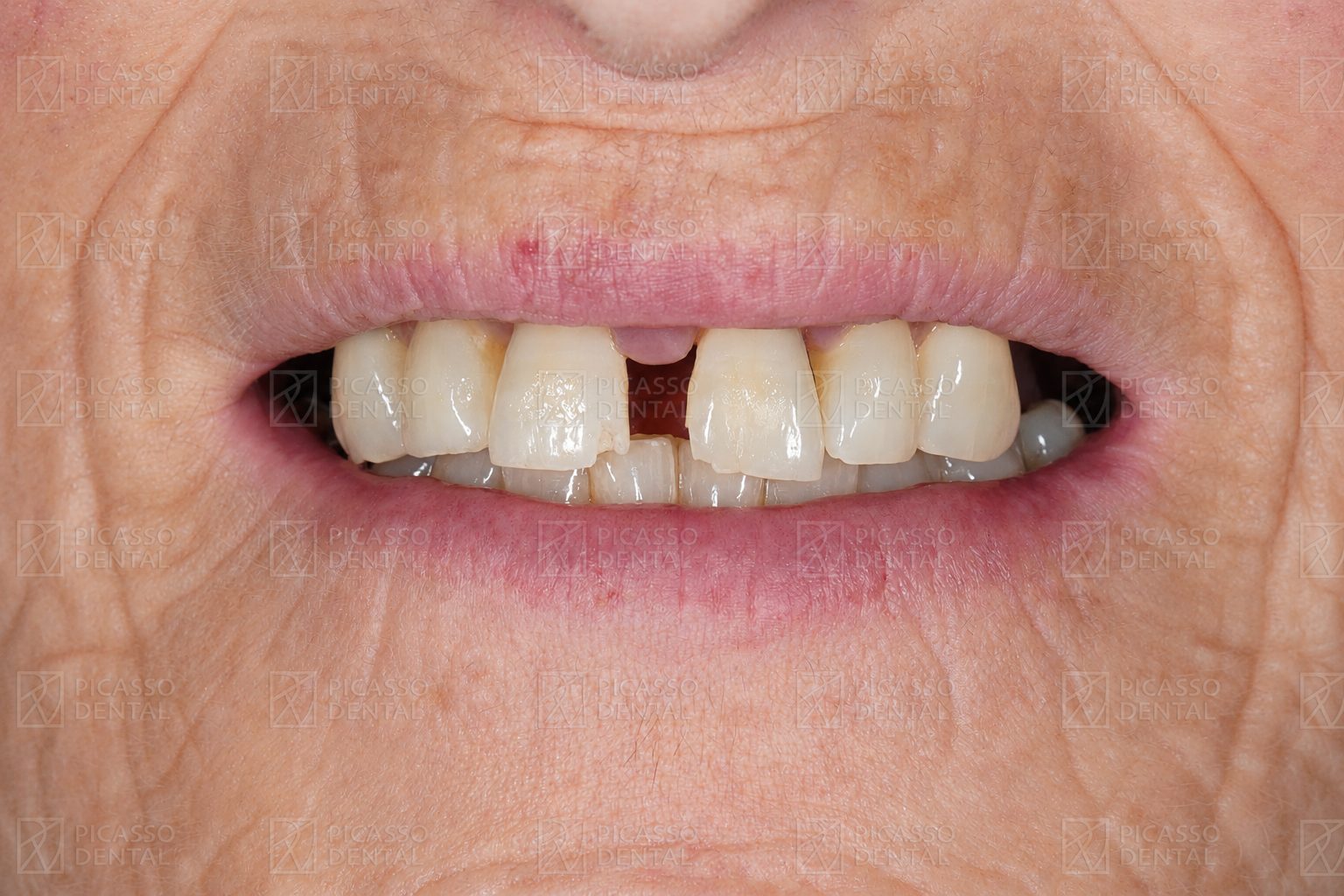 Before
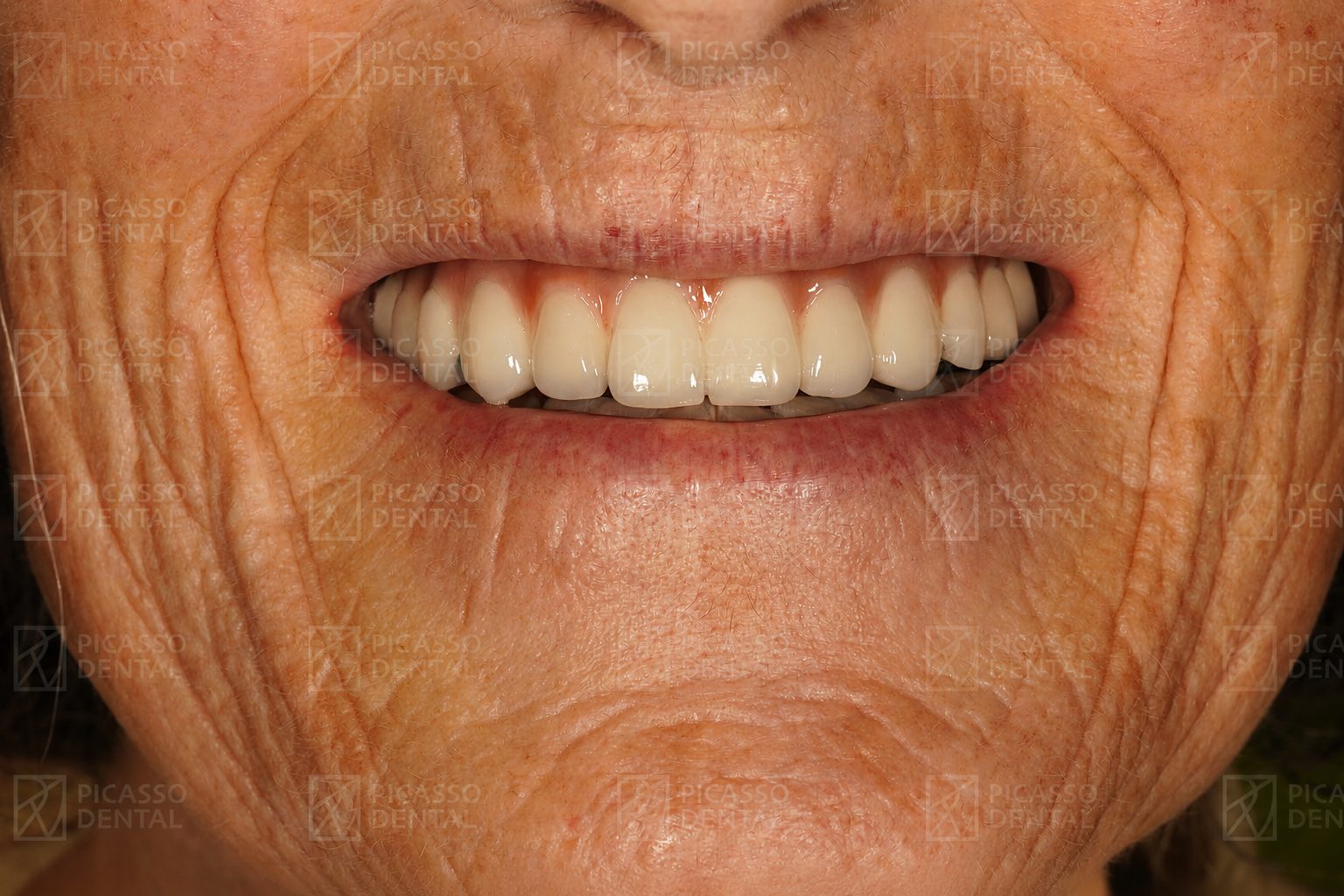 After
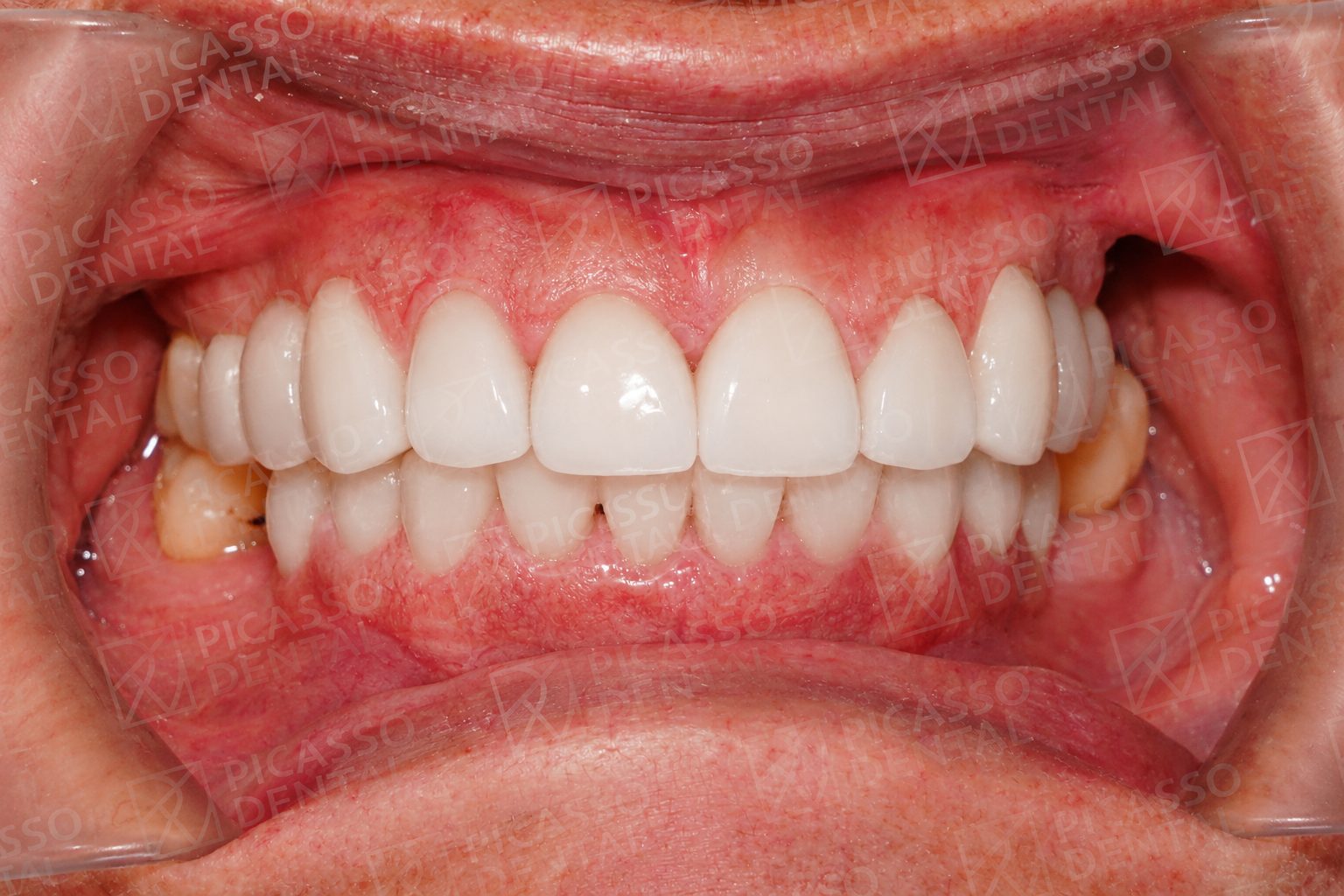
AfterCase 38420. Cracked PFM crown replaced with Zirconia. Posterior molar, Hanoi Old Quarter.
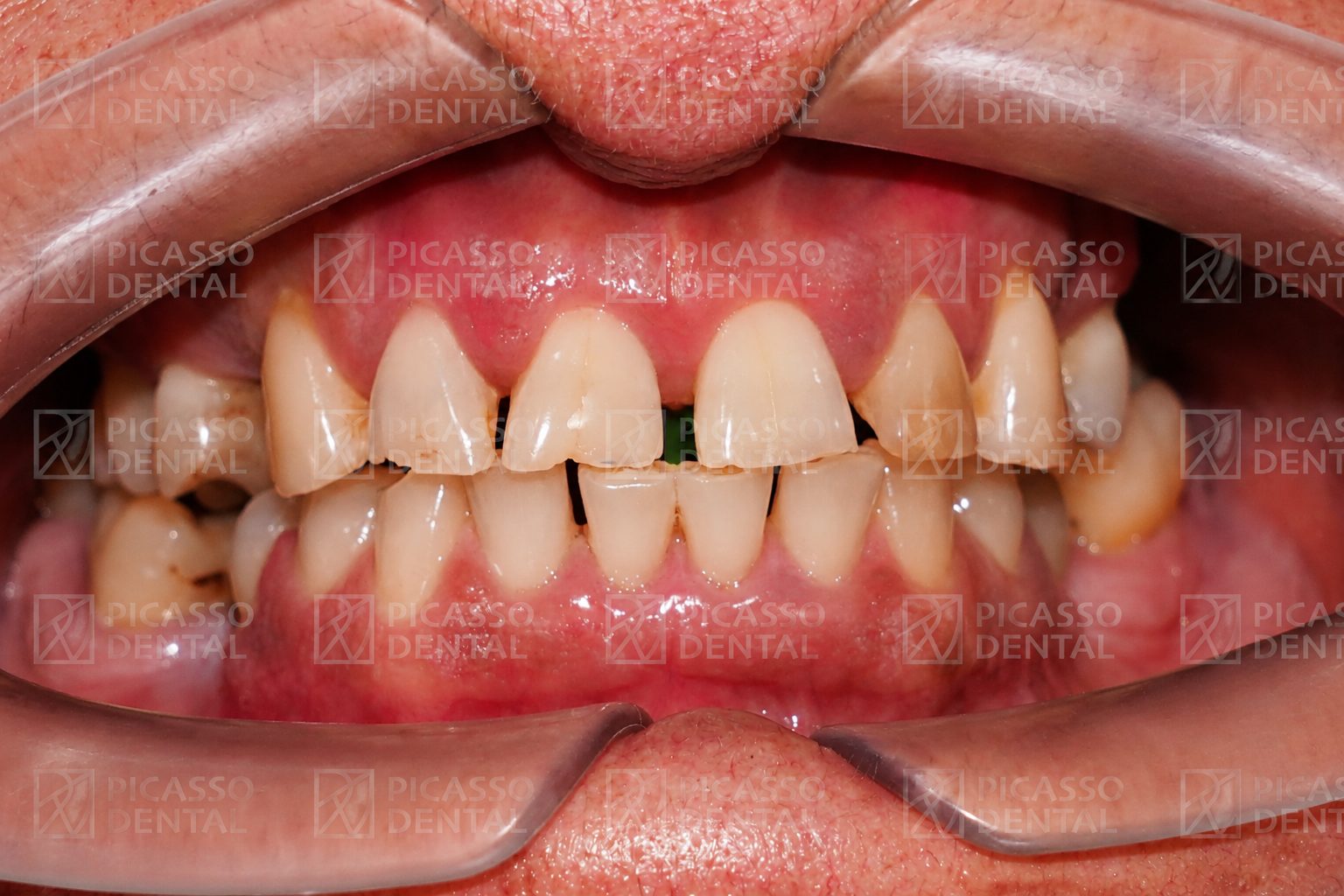 Before
 After
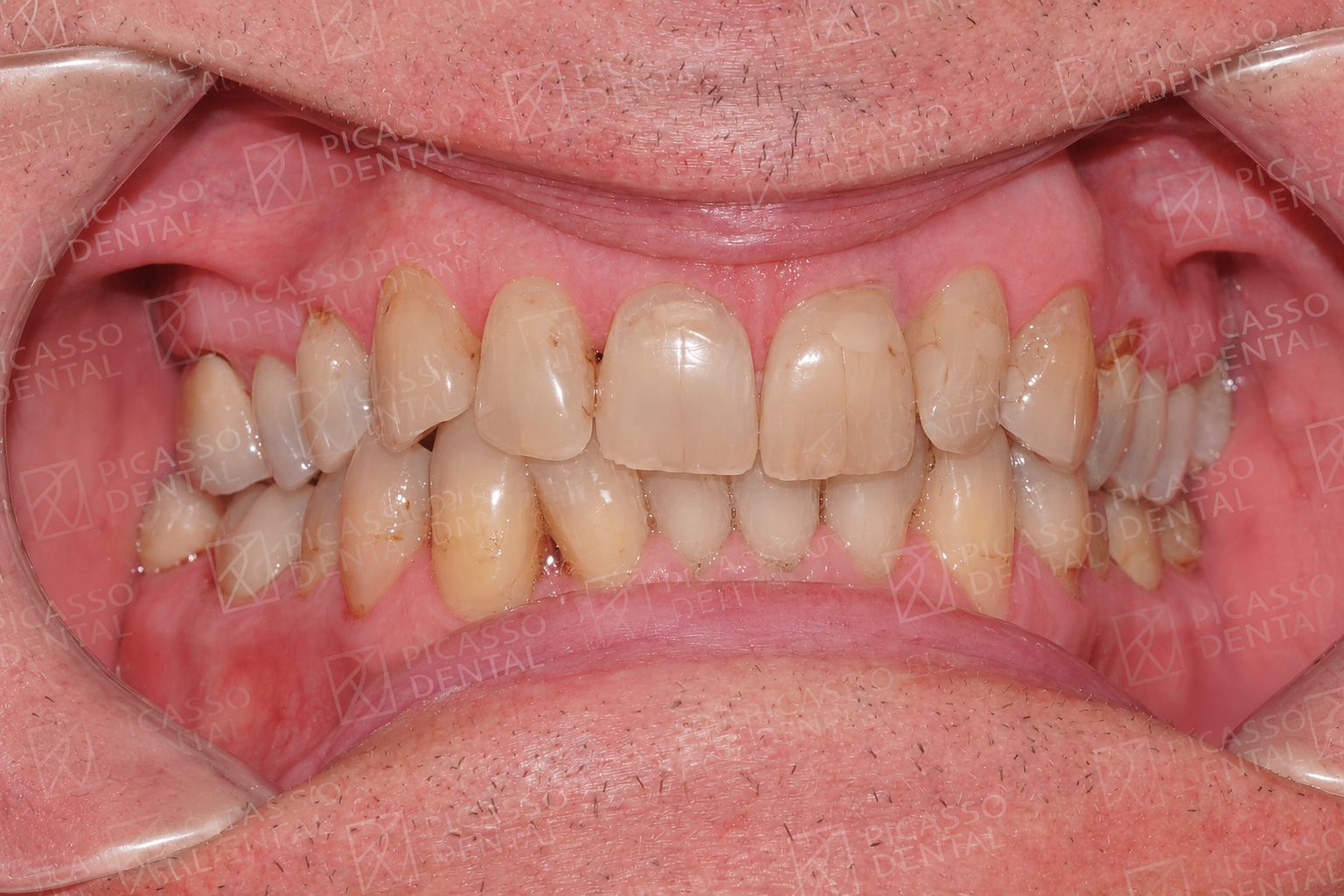
AfterCase 40179. Cracked PFM crown replaced with full-contour Zirconia. Posterior molar, Hanoi Old Quarter.
 Before
 After
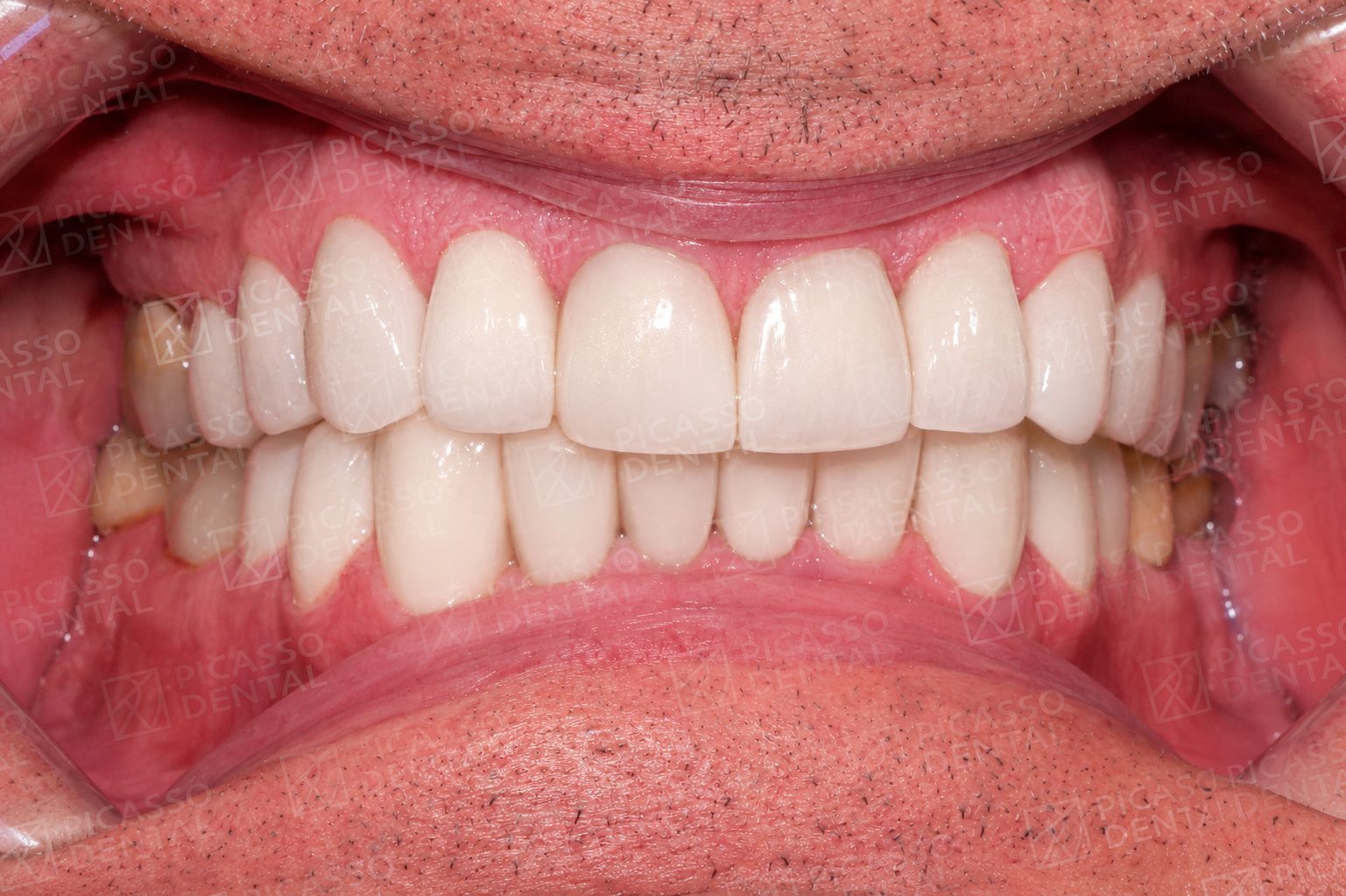
AfterCase 41400. Structural crack on anterior crown replaced with Emax. Front tooth, Da Nang.
 Before
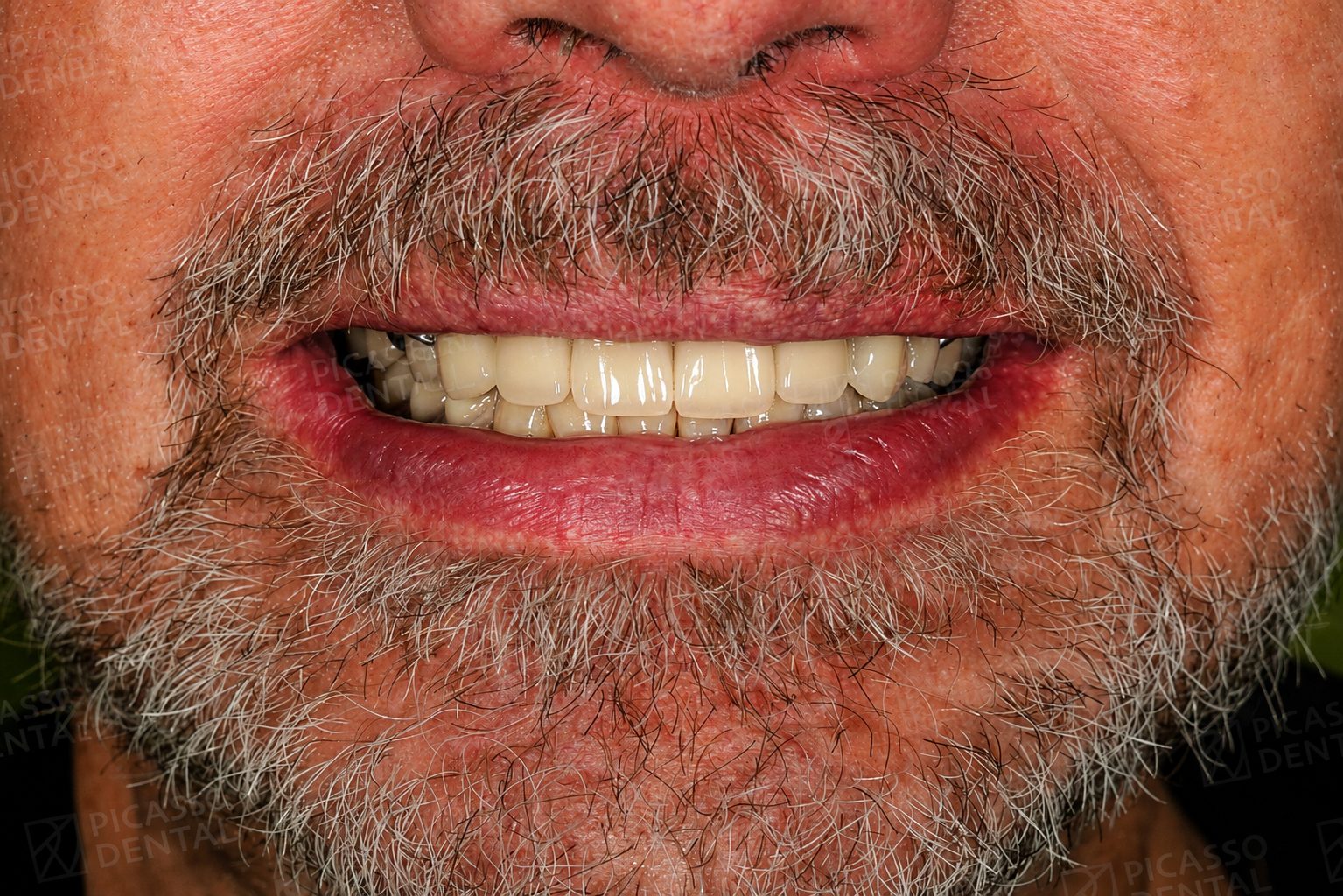 After
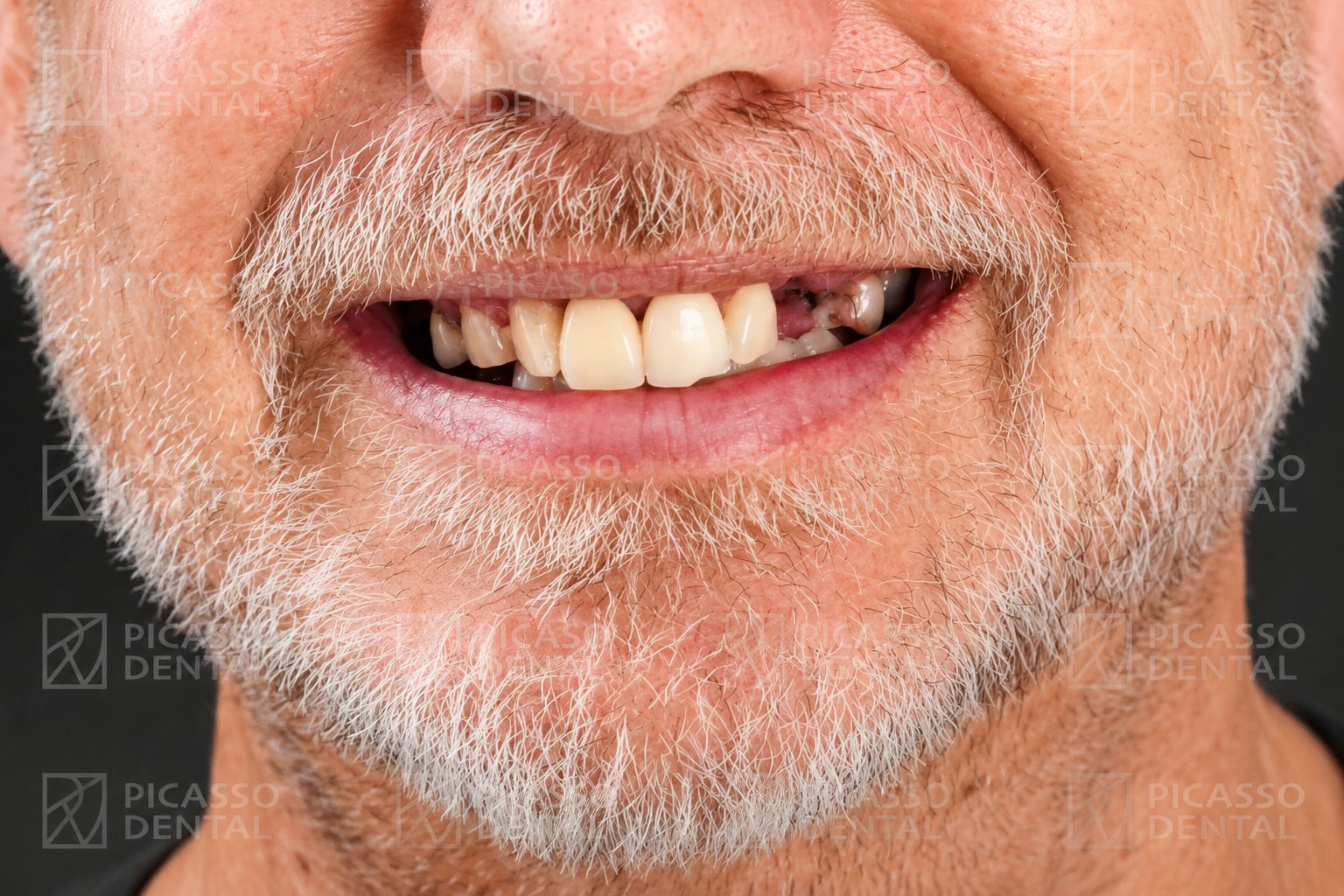
AfterCase 42840. Aged PFM with craze lines replaced with Lava Plus. Smile-line premolar, HCMC Thao Dien.
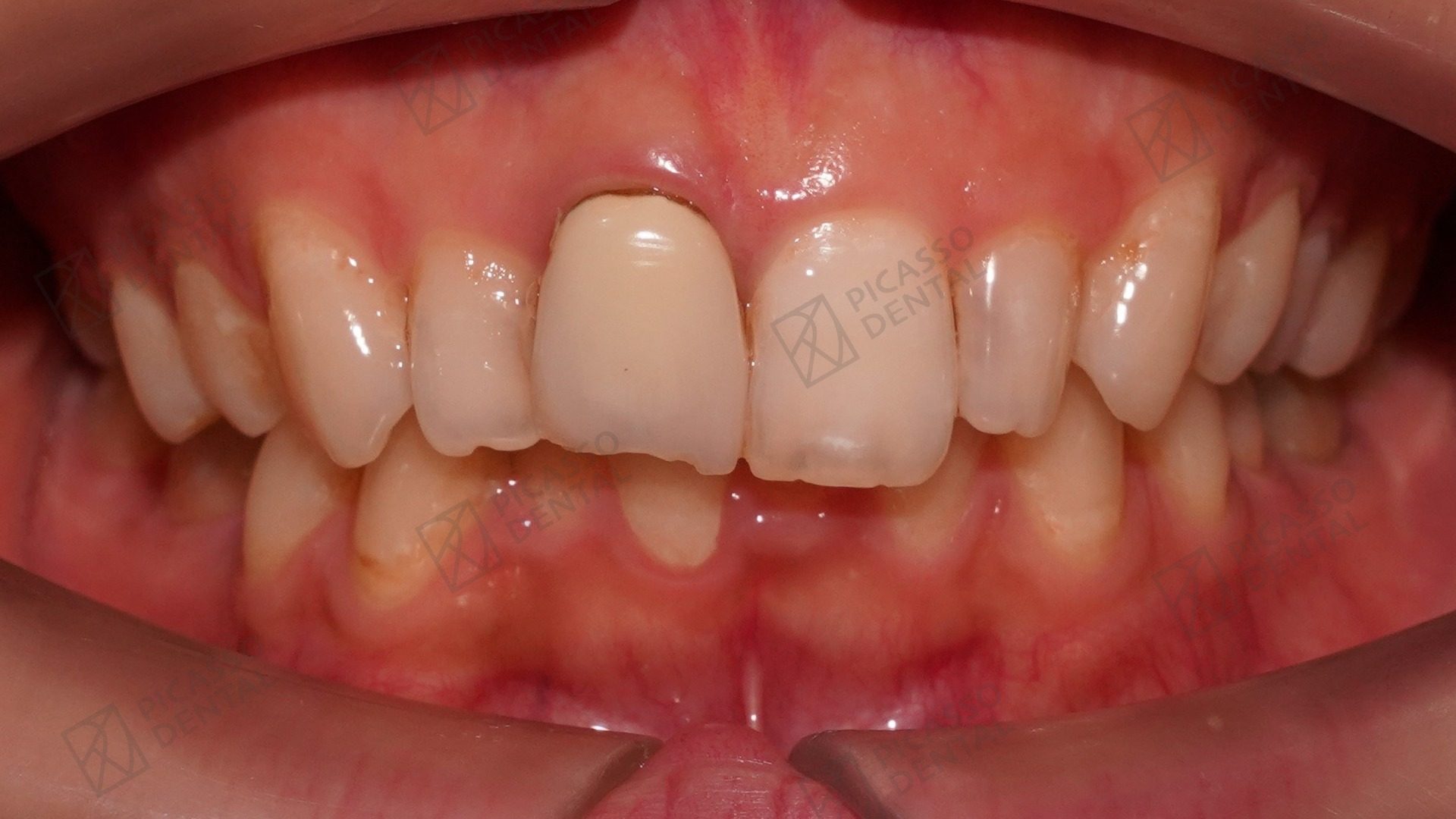 Before
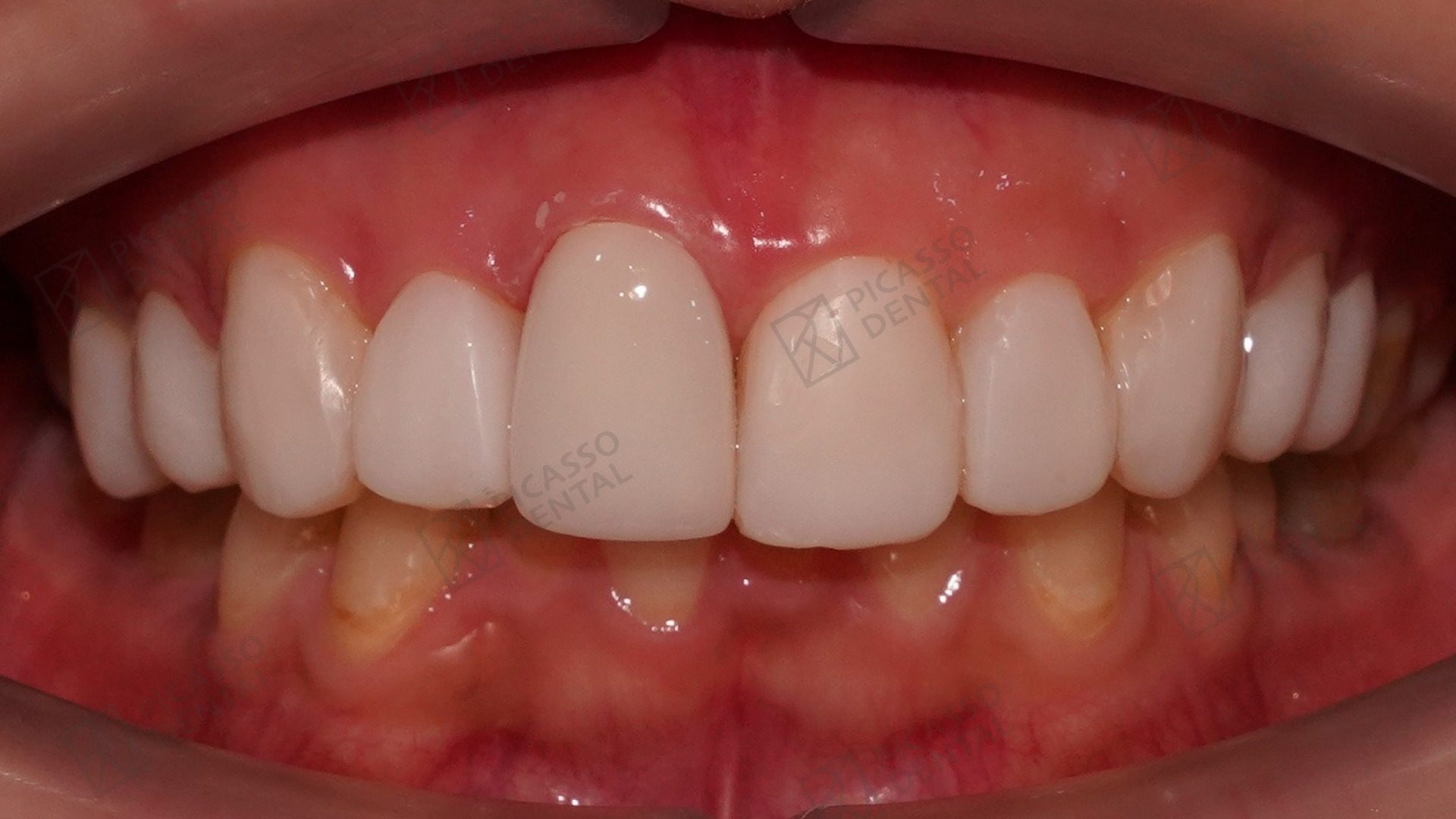 After
AfterCase 46229. Cracked Emax crown replaced with Lava Plus. Upper premolar, Da Lat.
Frequently Asked Questions
What is a hairline crack in a porcelain crown?
A hairline crack is a thin line visible on the surface of a porcelain crown. Most hairline cracks are surface craze lines that affect only the outer glaze layer and are not structural. About 30 to 40 percent of porcelain crowns develop some craze lines over 5 to 15 years. A smaller proportion are full-thickness structural cracks that penetrate the crown and require replacement.
How can I tell if a crown crack is cosmetic or structural?
Run a fingernail across the line. A craze line feels smooth and the nail glides over it. A structural crack catches slightly under the nail. Structural cracks also tend to grow longer over weeks, reach the gum line, cause temperature sensitivity, or change the bite feel. Craze lines stay stable, do not reach the gum, and cause no symptoms. None of these self-tests replaces a clinical exam, but they help decide whether to come in the same week or wait for the next routine recall.
Can a cracked porcelain crown be repaired?
For craze lines, no repair is needed because the crack is cosmetic. For structural cracks, intraoral composite bonding repair is sometimes possible as a short-term fix but not as a long-term solution. The bond between composite and porcelain is weaker than the original crown bond, and the repaired area tends to break down within months. Crown replacement is the durable answer for structural cracks.
What happens if I do not replace a cracked crown?
A craze line does not need replacement. A structural crack left untreated allows bacteria to reach the underlying natural tooth structure through the crack line. Decay then develops beneath the crown, hidden from visual exam. By the time pain or visible problems appear, the tooth often has decay so advanced that crown replacement is no longer enough, and the tooth needs root canal treatment or extraction. The replacement window is 6 to 12 months from detection of a structural crack.
How much does it cost to replace a cracked porcelain crown at Picasso?
Replacement cost depends on the new material chosen. At Picasso: PFM 5,000,000 VND, Zirconia 7,000,000 VND, Emax 9,000,000 VND, Lava 11,000,000 VND, Lava Plus 12,000,000 VND. Removal of the existing cracked crown is included. If the underlying tooth has developed decay, additional treatment (filling, core buildup, or root canal) is quoted separately and shown in writing before any work begins. See how much does a porcelain crown cost for the full breakdown.
What causes a porcelain crown to crack?
Five main causes: 1) Nighttime grinding or clenching (bruxism) is the single biggest cause. 2) Biting hard objects such as ice, hard candy, pen caps, or popcorn kernels. 3) An uneven bite that puts excess force on one specific tooth. 4) Age-related wear of the crown surface, which is mostly responsible for harmless craze lines. 5) Trauma from a fall or impact. Prevention means wearing a night guard if you grind, and not using teeth as tools.
Should I send a photo of the crack before I come in?
Yes. Take a clear photo of the tooth in good light, ideally with a phone in flash mode held close to the tooth in a mirror. Send the photo via the contact form at /contact/ along with a short description of when you first noticed the line and whether it has grown. A licensed dentist reviews every message and replies within 24 hours with whether you should come in the same week, monitor, or schedule normally.
How can I prevent crowns from cracking in the first place?
Three priorities: 1) Wear a custom night guard (2.5 to 3.5M VND, lasts 3 to 5 years) if you have any signs of grinding or clenching. 2) Avoid biting ice, hard candy, popcorn kernels, or using teeth to open packages. 3) Attend 6-monthly recall so bite issues are caught and adjusted before they overload a crown. These three habits prevent the great majority of crown fractures we see.
For the crown materials overview, see what is a porcelain crown. For replacement pricing detail, see how much does a porcelain crown cost. For material comparison, see porcelain vs ceramic crowns.
Dental Crowns · Picasso Dental Clinic
See a Line in
Your Crown?
Most hairline lines are cosmetic and need no treatment. Structural cracks need to be caught early. Send a photo and a licensed dentist replies within 24 hours with a clear answer.