
Cosmetic Dentistry
Does Laser Whitening Work
on Crowns, Veneers, or Fillings?
No. Here is why, and what to do.
Whitening chemistry only affects natural tooth enamel. Manufactured dental materials have fixed colours that do not change. Knowing this before booking prevents the colour mismatch problem that catches many patients off guard.

The short version
- Laser whitening does not change the colour of crowns, veneers, or composite fillings.
- Natural teeth whiten; restorations stay the same shade, creating a visible mismatch.
- Front-tooth restorations may need replacement after whitening to match the new natural shade.
- Back-tooth restorations not visible in the smile are generally not a concern.
- The correct sequence: whiten first, wait 7 to 14 days, then replace any visible restorations.
Why restorations do not respond to whitening
Porcelain crowns, ceramic veneers, and composite resin fillings are manufactured materials with colours determined precisely at the time of fabrication. The colour is baked into the porcelain or formulated into the resin at a structural level. Whitening gel releases oxygen molecules that break apart organic stain molecules within natural tooth enamel. These oxygen molecules do not interact with inorganic porcelain or ceramic in ways that alter their colour. They do not penetrate composite resin in the same way they penetrate natural enamel.
The result is straightforward: when a patient with crowns, veneers, or prominent fillings undergoes laser whitening, the natural teeth around those restorations brighten while the restorations remain exactly as they were. If the restorations were previously colour-matched to match natural teeth, they will now appear darker or more yellow by comparison after whitening.
How significant is the mismatch problem
It depends on the location of the restorations and the degree of whitening achieved. Back tooth fillings that are not visible when you smile are generally not a concern after whitening. Nobody sees them change colour relative to your smile, and the functional concern is nil.
Front tooth restorations are a different matter. A porcelain crown on an upper incisor that was carefully shade-matched to your natural teeth before whitening will be conspicuously mismatched after whitening if the surrounding teeth have brightened by several shades. The mismatch is visible in everyday conversation, in photographs, and in the mirror.
The degree of visible mismatch depends on how many shades the natural teeth brighten. If a patient achieves four to five shades of improvement in a single session, a previously matched front crown will stand out against the brightened surroundings. The brighter the whitening result, the more obvious the contrast.

The correct treatment sequence for patients with restorations
The solution is sequencing rather than avoidance. At Picasso Dental we advise patients with front-tooth restorations as follows.
Complete whitening first. Allow 7 to 14 days for the whitened shade to stabilise, as teeth can shift slightly in brightness during the first week after treatment as they remineralise. After this stabilisation period, take the shade match for any new restorations that will replace the visibly mismatched existing ones. The new restorations are fabricated to match the settled whitened shade, and the end result is a uniformly bright, coordinated smile.
The alternative sequence, placing new restorations first and then whitening, is the wrong order. The restorations match the pre-whitening shade. Whitening then brightens the natural teeth and creates the mismatch that necessitated the discussion in the first place.
"I not only received top class dental care, it was so cost effective in comparison to having all this work undertaken at an Australian dental practice."
Gerald Mair, Hanoi Old Quarter
Professional cleaning versus whitening for restorations
Professional scaling and polishing removes surface deposits from porcelain restorations: the coffee, tea, and wine stains that accumulate on the smooth ceramic surface over months and years. This does make restorations look cleaner and, to some degree, brighter. But it is removing what sits on the surface, not altering the underlying manufactured colour. A clean restoration looks like a clean version of its original shade, not a whiter shade.
For patients who are satisfied with their restoration shade and simply want them looking their best, regular professional polishing is the appropriate approach. For patients who want everything uniformly brighter, the whitening-first-then-replace-restorations sequence is the path to a coordinated result.
What to do if you have already whitened and have a mismatch
If you have whitened and your existing front-tooth restorations now appear dark relative to your brighter natural teeth, the resolution is to replace those restorations. New porcelain or ceramic restorations matched to your current whitened natural teeth will restore the uniform appearance.
This scenario is common among patients who whitened without consulting a dentist about their existing restorations first. The mismatch is fully correctable. The cost is the same as standard crown or veneer replacement, and the clinical process is identical. At Picasso Dental we assess the degree of mismatch and whether replacement is aesthetically warranted, or whether the difference is minor enough that it will not be noticed in everyday situations.

Have crowns or veneers and considering whitening? We will map the sequence and avoid the mismatch problem. Consultation, no obligation.
Book a consultation →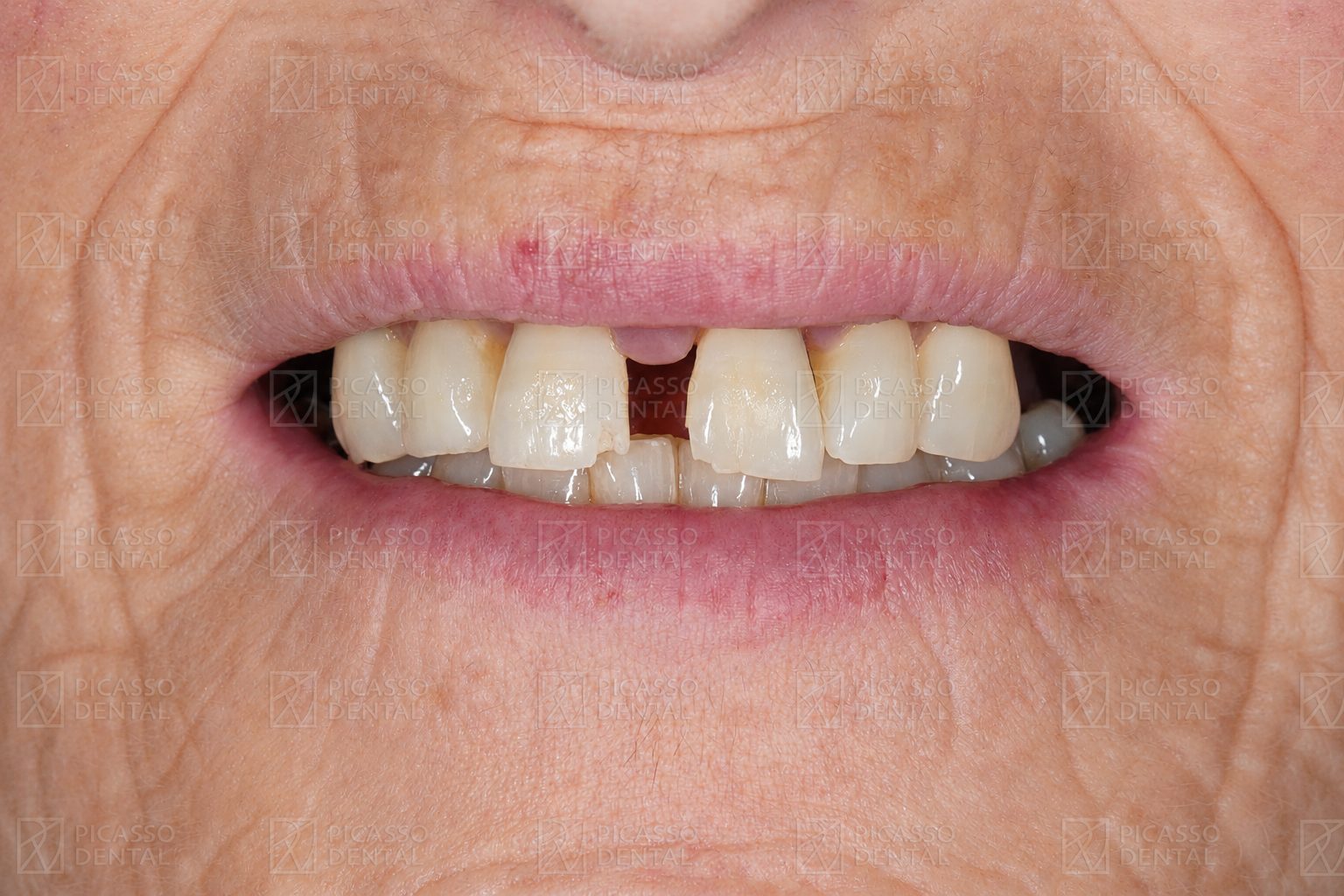 Before
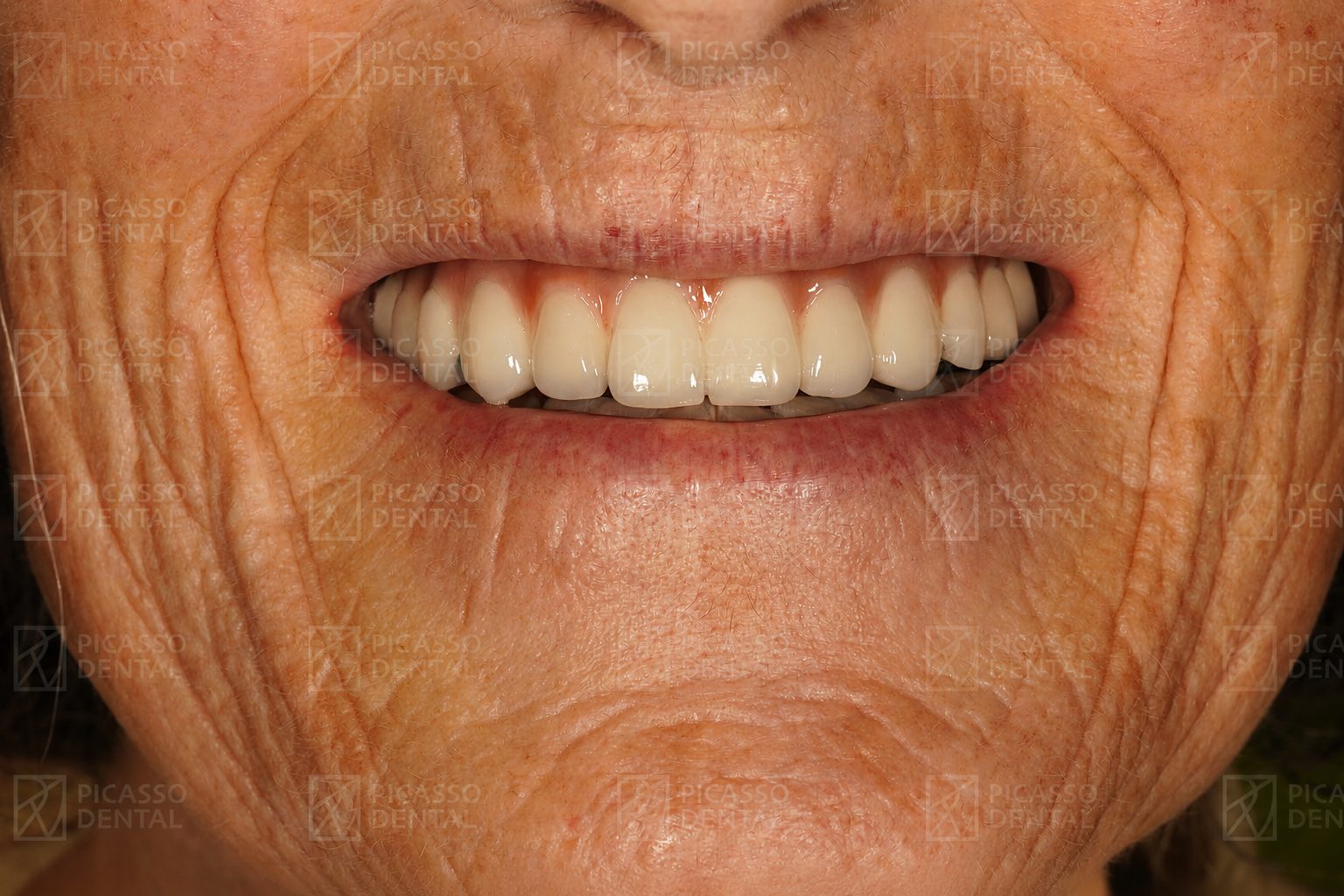 After
AfterFull rehabilitation, Hanoi Old Quarter
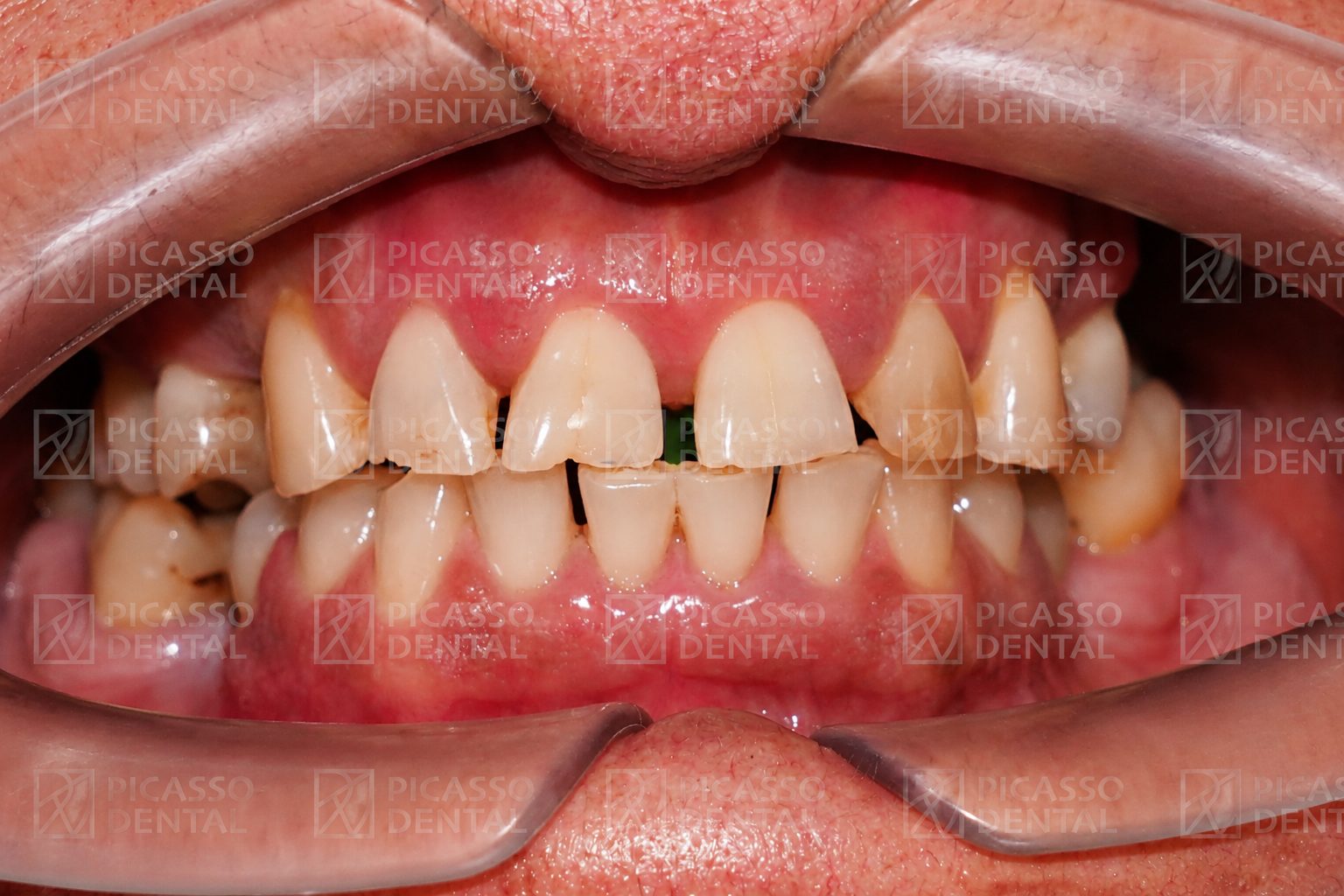 Before
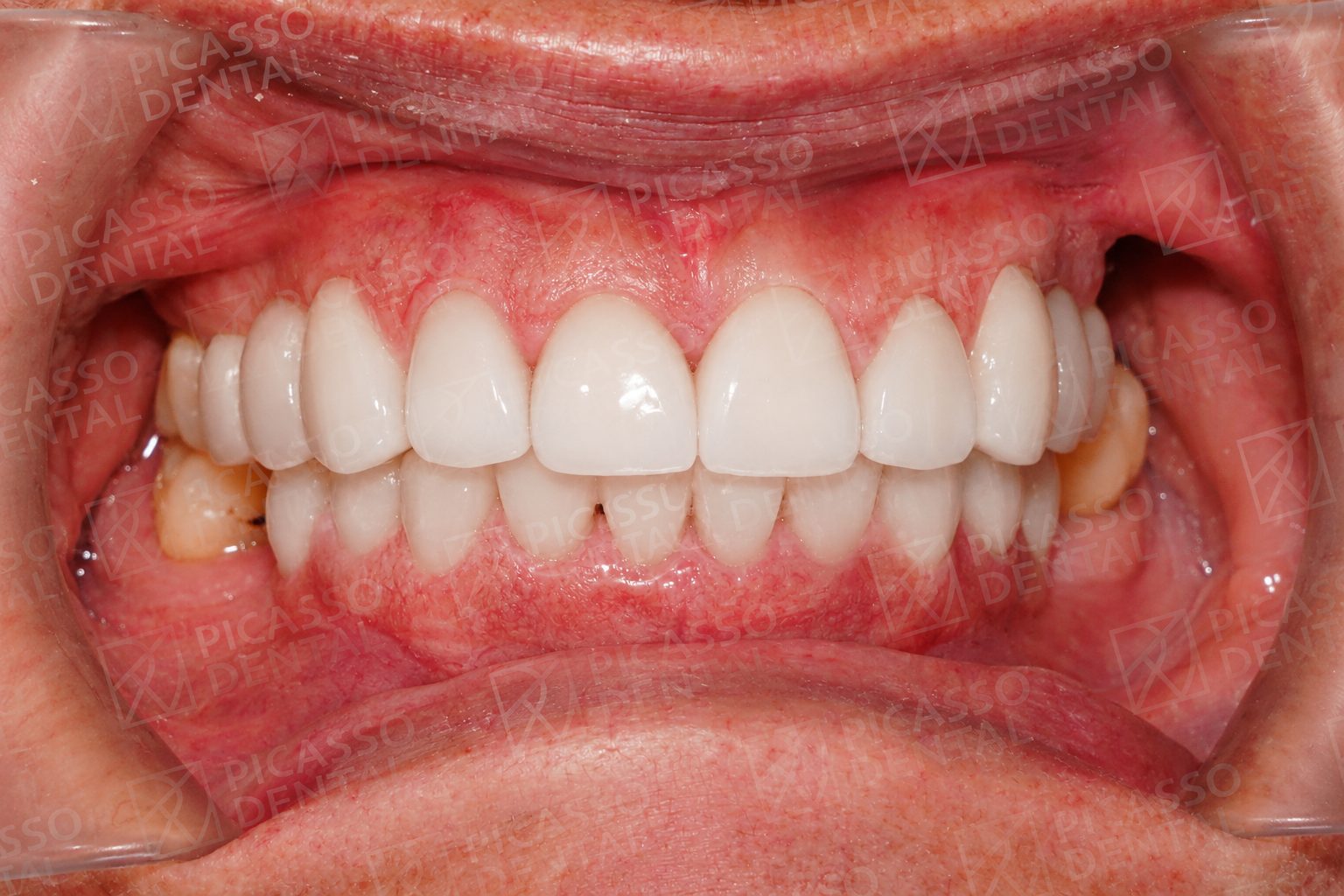 After
AfterPorcelain crowns, Da Nang
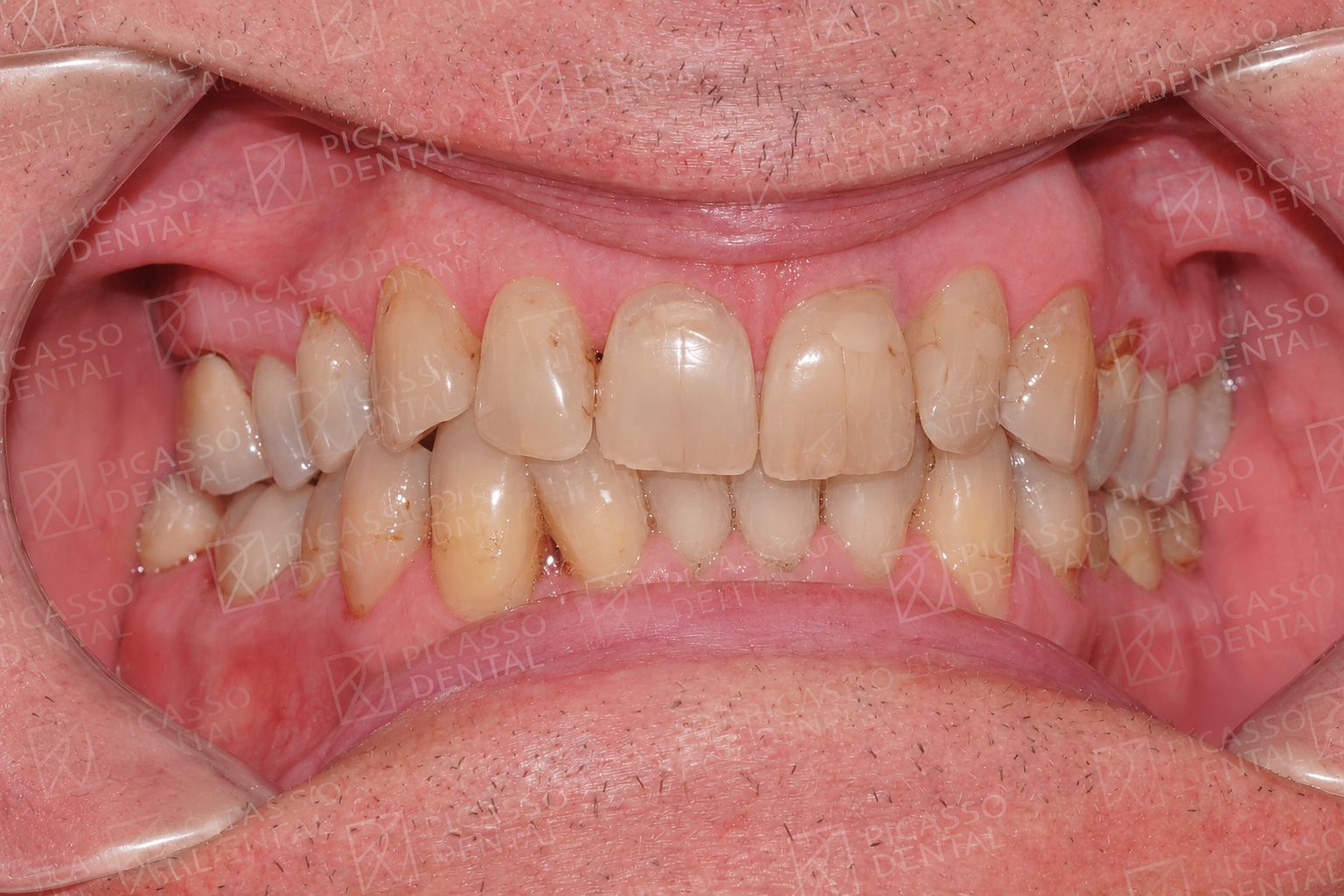 Before
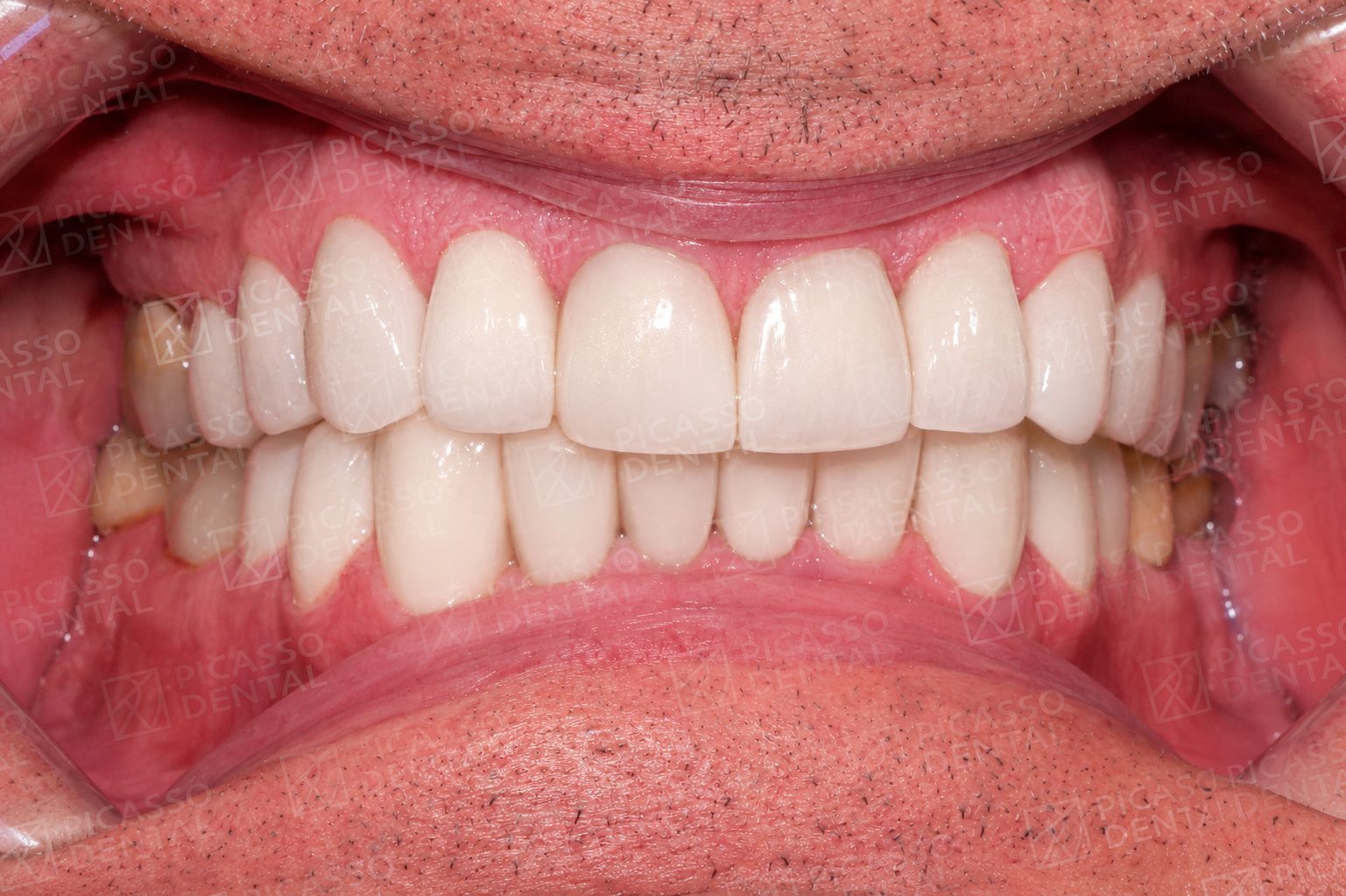 After
AfterCrown and implant, HCMC Thao Dien
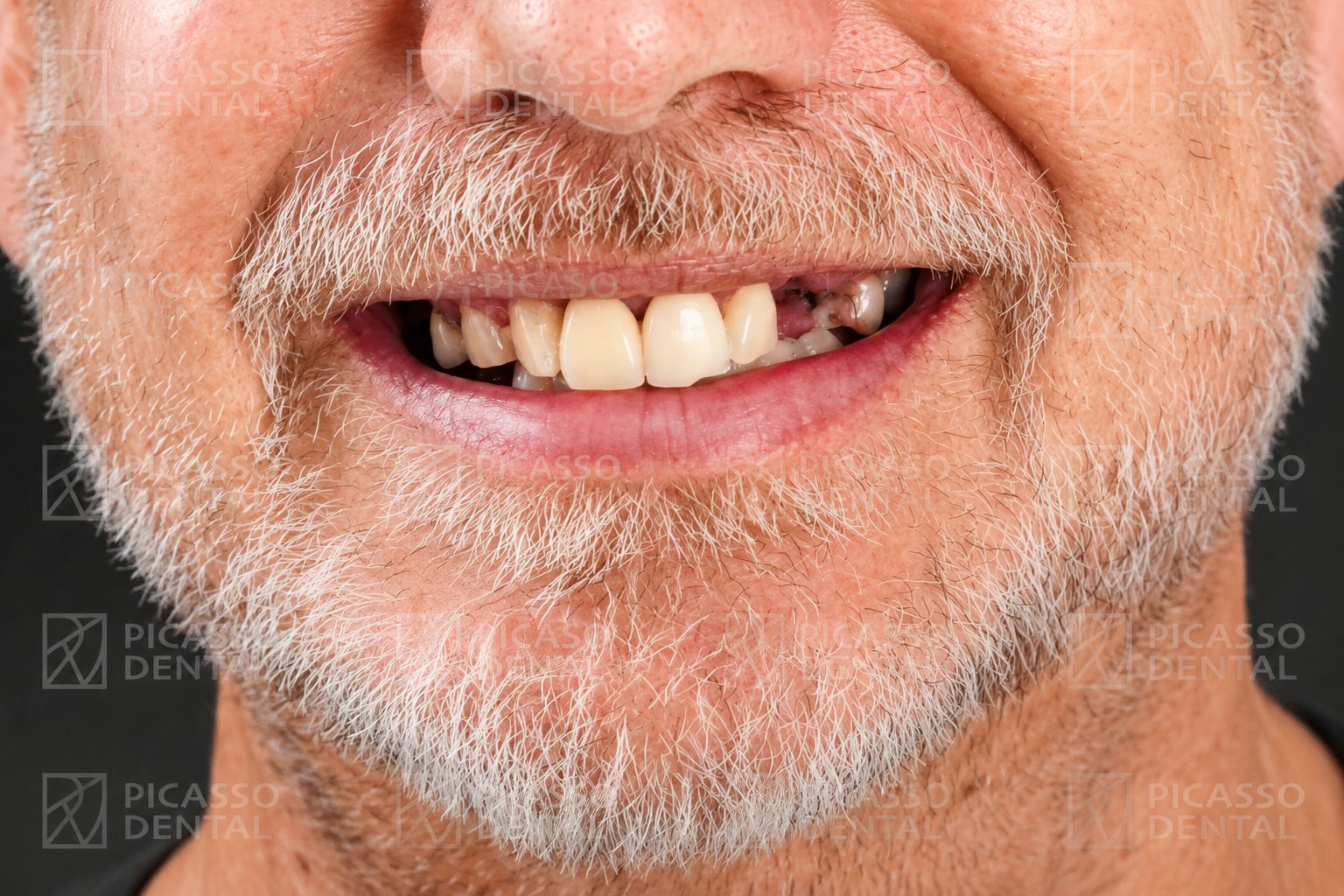 Before
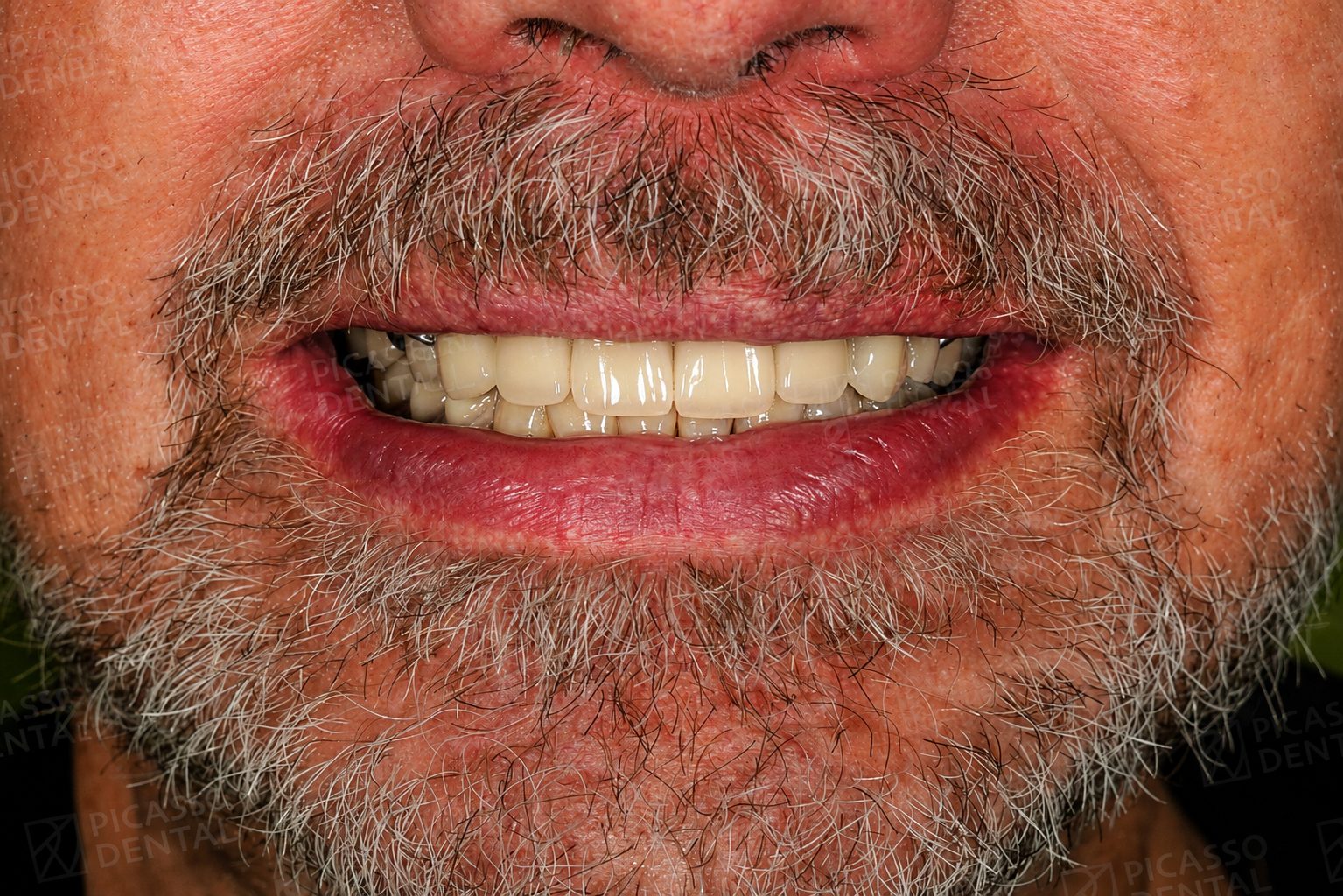 After
AfterCrown restoration, Hanoi Westlake
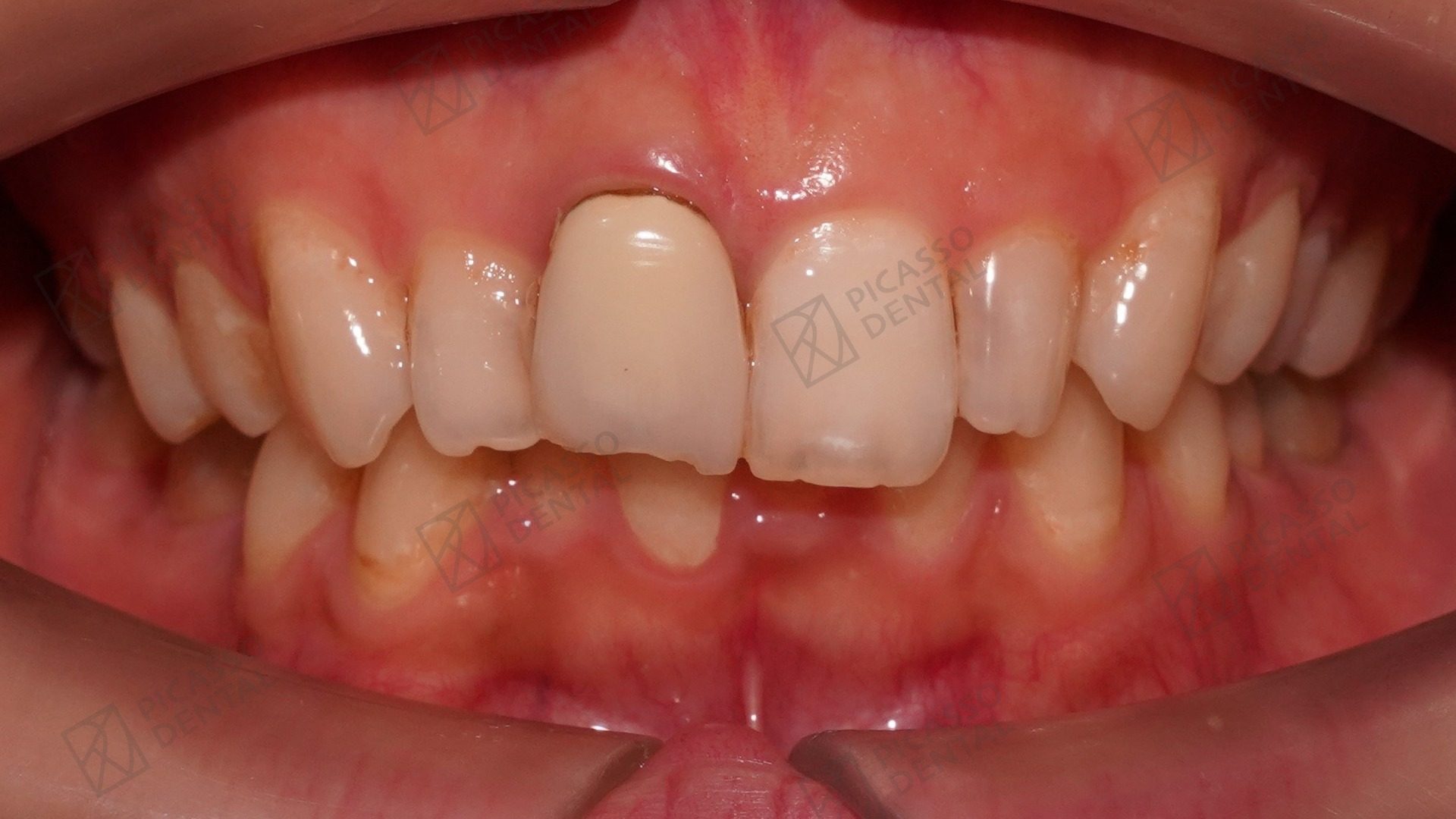 Before
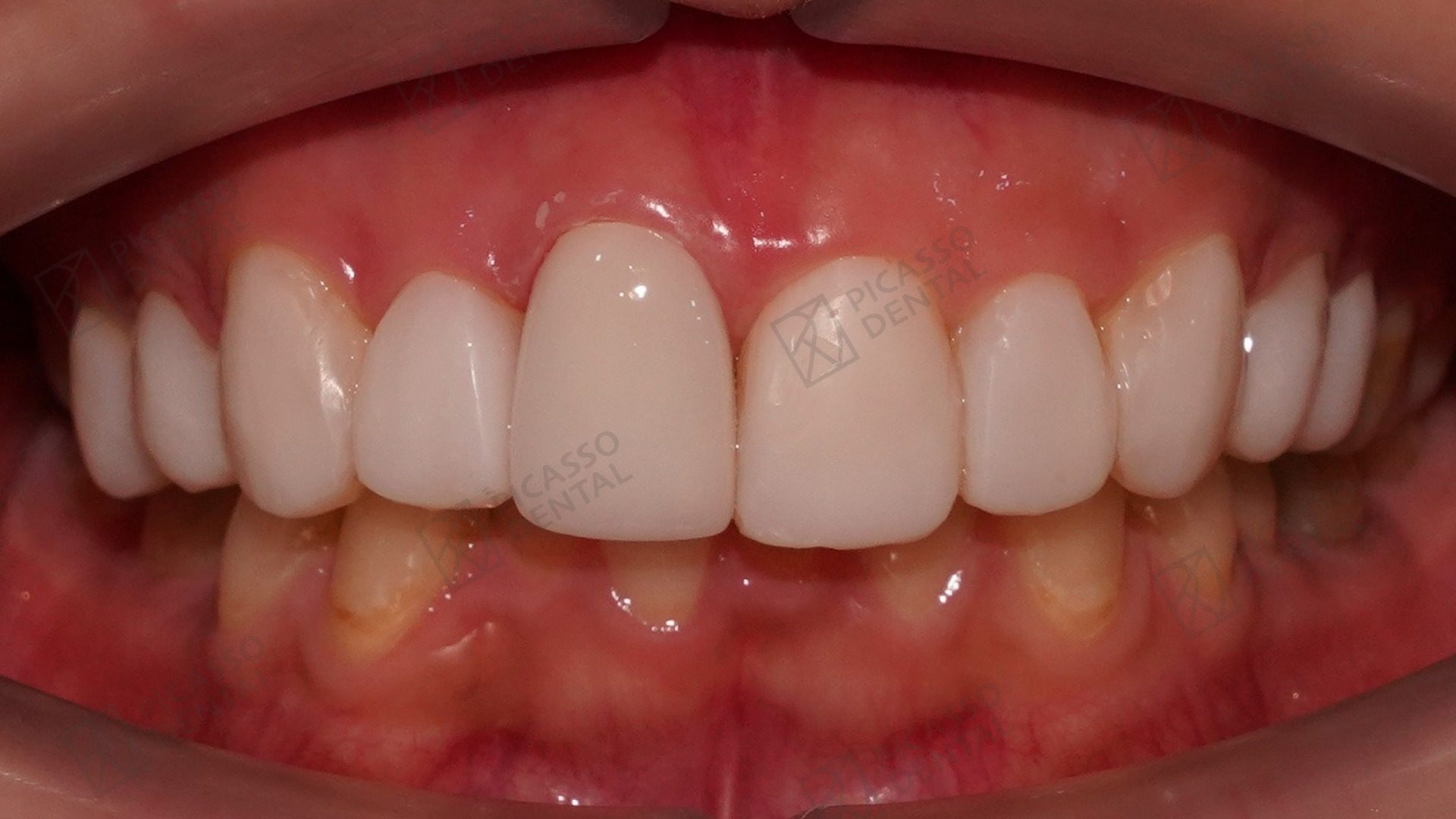 After
AfterSmile restoration, Da Nang Flagship
Frequently asked questions
Does laser whitening work on crowns, veneers, or fillings?
No. Laser whitening works only on natural tooth enamel. Crowns, veneers, and composite fillings are manufactured materials with fixed colours that do not respond to whitening chemistry. The oxygen molecules released by whitening gel interact with organic stain molecules in natural enamel; they do not alter the colour of porcelain, ceramic, or composite resin.
What happens to my existing restorations when I whiten?
Your restorations remain exactly the same shade while the surrounding natural teeth brighten. If those restorations were previously colour-matched to your natural teeth, they may now appear darker or more yellow by comparison. This colour mismatch is particularly noticeable on front teeth where crowns or veneers are prominent. Back tooth restorations that are not visible when smiling are generally not a concern.
Should I whiten before or after getting new restorations?
Whiten first if you plan to have new front-tooth restorations. This allows the ceramist to match the new restoration colour to your whitened natural teeth, ensuring everything is coordinated from the start. Wait 7 to 14 days after whitening before having the restorations made, as the whitened shade can shift slightly in the first week while the teeth remineralise.
Can professional cleaning make my restorations look whiter?
Professional polishing can remove surface stains from coffee, tea, and wine that have accumulated on the smooth surface of porcelain restorations, making them look cleaner and brighter. However, this removes surface deposits, not the underlying manufactured colour of the restoration. The result is a cleaner restoration, not a whiter one.
What if I have already whitened and my restorations now look too dark?
There are two options. You can attempt to whiten the natural teeth to the maximum achievable brightness and then replace the front restorations to match the new shade. Or, if the mismatch is minor, accept it and monitor whether it bothers you over time. We can assess the degree of mismatch and advise whether replacement is warranted at a clinical appointment.
How long should I wait after whitening before getting new restorations?
7 to 14 days. The whitened shade can shift slightly during the first week as the teeth remineralise and the initial post-whitening rebound settles. Taking the shade match after this stabilisation period ensures the new restoration colour accurately reflects your settled whitened shade rather than the peak brightness immediately after treatment.
Does whitening damage existing composite fillings?
Whitening gel does not chemically damage composite resins, but it can slightly alter the surface texture of older composite restorations, making them appear rougher or more porous after whitening. This can contribute to the contrast problem as the rough surface attracts staining more readily. Very old composite fillings in prominent positions may be worth replacing around the time of whitening.
Patient Video Testimonial

Start Here
Start with a brief.
Tell us about your existing dental work and whitening goals and we will plan the sequence that avoids colour mismatch. No obligation, 24-hour reply.