
Cosmetic Dentistry
Does Laser Whitening Work
on All Types of Tooth Stains?
Not all stains are equal.
Yellow and brown stains from coffee, wine, and ageing respond brilliantly. Grey tetracycline staining and fluorosis do not. Knowing which category your staining falls into before booking saves time, money, and disappointment.

The short version
- Extrinsic yellow and brown stains from food and drink respond very well, typically five to eight shades.
- Age-related yellowing from dentine showing through thinning enamel responds predictably.
- Tetracycline grey banding is built into the tooth structure and does not respond to whitening.
- Fluorosis spots respond inconsistently; whitening can temporarily worsen white spot contrast.
- Single dark teeth from trauma or root canals need internal bleaching or veneers, not surface whitening.
The science of what whitening can and cannot do
Whitening gel releases oxygen molecules that penetrate tooth enamel and break apart the chemical bonds within organic stain molecules. The stain fragments scatter light differently after oxidation, producing less visible colour. This chemistry works on organic compounds with the right molecular structure. It does not work on staining from inorganic sources, developmental abnormalities, or staining incorporated into the mineral matrix of the tooth during formation.
The practical implication is straightforward: extrinsic stains deposited on or near the tooth surface from dietary sources respond well. Intrinsic stains originating from within the tooth substance, or staining that occurred during tooth development, resist whitening chemistry entirely or respond only modestly.
Stains that respond well
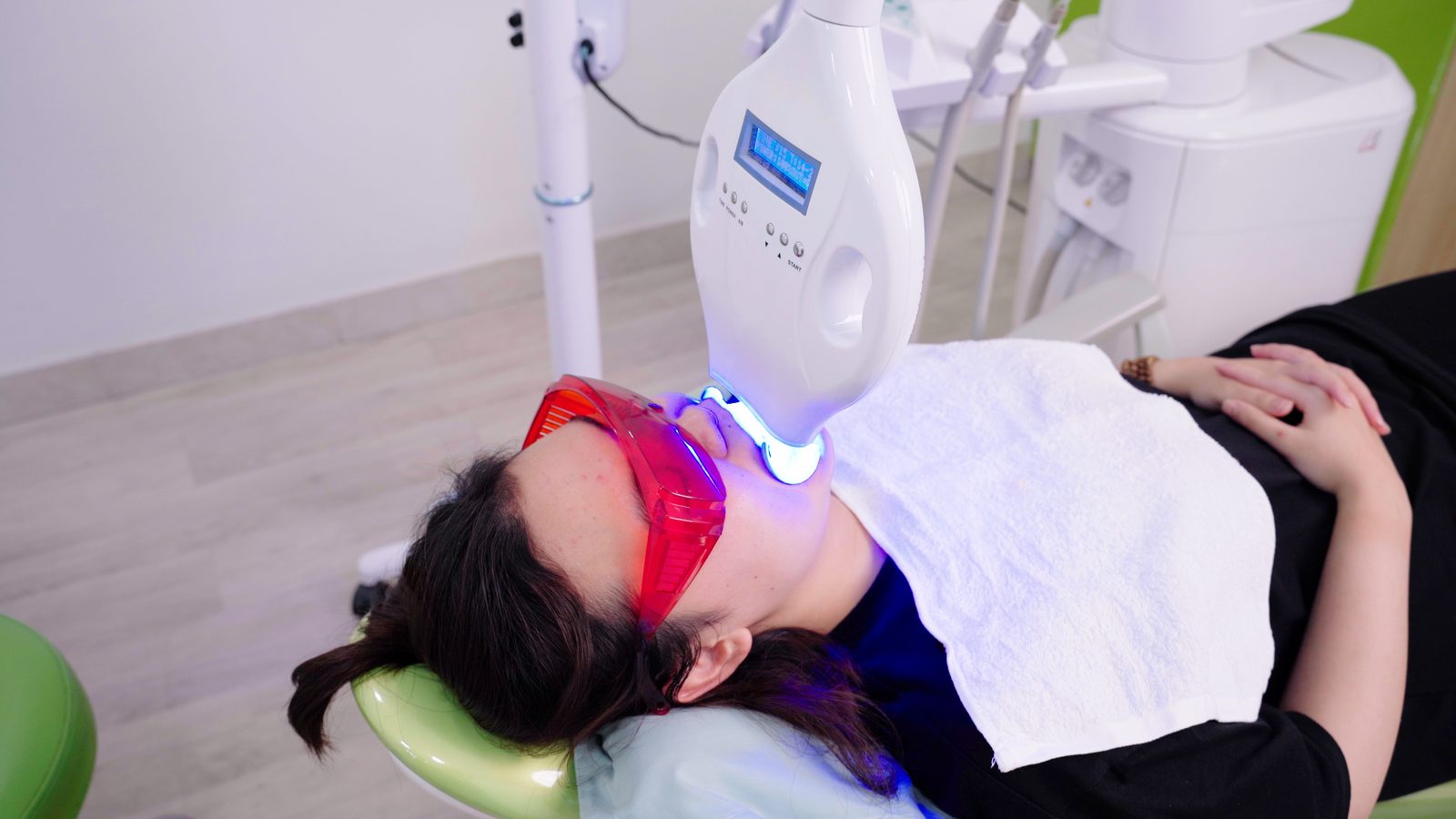
Yellow and light brown stains from coffee, tea, red wine, cola, and other pigmented beverages are the most common type of tooth discolouration and the most responsive to whitening. These organic chromophore molecules sit within the upper layers of enamel and dentine. Peroxide chemistry breaks them apart efficiently. Patients with primarily dietary staining reliably achieve five to eight shades of improvement in a single in-office session.
Age-related yellowing responds equally well. As we age, enamel thins slightly and the naturally yellowish dentine beneath shows through more prominently. Professional whitening essentially reverses this effect, lightening the dentine colour visible through the enamel and restoring a brighter, more youthful appearance. Results are predictable and consistent across this category.
Smoking stains contain organic tar and nicotine compounds that respond to whitening, though heavy smokers may require multiple sessions or higher-concentration protocols for maximum improvement. Smoking also contributes to gum recession and surface roughness that can make whitening results less even, so a thorough clinical assessment before treatment is particularly important for smokers.
Tetracycline staining: why it resists whitening
Tetracycline antibiotics taken during childhood while permanent teeth are mineralising incorporate into the crystalline structure of the forming enamel and dentine. The staining is not deposited on the tooth: it is built into the material itself at a molecular level. Grey, blue-grey, or dark brown horizontal banding across the teeth is the clinical appearance. The banding reflects where the tooth was mineralising at the time the antibiotic was circulating in the bloodstream.
Peroxide whitening chemistry targets organic molecules near the surface and subsurface of the enamel. It does not penetrate deeply enough to reach the tetracycline molecules incorporated into the dentinal matrix, and it cannot alter inorganic crystalline structures even where it does reach them. Aggressive extended whitening protocols applied over months sometimes produce one to two shades of improvement in mild cases, but the improvement is modest and the time investment is significant.
For tetracycline-stained teeth, veneers are the reliable solution. They mask the discolouration entirely regardless of severity and deliver a predictable, uniform result in a matter of days rather than months of whitening attempts.
"I had four crowns, two cavities, and a root canal and it was as gentle and pain free as it could possibly be, more so than any dentist back in the states in my sixty years of seeing the dentist."
Kevin McCarthy, Hanoi Old Quarter
Fluorosis: unpredictable and sometimes counterproductive
Fluorosis results from excessive fluoride ingestion during childhood tooth development, producing white, yellow, or brown spots and streaks across the enamel. Mild fluorosis with faint white chalky areas sometimes responds modestly to whitening. The challenge is that whitening brightens the surrounding enamel more than the already highly mineralised fluorotic spots, which can temporarily increase the contrast between the spots and the background enamel. Most patients find the spots become more visible immediately after whitening before the result settles.
Moderate to severe fluorosis with brown staining responds poorly. Where fluorosis is a significant concern, microabrasion (controlled removal of the outermost enamel layer to remove superficial staining) combined with whitening sometimes produces better results than whitening alone. For severe cases, veneers again provide the most predictable outcome.
Single dark tooth from trauma or root canal
A tooth that has darkened after an injury or following a root canal presents a different challenge. The staining originates from inside the tooth, either from decomposing pulp tissue that was not fully removed, or from blood by-products that penetrated the dentinal tubules after trauma. External whitening gel cannot penetrate deep enough to address this source.
Internal bleaching is a viable option for root-canal treated teeth: a whitening gel is placed inside the pulp chamber through the back of the tooth and sealed in for a week, then replaced and resealed for additional sessions until the desired shade is reached. For trauma-darkened vital teeth or cases where internal bleaching is insufficient, a veneer or crown masks the discolouration from the outside. Treating the dark tooth in isolation while whitening the others can worsen the aesthetic problem rather than solve it, because the contrast with the newly brightened surrounding teeth becomes more stark.
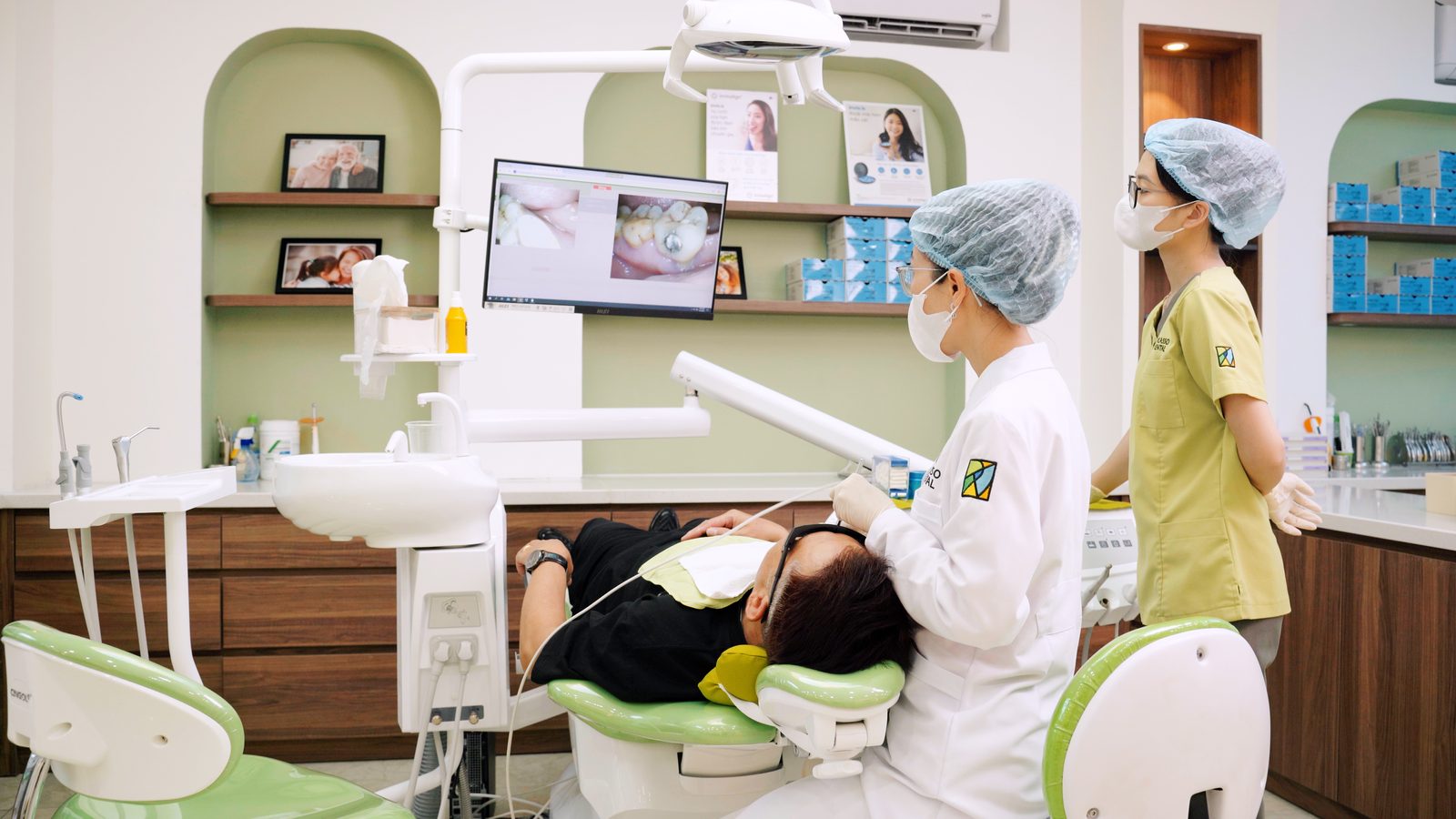
Not sure which type of staining you have? We assess stain type and predict whitening outcomes at the consultation. No obligation.
Book a consultation →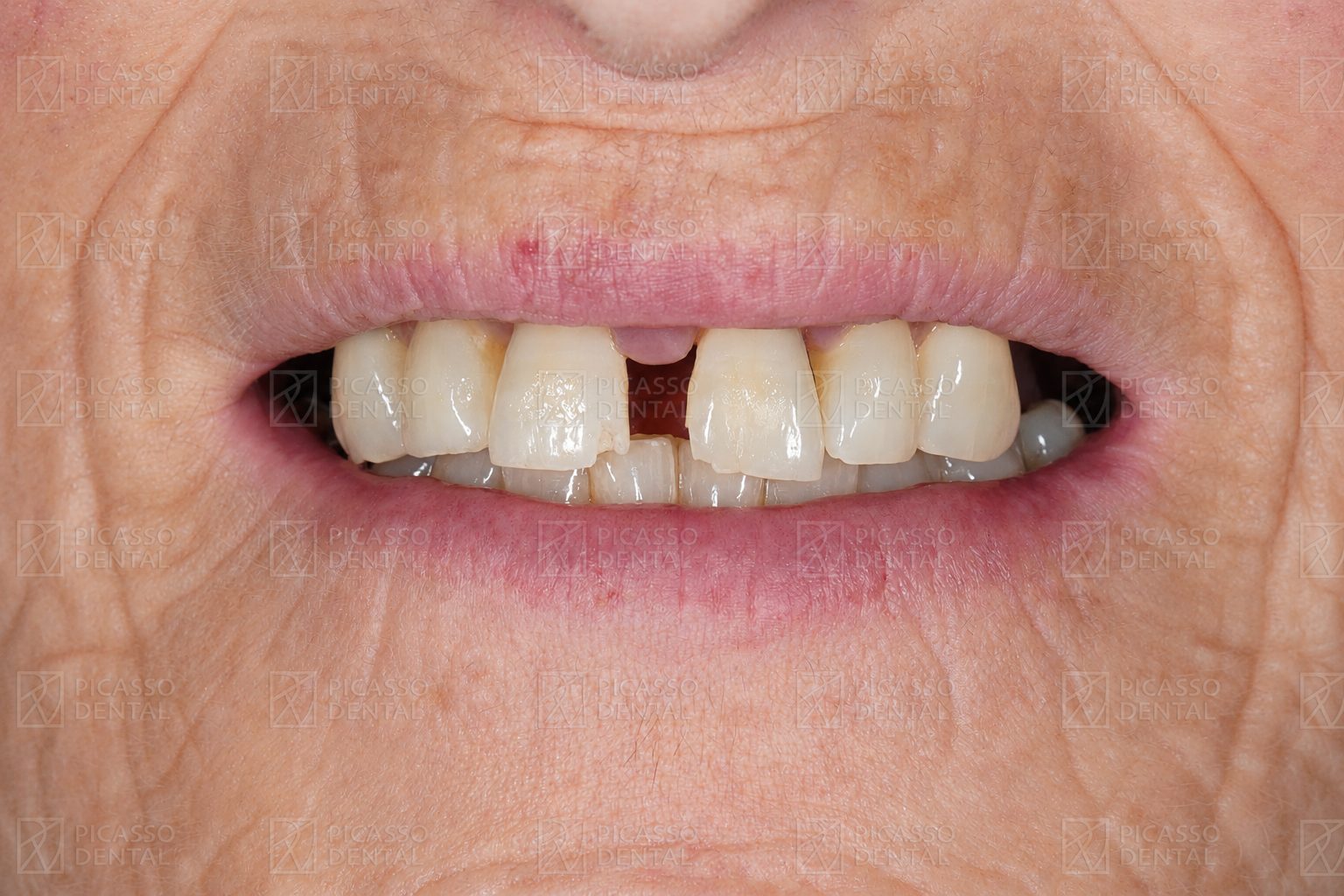 Before
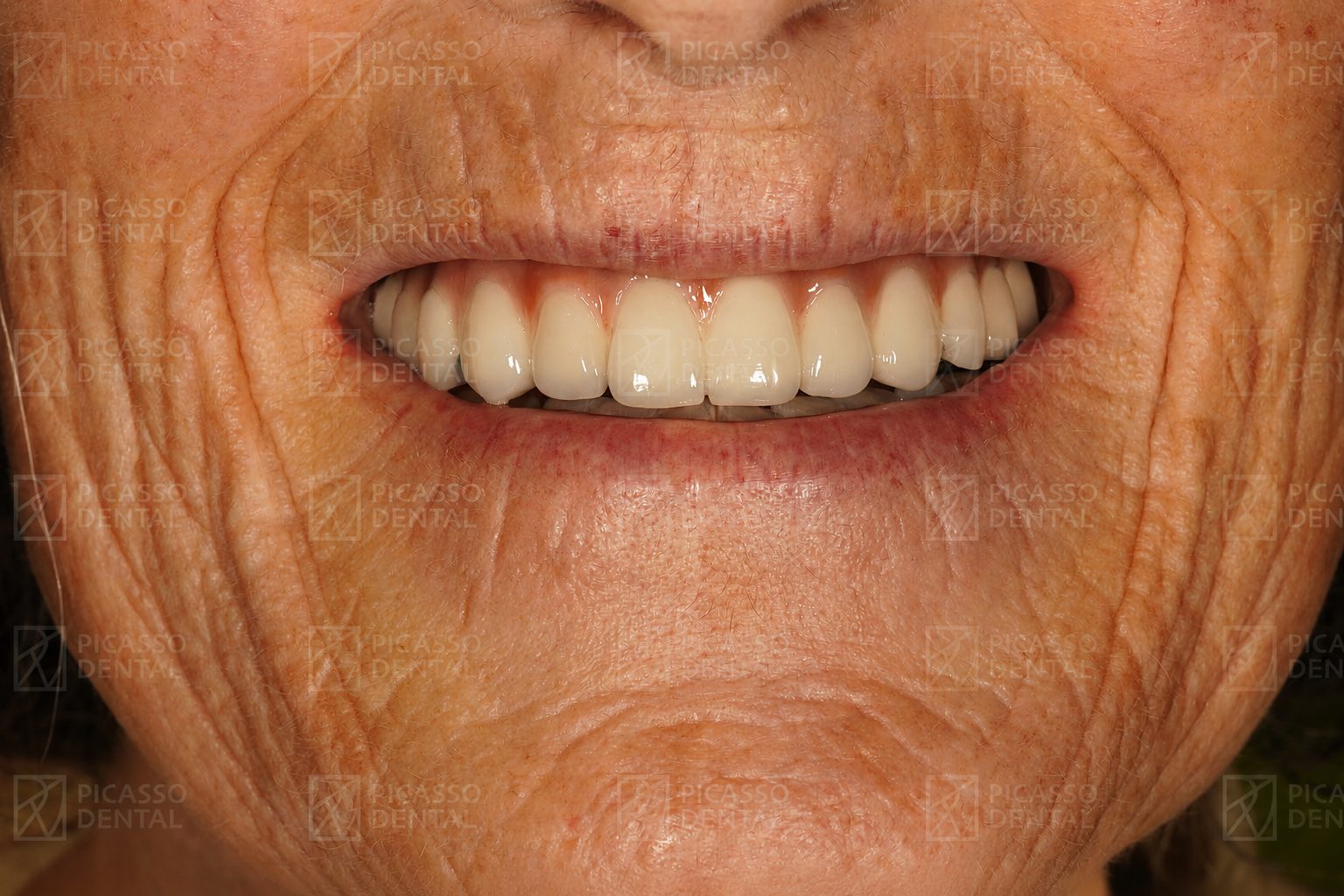 After
AfterFull rehabilitation, Hanoi Old Quarter
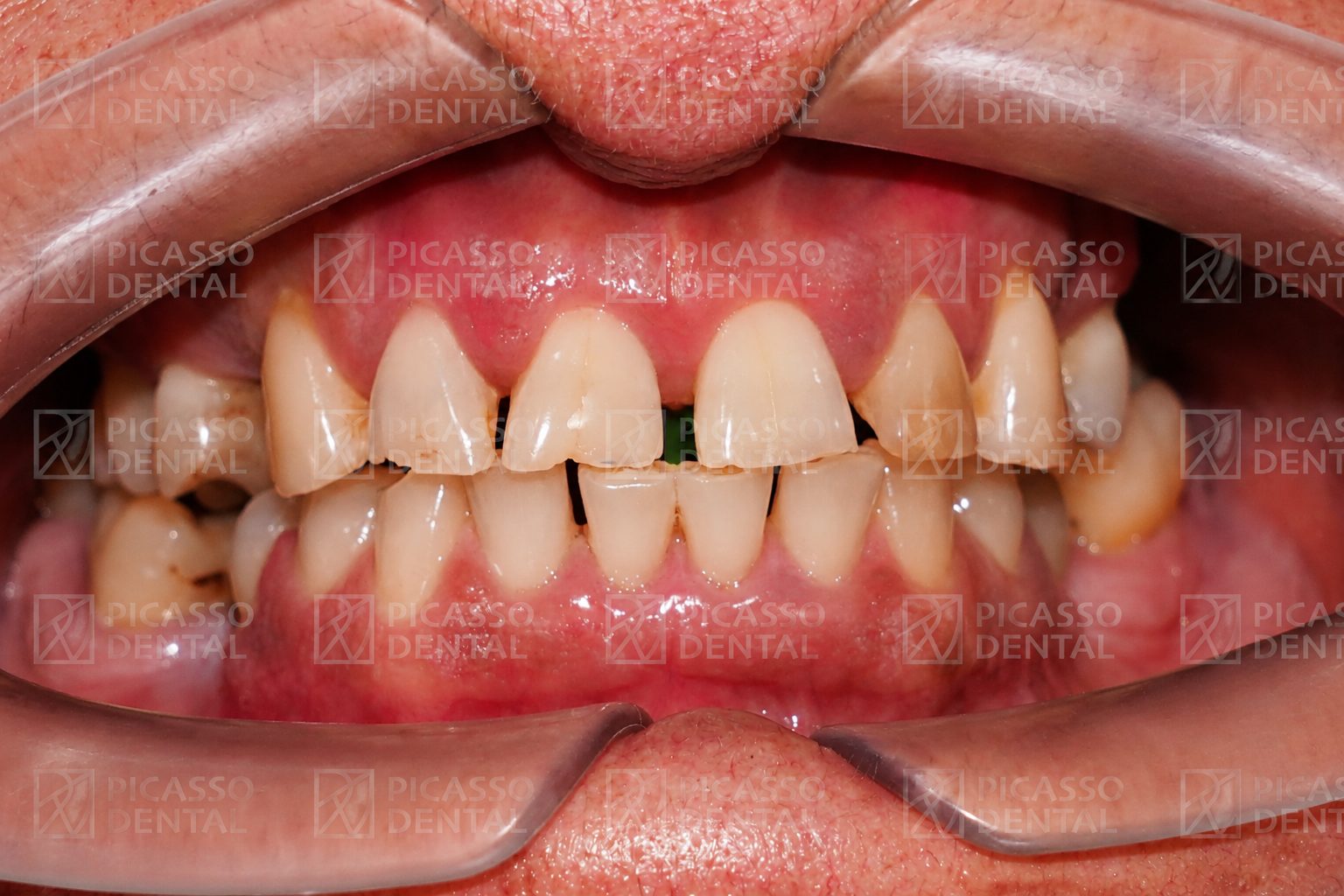 Before
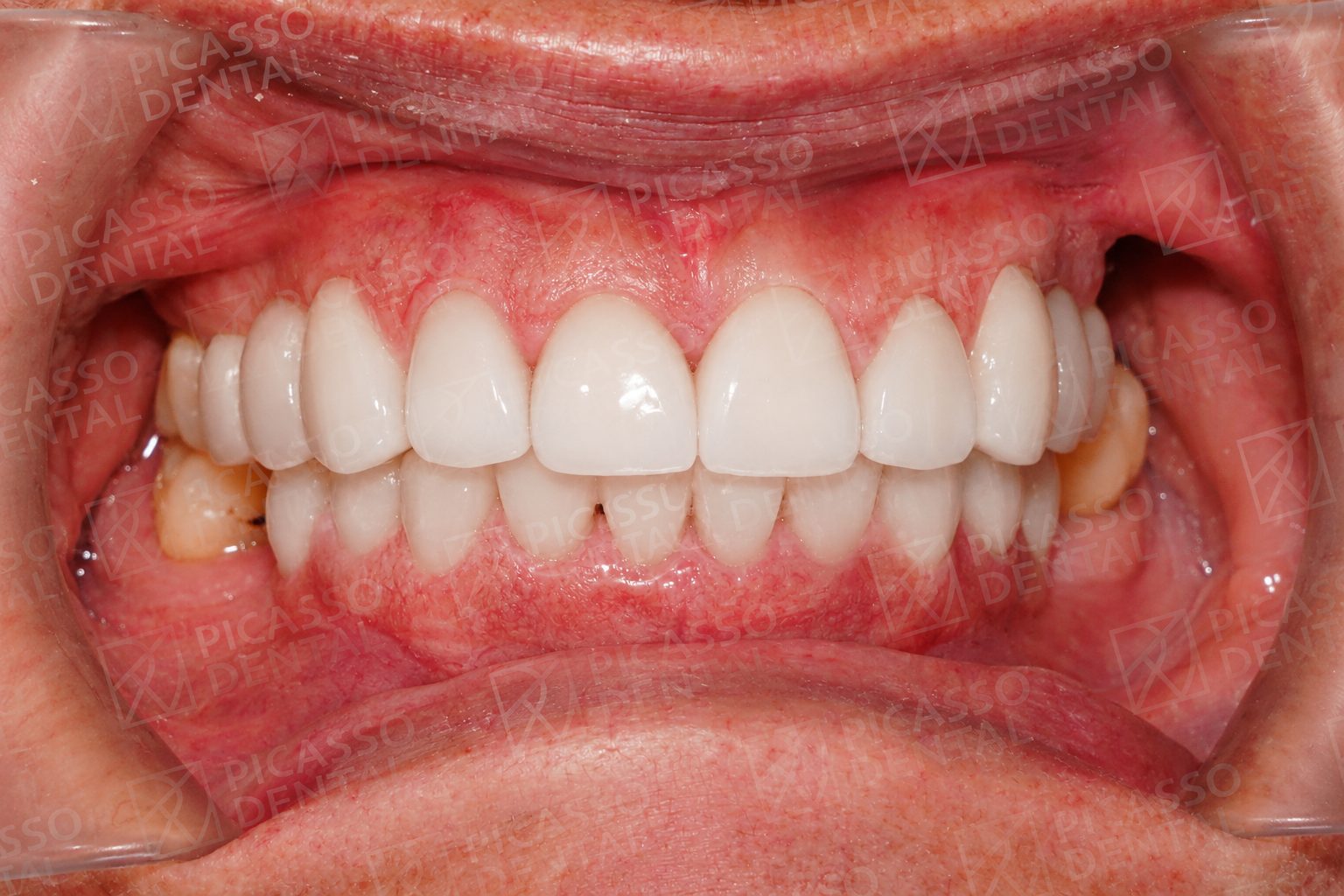 After
AfterPorcelain crowns, Da Nang
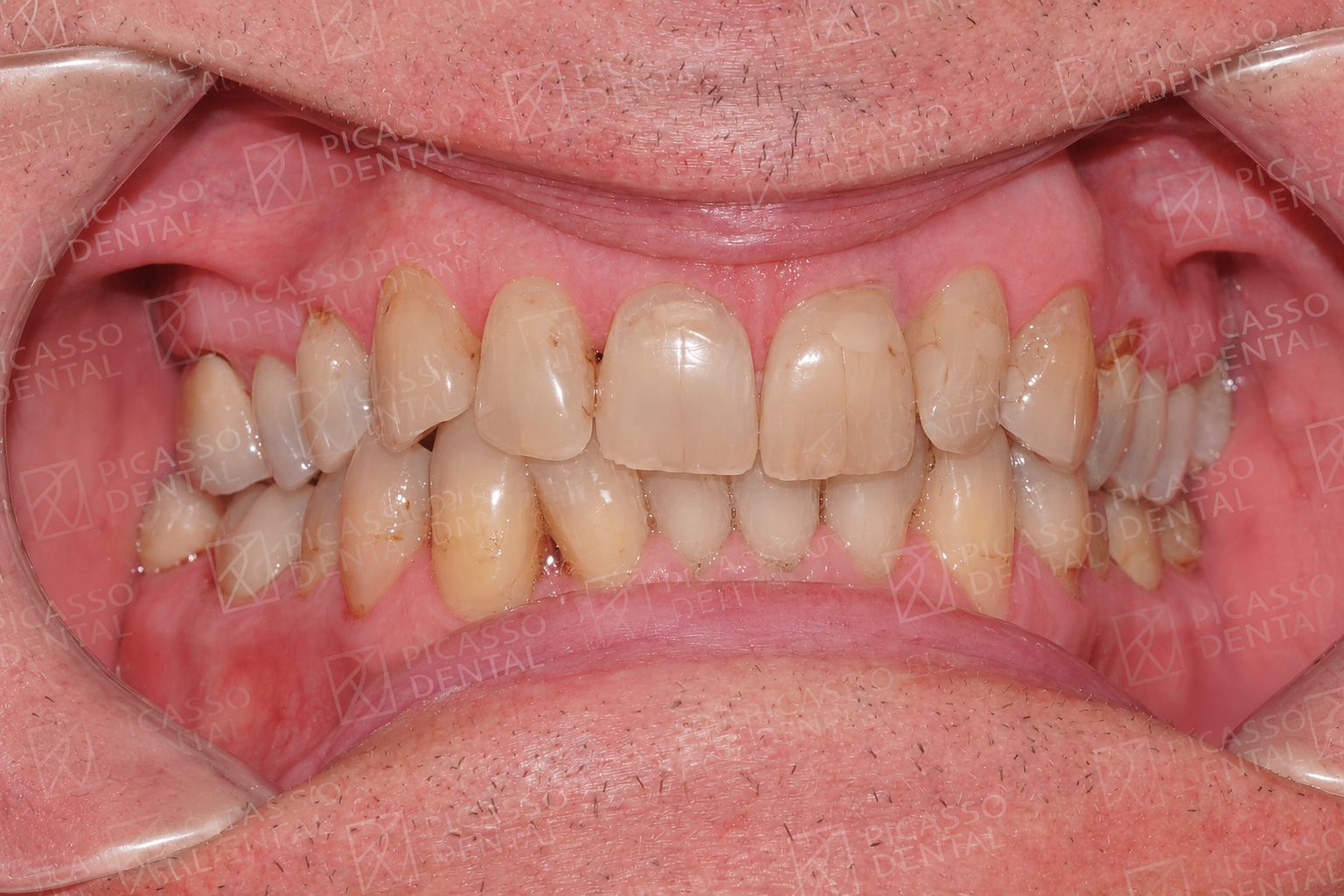 Before
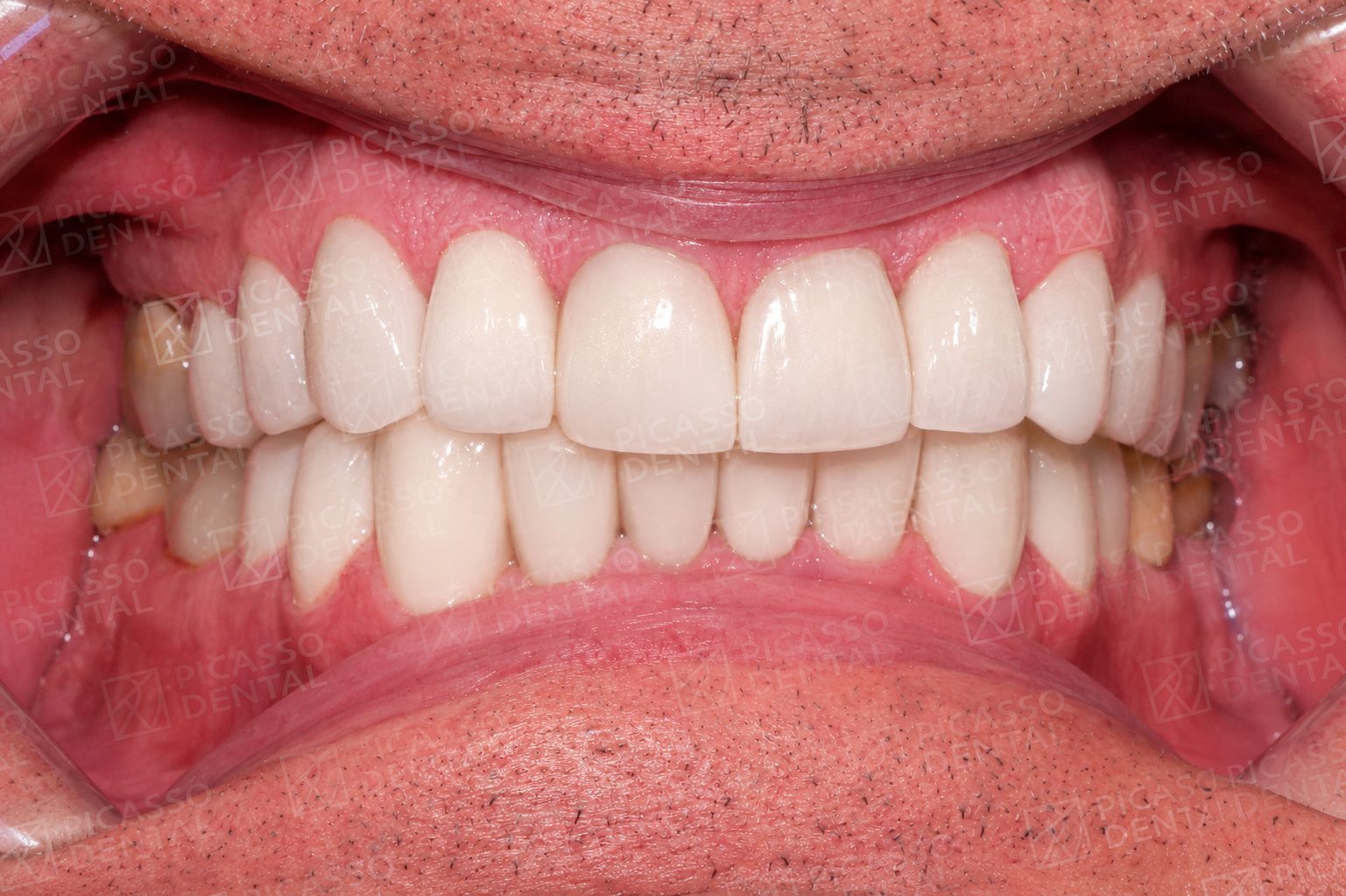 After
AfterCrown and implant, HCMC Thao Dien
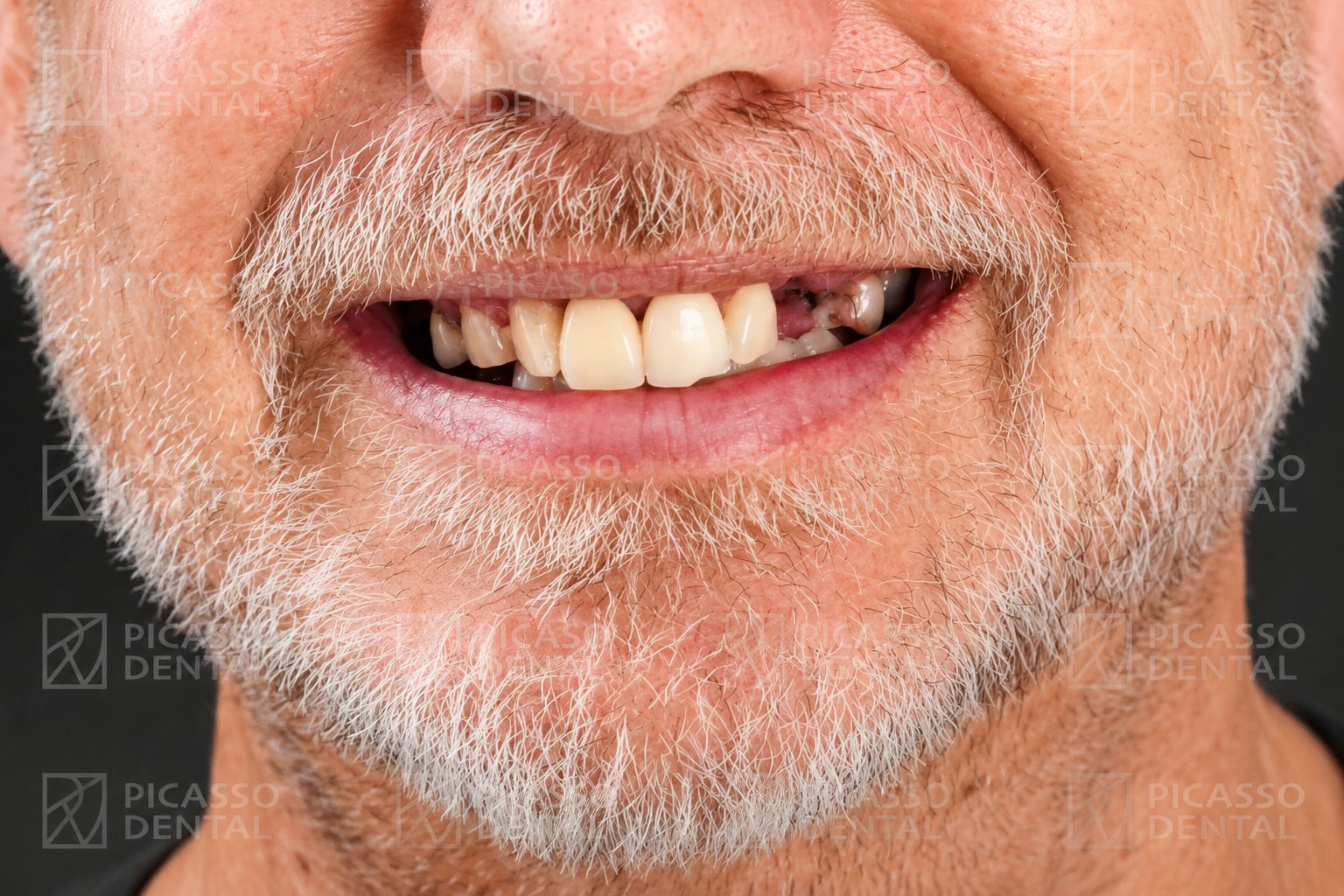 Before
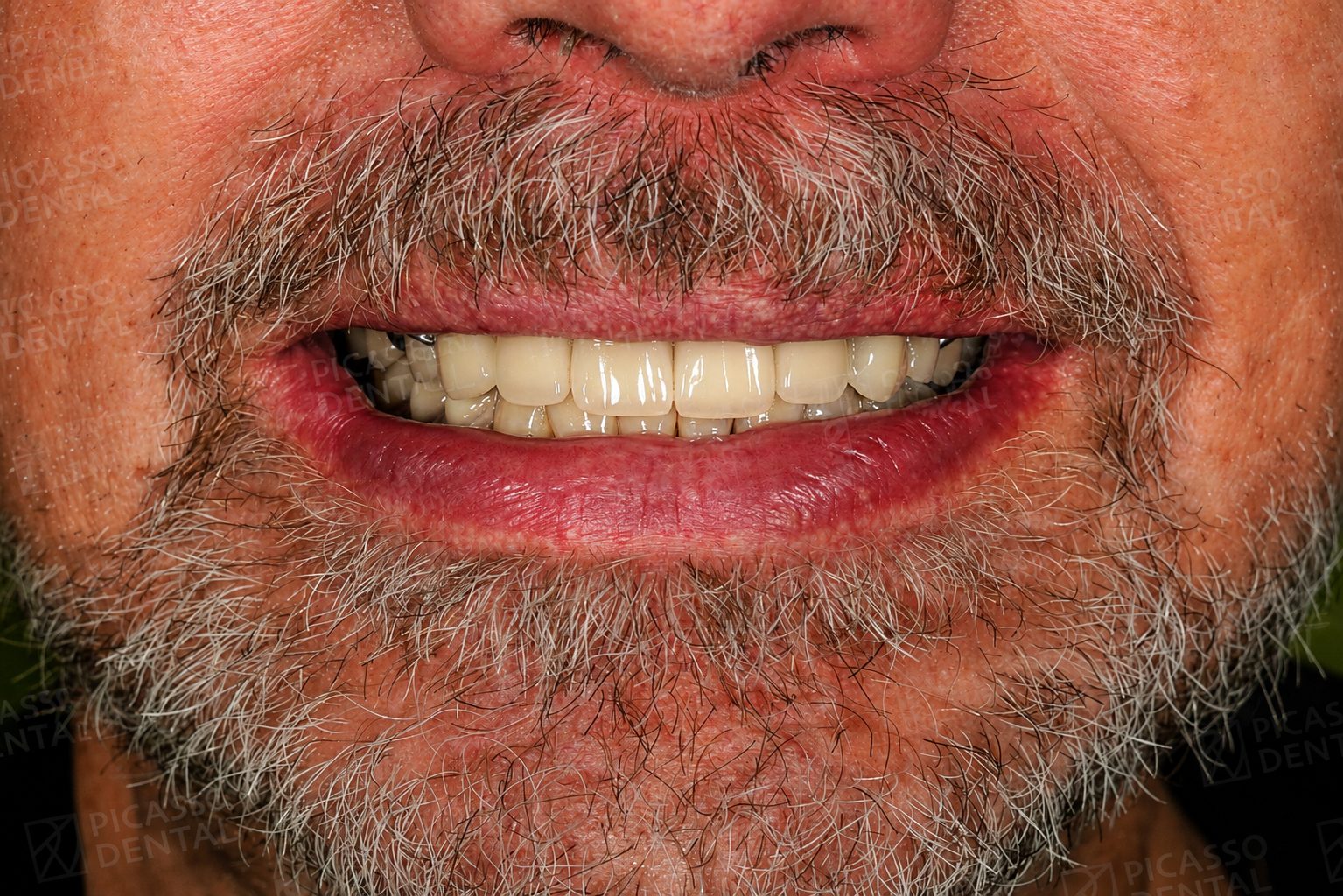 After
AfterCrown restoration, Hanoi Westlake
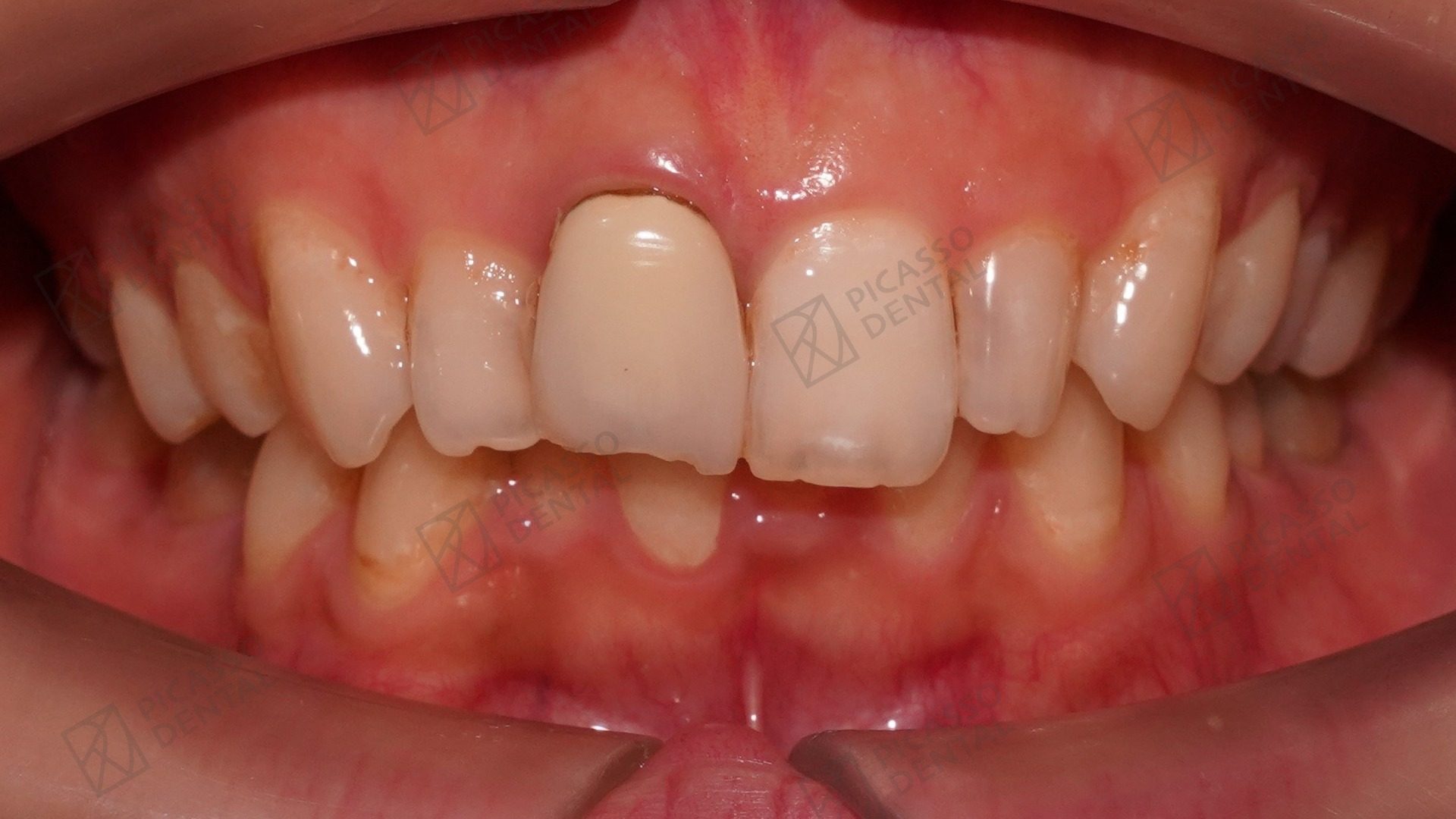 Before
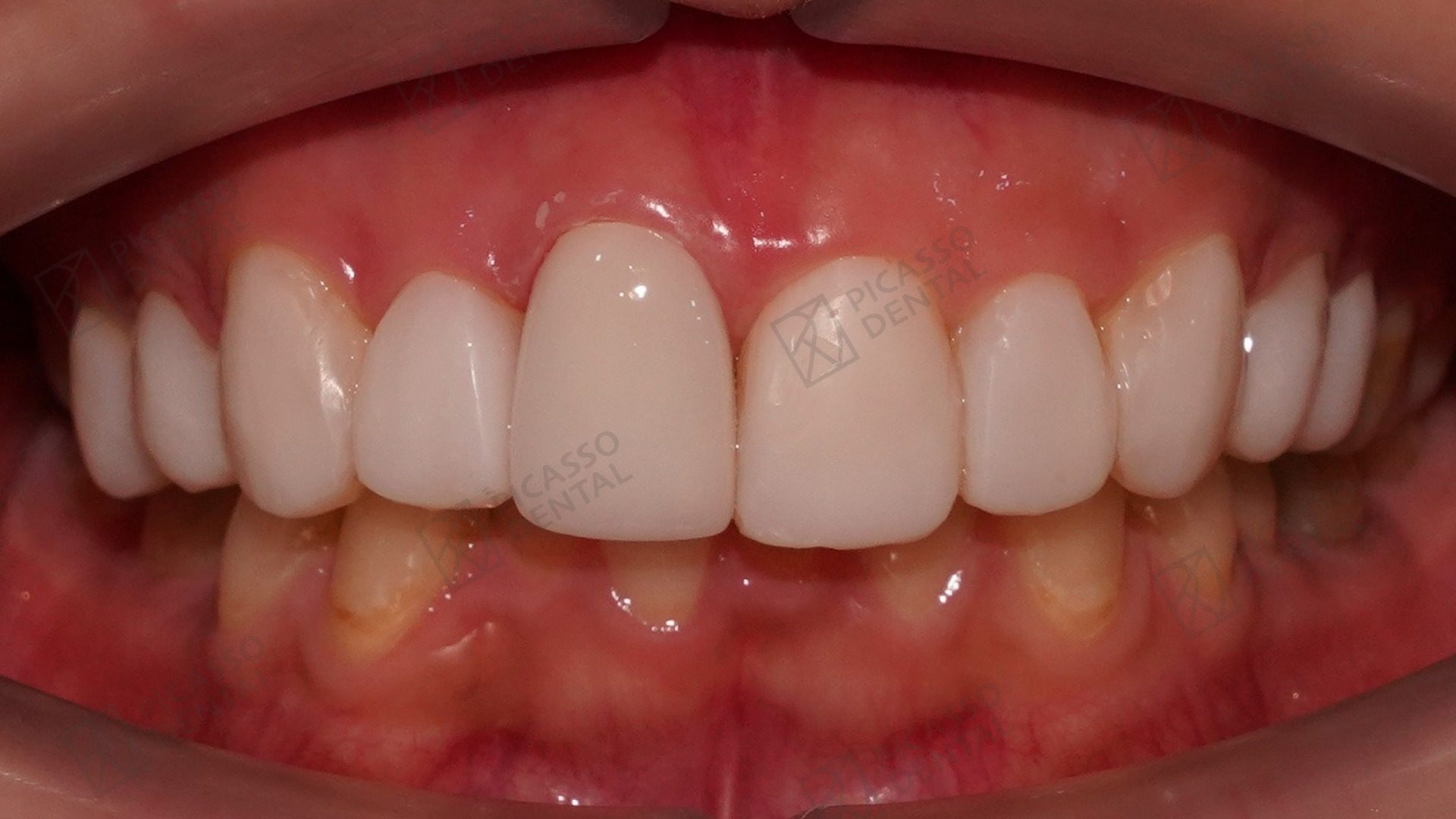 After
AfterSmile restoration, Da Nang Flagship
Frequently asked questions
Does laser whitening work on all types of tooth stains?
No. Laser whitening works very well on yellow and brown extrinsic stains from coffee, tea, wine, and smoking, and on age-related yellowing. It does not work on grey stains from tetracycline antibiotics taken during childhood, or on most cases of fluorosis staining. Identifying the stain type before booking whitening is essential to setting realistic expectations.
What stains respond best to laser whitening?
Yellow and light brown stains from coffee, tea, red wine, and other pigmented beverages respond excellently, typically achieving five to eight shades of improvement. Age-related yellowing caused by thinning enamel revealing the naturally darker dentine beneath responds very well. Smoking stains also respond significantly to professional whitening.
Why does laser whitening not work on tetracycline staining?
Tetracycline antibiotics taken during childhood while teeth are developing incorporate into the mineralising tooth structure at a molecular level. The resulting grey, blue, or dark brown banding is not a surface deposit but an integral part of the tooth material itself. Peroxide chemistry can only break down organic stain molecules on or near the surface; it cannot alter staining built into the crystalline matrix of the tooth. Veneers that mask the discolouration completely are the recommended solution for moderate to severe tetracycline staining.
Can laser whitening improve fluorosis staining?
Mild fluorosis with faint white spots sometimes responds modestly to whitening. Moderate to severe fluorosis with brown or mottled discolouration responds poorly and unpredictably. A complication is that whitening can temporarily make white spot fluorosis more obvious by whitening the surrounding enamel more than the already opaque spots, increasing contrast. This usually normalises over time as results settle.
What about dark staining on a single tooth after injury or root canal?
Single-tooth discolouration from trauma or a root canal indicates internal staining originating from decomposing pulp tissue or blood by-products within the tooth. External whitening is less effective because the source of staining is inside the tooth. Internal bleaching, where whitening gel is placed inside the tooth through an access hole in the back, can be effective. Alternatively, a veneer or crown masks the discolouration completely from the outside.
How do I know what type of stain I have?
A clinical examination with your full dental history is needed. Stain type is determined by the colour, pattern, and distribution of discolouration combined with your medical and dental history. Grey banding across multiple teeth suggests tetracycline. White and brown spots in patches suggest fluorosis. A single dark tooth after an old injury suggests internal staining. Yellow to light brown generalised staining almost always indicates extrinsic or age-related staining that responds well to whitening.
Is there a treatment for tetracycline staining beyond veneers?
For mild tetracycline staining, extended professional whitening protocols lasting several months sometimes produce modest improvement of one to two shades. For moderate to severe cases, veneers remain the most reliable solution, masking the staining completely and delivering a predictable, uniform result in a matter of days rather than months of whitening attempts. Crowns are considered when the tooth has structural issues alongside the staining. We discuss all options at the consultation.
Start Here
Start with a brief.
Tell us about your discolouration and we will assess the stain type and recommend the most effective treatment option. No obligation, 24-hour reply.