Dental Implants
Do Dental Implants Hurt
and How Long Do They Last?
The two questions every implant patient asks first. An honest clinical answer from the implant team at Picasso Dental Clinic.
The short version
- Implant surgery is performed under local anaesthetic: you feel pressure, not pain.
- Post-operative discomfort is mild, typically comparable to or less than a tooth extraction.
- The titanium implant post is designed to last a lifetime; success exceeds 95% at ten years.
- The porcelain crown may need replacement after 15 to 20 years due to normal wear.
- Smoking and poor hygiene are the main reasons implants fail; both are preventable.
What actually happens during implant surgery
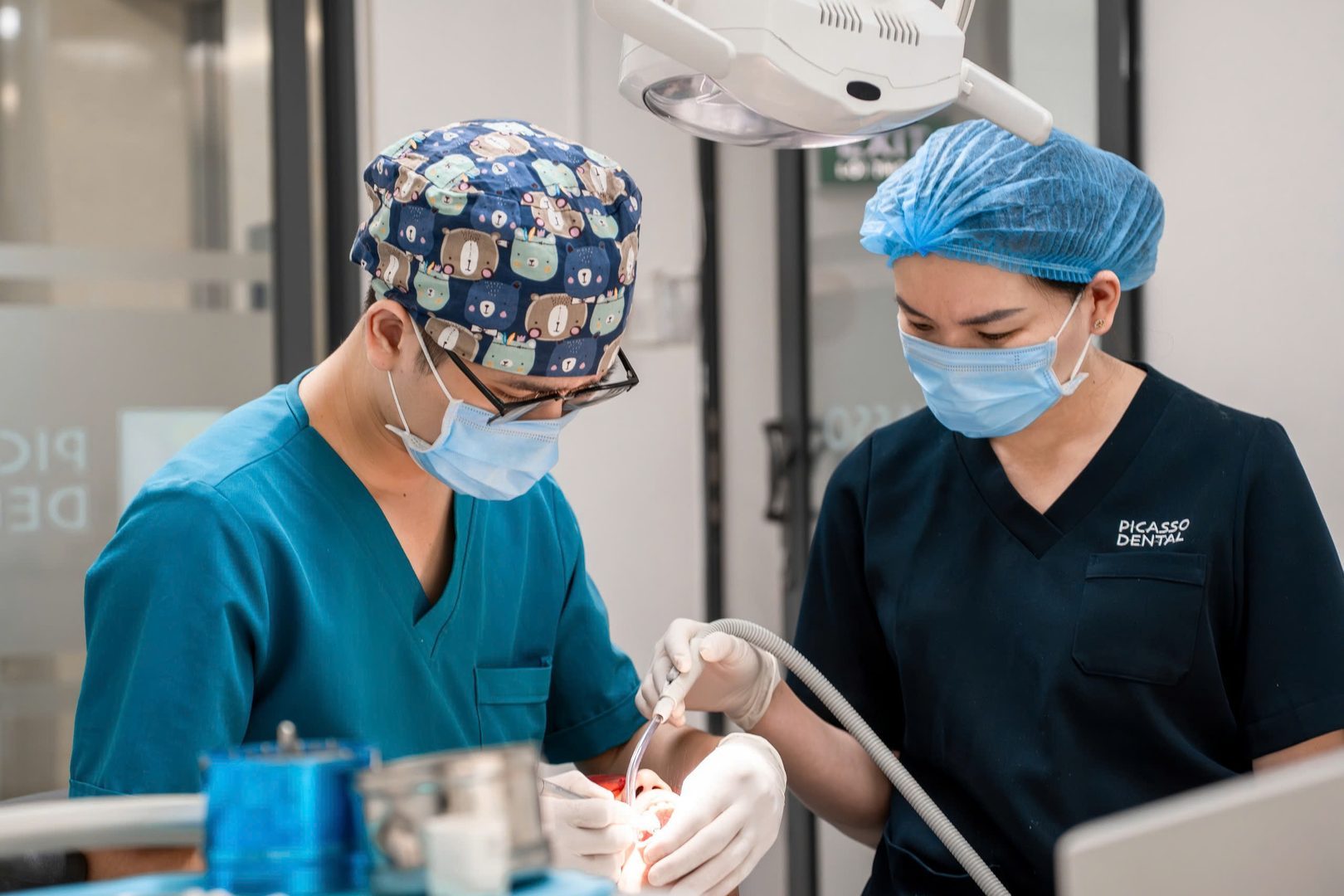
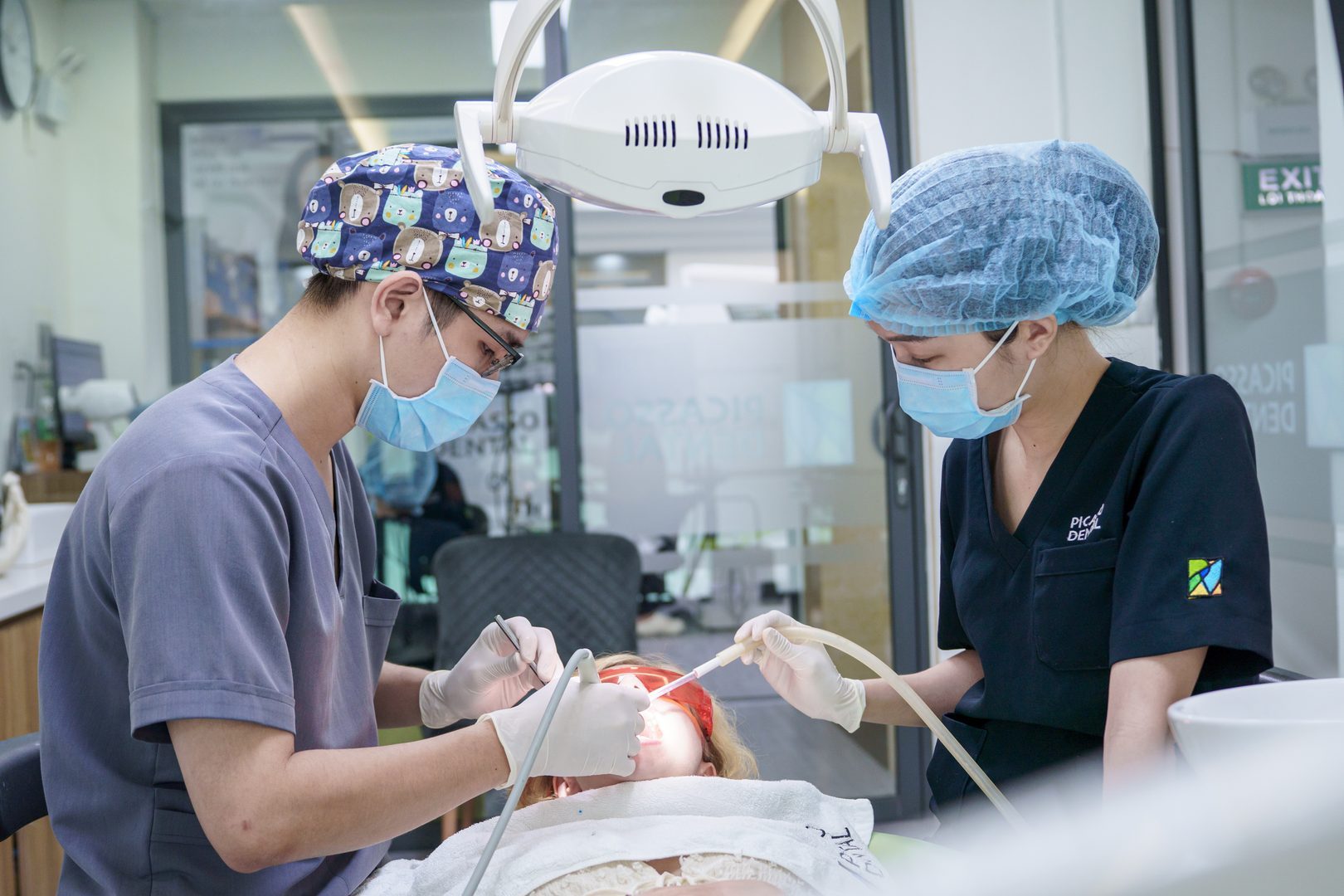
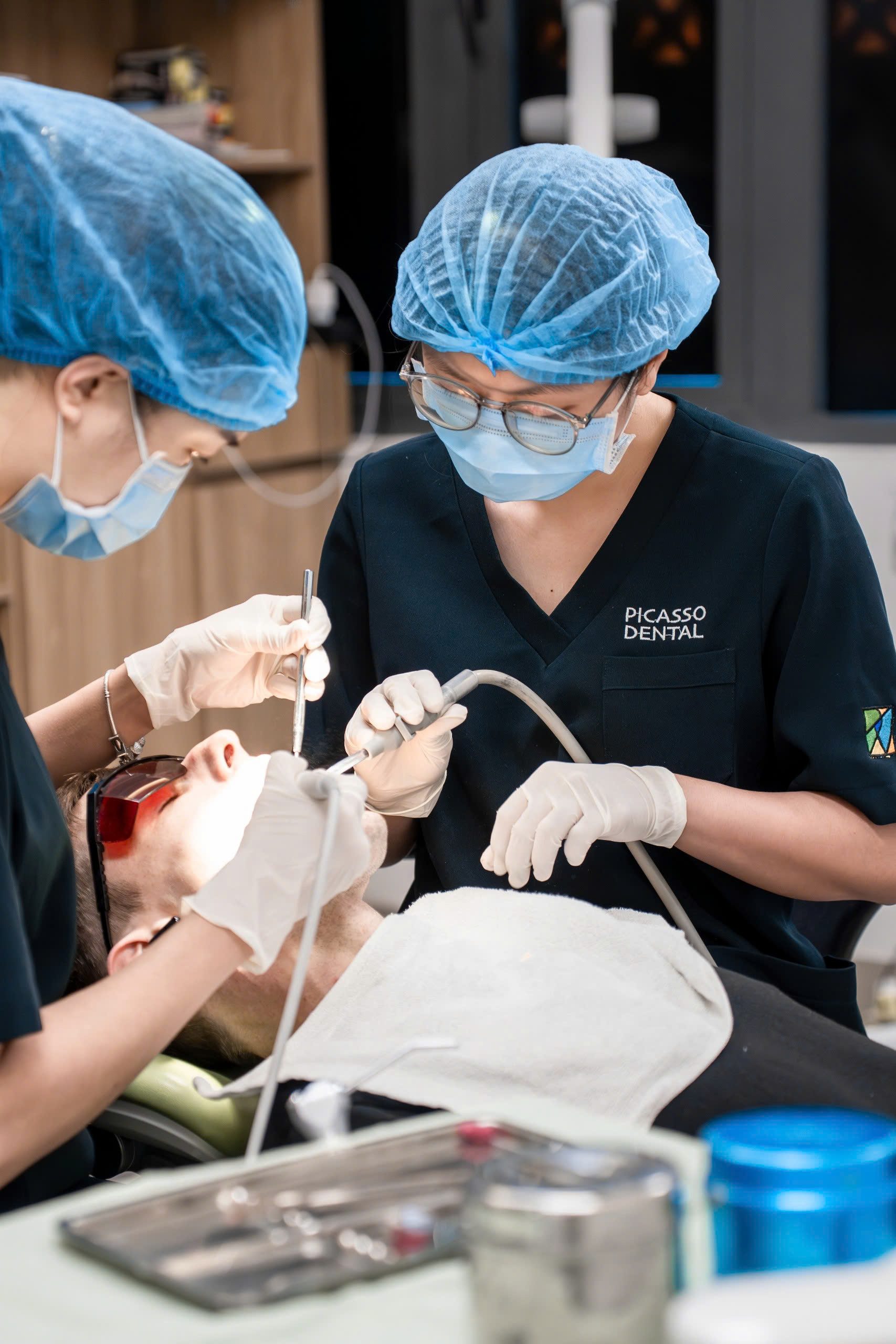
Before a single implant is placed, the site is numbed with local anaesthetic. You will feel pressure when the drill creates the channel in your jawbone, and you will feel vibration as the titanium post is screwed into position. What you will not feel is pain. Across the implant surgeries performed at Picasso Dental, the most common post-procedure comment is: "That was much easier than I expected."
The surgery itself takes 30 to 60 minutes per implant, depending on bone density and any preparatory steps such as a bone graft or sinus lift. Patients who are anxious can request intravenous sedation, in which case the entire appointment passes in what feels like minutes. We stitch the gum closed afterwards and send you home with prescriptions for pain relief and antibiotics.
Recovery: what the first week looks like
Swelling peaks at day two or three, then resolves steadily. Ice packs applied to the cheek for 20 minutes on, 20 minutes off during the first 24 hours reduce swelling significantly. Most patients manage on ibuprofen alone. A minority require the prescription analgesics we provide as a precaution.
Eat soft foods for the first week: soup, yoghurt, scrambled eggs, soft rice. You do not need to stay home from work. The majority of my patients return to the office the following day. By day five to seven, most report minimal awareness of the site.
Osseointegration: the three-to-six-month wait
After surgery you enter a healing phase called osseointegration, during which your jawbone grows around and fuses with the titanium post. This takes three to six months, depending on bone quality and the location of the implant. You will feel nothing during this period. We fit a temporary tooth so your smile is uninterrupted.
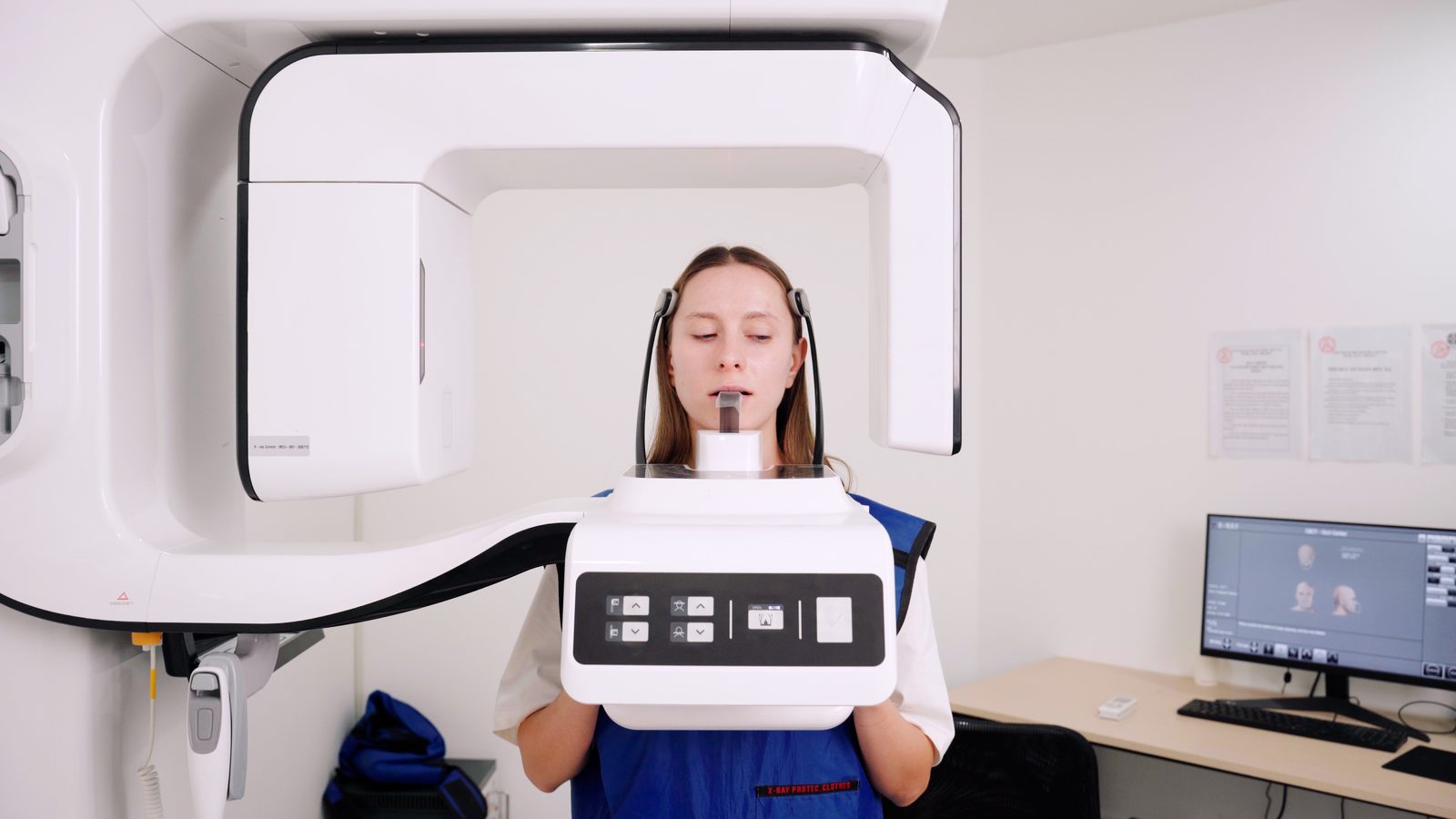
Once we confirm through X-ray that integration is complete, we attach the permanent porcelain crown. From that point, the implant functions identically to a natural tooth: you can eat anything, clean it like any other tooth, and forget it is there.
How long implants last, and what determines longevity
The titanium post does not decay, does not fracture under normal chewing forces, and does not erode with age. Clinical data puts the ten-year success rate above 95 percent. Among the first generation of implant patients from the 1960s, many are still using their original implants decades later.
The porcelain crown is subject to the same wear as a natural tooth. With normal use it typically lasts 15 to 20 years before the ceramics show enough wear to justify replacement. The implant underneath does not need to be touched.
"During my total 4 to 5 hours of treatment on the 2 days of visit, I feel completely relaxed and do not feel any slightest pain during the treatment whosoever."
Wilfred Koh, HCMC Thao Dien
The main causes of implant failure and how to avoid them
Smoking is the single biggest risk factor. Tobacco impairs blood supply to the healing bone and dramatically increases the rate of peri-implantitis, an infection of the tissue around the implant. I always advise patients to stop smoking for at least two weeks before surgery and ideally permanently thereafter.
Uncontrolled diabetes delays healing and increases infection risk. Patients with well-managed diabetes do not face meaningfully higher failure rates than non-diabetic patients. The key word is "well-managed." We request recent HbA1c results for any diabetic patient before scheduling surgery.
Poor oral hygiene after placement is the third major cause. Plaque allowed to accumulate at the implant collar causes peri-implantitis, which can progress to bone loss around the fixture. Twice-daily brushing with a soft brush and daily flossing or water-flossing removes the plaque load before it hardens. Six-monthly professional cleans at any of our branches catch anything that slips through.

Implants versus bridges and dentures
A bridge replaces a missing tooth by crowning the two teeth on either side and suspending a false tooth between them. Those adjacent teeth must be ground down whether they are healthy or not. The bridge also allows bone to resorb underneath the false tooth because there is no root to stimulate the jaw. Bridges typically last ten to fifteen years before needing replacement.
Dentures do not require grinding down natural teeth, but they rest on bone that is actively resorbing. Every year the fit worsens slightly. Relining and eventual replacement is expected every five to ten years. Eating hard or chewy foods remains uncomfortable for many denture wearers throughout their lives.
An implant stands alone, preserves bone, and lets you eat without restriction. The higher upfront cost is offset by the fact that, unlike the alternatives, the implant itself should never need replacing.
Thinking about implants? Book a consultation and we will assess your bone volume, discuss systems, and give you a full cost breakdown with no obligation.
Book a consultation →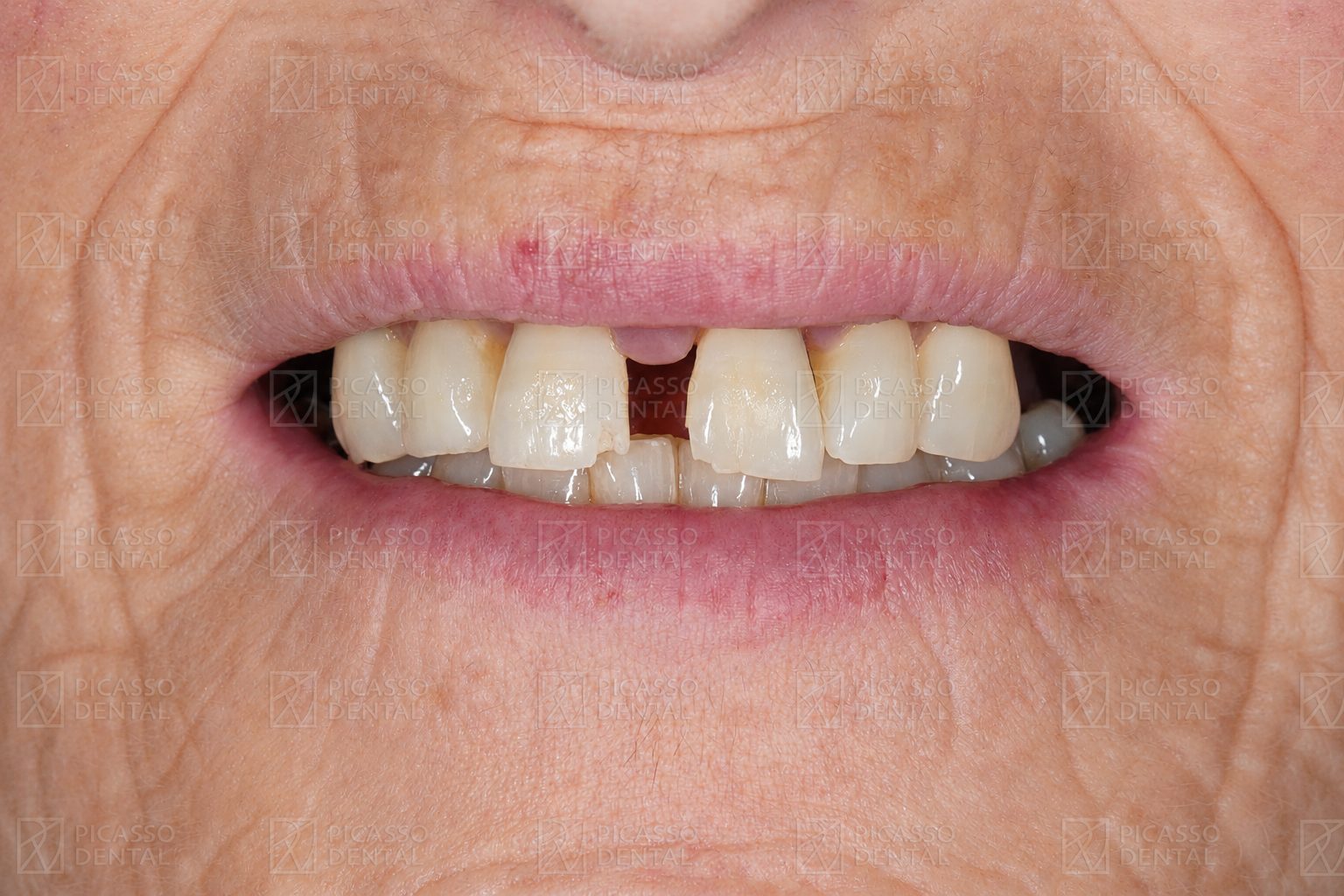 Before
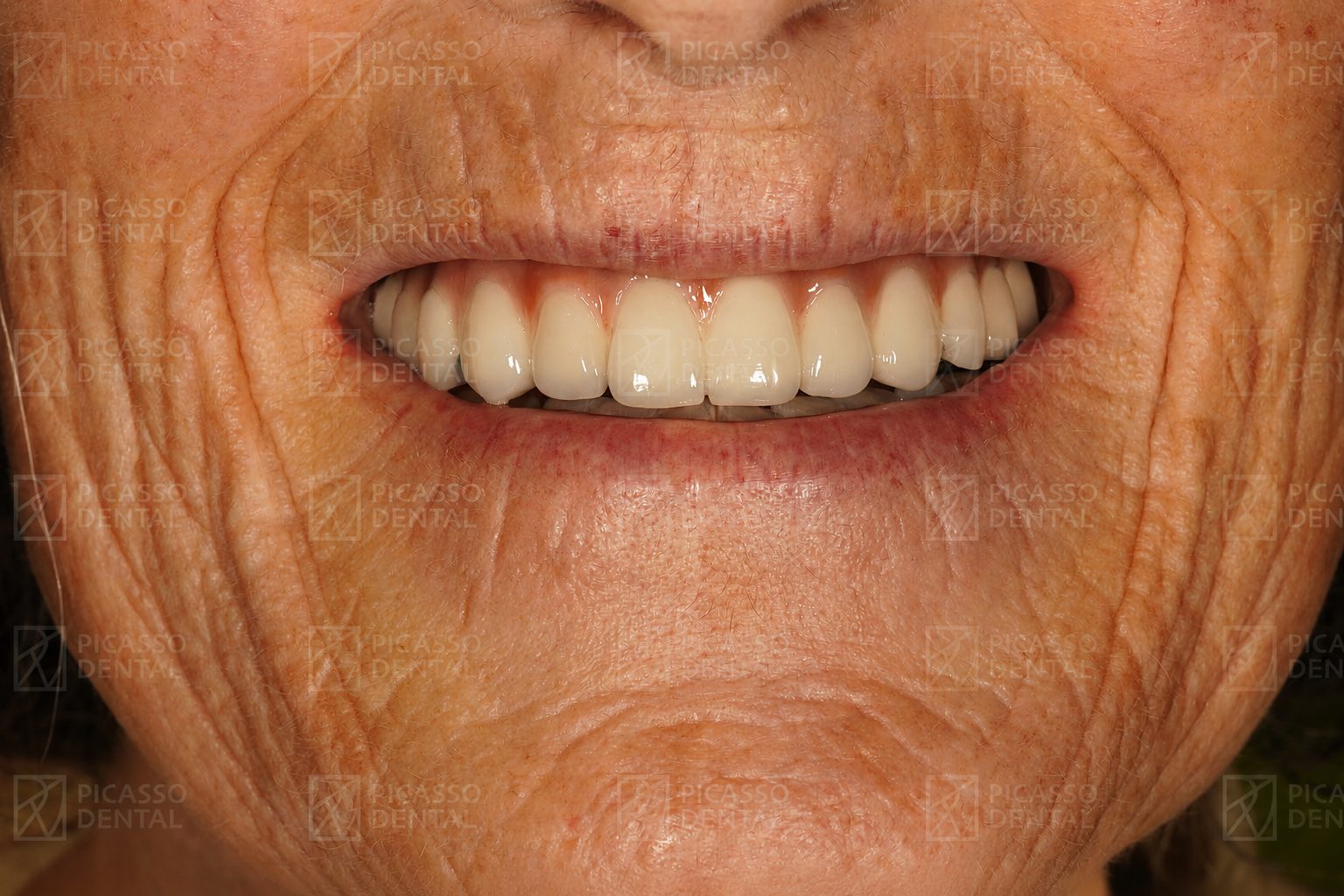 After
AfterFull rehabilitation, Hanoi Old Quarter
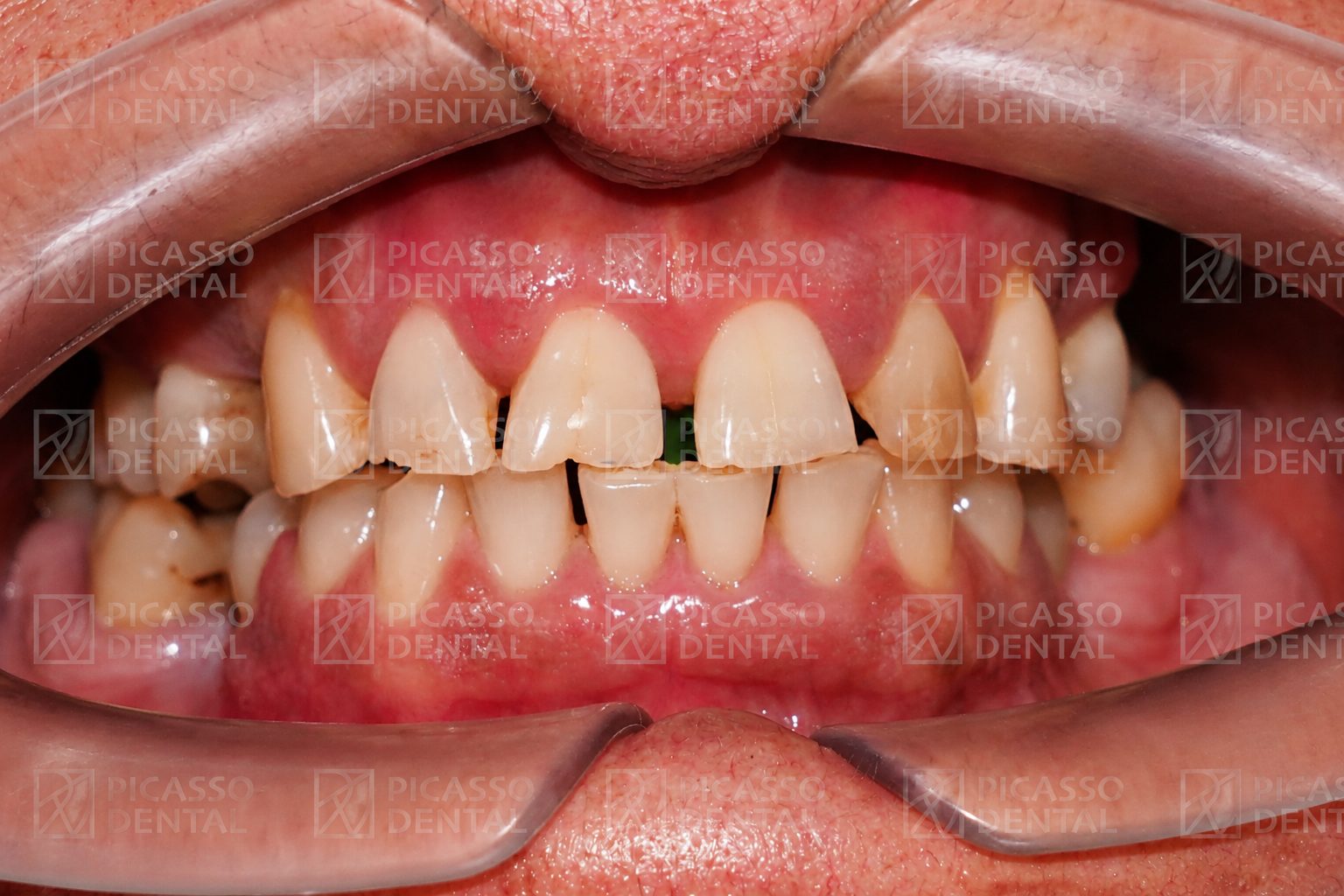 Before
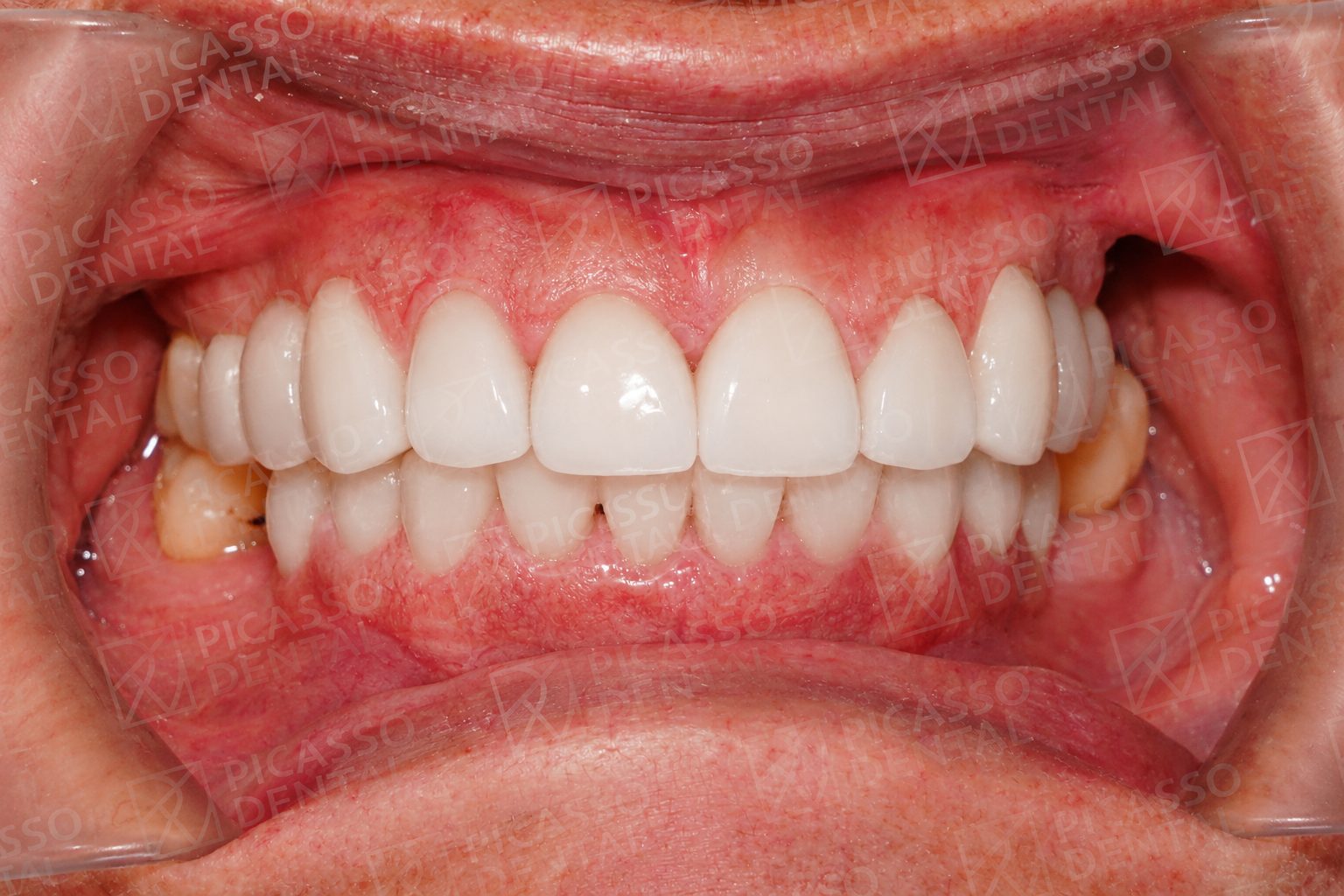 After
AfterPorcelain crowns, Da Nang
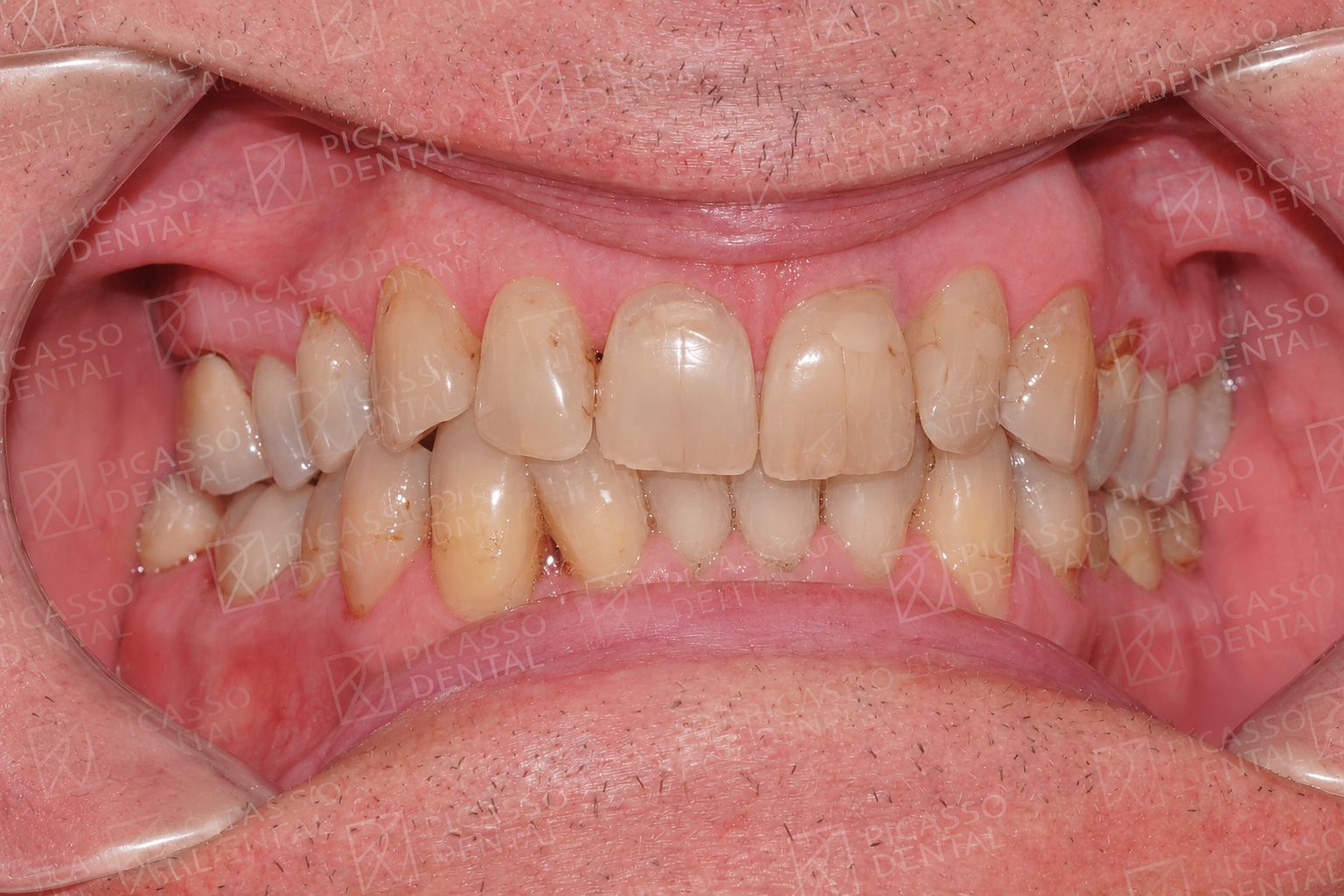 Before
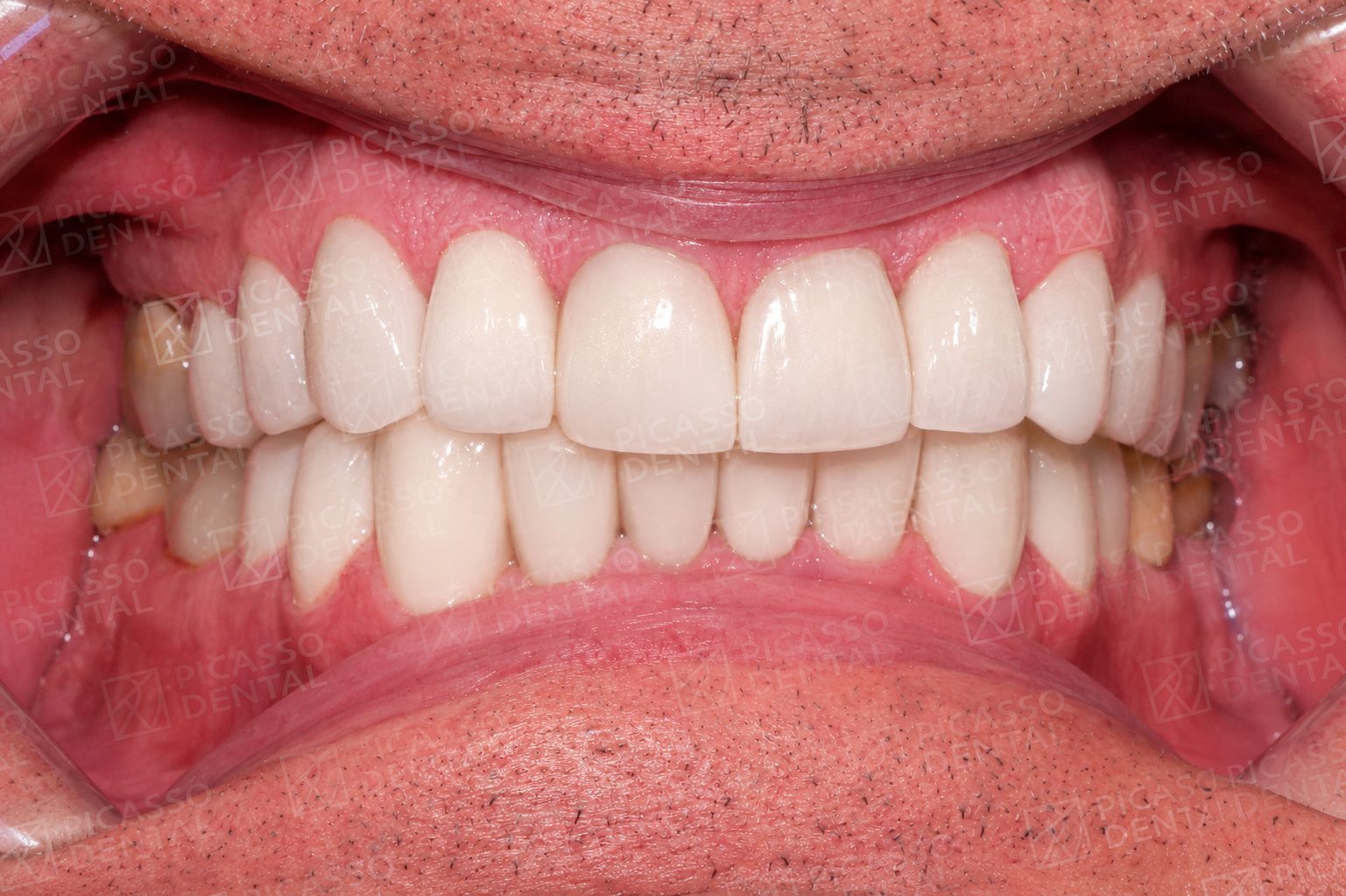 After
AfterCrown and implant, HCMC Thao Dien
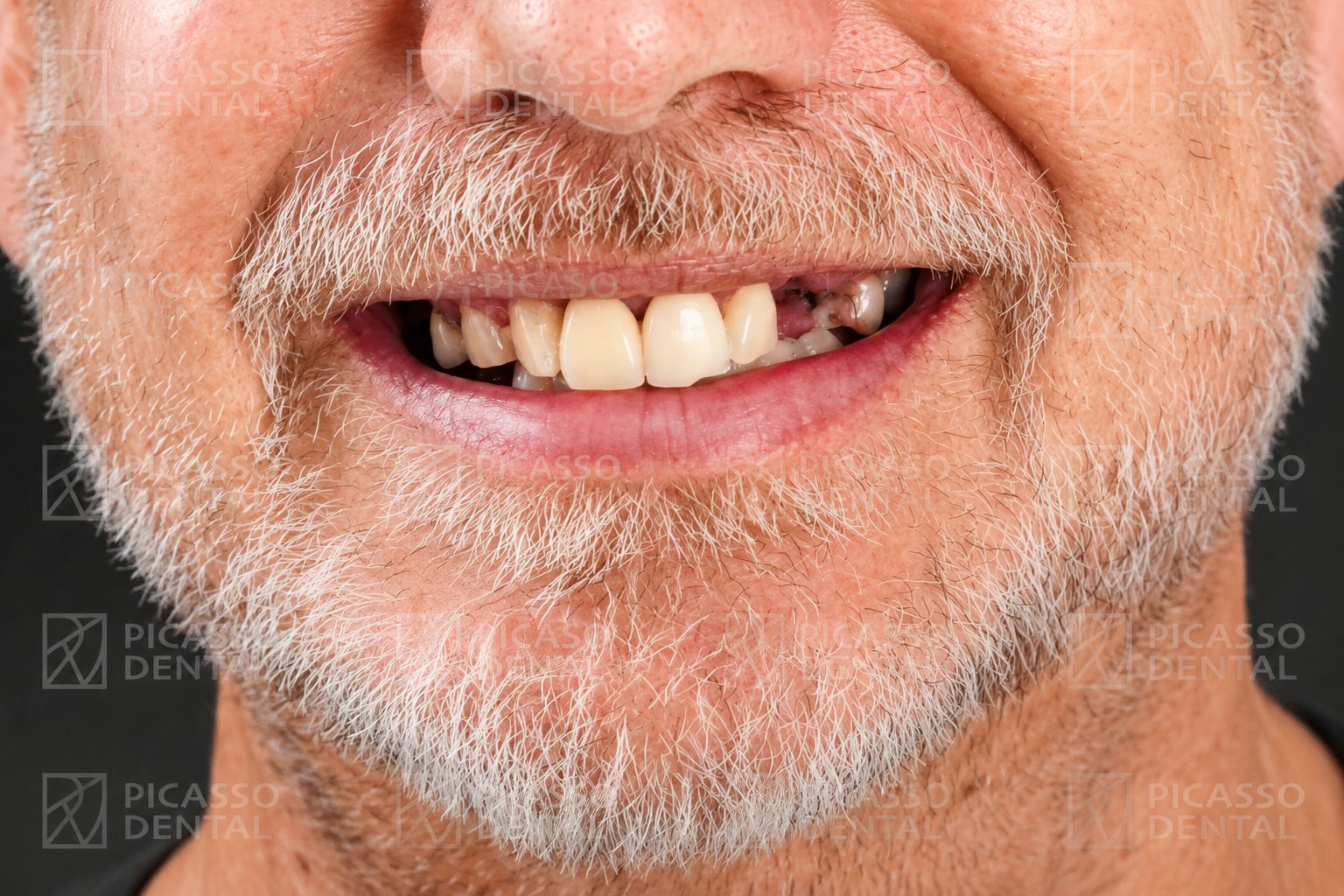 Before
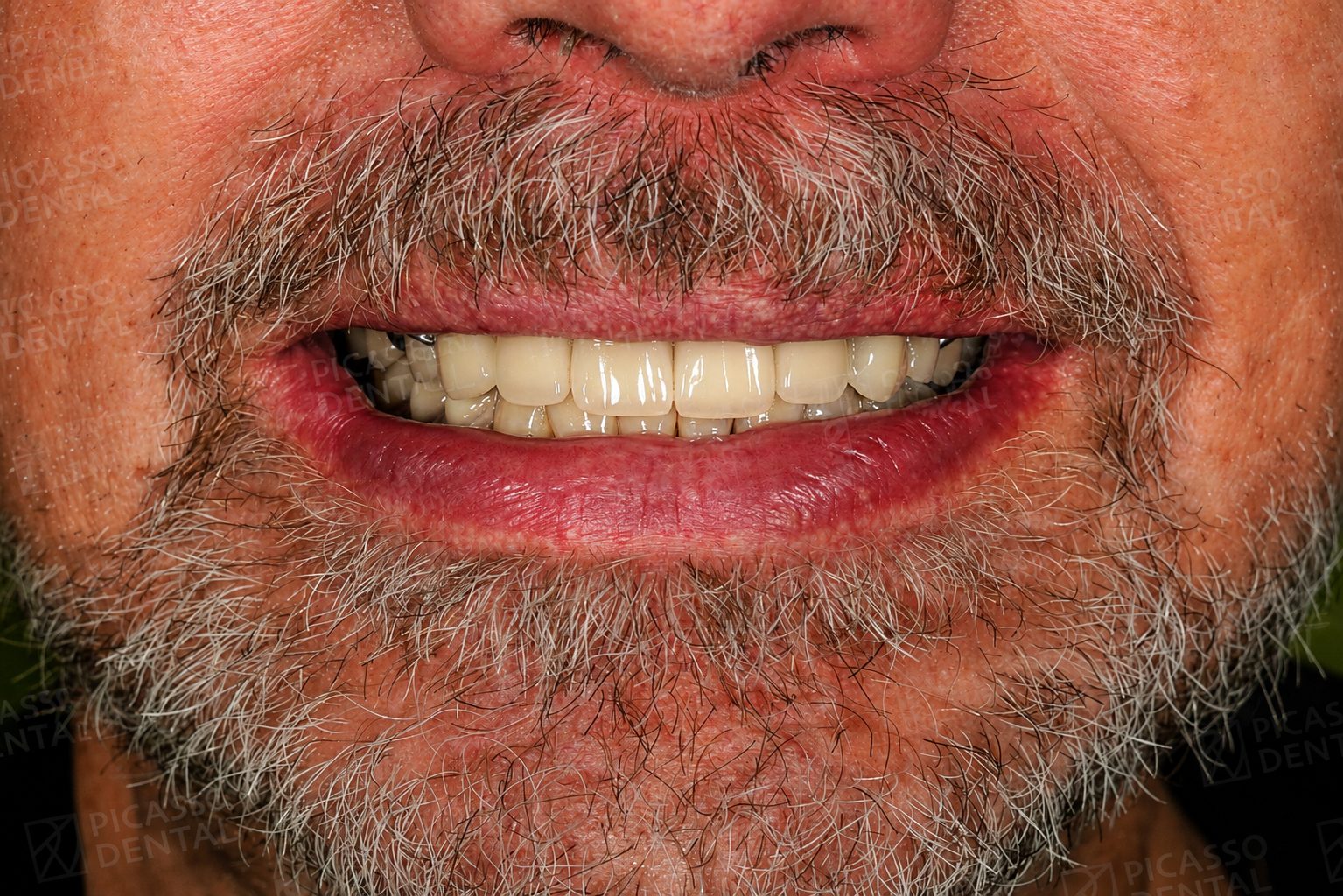 After
AfterCrown restoration, Hanoi Westlake
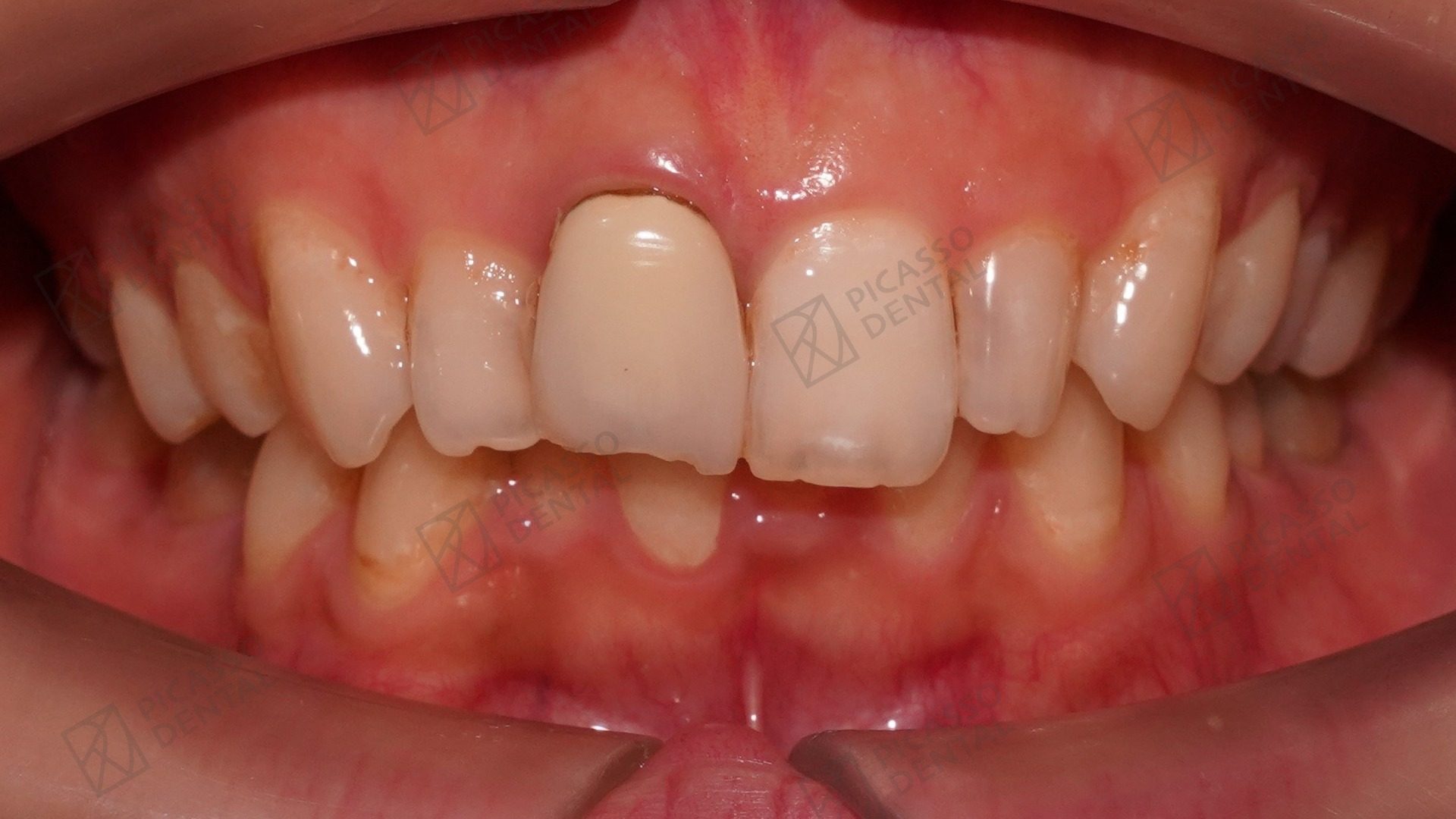 Before
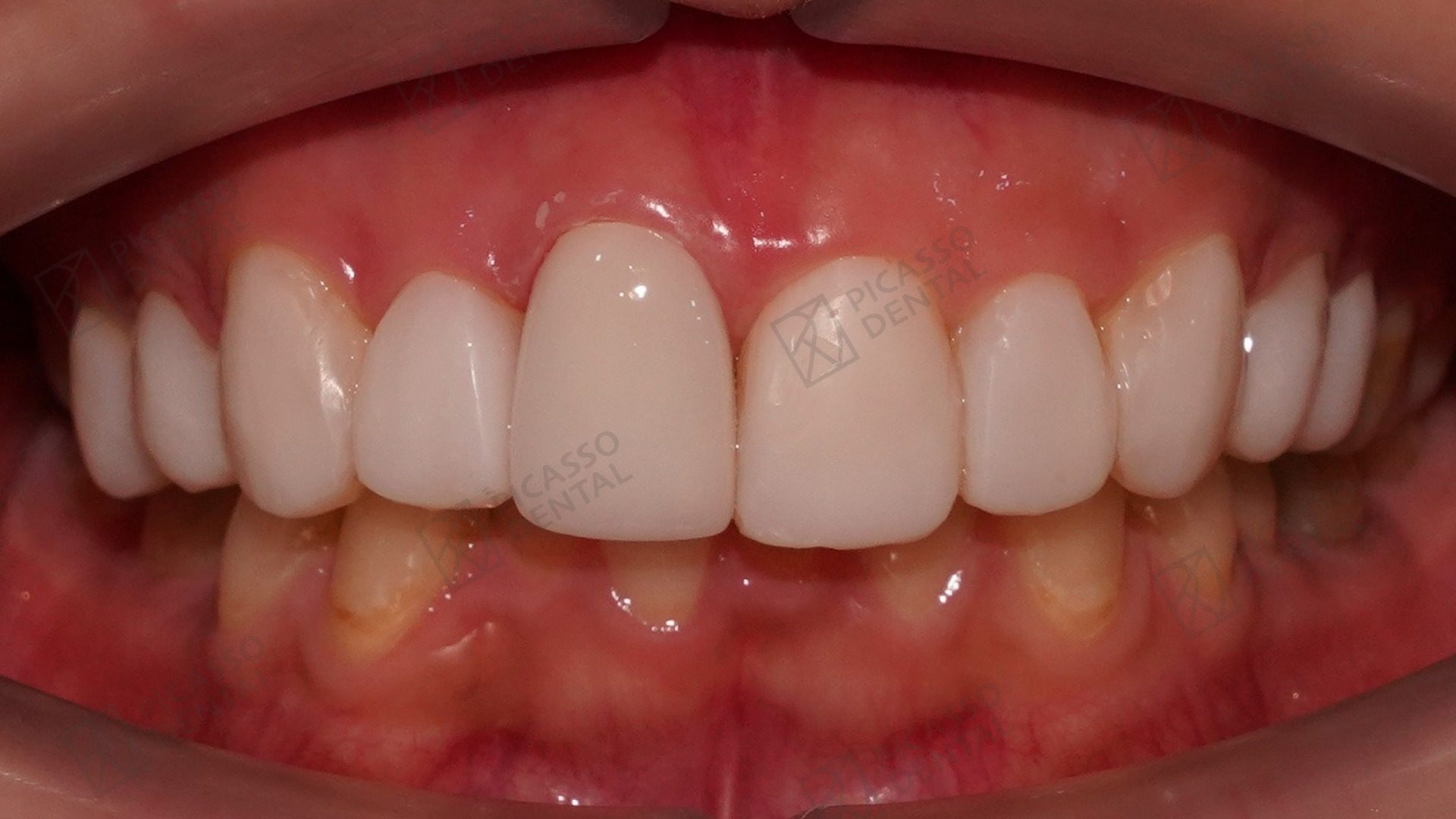 After
AfterSmile restoration, Da Nang Flagship
Frequently asked questions
Do dental implants hurt during the procedure?
No. The implant site is numbed completely with local anaesthetic before surgery begins. You will feel pressure and vibration as the titanium post is placed into your jawbone, but you will not feel pain. Patients who are anxious can also request sedation. Most patients are surprised at how comfortable the procedure actually is.
How much pain is there after dental implant surgery?
Most patients rate post-operative discomfort at two to four out of ten. Swelling peaks around day two or three and subsides over the following week. Over-the-counter ibuprofen controls it well for the majority of patients, and prescription medication is available for those who need stronger relief. The discomfort is comparable to, or less than, a straightforward tooth extraction.
How long does it take for an implant to heal?
The gum heals within one to two weeks. Full osseointegration, the process where bone fuses with the titanium post, takes three to six months depending on bone density and the patient's overall health. During this period you will have no discomfort. A temporary tooth keeps your smile intact while the implant consolidates.
How long do dental implants last?
The titanium implant post is designed to last a lifetime. Studies show a success rate exceeding 95 percent at ten years. Some patients from the earliest implant cohorts in the 1960s still have their original implants. The porcelain crown on top may need replacement after 15 to 20 years due to normal wear, but the implant fixture itself does not decay and does not wear out.
What can cause an implant to fail?
The main risk factors for implant failure are smoking, uncontrolled diabetes, severe bone loss at the time of placement, and poor oral hygiene after placement. Infection around the implant, called peri-implantitis, can develop if plaque is allowed to accumulate at the gumline. Regular six-monthly professional cleaning and diligent daily brushing eliminate most of this risk.
How do implants compare to bridges and dentures for longevity?
Bridges typically need replacement every ten to fifteen years and require grinding down the adjacent healthy teeth. Dentures need relining or replacement every five to ten years and accelerate bone loss in the jaw over time. Implants do not damage neighbouring teeth, maintain jawbone density through natural chewing stimulation, and are designed as a permanent lifetime solution.
How much do dental implants cost in Vietnam compared to Australia or the UK?
At Picasso Dental, a single implant including the crown costs USD 900 to 1,400 depending on the implant system chosen. Equivalent treatment in Australia runs AUD 4,500 to 6,000. The saving reflects lower operating costs in Vietnam, not lower clinical standards. Picasso uses Nobel Biocare, Straumann, and Osstem systems, the same brands used by leading practices in Australia, the UK, and the United States.
Can anyone get dental implants?
Most adults with adequate jawbone volume and healthy gums are candidates. Patients who have lost bone due to long-term tooth absence may need a bone graft before implant placement. Uncontrolled diabetes or active gum disease must be treated first. Age is rarely a barrier: patients in their 70s and 80s successfully receive implants at Picasso Dental's six Vietnam branches every month.
Start Here
Start with a brief.
Tell us which teeth you are missing and we will map out your implant options, timeline, and costs. No obligation, 24-hour reply.