Dental Tourism · Complete Guide 2026
Dental Tourism in Vietnam: The Complete 2026 Guide
Everything a first-time dental tourist needs to know before choosing Vietnam. How to vet a clinic, plan your trip, understand what you will be charged, and what real treatment results look like, with patient cases from Picasso Dental going back to 2014.

Key Takeaways
- Vietnam offers 50 to 70 percent savings on implants and veneers versus Australia, the UK, and Canada, using the same international material brands.
- The single most important clinic selection criterion is the implant brand: insist on Nobel Biocare, Straumann, Osstem, or ETK and get it in writing before you travel.
- CBCT 3D imaging is mandatory for any implant case; a clinic that skips it is a red flag regardless of price.
- Veneers and crowns can be completed in one trip of 5 to 7 days; implants and All-on-4 require two trips 3 to 6 months apart.
- Before you fly home you should receive: X-rays, implant serial number, clinical notes in English, and an itemised invoice for your insurer.
- Da Nang is the most popular entry city for dental tourists; Hanoi suits longer cultural stays; HCMC suits arrivals via Tan Son Nhat airport.
Why International Patients Choose Vietnam
Vietnam has become one of the top three destinations for dental tourism in Southeast Asia, alongside Thailand and the Philippines. The driver is not cost alone. It is the combination of internationally trained clinicians, certified implant brands, modern imaging equipment, and pricing that remains 50 to 70 percent below what the same treatment costs in Australia, the UK, or Canada.
The savings on a complex case are substantial. An All-on-4 rehabilitation on Nobel Biocare implants with a zirconia bridge costs USD 8,000 to 12,000 at Picasso Dental. The same treatment in Sydney or Melbourne routinely exceeds AUD 30,000. A set of 10 LAVA porcelain veneers costs USD 3,000 to 4,500 in Vietnam; in London, expect GBP 10,000 to 18,000.
| Treatment | Australia (AUD) | UK (GBP) | Vietnam at Picasso (USD) |
|---|---|---|---|
| Single dental implant (Nobel Biocare) | $5,000 – $6,500 | £3,000 – £4,500 | $900 – $1,400 |
| All-on-4 per jaw (Nobel Biocare) | $20,000 – $35,000 | £15,000 – £25,000 | $8,000 – $12,000 |
| 10 porcelain veneers (LAVA 3M) | $12,000 – $20,000 | £10,000 – £18,000 | $3,000 – $4,500 |
| Composite veneers (6 teeth) | $3,000 – $6,000 | £2,500 – £5,000 | $600 – $1,200 |
| Zoom whitening (in-office) | $800 – $1,500 | £600 – £1,200 | $200 – $350 |
These are list prices using certified international brands. The total including flights, accommodation, and spending in Vietnam still comes in well below the cost of the same treatment at home for most patients.
How to Choose a Dental Clinic in Vietnam
Vietnam has thousands of dental clinics. Most are perfectly competent for basic care: fillings, cleaning, whitening. For implants, full-arch rehabilitation, or significant cosmetic treatment, the differences between clinics matter significantly and the criteria below separate the top tier from the rest.
What to look for
- Named implant brands only. The clinic should commit in writing to the specific brand (Nobel Biocare, Straumann, Osstem, ETK) before you travel. Vague answers about "quality imported implants" are a warning sign.
- Implant serial number documentation. A reputable clinic gives you the implant serial number before you fly home. This verifies what was placed and activates the manufacturer warranty.
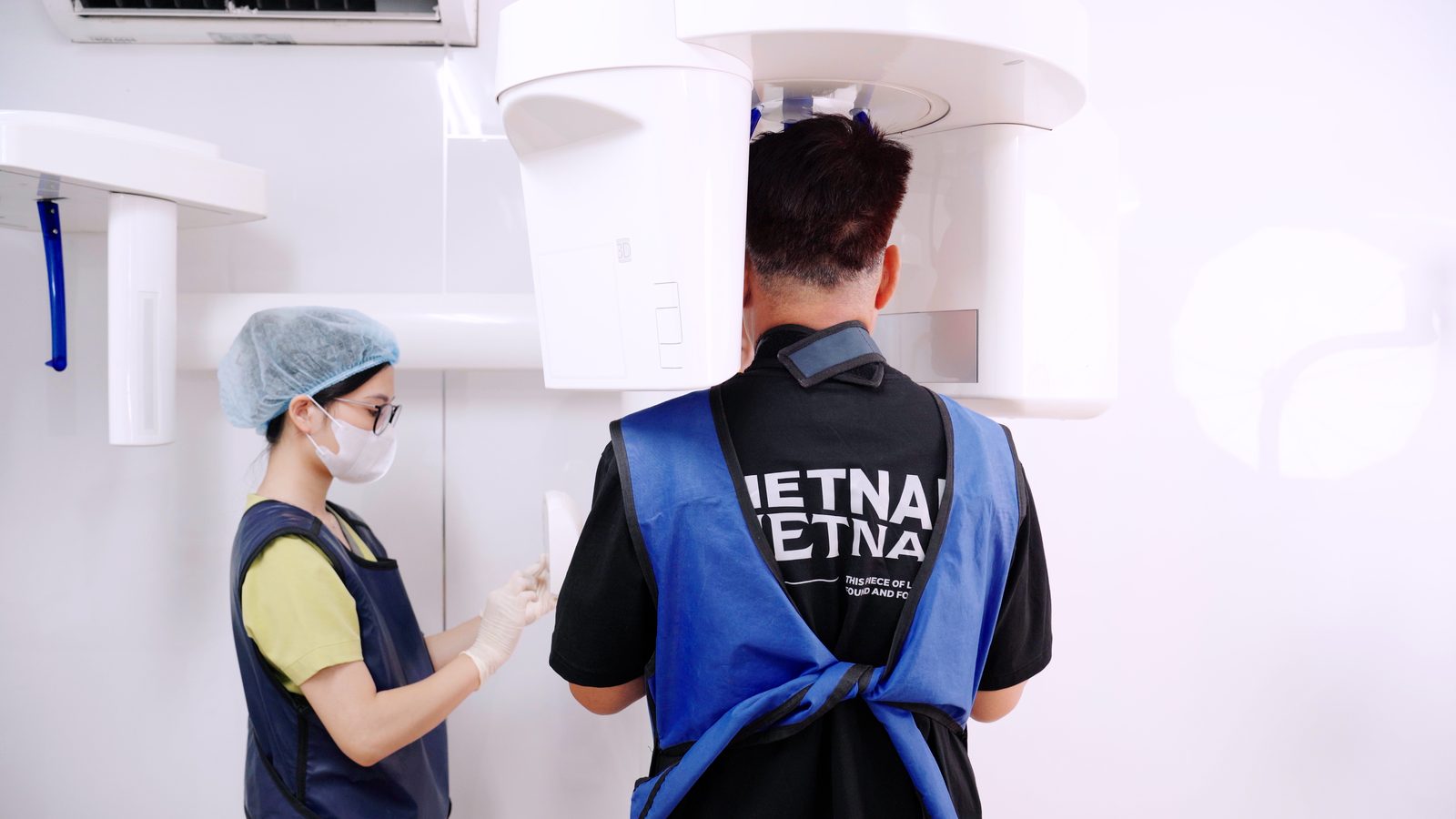
- CBCT 3D imaging for surgical planning. Implant placement without a CBCT scan is a serious red flag. The scan allows safe, accurate fixture positioning and identifies anatomical hazards such as nerve proximity and sinus depth.
- Written treatment plan with itemised costs sent before you book flights. Not after you arrive. You need this to compare quotes and plan your budget at home.
- English clinical records on departure. Your dentist at home needs to read what was done. Vietnamese-only records complicate follow-up care.
- Twelve or more months of verified international patient reviews. Check Google Maps, WhatClinic, and Dental Departures for reviews from patients in your country who have completed treatment, not just had a consultation.
Green flags
- Named brand confirmed in writing
- Itemised quote sent before you book
- CBCT scan included in surgical planning
- Serial number provided on departure
- English treatment notes in your file
- Reviews from patients who completed multi-stage treatment
Red flags
- Price 50–70% below Vietnam market rate
- Cannot name the implant brand before treatment
- No CBCT scan offered for implant cases
- No written quote before you arrive
- Large deposit required before a treatment plan exists
- Only recent reviews from local patients
Which Vietnamese City Should You Choose?
The four main cities for dental tourism in Vietnam each have different advantages depending on your itinerary and treatment type.
Da Nang
The most popular city for first-time dental tourists. Da Nang has a compact city centre, My Khe and Non Nuoc beaches within 20 minutes, and Hoi An Ancient Town one hour south. Picasso Dental Clinic - Da Nang Flagship operates inside Vinmec International Hospital, which is the right setting for complex surgical cases requiring IV sedation or hospital-grade support. Recommended for: cosmetic work, single and full-arch implants, anyone who wants beach recovery time.
Hanoi
The capital and the location of the Picasso Dental flagship in the Old Quarter, established 2013. Hanoi suits patients who want to combine treatment with cultural tourism: the Old Quarter, Hoan Kiem Lake, Temple of Literature, and Ha Long Bay day trips are all accessible. The Westlake branch serves the western expat residential district. Good for longer stays of two weeks or more.
Ho Chi Minh City
Best for patients arriving via Tan Son Nhat International Airport and those who prefer a large cosmopolitan city. Picasso Dental HCMC Thao Dien is in District 2, a well-established expat neighbourhood with international restaurants, supermarkets, and amenities. Short taxi and ride-share distances to the airport make this branch practical for short treatment trips.
Da Lat
Mountain city at 1,500 metres altitude, cooler than the coast year-round. Ideal for patients who prefer cooler recovery conditions or are visiting the central highlands. Picasso Da Lat operates inside Link General Hospital. Less suited to same-trip tourism pairing, but the climate and pace are appreciated by patients doing longer stays.
Planning Your Trip Around Your Treatment
The most critical planning step is determining how many days you need. This depends on what treatment you are having and whether lab work is involved.
| Treatment | Trips required | Days per trip |
|---|---|---|
| Whitening, cleaning, bonding | 1 trip | 2 to 3 days |
| Composite veneers (6 to 10 teeth) | 1 trip | 2 to 4 days |
| Porcelain veneers (6 to 10 teeth) | 1 trip | 5 to 7 days |
| Crowns and bridges | 1 trip | 5 to 7 days |
| Single implant | 2 trips | Trip 1: 3 to 5 days / Trip 2: 2 to 3 days (after 3 to 6 months) |
| All-on-4 or All-on-6 | 2 trips | Trip 1: 7 to 10 days / Trip 2: 3 to 5 days |
| Invisalign start | 1 trip (continue at home) | 3 to 4 days |
The best-value dental tourism trips combine multiple procedures in a single visit. Common high-value combinations include implant placement paired with whitening and cleaning in the same first trip, or veneers combined with a full cleaning and any necessary restorative work. When you submit your consultation, describe your full dental wishlist so the team can design a schedule that uses your available days efficiently.
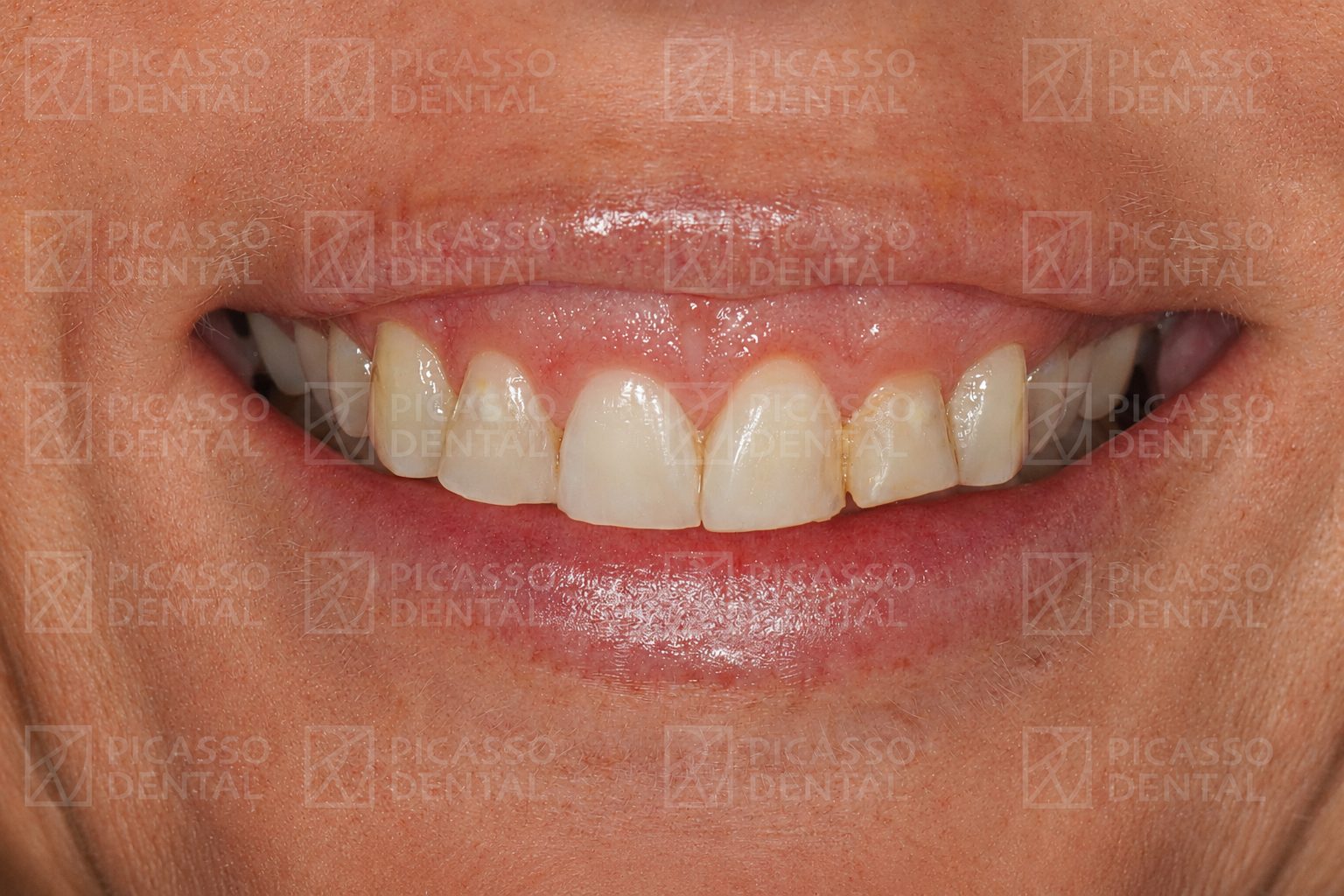
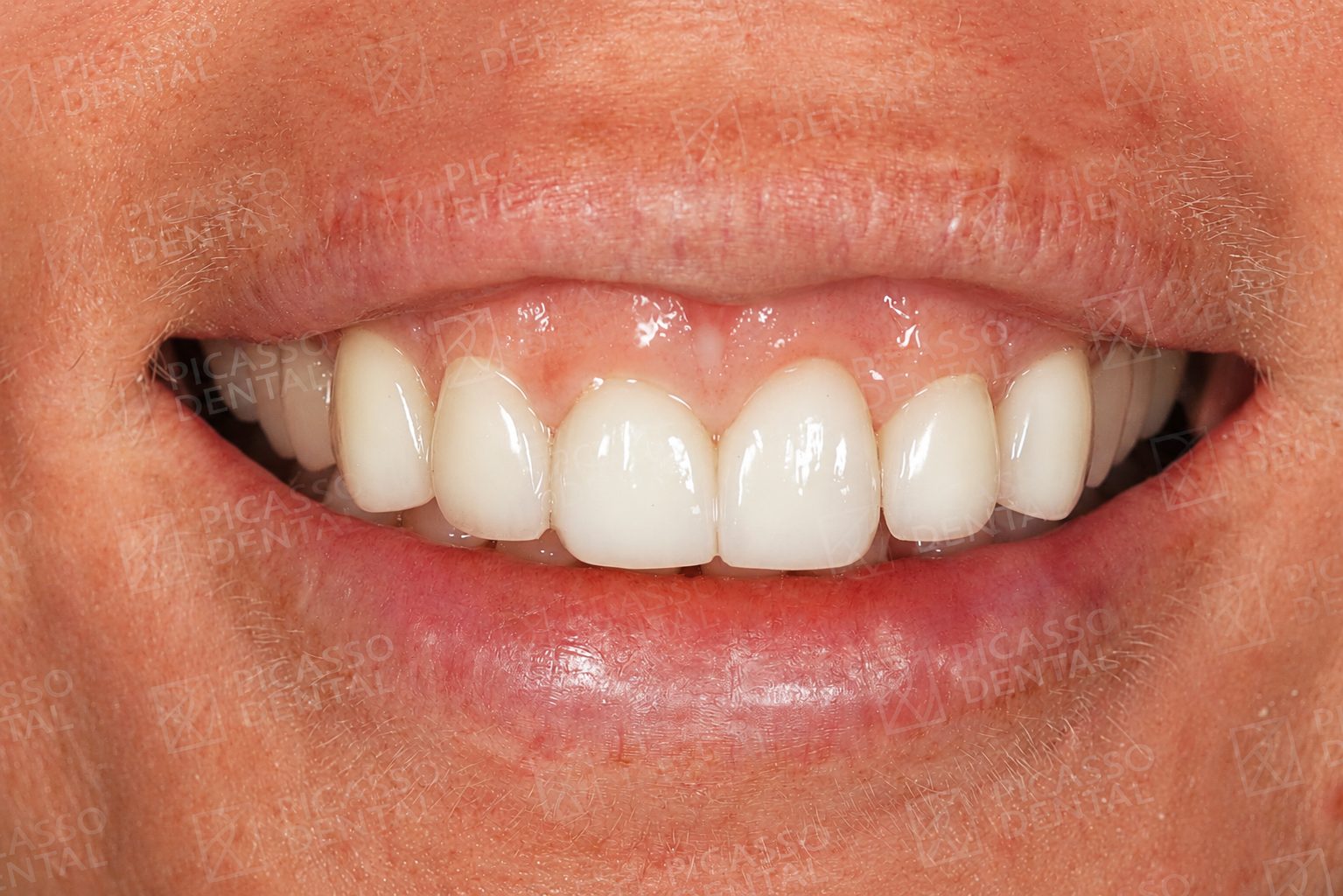
Veneer Results: Porcelain Veneers
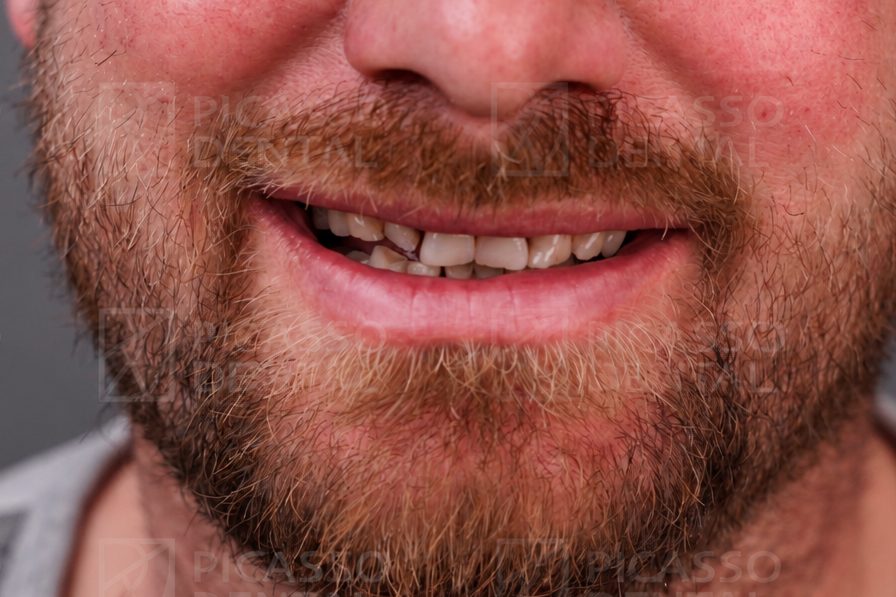
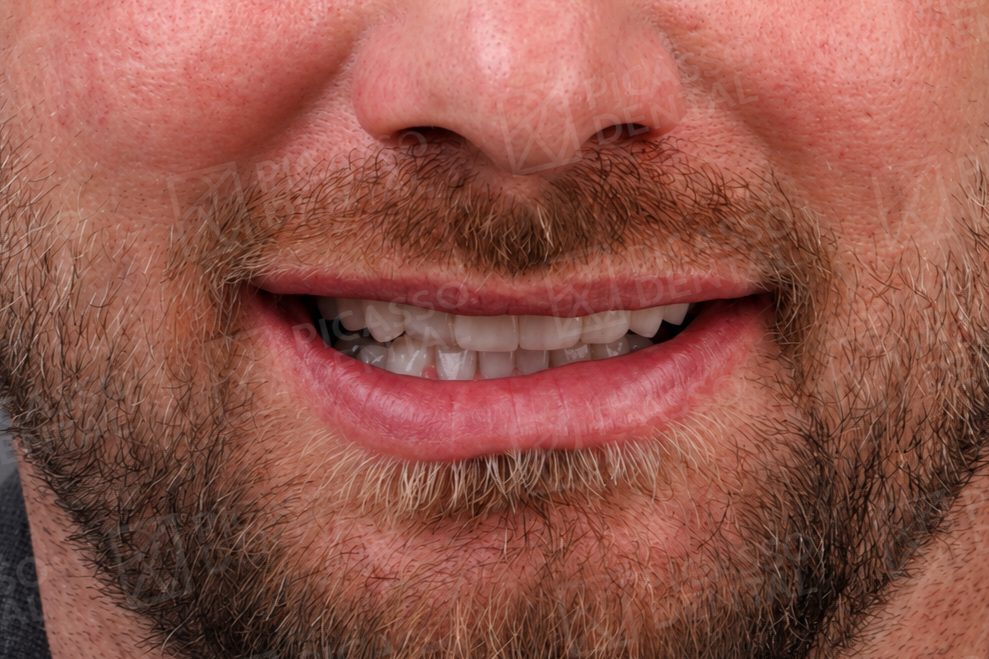
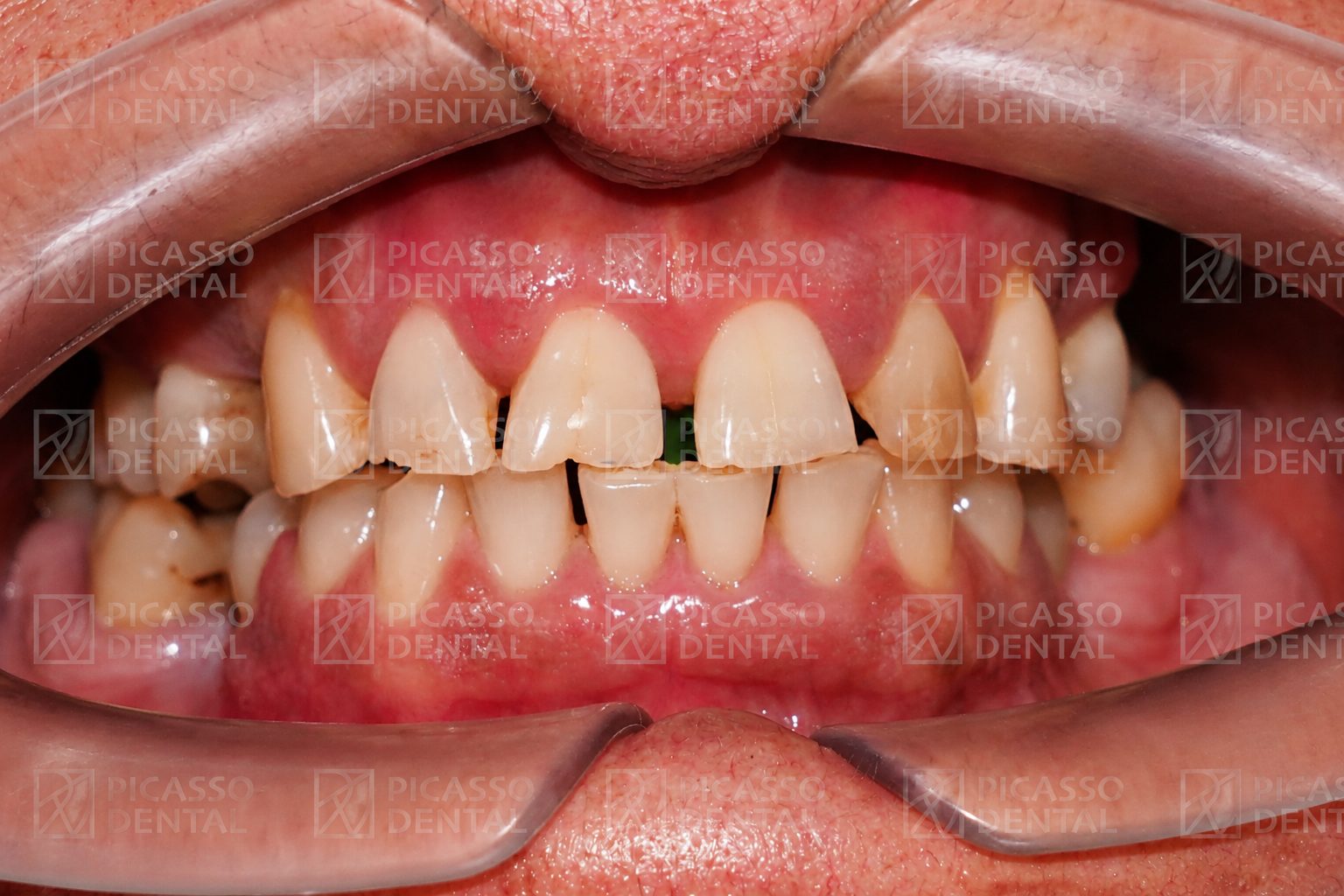
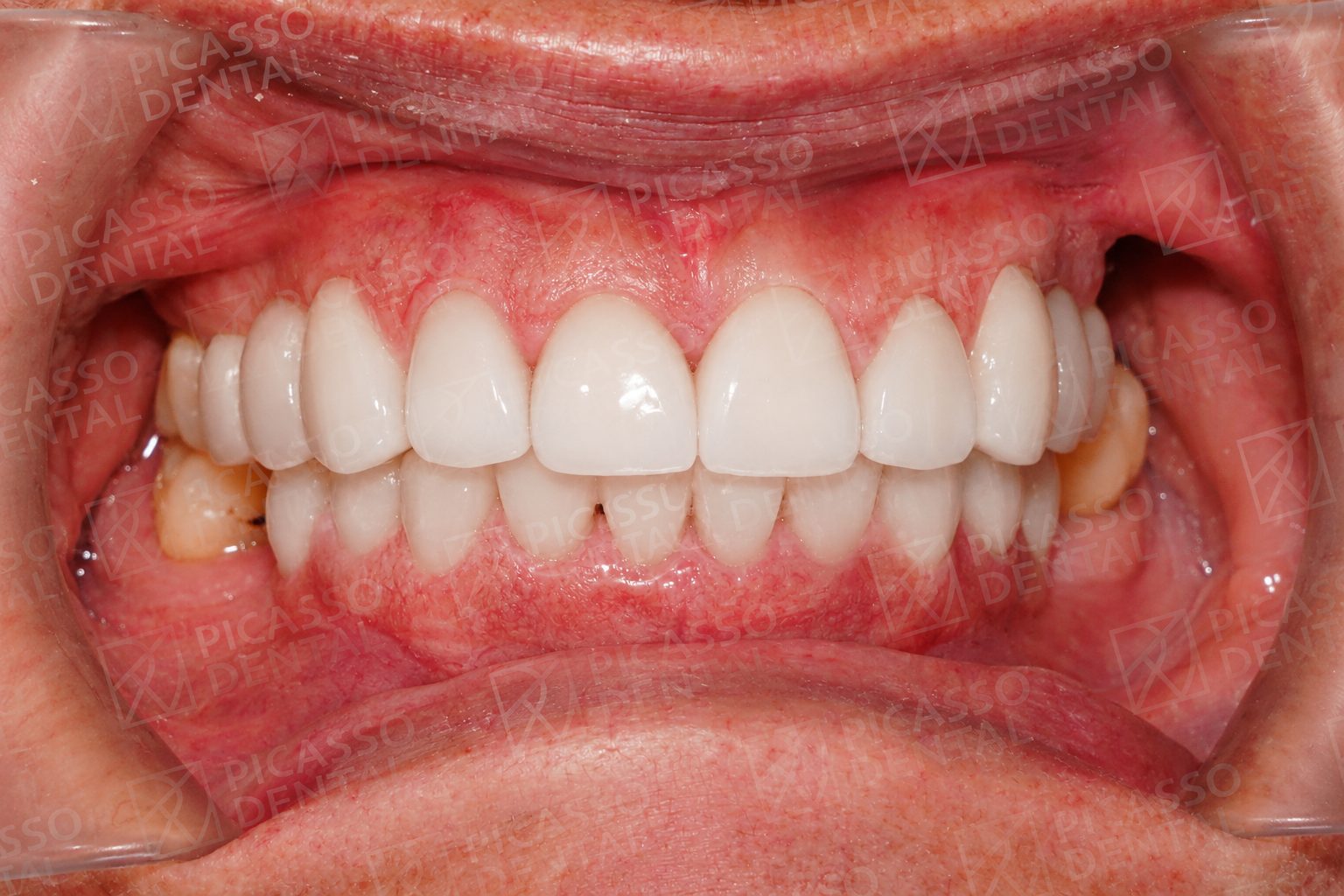
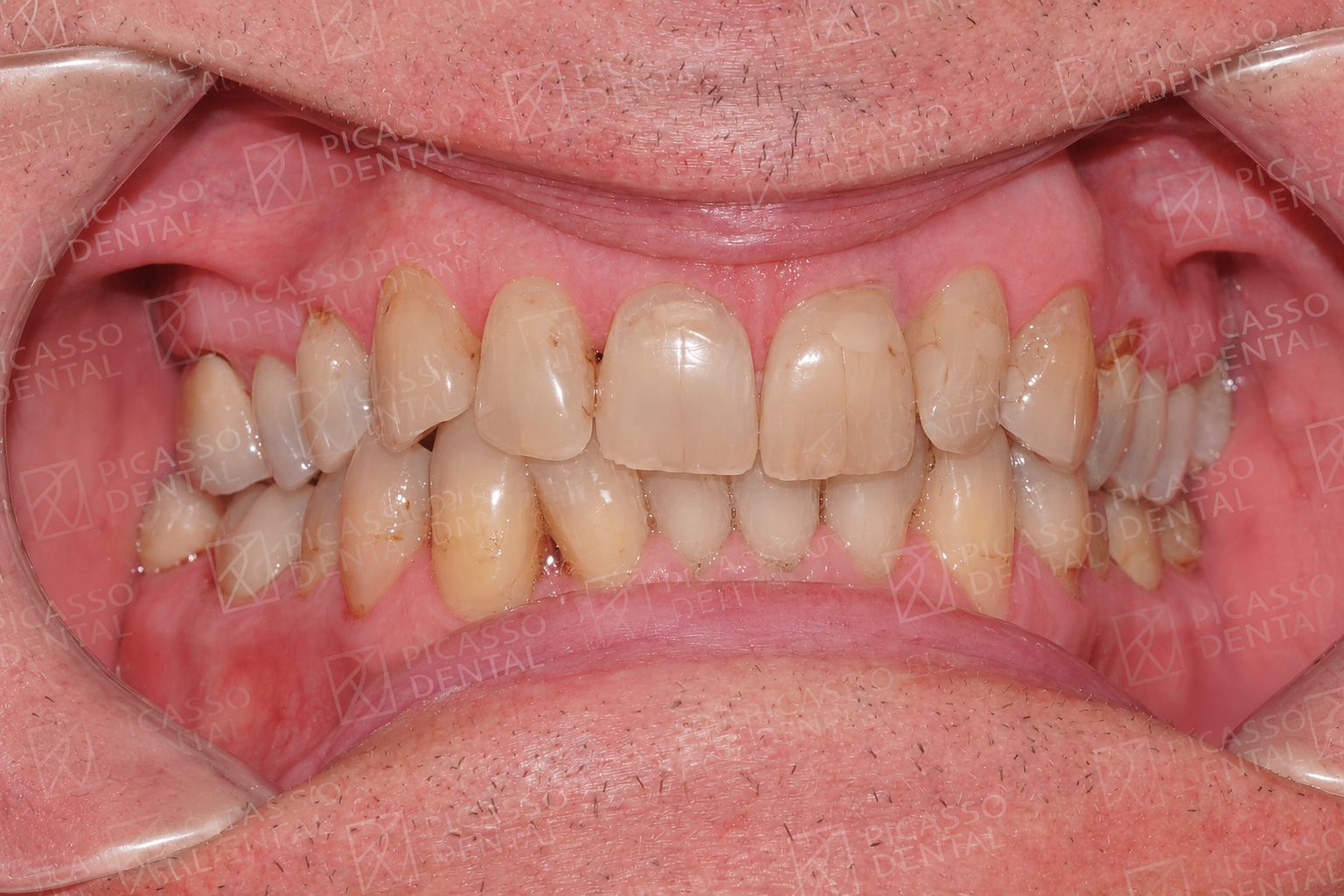
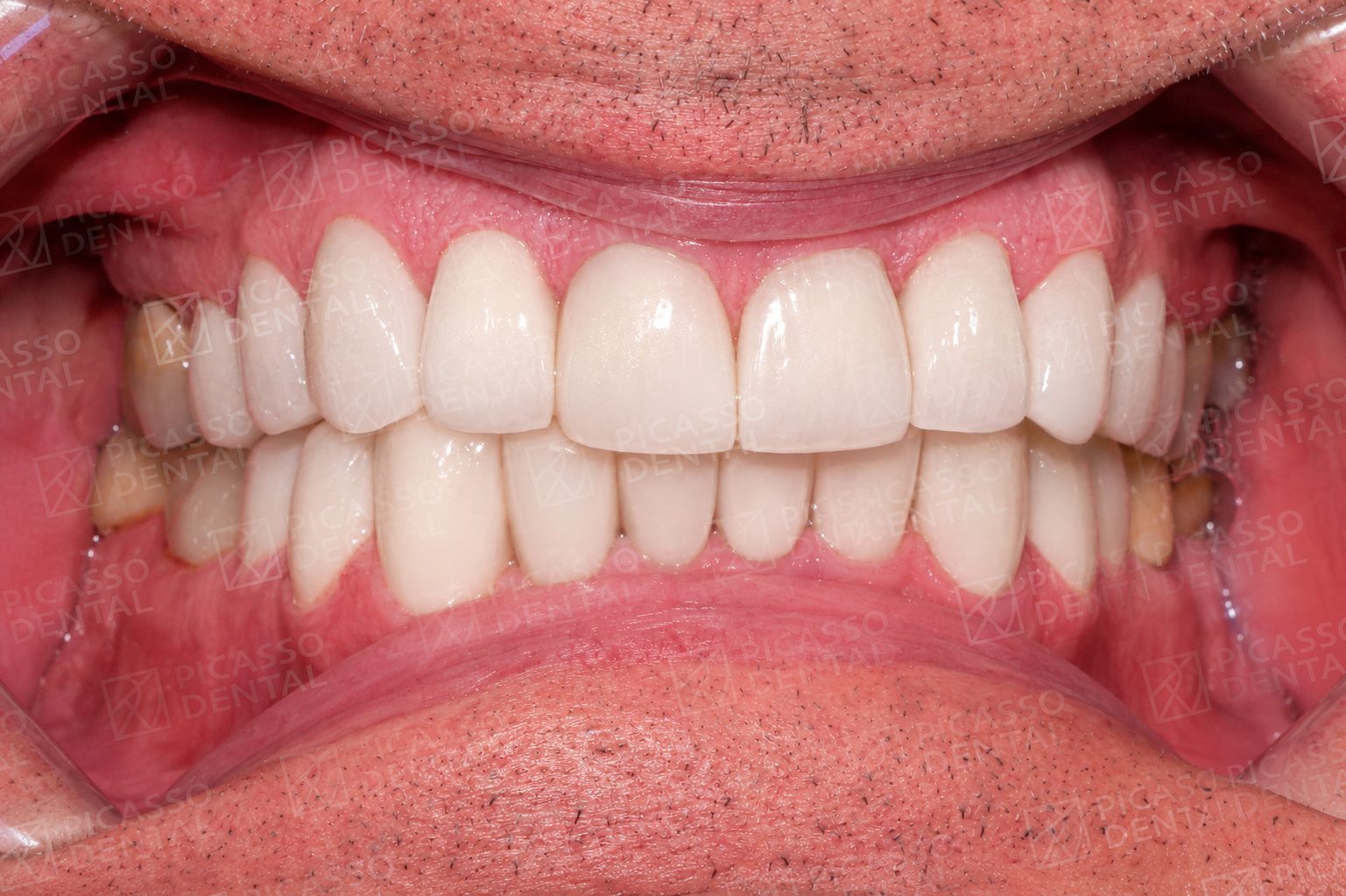
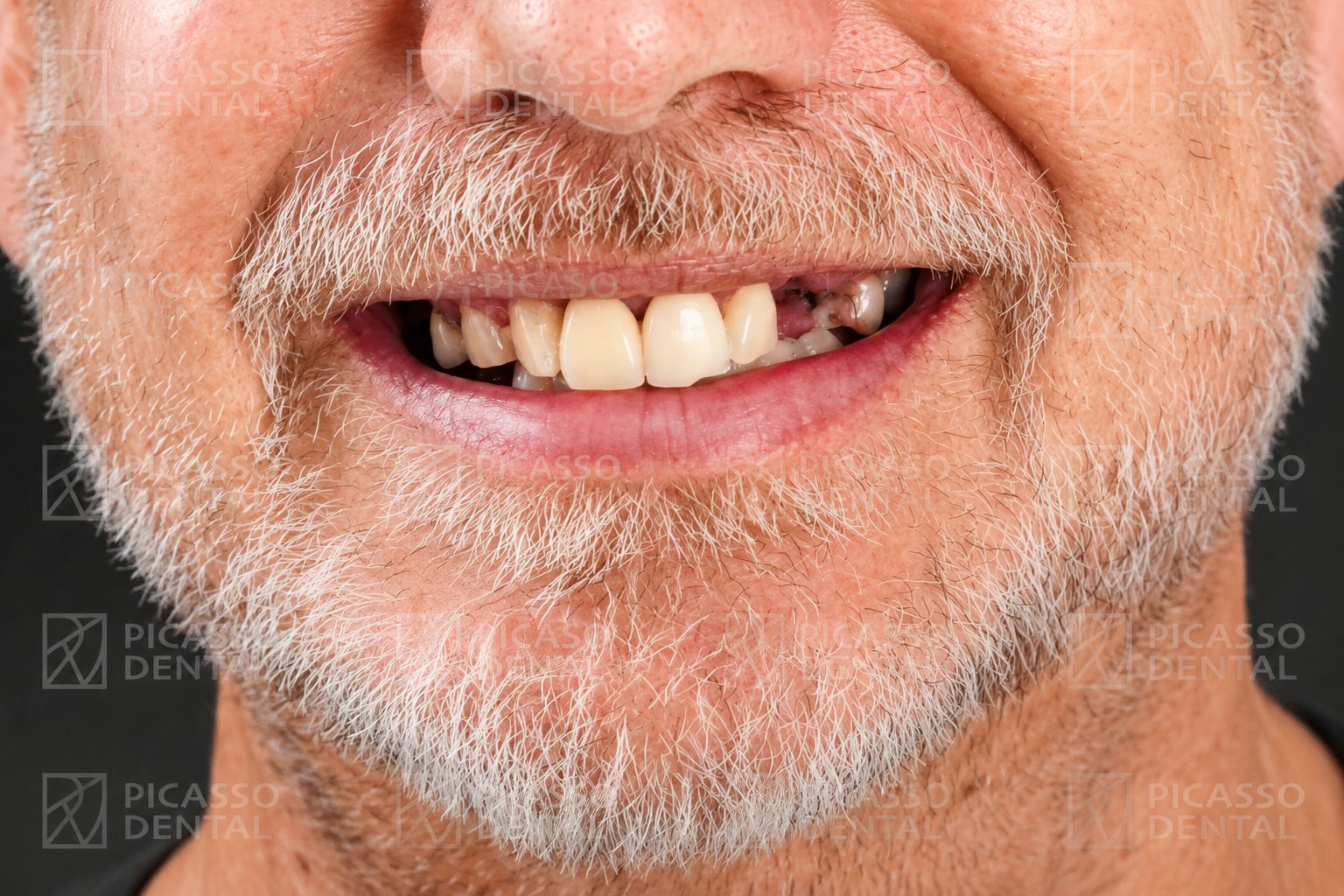
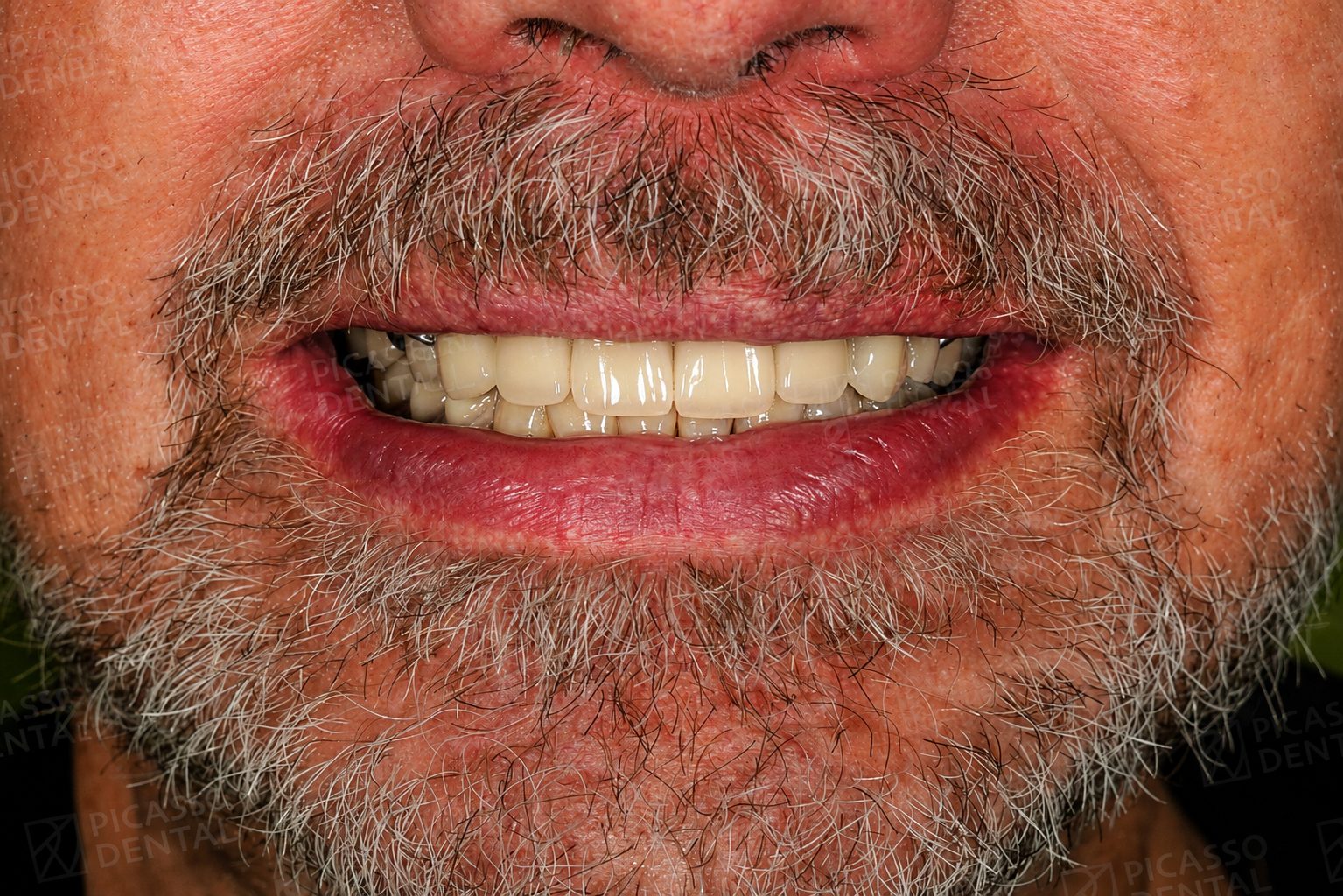
Porcelain veneers are the most requested cosmetic procedure at Picasso Dental for international patients. The cases below use LAVA 3M (USA) or Lisi GC Group (Japan) porcelain, the same laboratory materials used in Australian and European cosmetic dentistry. Treatment typically requires three appointments across 5 to 7 days, making it possible to complete in a single trip to Vietnam.
Each case is anonymised and photographed intra-orally under standardised lighting. No filters or editing have been applied to any image. Shade selection, tooth shape, and gum line are planned with the patient during the wax-up and mock-up phase before any preparation begins.
Porcelain Veneer Cases
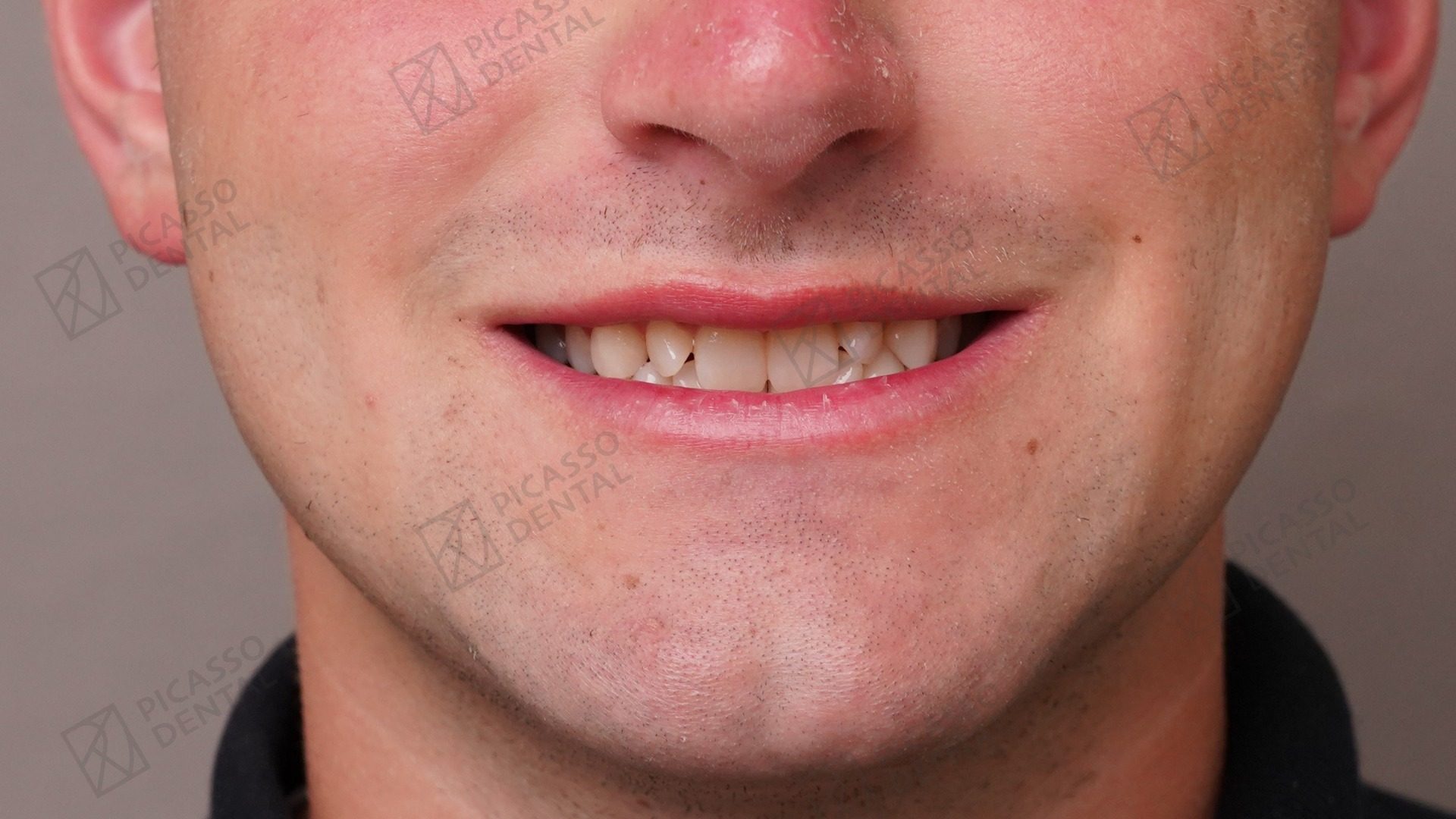
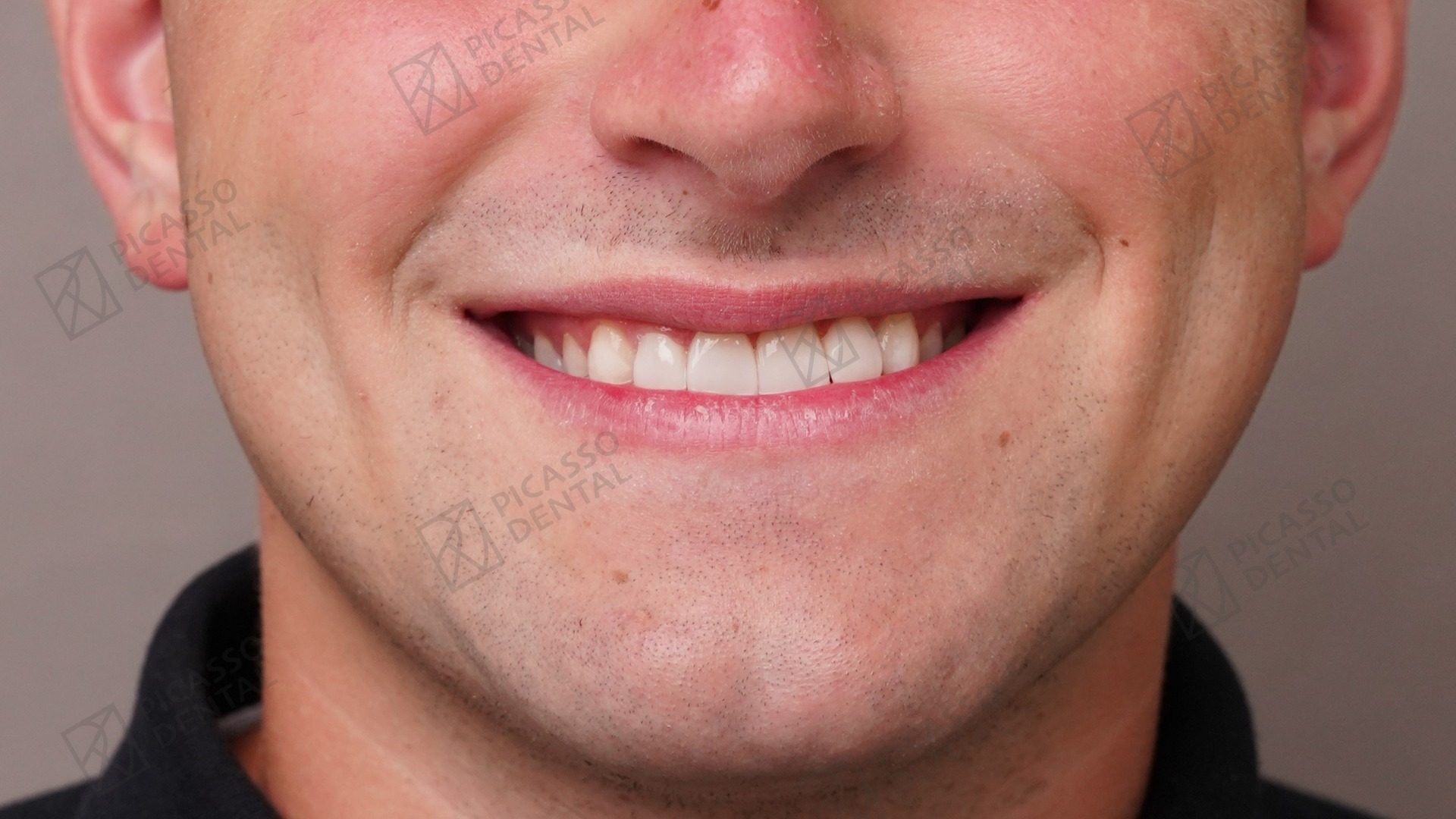
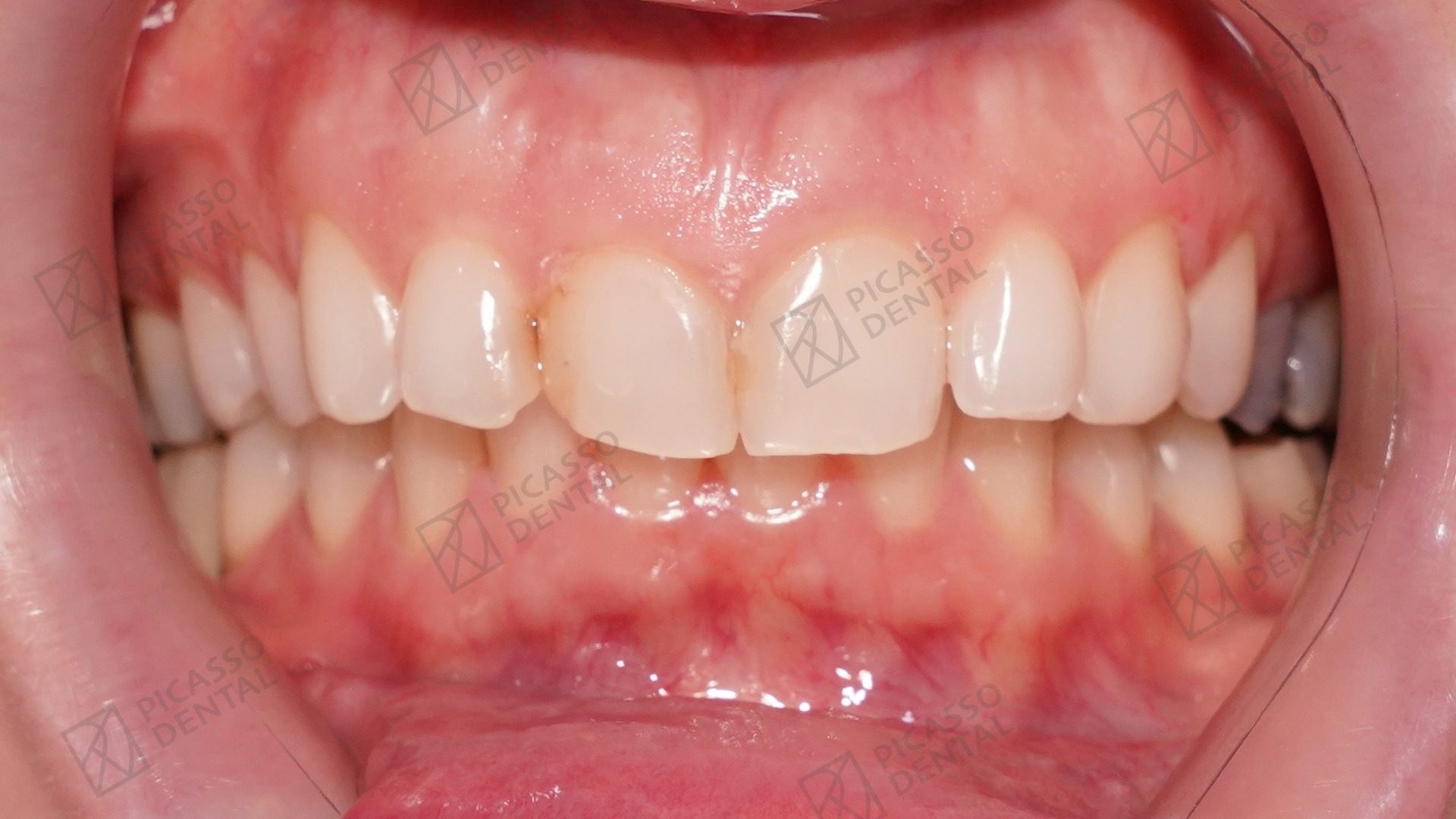
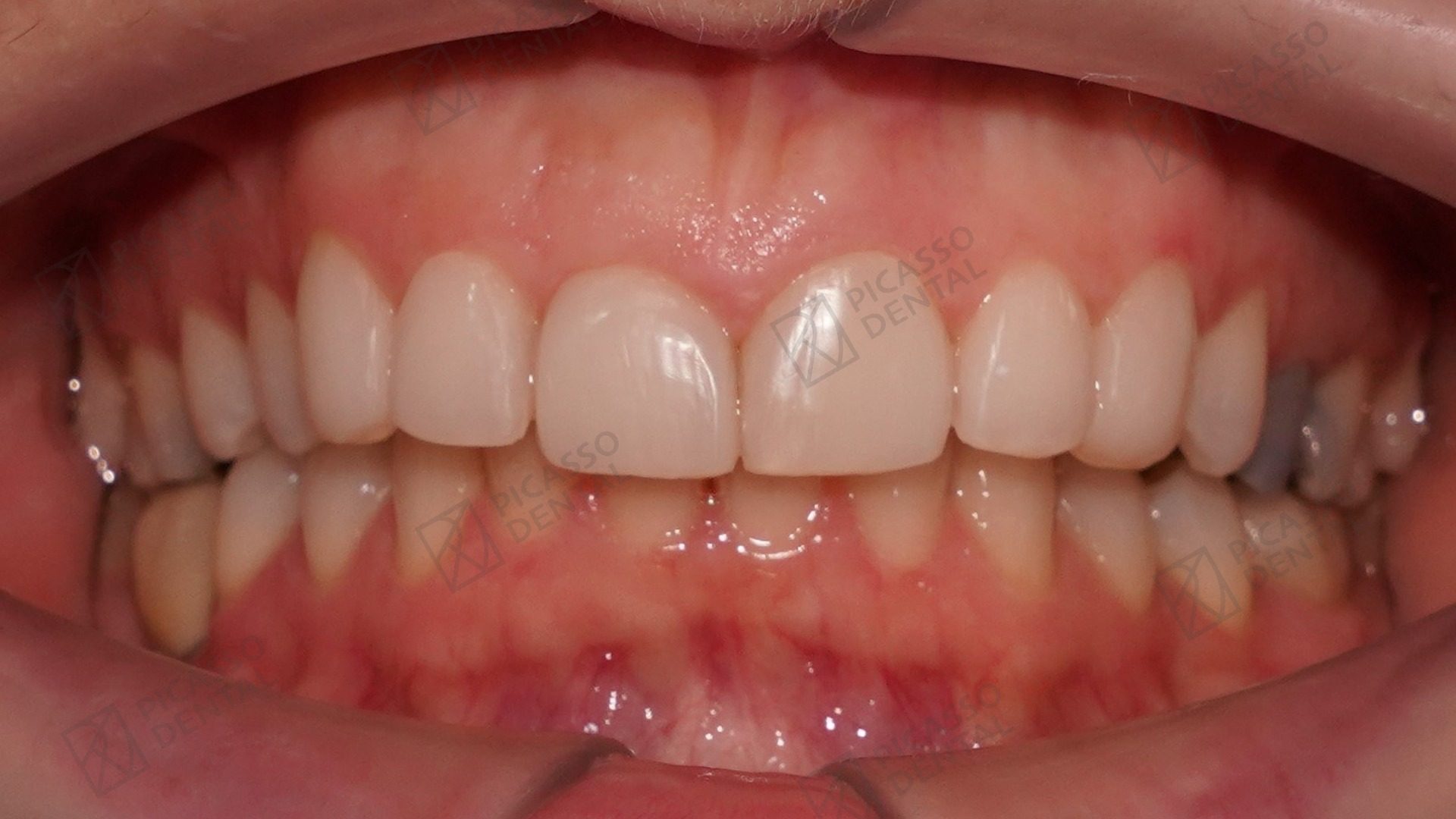
Veneer Results: Composite Veneers and Bonding
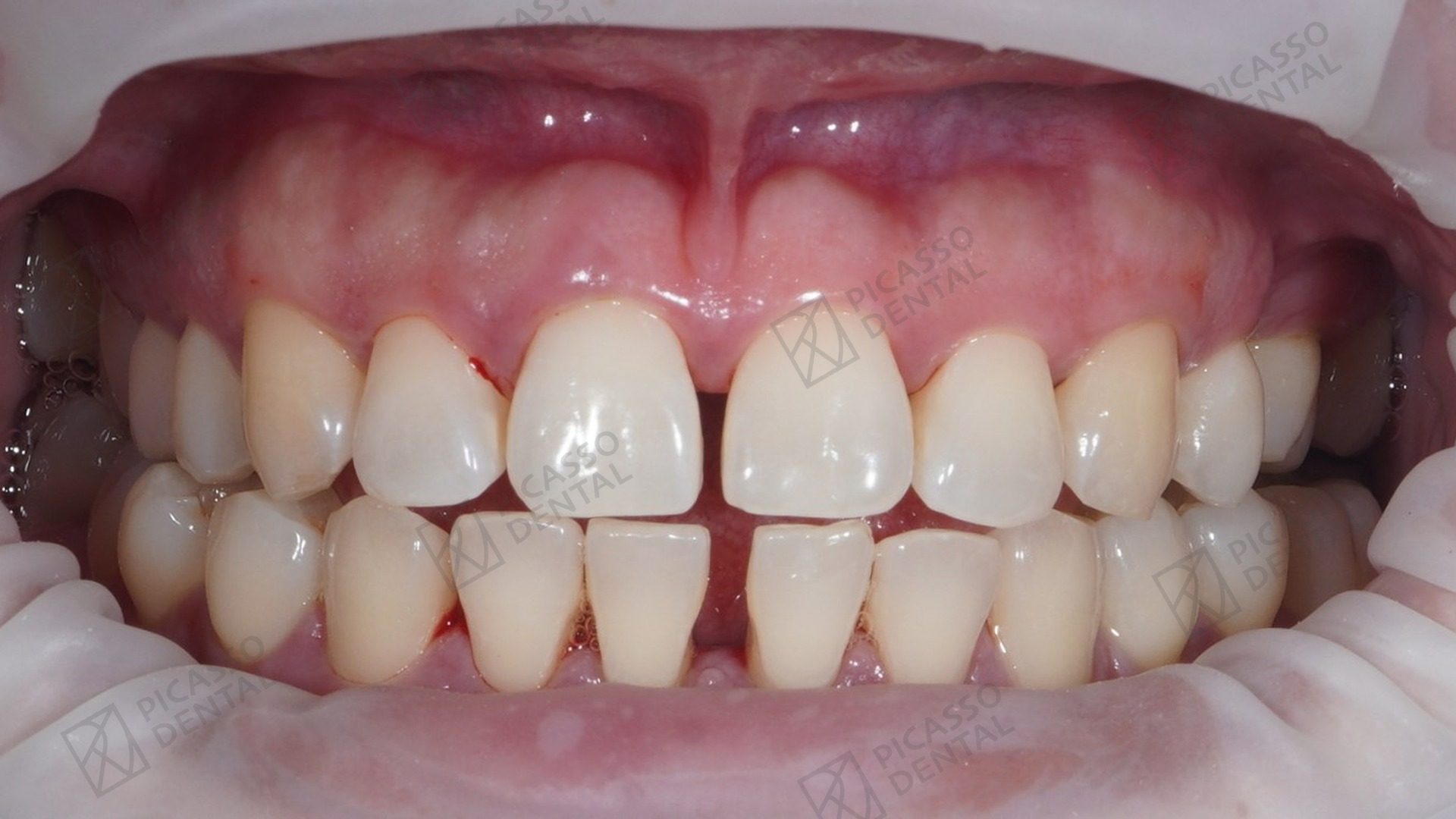
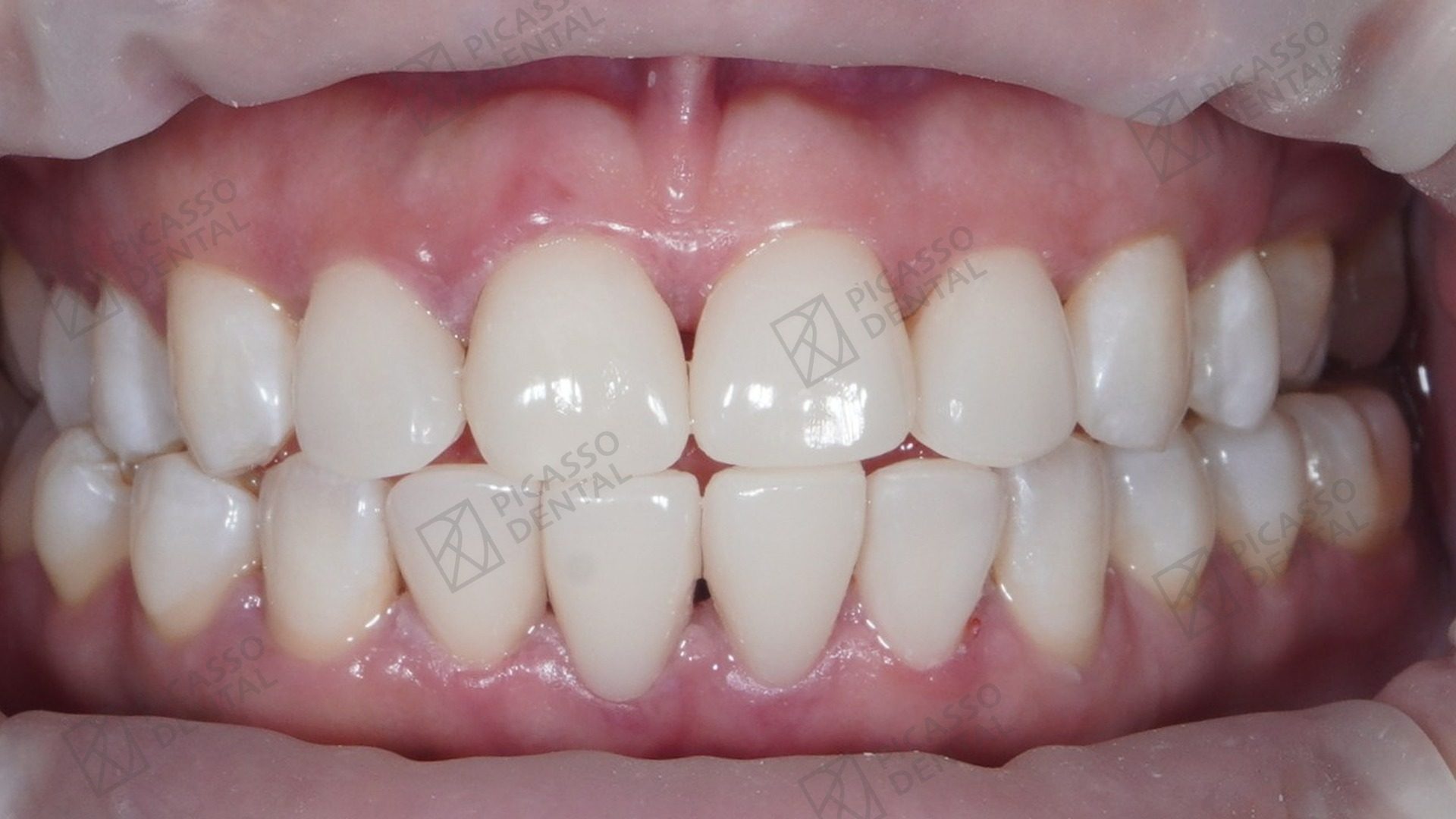
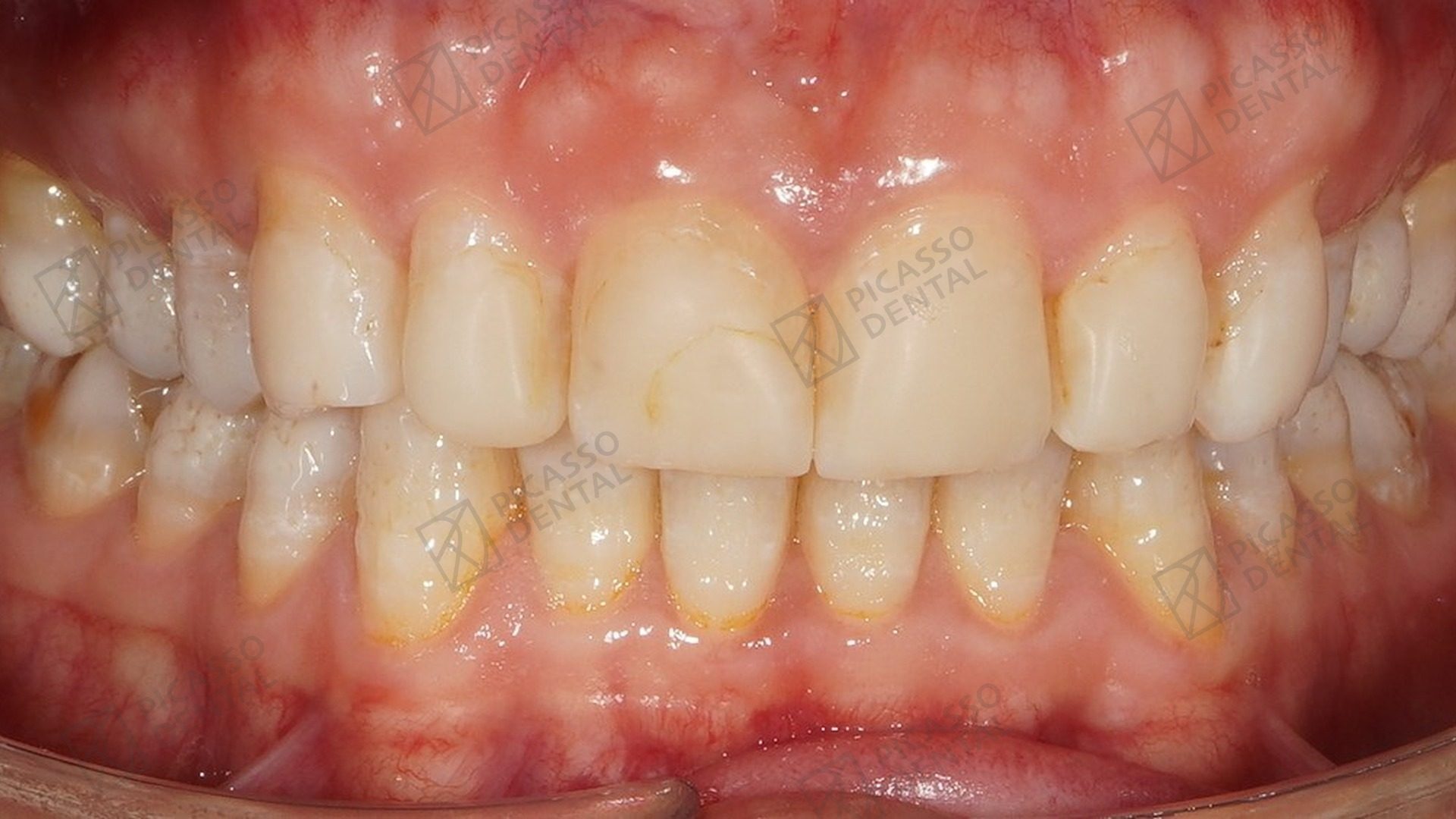
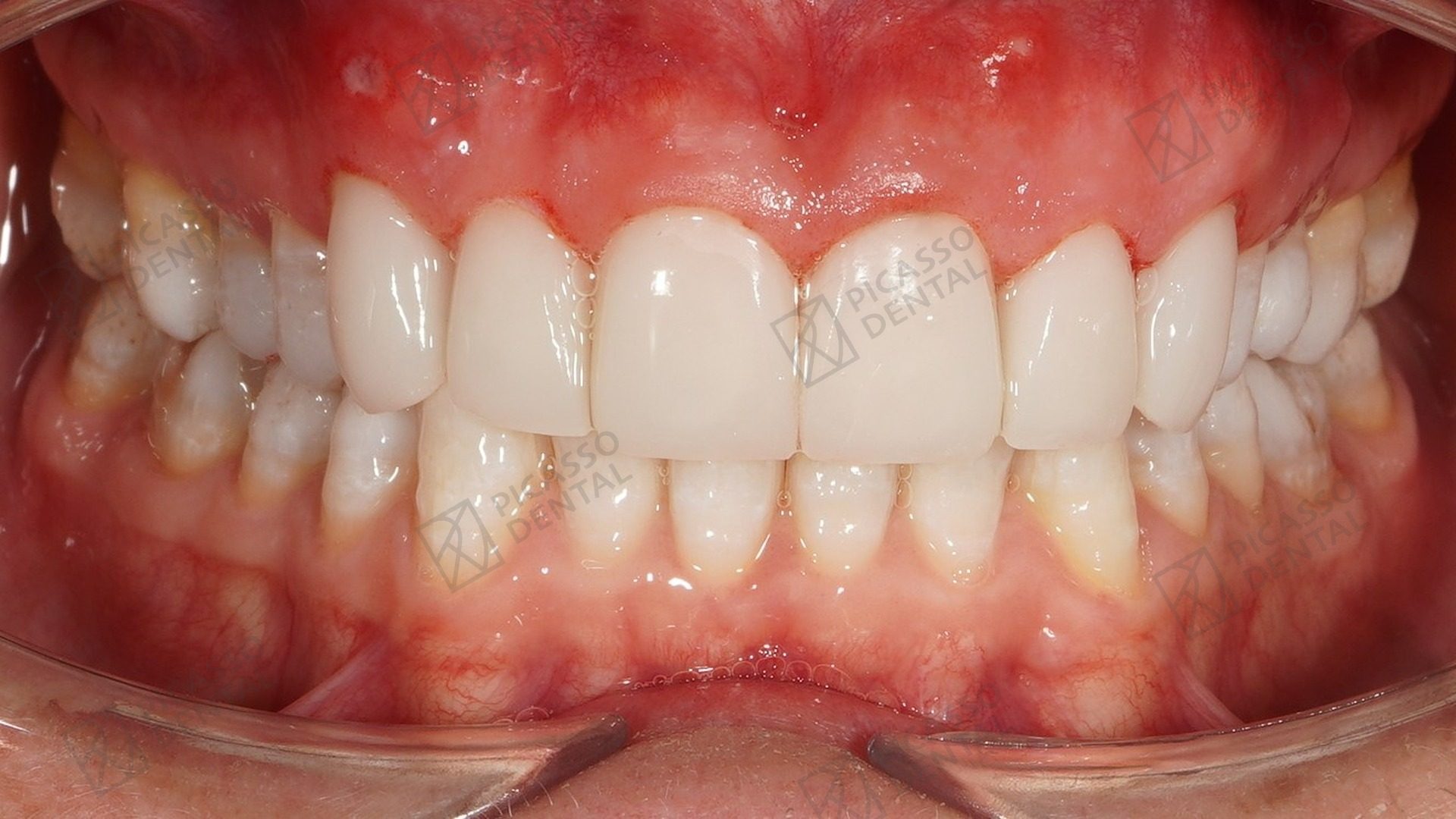
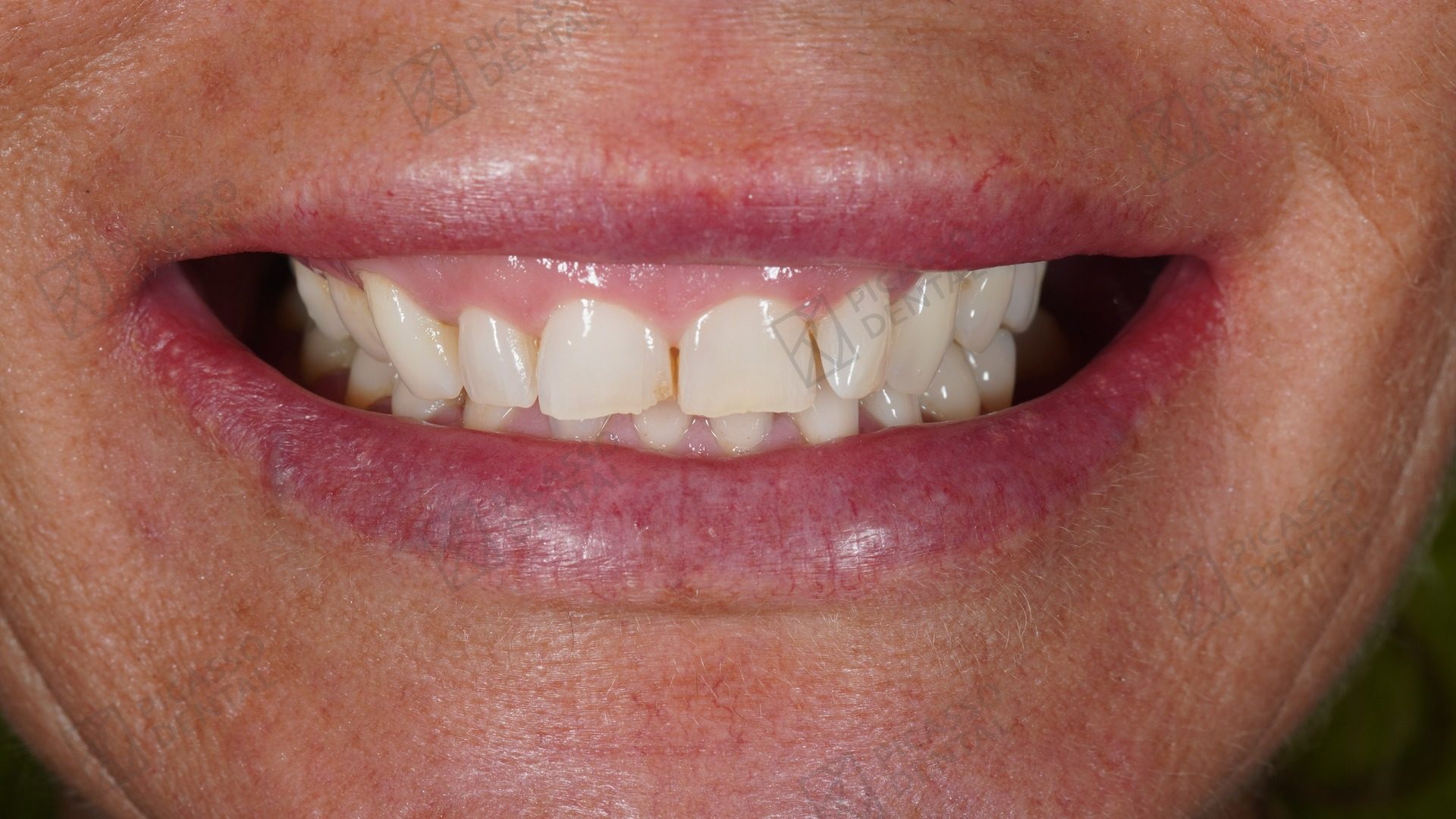
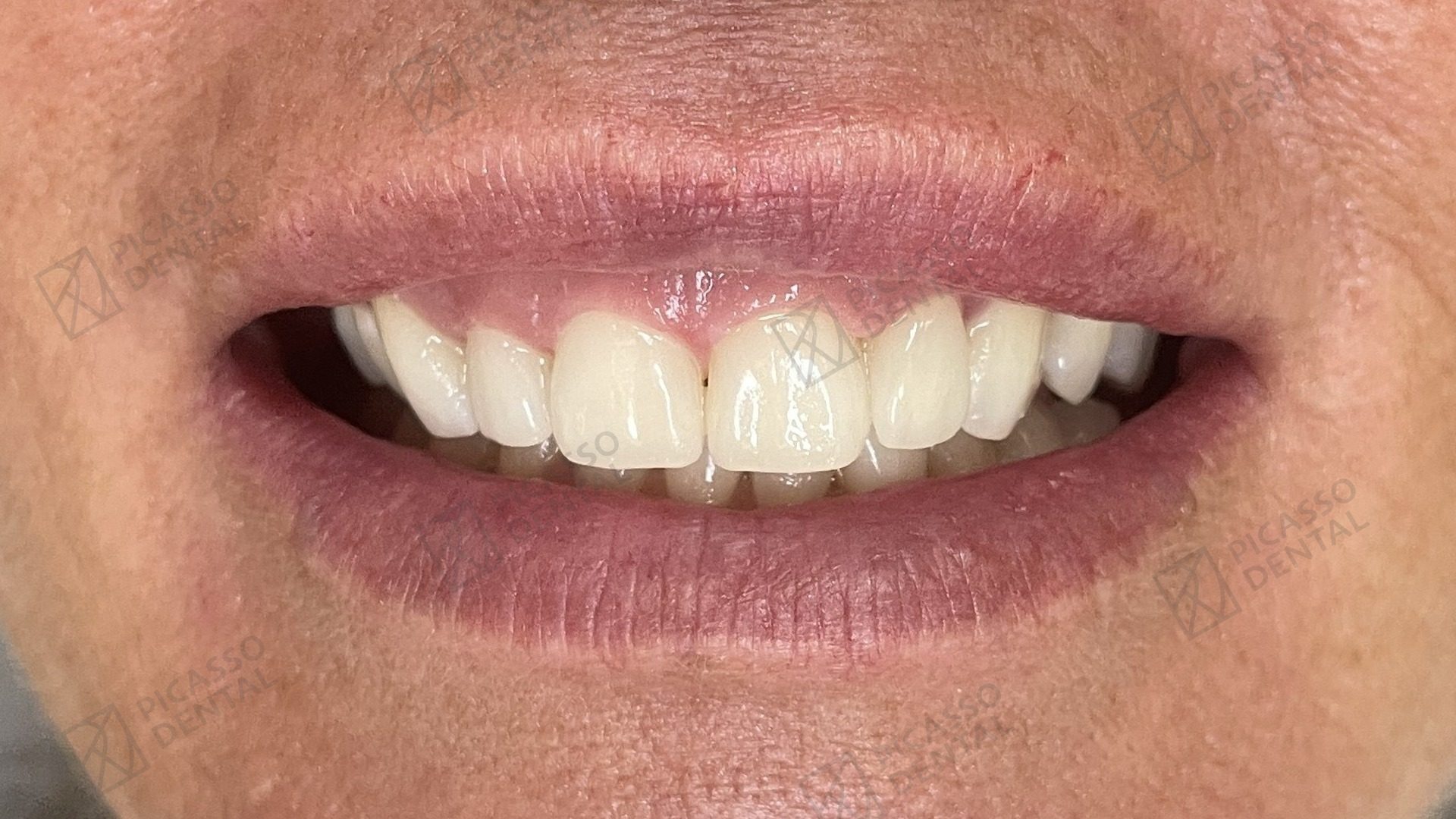
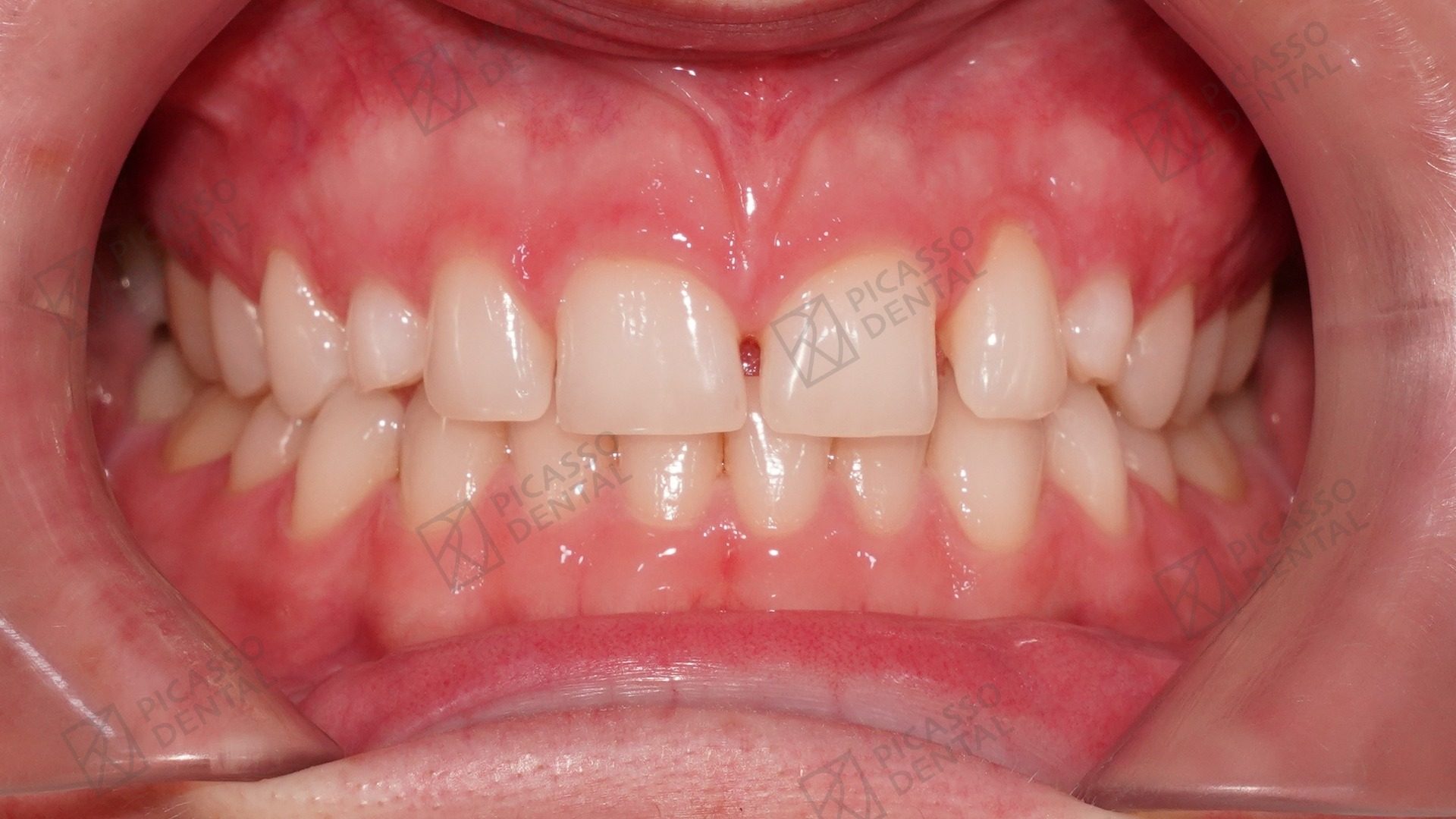
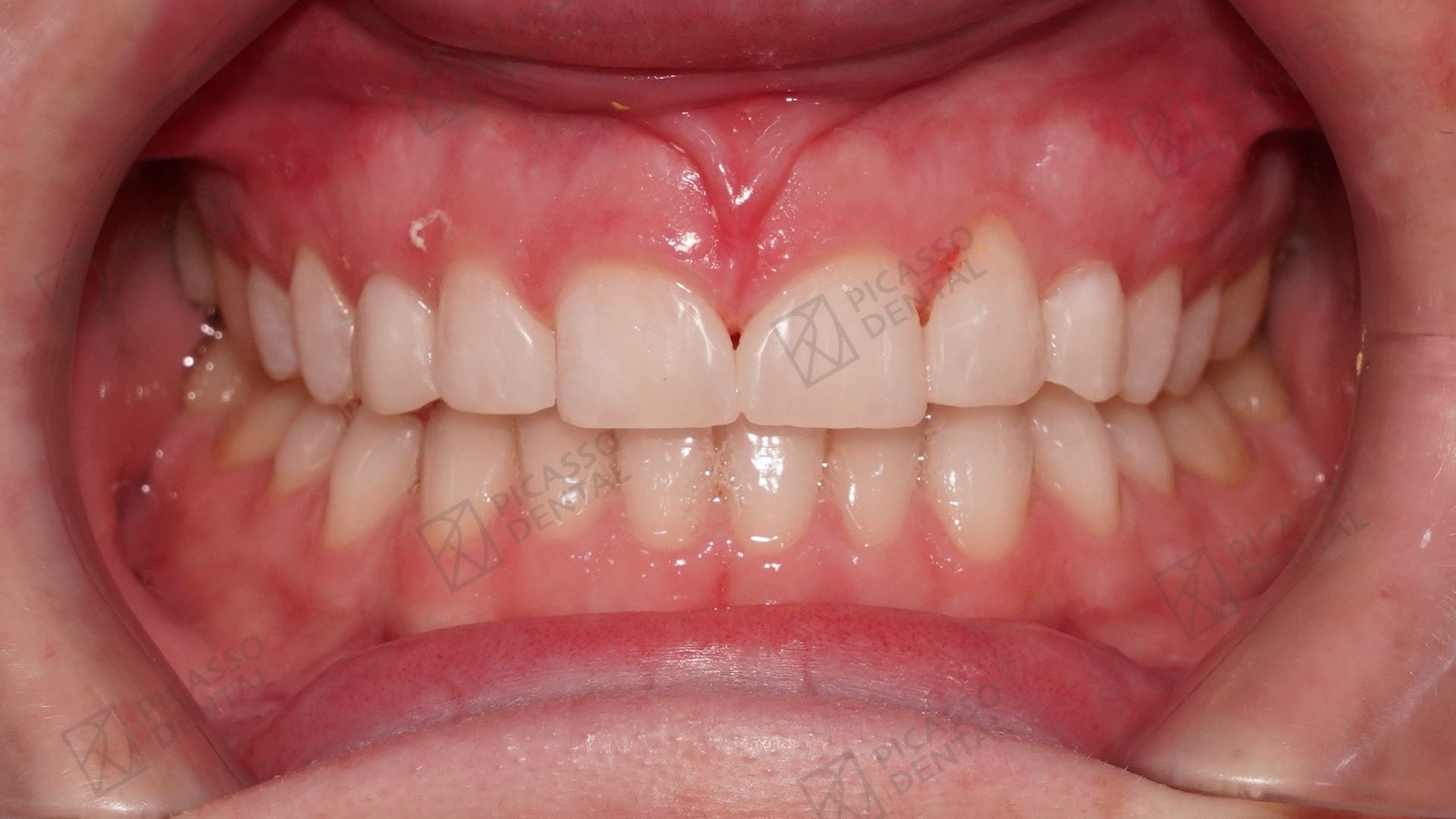
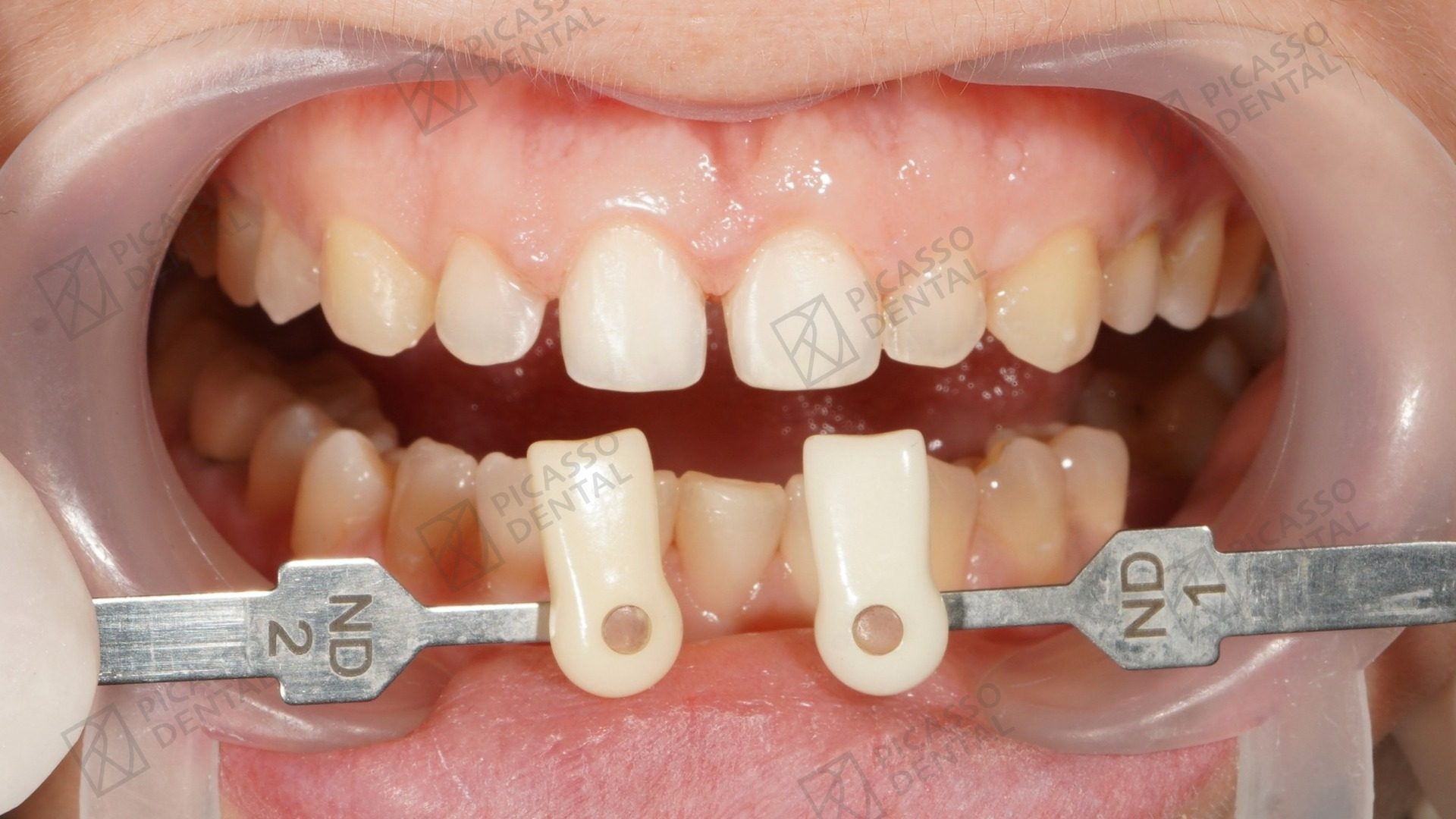
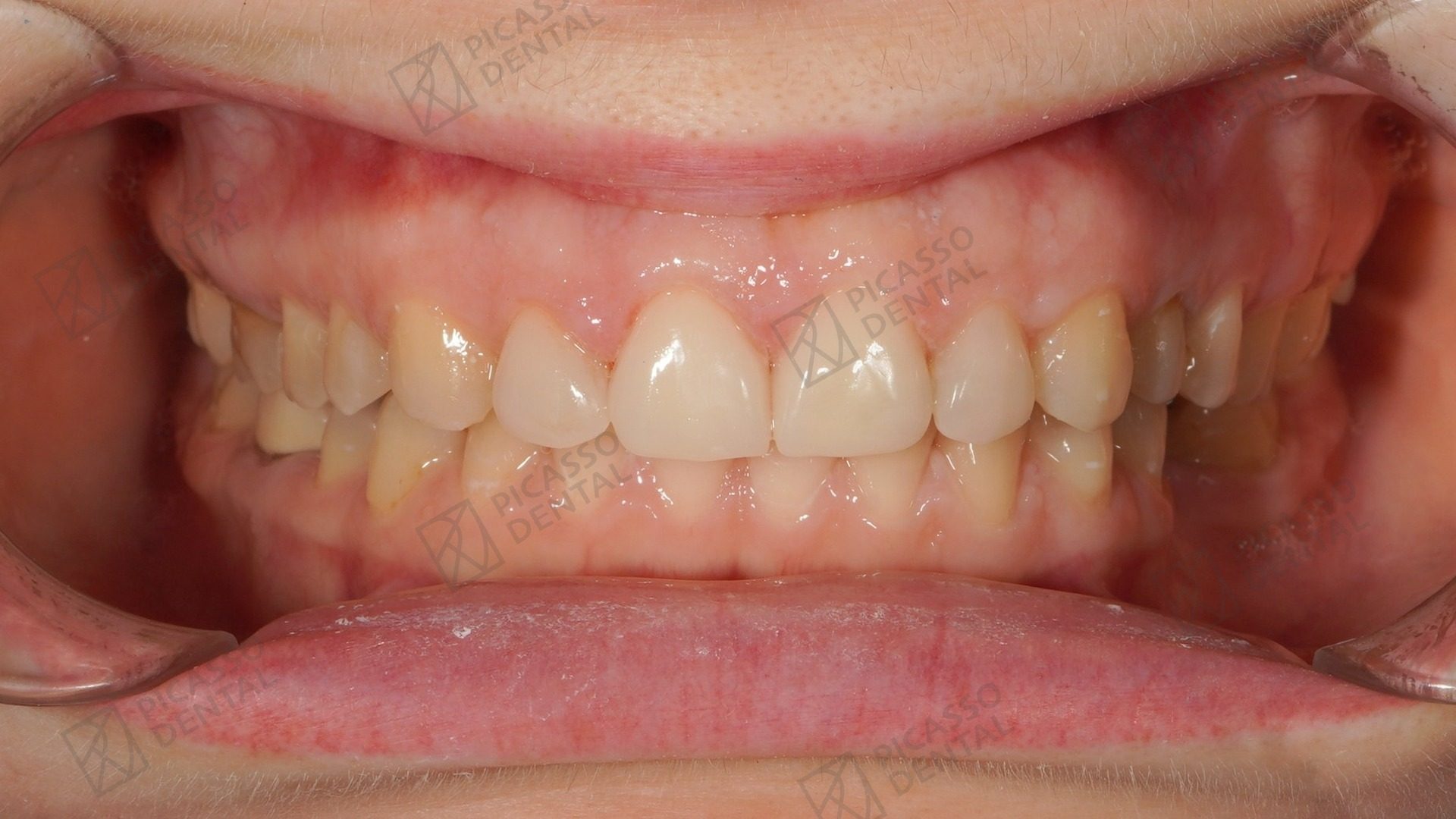
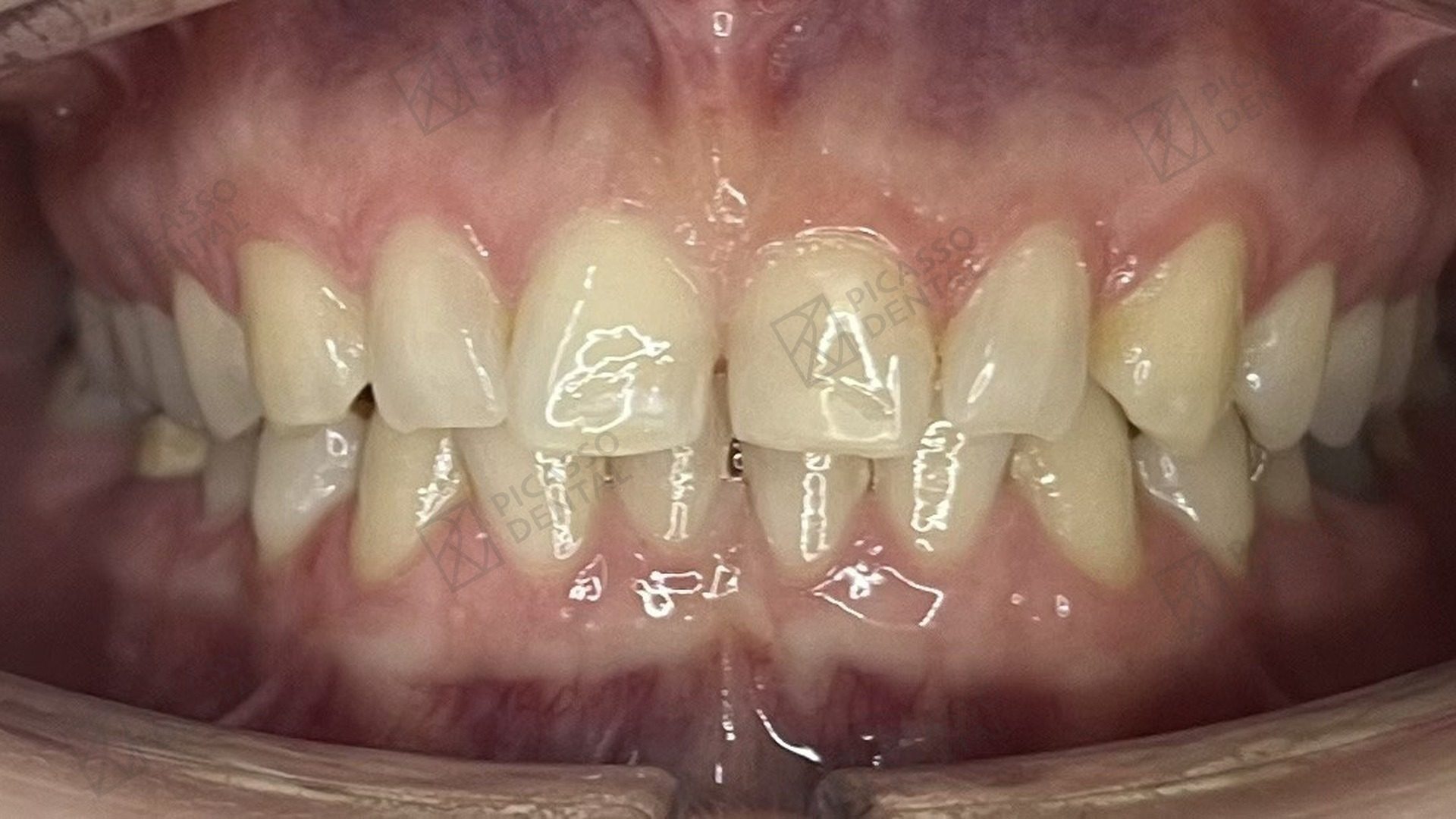
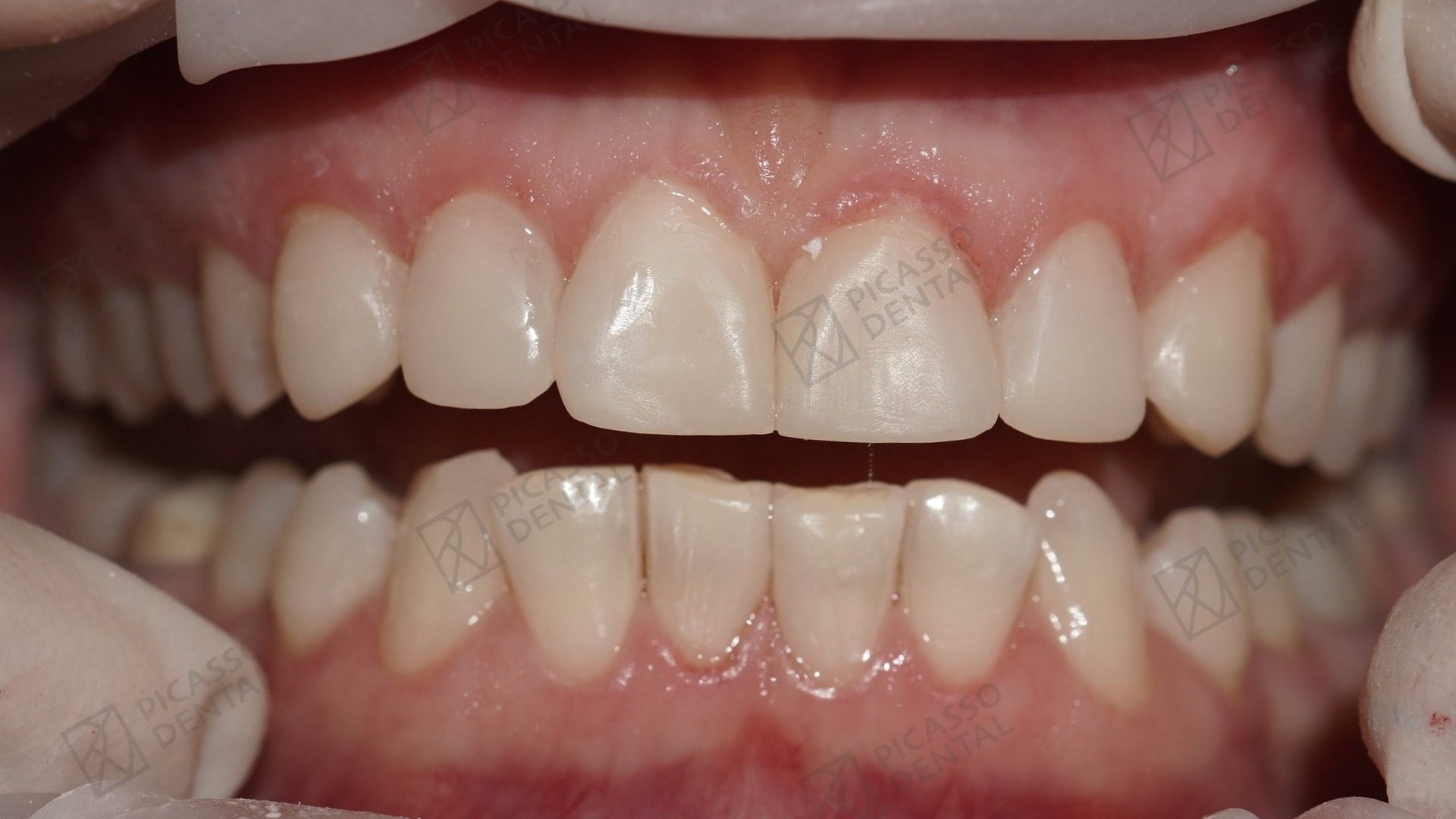
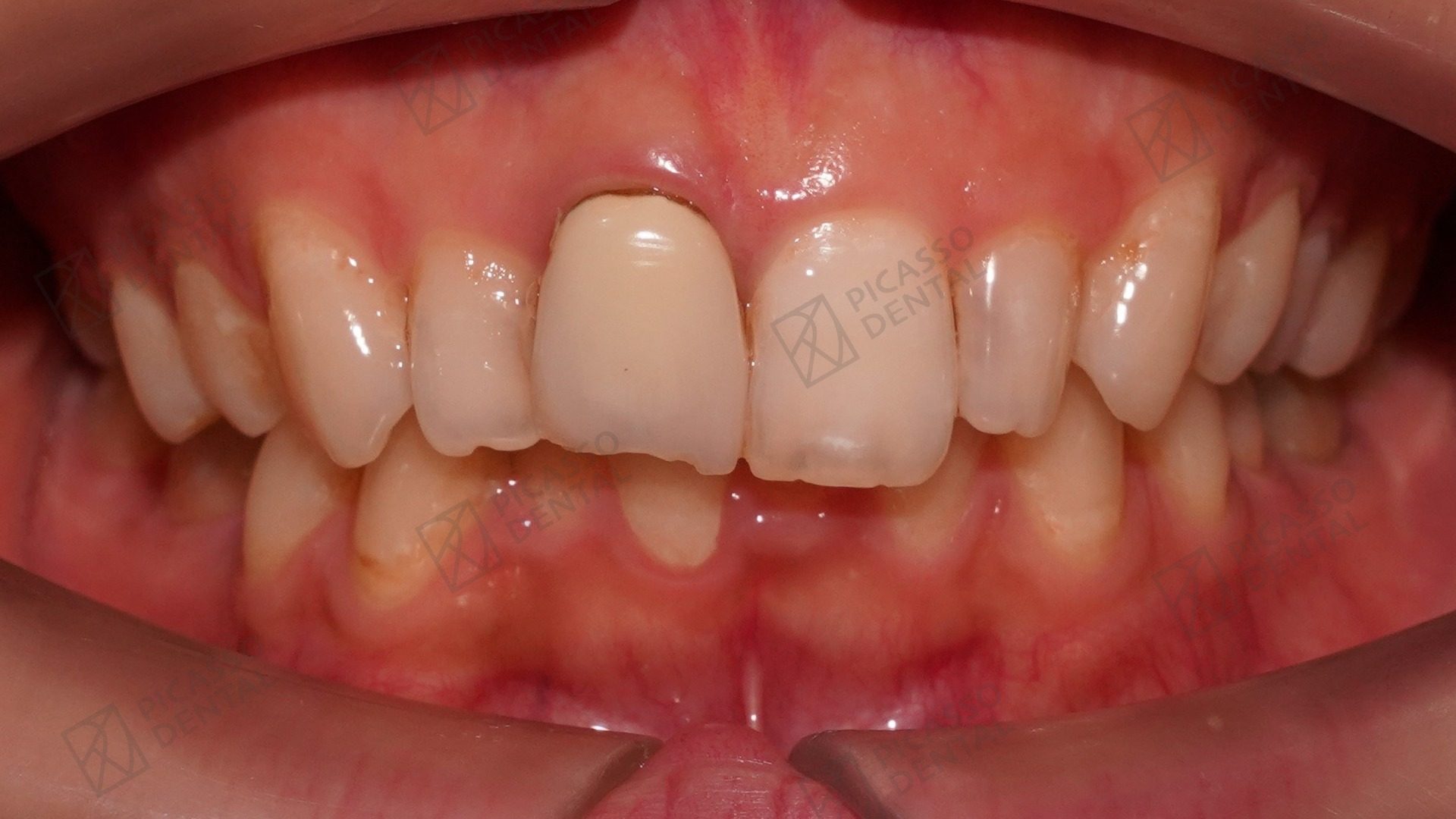
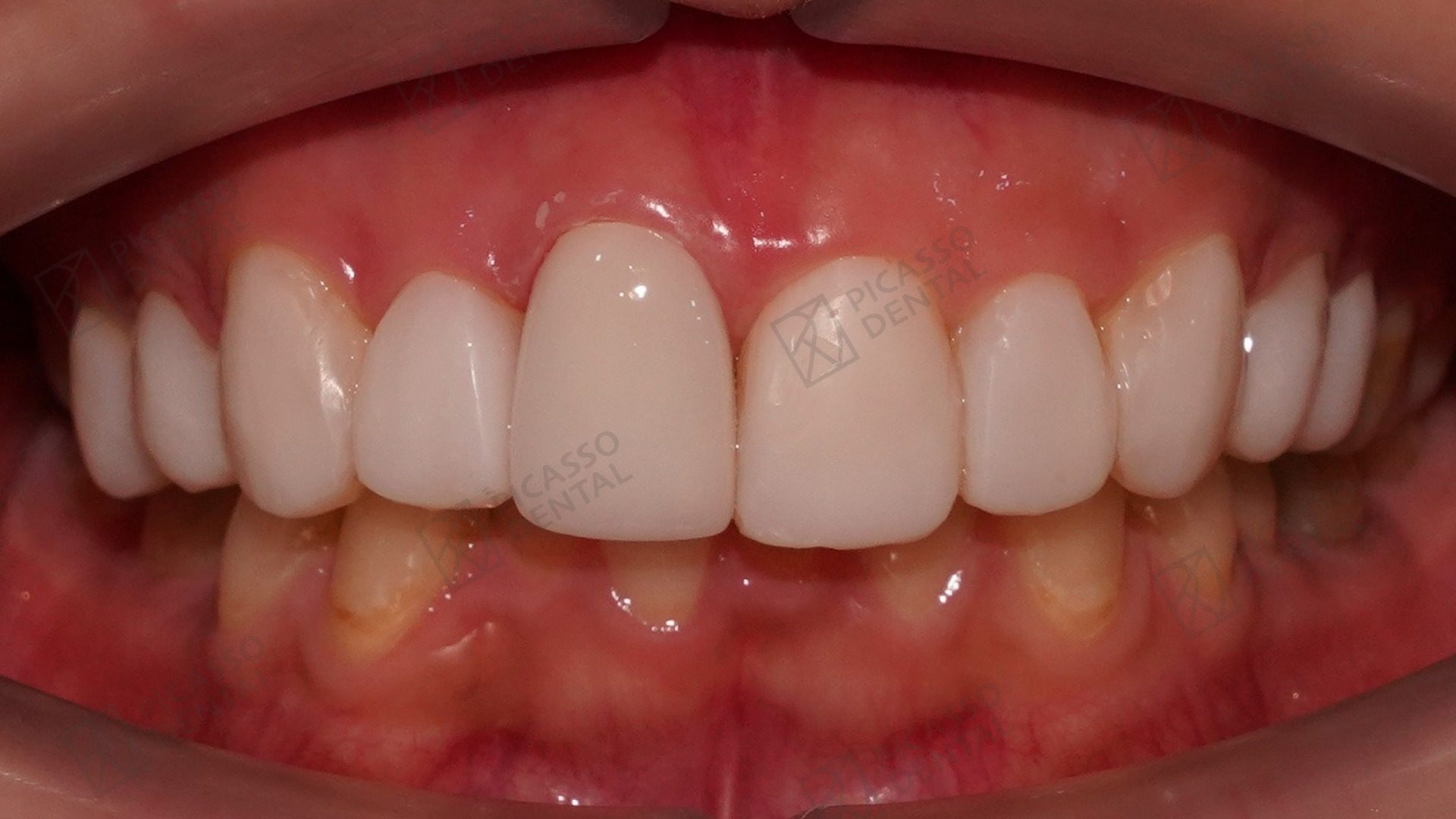
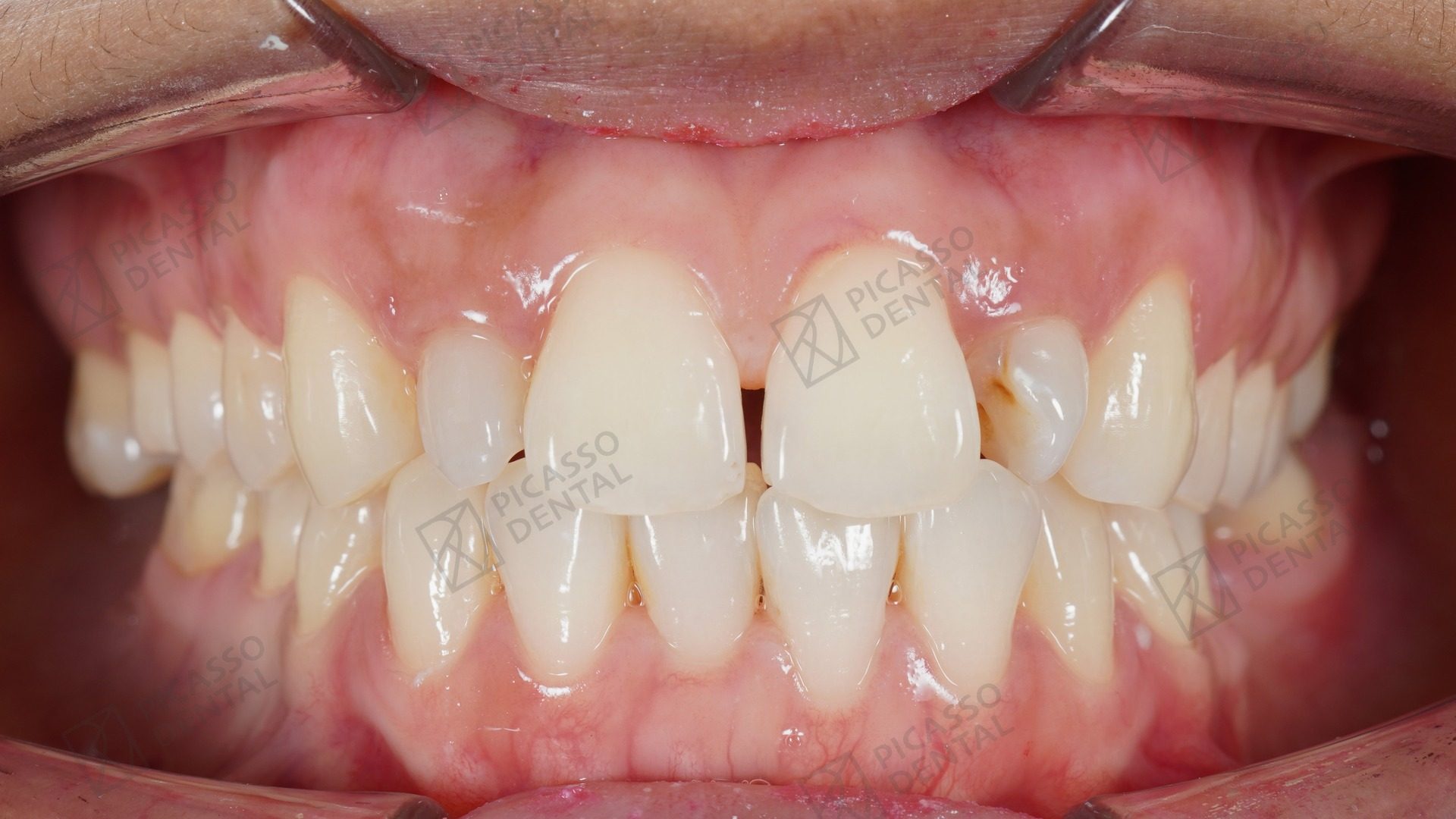
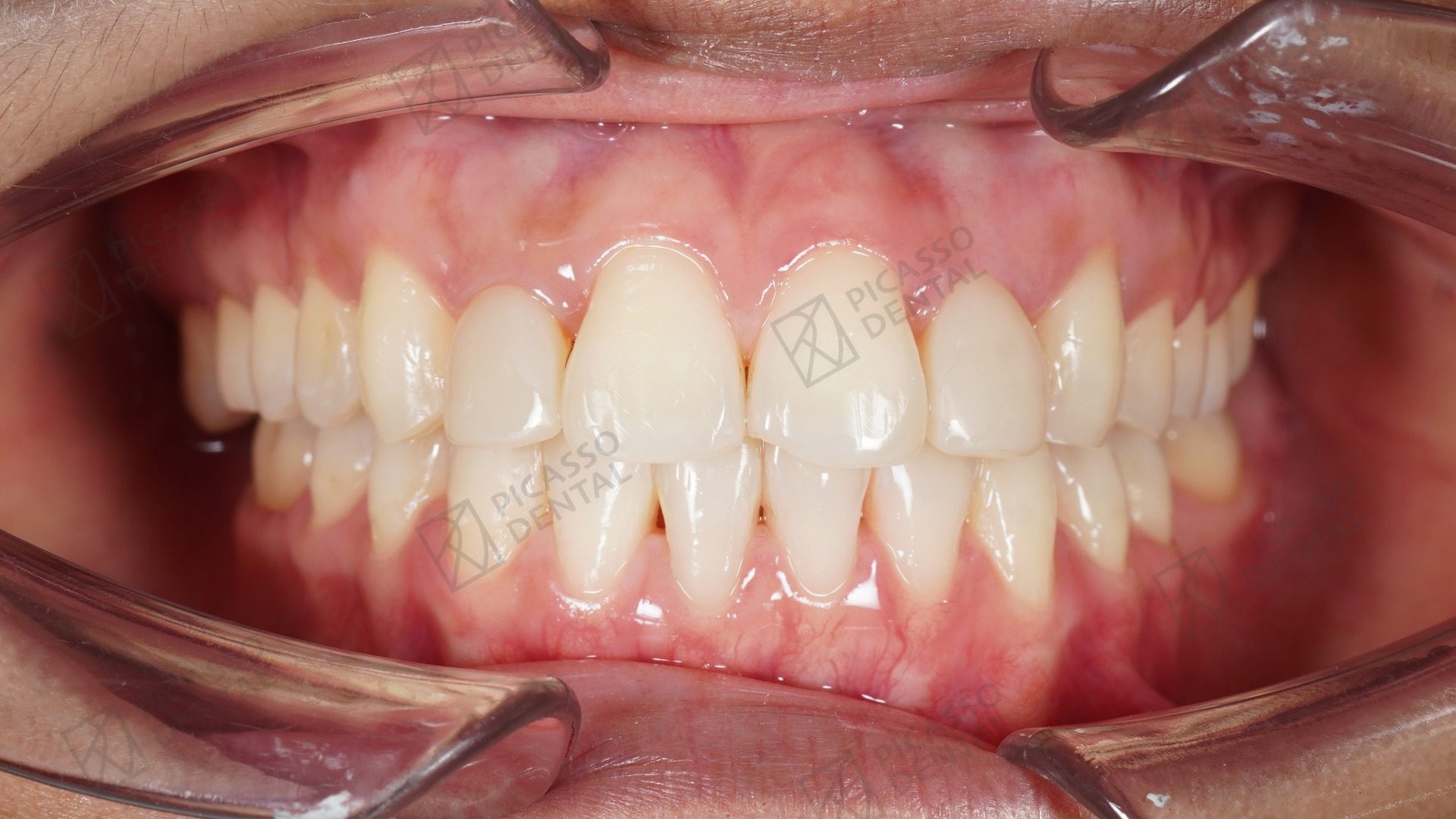
Composite veneers are a direct, chair-side alternative to porcelain. The dentist applies and sculpts tooth-coloured resin directly on the tooth surface in a single long appointment, or across two visits. There is no laboratory wait time and no tooth preparation in most cases, making composite veneers well suited to short trips of two to four days. Results last three to seven years with proper care, compared to ten to fifteen years for porcelain. The cost is 60 to 80 percent lower than porcelain.
All composite cases below use layered direct composite resins, planned with wax-up and intraoral mock-up where applicable. Several cases include whitening performed before the composite work to establish the shade baseline.
Composite Veneer and Bonding Cases
Implant Results: Single Dental Implants
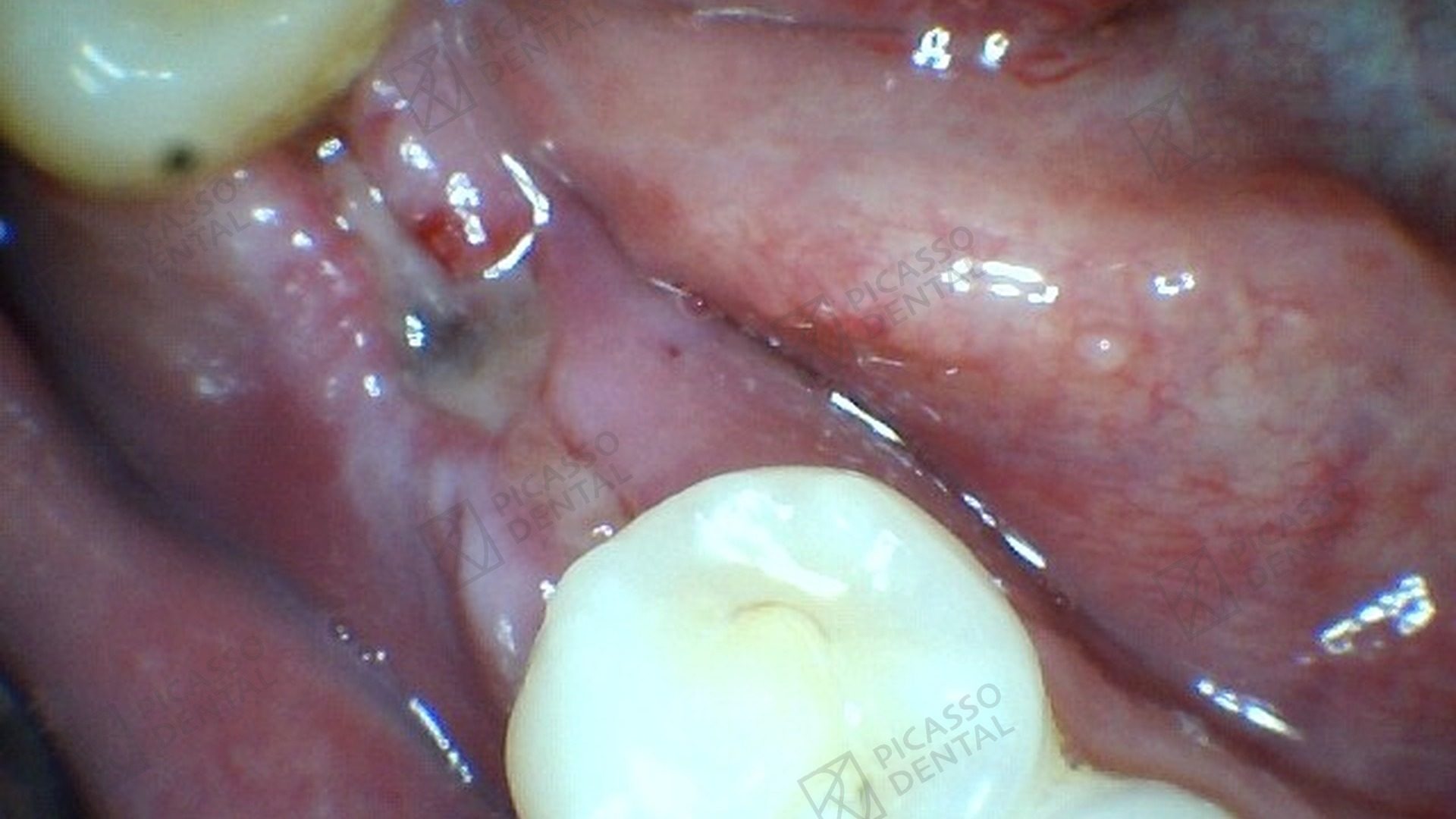
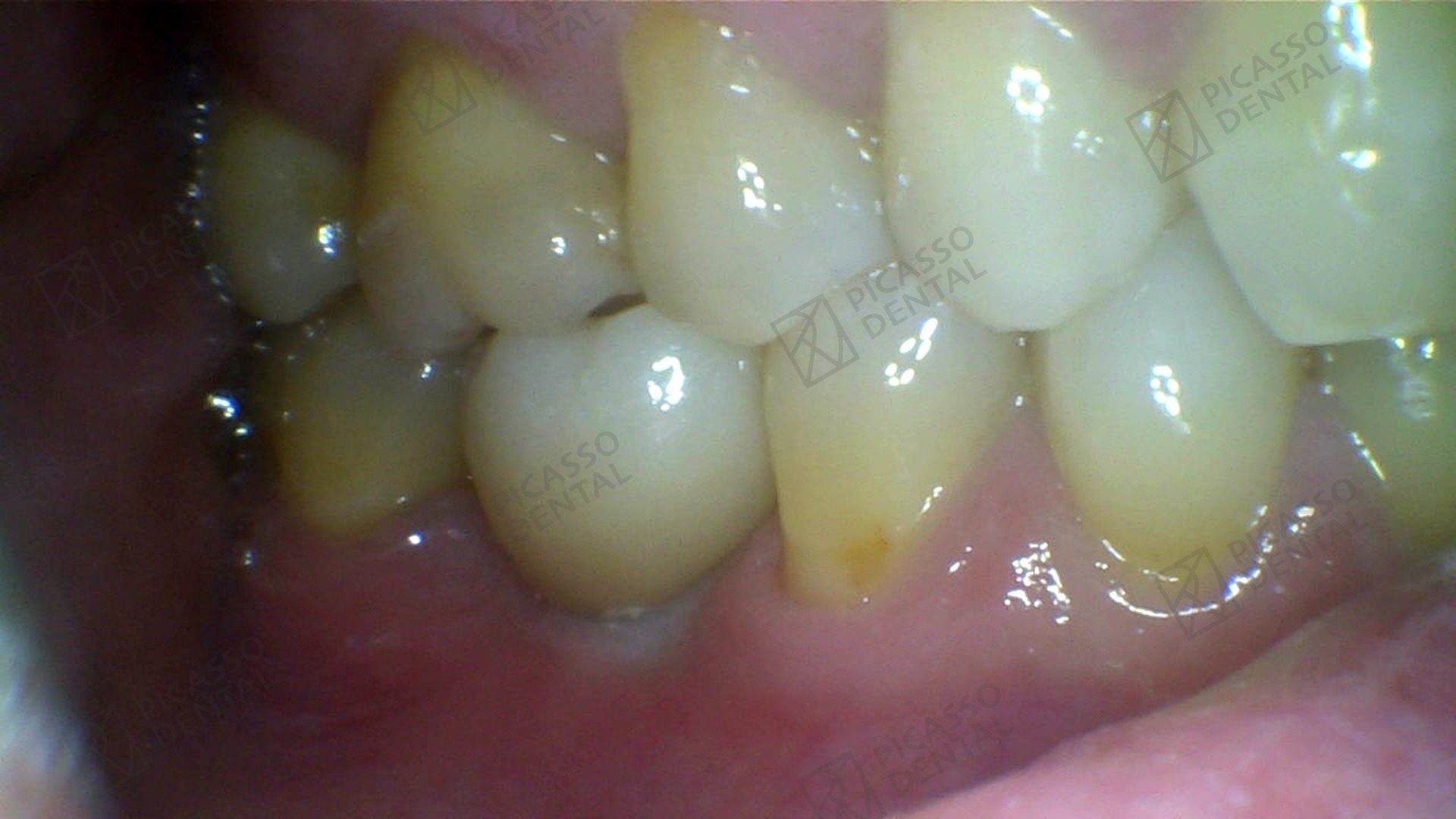
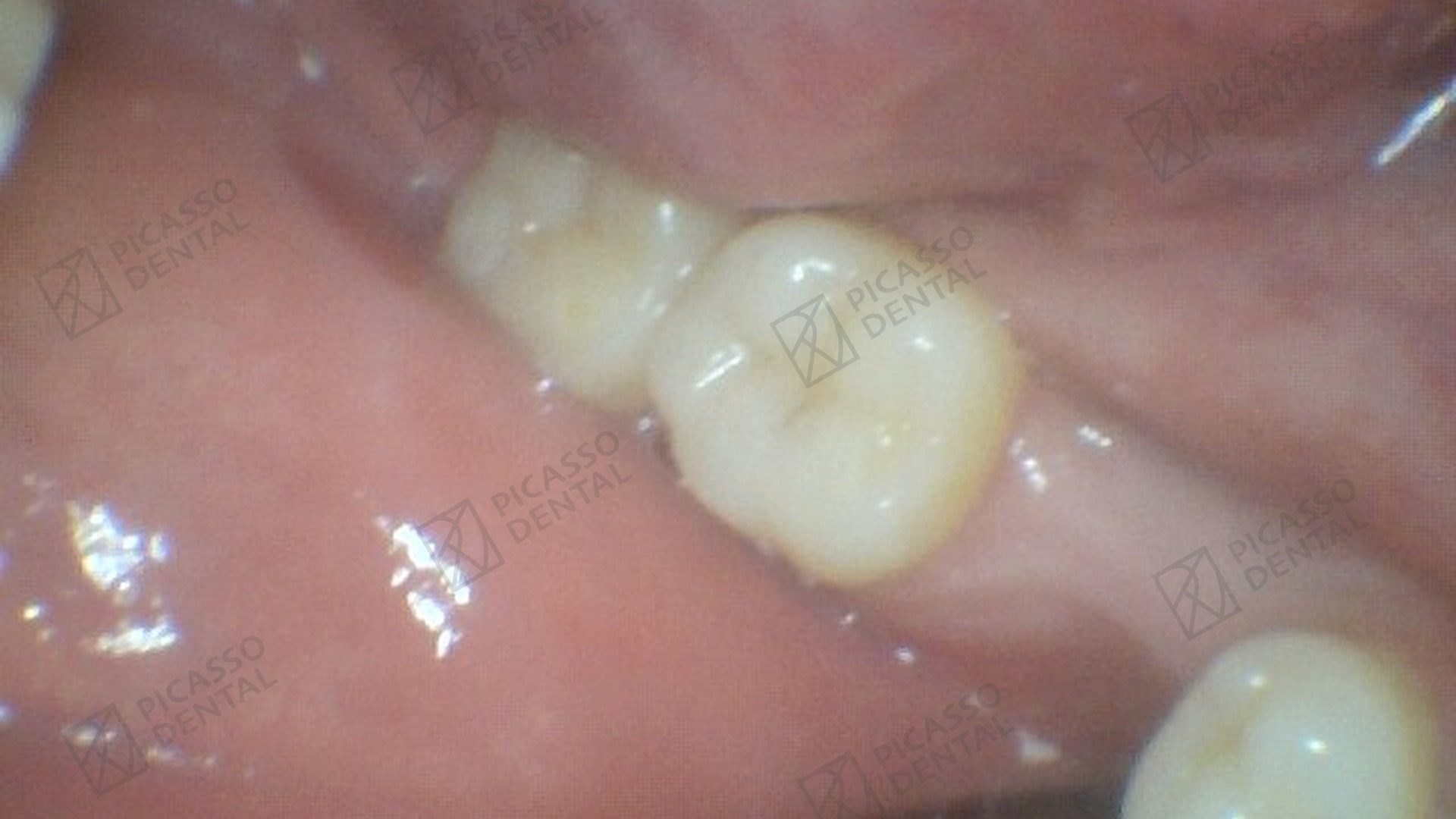
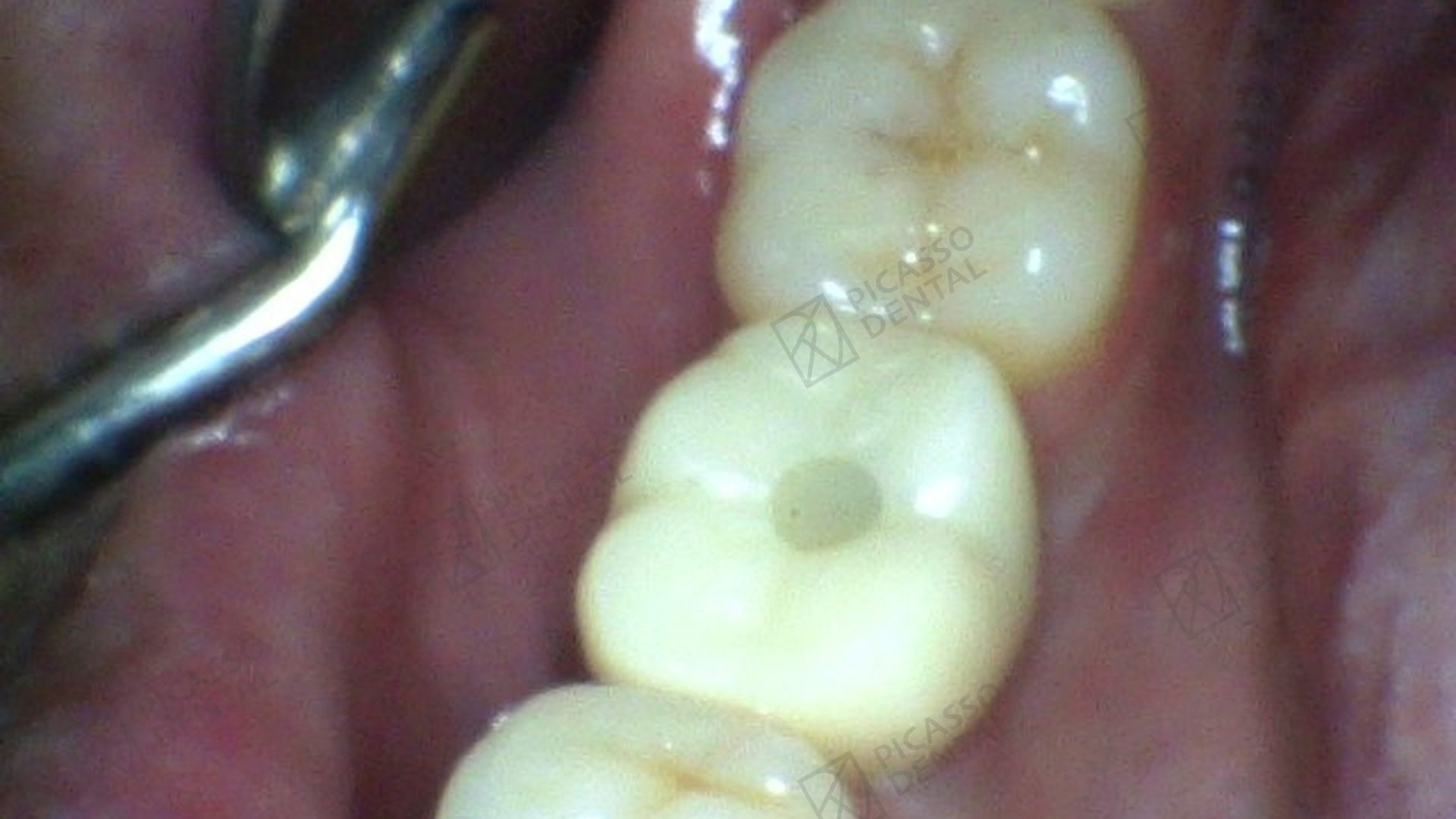
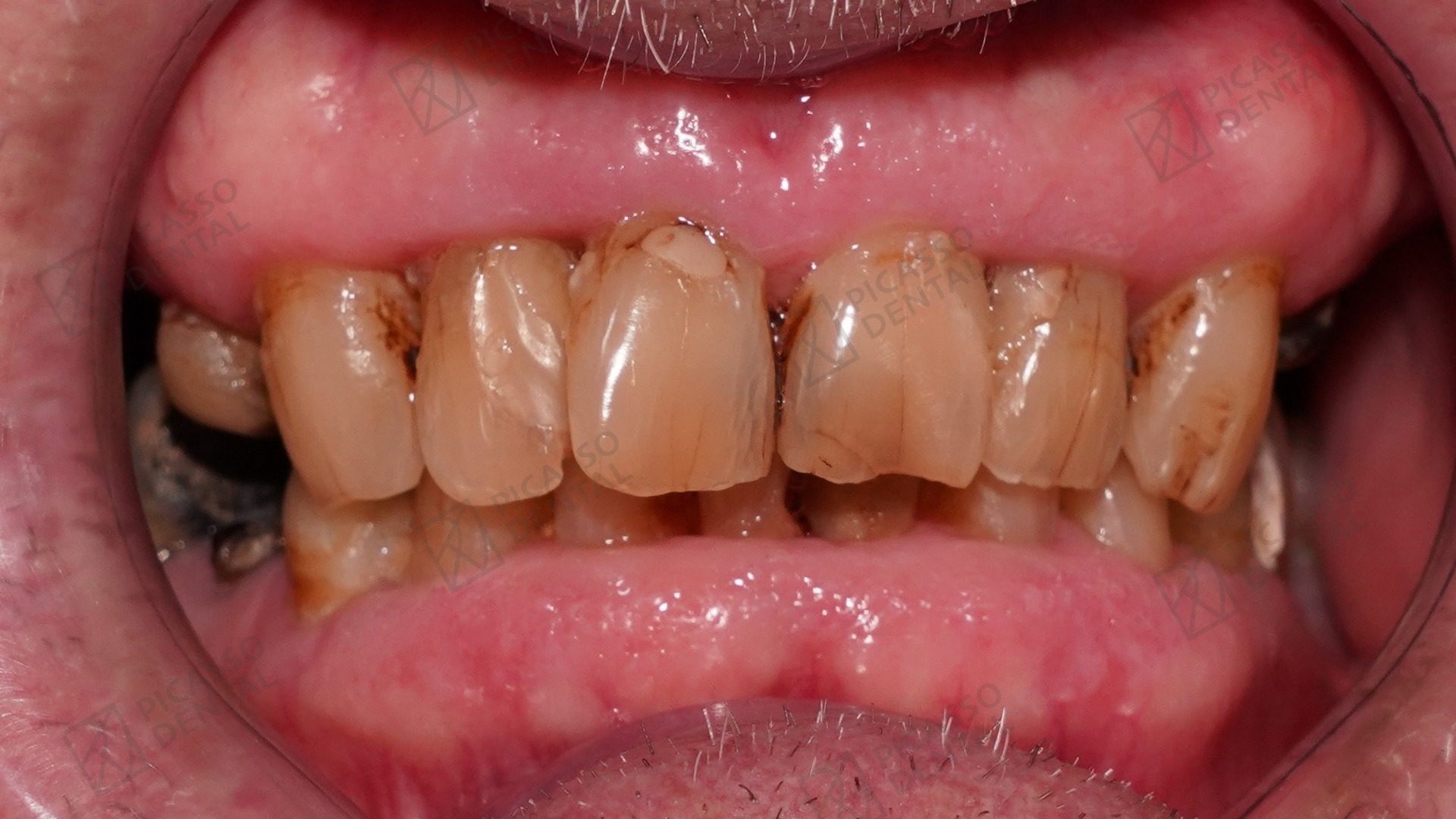
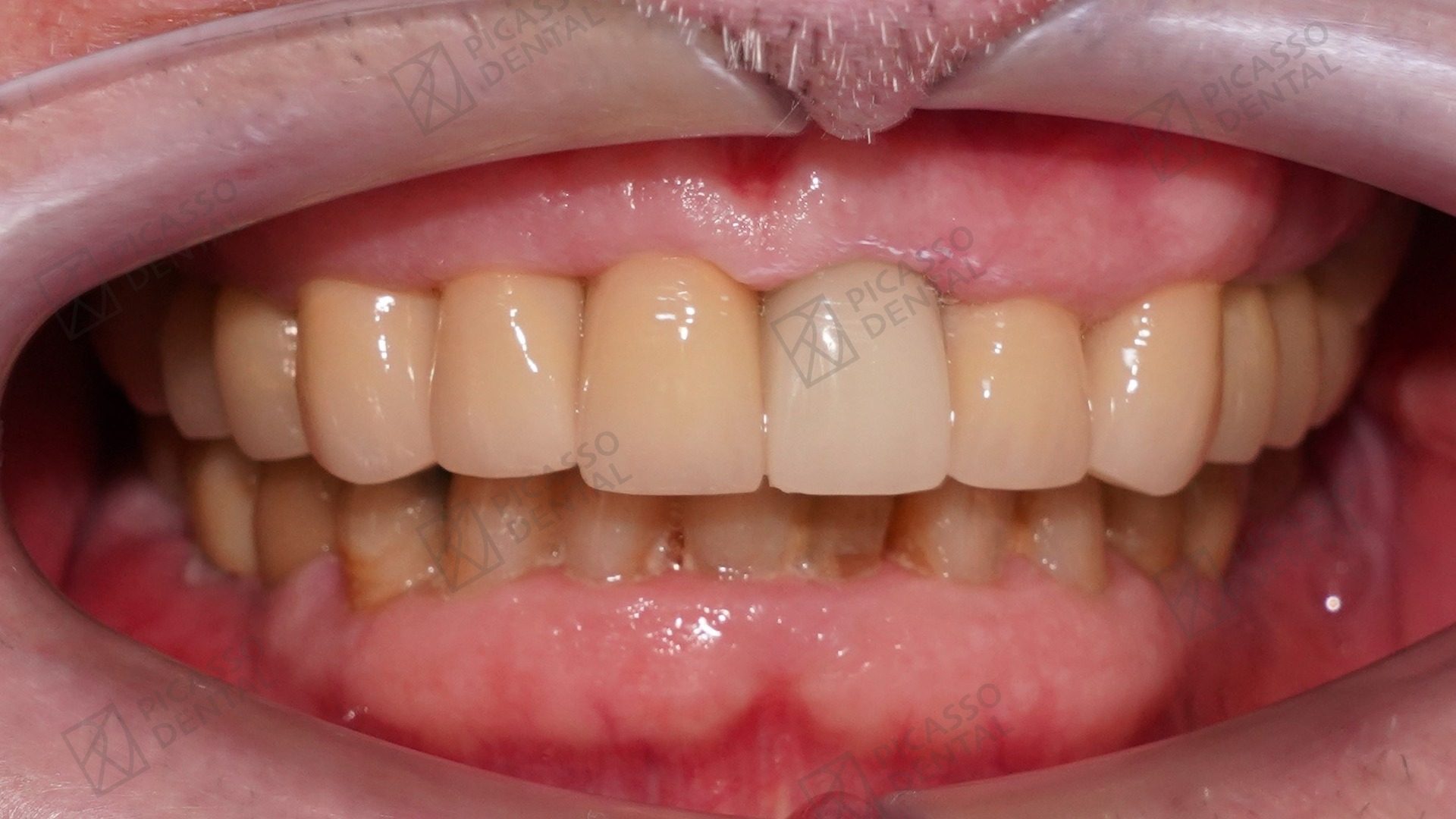
A single dental implant replaces one missing tooth with a titanium fixture, a ceramic abutment, and a zirconia or porcelain crown. The fixture is placed in a first appointment, then the bone is allowed to integrate over three to six months before the final crown is fitted on the second trip. All single implant cases at Picasso Dental use CBCT 3D scanning for surgical planning, and you receive the serial number documentation before you fly home.
Single Dental Implant Cases
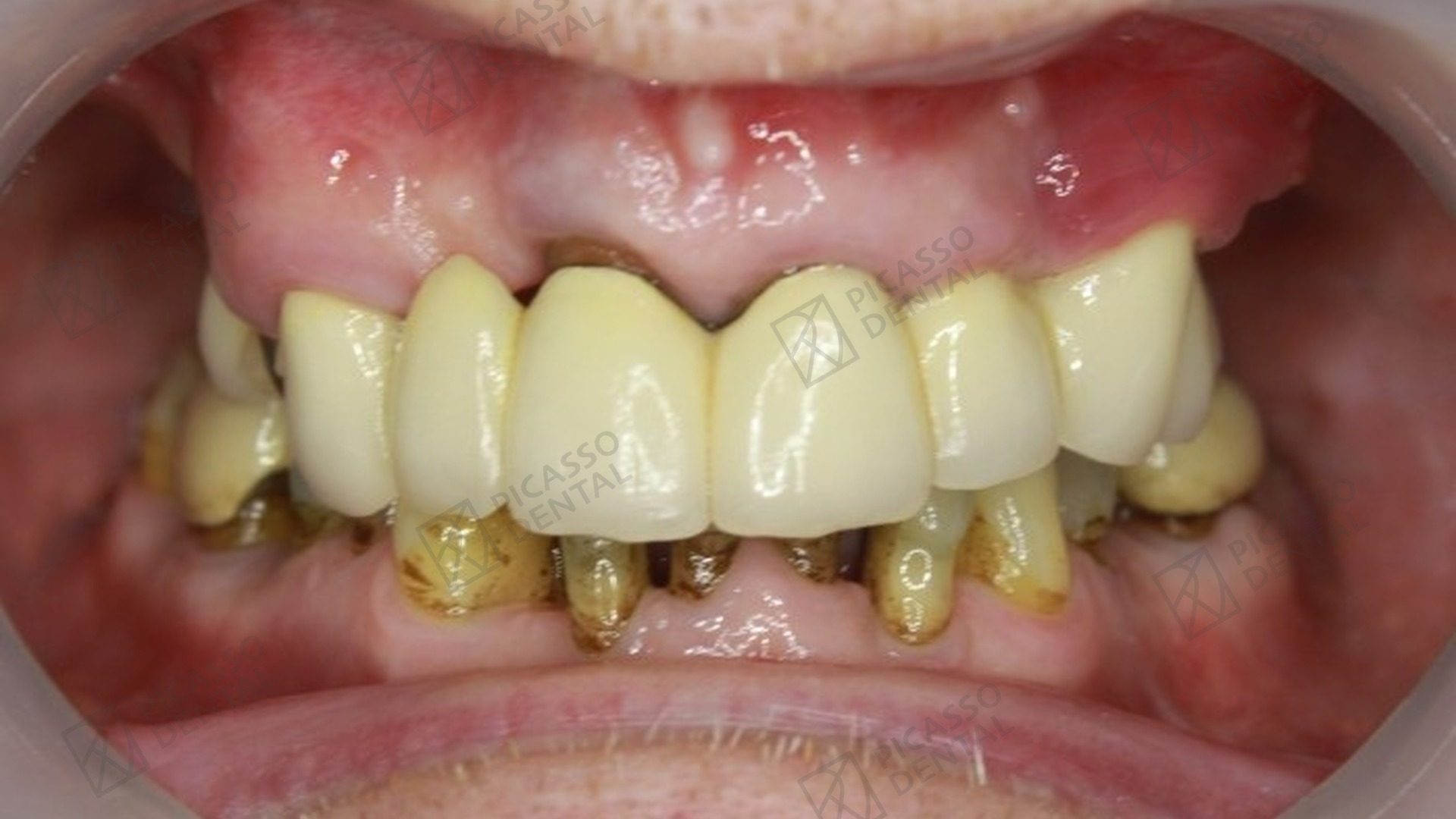
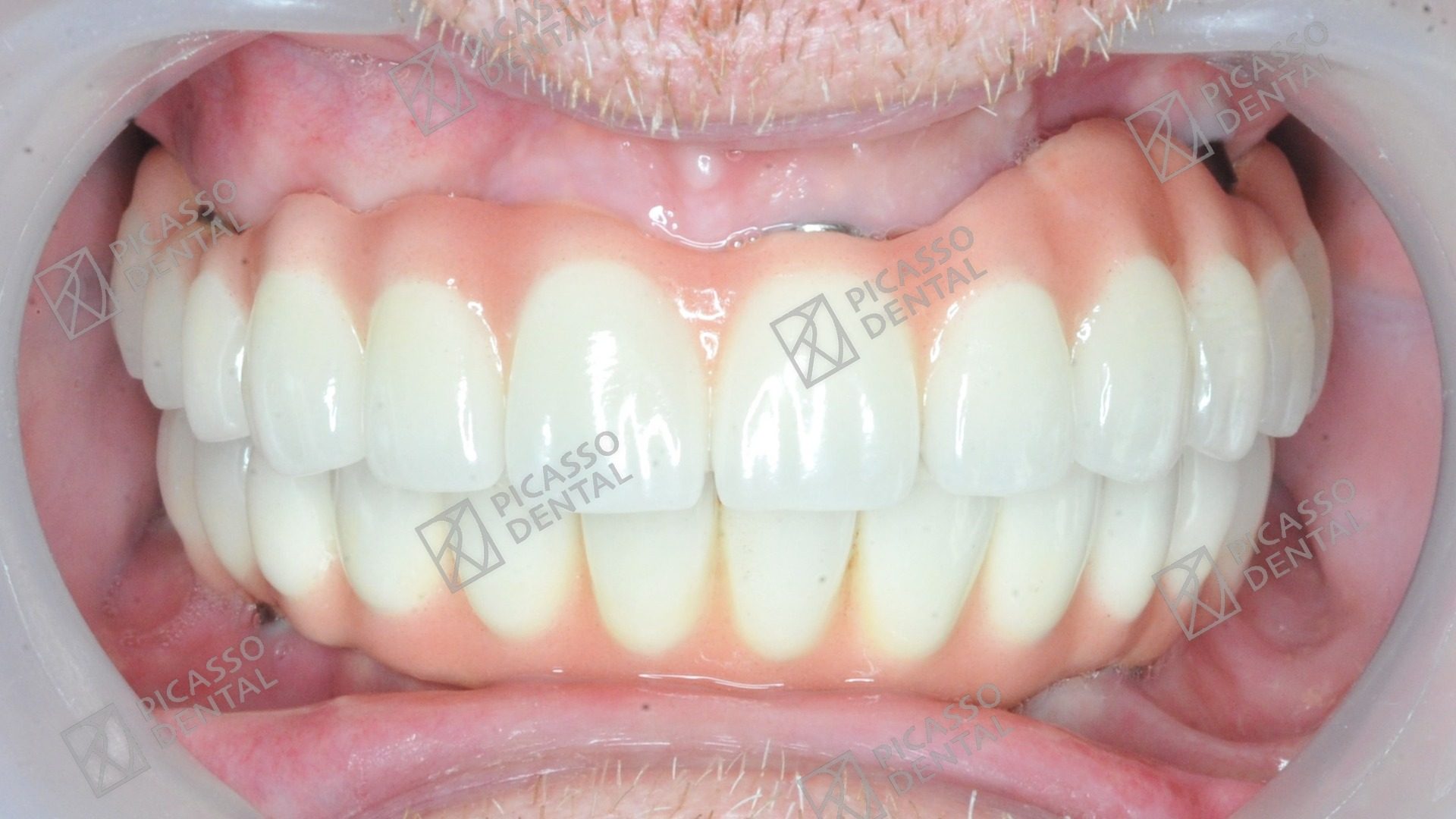
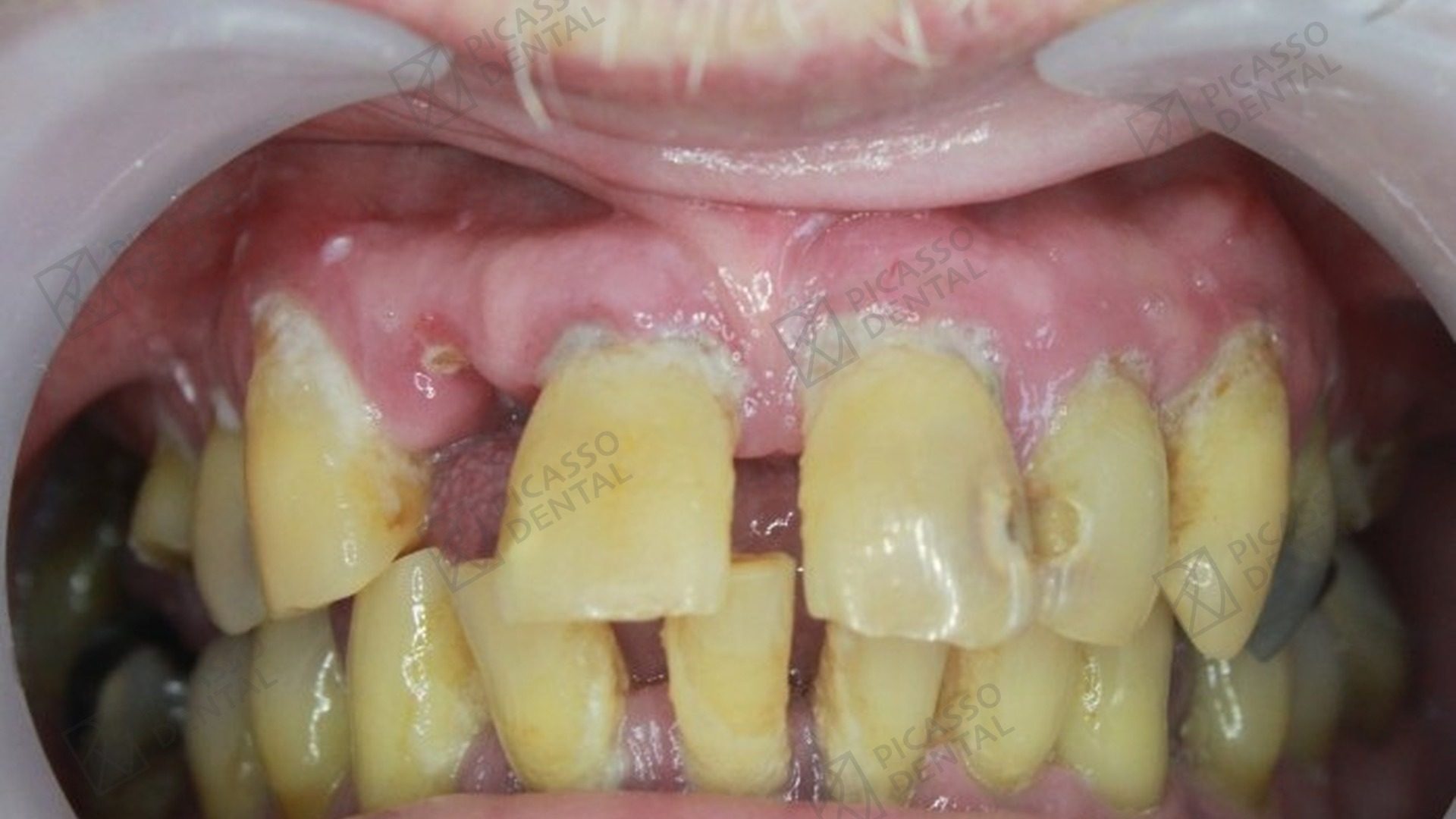
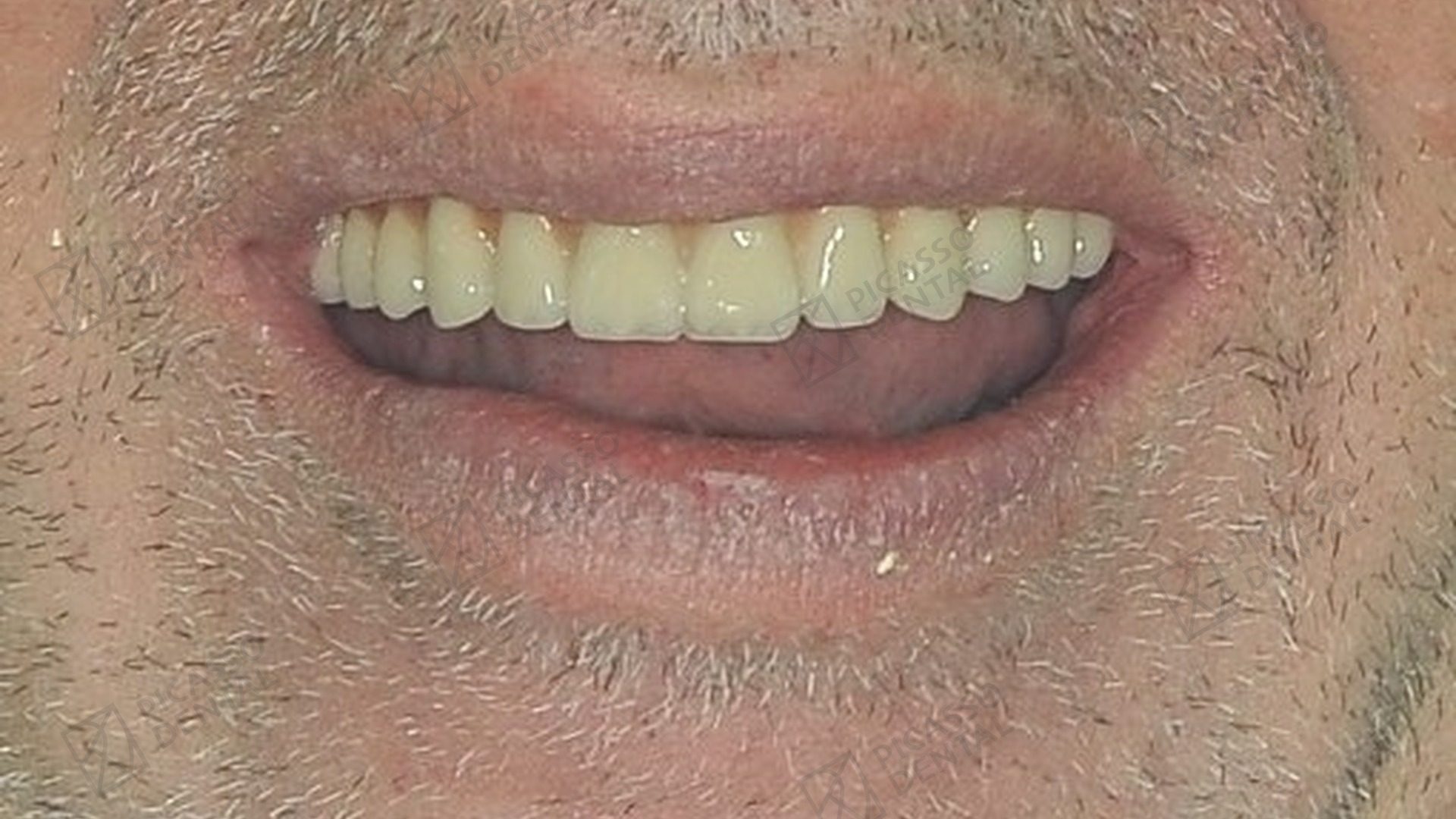
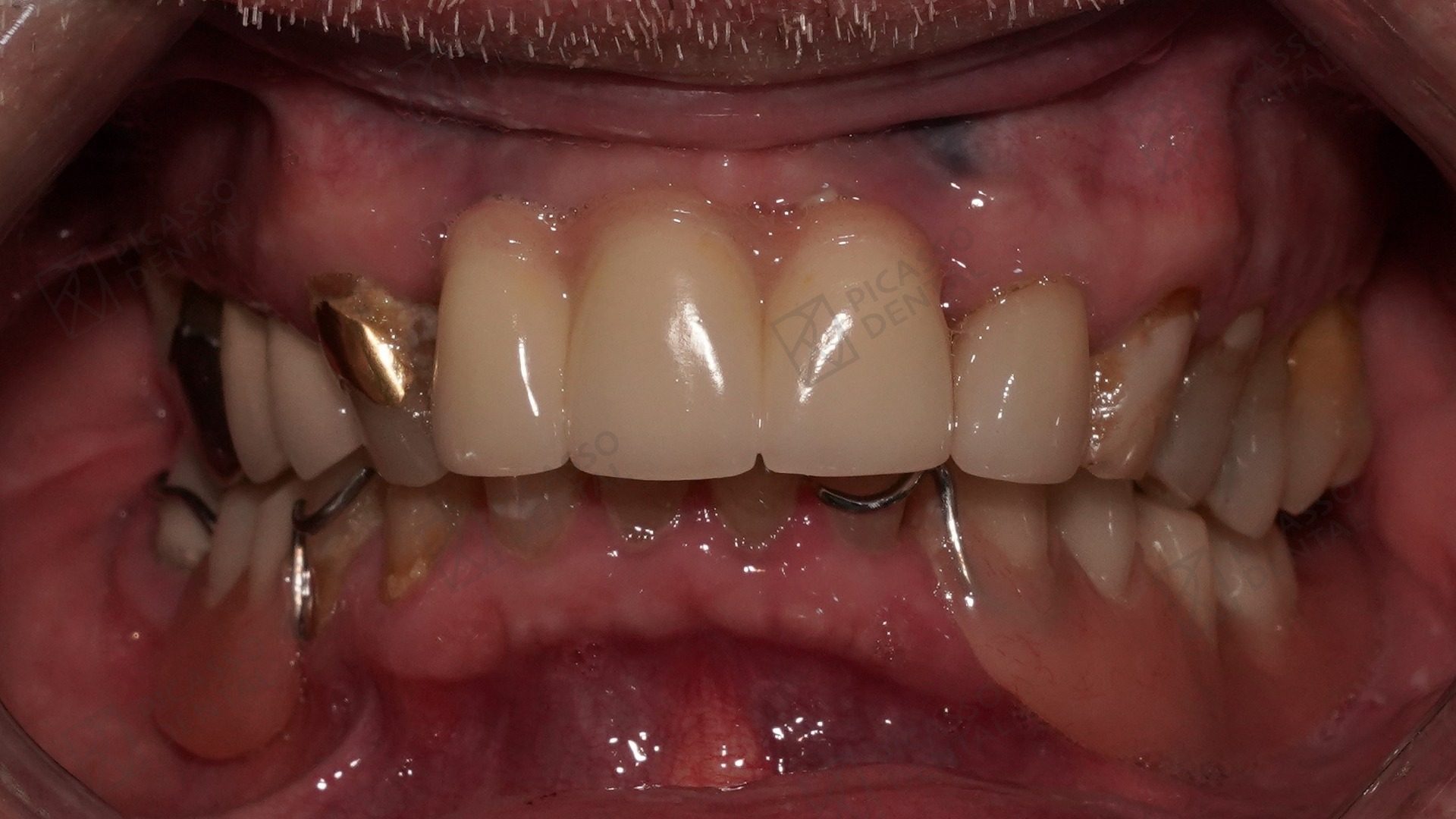
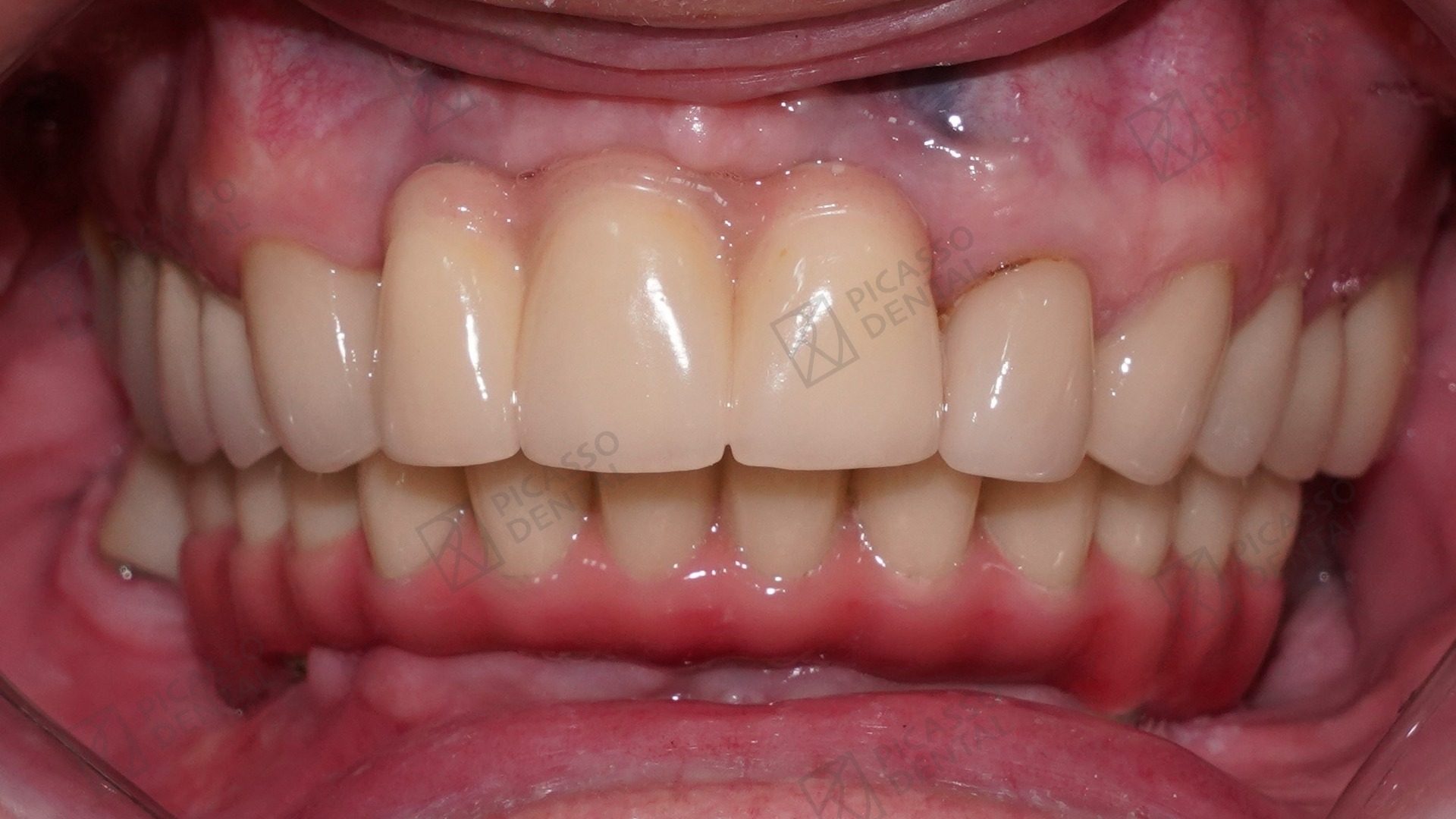
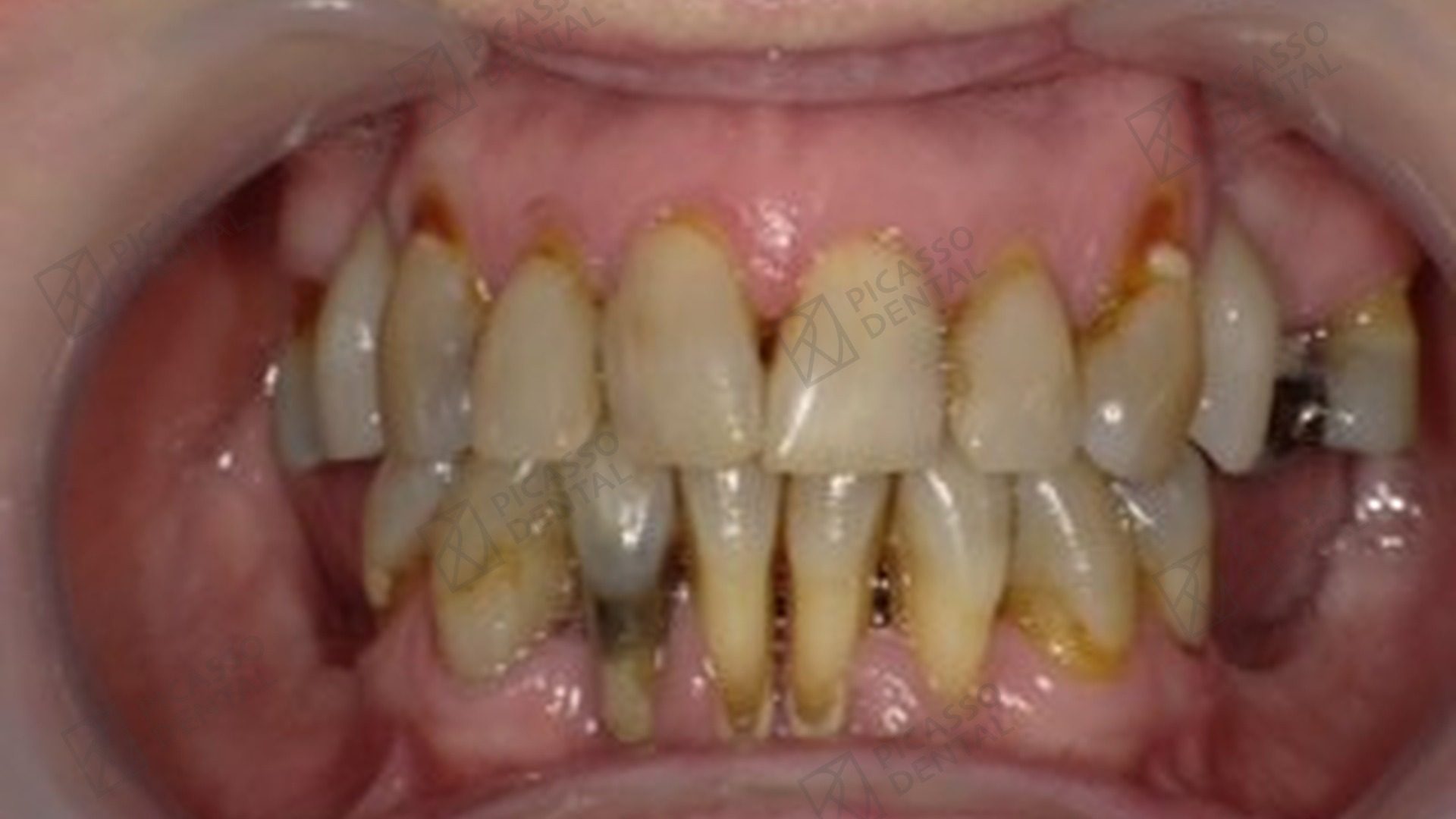
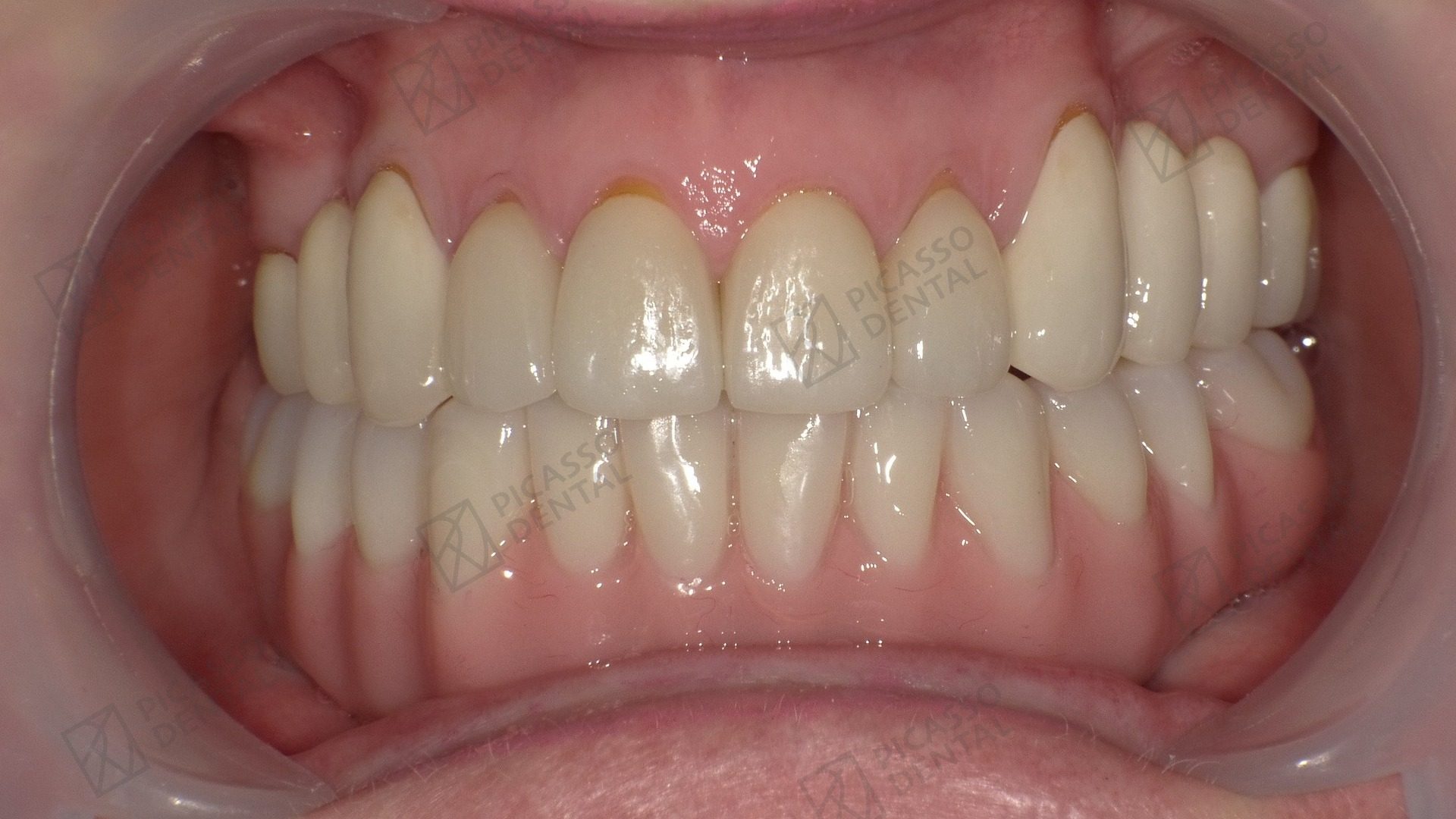
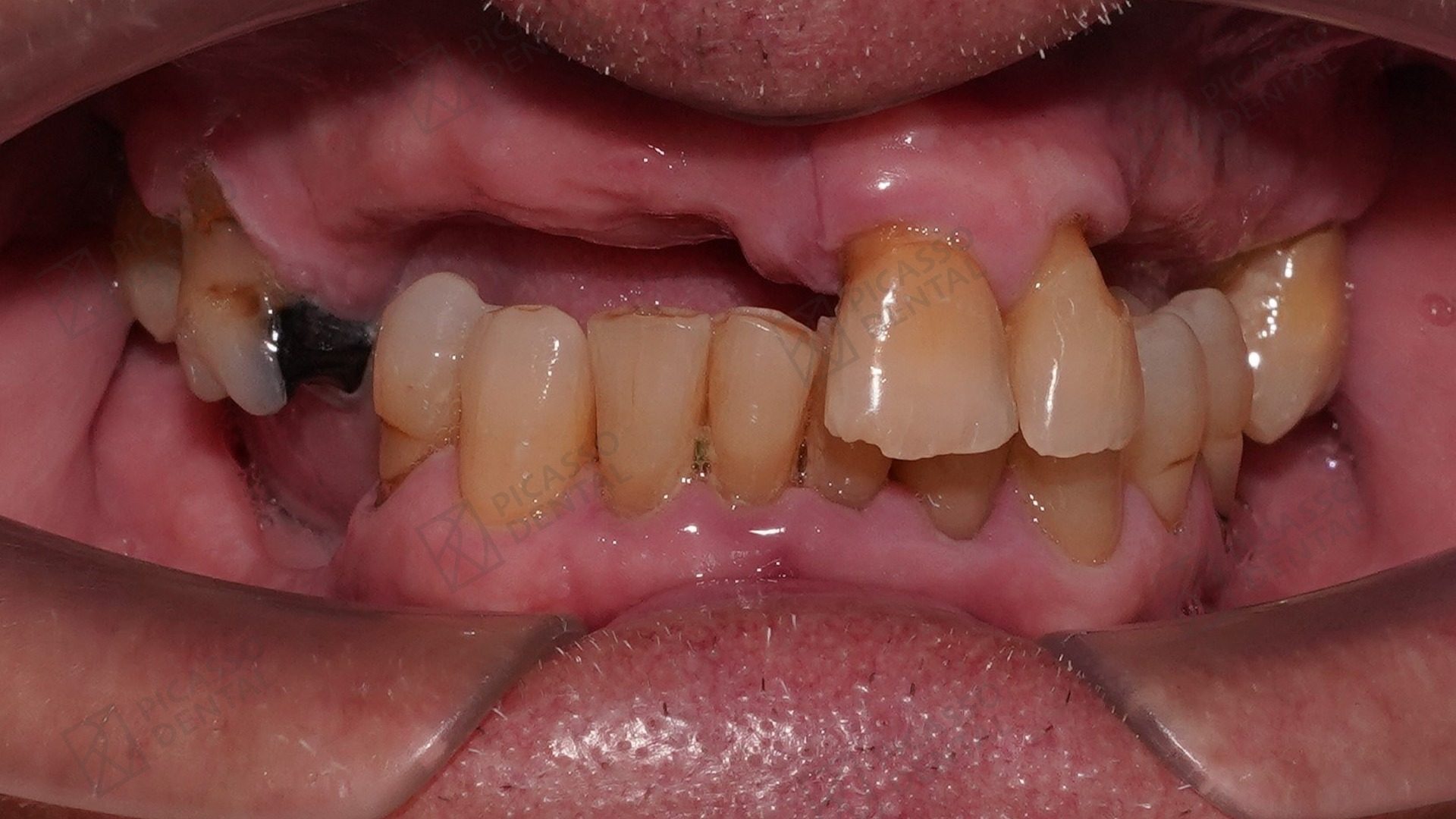
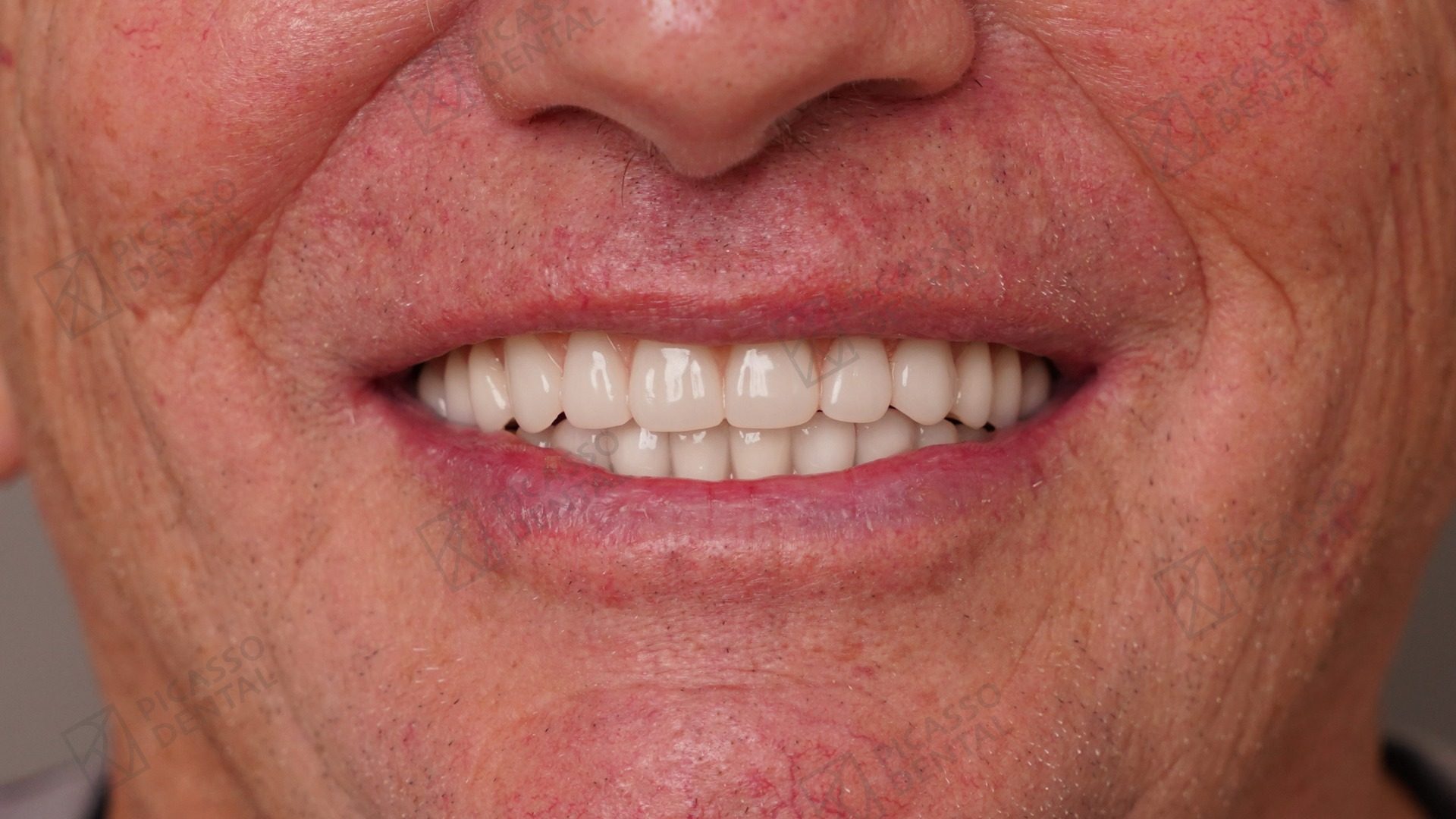
Implant Results: All-on-4, All-on-6, and Full-Arch Rehabilitation
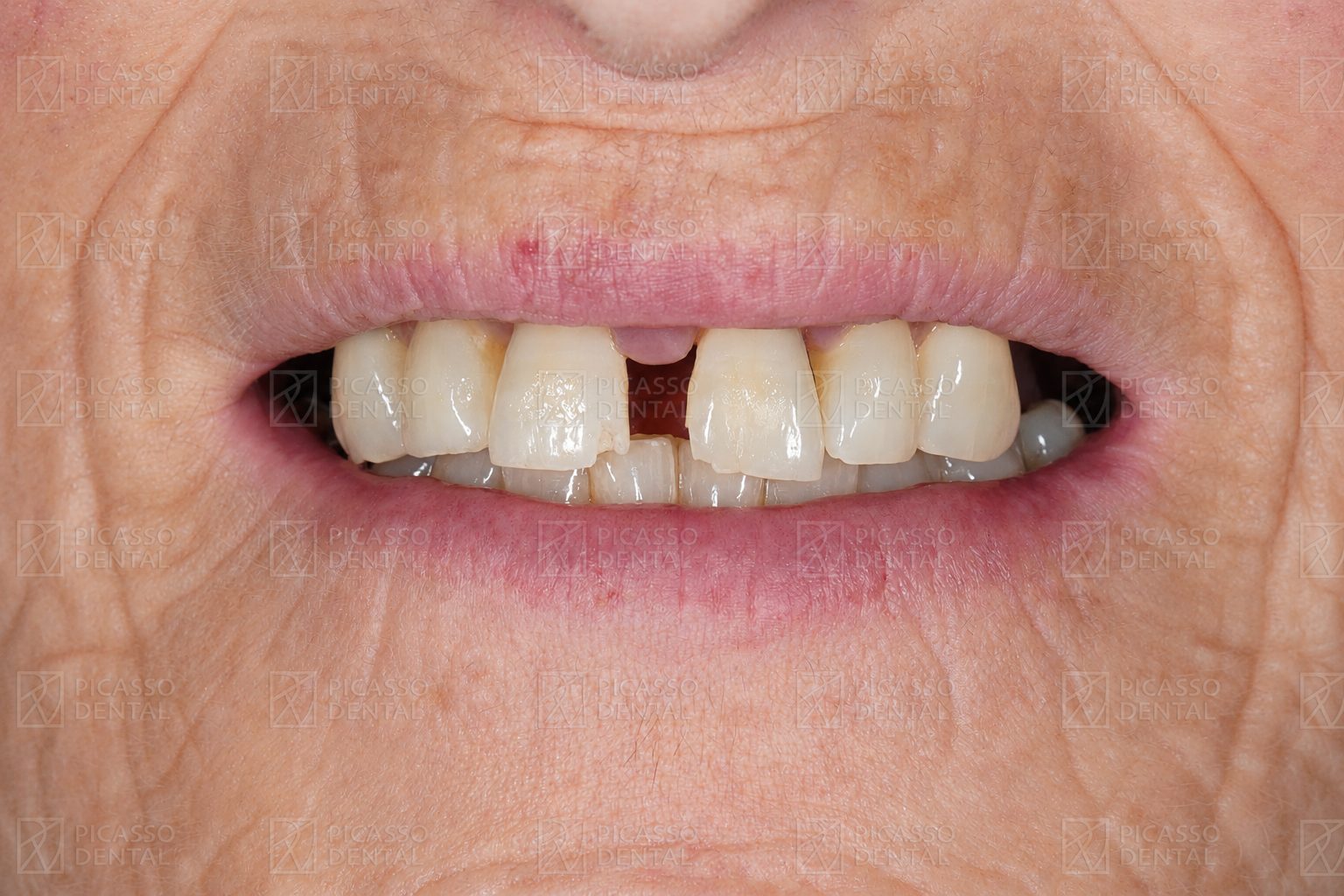
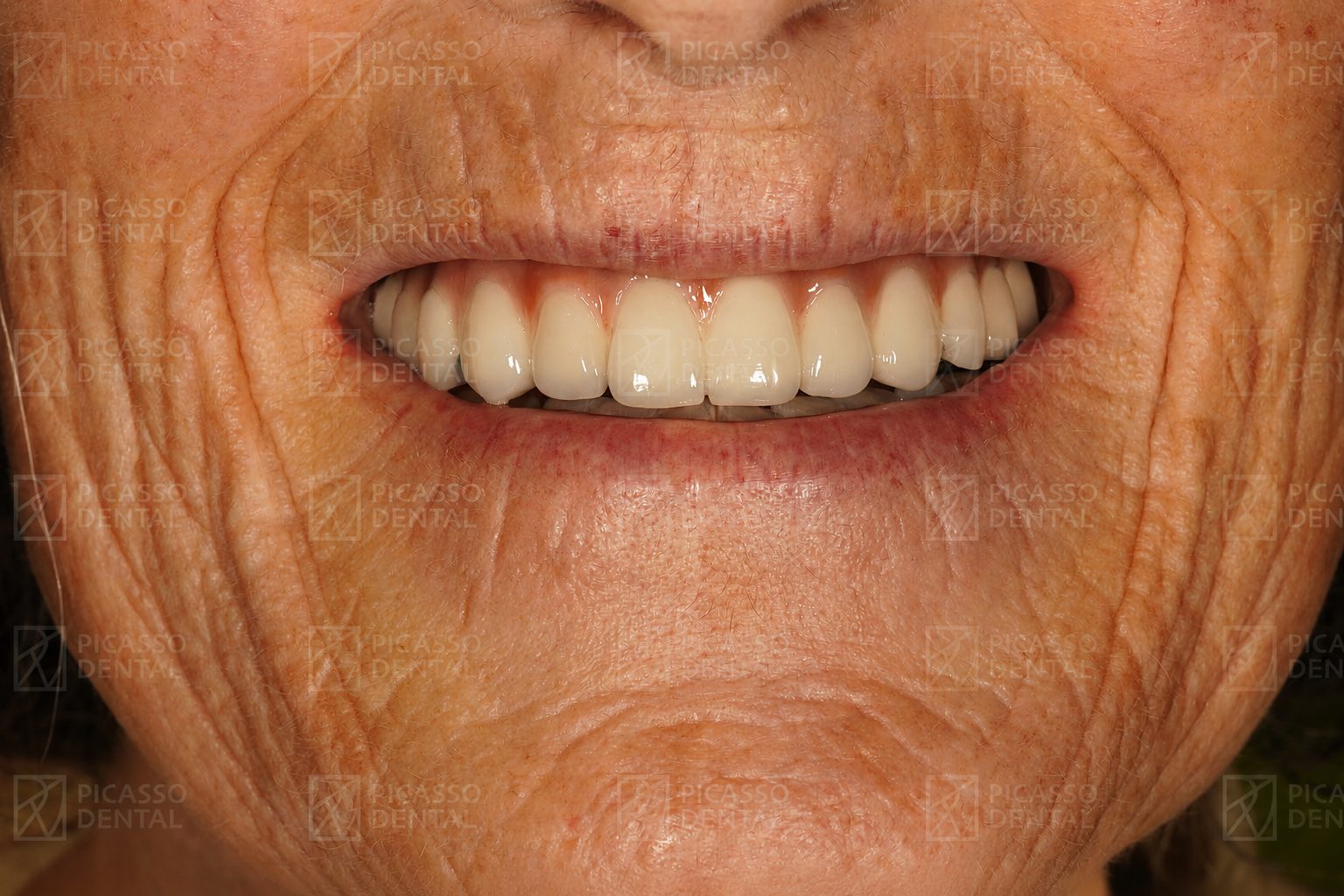
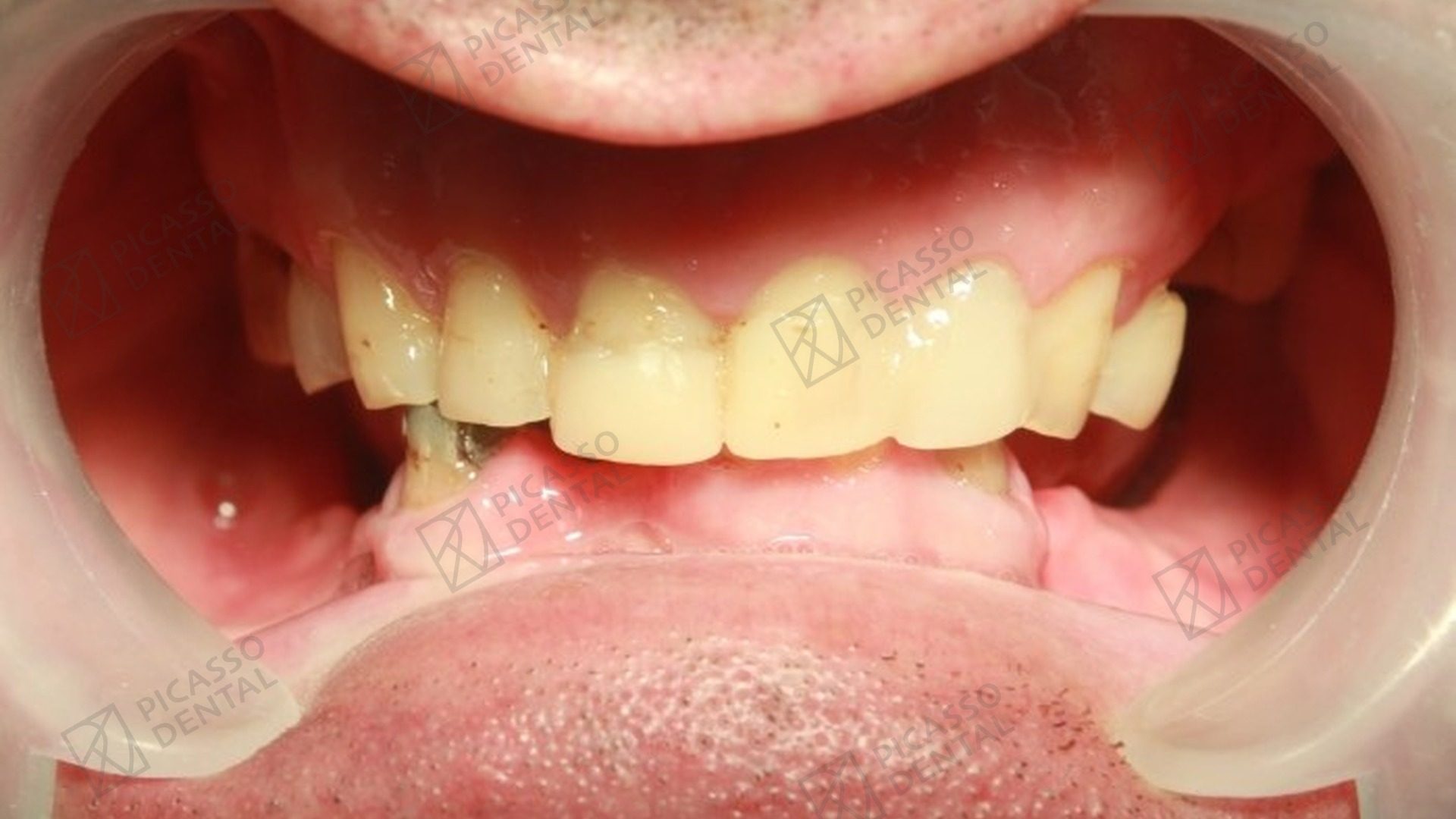
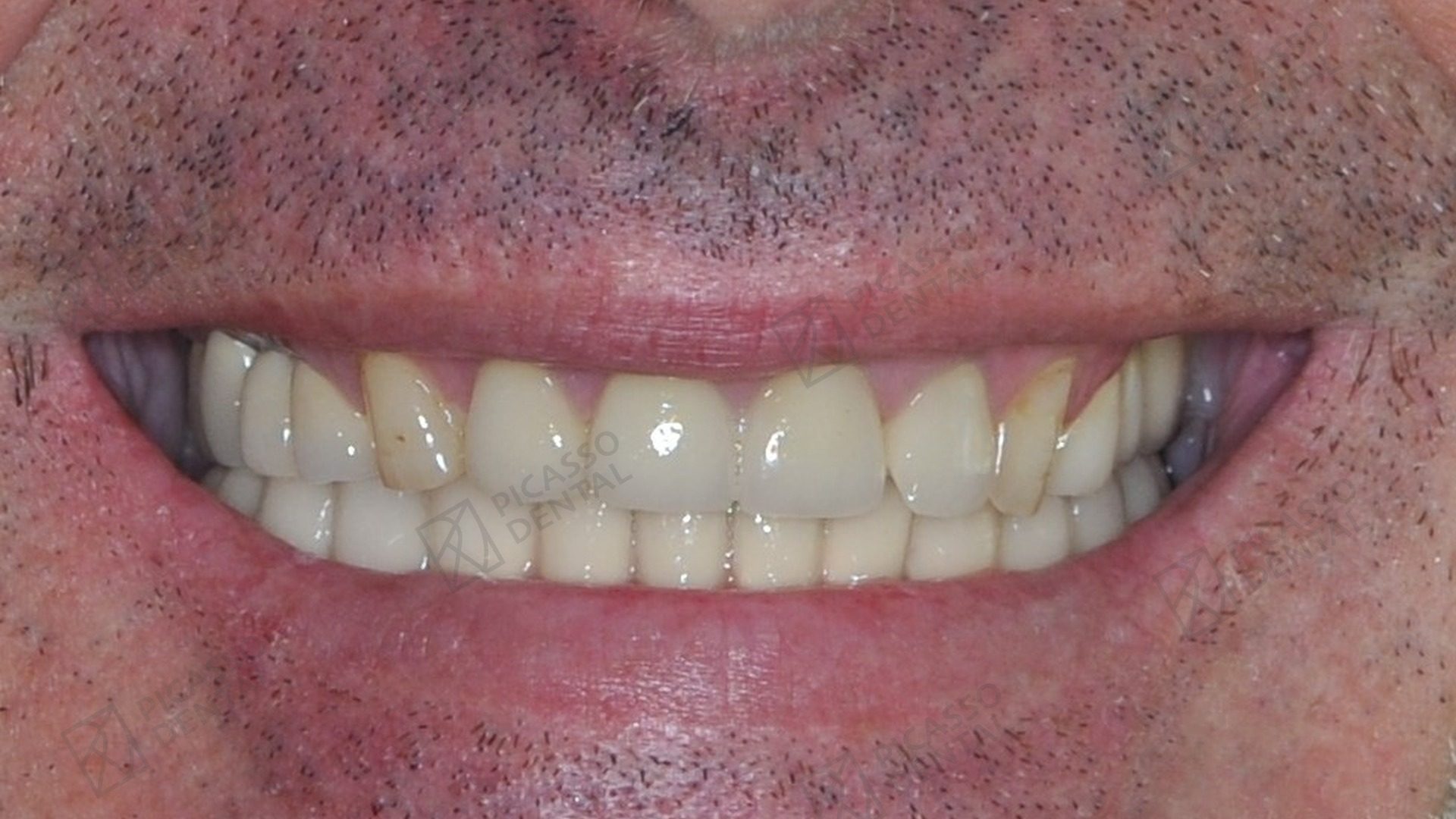
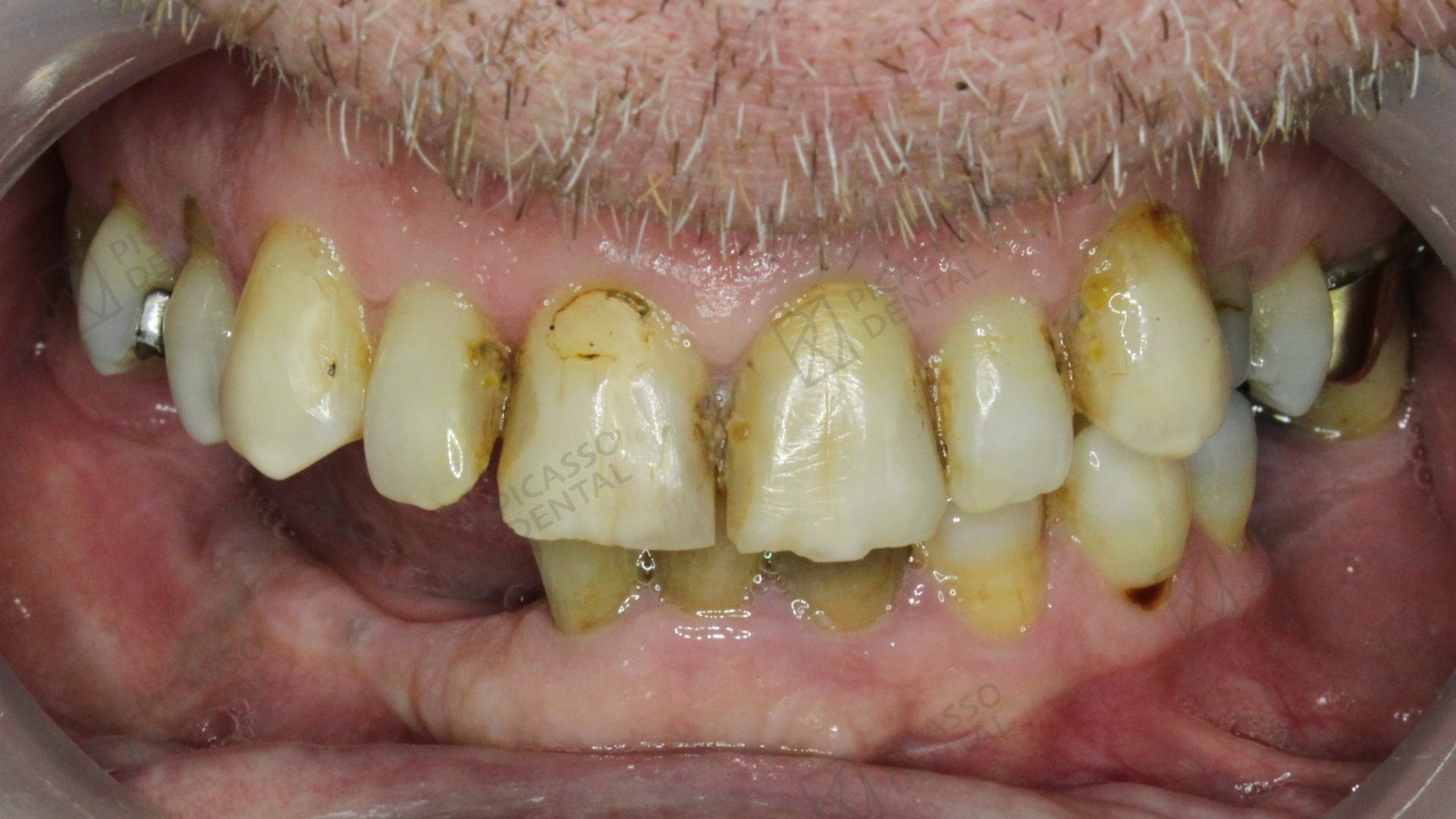
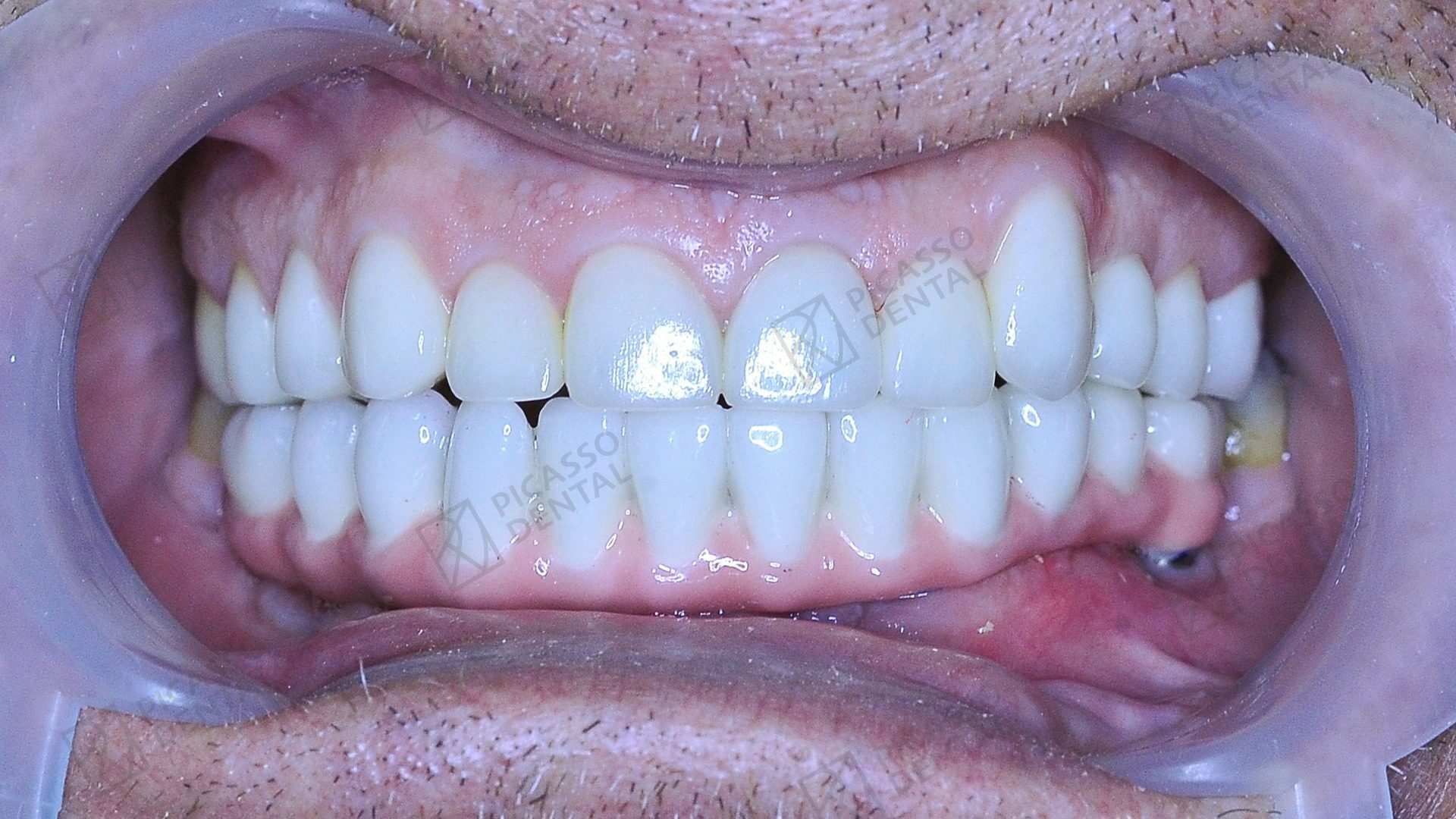
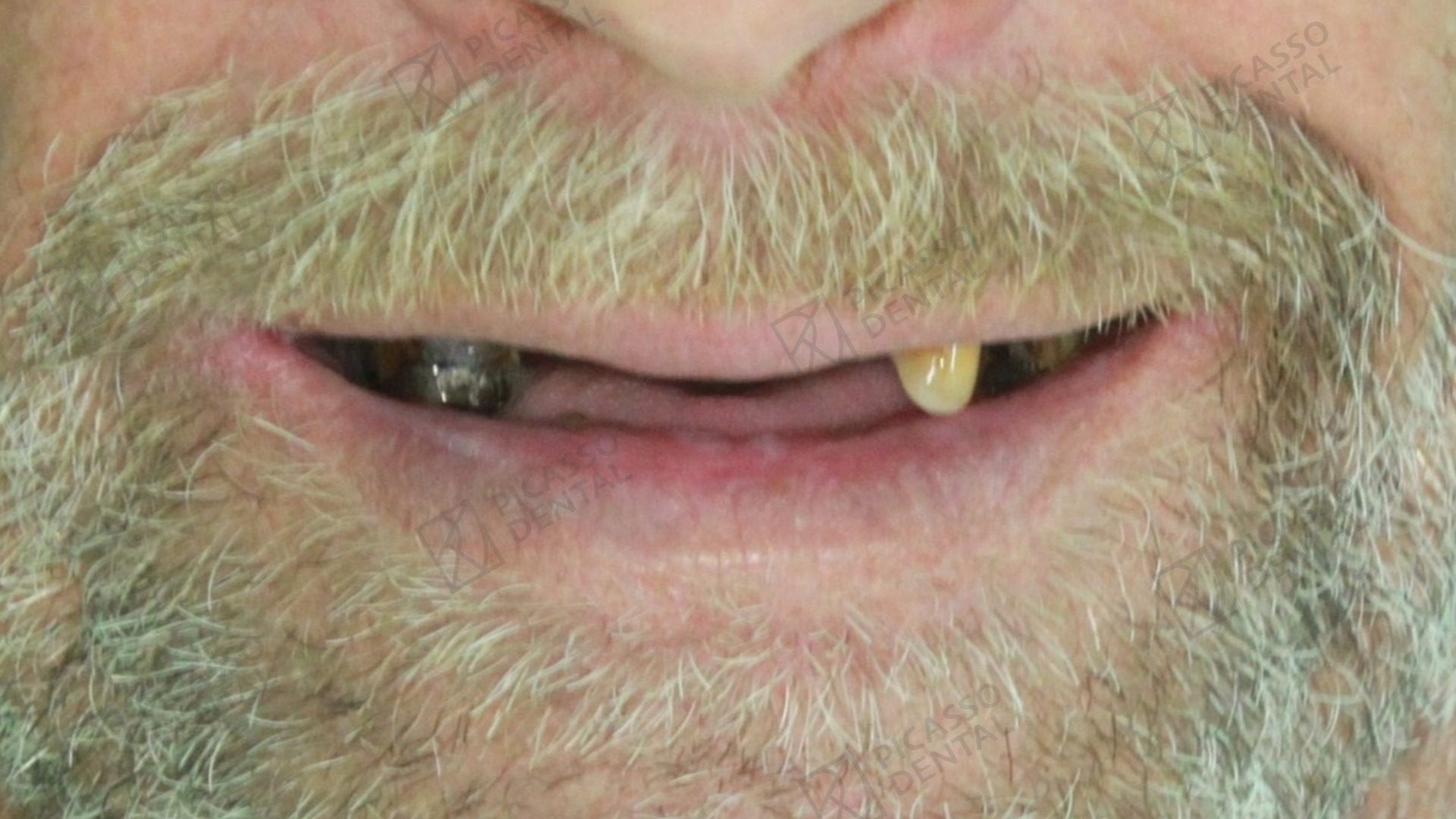
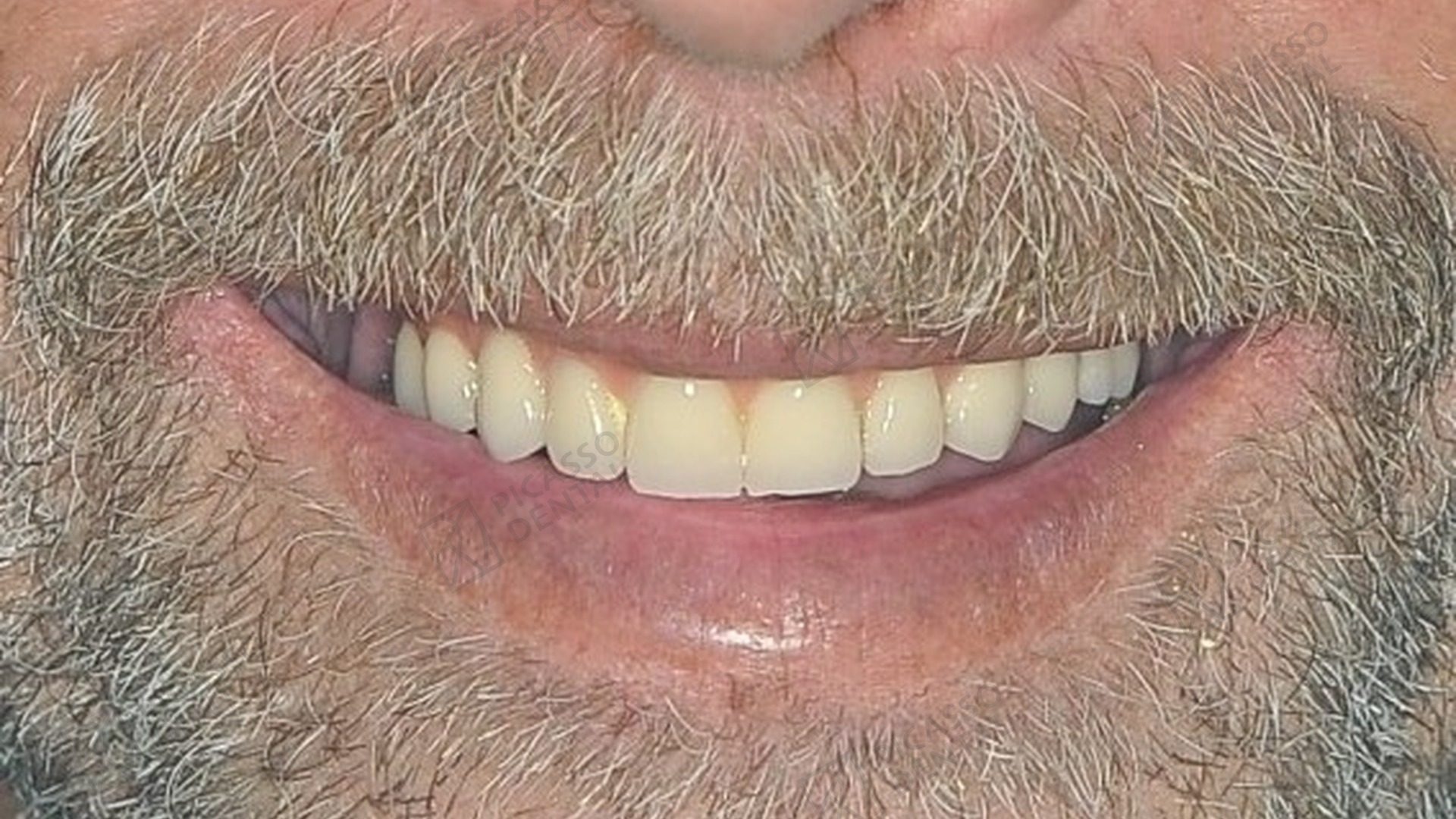
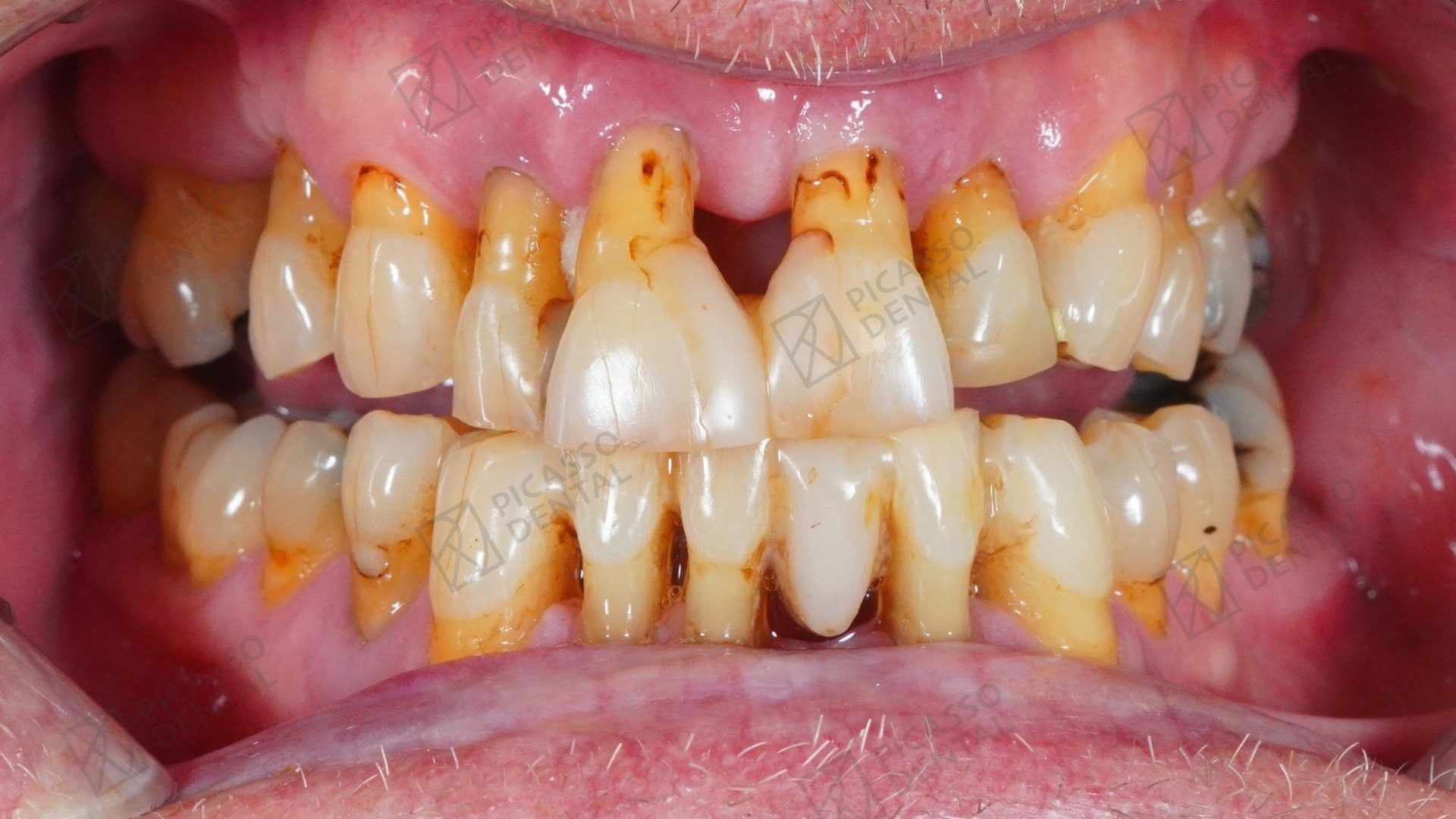
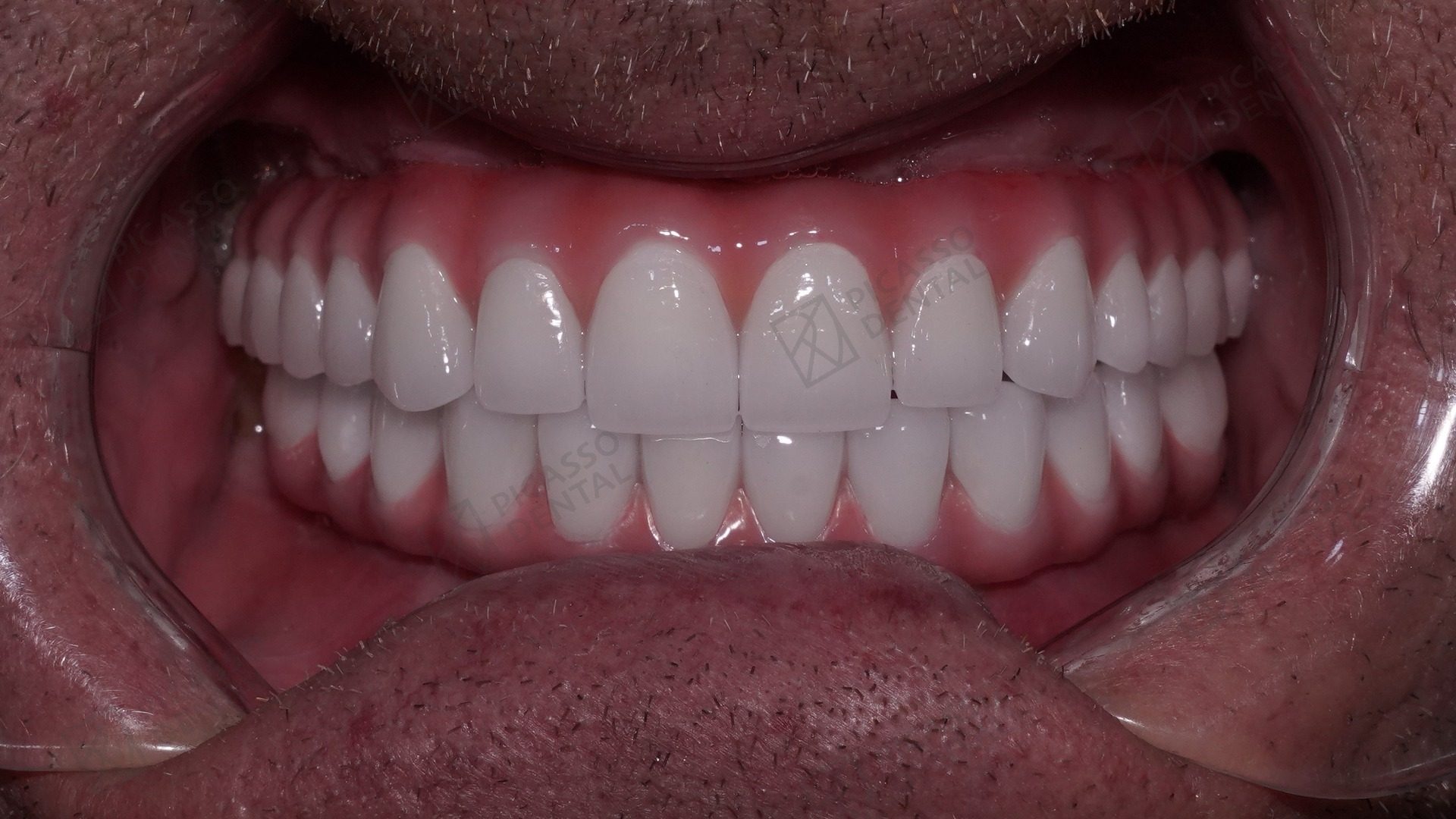
All-on-4 and All-on-6 full-arch rehabilitation replaces an entire jaw of teeth with four or six implants supporting a fixed bridge. The procedure is performed under local anaesthesia with optional IV conscious sedation. Patients leave the first visit with a temporary bridge in place; the final zirconia or LAVA bridge is fitted on the second trip three to nine months later.
Picasso Dental has performed All-on-4 and full-arch implant cases with Nobel Biocare, Straumann, Osstem, and ETK implants since 2013. The cases below span from 2014 to 2025, showing consistent long-term outcomes across surgeons, implant brands, and patient age groups.
All-on-4, All-on-6, and Full-Arch Implant Cases
Before You Travel: What to Send and What to Ask
A good pre-trip consultation takes ten minutes and saves significant confusion on arrival. Send the following when you make contact:
- Recent X-rays, ideally an OPG panoramic radiograph. If you do not have one, describe what you know about your dental history.
- Photos of your current teeth taken in good light: front-on smile, close-up retracted (upper and lower), and ideally the left and right sides.
- A description of your goals: what bothers you most, what result you are hoping for, and what your budget range is.
- Your approximate travel window and how many days you can allocate to the visit.
Before you book any flights, ask the clinic these specific questions:
- "Which specific implant brand will be used, and can you confirm this in writing before treatment starts?"
- "Will you provide the implant serial number before I leave Vietnam?"
- "Will a CBCT 3D scan be used for surgical planning, and is it included in the quoted price?"
- "Will I receive clinical notes and X-rays in English when I leave?"
- "What is your aftercare process for international patients who return home?"
Any clinic worth travelling to will answer all five of these questions clearly and in writing. Vague or evasive responses are a reason to look elsewhere before you book flights.
Payment, Insurance, and Material Warranties
Picasso Dental accepts Visa, Mastercard, Vietnamese dong cash, and bank transfer at all branches. Large advance deposits before arrival are not required. You pay for completed treatment stages, not in advance for work not yet performed.
Fully itemised invoices are provided in a format accepted by major international travel insurance providers. If you have dental insurance that provides partial reimbursement for international treatment, contact us before your trip and we will confirm the documentation format your insurer requires. Some Australian and UK private health funds reimburse a portion of overseas dental treatment costs when proper documentation is provided.
Nobel Biocare and Straumann implant fixtures carry the international manufacturer warranty, valid globally. Osstem and ETK carry manufacturer warranties within their regional networks. You receive all warranty documentation in your treatment file before you fly home. Crowns and prosthetic bridges from the laboratory carry a separate material certificate naming the material used and the laboratory.
Aftercare: What Happens When You Get Home
Before you depart Vietnam, Picasso Dental provides a complete treatment file containing:
- X-rays taken before and after treatment
- Clinical notes describing procedures performed, written in English
- Implant brand name and fixture serial number
- Crown and prosthetic material certificates from the laboratory
- Aftercare instructions specific to your treatment
- Itemised invoice for insurance reimbursement
After you return home, the international patient team is available for follow-up questions by email. For clinical questions, photographs reviewed by the treating dentist with a response within 24 hours is standard. If you experience a mechanical issue such as a loose crown or a broken aligner, the team advises remotely and, where possible, arranges for components to be sent.
For implant patients, it is important to inform your local dentist that you have implants placed and to share the brand and serial number documentation. Any local dentist can perform your six-monthly checks and hygiene visits; you do not need to travel back to Vietnam for routine implant maintenance.
Frequently Asked Questions
Is dental treatment in Vietnam safe for international patients?
Yes, when you choose a clinic that uses internationally certified implant brands, employs qualified dentists, and provides written treatment plans and documentation. The risks associated with dental tourism are almost always linked to choosing a clinic on price alone without checking credentials, brands, and patient records. Picasso Dental has treated international patients since 2013 across six branches, with cases verifiable through Google Maps reviews from patients in Australia, Canada, the UK, and the United States.
How much can I save on dental treatment in Vietnam compared to Australia or the UK?
Savings of 50 to 70 percent are typical for implants and veneers. A single Nobel Biocare implant that costs AUD 5,000 to 6,500 in Australia costs USD 900 to 1,400 at Picasso Dental. A full set of 10 LAVA porcelain veneers that might cost GBP 10,000 to 15,000 in the UK can be completed in Vietnam for USD 3,000 to 5,000 using the same certified material. Even after factoring in return flights and accommodation, the total is typically 40 to 60 percent below the home-country cost for larger treatment plans.
How long do I need to stay in Vietnam for dental treatment?
For cosmetic work such as veneers or crowns, plan 5 to 7 days in Vietnam for a single trip. Composite veneers are faster: 2 to 4 days. Implant cases require two trips: the first for placement (5 to 7 days) and a second trip 3 to 6 months later for the final crown (2 to 4 days). All-on-4 full-arch rehabilitation follows the same two-trip model, with the first trip usually 7 to 10 days. Whitening and cleaning alone can be done in 2 to 3 days.
Which city in Vietnam is best for dental tourism?
Da Nang is the most popular for first-time dental tourists: beach access, compact city centre, Hoi An nearby, and Picasso Dental operates inside Vinmec International Hospital for surgical cases. Hanoi suits longer stays and cultural tourism. Ho Chi Minh City is best for patients flying via Tan Son Nhat airport or staying in the south. Da Lat offers cooler mountain temperatures with a clinic inside Link General Hospital, preferred by patients who want a calm recovery environment.
What documentation will I receive when I leave?
Before you fly home, Picasso Dental provides: X-rays taken before and after treatment, clinical notes in English, implant brand name and serial number, crown and prosthetic material laboratory certificates, aftercare instructions, and an itemised invoice for insurance reimbursement. This documentation allows your home dentist to continue your care and activates the international manufacturer warranty on any implants placed.
What implant brands does Picasso Dental use?
Picasso Dental uses Nobel Biocare (Switzerland), Straumann (Switzerland), Osstem (South Korea), and ETK (France). All carry manufacturer warranties. You receive the implant serial number documentation before you fly home, and the specific brand for your case is confirmed in writing before any treatment begins. The brand used depends on the case type, bone availability, and the treating surgeon's recommendation.
Send us your X-rays and photos. We reply within 24 hours with a personalised treatment plan, recommended trip duration, and costs in your local currency. No commitment required.
Start My Consultation