Porcelain Veneers
Chipped Tooth: Implant,
Crown, or Veneer?
The Answer Depends on the Damage
The right treatment for a chipped tooth is determined by how much of the tooth remains, which tooth it is, and what the bite looks like. Dr. Emily Nguyen explains the decision framework used at Picasso Dental Clinic.

The short version
- A dental implant replaces a missing tooth. If your tooth is chipped but still present, an implant is not in the picture.
- A veneer covers the front surface of the tooth and works best for minor to moderate chips on front teeth where the structural integrity is intact.
- A crown caps the entire tooth and is needed for large chips, chips on back teeth, or teeth already weakened by decay or large fillings.
- Composite bonding is a conservative, less expensive option for small chips that do not require a full veneer.
- The size, location, and depth of the chip determine the right treatment. A clinical examination and X-ray are necessary for an accurate recommendation.
First, clear up the implant confusion
Patients often group implants, crowns, and veneers together as if they are interchangeable options for any tooth problem. This is a misunderstanding worth addressing directly, because it affects how patients think about their choices.
A dental implant is a titanium post surgically placed into the jawbone to replace a tooth that is completely missing or that needs to be extracted. The implant then supports a crown, bridge, or other restoration on top. If your tooth is chipped but still present in your mouth, an implant is not a treatment option for it. Implants are for absent teeth, not damaged ones. The moment implants enter the conversation for a chipped tooth, the underlying question has already shifted from repair to replacement, which means the tooth cannot be saved.
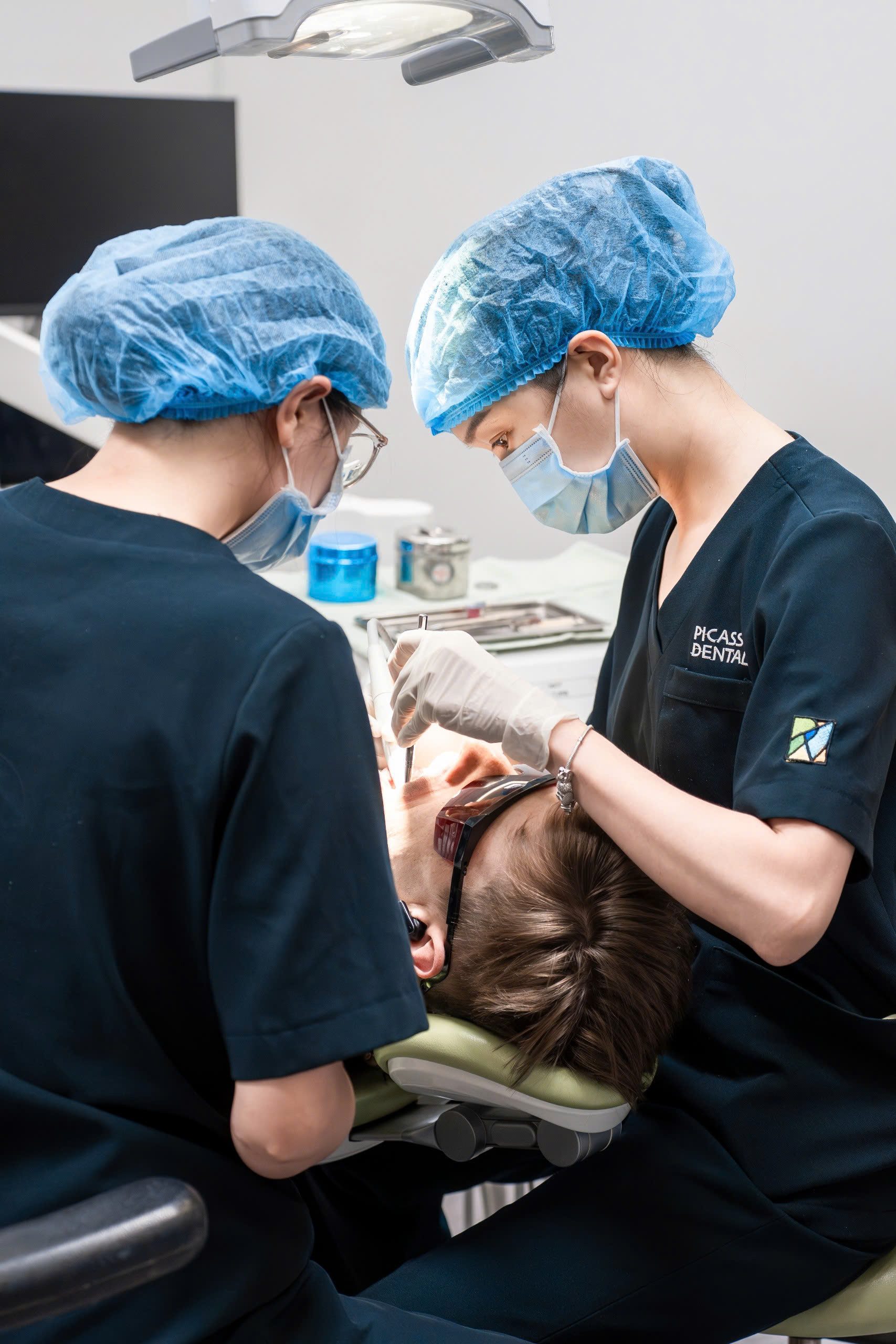
For a tooth that is chipped but structurally salvageable, the choices are composite bonding for small chips, a veneer for moderate front-tooth chips, or a crown for large chips or damaged back teeth. These are the actual decision points.
Composite bonding: the conservative starting point
Many chipped teeth, particularly small chips on front tooth edges, can be repaired at a single appointment with composite bonding. The dentist applies a tooth-colored resin material to the chipped area, shapes it to restore the natural contour of the tooth, and polishes it. No enamel is removed from the existing tooth. The result is immediate and, in the right hands, very natural-looking.
The limitation of bonding is durability. Composite resin is less hard than natural enamel and more susceptible to chipping, staining, and wear under heavy biting forces. A bonded repair typically lasts three to seven years before needing touch-up or replacement. For a small chip on a lower incisor that does not bear much load, bonding is an excellent, cost-effective solution. For a chip on a front tooth that is also being corrected as part of a broader smile makeover, a veneer provides a more durable, stain-resistant outcome.
Veneers: the right choice for front-tooth chips with cosmetic goals
A porcelain veneer is the preferred treatment for chips on front teeth when the chip affects less than about one-third of the tooth, when the tooth nerve is intact, and when the patient has broader cosmetic goals such as changing the color, shape, or length of the tooth simultaneously.
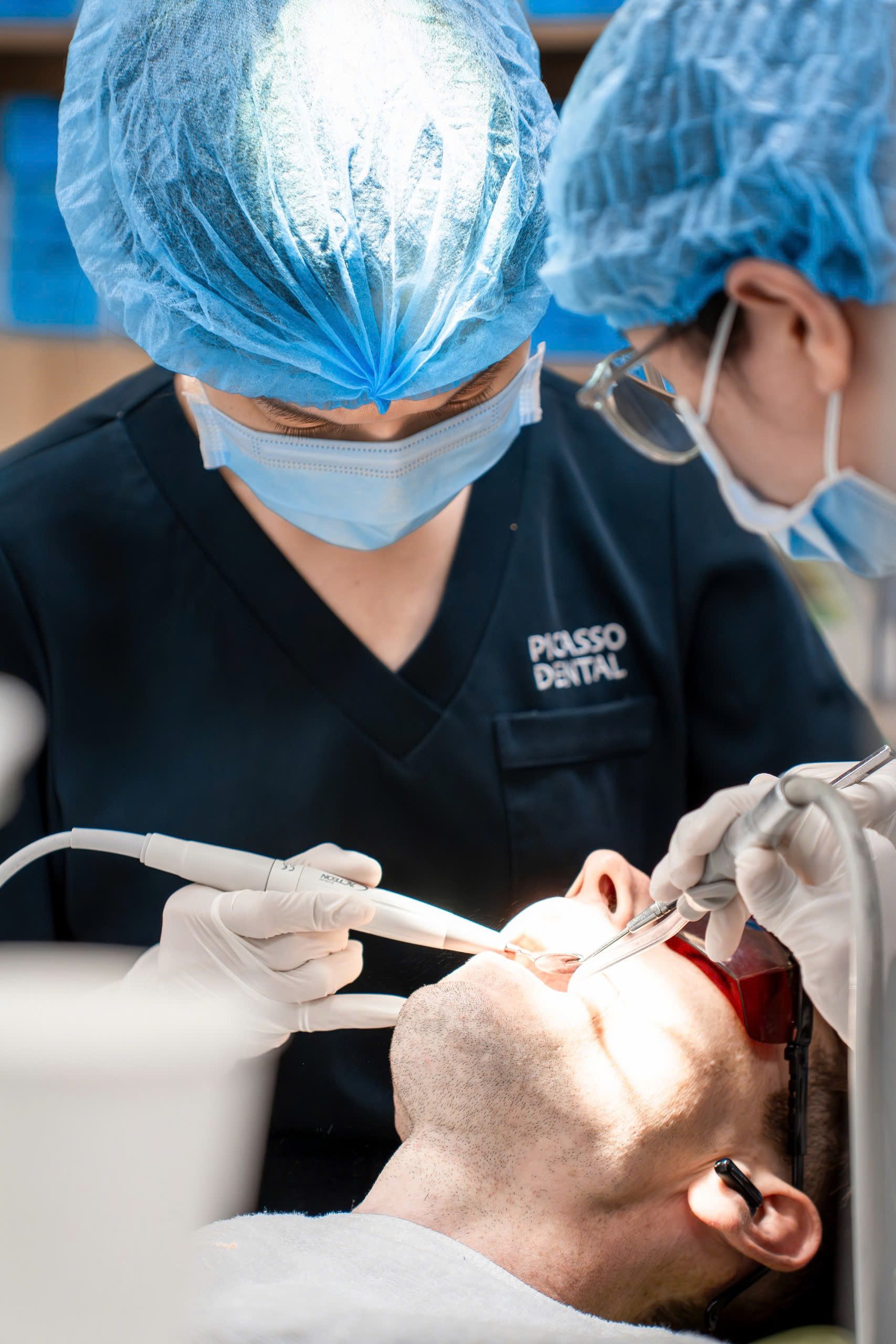
The veneer preparation removes approximately 0.5 millimeters from the front surface of the tooth, creating space for the porcelain shell that will cover the chip and restore the natural tooth profile. The porcelain is bonded to the prepared surface with a light-cured adhesive, creating a strong, stain-resistant result that lasts 10 to 15 years with proper care. Because the veneer covers the entire front surface of the tooth, the restored tooth looks indistinguishable from the adjacent natural teeth when designed correctly.
Veneers are not appropriate for chips on back teeth. Molars and premolars experience much higher bite forces than front teeth, and a thin veneer covering only the front surface does not provide the structural reinforcement needed for those loads. I have seen front-surface veneers debond or fracture on premolars within months when placed by clinicians who did not recognize this limitation.
Crowns: when the chip is large, deep, or on a back tooth
A crown is necessary when the chip is extensive enough to compromise the structural integrity of the tooth. The indicators for crown treatment rather than veneer treatment are:
- The chip is large, affecting more than one-third of the tooth A large chip leaves less remaining tooth structure to bond to, and the forces on a front tooth can cause a veneer placed over that remaining structure to flex and eventually debond or fracture. A crown provides circumferential support that distributes bite forces across the entire tooth rather than concentrating them on the veneer bond.
- The chip extends below the gumline When a chip breaks below the point where a veneer margin can be safely placed, a crown that extends to or below the gumline is needed to cover the affected area and provide a sealed margin against bacteria.
- The tooth has large existing fillings or previous decay A tooth that already has a large composite filling has less natural enamel remaining. Veneers bond primarily to enamel, and bonding to composite is less reliable. A crown encircles the entire tooth, providing support regardless of how much natural tooth structure remains.
- The chip is on a molar or premolar Back teeth need full structural coverage. Any chip on a molar that is large enough to restore should be treated with a crown, not a veneer. Porcelain-fused-to-zirconia and full zirconia crowns are the preferred materials for back teeth because of their superior strength under heavy bite loads.
"My Aussie dentist and the endodontist both commented on the quality of Dr Emily's work, equal to anything they had seen by local specialists."
Lawrie Smith, Hanoi Old Quarter, Google review
Not sure whether your chipped tooth needs a veneer or a crown? Share a photo and describe where the chip is. A Picasso dentist will respond within 24 hours with a clear recommendation.
Contact us →What the examination reveals
The honest answer to the veneer-versus-crown question for any specific patient is that the right choice requires seeing the tooth. What appears to be a small cosmetic chip from the outside may have a crack extending into the dentin that changes the treatment plan entirely. A chip that looks large from a photo may be entirely within the enamel and ideal for a veneer.
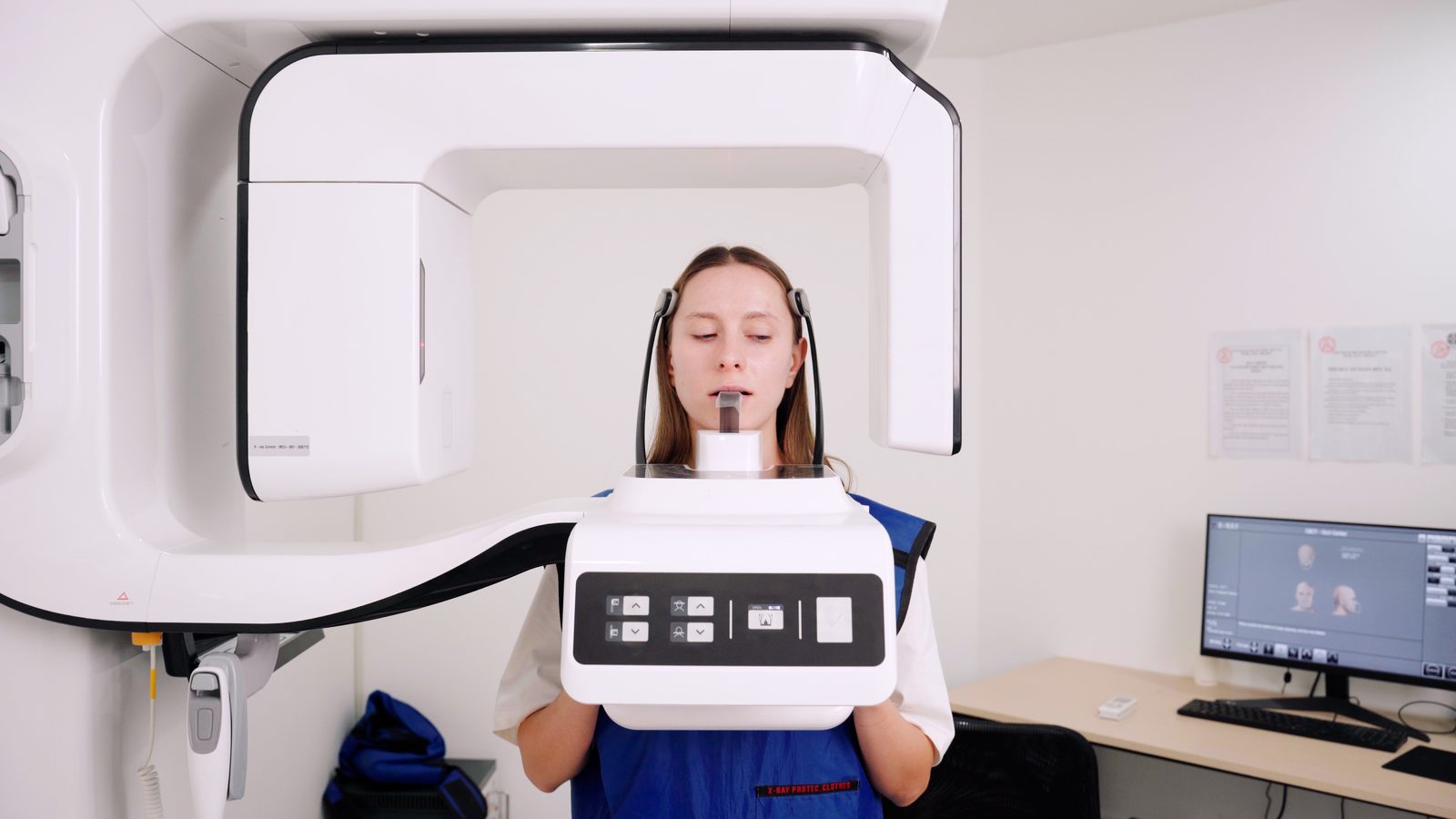
At every chipped tooth consultation at Picasso Dental, the assessment includes a clinical examination with a dental explorer to check for crack lines, photographs for documentation and treatment planning, and an X-ray to verify the health of the pulp and surrounding bone. Patients who grind their teeth at night also receive a bite assessment, because a strong grinding habit changes the prognosis for both veneers and crowns significantly. A patient who clenches heavily may need a crown even for a moderate chip, because the veneer will not survive the repeated loading.
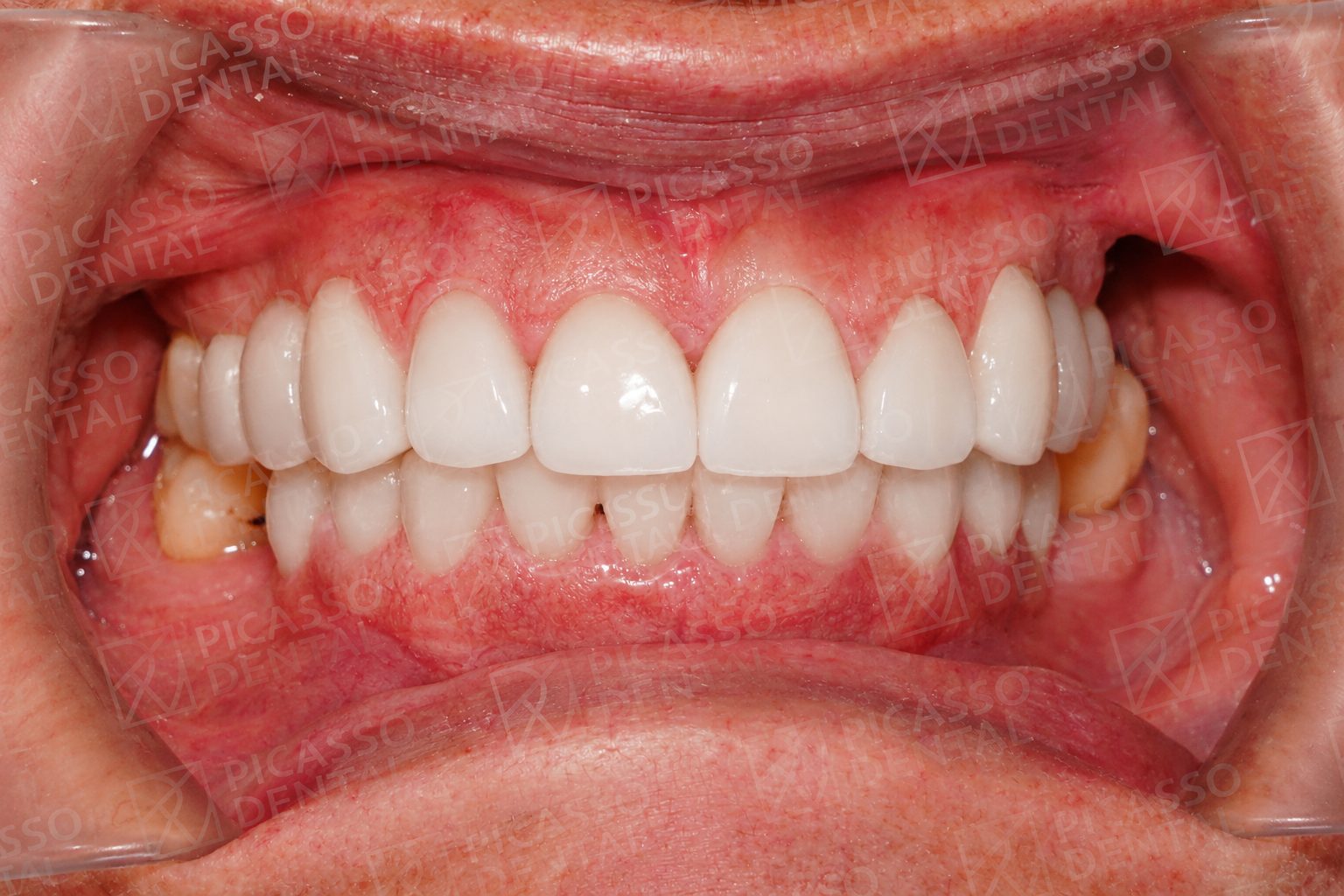
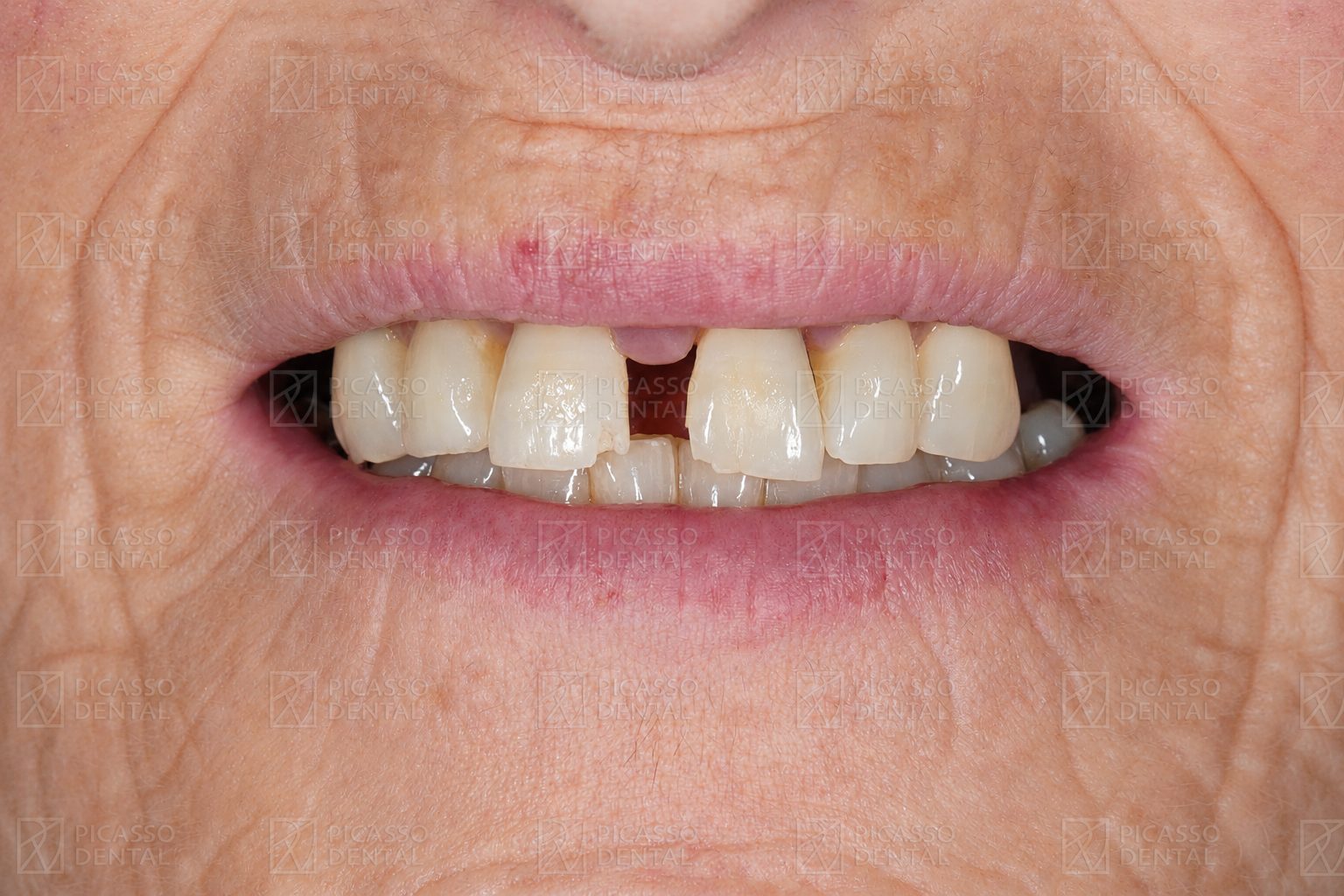 Before
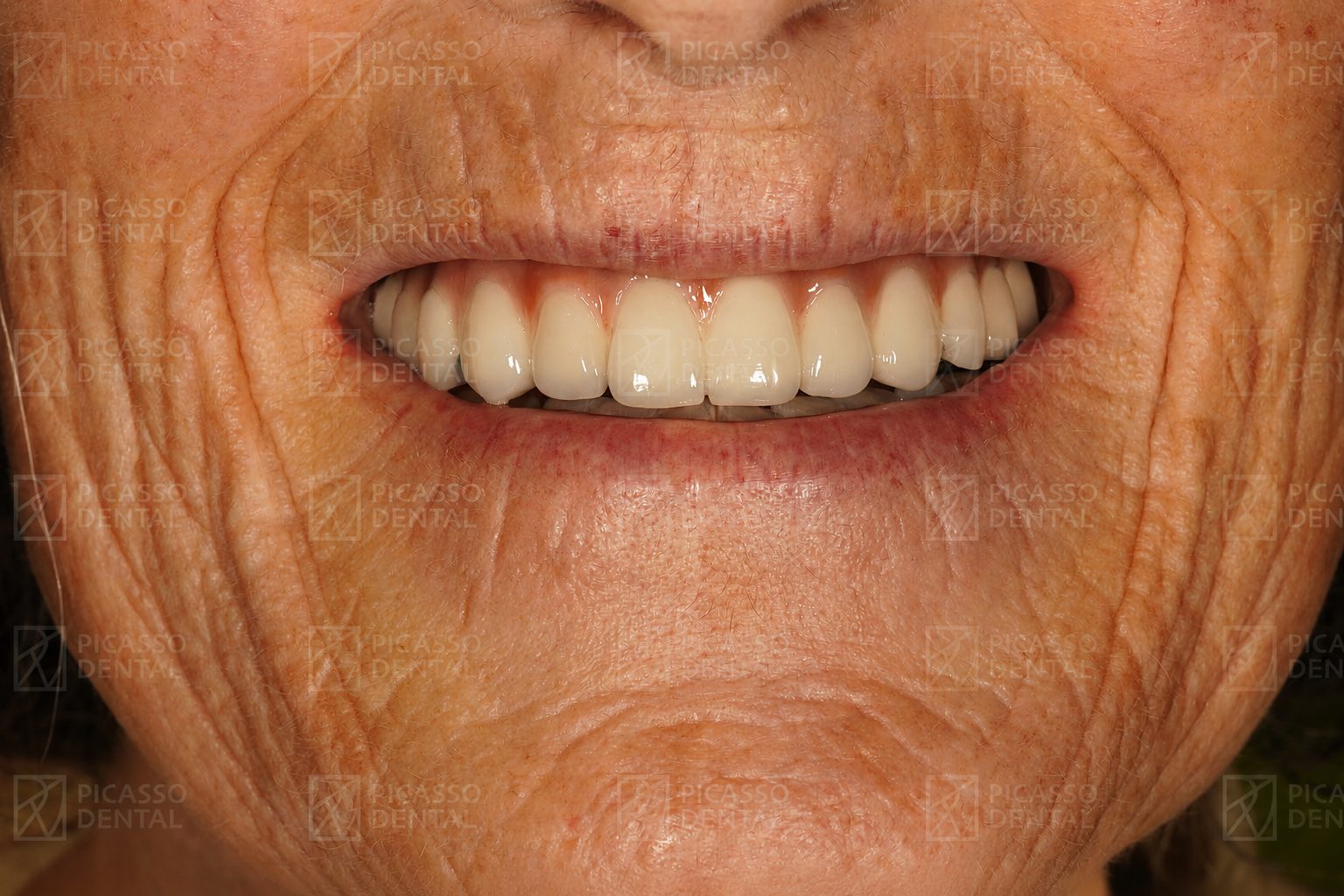 After
AfterFull rehabilitation, Hanoi Old Quarter
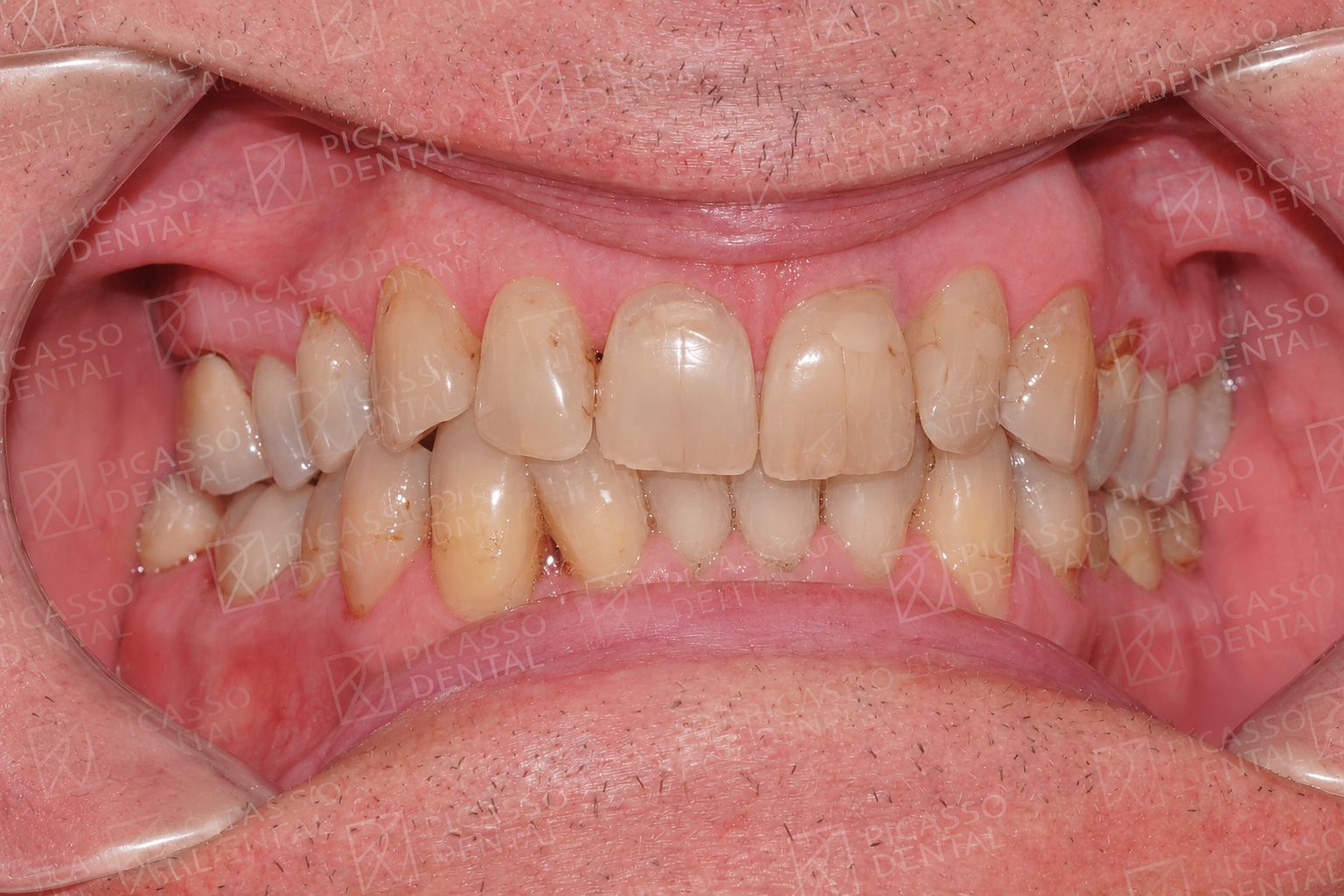
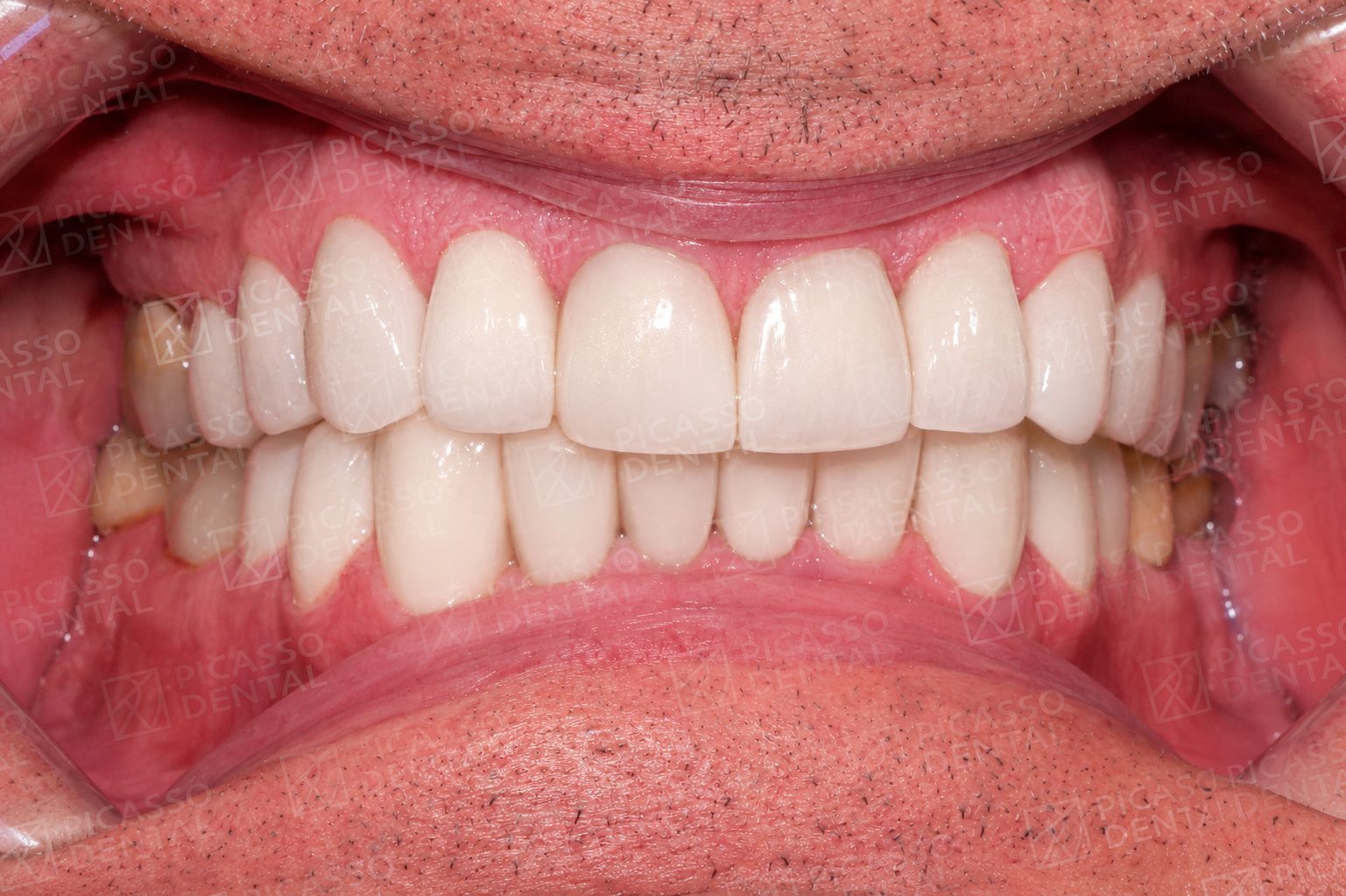
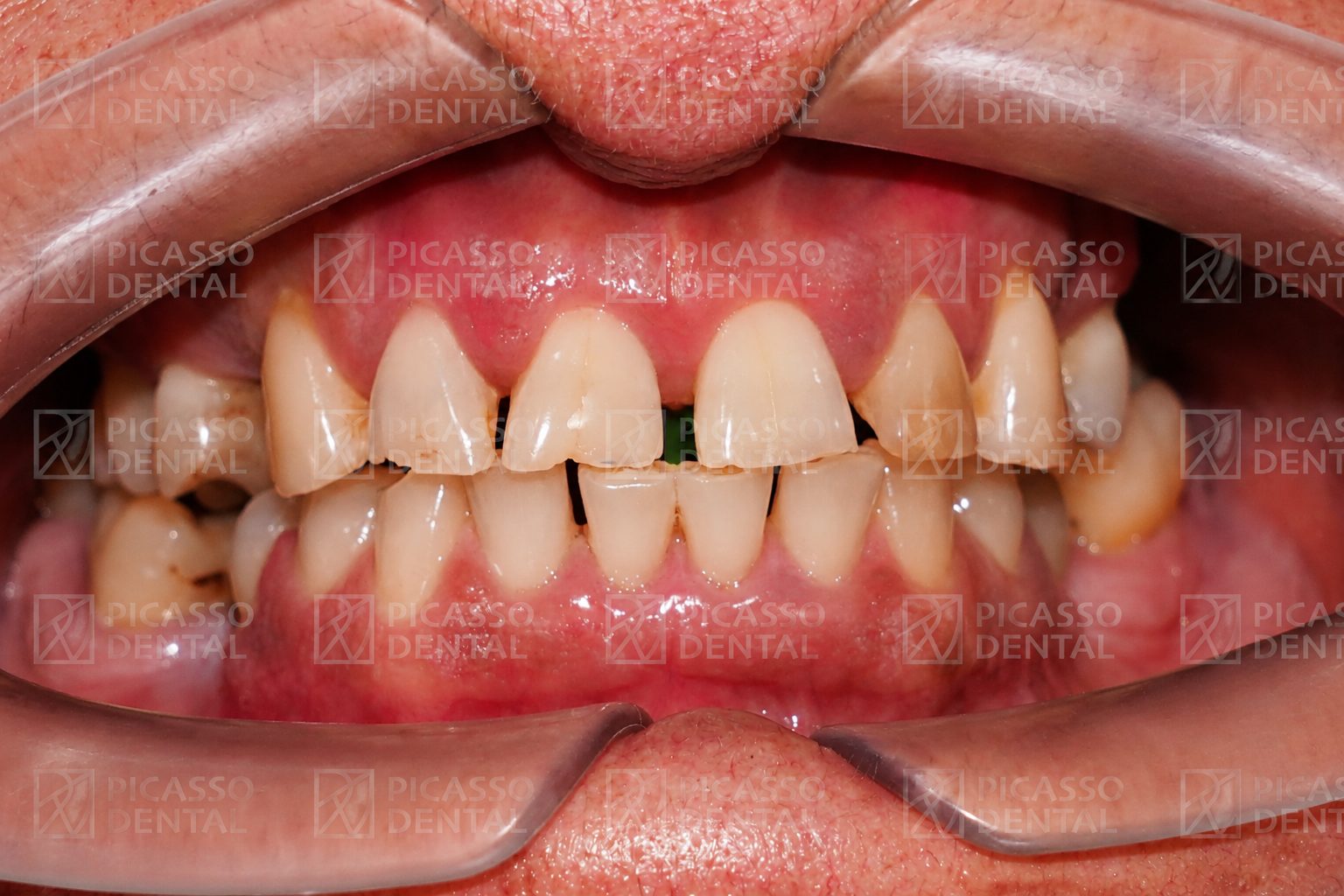 Before
 After
AfterPorcelain crowns, Da Nang
 Before
 After
AfterCrown and implant, HCMC Thao Dien
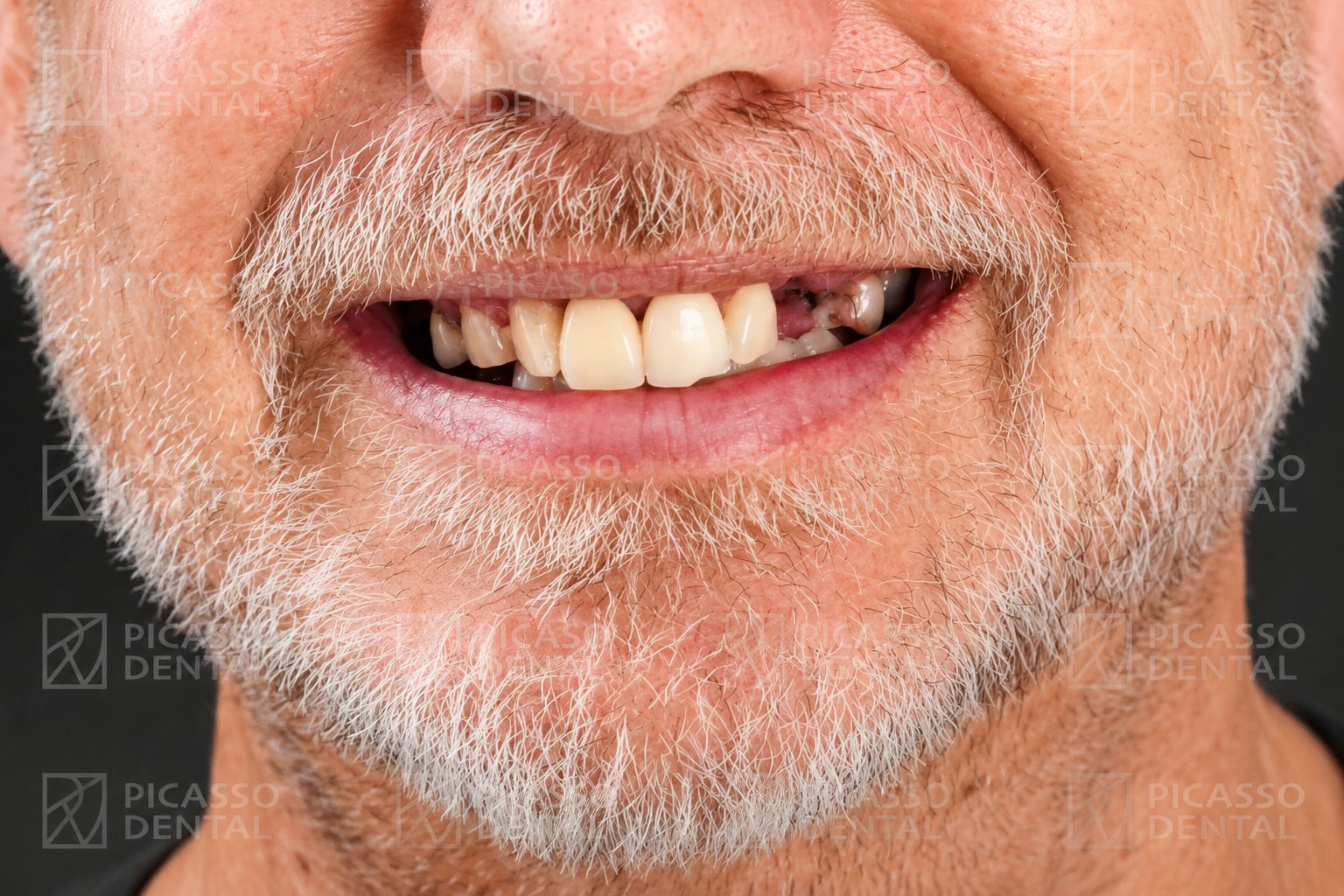 Before
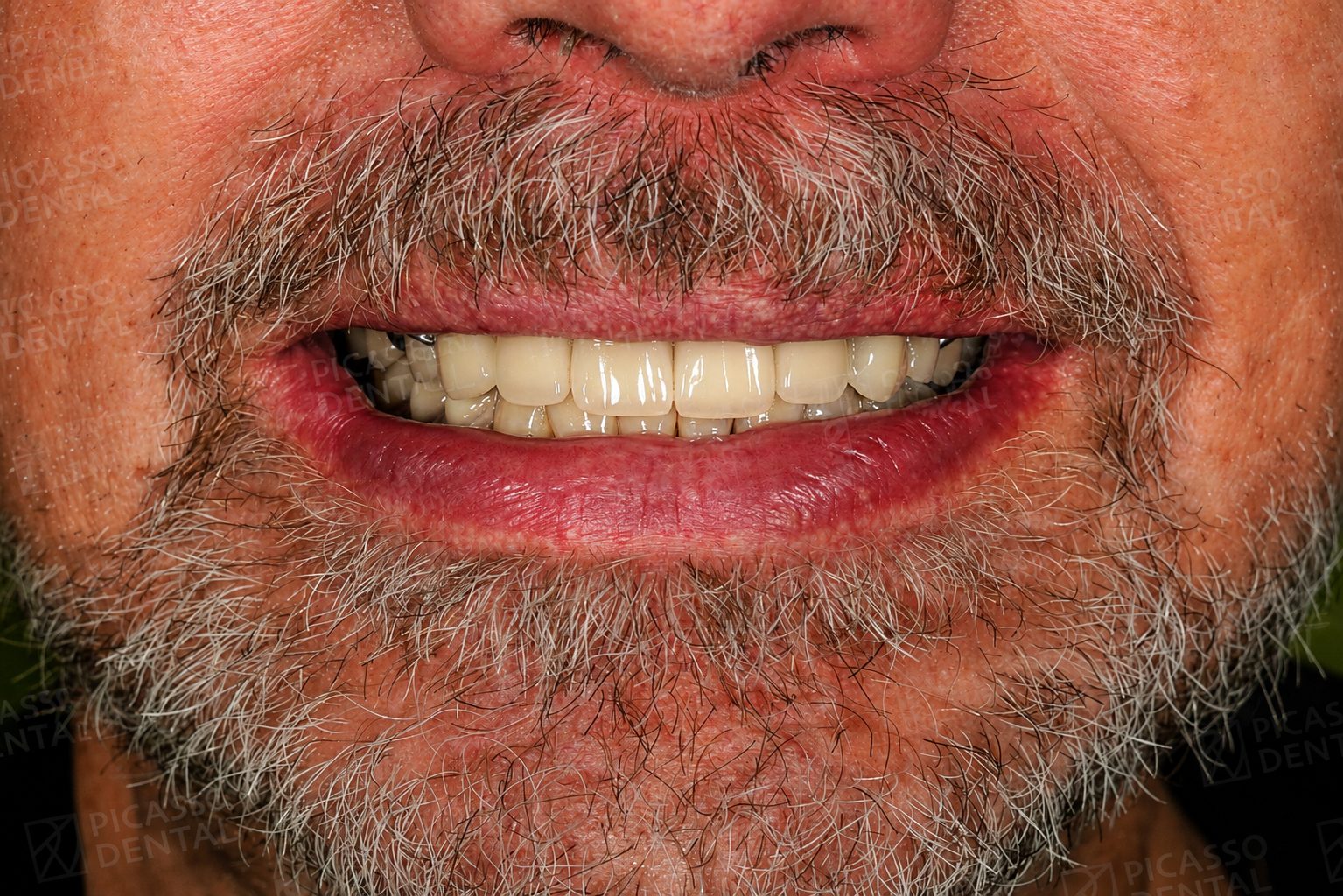 After
AfterCrown restoration, Hanoi Westlake
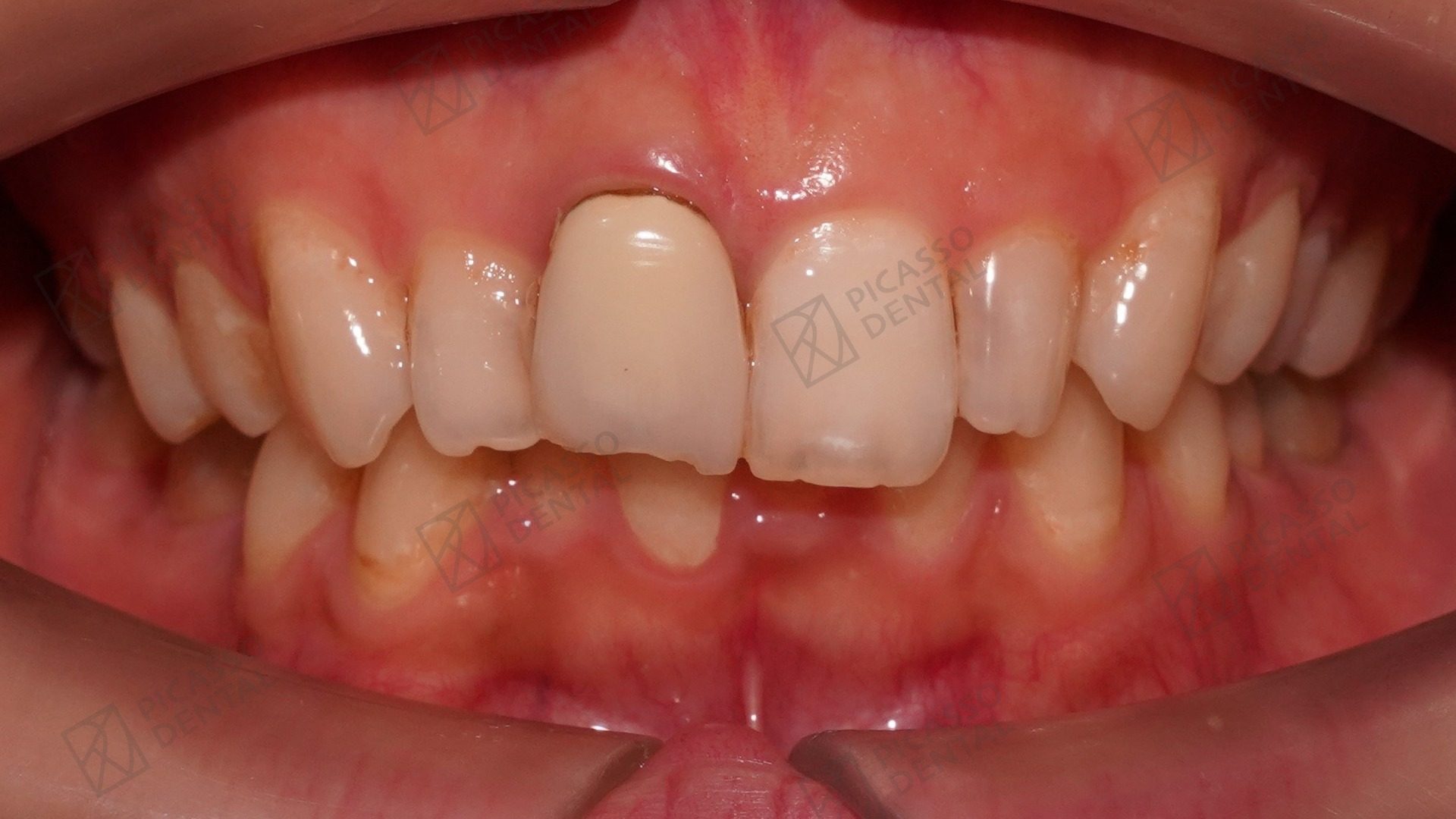 Before
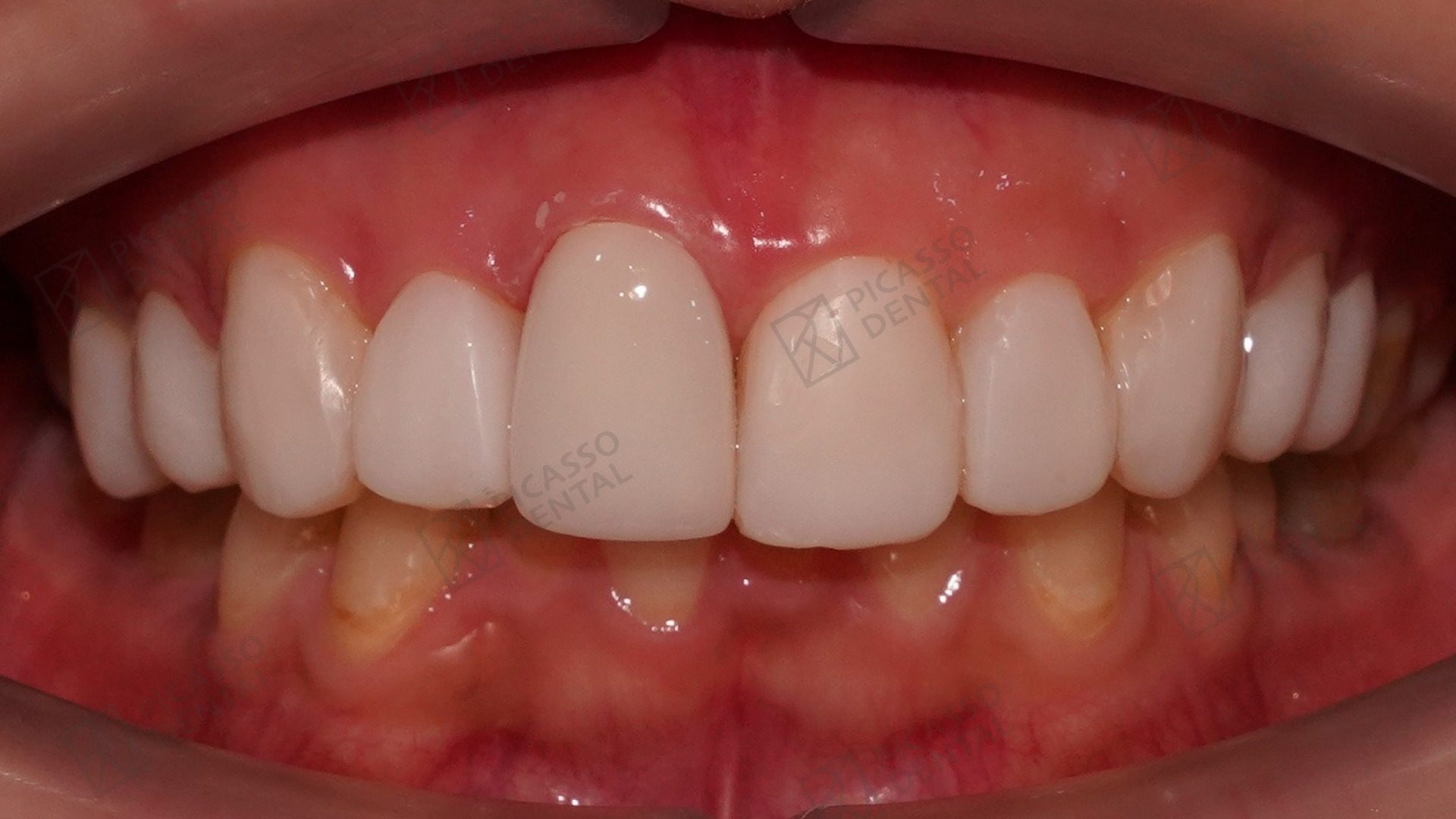 After
AfterSmile restoration, Da Nang Flagship
Frequently asked questions
Is a veneer or crown better for a chipped tooth?
The choice between a veneer and a crown depends entirely on the extent and location of the chip. Veneers work for small to moderate chips on front teeth where the damage does not affect the structural integrity significantly. Crowns are better for large chips, chips that extend below the gumline, chips on back teeth, or teeth already weakened by decay or large fillings. A veneer covers only the front surface; a crown covers the entire tooth and provides full structural protection.
Can a chipped tooth be fixed with an implant?
No. A dental implant replaces a tooth that is missing or needs extraction. If your tooth is chipped but still present in the mouth, an implant is not relevant to your situation. The options for a chipped tooth that can be saved are composite bonding, a veneer, or a crown, depending on the severity of the chip.
Can a small chip be fixed without a veneer or crown?
Yes. A small chip that affects only the tooth edge without causing structural weakness can often be repaired with composite bonding at a single appointment. The dentist applies tooth-colored resin to the chipped area, shapes it to match the natural tooth contour, and polishes it. Bonding is less expensive than a veneer or crown, requires no enamel reduction, but stains over time and is less durable under heavy biting forces.
Will a veneer fix a chip on a back tooth?
Veneers are not suitable for back teeth. Molars and premolars experience much greater biting forces than front teeth, and a thin veneer bonded to the front surface cannot withstand those loads long-term. Chips on back teeth are treated with composite fillings for small chips, or crowns for larger chips where structural support is needed.
How long does it take to fix a chipped tooth with a veneer?
Veneer treatment for a chipped tooth takes two appointments over one to two weeks. The first appointment involves tooth preparation, impressions, and placement of a temporary veneer. The second appointment is the permanent bonding, which takes approximately two hours. Composite bonding for a small chip can be completed in a single appointment of 30 to 60 minutes.
What happens if a chipped tooth is not treated?
An untreated chip creates a rough edge that collects plaque, is more susceptible to further fracture, and may irritate the tongue or cheek. If the chip has exposed dentin, temperature and bite sensitivity will develop over time. A crack extending from the chip that is not addressed with a crown can propagate to the nerve or root, eventually requiring root canal treatment or extraction. Early treatment of chips is almost always simpler and less expensive than treating the complications that develop from neglect.
What is the difference between a crown and a veneer for a chipped tooth?
A veneer covers only the front surface of the tooth and requires removing a thin layer of enamel from the front only. A crown covers the entire tooth circumference after reducing the tooth all the way around, and provides full structural support. A veneer is more conservative but provides less protection. A crown is less conservative but is necessary when the chip has compromised the structural integrity or when the tooth is a back tooth bearing heavy load.
Patient Video Testimonial

Start Here
Start with a brief.
Share a photo of your chipped tooth and describe where it is. A Picasso dentist will respond within 24 hours with an honest recommendation for the right treatment. No obligation.