
Porcelain Veneers
Can Veneers Fix
Severely Discolored Teeth?
Yes, When Whitening Has Failed
Tetracycline staining, fluorosis, and trauma-related discoloration do not respond to whitening. Dr. Emily Nguyen explains how layered porcelain veneers mask even the darkest teeth to deliver a permanent, natural-looking result.

The short version
- Porcelain veneers mask severe discoloration that whitening cannot touch, including tetracycline staining, fluorosis, and trauma-darkened teeth.
- Veneers for dark teeth use a layered opacity technique: an opaque base blocks the dark color, translucent outer layers create natural light reflection.
- Veneers for severely dark teeth may be slightly thicker (up to 1 mm) to ensure complete color blocking.
- The color of porcelain veneers is permanent and does not stain from coffee, wine, or tobacco.
- Internal bleaching is an alternative for a single mildly darkened root-treated tooth, but porcelain provides more reliable coverage for significant discoloration.
Why whitening fails for severe discoloration
Professional teeth whitening works by applying hydrogen peroxide or carbamide peroxide to the outer enamel surface, where it oxidizes the organic molecules that cause surface staining. This process is effective for extrinsic stains from coffee, tea, red wine, and tobacco. It is not effective for intrinsic discoloration, where the color originates from within the tooth structure itself.
Tetracycline antibiotics, when taken by children whose teeth are still developing, incorporate into the forming tooth mineral and create permanent gray, brown, or banded discoloration. The stain is chemically bonded to the hydroxyapatite crystals in the dentin. No amount of surface peroxide application can reach or break those bonds. Patients who have attempted multiple rounds of professional whitening for tetracycline staining without improvement are not doing something wrong; the chemistry of the discoloration simply does not respond to that treatment.

Fluorosis discoloration originates from excessive fluoride exposure during tooth development, creating white spots, brown streaks, or pitting in the enamel. Mild fluorosis sometimes responds partially to whitening or microabrasion, but moderate to severe cases do not achieve predictable results from non-invasive approaches. Trauma-related darkening, where a tooth turns gray or brown after an injury interrupted its blood supply, is also intrinsic. The dead or dying nerve tissue breaks down inside the tooth, and the breakdown products stain the dentin from the inside out.
How porcelain veneers mask dark teeth
A porcelain veneer works through two mechanisms simultaneously: blocking the underlying color and reflecting light naturally. Modern dental ceramics have an adjustable opacity spectrum. A purely translucent veneer, like those used on normally colored teeth, would allow the dark underlying shade to show through and produce a grayish result. For severely discolored teeth, the ceramist builds the veneer using a more opaque base material that stops the dark color from transmitting through the porcelain, followed by more translucent surface layers that provide depth and the characteristic way natural enamel interacts with light.
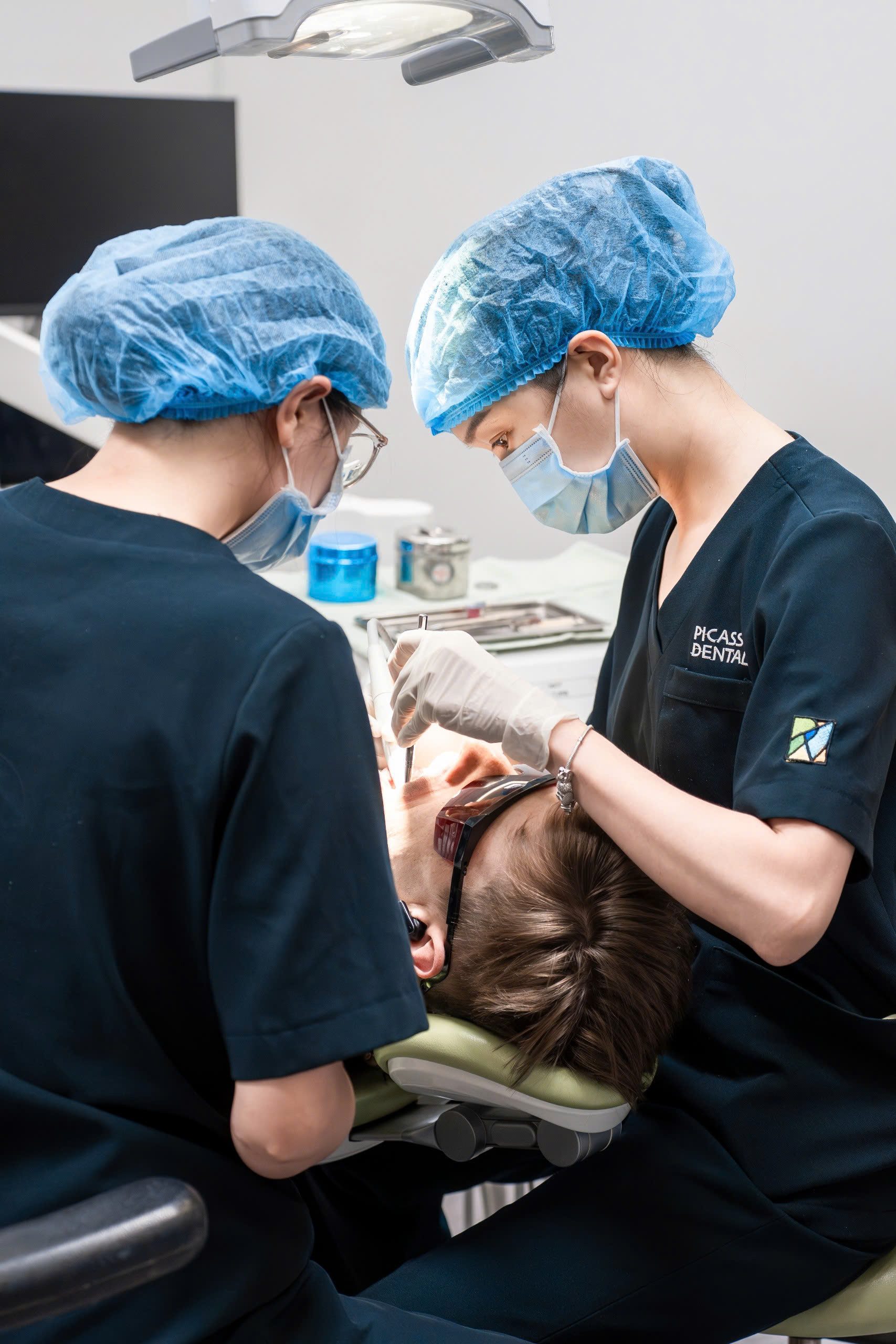
Veneer thickness matters significantly for dark teeth. Standard veneers are 0.5 to 0.7 millimeters thick, which provides adequate opacity for normally colored or mildly discolored teeth. For advanced tetracycline cases or teeth with significant trauma darkening, I design veneers closer to 1 millimeter thick. This requires slightly more enamel preparation but is necessary to ensure the underlying shade is completely blocked. A veneer that is too thin for a dark tooth will look visibly grayish in natural light, particularly from the side.
"I had four crowns, two cavities, and a root canal and it was as gentle and pain free as it could possibly be. More so than any dentist back in the states in my sixty years of seeing the dentist."
Kevin McCarthy, Hanoi Old Quarter, Google review
The different types of severe discoloration and how veneers address each
- Tetracycline staining Gray or brown banding across the full mouth, typically more severe at the gumline. A full upper veneer run of 8 to 10 teeth is standard, often with lower veneers added for total consistency. The banding pattern varies in severity, and the ceramist designs opacity to compensate for the darkest areas while keeping the overall shade uniform. Multiple whitening failures are common in this patient group; veneers are the definitive solution.
- Dental fluorosis White spots, brown staining, or pitting from excessive fluoride during development. Mild cases with only white spots sometimes respond to microabrasion or resin infiltration. Moderate and severe fluorosis with brown staining or surface breakdown benefits from veneer coverage, which replaces the affected enamel surface entirely and provides a smooth, uniform color.
- Single tooth trauma discoloration One dark tooth surrounded by lighter natural teeth is particularly noticeable and causes significant self-consciousness. A single veneer on the affected tooth corrects the color mismatch. Internal bleaching is worth attempting first for mildly gray trauma teeth, but for significant darkening or when bleaching has not produced adequate lightening, a veneer provides more reliable and permanent coverage.
- Root canal-related darkening Teeth that have undergone root canal treatment sometimes darken over the following years as residual tissue in the dentin tubules breaks down. The pattern is gradual and becomes progressively worse without intervention. A veneer or crown placed before the darkening becomes severe is significantly easier to mask than advanced discoloration.
Have severely discolored teeth that whitening has not improved? Share a photo and a Picasso dentist will assess whether veneers are the right solution for your specific discoloration type.
Contact us →Setting realistic expectations for the final shade
Porcelain veneers allow you to choose your final tooth color, within natural limits. Most patients with severe discoloration select shades that look bright and healthy, often in the A1 to B1 range on the standard shade guide, rather than the very white shades that look artificial on anyone. I show patients physical shade samples against their skin tone and in different lighting conditions before committing to a target shade.

For patients who have been self-conscious about dark teeth for years, the tendency is to select a very bright shade as compensation. I encourage stepping back from that instinct. A veneer shade that looks noticeably white against someone's natural skin tone and gum color will appear artificial even if the porcelain itself is excellent quality. The goal is a result that looks like you simply have naturally beautiful teeth, not teeth that were obviously treated.
Mock-ups in temporary composite material allow patients to preview the approximate shade and shape before any preparation begins. These are not perfect representations of the final porcelain result, but they give a useful general impression and an opportunity to adjust the design before committing.
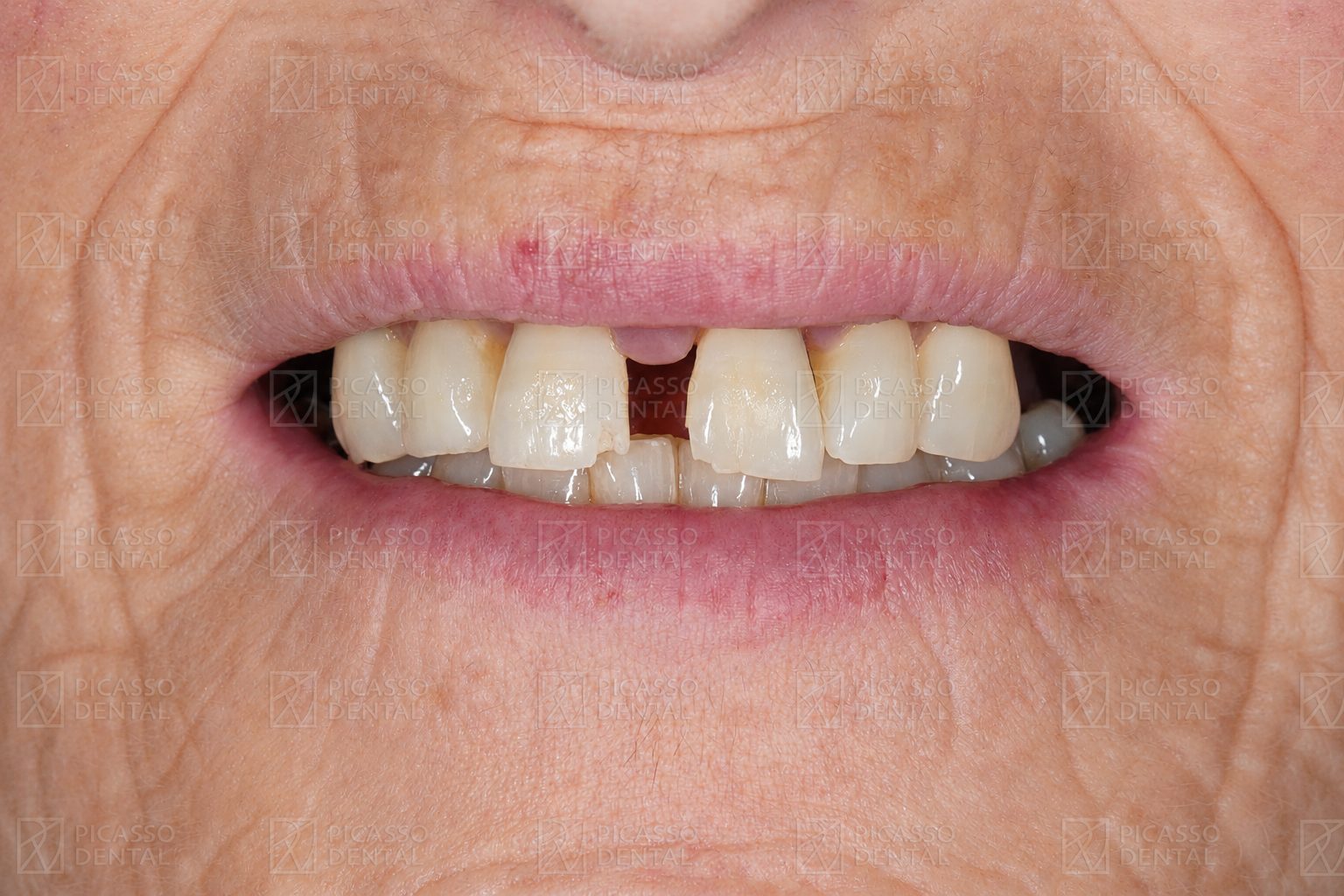 Before
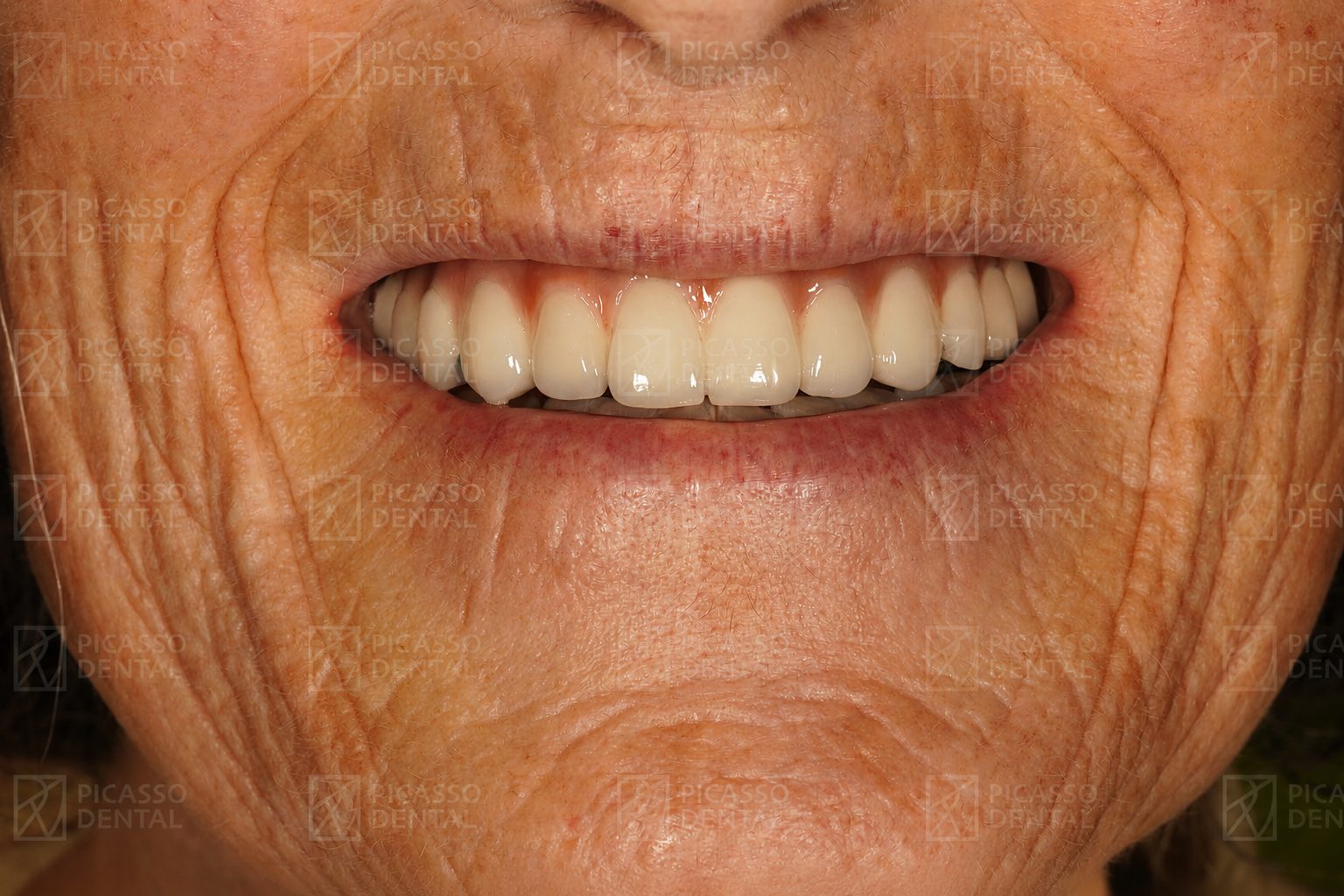 After
AfterFull rehabilitation, Hanoi Old Quarter
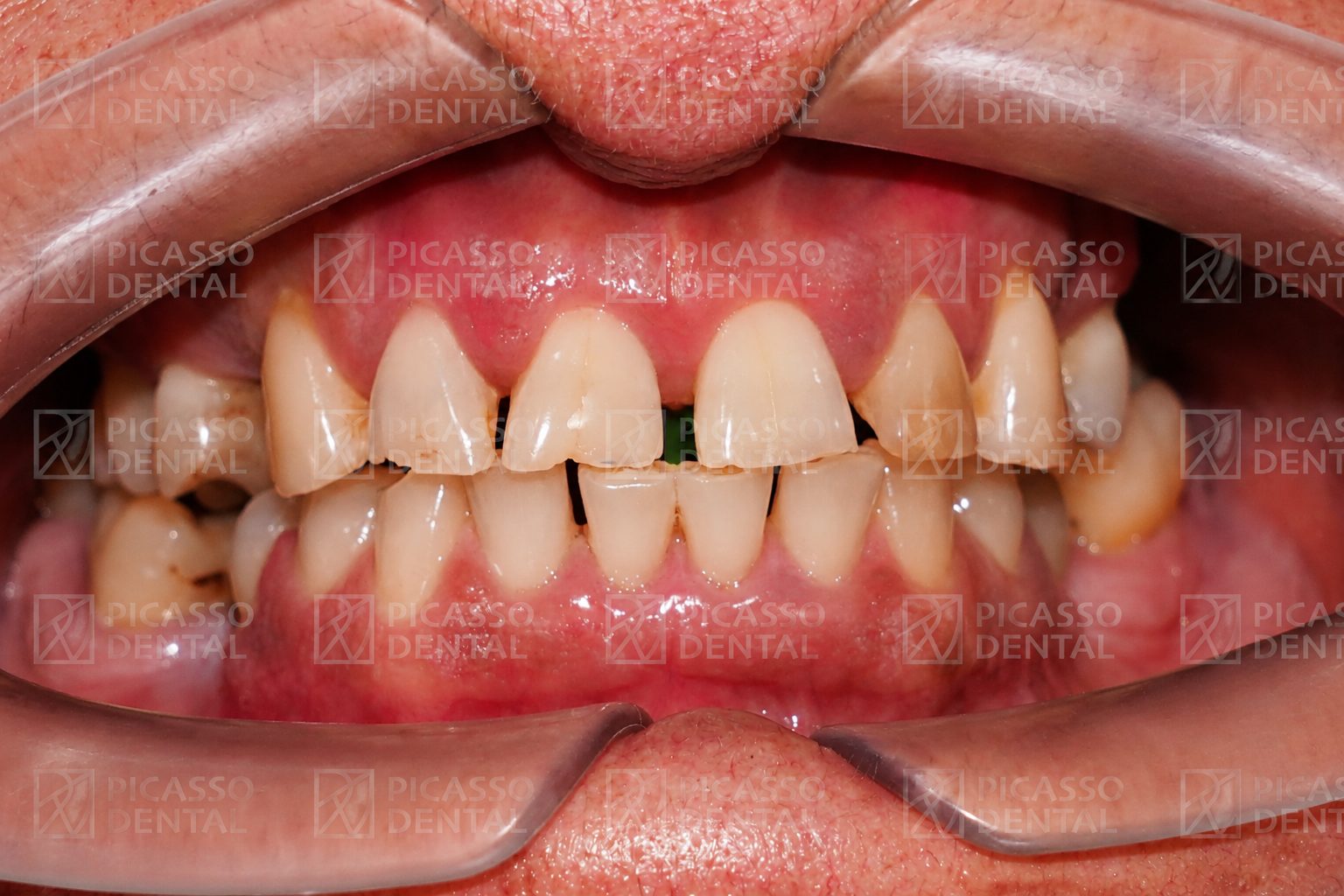 Before
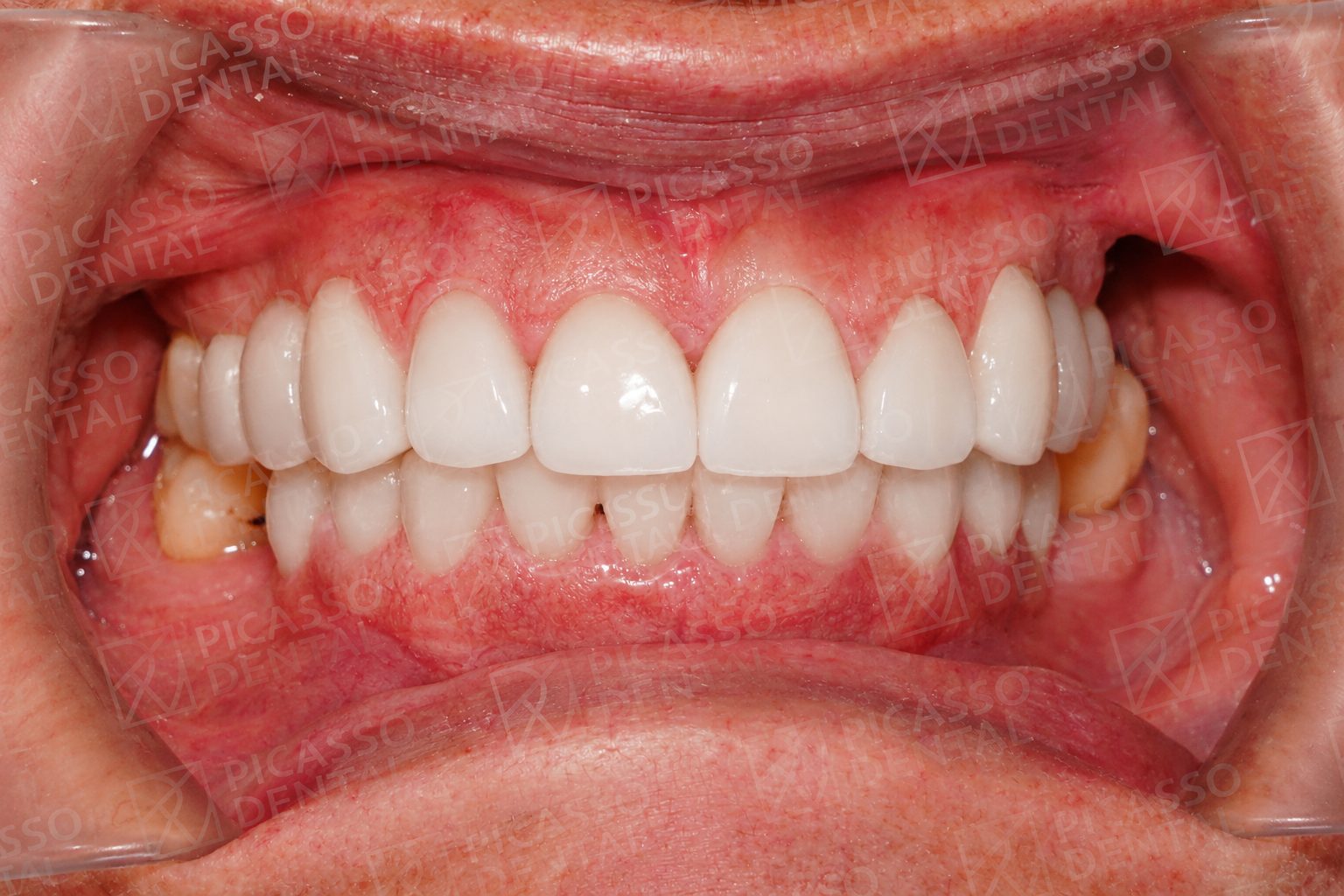 After
AfterPorcelain crowns, Da Nang
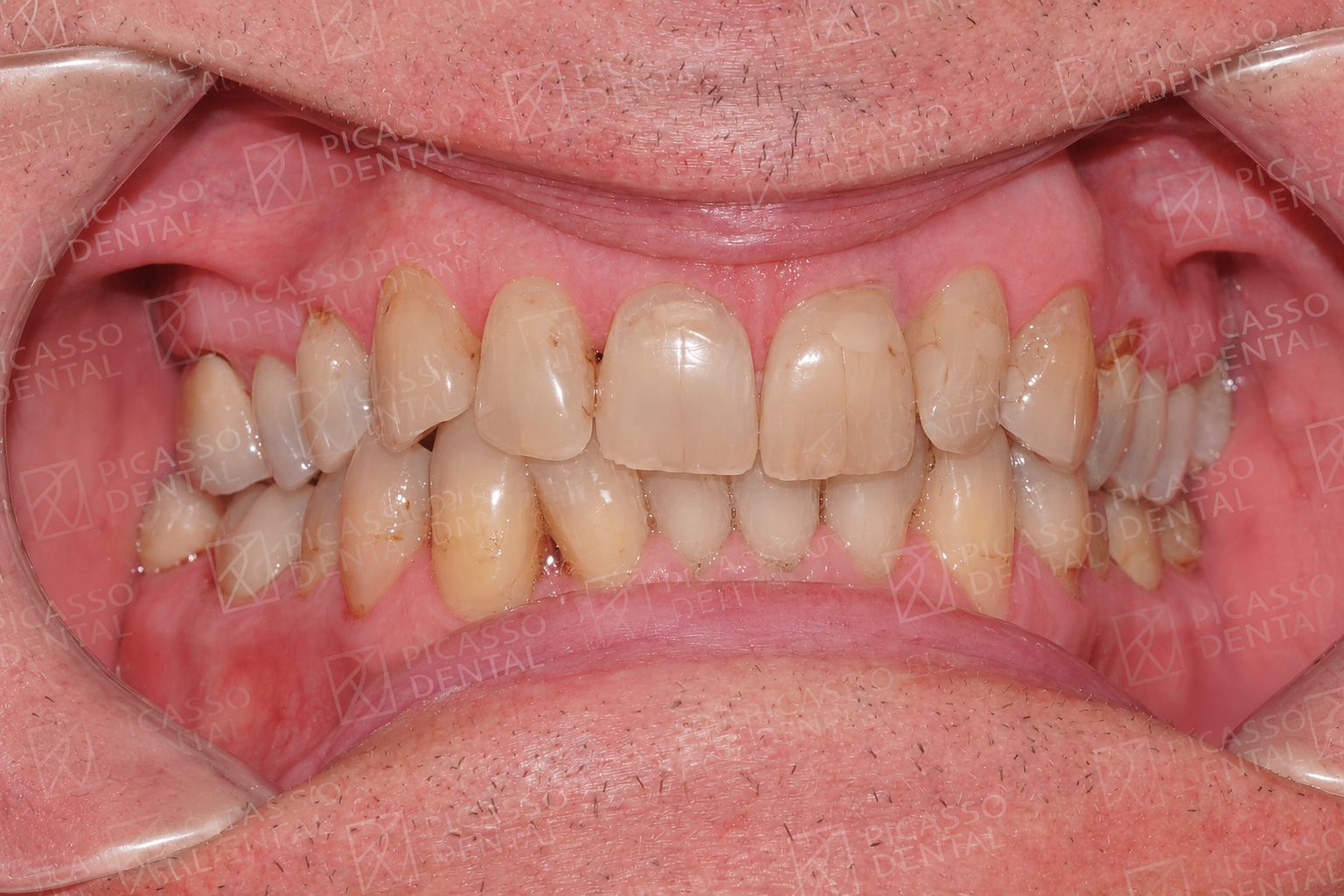 Before
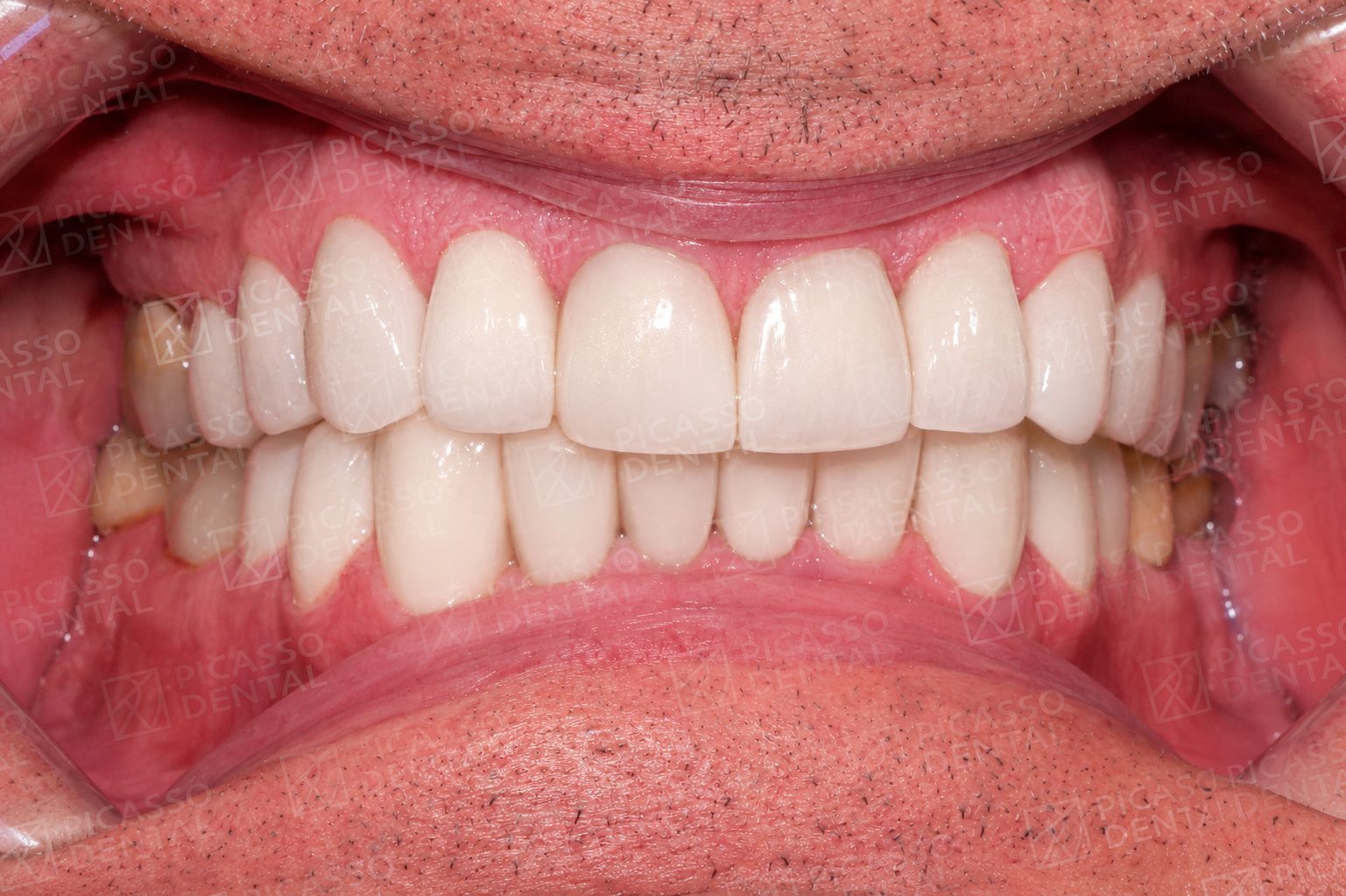 After
AfterCrown and implant, HCMC Thao Dien
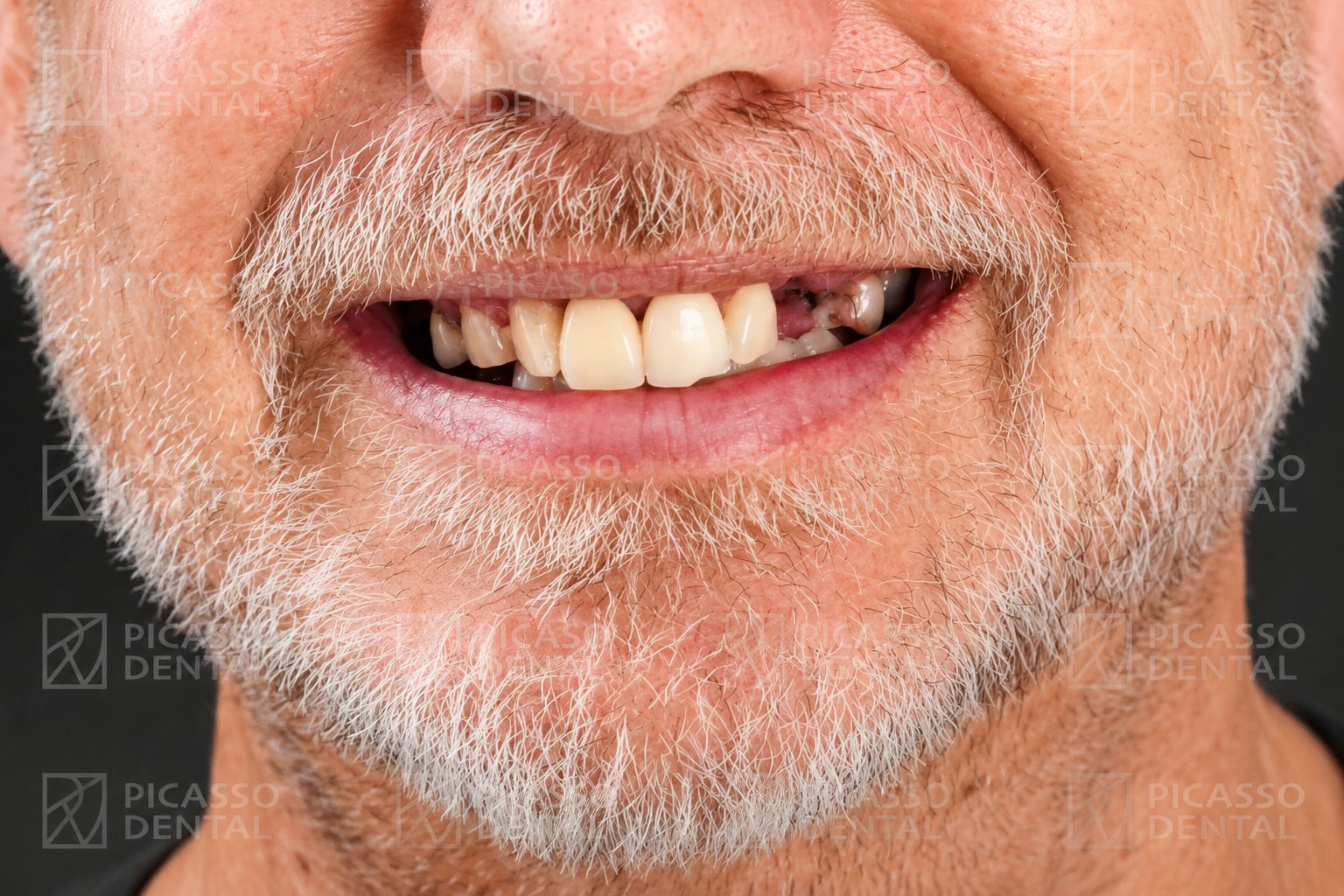 Before
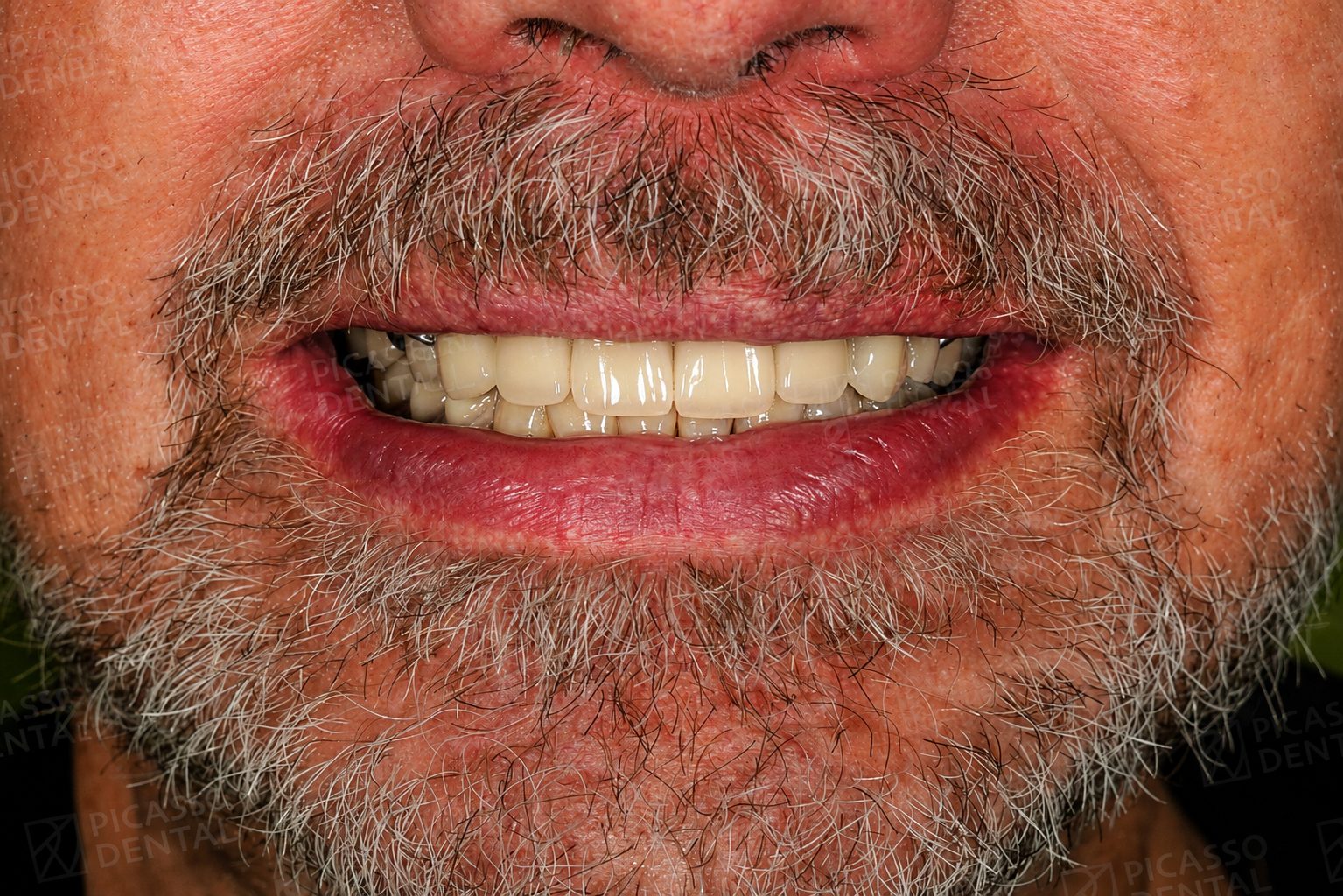 After
AfterCrown restoration, Hanoi Westlake
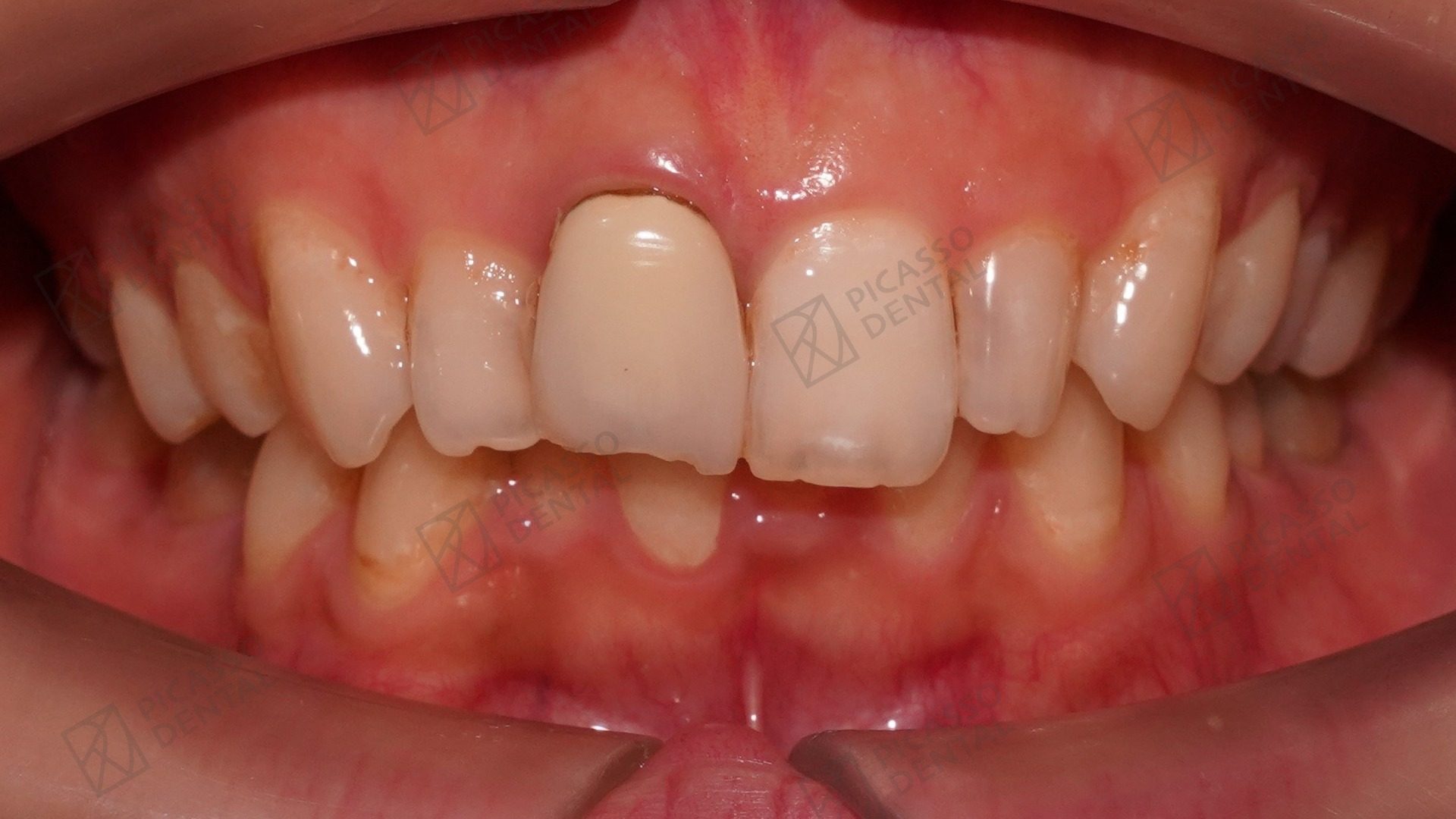 Before
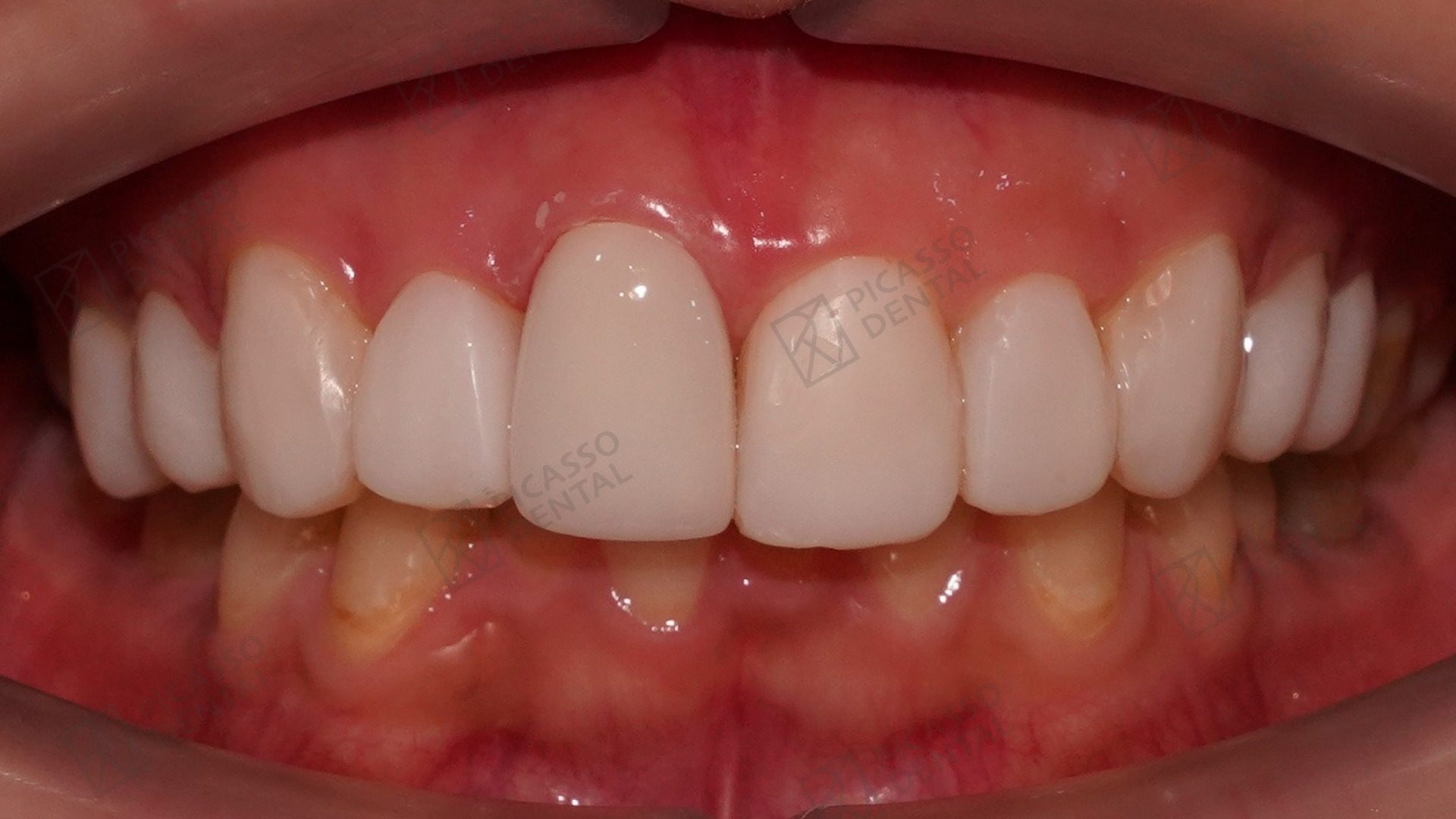 After
AfterSmile restoration, Da Nang Flagship
Frequently asked questions
Can veneers fix severely discolored teeth?
Yes. Porcelain veneers are one of the most effective treatments for severe tooth discoloration that does not respond to whitening. The porcelain blocks out the underlying dark color using layered opacity techniques and reflects light naturally to create a bright, lifelike result. Tetracycline staining, fluorosis, and trauma-related discoloration all respond well to veneer treatment when the preparation and ceramics are designed correctly.
What types of discoloration can veneers fix?
Veneers can correct tetracycline (antibiotic) staining, which creates gray or brown banding that cannot be whitened; moderate to severe dental fluorosis with white or brown spots; single tooth discoloration from trauma or root canal treatment; and generalized yellowing or browning that has not responded to professional whitening. Veneers are not the right choice for discoloration caused by active decay or gum disease, which must be treated first.
Will whitening work on tetracycline staining before getting veneers?
Professional whitening does not work on tetracycline staining. Tetracycline forms chemical bonds within the tooth mineral structure during development, placing the stain inside the tooth rather than on the surface. Peroxide gels cannot reach or break those bonds. Patients who have tried multiple rounds of whitening without improvement and have tetracycline staining are excellent candidates for veneers, which mask the discoloration completely from the outside.
Do veneers for dark teeth look natural?
Yes, when designed correctly. The key is using an opaque base layer in the ceramic construction to block out the dark underlying color, followed by translucent layers that create depth and light reflection similar to natural enamel. The result should look bright and healthy without appearing flat, chalky, or unnaturally uniform. At Picasso Dental, the shade and layering design are approved with the patient before the laboratory begins fabricating the final veneers.
How thick are veneers for severely discolored teeth?
Standard veneers are 0.5 to 0.7 millimeters thick, which is sufficient for mildly discolored or normally colored teeth. For severely dark teeth, such as advanced tetracycline cases, veneers closer to 1 millimeter thick are needed to fully block the underlying shade. The additional thickness requires slightly more enamel preparation but ensures the final result looks bright rather than grayish.
Can veneers be placed over teeth that had root canal treatment and turned dark?
Yes. A single tooth that has turned gray or brown after root canal treatment is one of the clearest indications for a veneer. The porcelain covers the front surface of the tooth completely and blocks out the internal discoloration. Internal bleaching is an alternative for minor darkening after root canal treatment, but for significant discoloration, a veneer or crown provides more reliable and permanent coverage.
Will veneers for severe discoloration stain over time?
No. The porcelain surface of veneers does not absorb stains from coffee, tea, wine, or tobacco. The color you choose at the start of treatment is the color that remains for the life of the veneer, typically 10 to 15 years. This is one of the primary advantages for patients who have lived with progressive tooth darkening: the veneer result is stable and permanent.
Patient Video Testimonial

Start Here
Start with a brief.
If whitening has not worked for your discoloration, share a photo and a Picasso dentist will assess whether veneers are the right solution for your case. No obligation, 24-hour reply.