
Porcelain Veneers
Can Veneers Close
Gaps Between Teeth?
Yes, in About Two Weeks
Veneers are one of the fastest and most effective ways to eliminate unwanted spaces between teeth. Dr. Emily Nguyen explains how the technique works, which gap sizes are ideal, and when orthodontics is the better choice.

The short version
- Veneers close gaps by adding width to the teeth on either side of the space, eliminating it without moving teeth.
- Gaps of 1 to 3 millimeters respond best to veneers while maintaining natural tooth proportions.
- The entire treatment takes two appointments over one to two weeks, with temporaries closing the gap on day one.
- Gaps larger than 4 to 5 millimeters are better addressed with orthodontics first, then veneers to perfect the result.
- Composite bonding is a lower-cost alternative for very small gaps but stains over time and requires replacement.
How veneers eliminate tooth gaps
A gap between teeth exists because the natural width of a tooth leaves space between it and the adjacent tooth. Veneers close that space by extending the width of the tooth on one or both sides of the gap. The porcelain shell is designed so that its edge meets the edge of the neighboring tooth precisely, leaving no visible space between them.
This approach works quickly because it does not involve moving teeth. Traditional orthodontic treatment physically repositions teeth within the jaw, which takes months to years. Veneer gap closure changes the apparent width of the tooth, which takes two weeks. For patients who have lived with a central diastema (the gap between the two front upper teeth) for years and want it resolved before a specific date, veneers are consistently the fastest route.

The design challenge in gap closure is proportion. Adding width to a tooth that was already the correct size makes it look too wide if not handled carefully. At Picasso Dental, I use digital smile design software to calculate how much width to add to each tooth, preview the result on a screen, and have the patient approve the proportions before any preparation begins. The digital preview eliminates the uncertainty of not knowing whether the final result will look natural or artificial.
Gap sizes: what works, what does not
Gaps of 1 to 3 millimeters close beautifully with veneers alone. Adding a fraction of a millimeter of width to each adjacent tooth is within the natural variation of human tooth size and looks completely believable once the ceramics are bonded. The result looks as though the teeth simply grew together.
Very small gaps under 1 millimeter can sometimes be addressed with composite bonding rather than full veneers. Bonding adds a tiny amount of tooth-colored resin to the tooth edge at a single appointment, with no preparation required. For minimal spacing where only the edge of one tooth needs to be slightly wider, bonding is a reasonable, less invasive solution. It stains over time and typically needs replacement every three to five years, but the cost is lower and no enamel is removed.

Gaps larger than 4 to 5 millimeters create a proportional challenge for veneers alone. Closing a 5-millimeter gap by adding 2.5 millimeters of width to each adjacent tooth would make those teeth roughly 30 percent wider than their natural size. That kind of width addition is detectable. The teeth look bulky and the smile appears altered rather than natural. My recommendation for wide gaps is orthodontic treatment first to bring the gap down to 2 millimeters or less, followed by veneers to perfect the shape, shade, and surface texture of the final result. The combination produces better aesthetics than either treatment alone.
Veneers versus orthodontics: an honest comparison
Patients frequently ask which is better. The honest answer is that they solve different problems and the right choice depends on your specific situation, not on which treatment is generally superior.
Veneers are better when
- The gap is 1 to 3 millimeters
- Speed is a priority (two weeks versus 12 to 24 months)
- You also want to change tooth color or shape
- The bite is already functional and only appearance is the concern
- Multiple cosmetic issues will be addressed simultaneously
Orthodontics is better when
- The gap is larger than 4 to 5 millimeters
- Preserving all natural tooth structure is the priority
- The bite needs correction as well as the spacing
- Multiple teeth are misaligned, not just one gap
- The patient is young with many decades of tooth use ahead
"Making the decision to go to Hanoi and have the dental treatment done by Picasso was one of the best decisions I have taken for a long time. I not only received top class dental care, it was so cost effective in comparison to having all this work undertaken at an Australian dental practice."
Gerald Mair, Hanoi Old Quarter, Google review
Orthodontics preserves all natural tooth structure because no enamel is removed. Veneers require removing a thin layer, typically 0.5 millimeters, from the front surface of each prepared tooth. This is an irreversible change. The trade-off is that veneers deliver results in two weeks, allow the patient to choose the final shade, and correct chips, staining, and shape irregularities simultaneously. For a patient who has a small gap and also wants whiter, more uniform teeth, veneers accomplish everything in a single treatment phase.
The two-week treatment timeline
Gap closure with veneers follows the same two-appointment process as any veneer case. The first appointment is the preparation visit. The teeth adjacent to the gap are reduced by a thin layer of enamel to make space for the veneer without adding bulk. Impressions are taken and sent to the ceramic laboratory, along with the shade reference and the digital smile design that shows the proportions we have agreed on. Temporary veneers are bonded to the prepared teeth at this same appointment, closing the gap immediately. The patient leaves with the gap closed, even though the final porcelain has not yet been placed.
Curious whether your gap is the right size for veneer treatment? Share a photo and receive an honest assessment within 24 hours.
Contact us →The second appointment, one to two weeks later, is the permanent bonding visit. The temporary veneers are removed, the permanent porcelain veneers are tried in with a non-setting adhesive to check fit, shade, and appearance in natural light, and the patient reviews the result before permanent bonding is confirmed. Once approved, the veneers are bonded with a light-cured adhesive and polished. The appointment takes approximately two hours. The patient leaves with a permanent result the same day.

Natural proportions after gap closure
The most common concern patients raise about veneer gap closure is whether the teeth will look too wide or artificial. This concern is legitimate, because poorly designed gap-closure veneers do produce exactly that result. The key is the width calculation done before preparation begins.
In a well-designed case, the added width is distributed symmetrically across the teeth bordering the gap, the veneer edges taper gradually toward the back of the tooth, and the gum contour is taken into account. Sometimes minor gum reshaping before veneer placement creates a better tissue frame for the final result. The combination of correctly proportioned veneers and well-shaped gum tissue produces a result that looks like the patient simply has naturally close-set teeth.
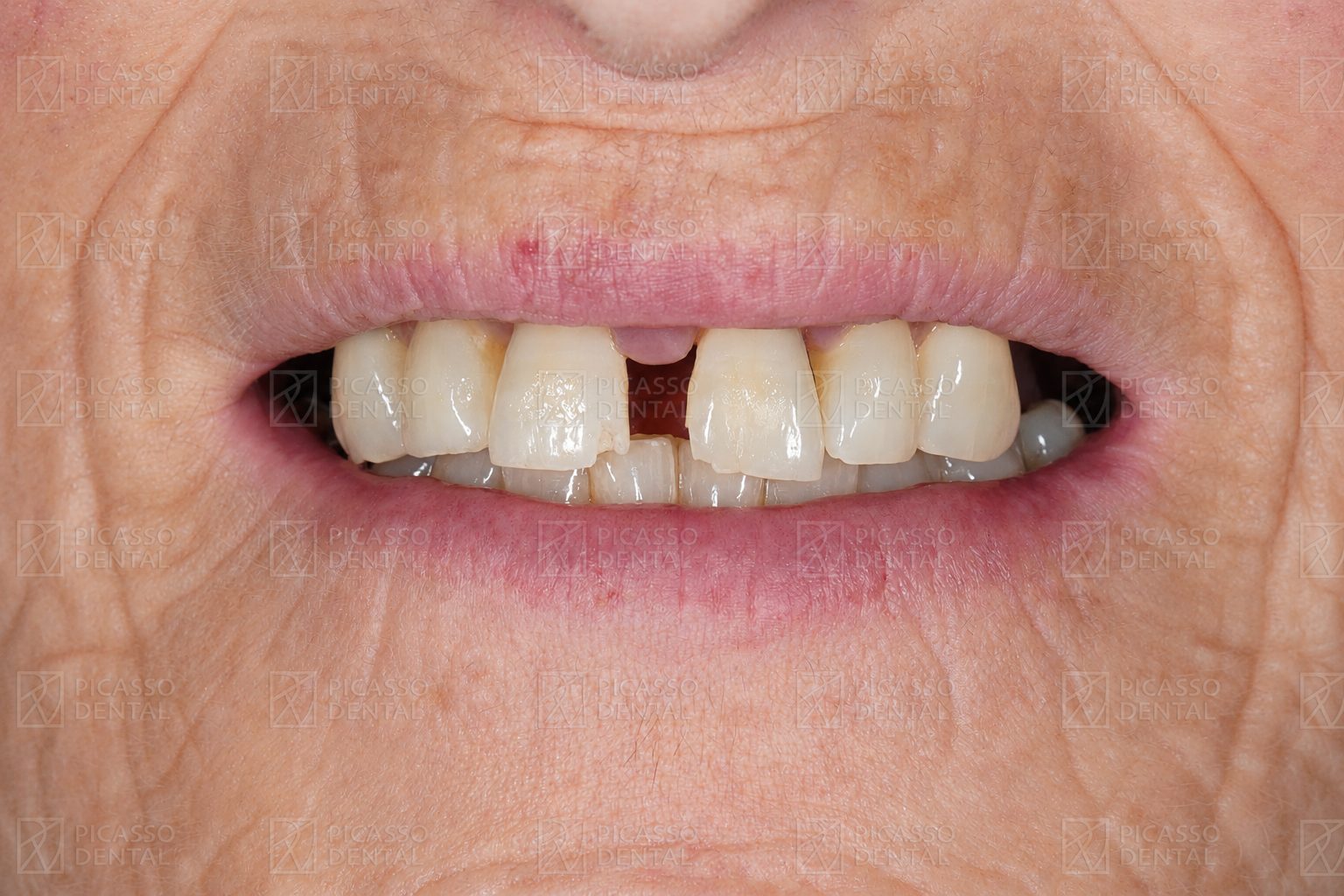 Before
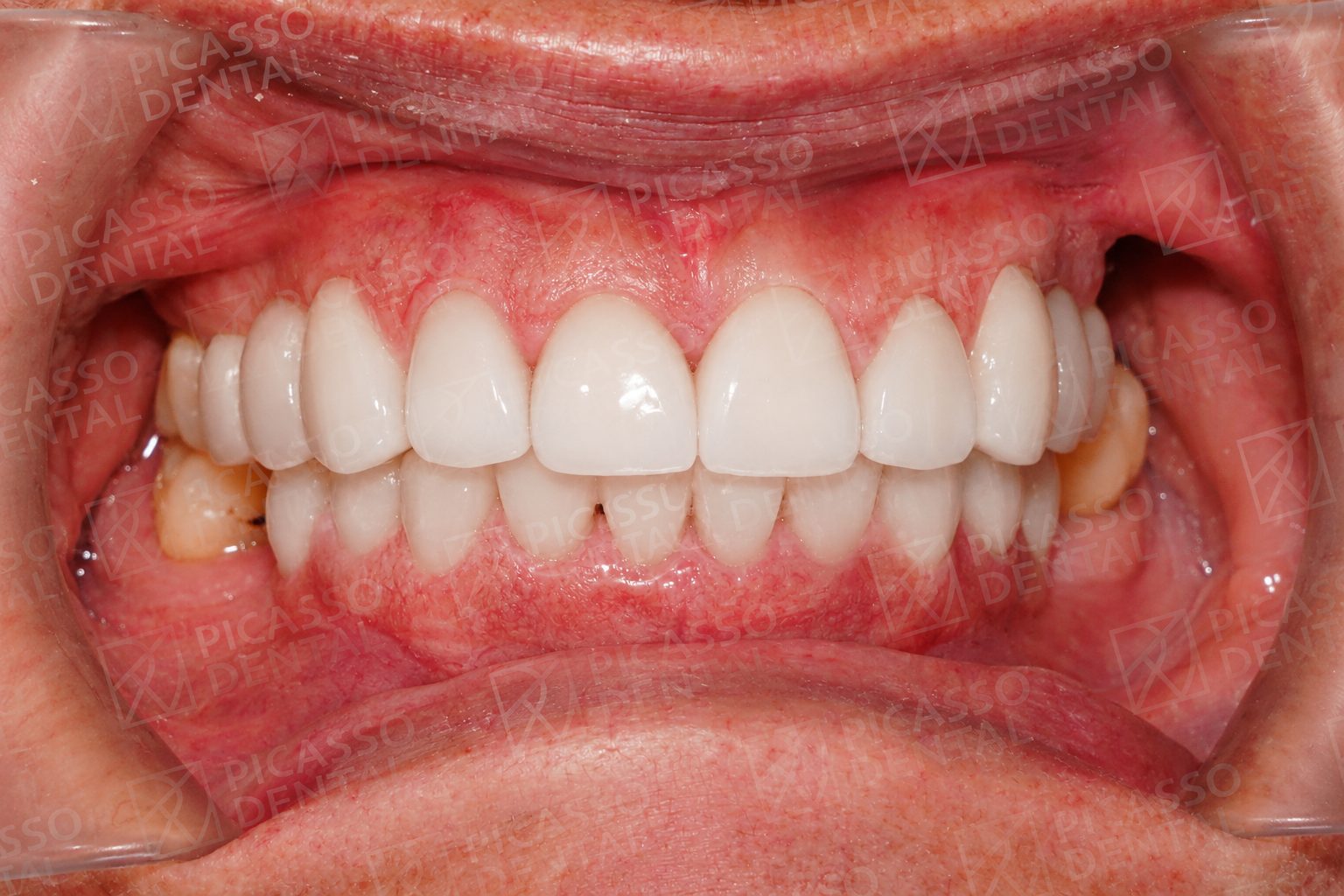
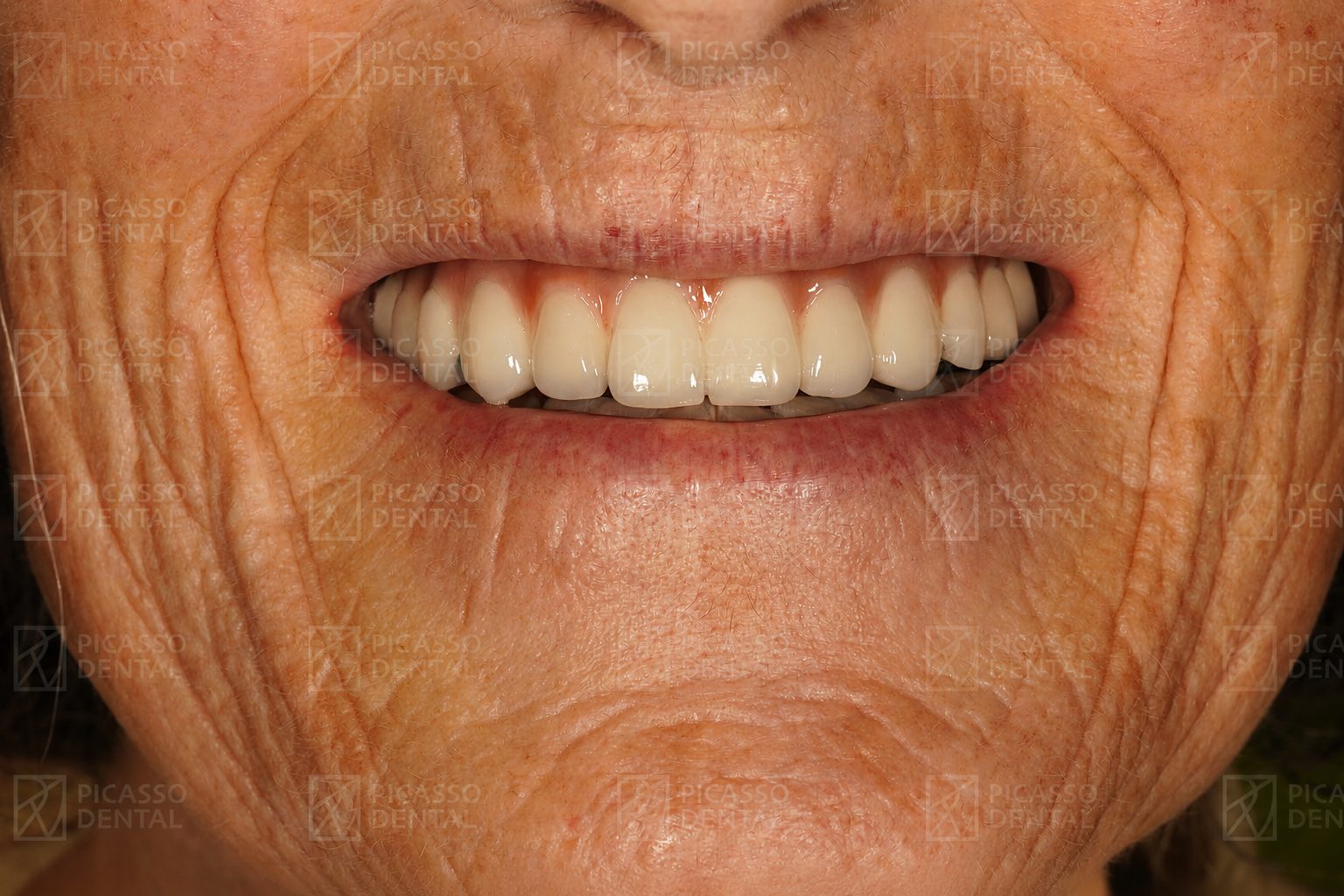 After
AfterFull rehabilitation, Hanoi Old Quarter
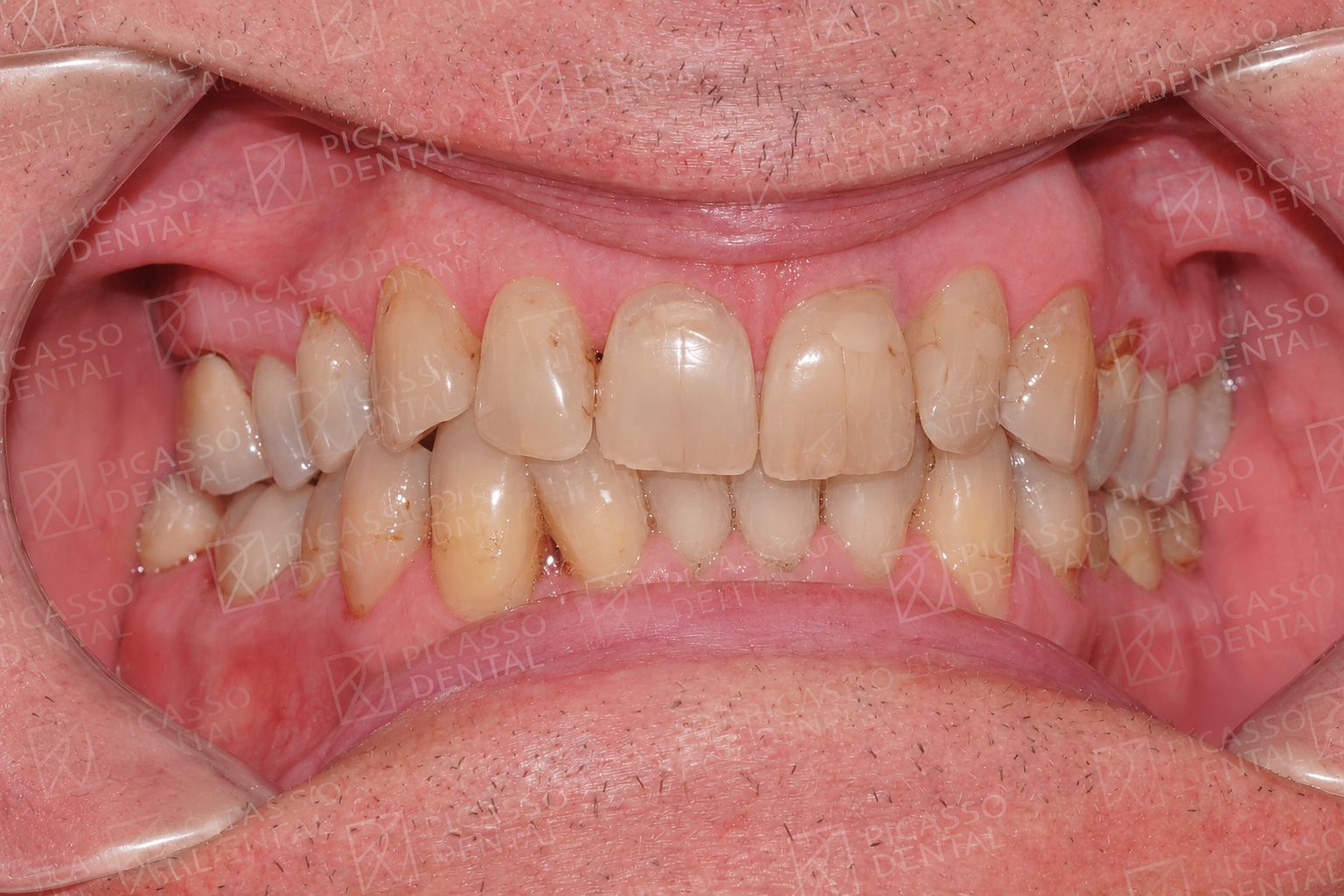
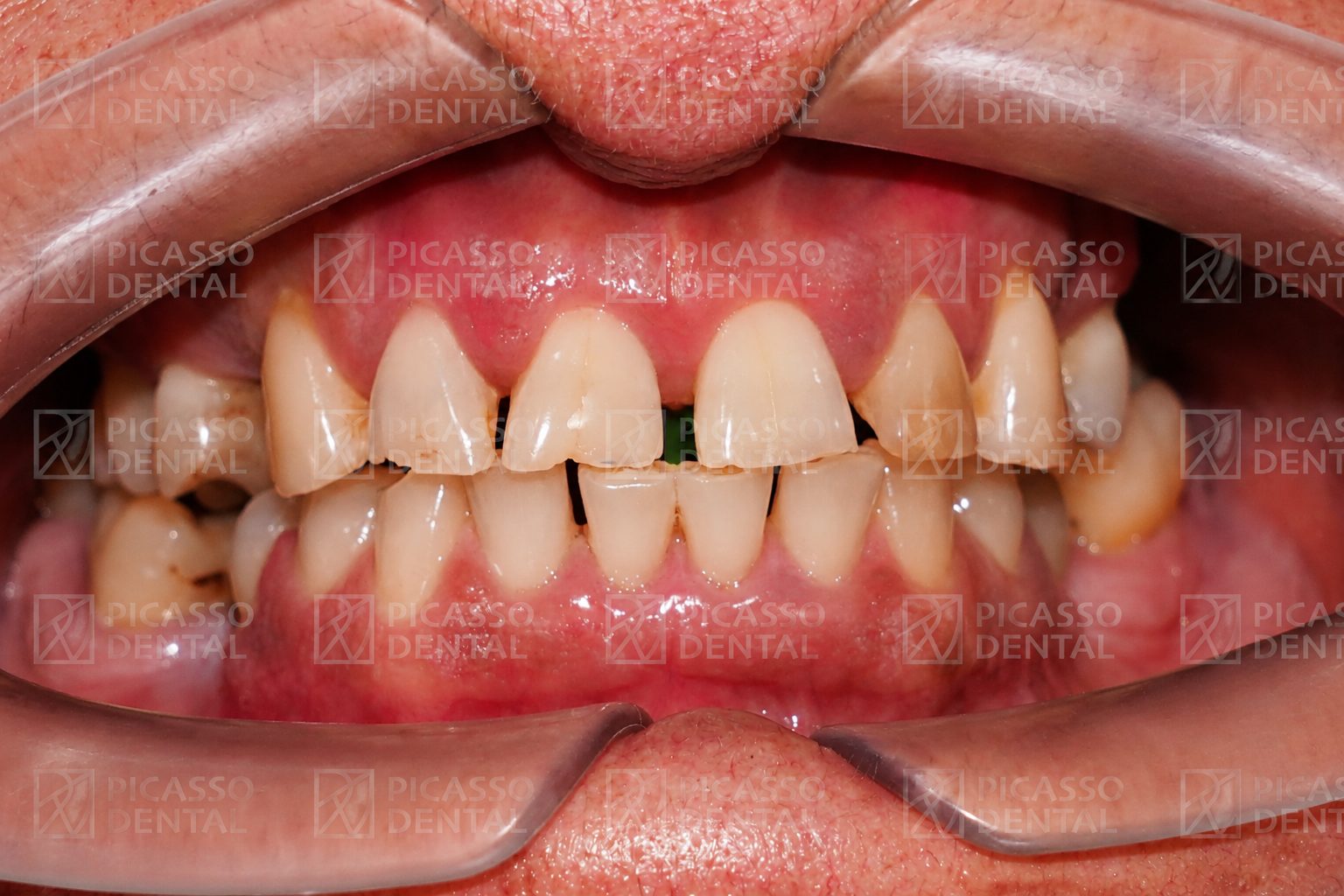 Before
 After
AfterPorcelain crowns, Da Nang
 Before
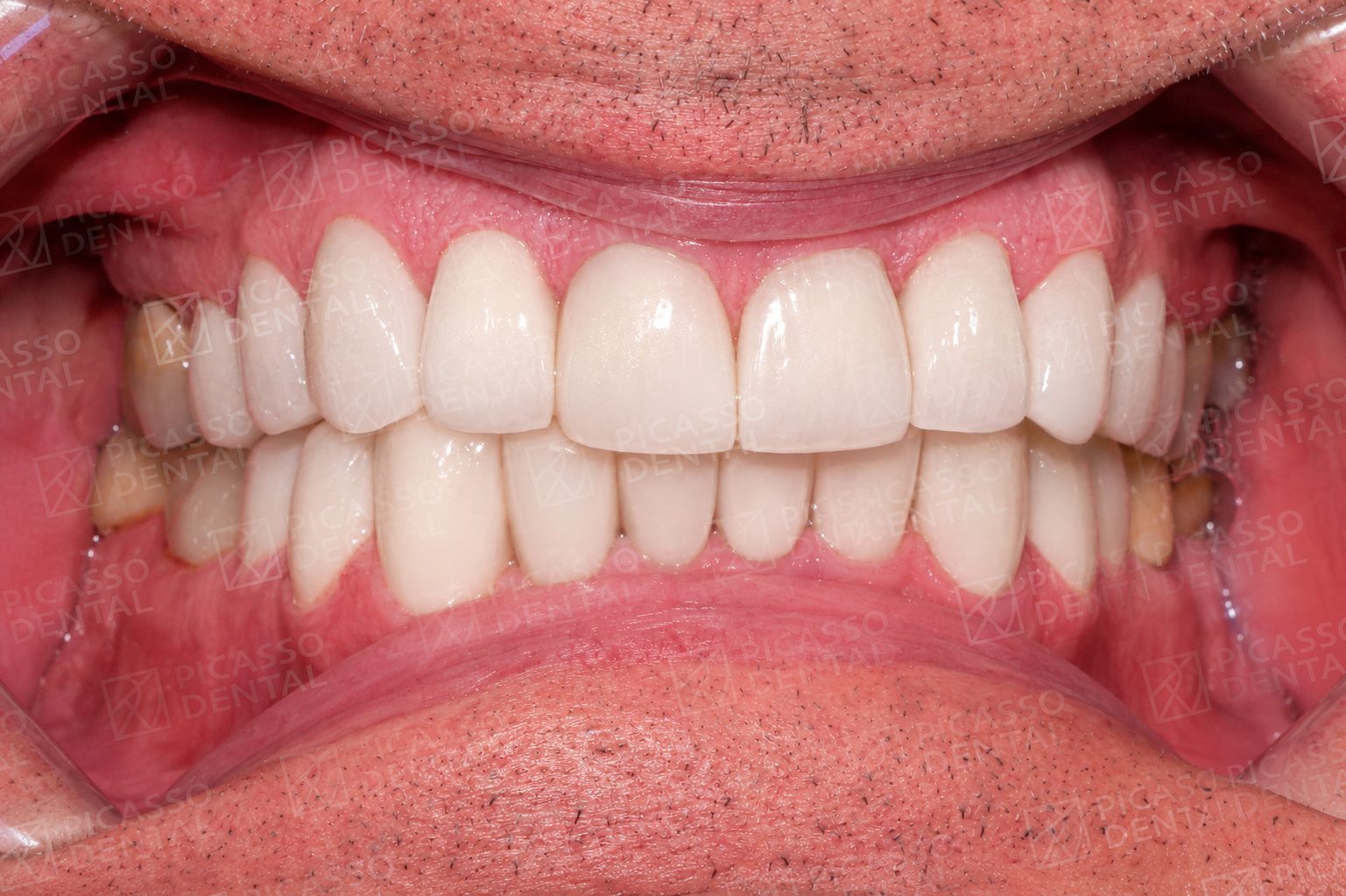 After
AfterCrown and implant, HCMC Thao Dien
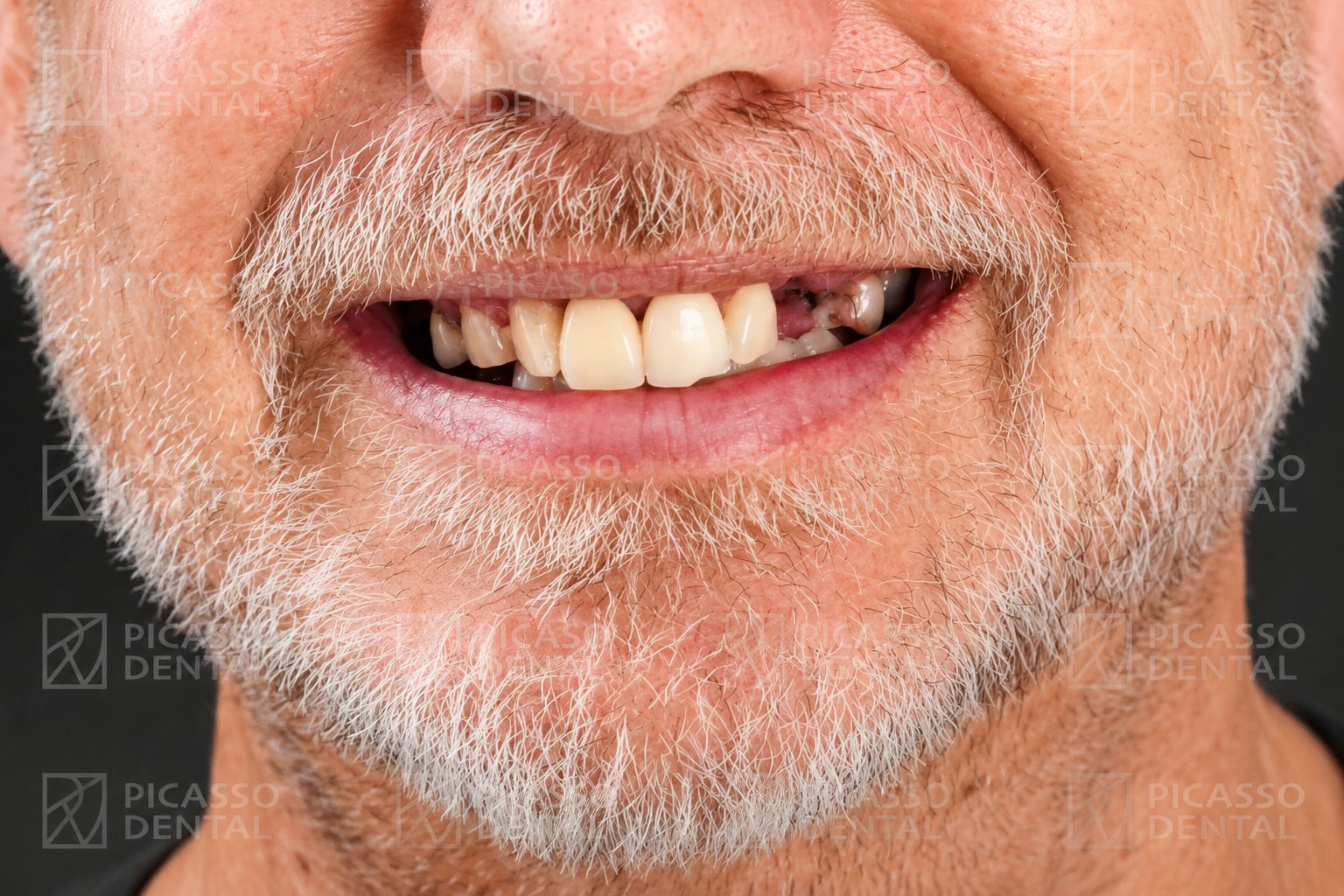 Before
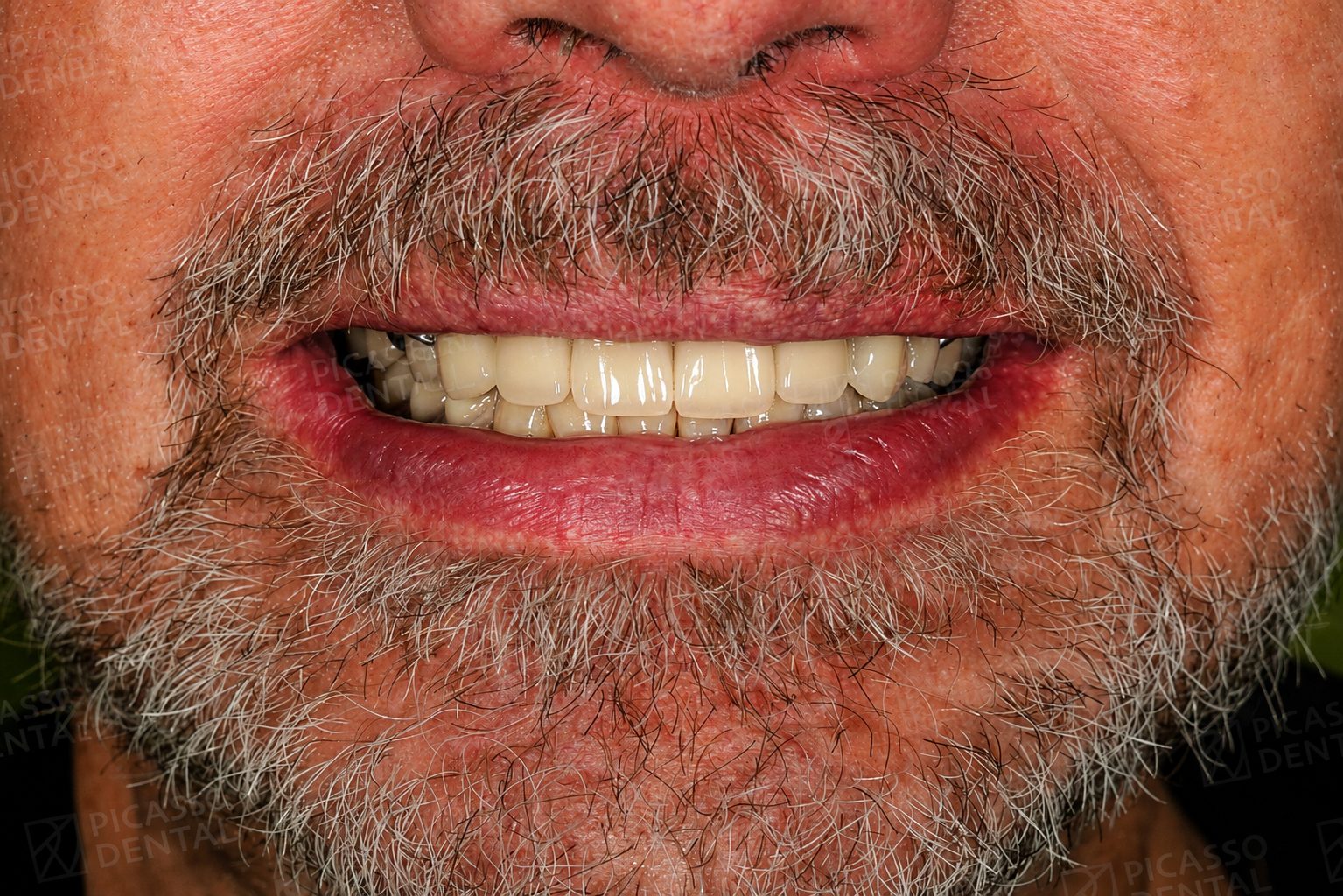 After
AfterCrown restoration, Hanoi Westlake
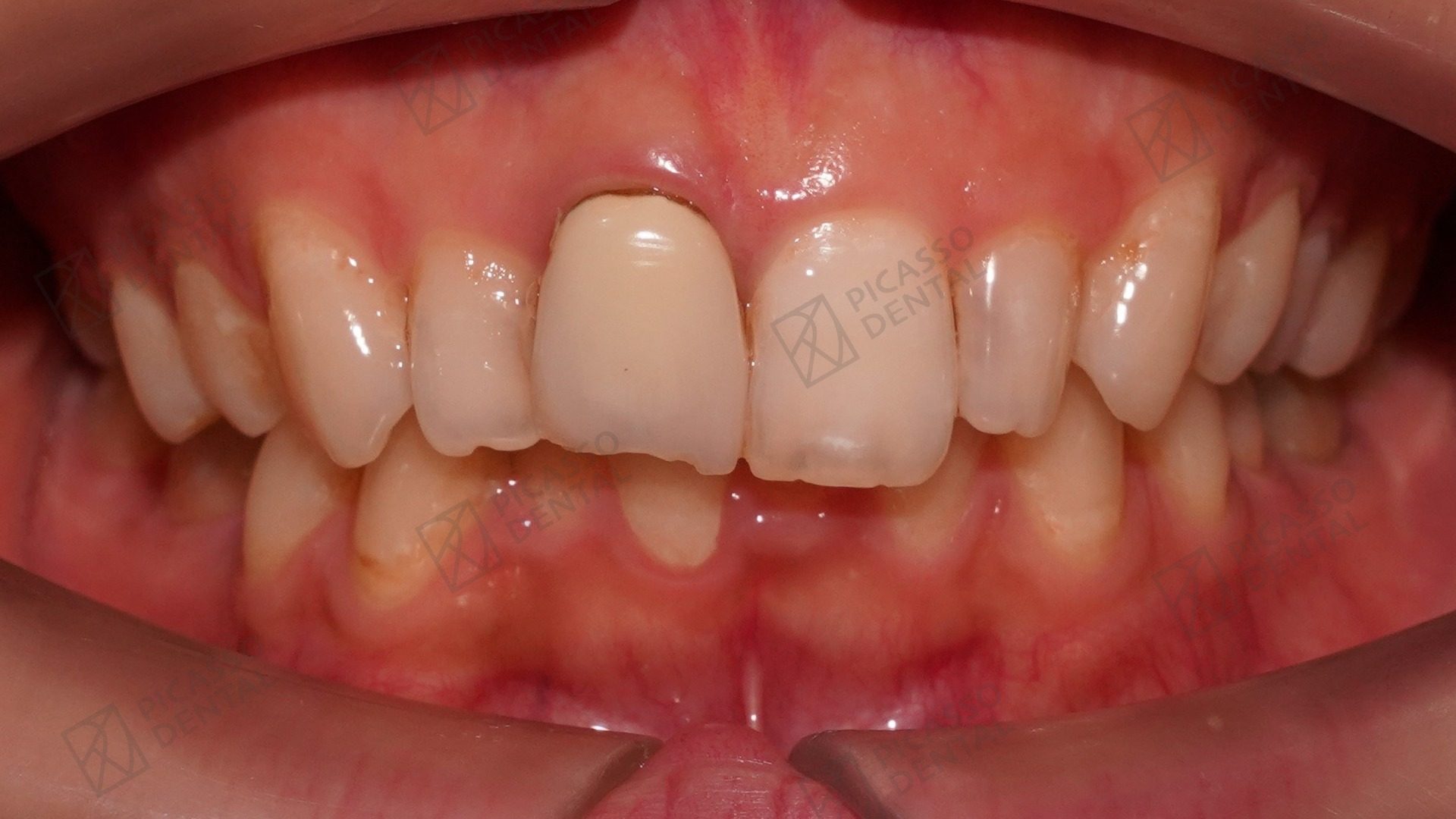 Before
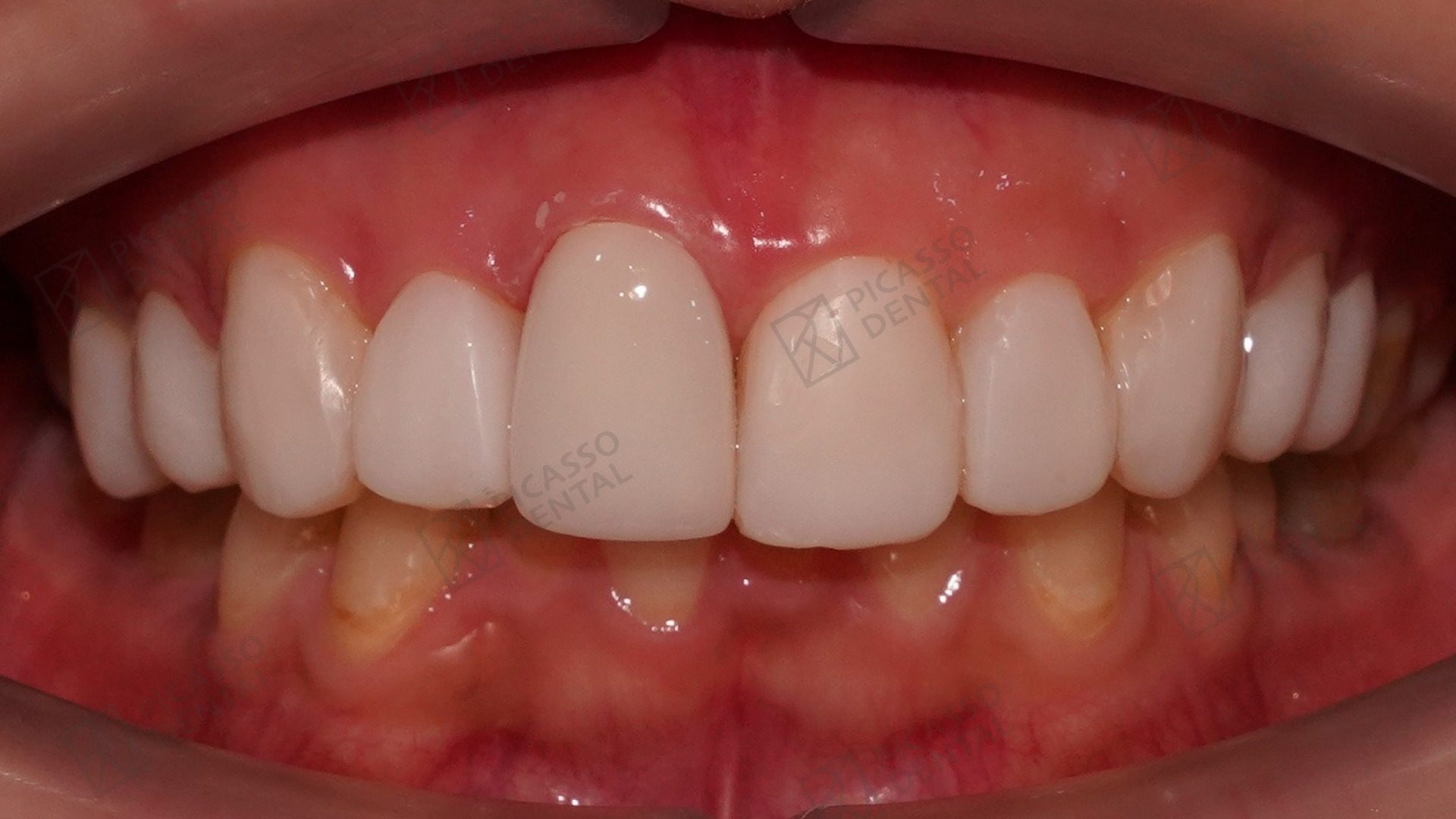 After
AfterSmile restoration, Da Nang Flagship
Frequently asked questions
Can veneers close gaps between teeth?
Yes, veneers close gaps by adding width to the teeth on either side of the space. The porcelain veneer extends slightly beyond the natural tooth edge to eliminate the gap entirely. This approach works best for spaces of 1 to 3 millimeters and takes approximately two weeks from the first preparation appointment to permanent bonding.
How big a gap can veneers close?
Veneers work best for gaps of 1 to 3 millimeters. These moderate spaces can be closed while keeping teeth in natural proportion. Very small gaps under 1 millimeter are sometimes better addressed with composite bonding. Gaps larger than 4 to 5 millimeters usually require a combination of orthodontic treatment to reduce the gap followed by veneers to perfect the final appearance.
How long does it take to close a gap with veneers?
Veneer treatment for gap closure typically takes two appointments spaced one to two weeks apart. The first appointment covers tooth preparation, impressions, shade selection, and placement of temporary veneers that close the gap immediately. The second appointment is the permanent bonding, which takes about two hours.
Do veneers or braces work better for closing gaps?
Orthodontic treatment moves teeth physically to close gaps and preserves natural tooth structure completely. Veneers close gaps in two weeks but require removing a thin layer of enamel. For small to moderate gaps where the patient values speed and simultaneous cosmetic improvement, veneers are often the preferred choice. For large gaps or cases where tooth movement is required for bite reasons, orthodontics is the better option.
Will teeth look too wide after veneer gap closure?
Well-designed veneers should not look too wide after gap closure. The dentist calculates how much width to add to each adjacent tooth so that the final proportions appear natural. The veneer tapers gradually at the edges to create the appearance that the teeth grew together rather than having material added. Digital smile design previews allow patients to approve the proportions before preparation begins.
Is composite bonding better than veneers for closing gaps?
Composite bonding costs less and does not require removing enamel, making it a reasonable option for small gaps. However, composite stains over time, typically needs replacement every 3 to 5 years, and does not achieve the same optical quality as porcelain. For patients who want a permanent, stain-resistant result that also improves the overall color and shape of the teeth, porcelain veneers are the superior long-term choice.
Do I need veneers on all my teeth to close one gap?
No. You only need veneers on the teeth directly adjacent to the gap. Two veneers placed on the teeth bordering a single diastema close that space completely. Whether additional teeth benefit from veneers depends on the overall smile design goals. Some patients choose to extend the veneer run to create a more uniform smile across all visible upper teeth, while others are happy with the minimal two-veneer solution.
Patient Video Testimonial

Start Here
Start with a brief.
Share a photo of your smile and a Picasso dentist will confirm whether your gap is the right size for veneer closure. No obligation, 24-hour reply.