Dental Implants
Can Dental Implants
Be Used With Porcelain Bridges?
Less Surgery, Same Result
An implant-supported bridge replaces multiple missing teeth using fewer implants than individual replacements, without touching the healthy teeth on either side of the gap.

The short version
- Yes: two implants can anchor a three or four-unit porcelain bridge, replacing all the missing teeth without an implant at every position.
- This avoids grinding down healthy adjacent teeth, which traditional bridges require.
- Implant-supported bridges last 15 or more years and prevent bone loss under the gap.
- Replacing four teeth with two implants and a bridge costs 40 to 60 percent less than four individual implants.
- Treatment takes four to six months including the osseointegration healing period.
How an implant-supported bridge works
A conventional porcelain bridge suspends a false tooth (pontic) between two crowns placed on the natural teeth adjacent to the gap. Those natural teeth must be ground down to anchor stumps to accept the crowns. The whole structure is cemented in place permanently.
An implant-supported bridge works identically in terms of what the patient sees and feels, but the anchor crowns attach to titanium implant fixtures placed in the jawbone rather than to modified natural teeth. The healthy teeth on either side of the gap are left completely untouched.
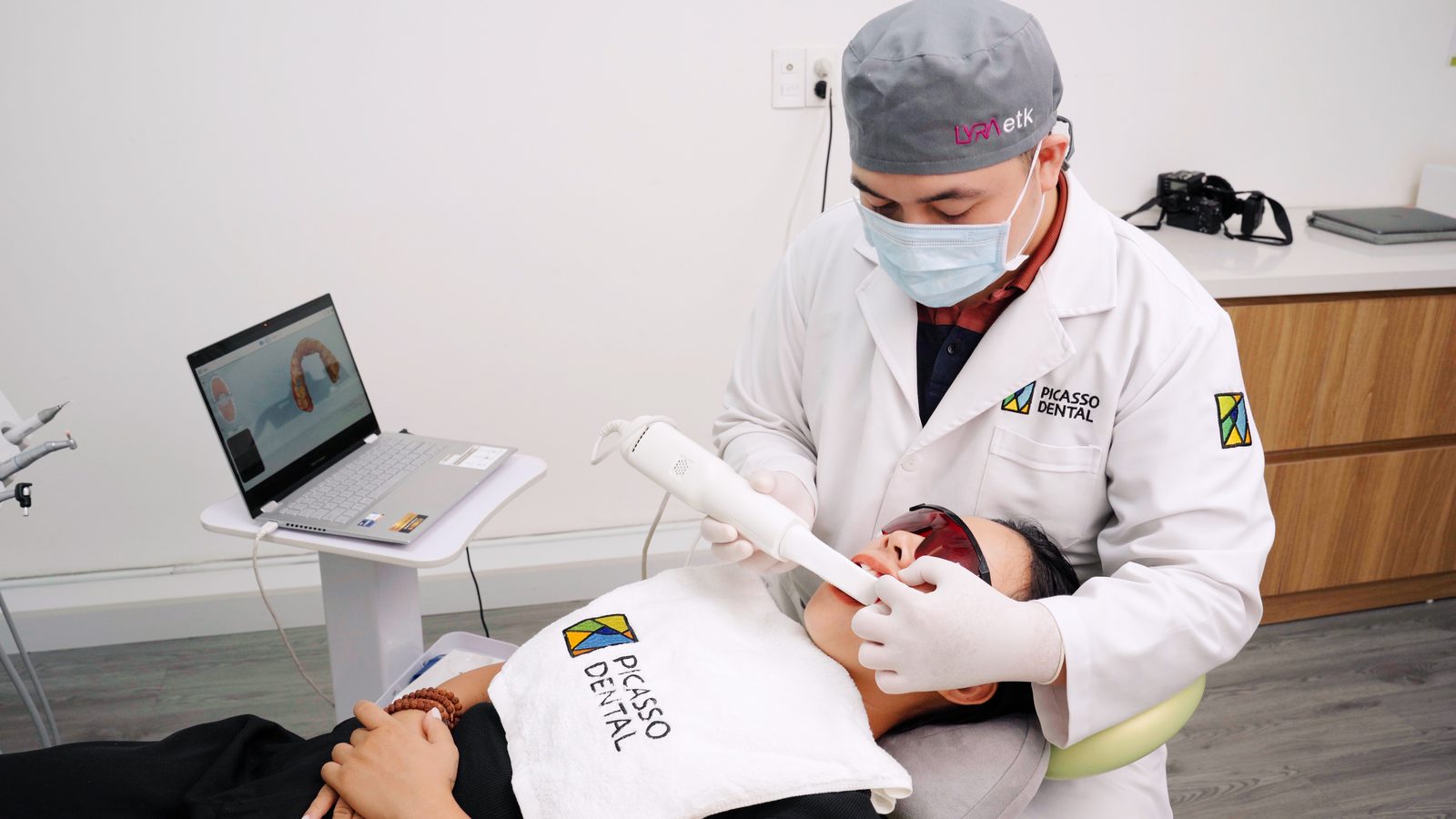
The typical configuration for a three-tooth gap: two implants are placed at the positions of the first and third missing teeth, with the bridge spanning the middle position as a pontic. For a four-tooth gap, two implants still support the full bridge in most cases. For five or six consecutive missing teeth, three implants distribute the load more evenly.
The implants integrate with the surrounding bone through osseointegration over three to six months. During this period, a temporary bridge keeps the patient functional. Once healing is confirmed, final impressions are taken, the permanent porcelain bridge is fabricated, and it is attached to the implant abutments. The final result is a fixed restoration that feels and functions like natural teeth.
Why implant-supported bridges outperform traditional bridges
The most important advantage is what is preserved. A traditional bridge permanently modifies the two healthy teeth on either side of the gap, reducing them to stumps to anchor the bridge. Those teeth will always need crowns from that point forward, and if the bridge fails, the abutment teeth are already compromised. Implant-supported bridges leave adjacent teeth completely untouched, which is a significant clinical advantage over decades of use.
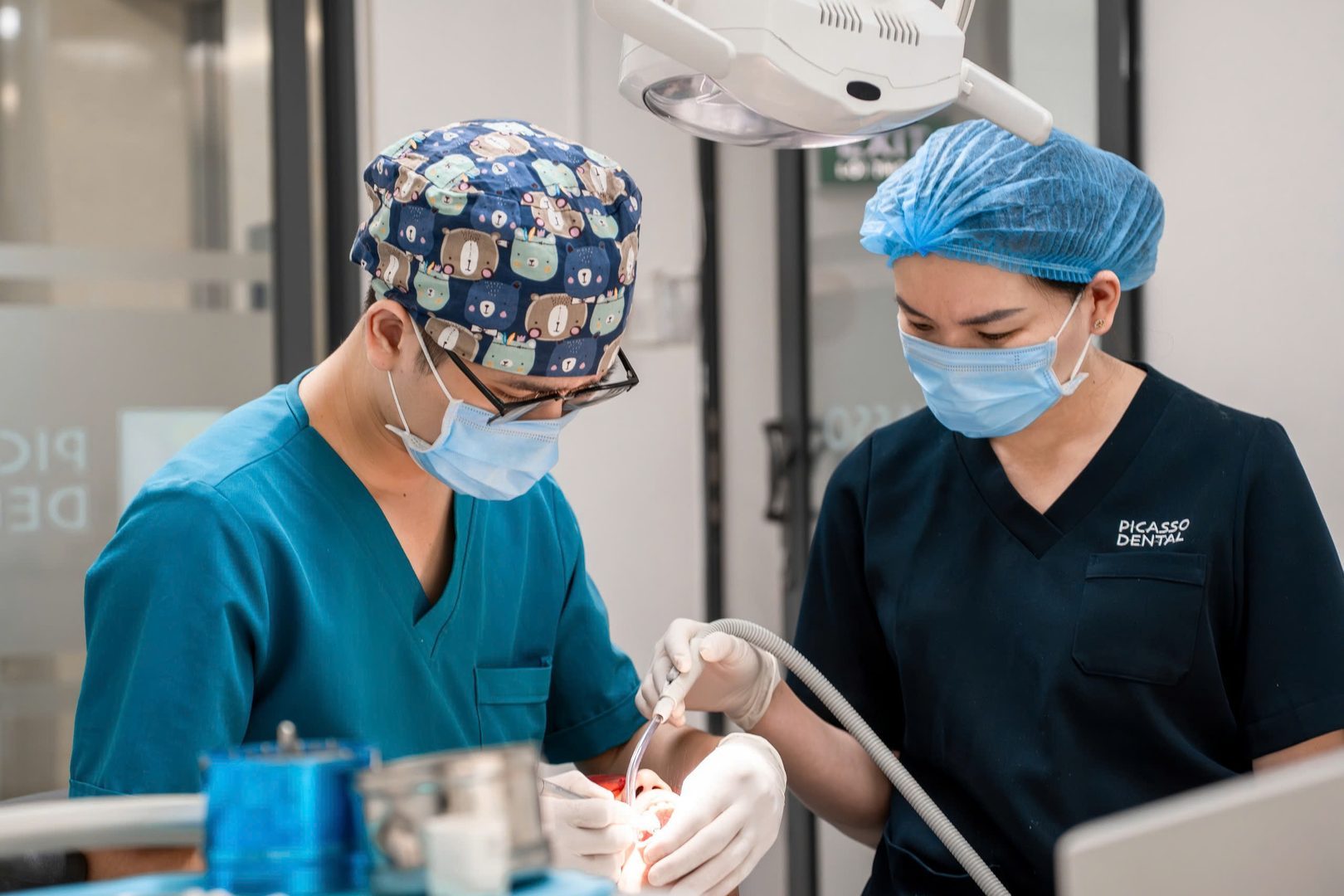
Longevity is the second major advantage. Traditional tooth-supported bridges last seven to ten years on average before requiring replacement, and the supporting teeth often develop problems from the stress of carrying the bridge. Implant-supported bridges routinely last fifteen years or more because implants handle occlusal forces well and do not develop decay or nerve problems the way natural tooth supports do.
Bone preservation is the third. When a tooth is lost, the jawbone in that area begins resorbing from lack of stimulation. A traditional bridge does nothing to prevent this, so the bone under the pontic slowly disappears. The implant fixtures in an implant-supported bridge transmit chewing forces into the bone, stimulating it and preserving volume. Over ten or twenty years, this difference becomes visible in facial contour and affects the ease of future dental work.
Implant-supported bridge
- Adjacent healthy teeth untouched
- Lasts 15 or more years
- Preserves jawbone under gap
- Success rate exceeds 95%
- No decay possible on implant fixtures
Traditional tooth-supported bridge
- Two healthy teeth permanently modified
- Average lifespan 7 to 10 years
- Bone resorbs under pontic over time
- Abutment teeth vulnerable to decay
- Replacement requires same modification again
Cost efficiency versus individual implants
Replacing four missing consecutive teeth with four individual implants requires four surgical sites, four implant fixtures, four healing periods to manage, and four separate crowns. The cost, the surgery burden, and the clinical complexity multiply accordingly.
An implant-supported bridge for the same four teeth uses two implants supporting a four-unit bridge. The saving is typically 40 to 60 percent compared to four individual implants. The functional result is equivalent for most patients. The primary difference is that the two middle teeth in the bridge do not have individual implant roots stimulating the bone directly beneath them. For patients where that bone preservation is a priority, individual implants remain the better long-term choice. For patients balancing budget and outcome, the bridge approach is a clinically sound and well-established alternative.
"Making the decision to go to Hanoi and have the dental treatment done by Picasso was one of the best decisions I have taken for a long time. I not only received top class dental care, it was so cost effective in comparison to having all this work undertaken at an Australian dental practice."
Gerald Mair, Hanoi Old Quarter, Google review
When anatomy makes a bridge the right call
Not every jaw has adequate bone at every missing tooth site. Proximity to the inferior alveolar nerve, the maxillary sinus, or areas with insufficient width or height can prevent placing an implant at every position in a gap. An implant-supported bridge works around these anatomical constraints by placing fixtures only at sites where bone is adequate and spanning the rest with the bridge structure.
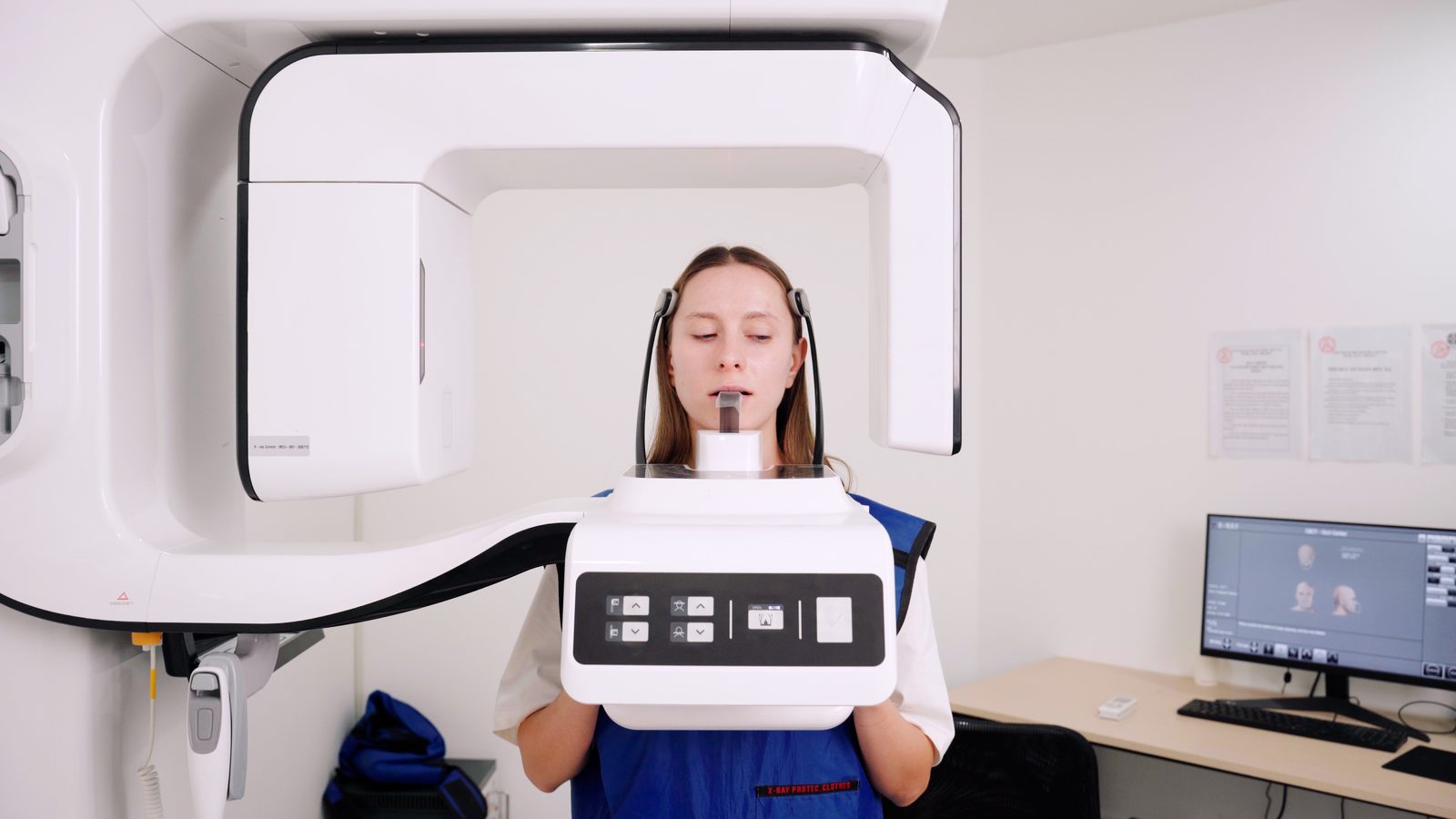
This is one reason implant-supported bridges are useful in cases where extensive grafting would otherwise be needed for individual implants. Strategic placement of two or three implants at anatomically favourable sites, with the bridge spanning areas where grafting would be extensive, reduces the overall surgical burden while still delivering a fixed restoration.
Missing multiple consecutive teeth and want to understand your options? We provide a detailed treatment plan and written cost breakdown before any procedure begins.
Contact us →The treatment process at Picasso Dental
- Planning and imaging CBCT cone beam scanning maps bone volume, nerve positions, and sinus proximity in three dimensions. Treatment planning software generates the implant positions and bridge dimensions before any surgery. A surgical guide is fabricated for precise implant placement.
- Implant placement surgery One to two hours depending on the number of implants and whether any bone grafting is needed. A temporary bridge is fitted the same day or within a few days, so the patient is never without teeth during healing.
- Osseointegration period Three to six months for the titanium fixtures to fuse completely with the surrounding bone. Follow-up X-rays at three months confirm integration is progressing. The temporary bridge is adjusted as needed during this period.
- Final bridge fabrication and fitting Impressions or digital scans are taken after integration is confirmed. The permanent porcelain bridge (zirconia, Emax, or Lava depending on location and clinical requirements) is fabricated over one to two weeks, then fitted and bite-adjusted at the final appointment.

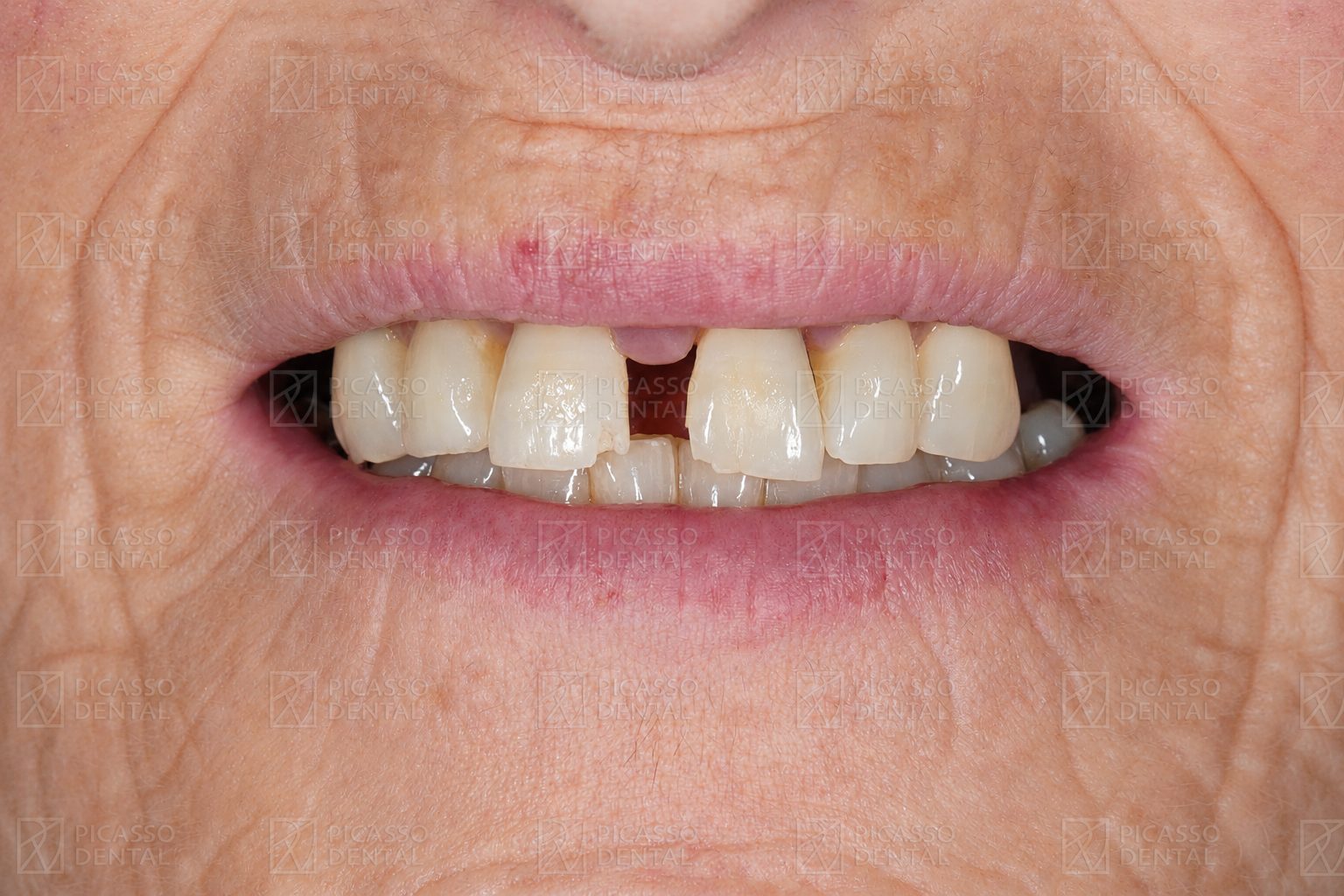 Before
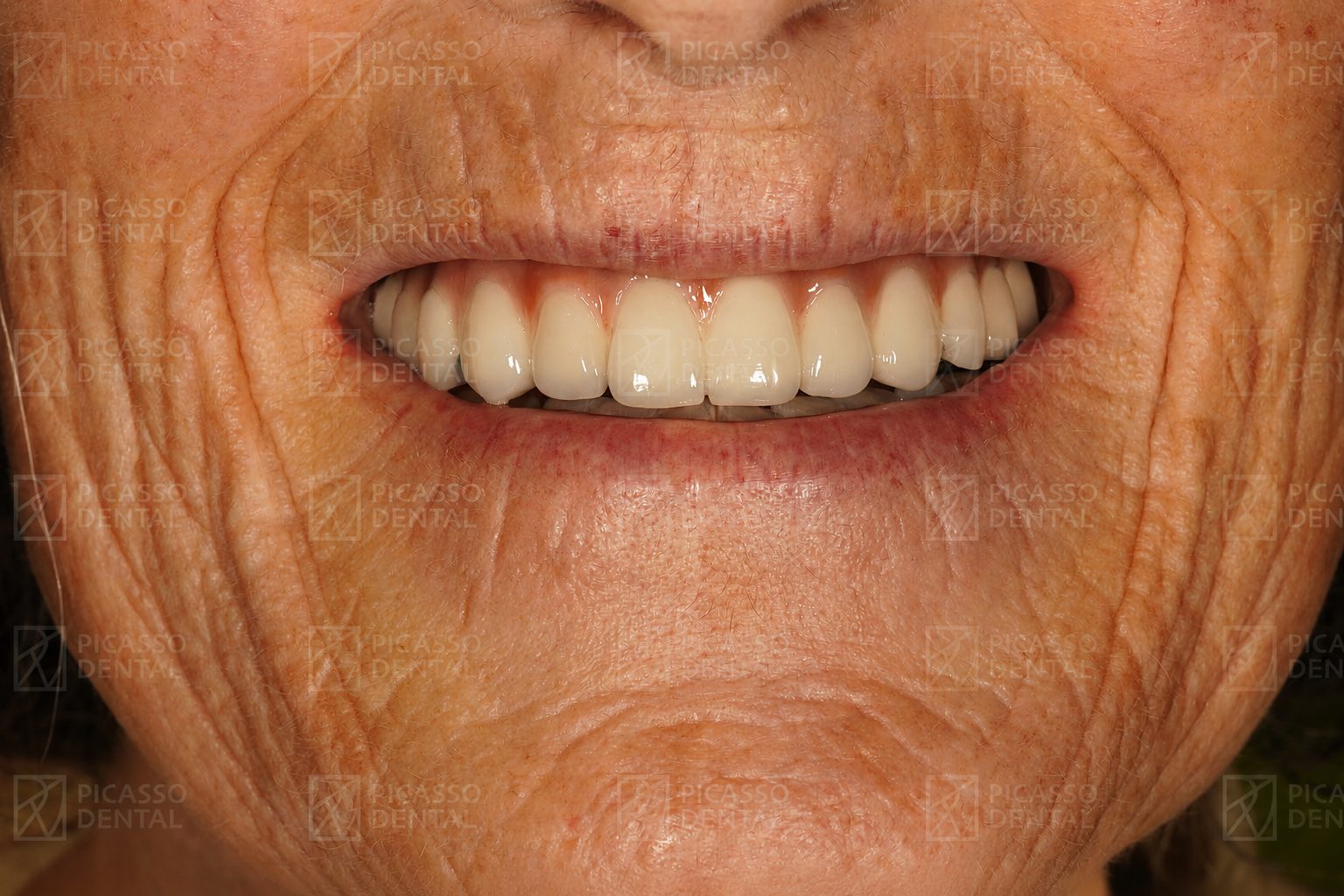 After
AfterFull rehabilitation, Hanoi Old Quarter
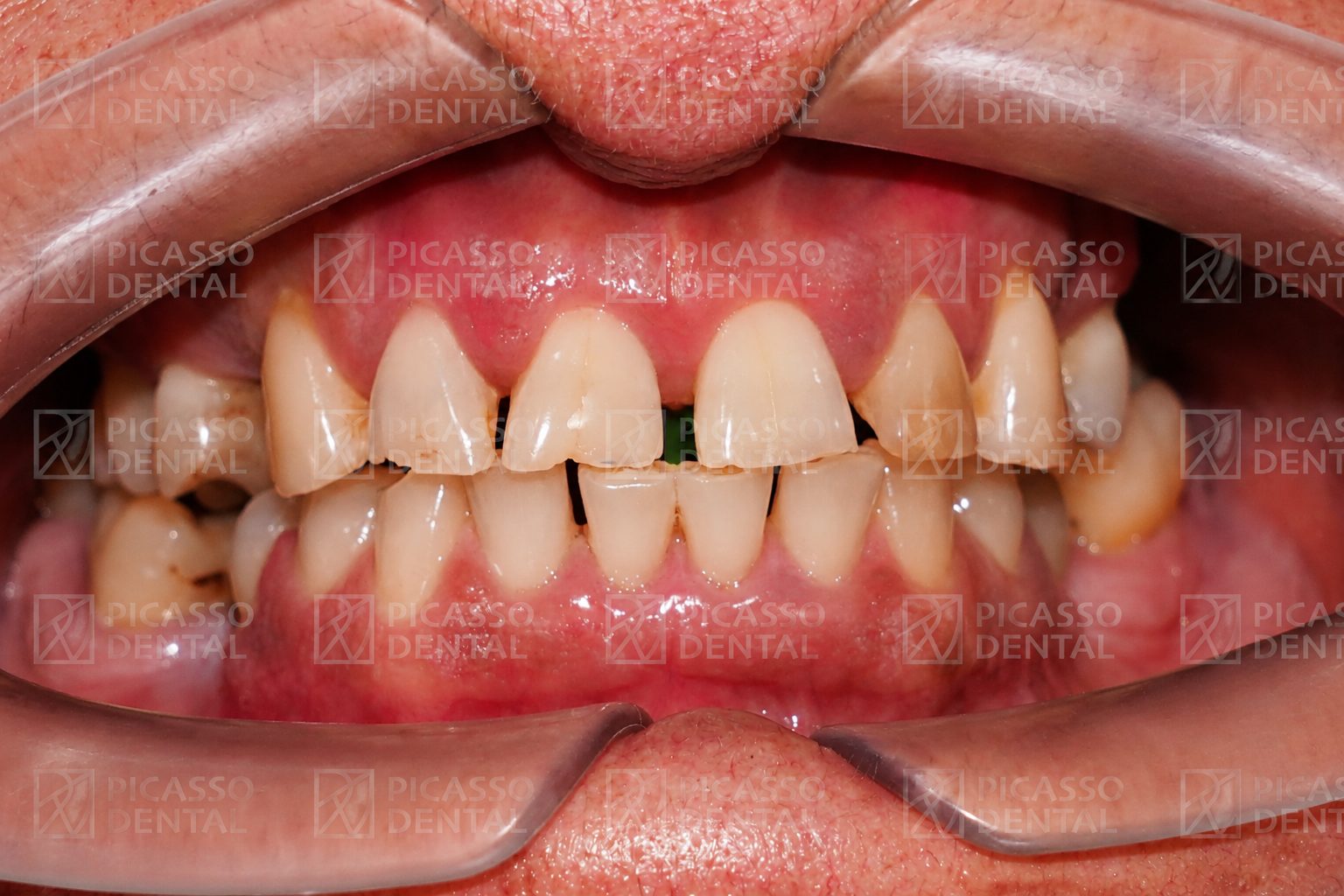 Before
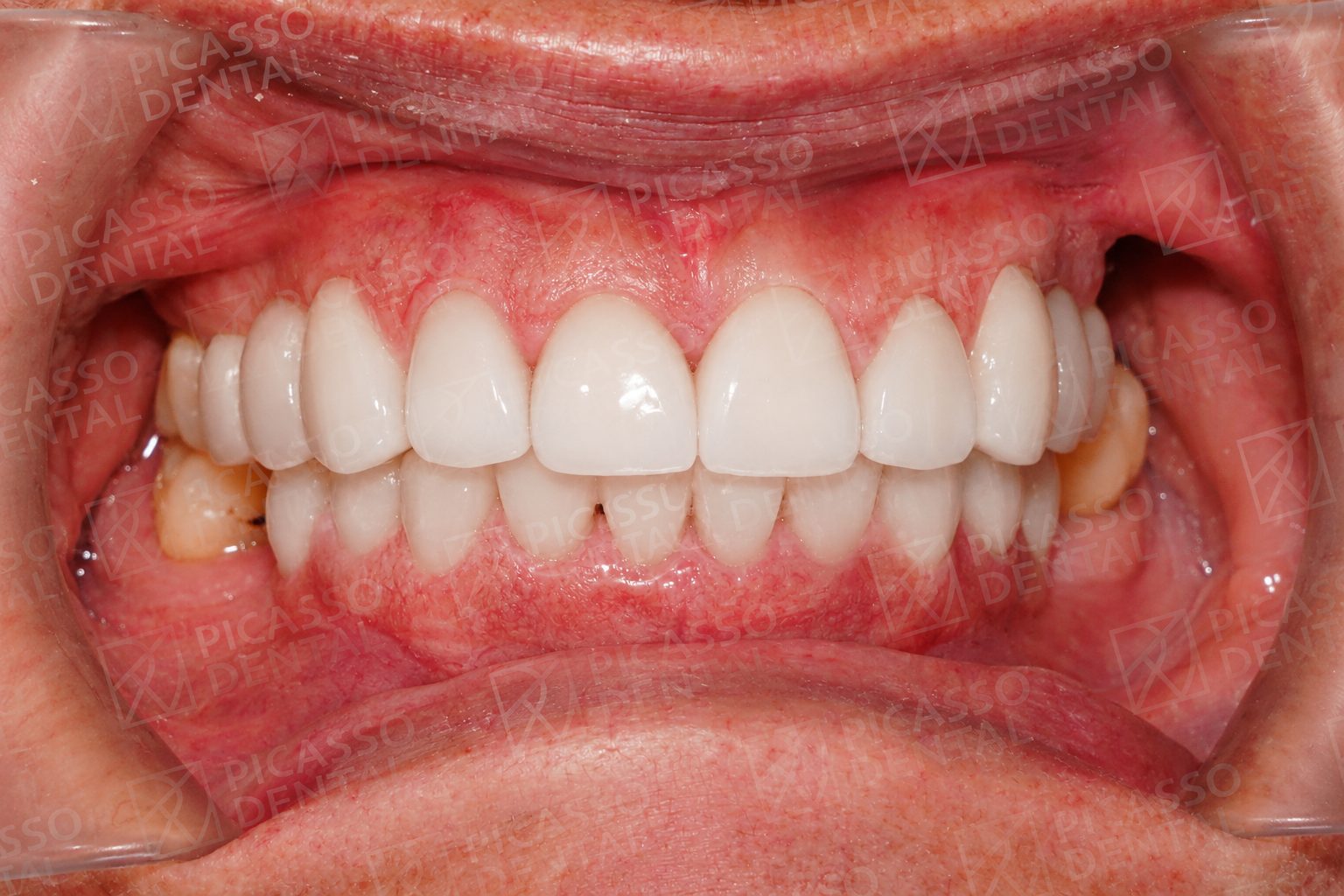 After
AfterPorcelain crowns, Da Nang
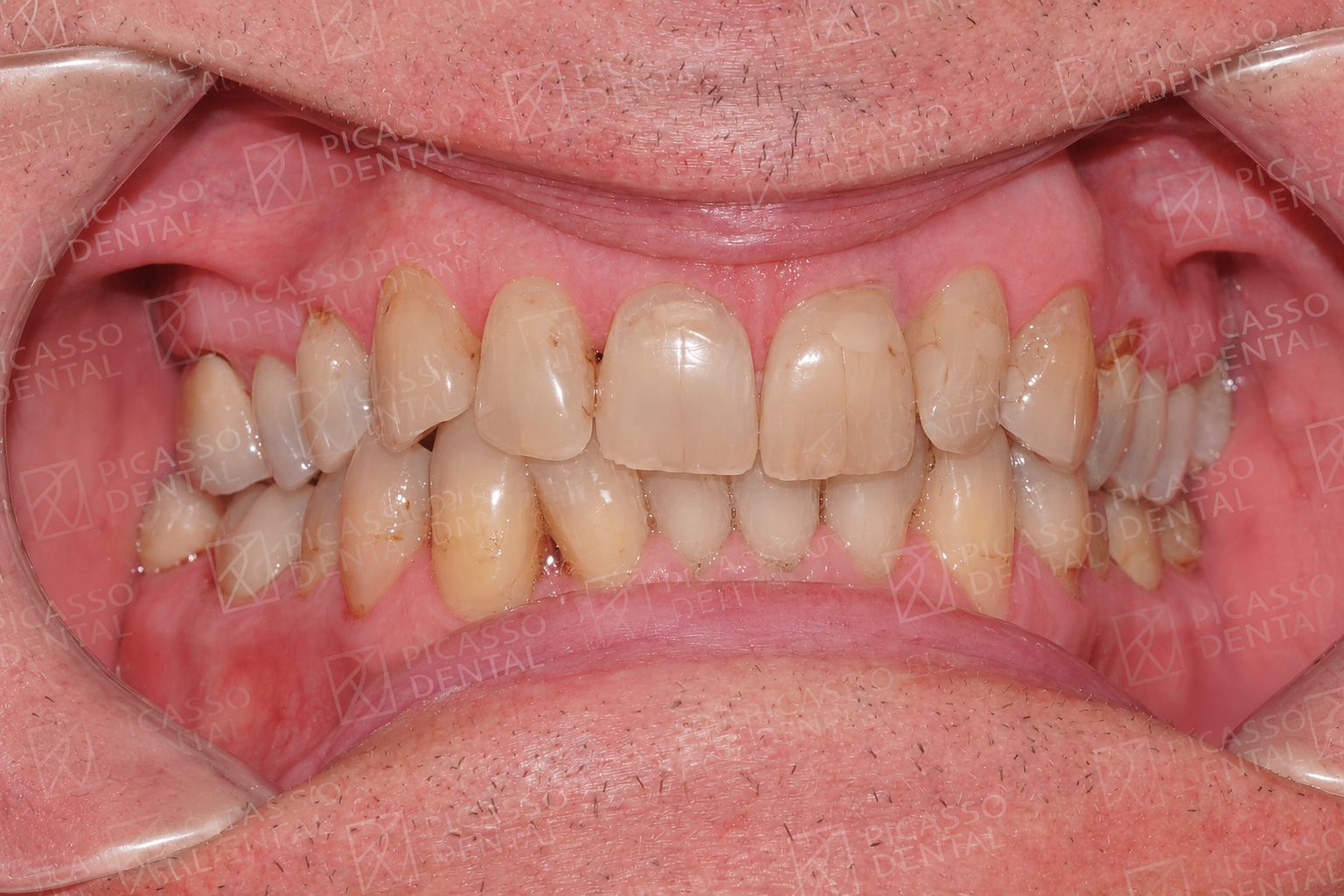 Before
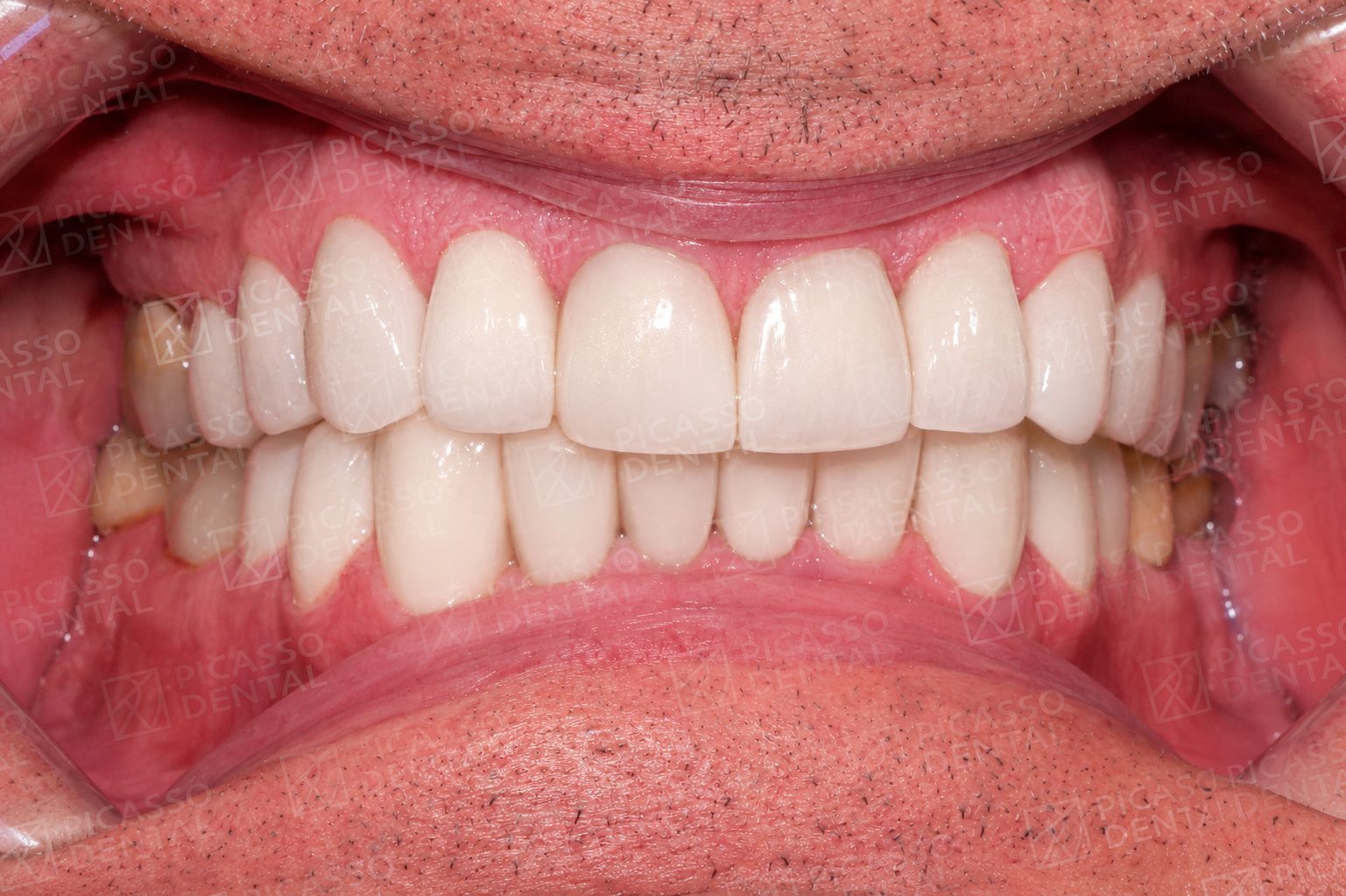 After
AfterCrown and implant, HCMC Thao Dien
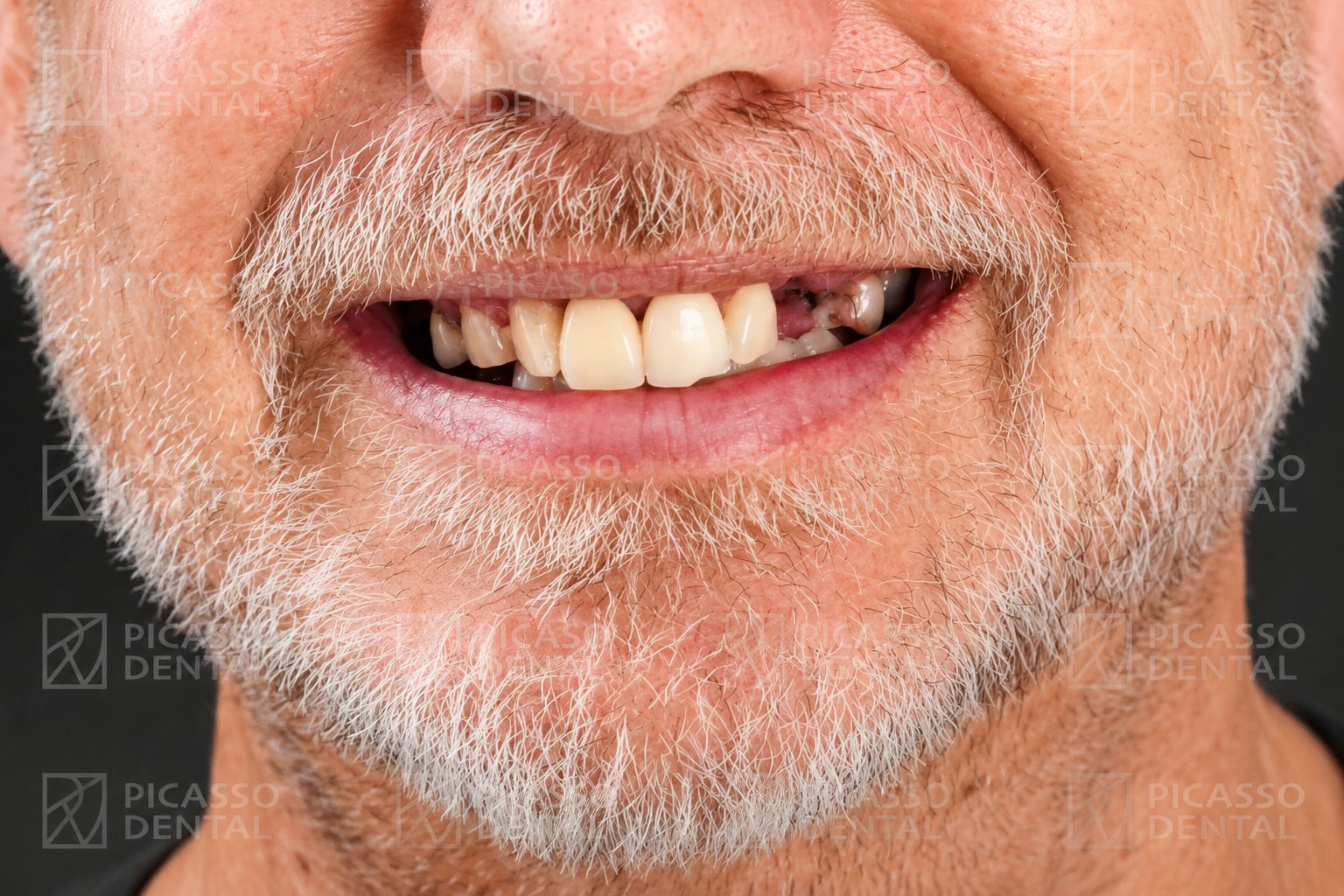 Before
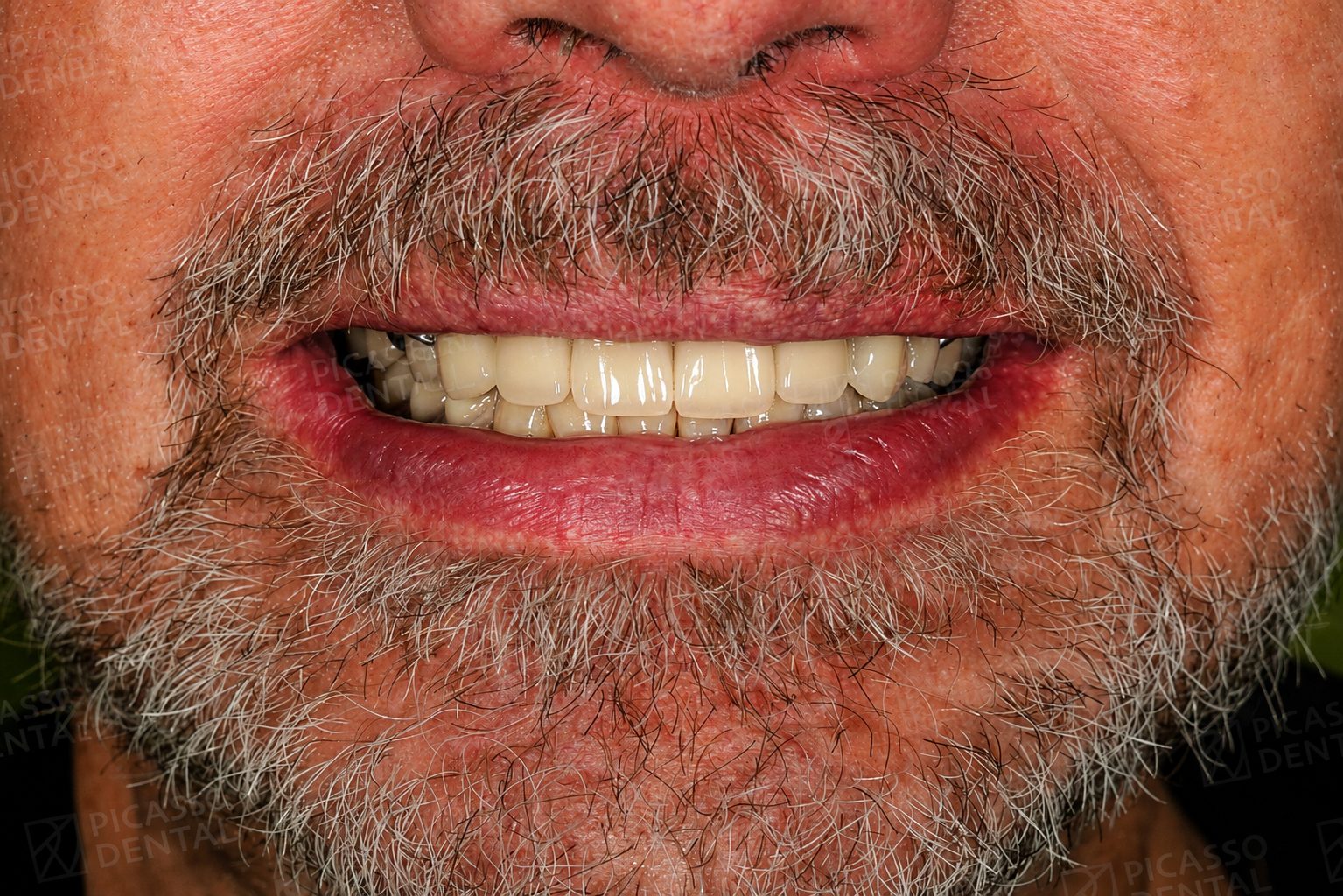 After
AfterCrown restoration, Hanoi Westlake
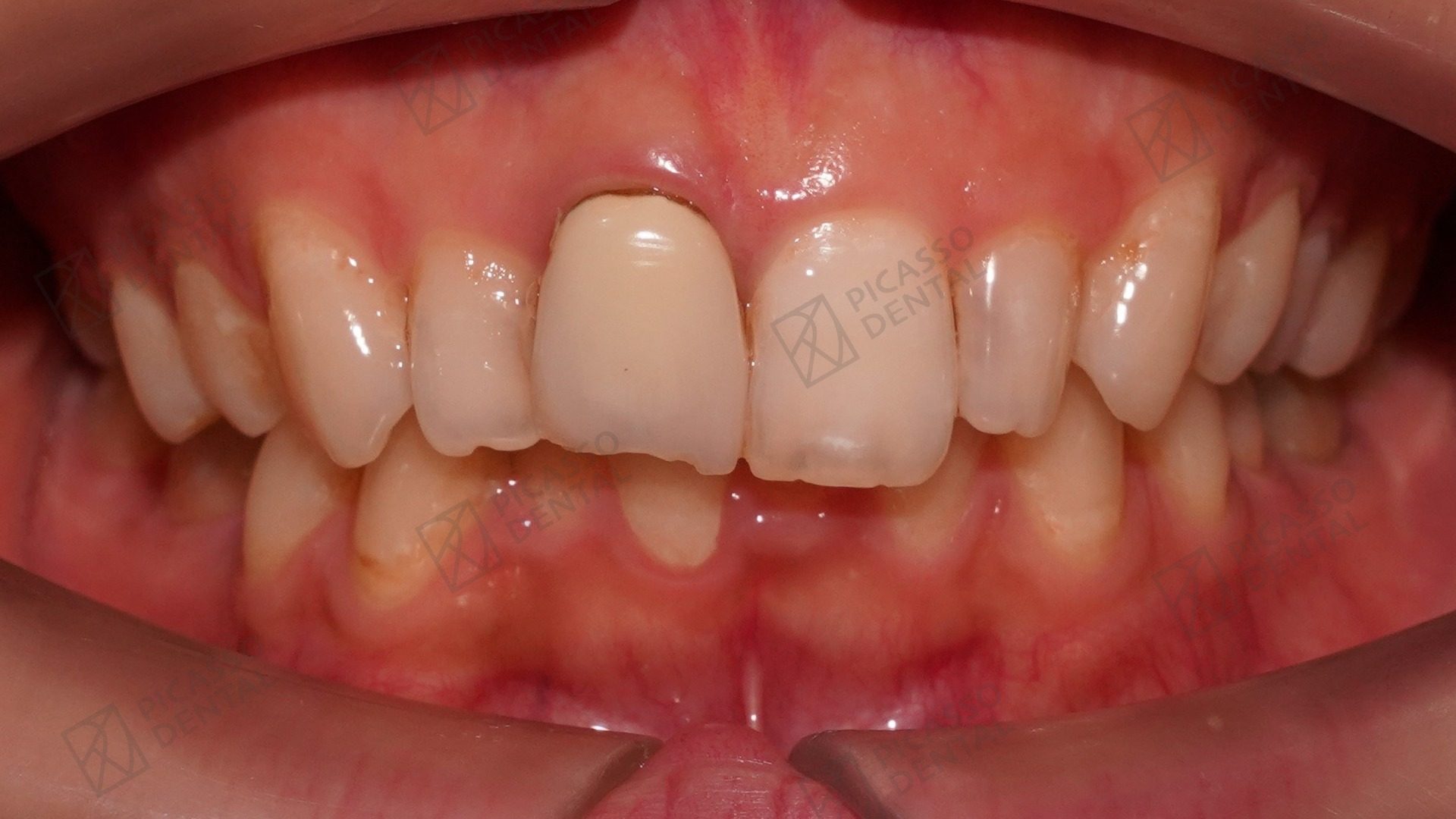 Before
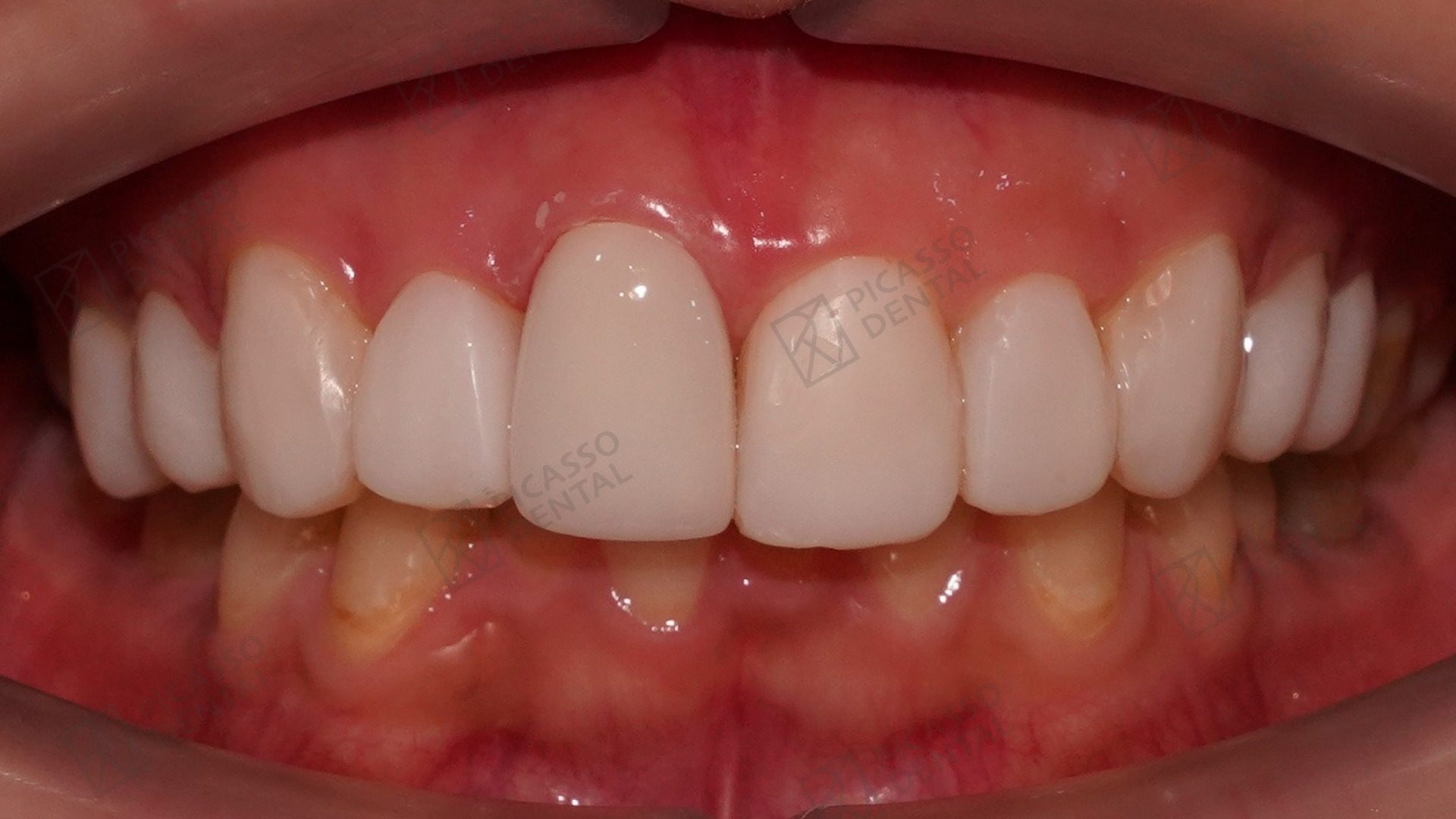 After
AfterSmile restoration, Da Nang Flagship
Frequently asked questions
Can dental implants support a porcelain bridge?
Yes. An implant-supported bridge uses two or more dental implants as anchors in place of natural teeth. Crowns attach to the implants and a pontic (false tooth) spans the gap between them, replacing multiple missing teeth efficiently without grinding down any healthy adjacent teeth.
How many implants are needed to support a bridge?
Two implants typically support a three or four-unit bridge. For longer spans replacing five or six teeth, three implants provide optimal stability. The exact number depends on the span length, the forces those teeth will handle, and the bone volume available at each implant site.
What is the advantage of an implant-supported bridge over a traditional bridge?
A traditional bridge requires grinding down the healthy teeth on either side of the gap to serve as anchor crowns, permanently altering them. An implant-supported bridge uses implants as anchors, leaving adjacent healthy teeth completely untouched. Implant bridges also last significantly longer (15 or more years versus 7 to 10 for traditional bridges) and prevent bone loss under the gap.
Is an implant-supported bridge cheaper than individual implants for each missing tooth?
Yes. Replacing four teeth with two implants and a four-unit bridge costs significantly less than placing four individual implants. The saving comes from fewer surgical procedures, less implant hardware, and less clinical time while delivering essentially the same functional result.
How long does the implant-supported bridge treatment take?
The full process typically takes four to six months. Implants are placed in the first appointment, then a healing period of three to six months follows to allow osseointegration. After healing is confirmed, impressions are taken and the permanent bridge is fabricated and fitted over one to two weeks.
Can an implant-supported bridge be done in Vietnam for international patients?
Yes. Picasso Dental Clinic has placed implant-supported bridges for patients from over 65 countries since 2013. International patients typically plan a first visit for implant placement, return home during the healing period, and travel back for the final bridge fitting. A detailed treatment timeline and written cost estimate are provided before any procedure begins.
What maintenance does an implant-supported bridge require?
Daily brushing and flossing around the implant crowns, plus cleaning under the bridge pontic using a floss threader, super floss, or water flosser. Professional cleanings every six months check the bridge, evaluate implant health, and remove any calculus. With proper care, an implant-supported bridge can function well for 15 to 20 years or longer.
Start Here
Start with a brief.
Send us your X-rays or a description of the missing teeth and we will provide a written treatment plan with exact costs, with no obligation, within 24 hours.