Dental Implants
Can Children Get
Dental Implants?
Why Timing Is Everything
Placing an implant before jaw growth is complete creates problems that require starting over from scratch. Here is what the growth timeline actually looks like and what to do while waiting.

The short version
- Dental implants become fixed to bone and cannot move. A growing jaw will outgrow a prematurely placed implant.
- Girls typically reach jaw maturity around 16 to 18; boys around 18 to 21, sometimes later.
- Skeletal maturity is confirmed with hand-wrist X-rays and serial dental X-rays, not age alone.
- Removable partial dentures, resin-bonded bridges, and orthodontic space maintainers are the right solutions while waiting.
- Bone socket preservation at extraction time protects the implant site for the future.
Why growing jaws and implants do not mix
The core problem is simple: a dental implant integrates with the jawbone through a process called osseointegration, becoming as fixed as a tooth root. Unlike a natural tooth, which has a periodontal ligament allowing minor positional adjustments throughout life, an implant is permanently anchored. Once fused, it cannot move, erupt, or reposition in any direction.
A child's jaw does not grow in one plane. It expands in all three dimensions simultaneously, forward, sideways, and vertically, at rates that vary between individuals and spike during puberty. An implant placed before this growth is complete becomes an anchor point that stays exactly where it was placed while the surrounding jaw and dentition continue developing around it.
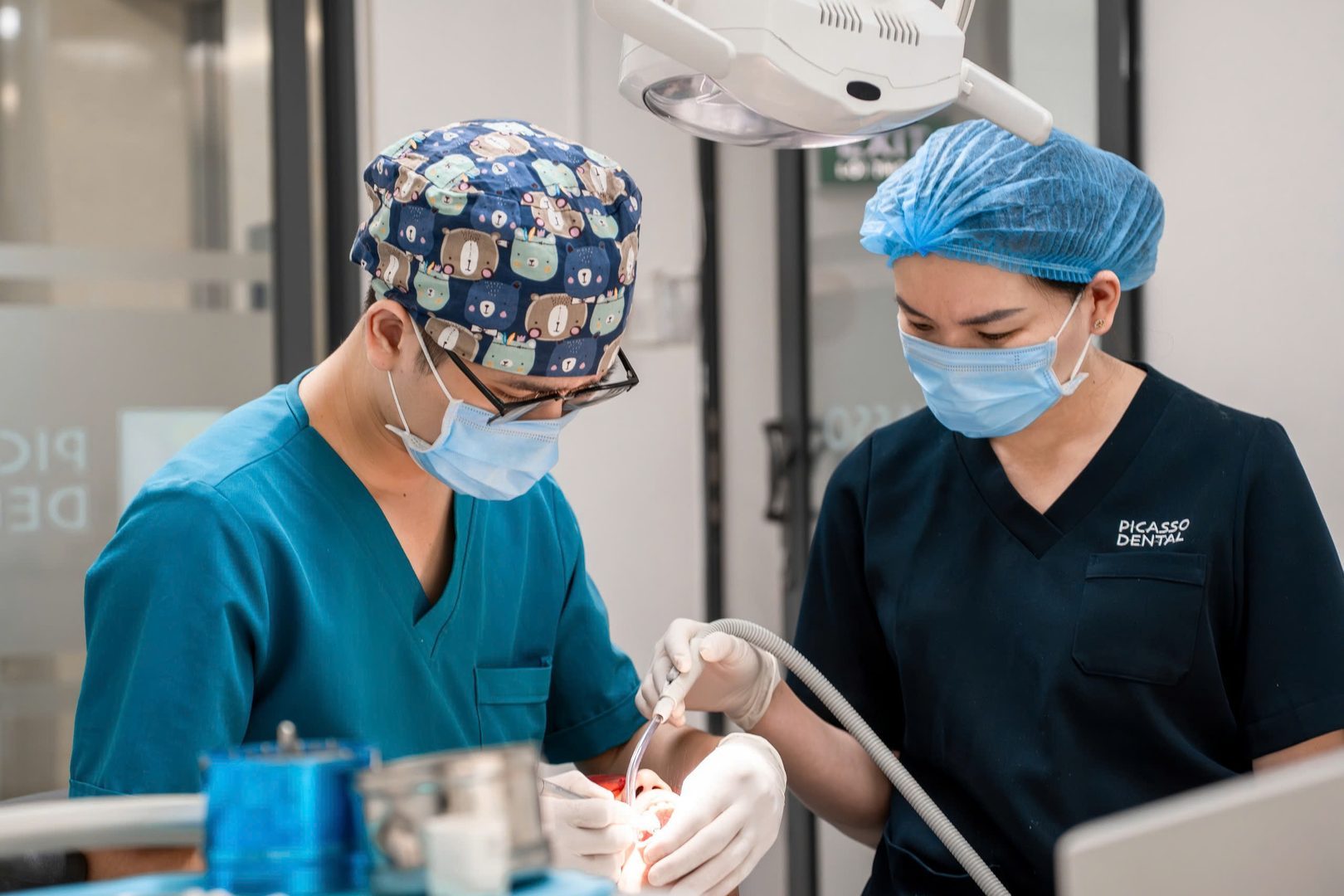
The visible result is predictable. Within a few years the implant crown appears shorter than the natural teeth beside it, which have continued erupting upward with normal dental development. The implant looks as if it has sunk into the jaw. In the anterior (front) region, where vertical jaw growth is most pronounced, the cosmetic problem becomes severe. Correcting it requires explanting the implant, bone grafting, and waiting for the grafted site to mature before placing a new implant. The patient ends up doing the whole process again, at significantly greater cost, complexity, and discomfort.
When growth actually stops
The clinical answer to "at what age can we place an implant?" is not a single number. It varies between individuals, between sexes, and between jaw regions. As a general guideline, females complete jaw growth between ages 16 and 18, while males typically continue growing until ages 18 to 21. Some male patients show active jaw growth as late as 22 or 23.
At Picasso Dental we never rely on age alone. The assessment I use for adolescent patients involves two objective measures. First, a hand-wrist X-ray evaluating skeletal maturity at the growth plates. Second, comparison of serial panoramic X-rays taken at least six months apart, confirming that jaw dimensions have not changed between readings. Only when both measures confirm growth cessation do we proceed with implant planning.
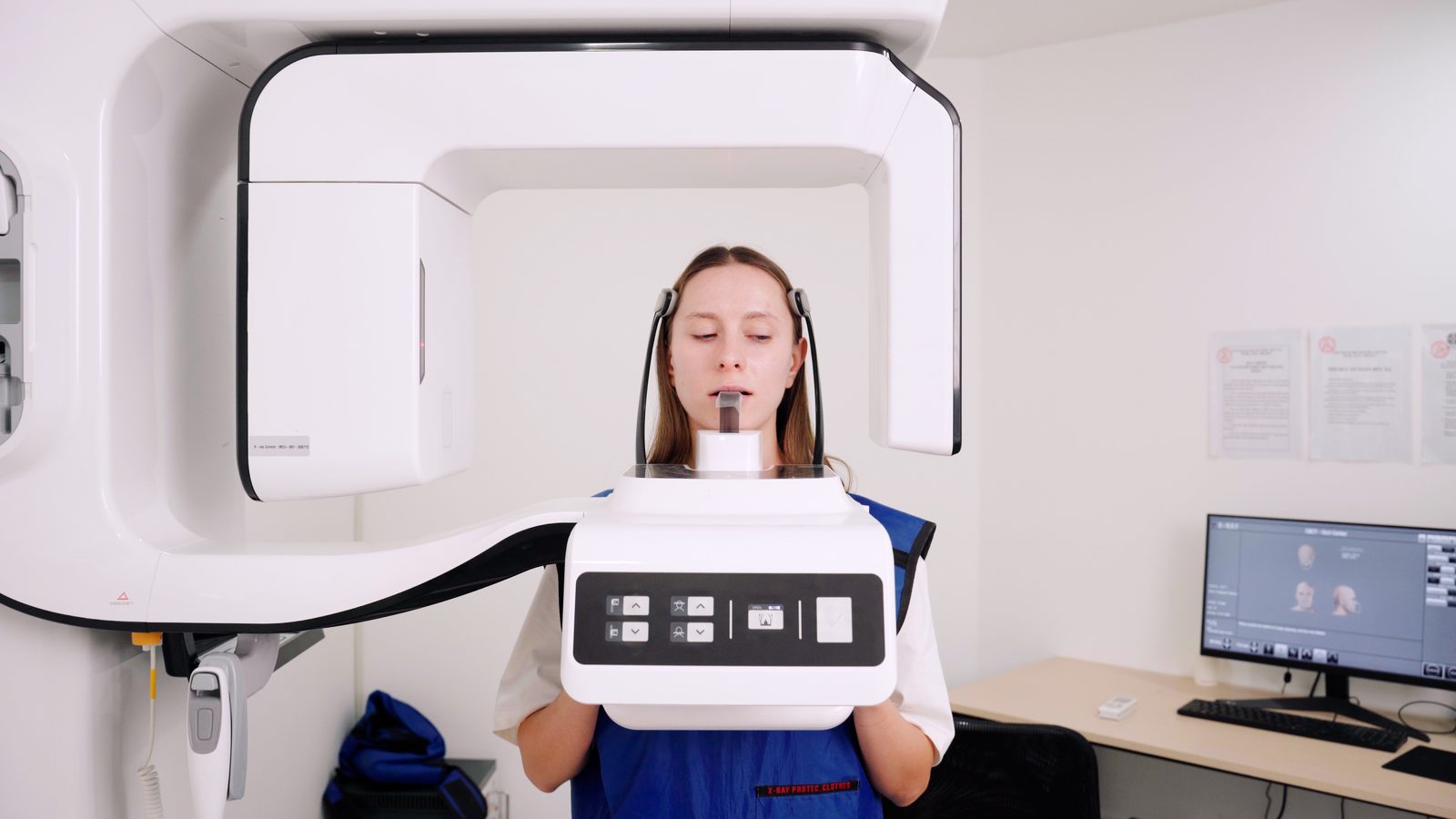
Posterior teeth (back molars and premolars) tend to reach stability slightly earlier than anterior teeth because that region of the jaw completes its vertical growth sooner. For a 17-year-old female with confirmed growth cessation, a posterior implant might be clinically justifiable. An anterior implant in the same patient warrants more caution and a longer monitoring period.
Exceptions that exist in clinical practice
Congenital hypodontia, where a child is born missing multiple permanent teeth, represents the main category where earlier implant consideration arises. When many teeth are absent, the alveolar bone in the affected areas does not develop normally because it relies on erupting teeth for stimulation. In severe oligodontia cases, the jaw structure may already be compromised enough that a different clinical calculus applies.
Even in these exceptional cases, growth assessment is mandatory. Placing implants in regions where the bone has confirmed stability while using interim prosthetics elsewhere is a reasonable staged approach. These are specialist decisions requiring detailed multidisciplinary planning, not general clinical practice.
Wondering if your child is a candidate, or when the right time might be? We review growth X-rays and provide a written timeline at no obligation.
Contact us →What works well while waiting
The waiting period between tooth loss and implant eligibility is not a gap to be merely endured. The right interim solution protects the space, maintains bone volume, supports jaw development, and keeps the child's confidence intact during a socially sensitive period of life.
- Removable partial denture A lightweight acrylic appliance replaces the missing tooth or teeth and can be adjusted as the jaw grows. Modern partial dentures are comfortable and natural-looking, and children adapt to them quickly. They are the most flexible option because they accommodate growth without any modification to surrounding teeth.
- Resin-bonded bridge (Maryland bridge) A false tooth attached to adjacent teeth via metal or ceramic wings bonded to the backs of those teeth. Requires minimal tooth preparation and provides a fixed, non-removable result. Best suited for older adolescents whose growth is nearly complete and who need a fixed solution for the final waiting period.
- Orthodontic space maintainer If no replacement tooth is needed cosmetically (for a posterior tooth, for example), a space maintainer prevents adjacent teeth from drifting into the gap. Without one, teeth begin moving within months, and what would have been a straightforward implant site becomes one requiring orthodontic correction before the implant can be placed.
- Bone socket preservation at extraction When a tooth is extracted, placing bone graft material in the empty socket significantly slows the natural resorption process. Without preservation, the site can lose substantial bone volume over the years of waiting, complicating or preventing future implant placement. This simple step at the time of extraction makes a meaningful difference to what is available years later.
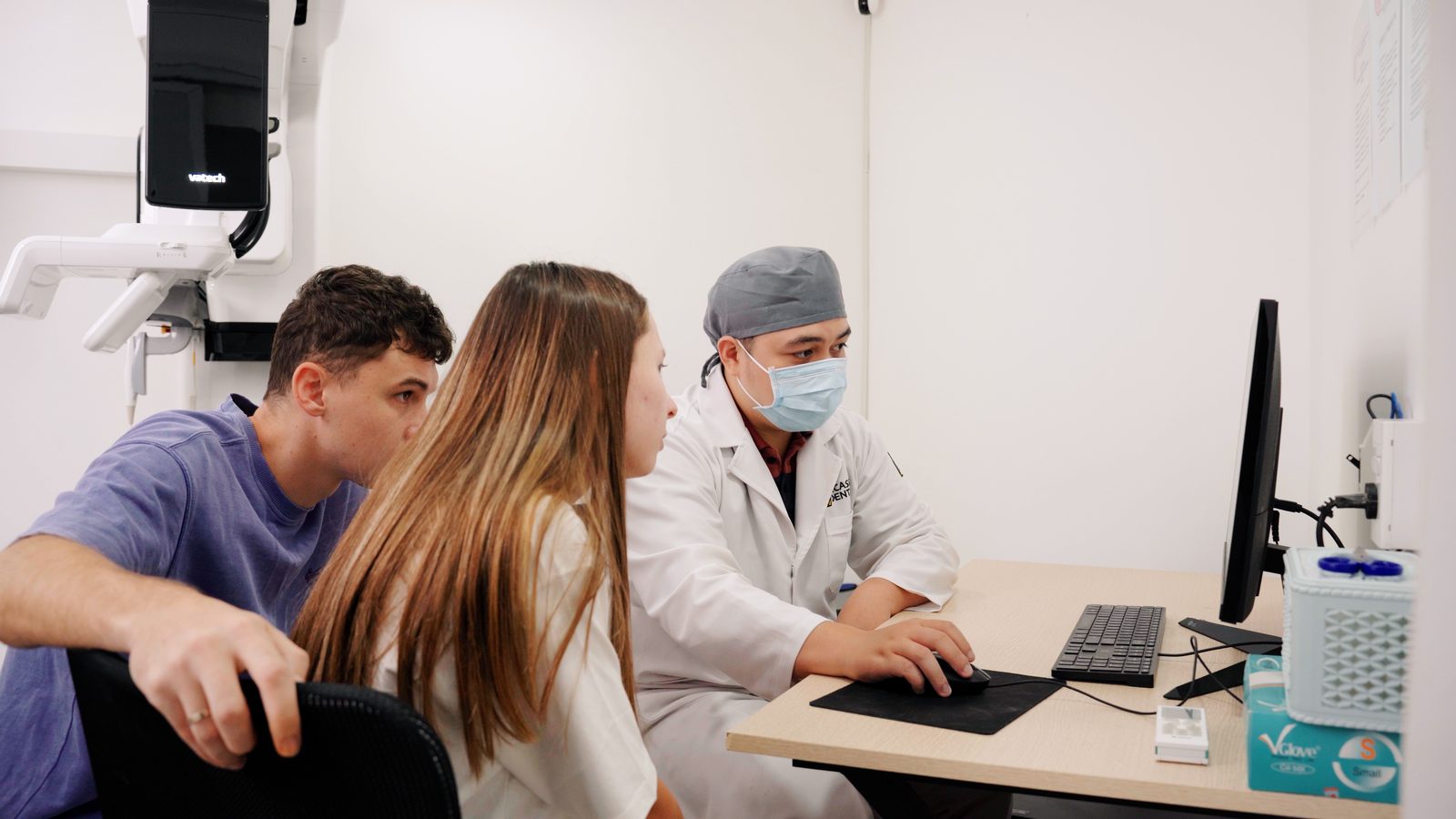
"Making the decision to go to Hanoi and have the dental treatment done by Picasso was one of the best decisions I have taken for a long time. I not only received top class dental care, it was so cost effective in comparison to having all this work undertaken at an Australian dental practice."
Gerald Mair, Hanoi Old Quarter, Google review
Planning the transition to a permanent implant
The conversation about timing for a permanent implant should begin well before the patient reaches adulthood. Starting growth monitoring in the early teens, with serial X-rays every six to twelve months, means that the moment growth stabilises, we can move quickly into implant planning rather than starting the assessment from scratch.
Bone volume assessment using CBCT cone beam imaging is performed at the point of implant planning to determine whether the preserved socket has maintained adequate width and height for the implant fixture. In cases where some bone loss has occurred despite preservation efforts, a bone graft prior to or simultaneous with implant placement addresses the deficit. This is a predictable, well-established procedure at Picasso Dental across all six branches.
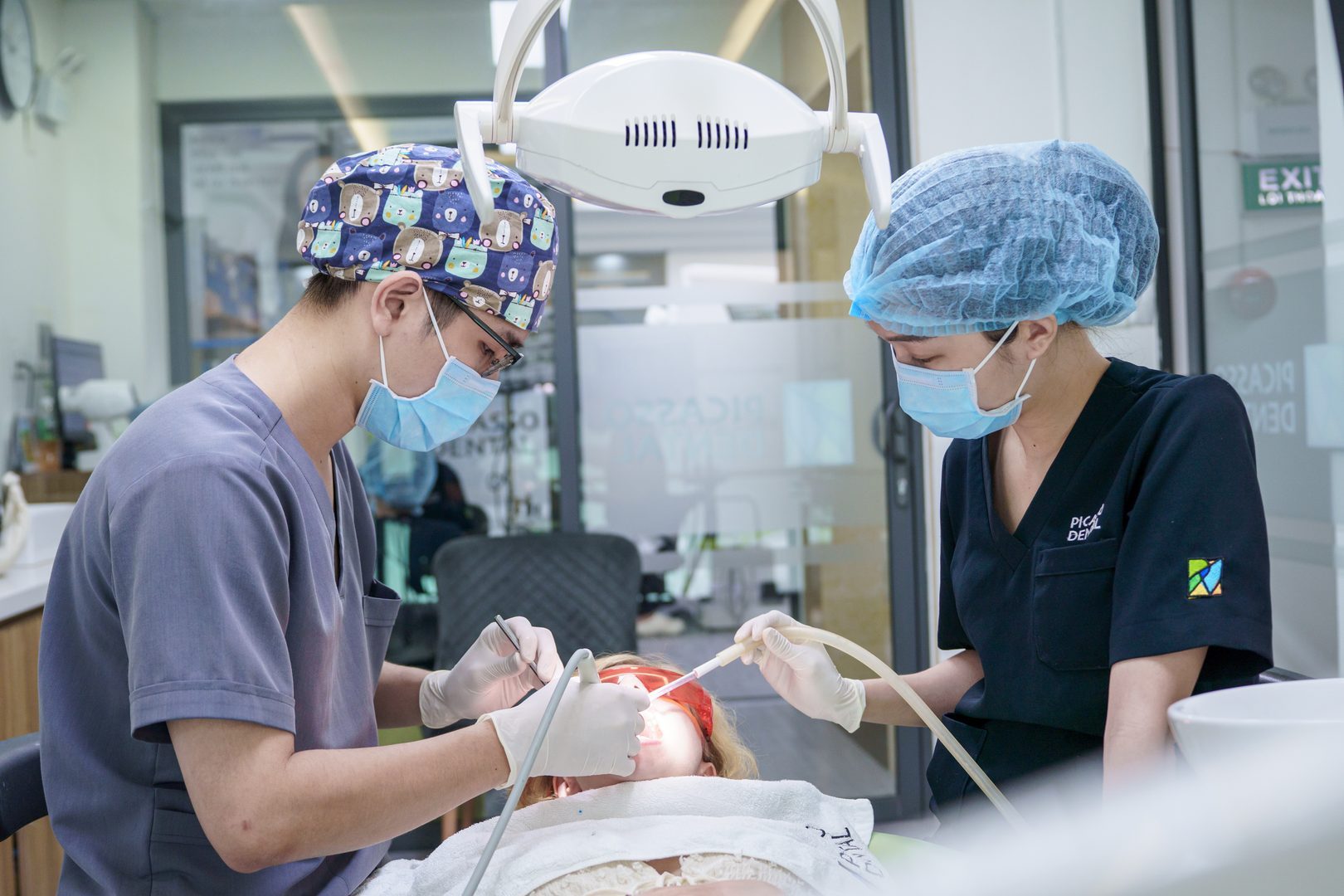
The long view matters here. An implant placed at the right time, in adequate bone, with appropriate crown aesthetics, can last 30, 40, or 50 years. That outcome is worth a period of patience and good interim care during adolescence. An implant placed prematurely has a near-certain outcome of requiring replacement, at greater total cost and clinical difficulty. The wait is the right clinical choice, and the interim solutions available today are genuinely good.
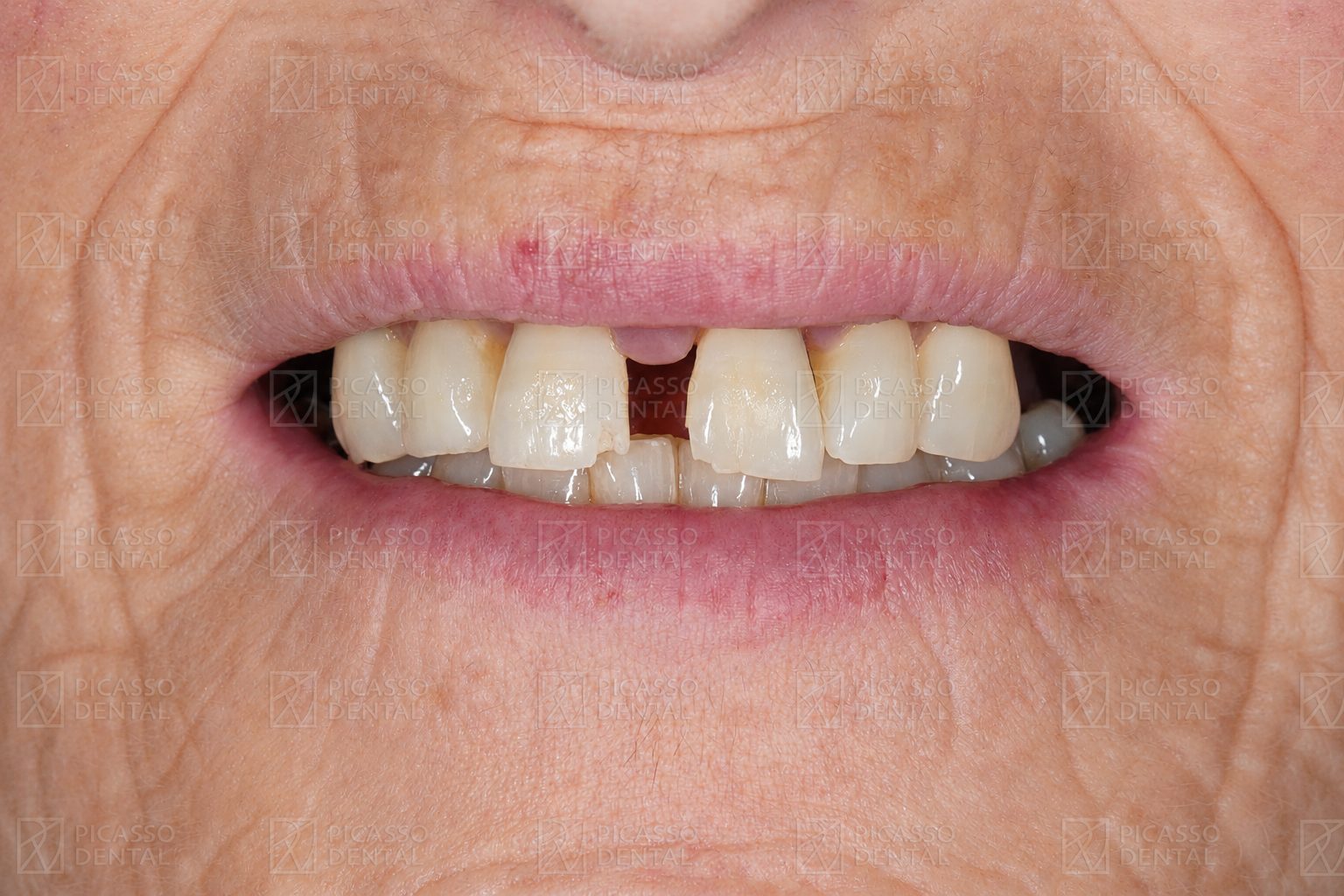 Before
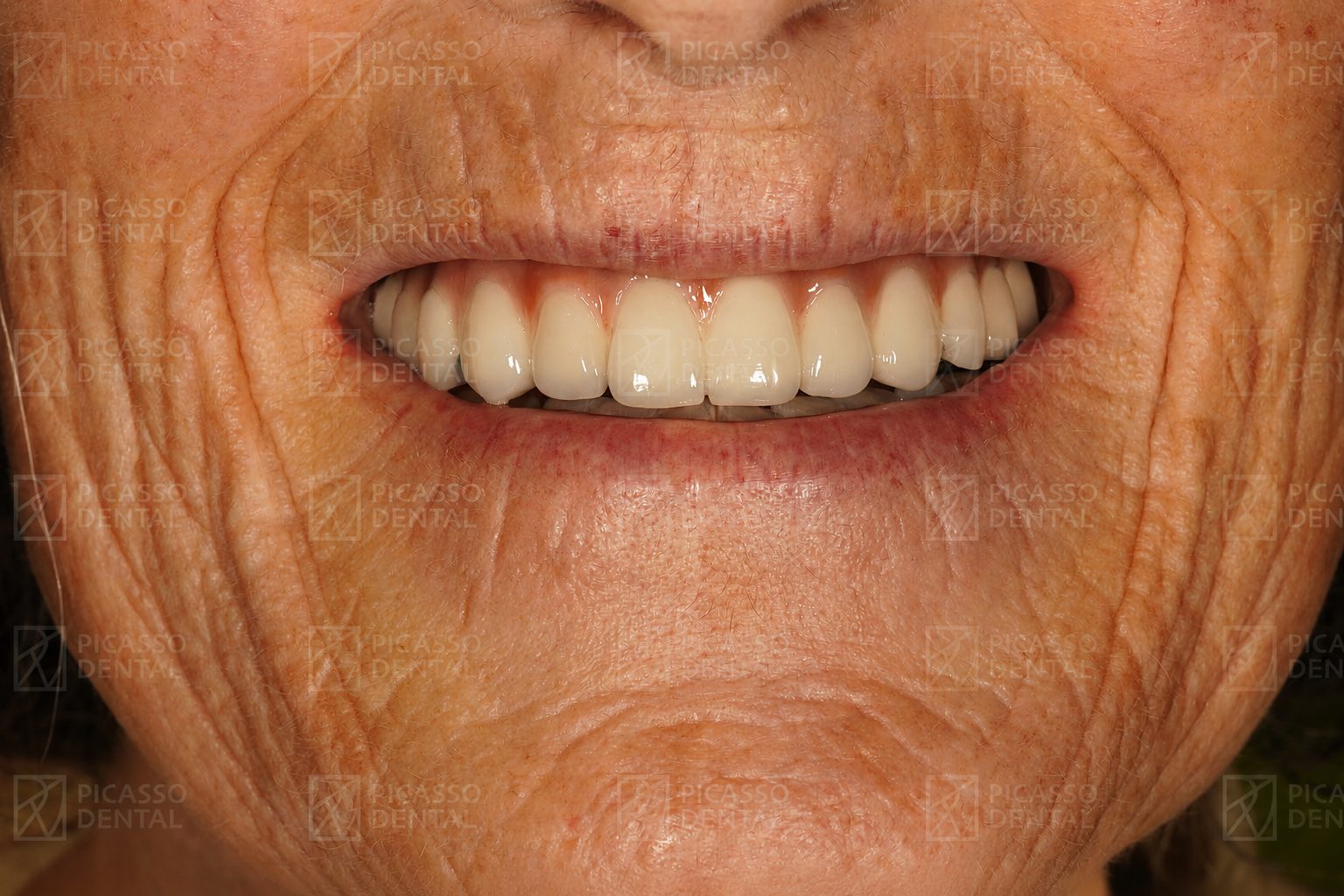 After
AfterFull rehabilitation, Hanoi Old Quarter
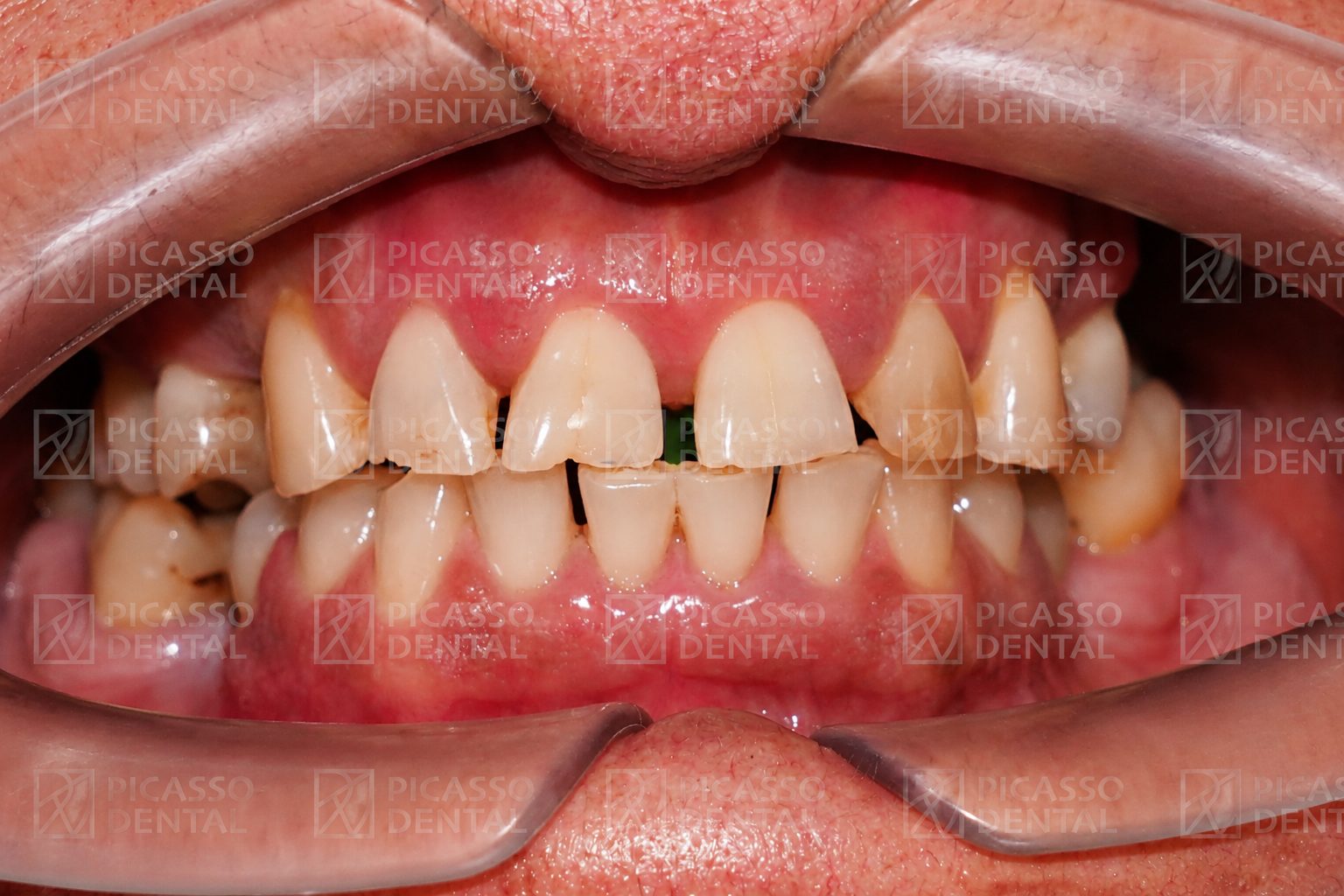 Before
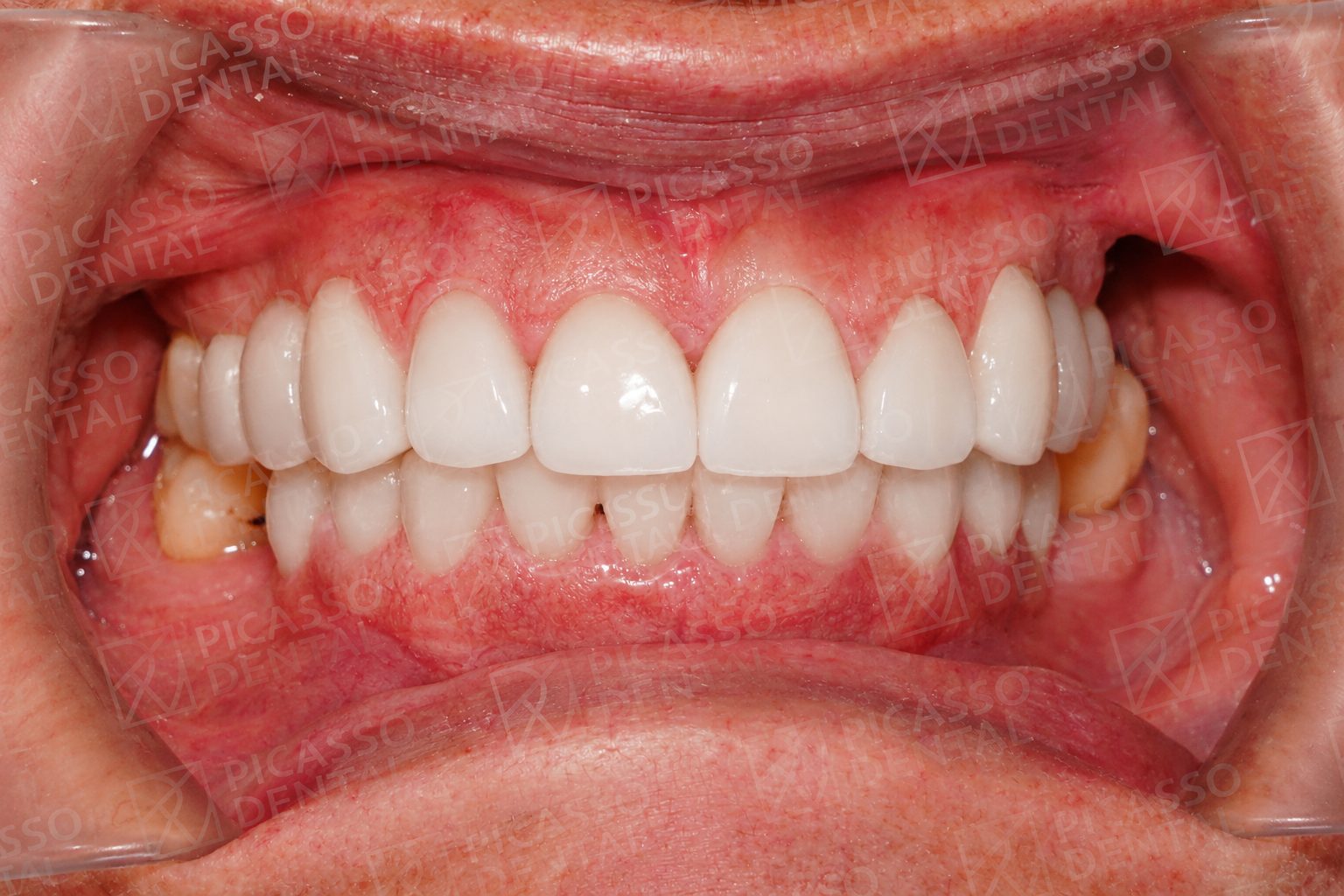 After
AfterPorcelain crowns, Da Nang
 Before
 After
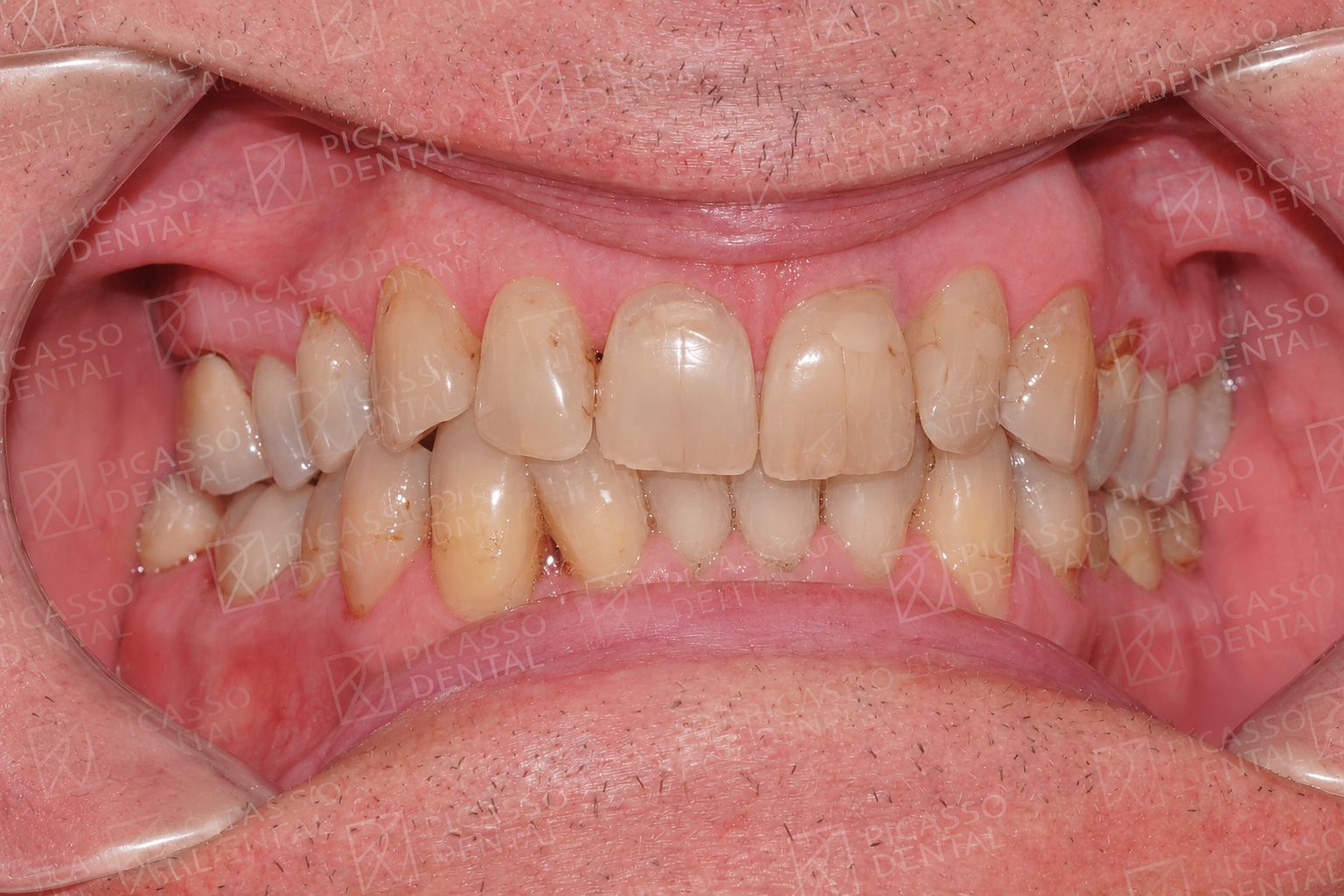
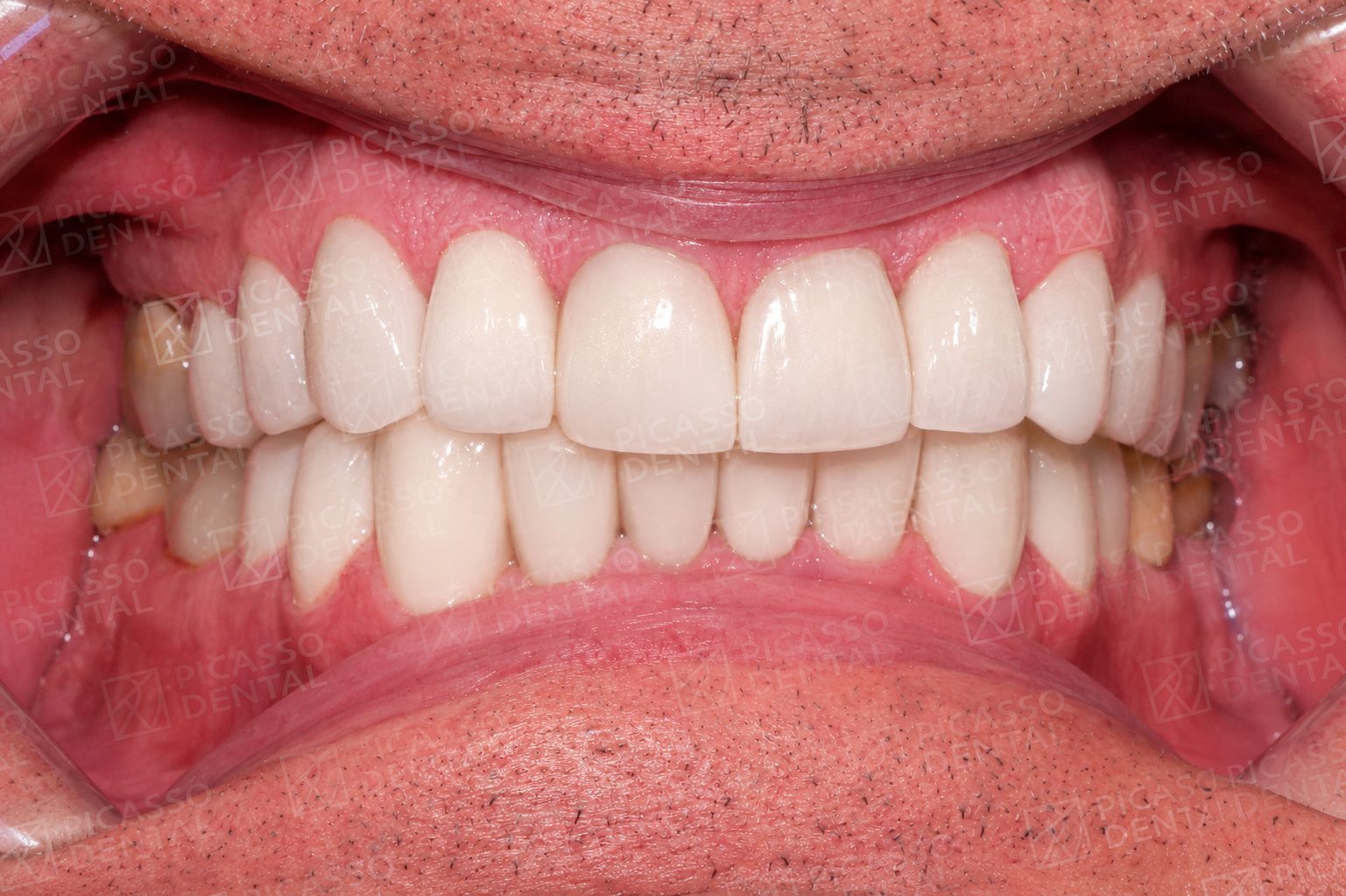
AfterCrown and implant, HCMC Thao Dien
 Before
 After
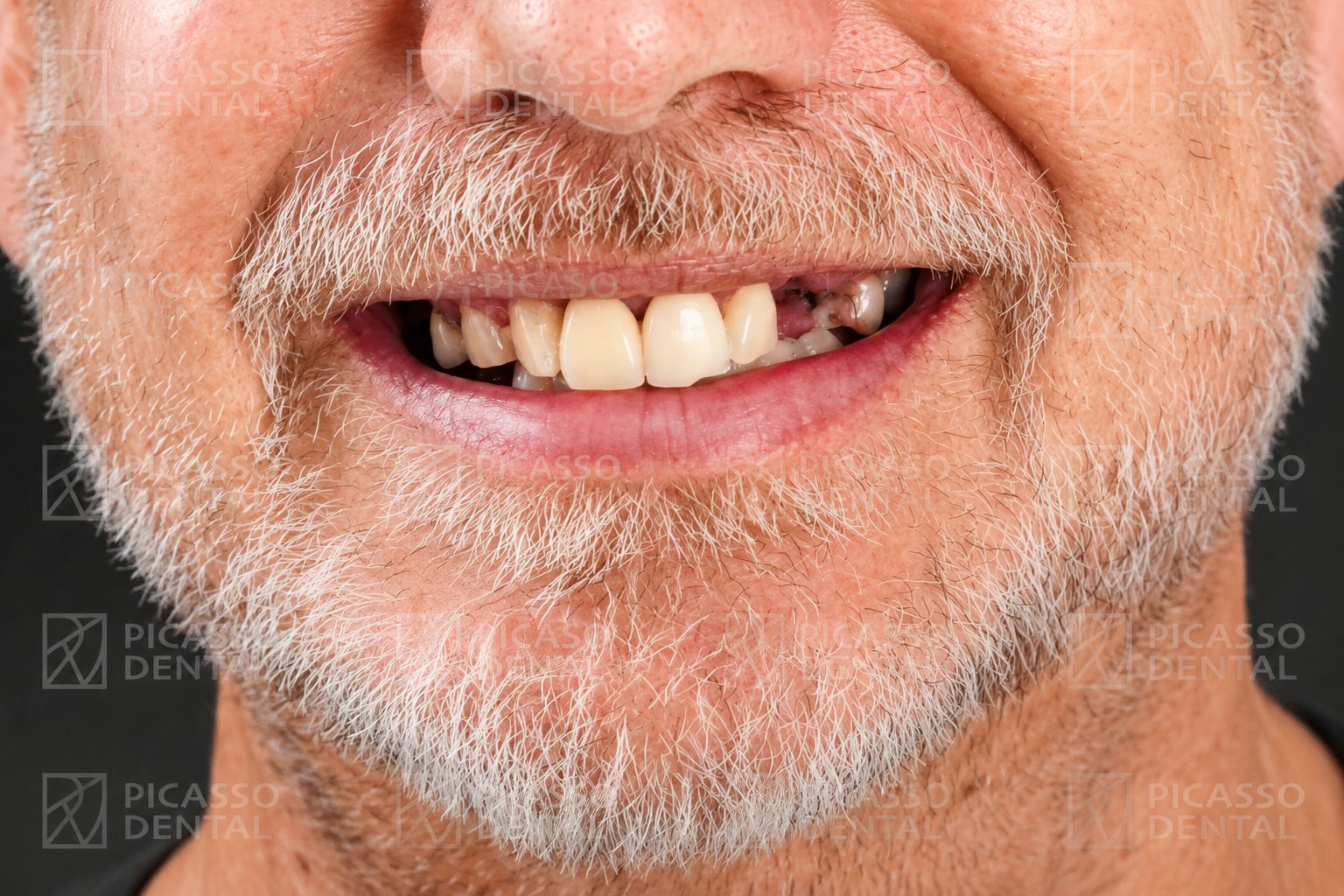
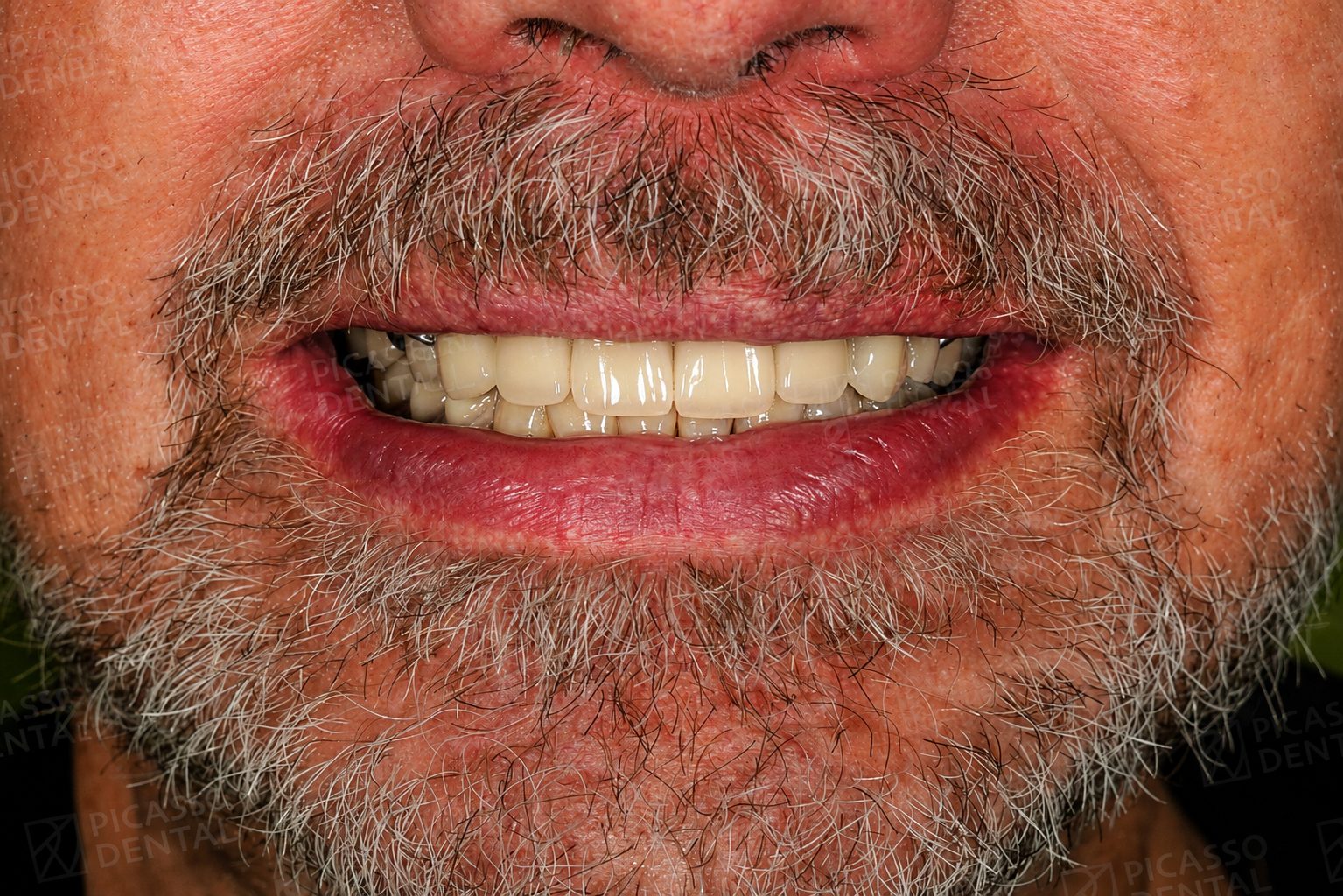
AfterCrown restoration, Hanoi Westlake
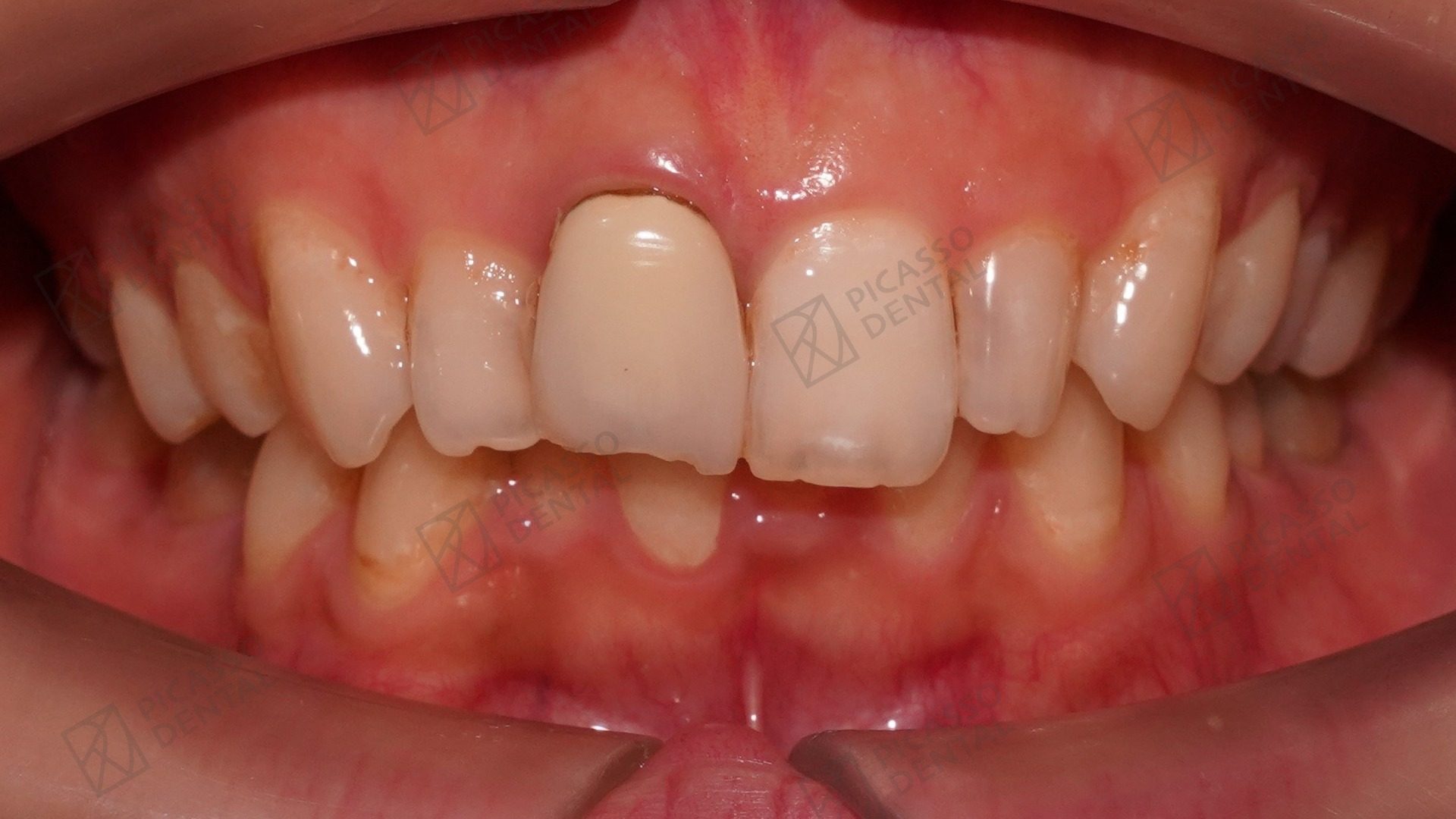 Before
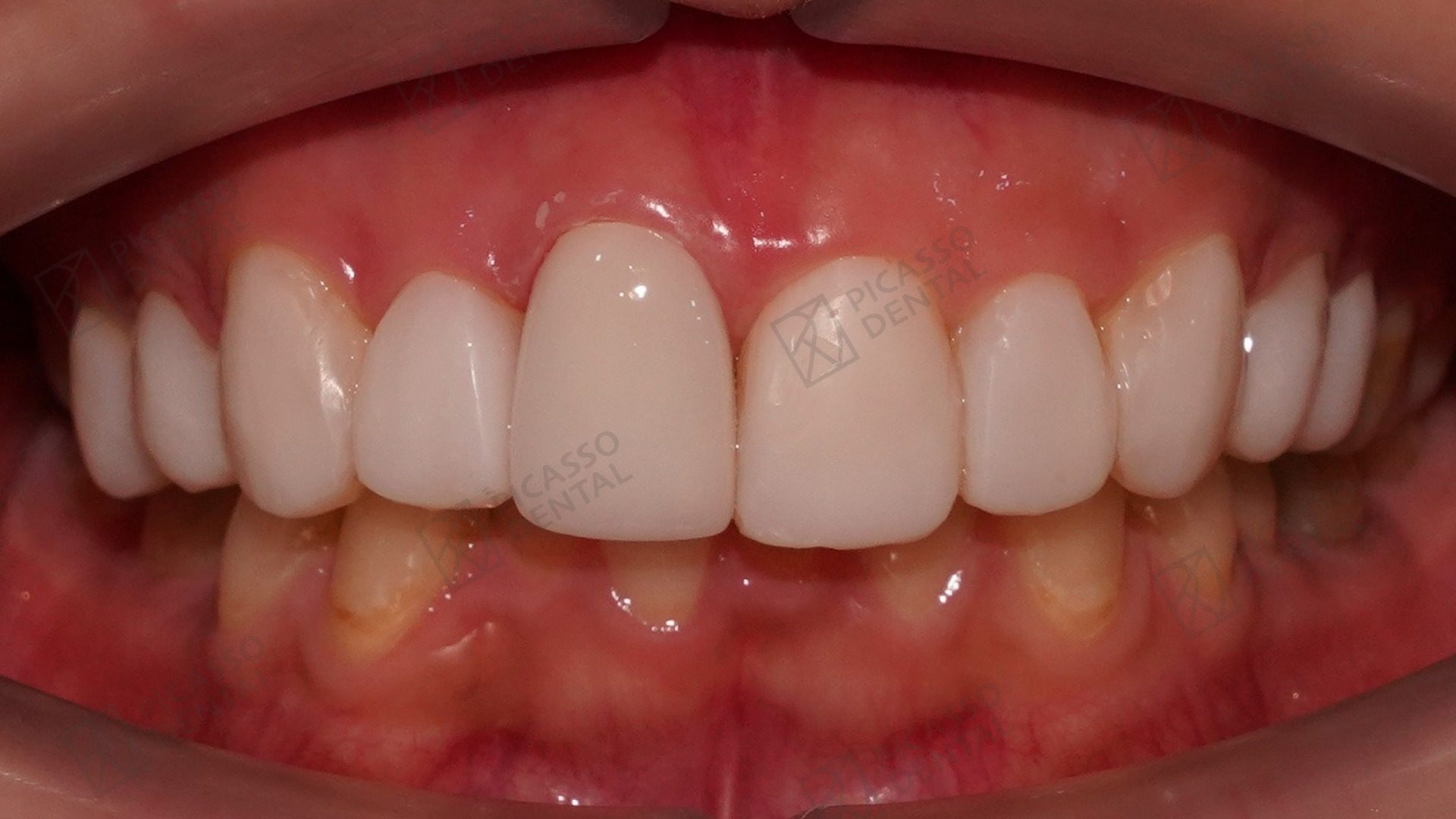 After
AfterSmile restoration, Da Nang Flagship
Frequently asked questions
Can children get dental implants?
No, not safely. A dental implant becomes fixed to the jawbone through osseointegration and cannot move. A child's jaw continues growing until the late teens or early twenties, so an implant placed too early ends up in the wrong position as the surrounding bone grows around it. The implant crown appears sunken or misaligned compared to adjacent natural teeth that have continued erupting. Correction requires removing the implant, bone grafting, and starting over once growth is complete.
At what age can a teenager get a dental implant?
For girls, jaw growth is usually complete between ages 16 and 18. For boys, growth typically continues until ages 18 to 21, sometimes longer. At Picasso Dental, we never rely on age alone: we take hand-wrist X-rays to assess skeletal maturity and compare serial dental X-rays to confirm growth has stopped before placing any implant in a young patient.
What should a child do while waiting to be old enough for an implant?
There are several good temporary solutions. A removable partial denture replaces the missing tooth and can be adjusted as the jaw grows. A resin-bonded bridge attaches to adjacent teeth with minimal preparation and provides a fixed option for older adolescents. An orthodontic space maintainer holds the gap open so the implant site is preserved. Bone socket preservation at extraction time protects the volume of bone that will be needed later.
Why is space maintenance so important before an implant?
When a tooth is lost, adjacent teeth begin drifting into the gap within months. If the space closes even partially before the implant is placed, restoring it requires orthodontic treatment, bone grafting, or both. Placing a space maintainer immediately after extraction prevents this and ensures the implant site remains properly sized for the future procedure.
Are there any exceptions where a child could get an implant earlier?
In rare cases of congenital hypodontia or oligodontia, where many permanent teeth are missing and jaw development is already significantly affected, implants might be considered earlier as part of comprehensive rehabilitation. Even then, growth assessment must confirm adequate skeletal maturity in the specific jaw region. These are rare clinical exceptions, not a general rule.
Does bone preserve itself while waiting for an implant?
No. After a tooth is lost, the jawbone in that area begins resorbing within weeks. Over months and years, significant bone volume can be lost. Bone socket preservation at the time of extraction, which involves placing bone graft material in the empty socket, significantly slows this process and makes future implant placement simpler and more predictable.
How much does a dental implant cost at Picasso Dental Clinic?
Implant costs at Picasso Dental Clinic depend on the implant system selected. Nobel Biocare and Straumann implants are available alongside Osstem. International patients routinely find that the total cost of travel and treatment in Vietnam is significantly less than the equivalent procedure in Australia, New Zealand, or the UK. A written itemised quote is provided before any procedure begins.
Start Here
Start with a brief.
Tell us your child's situation and we will assess growth readiness, recommend the right interim solution, and give you a clear timeline for permanent implant placement, with no obligation.