
Porcelain Veneers
Veneers and Bruxism:
What grinders need to know first
Bruxism does not automatically disqualify you from veneers, but it raises the risk significantly. Here is an honest assessment of who can proceed and who should choose a different restoration.

The short version
- Bruxism generates grinding forces up to five times higher than normal chewing, which porcelain veneers were not designed to absorb.
- Mild bruxism controlled with a custom nightguard is compatible with veneers for committed patients.
- Severe or uncontrolled grinding makes veneers a poor investment: they can chip or debond within months.
- Full-coverage zirconia crowns are a far better option for heavy grinders needing cosmetic restoration.
- Identifying and treating the underlying cause of grinding (sleep apnoea, bite problems, stress) can improve prognosis before any restoration is placed.
Why bruxism is a serious problem for veneers
Bruxism generates enormous forces that porcelain veneers were not designed to withstand. Normal chewing produces roughly 40 to 70 pounds of pressure per square inch. Grinding and clenching can generate 250 to 300 pounds or more, concentrated in lateral movements that drag across the veneer surface and edges rather than the straightforward vertical load of biting.
Veneers are thin shells of porcelain bonded to the front surface of teeth. That thinness is deliberate: it minimises the amount of natural enamel that must be removed to seat them. But thin porcelain under repetitive lateral stress develops micro-cracks that propagate over time. Chips appear first at the incisal edges where grinding forces concentrate. In severe cases the entire veneer debonds or fractures.
I have seen beautiful veneers, placed with excellent technique using premium materials, destroyed within months by uncontrolled grinding. Placing veneers without addressing bruxism is like installing new floor tiles without fixing the subsidence underneath. The workmanship is fine; the conditions guarantee failure.
When veneers can work despite bruxism
Mild bruxism that is well controlled with a custom nightguard does not automatically disqualify you from veneers. The critical variables are grinding severity and your honest commitment to protection. If you grind occasionally, your wear patterns are mild, and you have a track record of wearing protective appliances, veneers can succeed.
Custom nightguards are non-negotiable for any grinding patient with veneers. These guards are fabricated from hard acrylic, fit precisely to your dental arch, and distribute grinding forces evenly across all teeth rather than concentrating them on individual veneers. The difference between a custom guard and an over-the-counter stock guard is significant: stock guards can actually increase grinding intensity and provide uneven force distribution.
The challenge I encounter most often is compliance. Many patients intend to wear nightguards but find them uncomfortable for the first few nights and abandon them. If you have tried nightguards previously and cannot wear them consistently, veneers are a poor investment regardless of grinding severity. I will tell you this directly at consultation rather than take your money and watch the veneers fail.
"I had four crowns, two cavities, and a root canal and it was as gentle and pain free as it could possibly be. More so than any dentist back in the states in my sixty years of seeing the dentist."
Kevin McCarthy, Hanoi Old Quarter
Better alternatives for severe grinders
Full-coverage crowns handle grinding forces far better than veneers. Crowns cover the entire tooth rather than just the front surface. This means grinding forces are distributed across a much larger bonded area, and the crown itself is substantially thicker than a veneer, giving the porcelain or zirconia material more structural depth to resist fracture.
Zirconia crowns are the strongest option for bruxism patients. Zirconia is harder than standard feldspathic porcelain and significantly more fracture-resistant under lateral loading. Modern monolithic zirconia looks very natural, particularly for back teeth. For front teeth where translucency and light interaction are critical, layered zirconia or lithium disilicate (E.max) provides stronger aesthetics while still offering better bruxism resistance than traditional veneers.
The trade-off is preparation depth. Crowns require more natural tooth structure to be removed than veneers. For patients whose teeth are already damaged by grinding, this is rarely a concern because the worn tooth structure has already been lost. For patients with healthy teeth, the additional removal is a real consideration to weigh honestly.
Veneers may be suitable when
- Grinding is mild and infrequent
- Nightguard is worn consistently every night
- Wear patterns show minimal existing damage
- Jaw muscles and joints are symptom-free
- Patient understands and accepts higher risk
Crowns or alternative recommended when
- Grinding is severe or nightly
- Teeth are already flattened or shortened
- Previous dental work has been broken by grinding
- Nightguard compliance is poor or inconsistent
- TMJ symptoms are present
Grind your teeth and want a better smile? A comprehensive assessment at Picasso Dental Clinic will map your wear patterns and propose the restoration with the best long-term prognosis for your specific jaw forces.
Book your assessmentTreating the cause before treating the teeth
Bruxism caused by identifiable, treatable factors is worth addressing before any cosmetic restoration is placed. Sleep apnoea is the most common correctable cause: the grinding pattern often occurs during arousals from apnoeic episodes and improves substantially when sleep apnoea is properly treated with CPAP or an oral appliance.
Malocclusion, where the teeth do not close evenly, creates uneven force distribution that can drive grinding. Orthodontic treatment or bite adjustment can redistribute loading more evenly and reduce bruxism intensity. Significant stress can also worsen grinding, and some patients benefit from physiotherapy, occlusal splints worn full-time, or Botulinum toxin injections into the masseter muscles to reduce grinding force while other measures take effect.
None of these approaches guarantee bruxism elimination, but reducing severity before placing any restoration improves the long-term prognosis. At Picasso Dental Clinic, the consultation for a grinding patient always includes a discussion of the underlying cause and the most appropriate protective strategy before we discuss what material to use for the restorations.
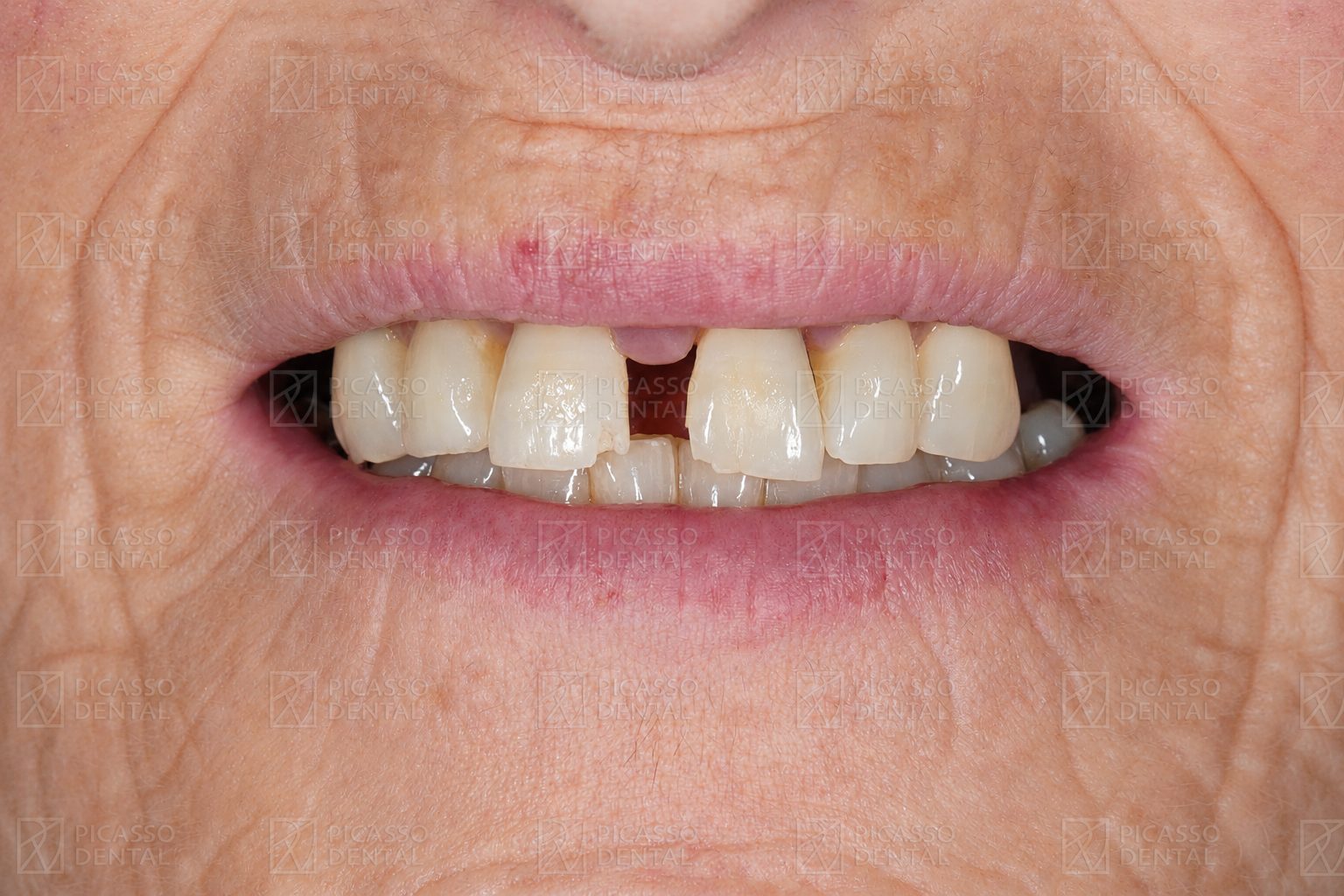 Before
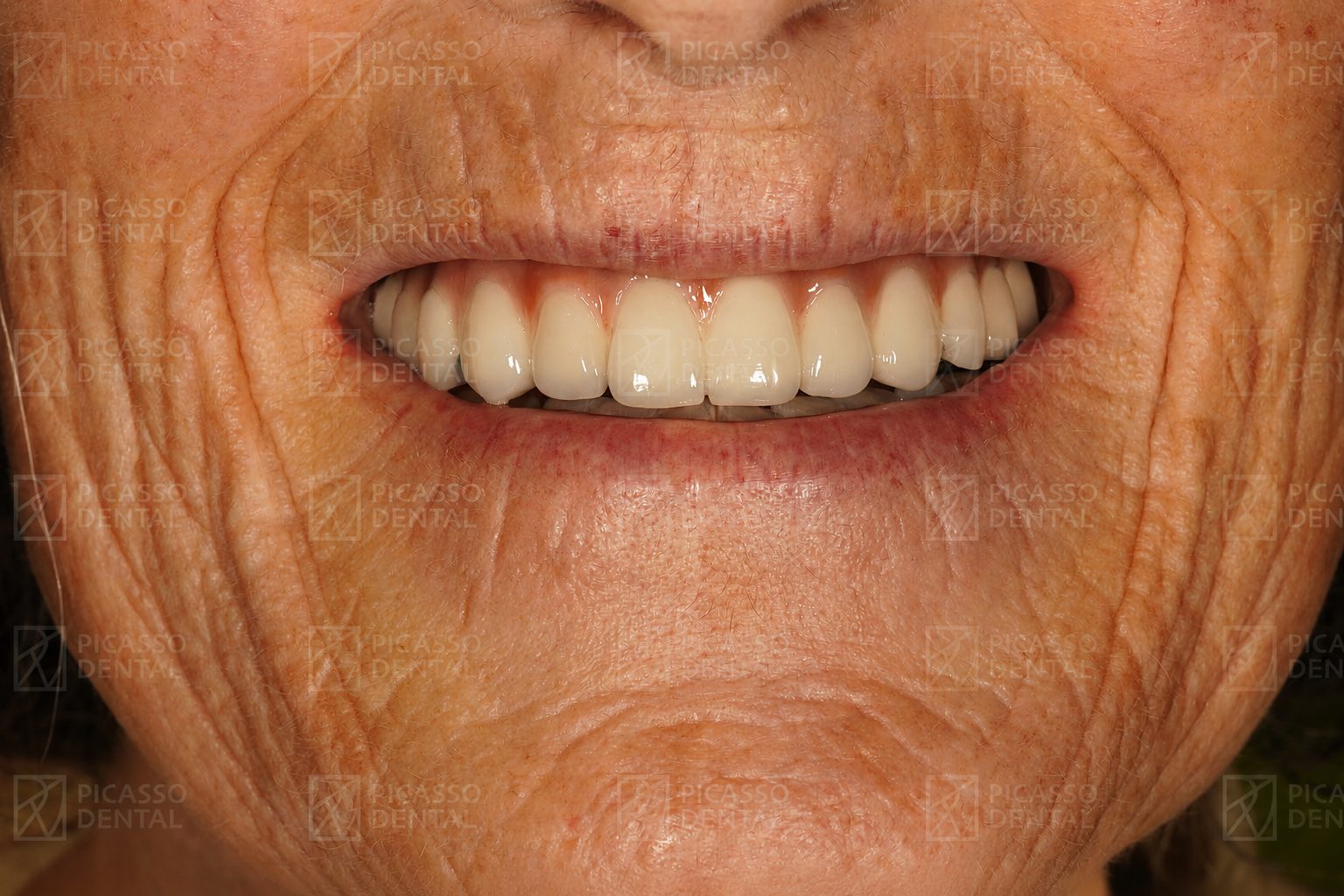 After
AfterFull rehabilitation, Hanoi Old Quarter
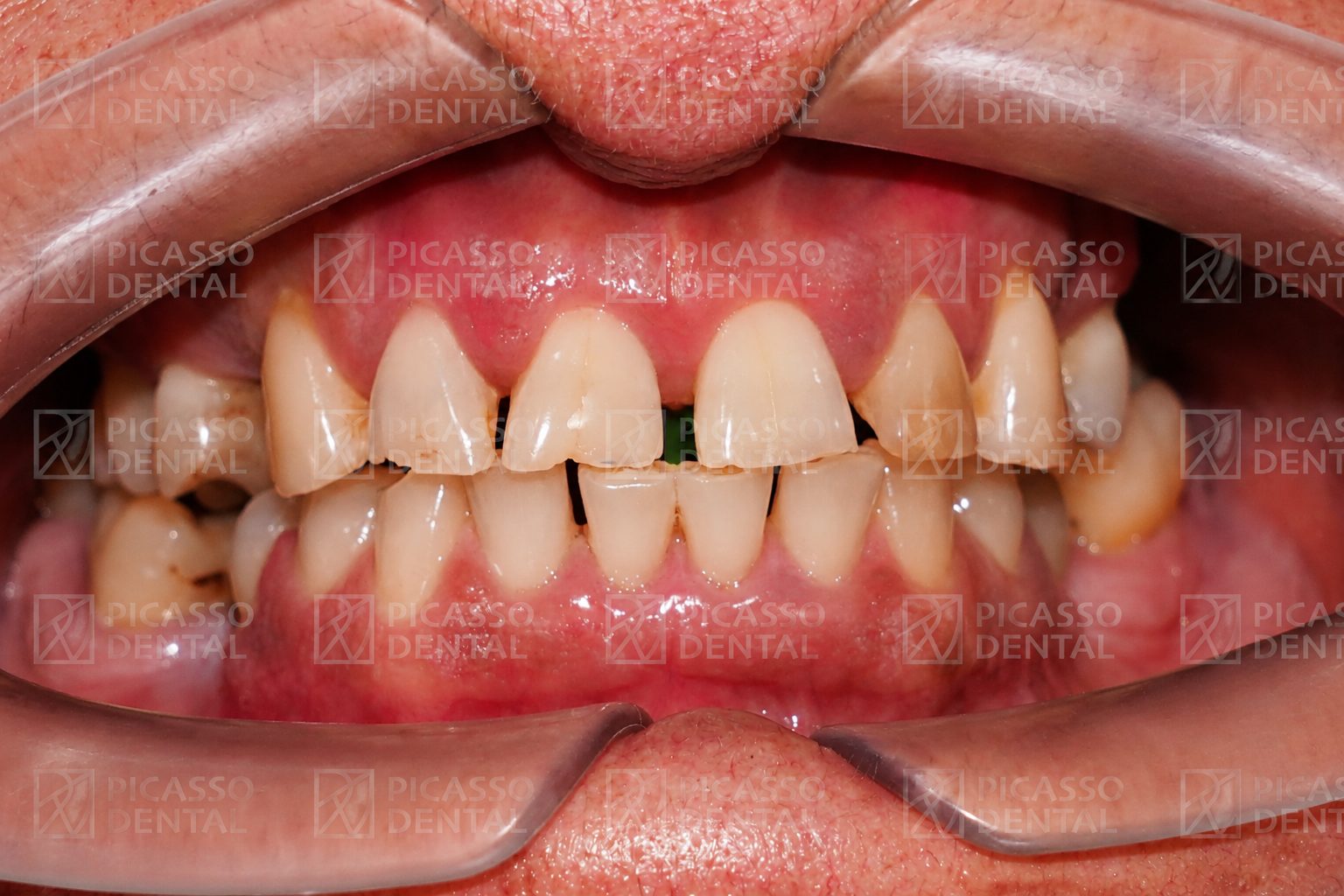 Before
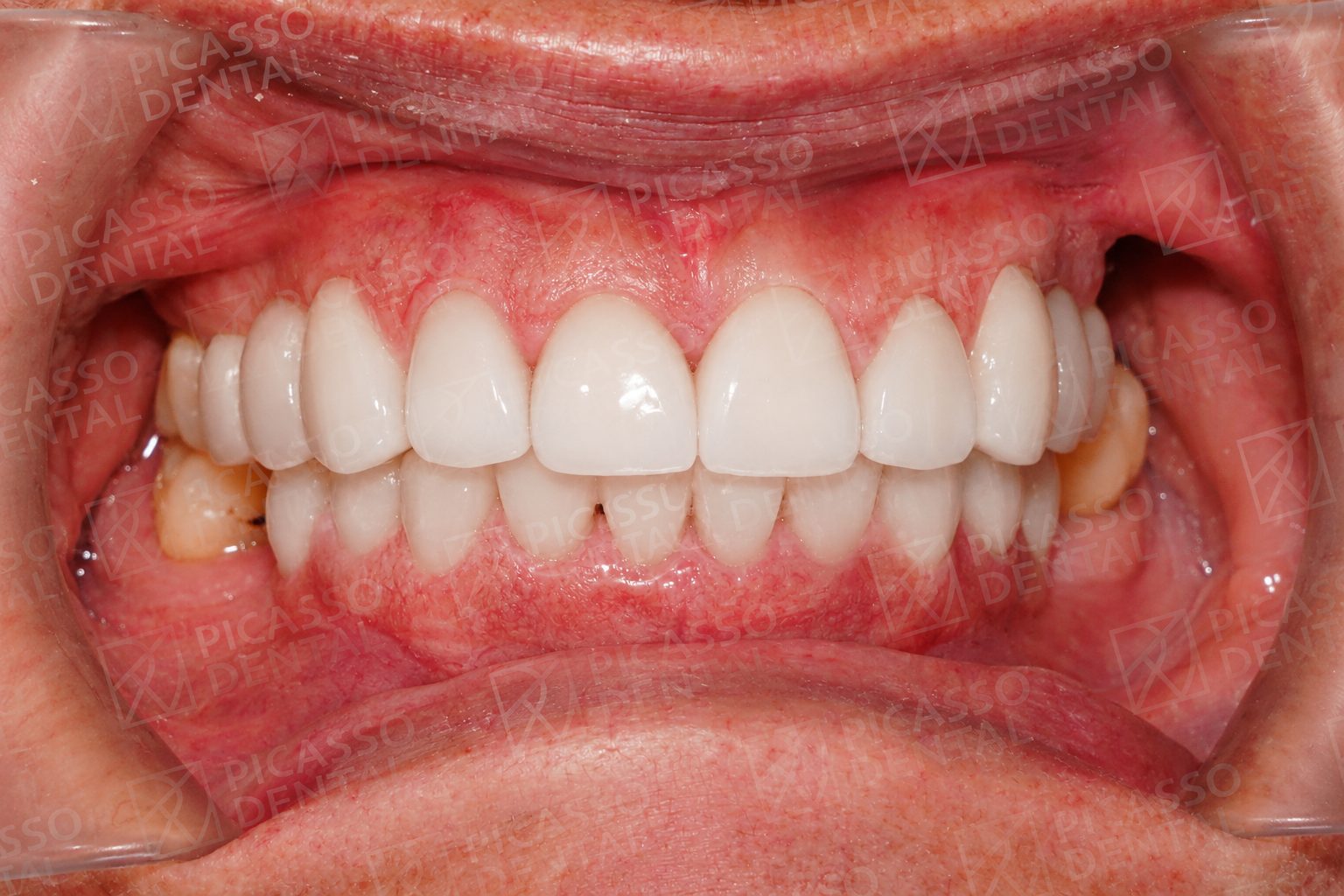 After
AfterPorcelain crowns, Da Nang
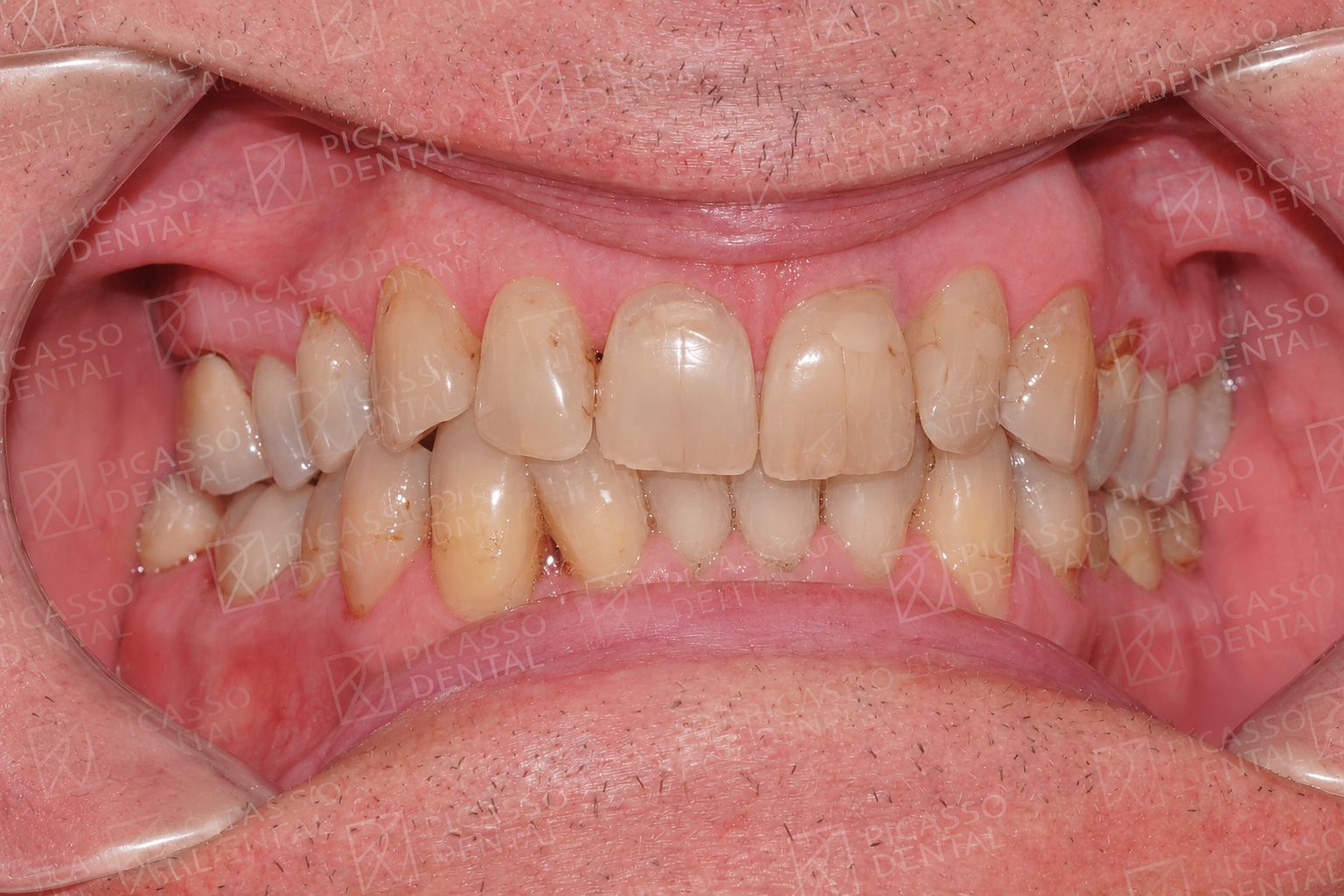 Before
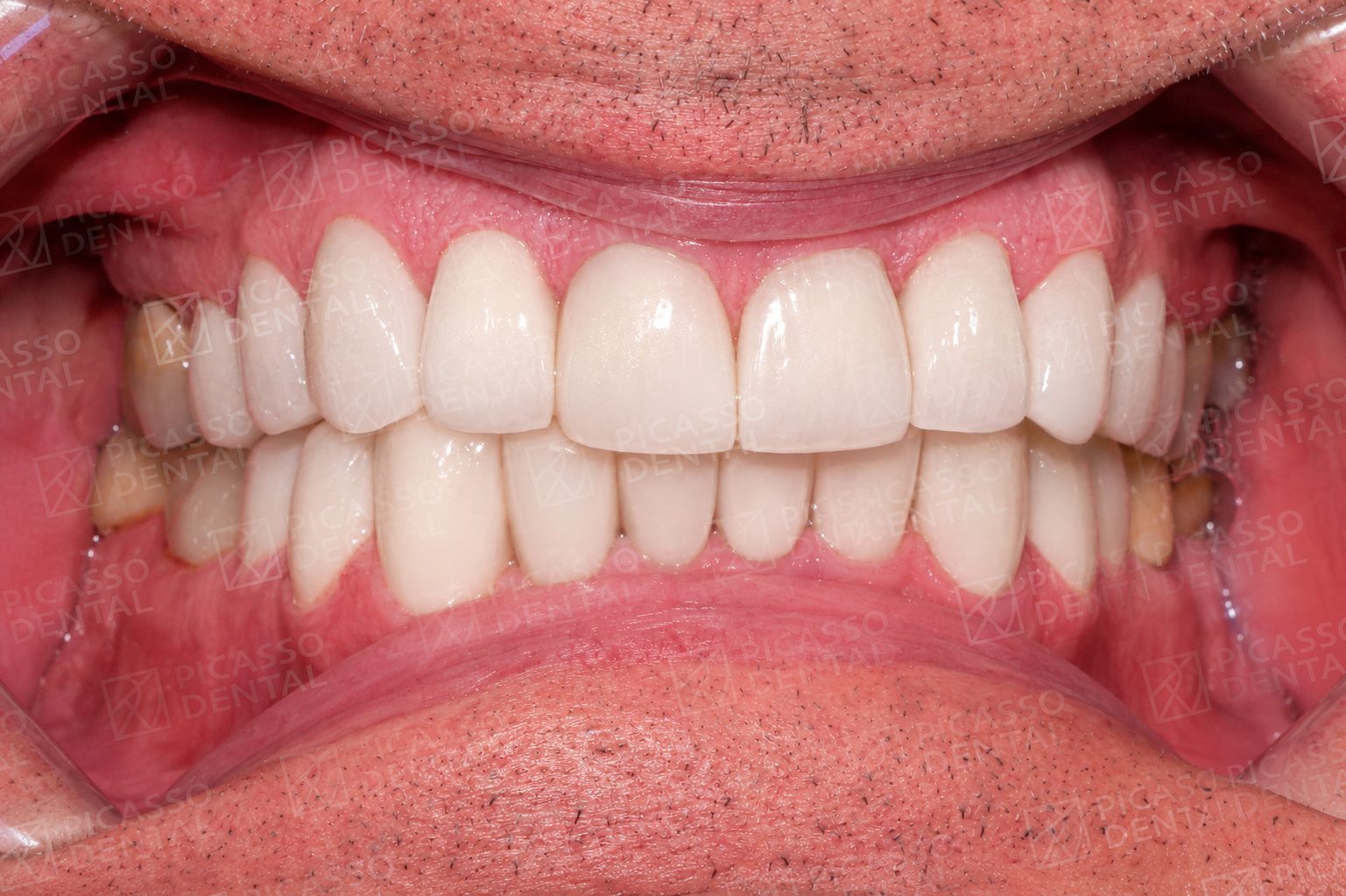 After
AfterCrown and implant, HCMC Thao Dien
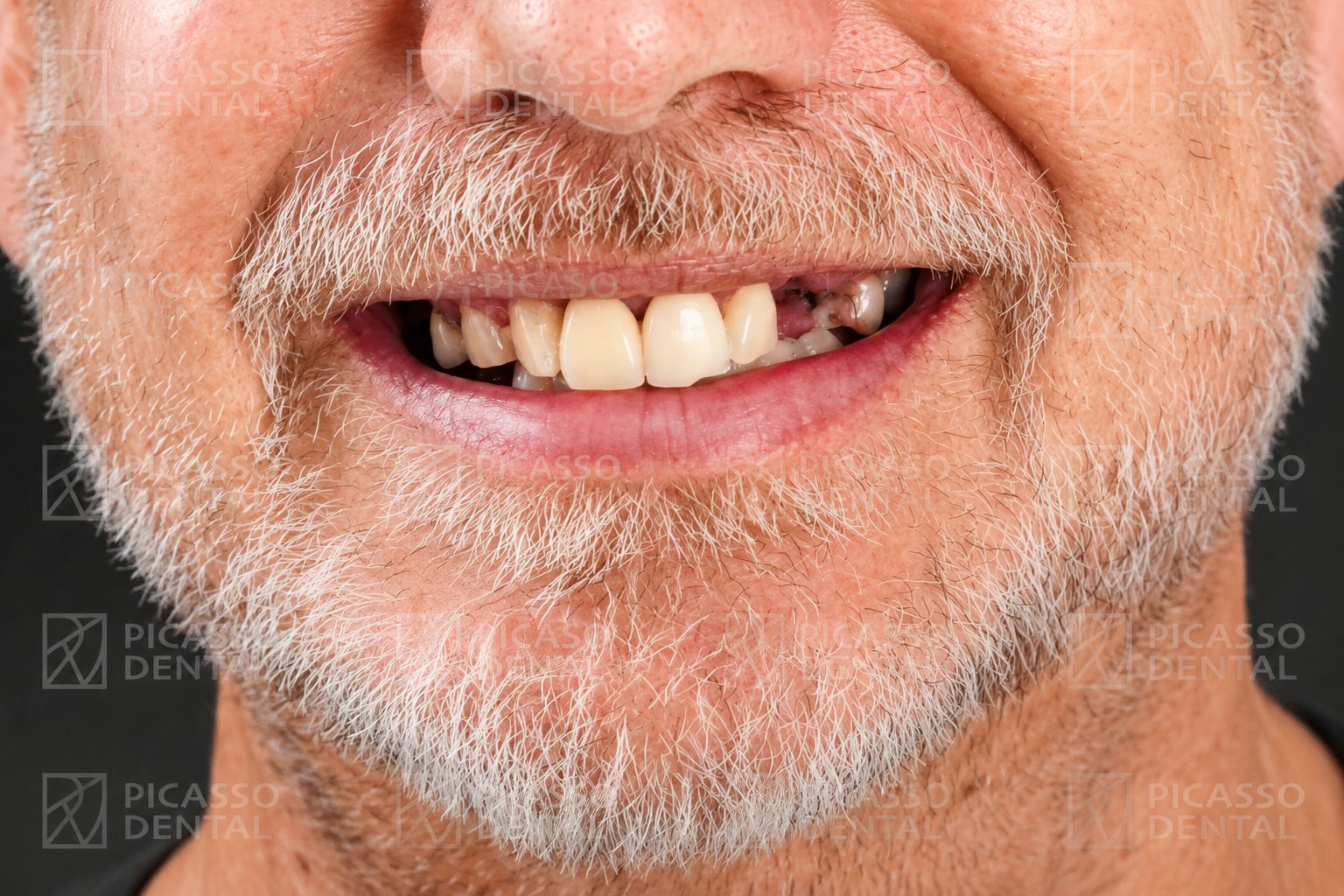 Before
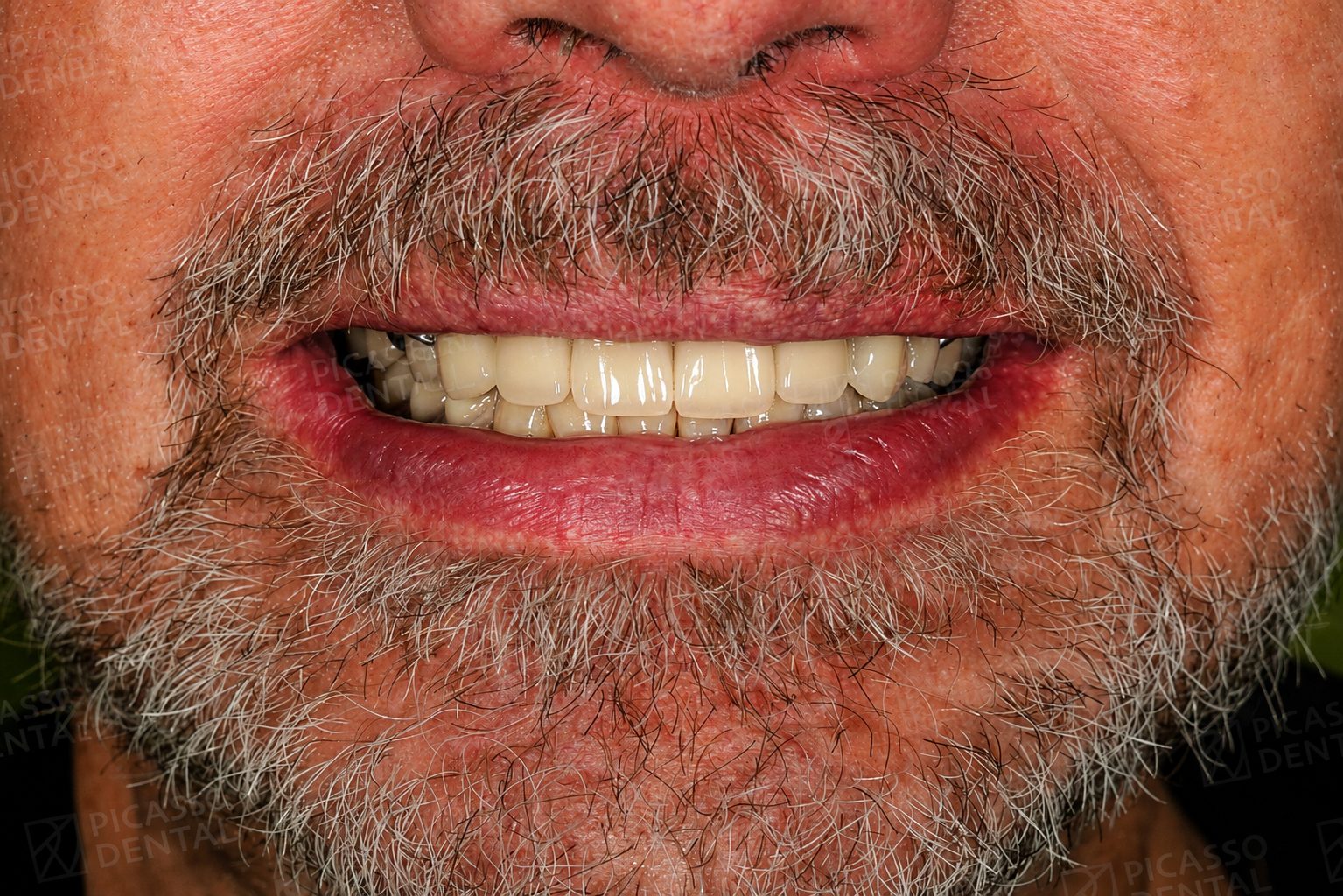 After
AfterCrown restoration, Hanoi Westlake
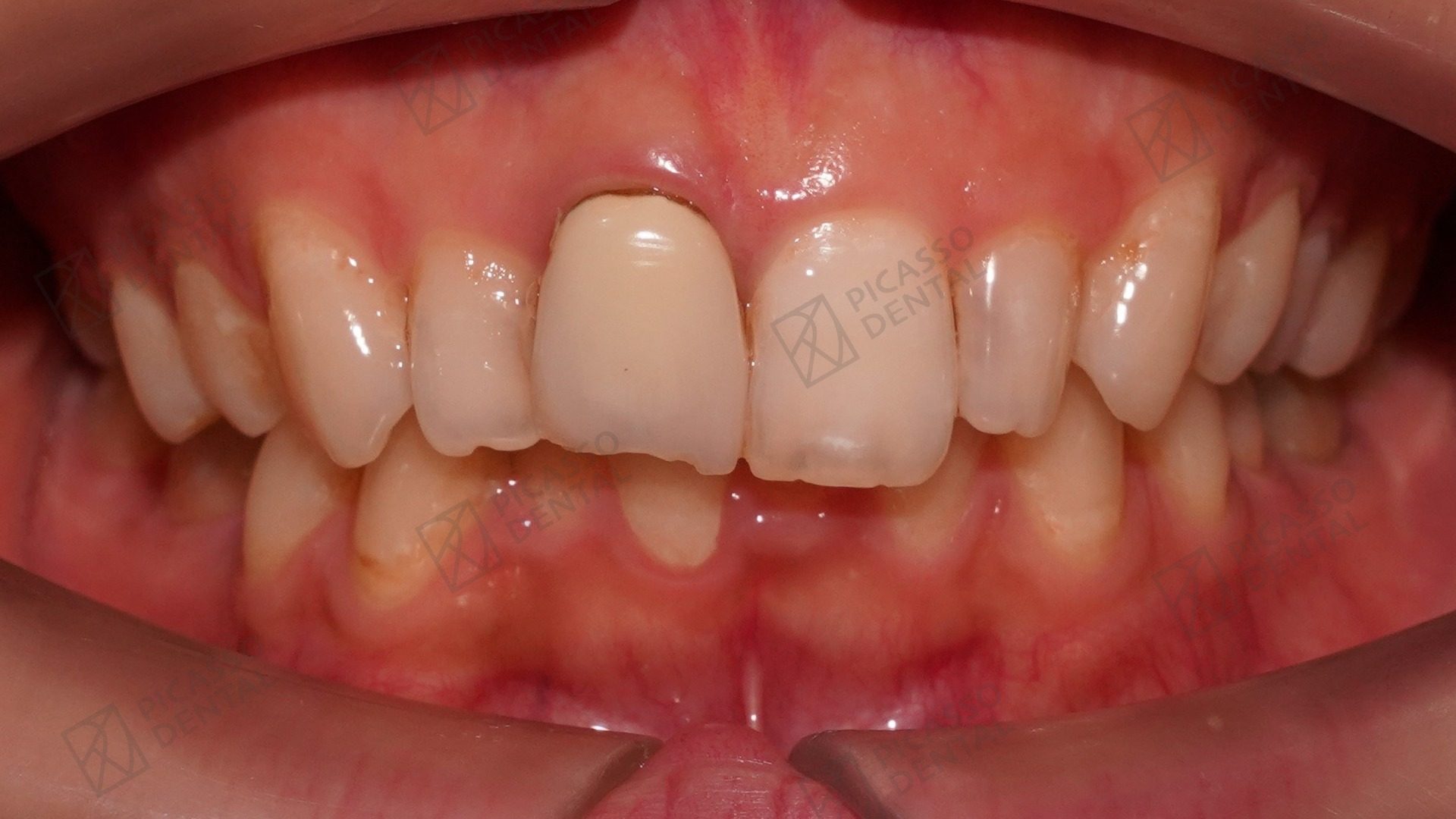 Before
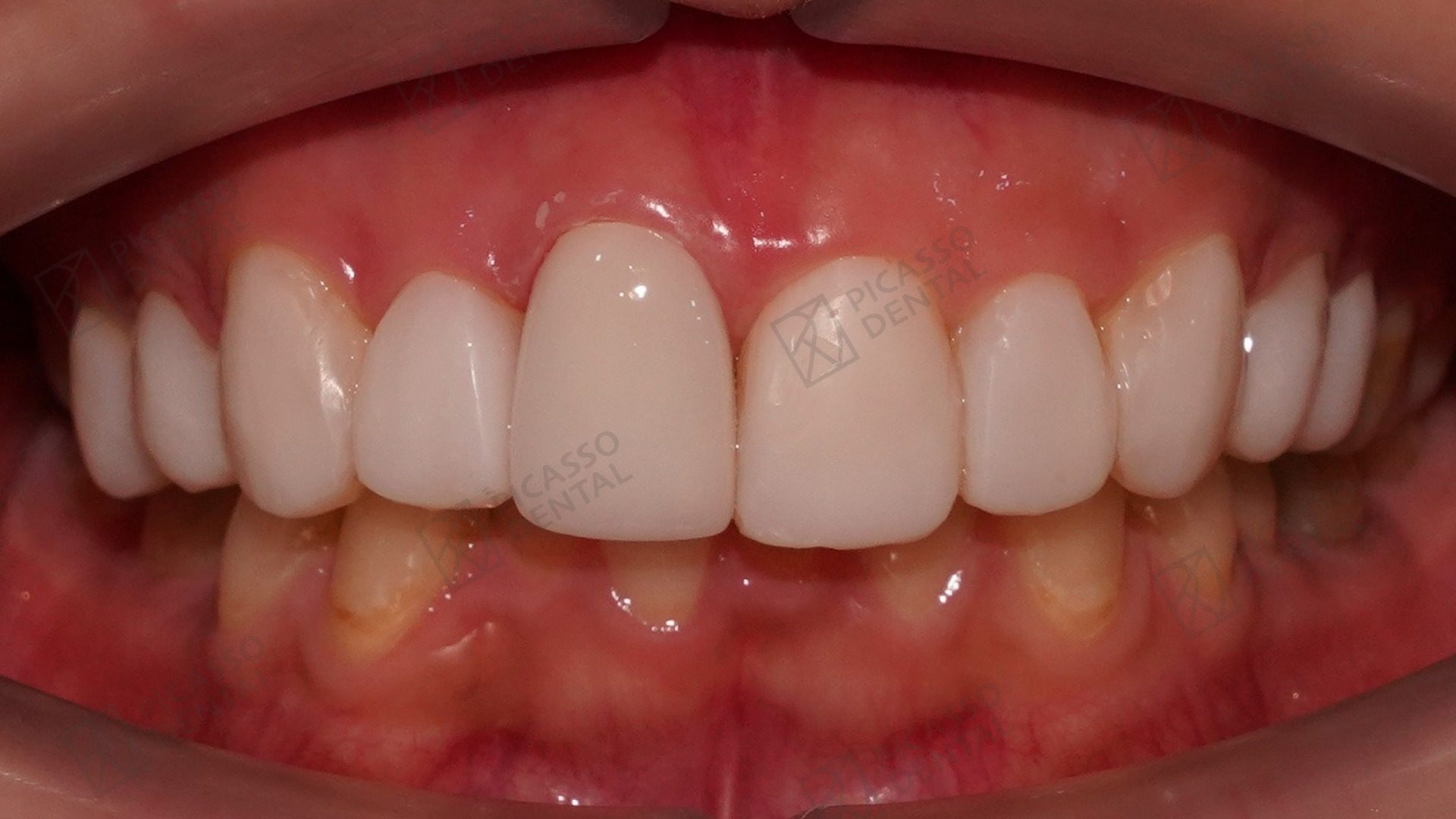 After
AfterSmile restoration, Da Nang Flagship
Frequently asked questions
Can I get porcelain veneers if I grind my teeth?
It depends on how severely you grind. Mild bruxism that is well controlled with a custom nightguard does not automatically disqualify you from veneers, provided you are committed to wearing the guard every night without exception. Severe, uncontrolled grinding makes veneers an extremely high-risk choice. The porcelain may fracture or debond within months rather than lasting the expected 10 to 15 years.
Why does bruxism damage veneers?
Bruxism generates lateral grinding forces of 250 to 300 pounds per square inch, far exceeding the 40 to 70 pounds of normal chewing. Veneers are thin shells bonded to the front surface of teeth. They are not designed to absorb repetitive lateral stress. The concentrated force at the incisal edges causes chips and cracks, and the bond between veneer and tooth can fail under repeated loading.
What is a nightguard and why is it mandatory for grinders?
A custom nightguard is a hard acrylic appliance that fits precisely over your teeth and creates a barrier between upper and lower arches while you sleep. It absorbs and redistributes grinding forces before they reach the veneer surface. For any grinding patient with veneers, a properly fitted nightguard is not optional. Stock nightguards from pharmacies do not protect veneers effectively because they do not distribute forces evenly.
What alternatives to veneers are better for severe grinders?
Full-coverage zirconia crowns are the strongest option for severe bruxism patients. They cover the entire tooth rather than just the front surface, distributing grinding forces over a larger area, and zirconia is significantly harder than porcelain. Composite bonding is another option for minor cosmetic improvements, as composite can be repaired easily and cheaply when it chips. For patients whose main concern is alignment rather than colour, orthodontics is entirely safe for grinders.
How do you assess whether my grinding is mild or severe?
During a consultation, Dr. Emily Nguyen examines the wear patterns on your existing teeth, checks for flattened biting surfaces, exposed dentin, and shortened incisors. Tender jaw muscles or temporomandibular joint symptoms indicate active clenching. Your history (waking with a sore jaw, partner reporting noise, previously broken teeth or restorations) is factored into the assessment. Where the picture is unclear, a CBCT scan evaluates joint health before any treatment decision.
If I get veneers and grind, will they be covered by warranty?
Veneers that fail due to grinding are typically not covered by a clinic warranty because the damage is caused by patient habit rather than material or placement failure. This is a significant financial risk. A veneer set placed on an uncontrolled grinder may need replacement within two to five years rather than lasting the expected 10 to 15 years, effectively doubling or tripling the long-term cost.
Can treating the cause of bruxism make veneers safe?
In some cases, yes. Bruxism caused by sleep apnoea often improves significantly when the sleep apnoea is treated. Grinding driven by malocclusion may improve after orthodontic correction or bite adjustment. Stress-related grinding can diminish with appropriate management. Where a treatable cause is identified, addressing it before veneer placement improves long-term prognosis. However, many patients have idiopathic grinding with no clear cause, and in those cases the nightguard remains the primary protective measure.
Patient Video Testimonial

Start Here
Start with a brief.
Tell us about your grinding history and your smile goals, and a dentist will reply with an honest assessment of the safest restoration route and a written plan within twenty-four hours. No obligation.