Dental Implants
A Beautiful Smile Restored:
Dental Implants for a
36-Year-Old Patient
Two damaged upper front teeth. Years of self-consciousness. A treatment plan involving socket preservation, staged implant placement, and all-ceramic crowns that returned full confidence. This is the case in full.

The short version
- Front tooth implants require 3D CBCT scanning before surgery to assess bone volume, density, and root anatomy of adjacent teeth.
- When bone volume is adequate, an implant can be placed at the time of extraction. When bone has been lost, socket preservation grafting rebuilds the site first.
- Temporary restorations are placed on the same day as surgery so the patient leaves with teeth.
- Final all-ceramic crowns are shade-matched and fabricated for natural translucency. When done well, they are indistinguishable from natural teeth.
- This case required two visits separated by a healing period. International patients manage this comfortably with the right trip structure.
The patient and her situation
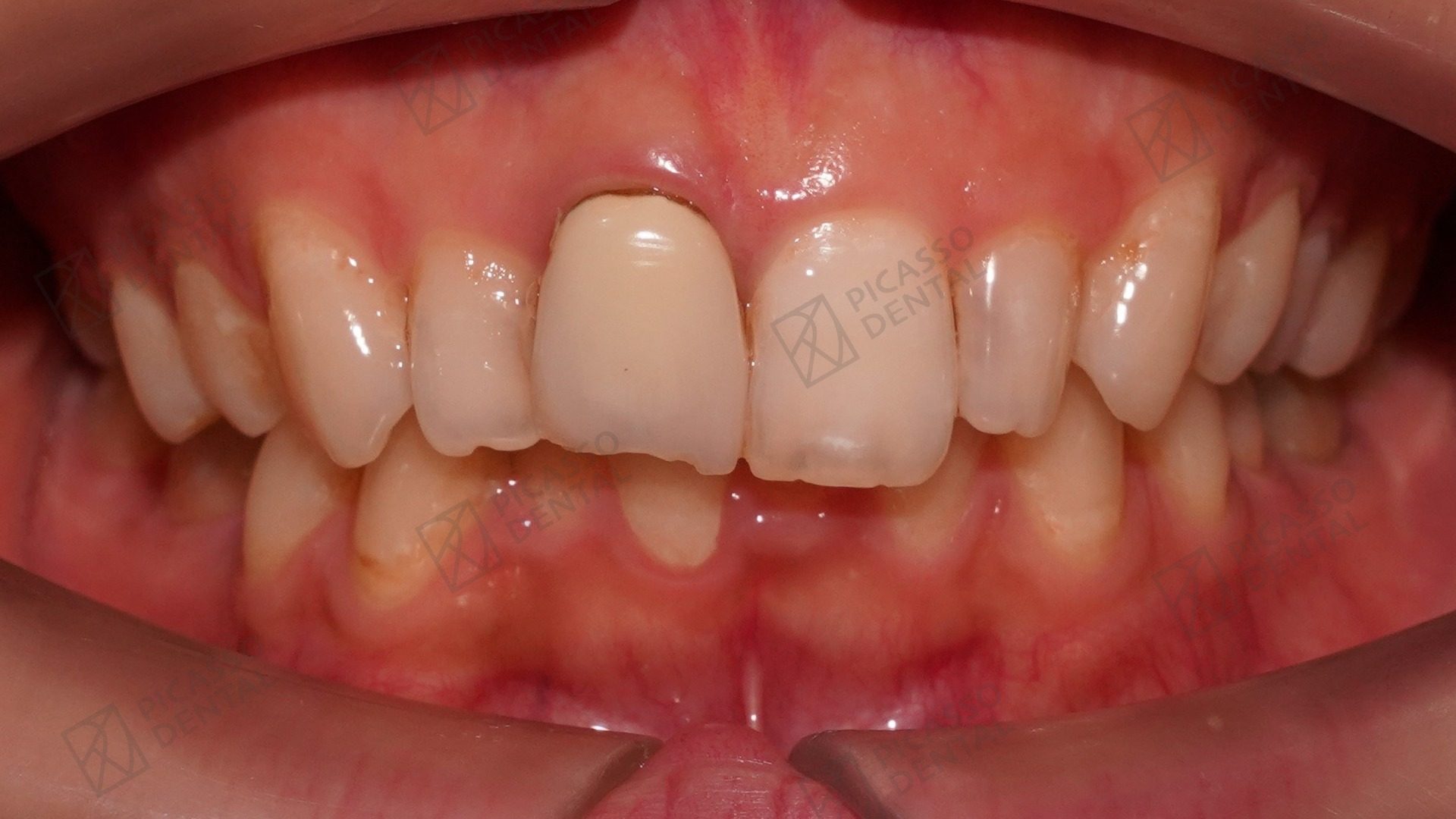
Our patient, a 36-year-old woman, came to Picasso Dental with significant damage to teeth 11 and 21, her two upper central incisors. These are the most visible teeth in the smile, and their condition had affected her confidence for years. One tooth had experienced trauma and undergone a root canal treatment that ultimately left the tooth structurally compromised. The adjacent tooth had severe decay that had progressed beyond what could be restored with a crown.
She had researched her options carefully before the consultation. She understood that a bridge was one possibility but had concerns about the long-term implications for the adjacent healthy teeth. She asked specifically about implants and whether they could produce a natural result in such a prominent location.
Assessment and treatment planning
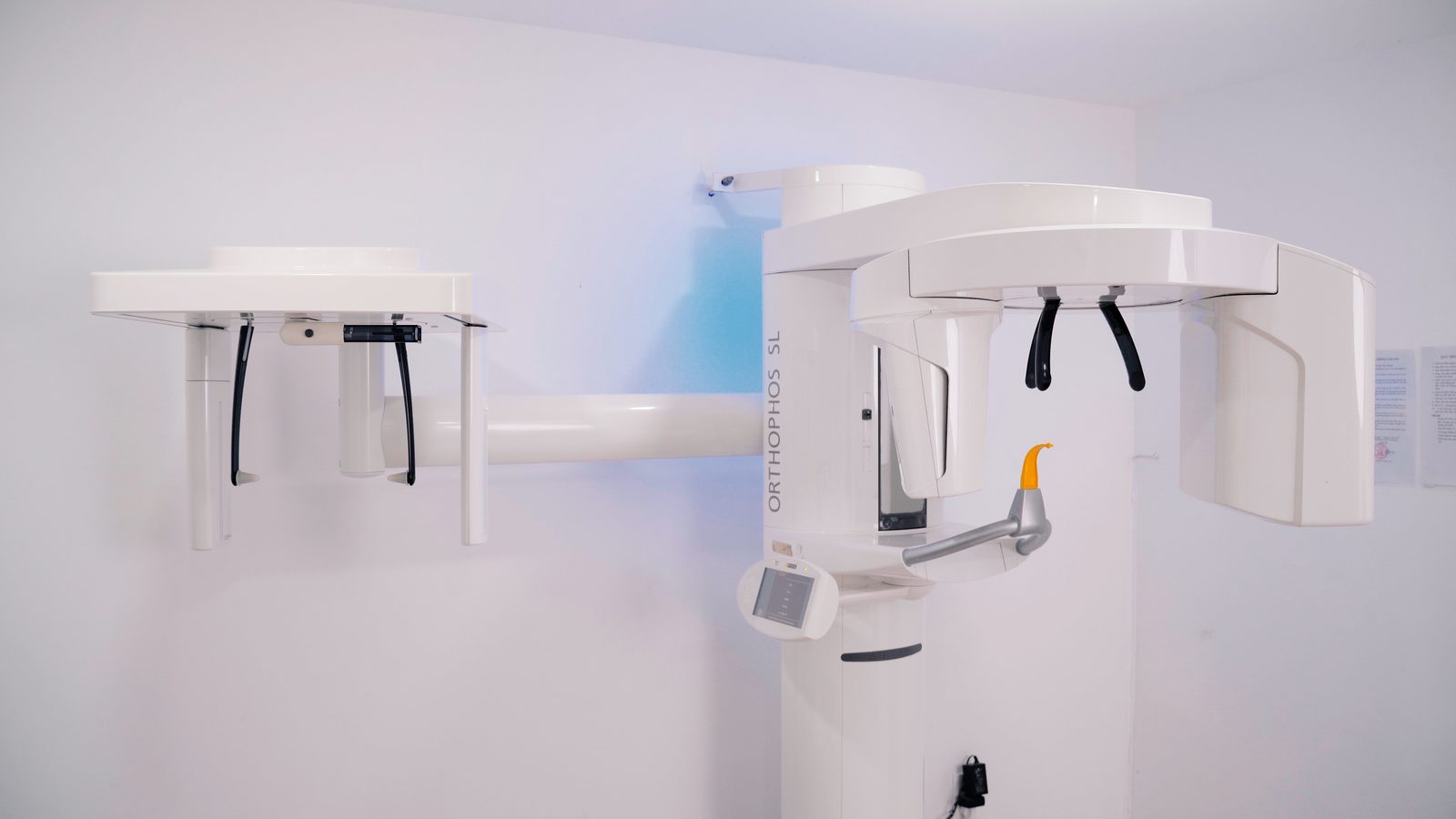
The first step was a comprehensive 3D cone beam CT scan to assess the bone at both sites. Extracting front teeth creates an immediate aesthetic concern, and the bone volume at both locations needed to support implants that would emerge at the right position and angle for a natural crown result.
The CBCT scan showed adequate bone volume at tooth 21 for immediate implant placement following extraction. Tooth 11, however, showed horizontal bone loss from the prior root canal infection and would benefit from socket preservation grafting at the time of extraction, followed by a healing period before implant placement.
Both options were explained clearly to the patient. She would have one implant placed immediately at extraction for one tooth, and a staged approach for the other with grafting and a three-month healing period before implant placement. She understood the reasoning and agreed to proceed with the recommended plan.
The surgical phase
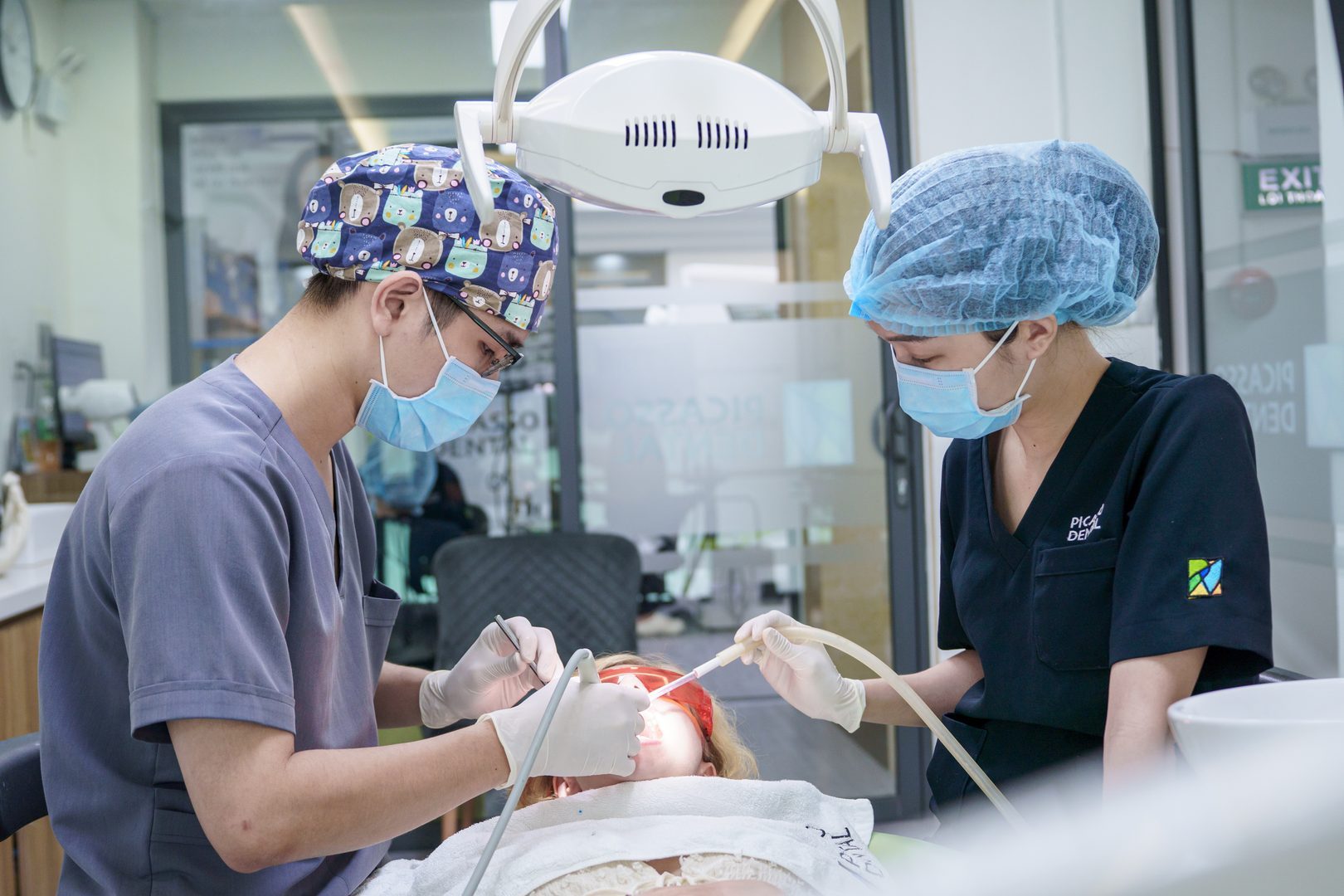
At the first surgical appointment, both teeth were extracted with care to preserve as much of the surrounding bone and soft tissue as possible. At the same appointment, the implant was placed at tooth 21 and bone graft material was packed into the socket at tooth 11. Temporary restorations were placed immediately so she left the clinic with teeth in place. This is not a cosmetic nicety for front teeth: it is clinically important for soft tissue contouring during the healing phase.
Three months later she returned. Imaging confirmed the graft had integrated well at tooth 11 and the implant at tooth 21 had undergone successful osseointegration. The second implant was placed at tooth 11 at this appointment, and a further three months were allowed for complete osseointegration before the final restorative phase.
Crown fabrication and final placement
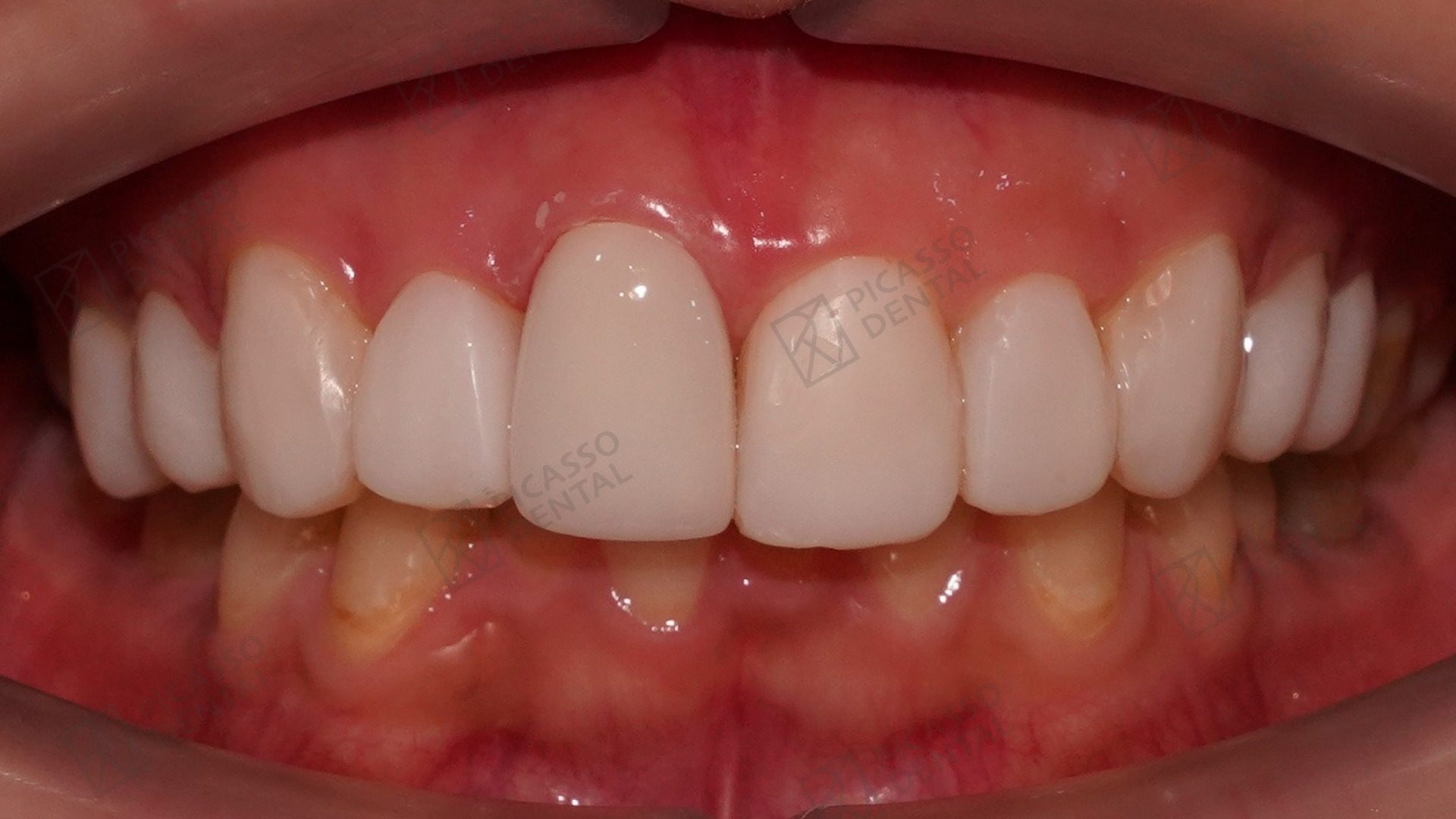
At the final major appointment, abutments were placed on both implants and final impressions were taken. The laboratory fabricated two all-ceramic crowns shade-matched to her natural teeth, with careful attention to translucency, surface texture, and the subtle colour gradation that makes a crown indistinguishable from a natural tooth under normal lighting. The crowns were designed with slightly longer and more refined contact points to complement the proportions of her specific face.
Crown placement was straightforward. Both crowns seated precisely. Bite alignment was verified and minor occlusal adjustments were made. She looked in the mirror and was visibly moved.
"Making the decision to go to Hanoi and have the dental treatment done by Picasso was of the best decisions I have taken for a long time. I not only received top class dental care, it was so cost effective in comparison to having all this work undertaken at an Australian dental practice."
Gerald Mair, Hanoi Old Quarter, Google review
The outcome and what made it work
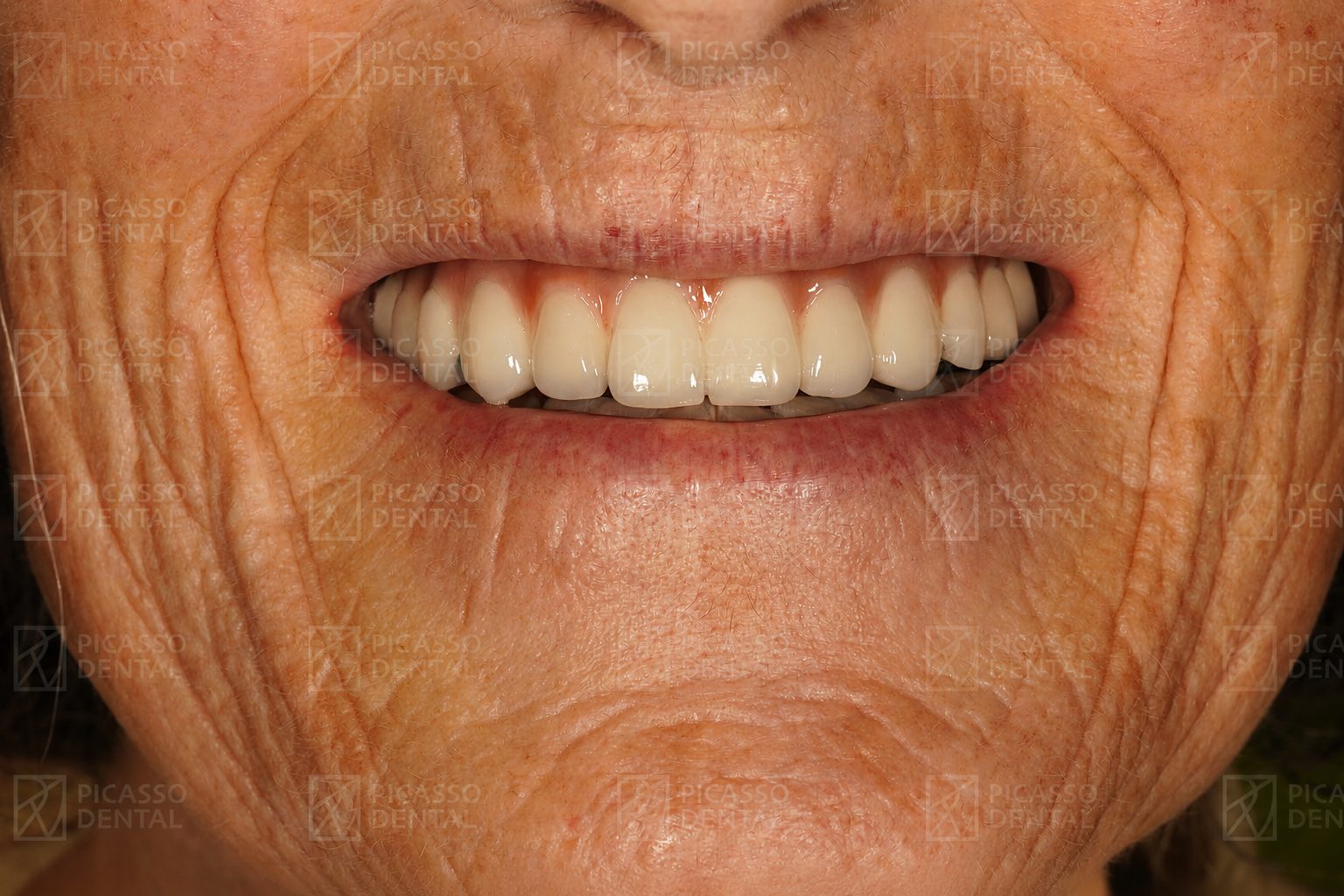
Both implants are fully integrated and functioning normally. The crowns are visually indistinguishable from her natural teeth. She can eat anything, smile without hesitation, and speak without concern. The implants will serve her for decades with normal maintenance.
What made this case successful was careful planning before any surgery began. Assessing the bone before committing to a timeline, using socket preservation where needed, and taking adequate healing time between stages gave both implants the best possible foundation. Rushing this process, as some clinics do, increases failure risk and compromises the aesthetic result in the most visible part of the smile.

What front tooth implant cases require
Front teeth implants are among the most technically demanding cases in implant dentistry. The aesthetic demands are highest, the anatomy is most unforgiving, and patients scrutinise the result every day. Success requires 3D pre-surgical planning, careful surgical technique, adequate healing time between stages, and an excellent laboratory relationship for crown fabrication.
- 3D CBCT scan before surgery Assesses bone width, height, and density at both sites. Confirms that adjacent root tips will not be compromised by implant positioning. Allows digital surgical guide fabrication for precise placement.
- Socket preservation grafting where needed When bone has been lost to prior infection or long-term tooth absence, grafting maintains the ridge needed for a correctly positioned implant. Without it, the implant may emerge too far to the palate or at an angle that compromises the crown.
- Temporary restoration placed on day of surgery Maintains aesthetics and guides soft tissue contouring during healing. The shape of the temporary crown trains the gum tissue to the correct emergence profile before the final crown is fabricated.
- Adequate osseointegration time Front tooth implants generally require 3 to 4 months of healing before the final crown is placed. Attempting to load the implant earlier risks micro-movement that disrupts the integration process.
- All-ceramic crown with natural optical properties The final crown is shade-matched under multiple lighting conditions. Translucency, surface texture, and the colour gradient from cervical to incisal edge are all specified to match adjacent natural teeth.
Have damaged or missing front teeth? Send us your current X-rays and photos and our implant team will review your case and provide a written treatment plan within 48 hours.
Contact us →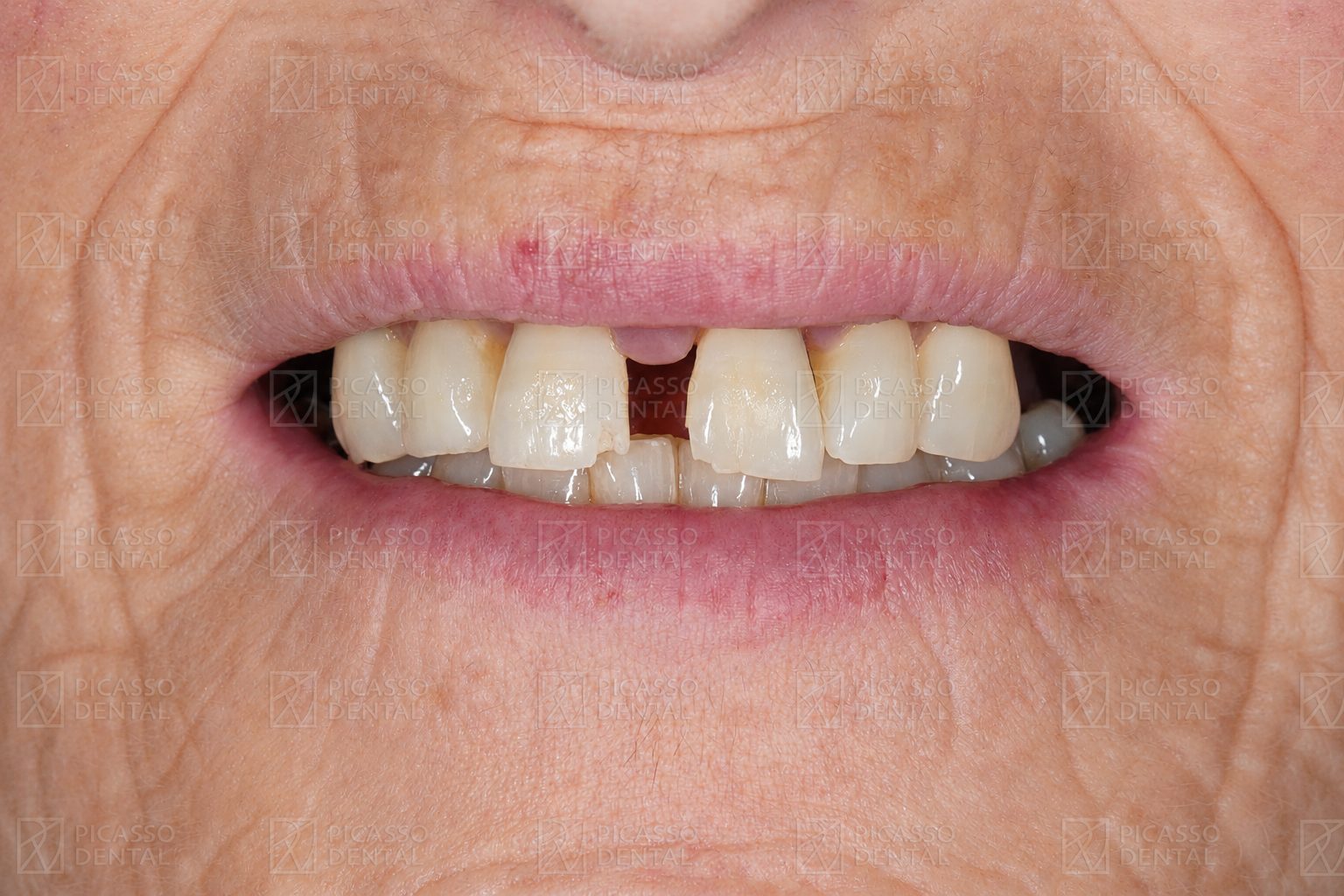 Before
 After
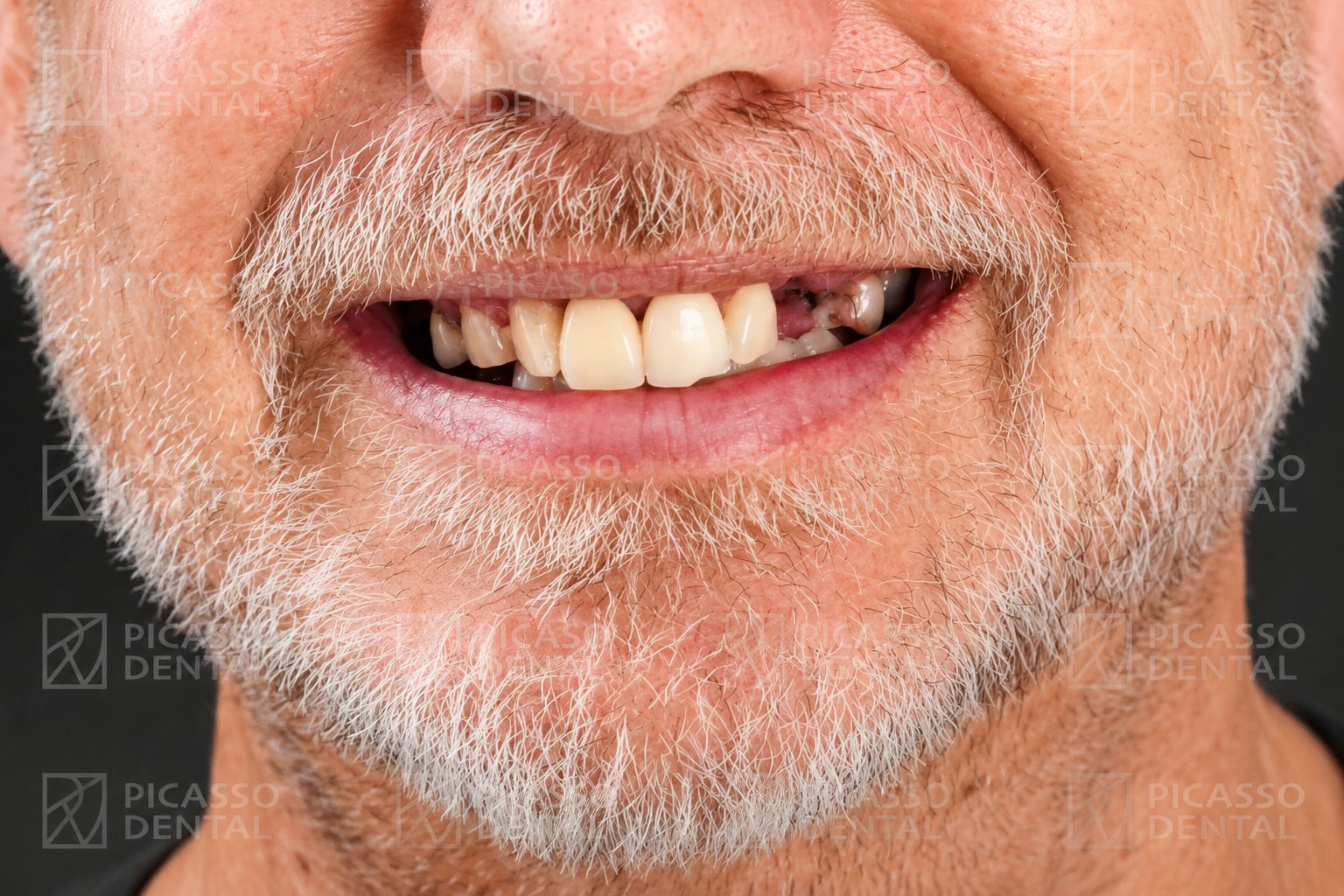
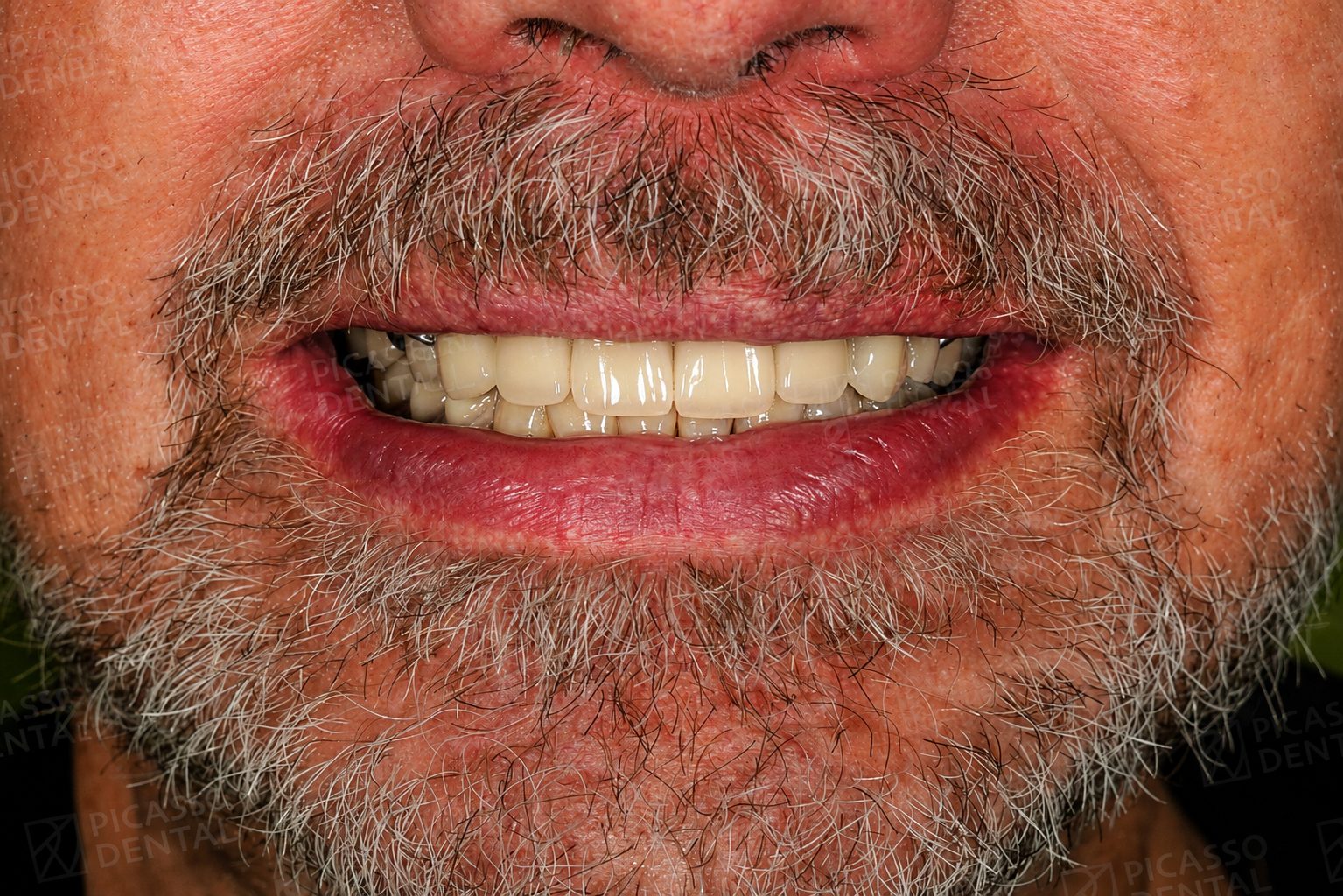
AfterFull rehabilitation, Hanoi Old Quarter
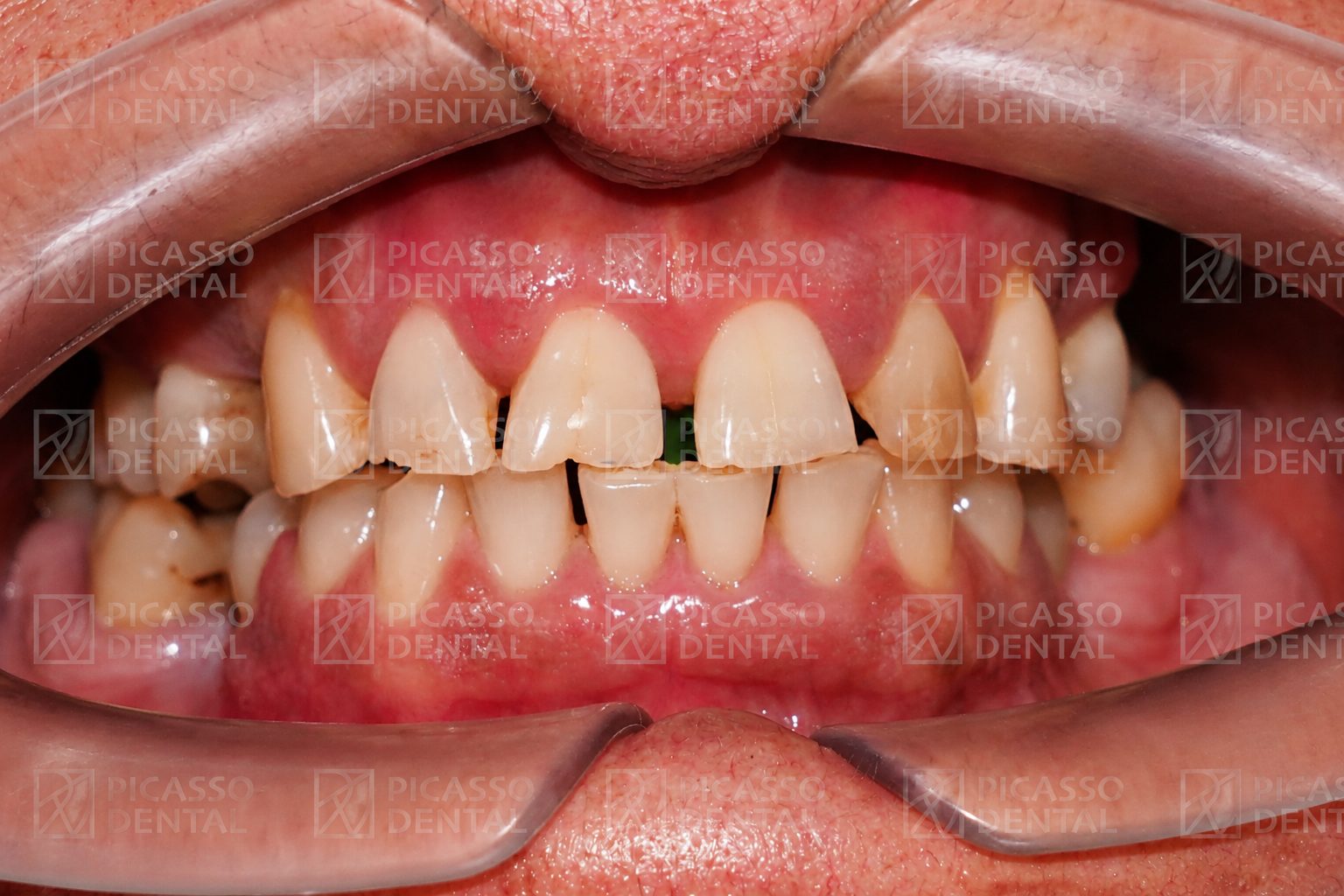 Before
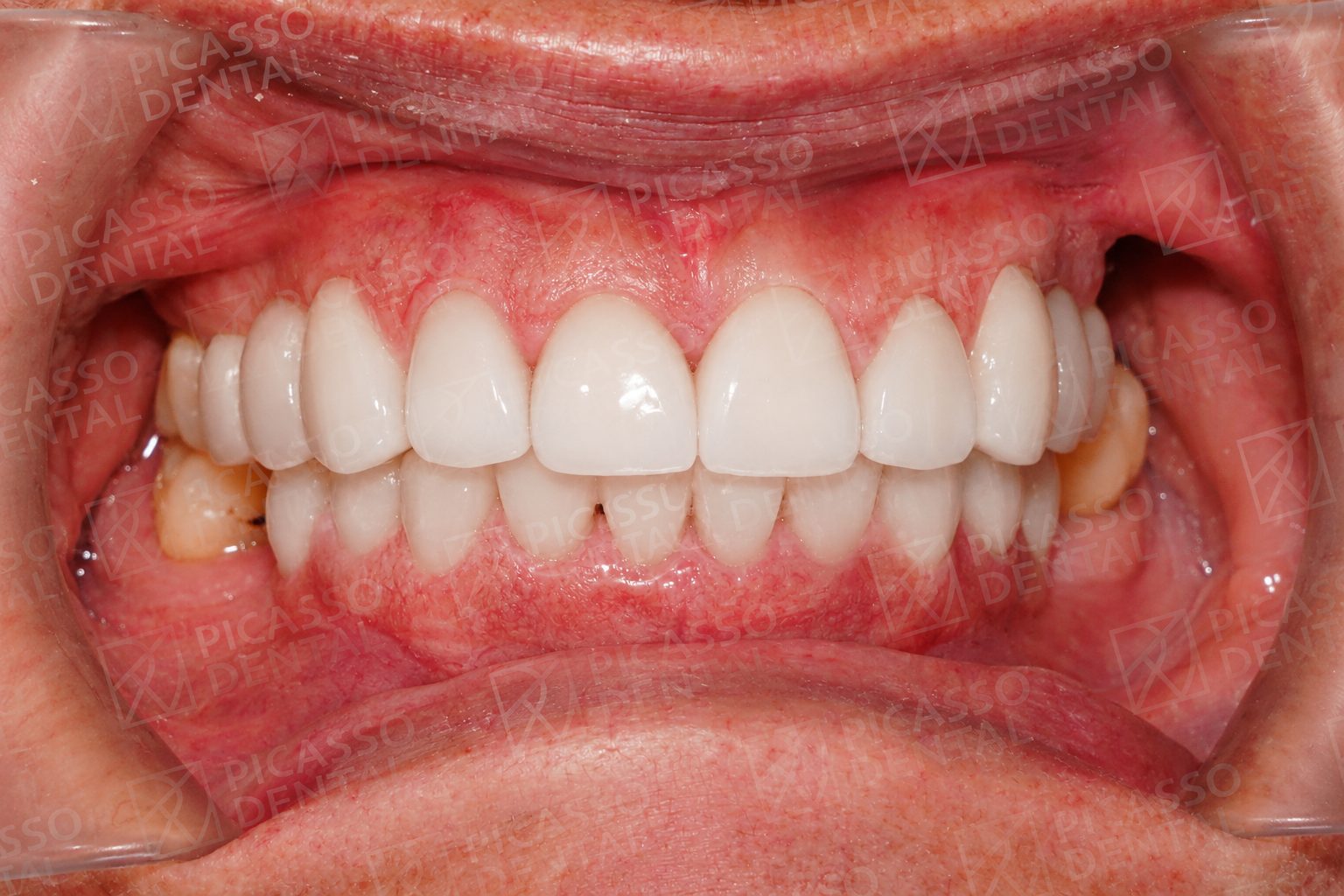 After
AfterPorcelain crowns, Da Nang
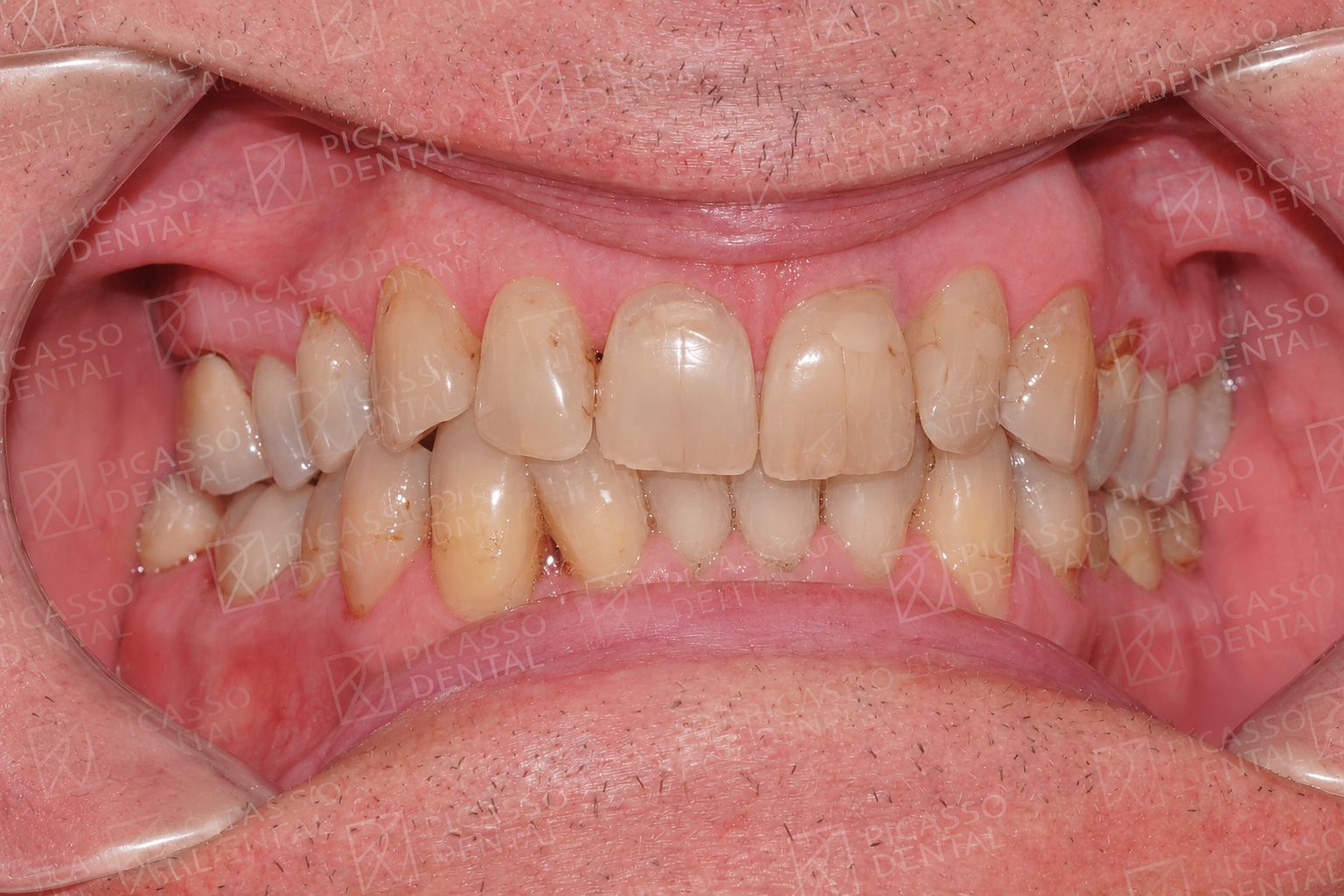 Before
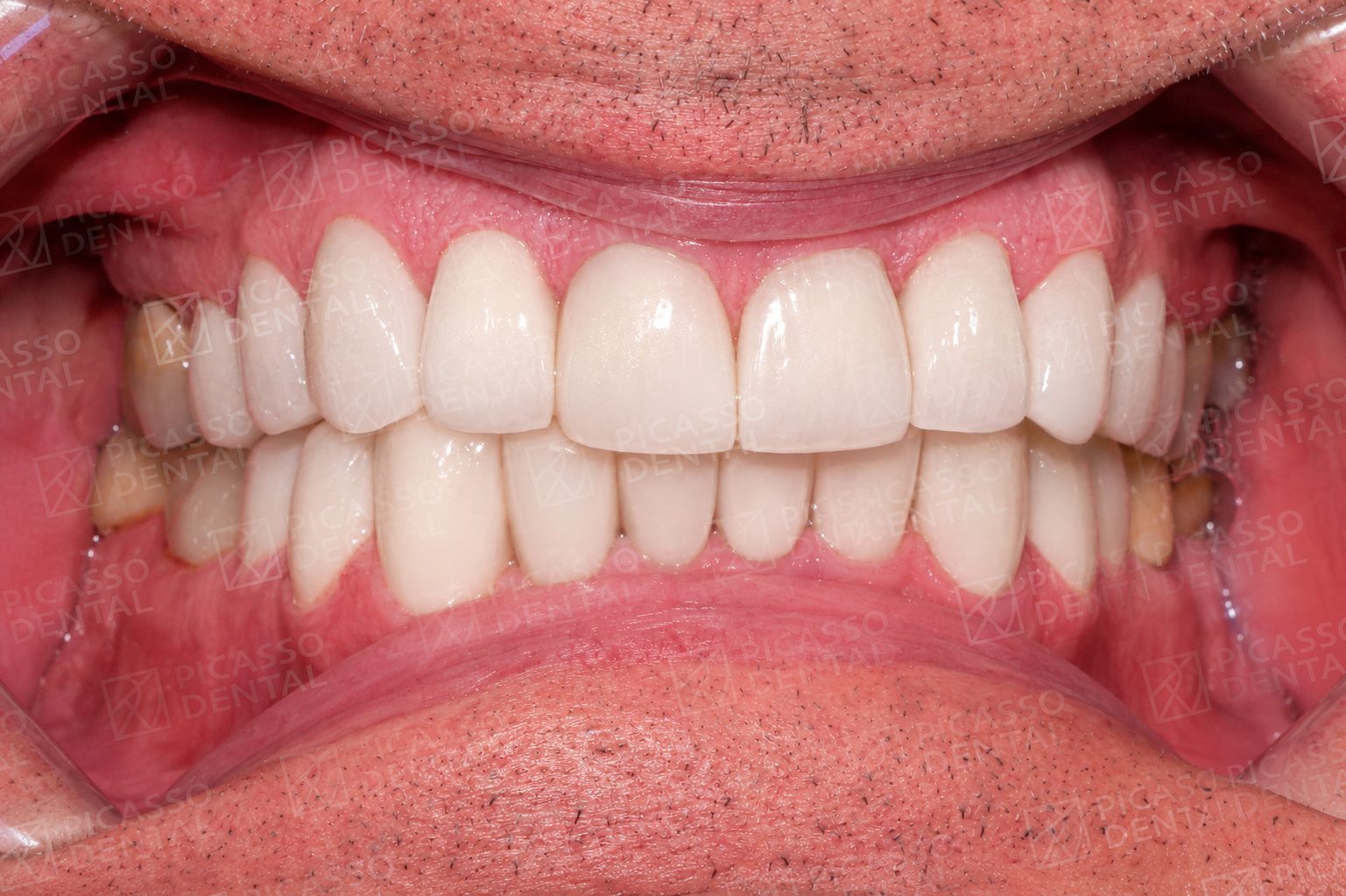 After
AfterCrown and implant, HCMC Thao Dien
 Before
 After
AfterCrown restoration, Hanoi Westlake
 Before
 After
AfterSmile restoration, Da Nang Flagship
Frequently asked questions
Can front teeth be replaced with implants?
Yes. Front tooth implants are technically demanding because aesthetic standards are highest and the bone and gum tissue require careful management. A 3D CBCT scan before surgery assesses bone volume and density to plan the exact implant position and angle. When bone is adequate, an implant can be placed at the time of extraction. When bone has been lost from prior infection or long-term absence, socket preservation grafting is done first to rebuild the site.
How long does front tooth implant treatment take?
For a straightforward single front tooth with good bone, treatment takes 4 to 6 months from extraction to final crown if immediate implant placement is possible. For cases requiring socket preservation grafting, the timeline extends to 9 to 12 months to allow the graft to integrate before implant placement. International patients typically manage this across two visits separated by a healing period at home.
What is socket preservation grafting?
Socket preservation is a procedure performed at the time of tooth extraction where bone graft material is packed into the empty socket. This maintains the width and height of bone that would otherwise resorb over the following months. Without grafting, bone loss can make implant placement more difficult or compromise the aesthetic result of the final crown by leaving insufficient ridge volume for a natural emergence profile.
Will the implant crown look natural on a front tooth?
Yes, when planned and fabricated carefully. The crown is shade-matched to adjacent natural teeth with attention to translucency, surface texture, and the colour gradation that allows light to pass through the crown similarly to natural enamel. When the implant is positioned correctly and gum tissue is shaped well during the healing phase, the result is indistinguishable from a natural tooth under normal viewing conditions.
Can international patients manage front tooth implants in one trip?
For some single-tooth cases where immediate implant placement is possible and bone is in good condition, a temporary crown can be placed at the time of surgery and the final crown fitted during the same trip after a short wait. For complex cases requiring grafting or staged placement, two trips are the responsible approach. The exact plan is confirmed after reviewing your 3D CBCT scan, which is taken on arrival in Vietnam.
What implant brands are used for front tooth cases at Picasso?
Picasso Dental uses Nobel Biocare and Straumann implants for anterior (front tooth) cases where aesthetics are paramount. Both systems have extensive published literature on soft tissue management and tissue-level designs used for anterior implants. The implant brand and model are specified in writing before treatment begins and included in your treatment documentation.
What happens if bone volume is insufficient for a front tooth implant?
When the 3D CBCT scan shows insufficient bone volume at the intended site, socket preservation grafting or a block bone graft is planned before implant placement. This rebuilds the bone to the volume needed for a correctly positioned implant. The grafting procedure and healing period are factored into the overall treatment timeline and costed separately in the written plan before you commit to travel.
Is a temporary crown placed on the same day as the implant?
A temporary restoration is placed on the day of surgery to maintain aesthetics and function during the healing period. This is particularly important for front teeth: the temporary crown shapes the gum tissue to the correct emergence profile so the final crown seats in a well-prepared site. The permanent all-ceramic crown is placed after osseointegration is confirmed, typically 3 to 4 months after implant placement.
Start Here
Start with a brief.
Send us your X-rays and photos and a licensed implant specialist replies with a written treatment plan and itemised quote within twenty-four hours. No obligation.