
General Dentistry · Reviewed by Dr. Emily Nguyen · Updated May 2026
Safe Amalgam Removal,
Full IAOMT Protocol.
Every existing amalgam filling at Picasso is removed under a full IAOMT SMART-style protocol: rubber dam, high-volume suction at the tooth, sectioning rather than pulverising, optional clean-air cannula, and composite bonded the same visit. The protocol is a flat 800,000 VND add-on on top of the standard filling fee. About one tenth what the same protocol costs back home. Picasso does not place new amalgam fillings.
The Direct Answer
What you actually get, in one paragraph.
No detox theatre. No medical promises we cannot keep. A defined protocol, applied in full, at Vietnamese pricing.
The full IAOMT SMART protocol, every removal.
Seven defined steps, applied in full to every amalgam removal at every Picasso branch. Same protocol whether you came in for cosmetic reasons or because you read about IAOMT online. We do not gatekeep best practice behind a particular patient motivation.
Composite replacement, same visit.
Once the dam comes off, the cavity is etched, bonded and rebuilt with layered light-cured composite. Polished, photographed, bite checked. You leave the chair with a finished tooth, not a temporary, in a single 60-minute visit per tooth.
800,000 VND add-on. About one tenth the price.
The same SMART protocol from an IAOMT-aligned clinic in Sydney, London or Los Angeles is USD 200 to USD 400 per tooth. At Picasso it is USD 48 to USD 60 per tooth, all in. Identical isolation. Identical sectioning technique. Identical composite materials. See the cost comparison below.
No new amalgams, ever.
Picasso has not placed a new amalgam filling since opening in 2013. Every new restoration is composite, ceramic inlay or porcelain crown. If an existing amalgam needs to come out for any reason, the SMART protocol is how we do it.
The Protocol
What "safe amalgam removal" actually means.
Safe amalgam removal is a defined clinical protocol developed by the IAOMT (International Academy of Oral Medicine and Toxicology), designed to minimise patient and operator exposure to mercury vapour during the removal of existing dental amalgam fillings. The published protocol is called SMART, Safe Mercury Amalgam Removal Technique. The act of removal is the part of an amalgam's lifetime when measurable vapour release is highest, so this is where the protocol does its work. It does not eliminate exposure. It materially reduces it.
Seven Steps, Every Tooth
The Picasso SMART protocol.
Seven elements, applied in full to every amalgam removal, regardless of patient motivation. This is best practice for any amalgam removal. Most single-tooth cases complete in 60 minutes; multi-tooth cases are sequenced over two or more visits by quadrant.
i.Pre-Removal Briefing
Medical history review, photographs of existing amalgam restorations, bite check. We brief you on the protocol, the tradeoffs and the realistic outcome. Patient preferences around supplements are acknowledged; we do not prescribe pre-treatment regimens.
ii.Patient Protection
Rubber dam isolation around the tooth being treated, protective body drape, eye protection, and on request an alternative air supply via nasal cannula so you breathe external air rather than air over the working field.
iii.Operator Protection
Face shield, particle masks and gloves for the dentist and assistant. Operator protection matters because dental teams are exposed repeatedly across many removals.
iv.Copious Water Cooling
Continuous water spray throughout the removal. Heat is one of the main drivers of mercury vapour release from amalgam; cooling suppresses it directly at the source.
v.High-Volume Evacuation
Large-bore high-volume suction positioned immediately at the tooth, capturing vapour and particulate at the source rather than letting it disperse into the operatory air.
vi.Sectioning, Not Pulverising
Where anatomy allows, the amalgam is cut into large segments and lifted out cleanly under copious water spray, rather than ground into fine dust. Less grinding equals less vapour and less particulate.
vii.Composite Replacement
After thorough rinsing and dam removal, the cavity is etched, bonded and rebuilt with layered light-cured composite the same visit. Polished, occlusion checked with articulating paper, photographed. Optional review at one week.
The Economics
The protocol, identical. The bill, not.
Same rubber dam. Same Hygoformic high-volume suction. Same sectioning technique. Same bonded composite. At the cost of a long lunch, not the cost of a flight home.
"I had one amalgam filling removal and two composite fillings. I was nervous about the amalgam removal, but the doctor made me feel very comfortable. Less than two hours from start to finish. In NZ, this would have cost me at least 750 NZD."
Jasmeet Gill · New Zealand to Hanoi Old Quarter · Google review, 2023. Total bill: 160 NZD (check-up + 1 amalgam removal + 2 composite fillings + sensitive toothpaste).
See the full international patient comparison →Home-country figures drawn from current quotes provided by Picasso patients on consultation. Picasso pricing is identical across all six Vietnamese branches: 800,000 VND IAOMT protocol add-on + 400,000 to 700,000 VND composite filling, depending on cavity size.
Itemised Pricing
Per-tooth pricing, itemised.
The IAOMT protocol is a flat add-on on top of the underlying composite filling fee. Identical across all six branches. No surprise fees, no upgrade-tier nonsense.
| Service | Price (VND) | USD (approx.) |
|---|---|---|
| Composite filling, small (replacement) | 400,000 | $16 |
| Composite filling, moderate (replacement) | 500,000 | $20 |
| Composite filling, large (replacement) | 700,000 | $28 |
| Safe amalgam removal protocol (IAOMT) add-on | 800,000 | $32 |
| Total per tooth, typical range | 1,200,000 to 1,500,000 | $48 to $60 |
| Inlay / onlay if cavity too large for direct fill (Emax) | 3,500,000 | $140 |
| Crown if tooth structure compromised (Emax) | 7,500,000 | $300 |
For larger restorations see dental fillings, porcelain crowns or porcelain veneers. For a written quote on your specific case, send the studio a brief.
Who Comes In
Six reasons patients request removal.
All six are legitimate. We do not gatekeep the protocol behind a particular motivation.
Personal Preference for Non-Metal
Some patients simply prefer non-metallic restorations for personal or aesthetic reasons. That is sufficient reason to request removal and replacement with composite.
Visible Silver in the Smile
Older amalgams in upper premolars or front molars often show as dark patches when smiling or speaking. Cosmetic concern alone is a common and legitimate trigger for replacement.
Concern About Long-Term Exposure
Some patients are concerned about long-term mercury exposure from existing amalgams. Picasso does not make medical claims about systemic mercury impact; we provide the protocol, you make the decision.
Failed Amalgam Needing Replacement
Marginal leakage, recurrent decay around the filling, or fracture of the surrounding tooth structure all require replacement on clinical grounds. If the existing restoration is amalgam, the SMART protocol is the responsible way to remove it.
Pregnancy Planning
Some patients planning pregnancy choose to remove existing amalgams beforehand. The FDA 2020 guidance lists pregnant women among groups for whom alternatives to amalgam should be considered.
Mercury Allergy or Sensitivity
True mercury allergy is rare but documented. Patients who self-identify as sensitive are accepted without requirement to prove it; the protocol is the same either way.
Evidence Note
What we do not claim.
An honest evidence note. We are not a holistic clinic and we will not oversell this procedure to you.
The current scientific consensus, per the U.S. FDA (2020 update), the World Health Organization and the American Dental Association, is that dental amalgam is regarded as safe for most adults and children aged 6 and over. The FDA recommends caution and considering alternatives specifically for higher-risk groups: pregnant women and women planning pregnancy, nursing mothers, children under 6, people with neurological disease, impaired kidney function, or known mercury allergy.
We do not claim that removing existing amalgam fillings produces a measurable systemic health benefit in the general population. The published evidence does not support that claim, and we will not make it.
What we do claim is narrower and defensible: if you are going to remove an amalgam filling, for any reason, the IAOMT SMART protocol is the best-practice way to do it, because the act of removal is the part of an amalgam's lifetime when measurable vapour release is highest. We apply the protocol because it is good practice, not because we are selling a health outcome. Picasso does not place new amalgam fillings at all; every new restoration we provide is composite, ceramic or porcelain.
Patient choice is respected. We will not pressure you to remove amalgams that are clinically sound, and we will not pressure you to keep them either.
Letters from Patients
Two patients, verbatim.
Real Google reviews from international patients who had an amalgam removed at Picasso. No edits, no composites, no marketing polish.
"
I came in for a check-up, cleaning and fillings. I had one amalgam filling removal and two composite fillings. I was nervous about the amalgam removal, but the doctor made me feel very comfortable. The whole process was pretty fast as well. Less than two hours from start to finish. In total: check-up, 1 amalgam filling removal, 2 fillings and 1 sensitive toothpaste = 160 NZD. In NZ, this would have cost me at least 750 NZD.
Jasmeet Gill
"I travelled from Sydney to Hanoi and began a course of treatment over two separate visits across a month. I had four crowns fitted, one large filling and the removal of an old and very large amalgam filling. I have been to many dentists in my time, in the UK and in the last 20 years while living in Australia. But my visits to Picasso were by far and away the best dental treatment and care I have experienced."
Gerald Mair · Sydney to Hanoi Old Quarter · Amalgam removal + crowns + implants · Google review
Risks & Tradeoffs
Risks, honestly.
The protocol minimises risk; it does not eliminate it. Four things to know before you book.
Transient Vapour Exposure
The IAOMT protocol minimises but does not eliminate mercury vapour release during removal. The brief exposure during a controlled removal is small; the literature does not establish a defined safe threshold, which is part of why the protocol exists.
Post-Op Sensitivity
48 hours of sensitivity to cold or pressure is common after any moderate-to-large filling, amalgam or composite. It usually resolves on its own. Persistent sensitivity beyond a week warrants a review, which is included free.
Cavity Larger Than Expected
Once an old amalgam is removed, the underlying tooth is sometimes more compromised than the X-ray suggested. A direct composite may not be the right restoration; an inlay, onlay or crown may be needed instead. We will tell you the same visit and quote in writing before proceeding.
No Promised Systemic Benefit
We are not promising you will feel different. The published evidence does not support a general claim of systemic improvement after amalgam removal in healthy adults. We are promising the removal itself will be done responsibly.
Your Team
Your treating team.
Safe amalgam removal at Picasso is performed by our general dentistry team under clinical standards set by the founding clinical director. Branch assignment is confirmed at booking.
Dr. Thao Tran (Anna)
General Dentist, University of Hamburg trained. Routine restorative care including composite fillings and amalgam removal under the IAOMT protocol. Based at HCMC Thao Dien.
Dr. Nhung Duong (Lynn)
General Dentist, Prosthodontics. Restorative dentistry, composite fillings, and rubber dam isolated procedures including SMART-protocol amalgam removal.
Dr. Emily Nguyen
Founding Clinical Director, in place since 2013. Sets clinical standards for case selection, surgical protocols and prosthetic delivery group-wide, including the protocol followed for amalgam removal.
Where We Practise
Six branches. One protocol.
Six studios across four cities. Two operate inside accredited hospitals. Every studio delivers the same SMART protocol at the same price.
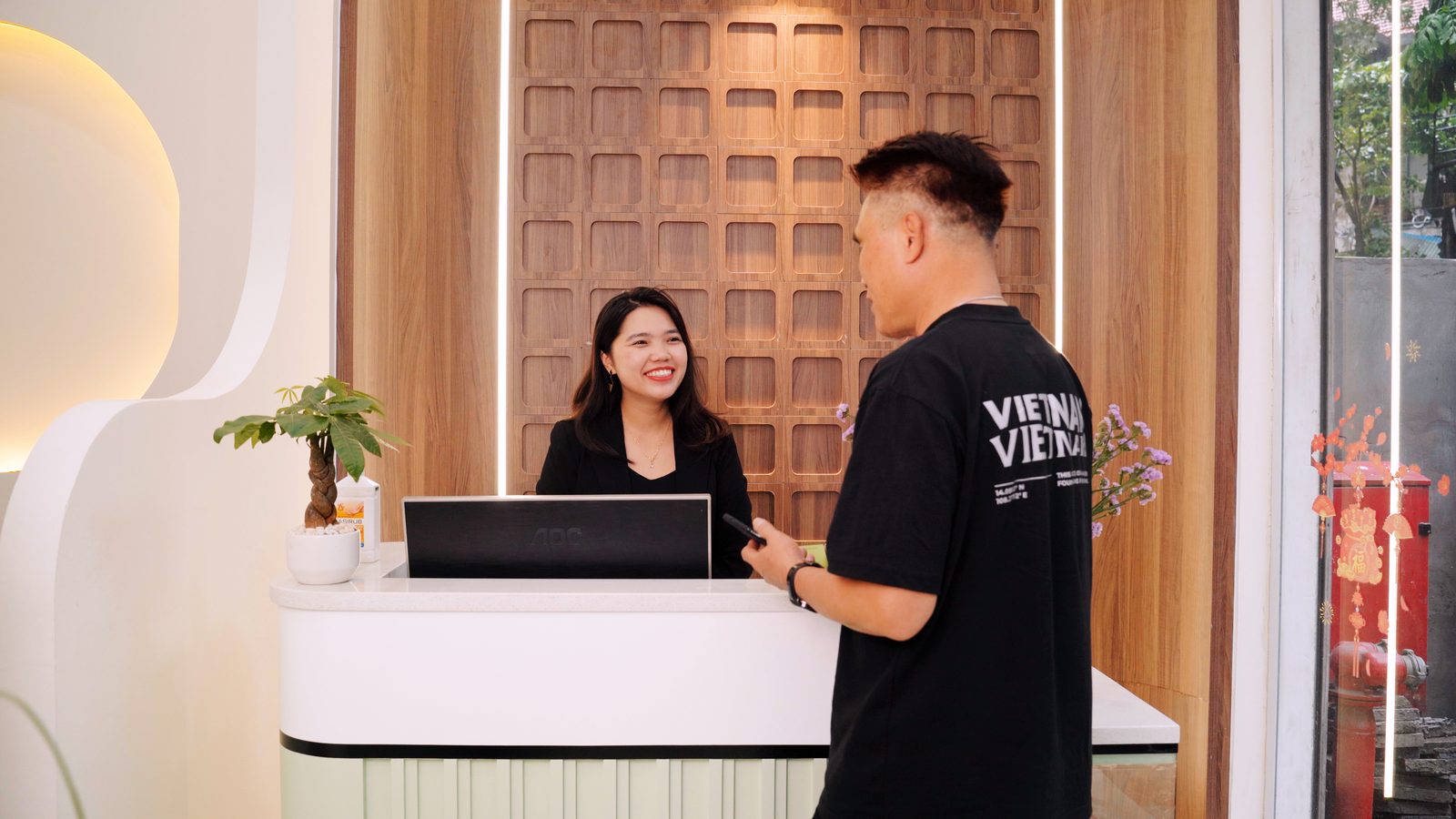 Flagship
Hanoi
Old Quarter
16 Pho Chau Long, Truc Bach, Ba Dinh
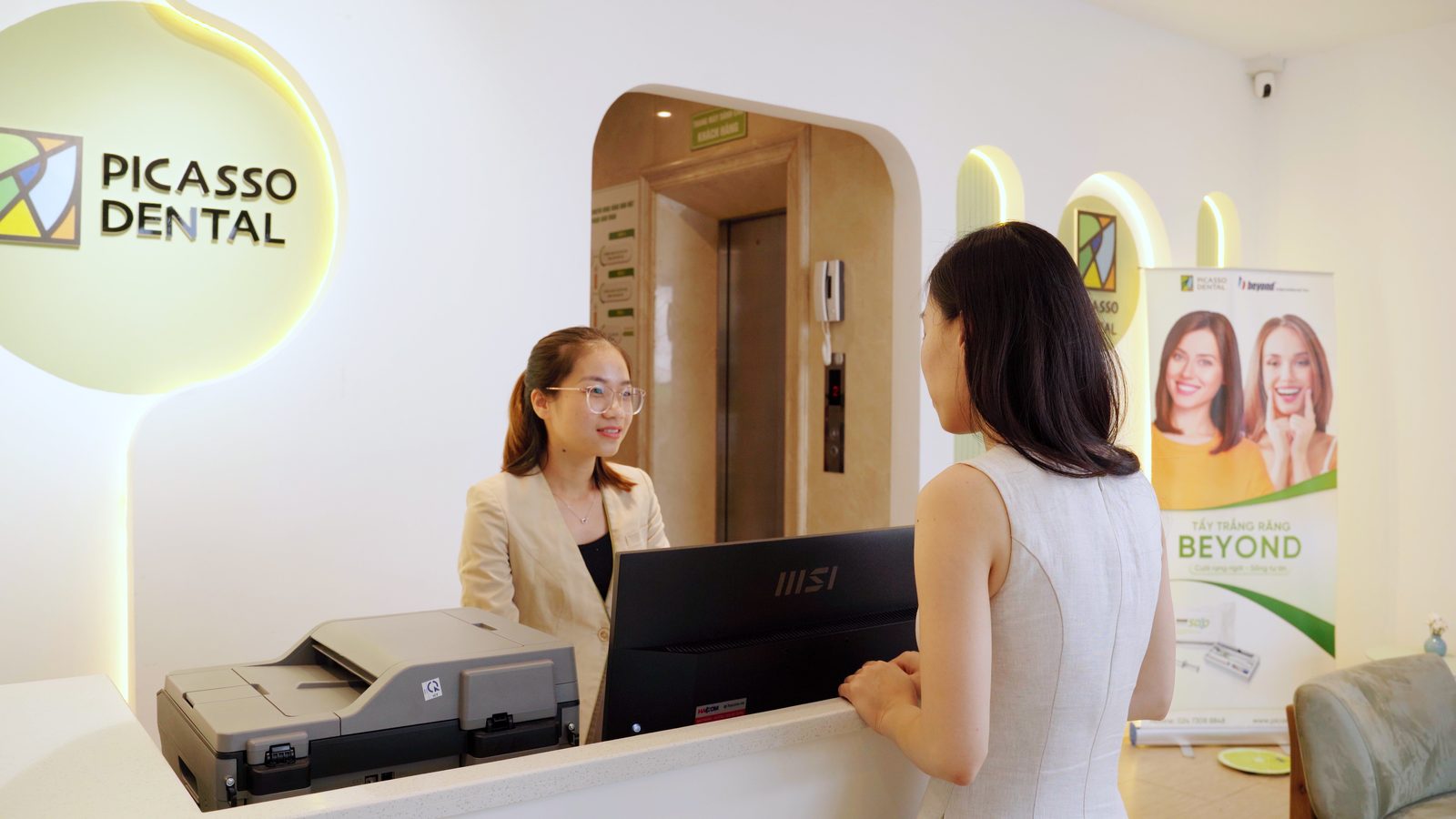 Expat District
Hanoi
Westlake
LKC22 Hoang Minh Thao, Bac Tu Liem
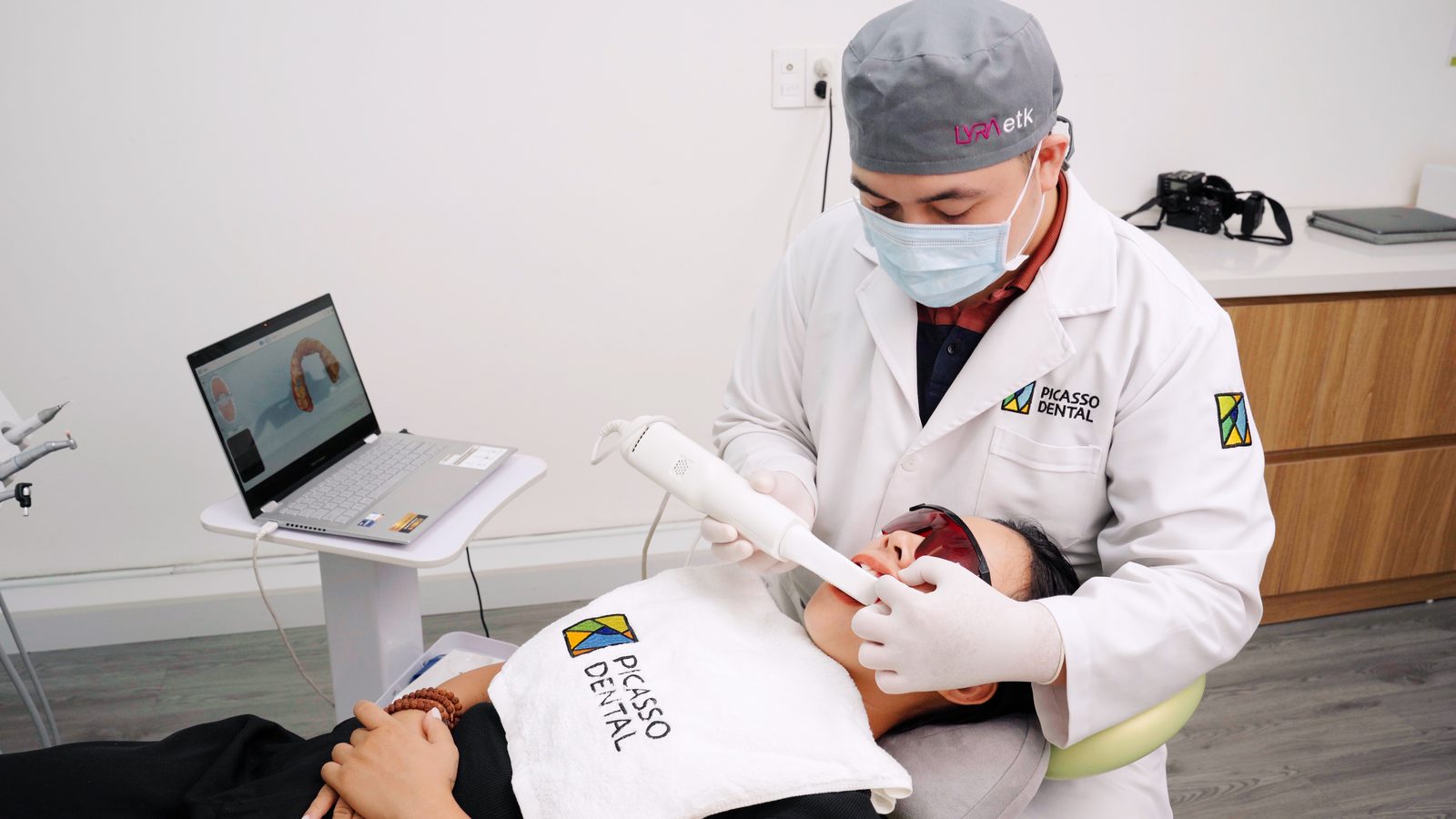 City Centre
Da Nang
Picasso Dental Clinic - Da Nang Flagship
222 Phan Chu Trinh, Hai Chau, Da Nang
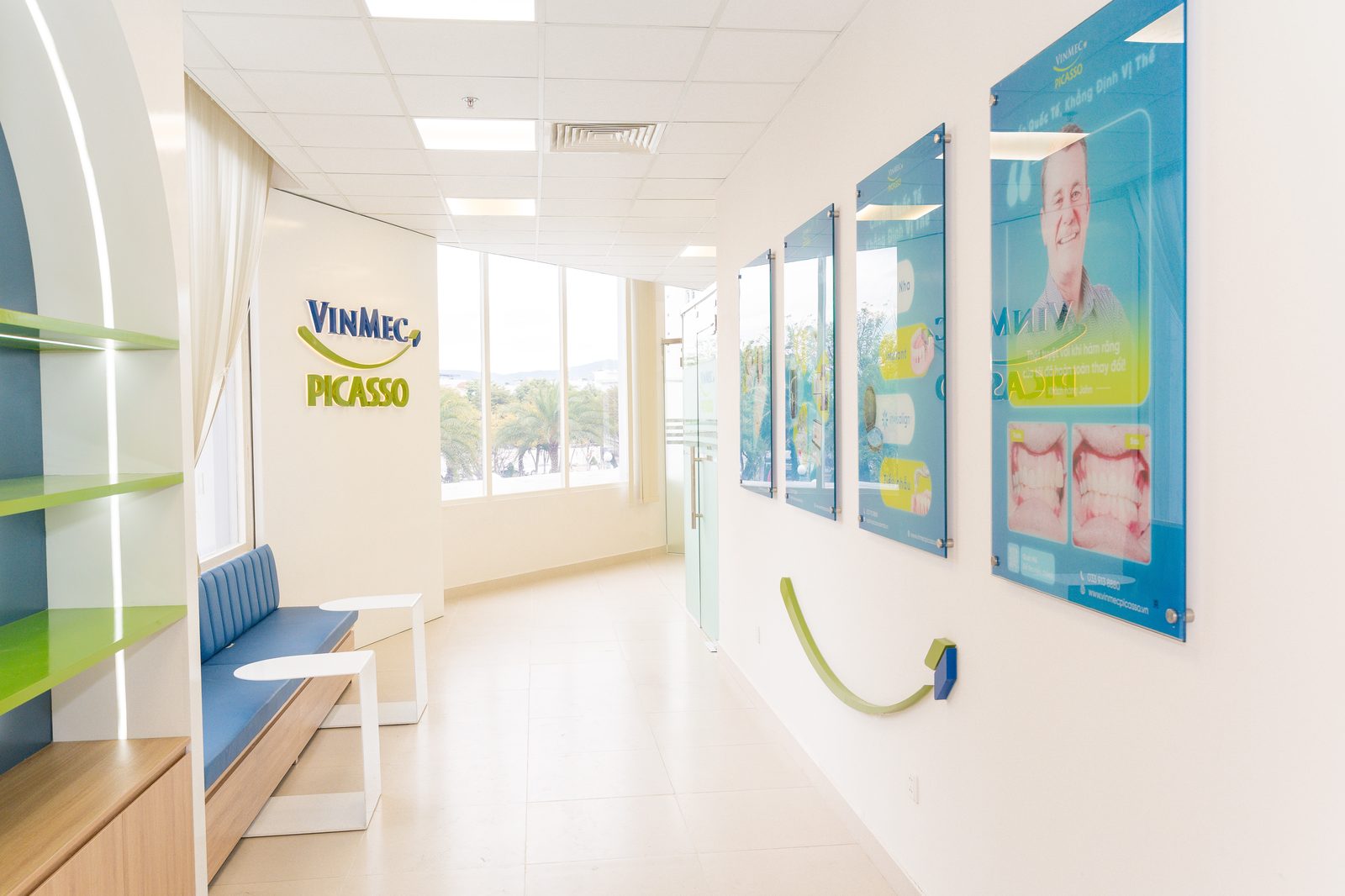 Hospital Branch
Da Nang
Vinmec Hospital
Floor 2, Vinmec International Hospital
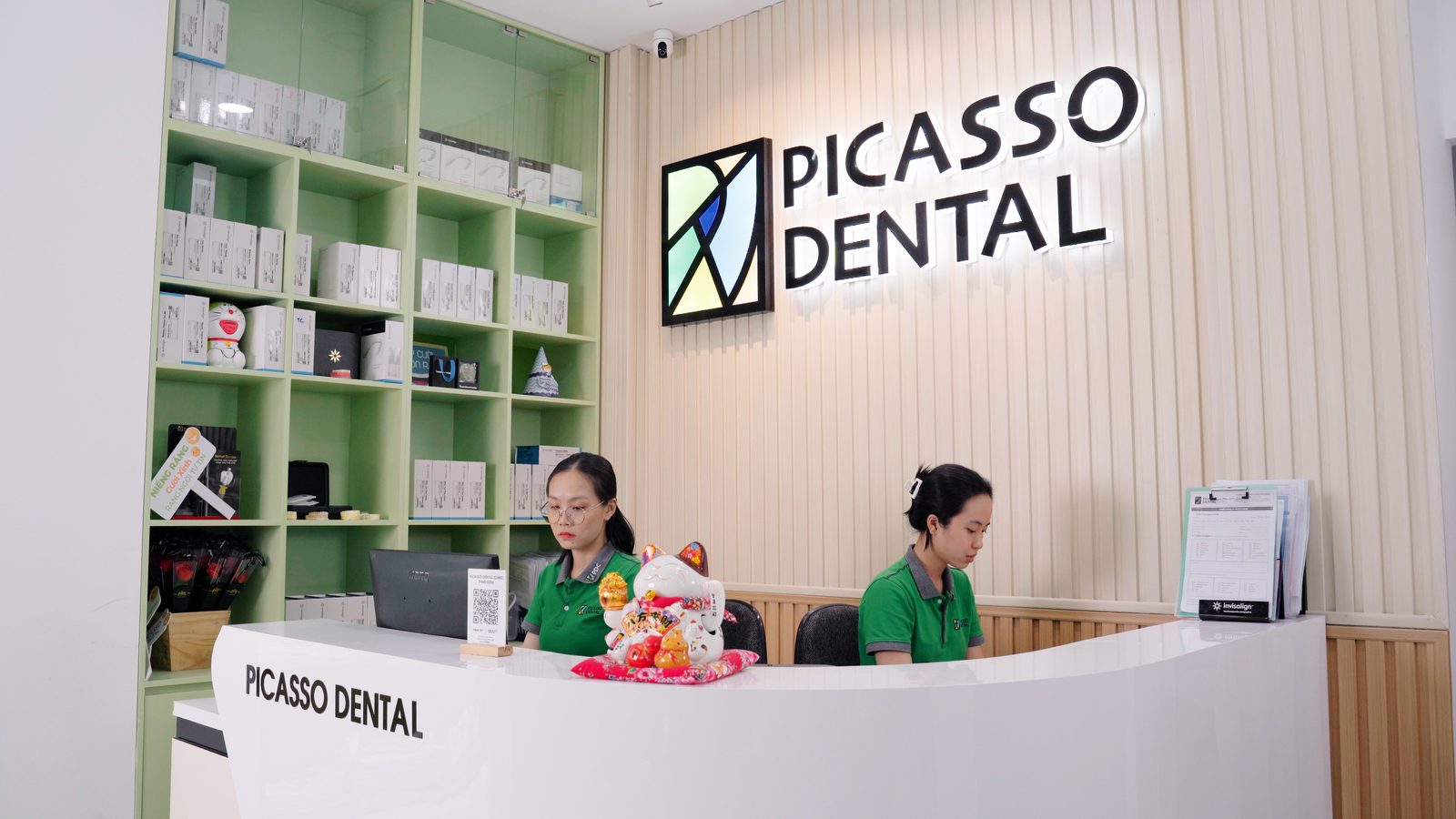 Expat District
Ho Chi Minh City
Thao Dien
25B Nguyen Duy Hieu, Thao Dien, District 2
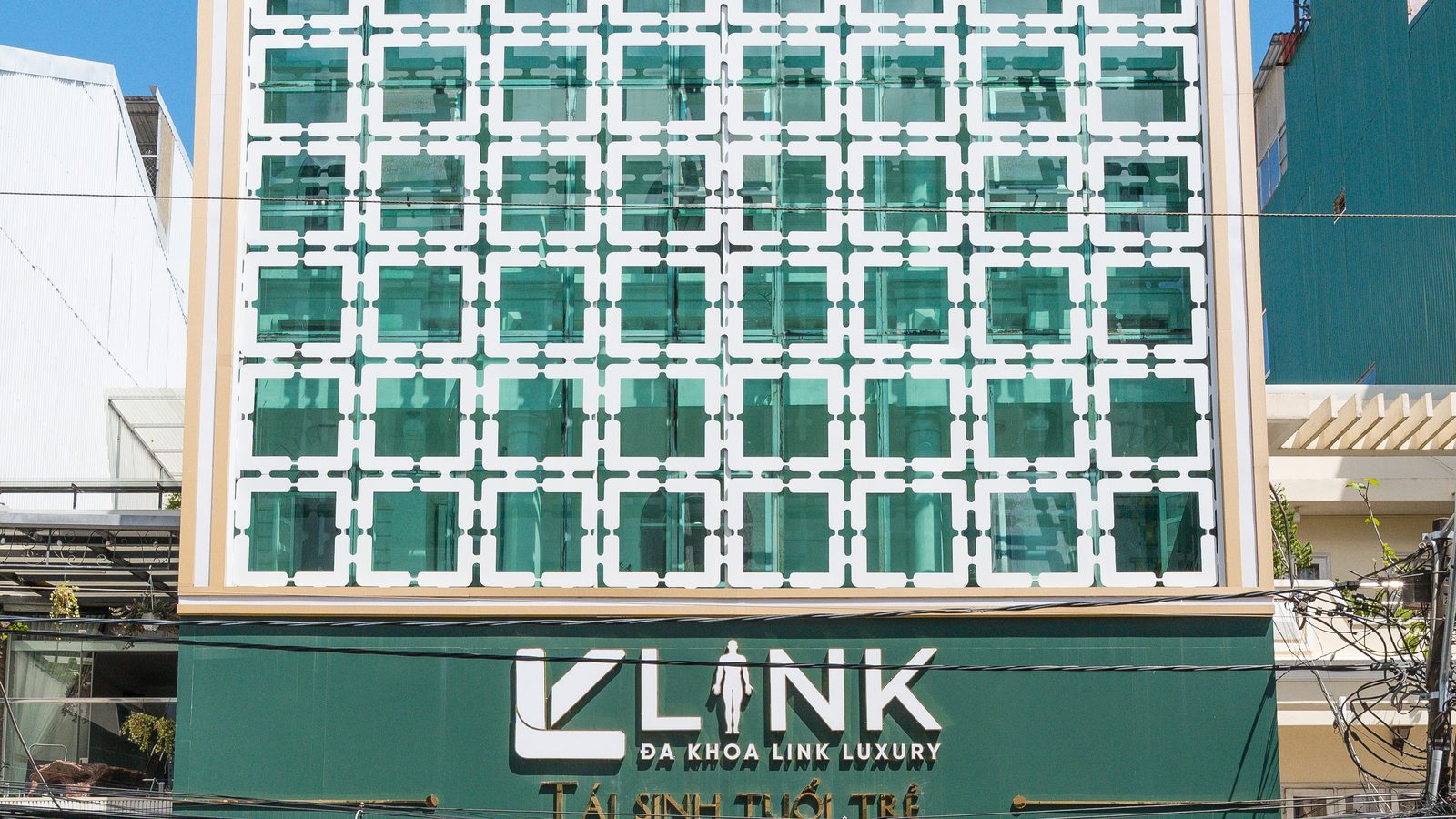 Hospital Branch
Da Lat
Link General Hospital
55 Ha Huy Tap, Ward 3, Da Lat
Common Questions
Common questions.
If yours is not answered here, our clinical team replies to every online consultation within twenty-four hours.
What is the IAOMT SMART protocol?
SMART stands for Safe Mercury Amalgam Removal Technique, published by the International Academy of Oral Medicine and Toxicology (IAOMT). It is a defined removal protocol designed to minimise patient and operator exposure to mercury vapour during removal of dental amalgam restorations. Key elements: rubber dam isolation, high-volume air evacuation at the tooth, copious water cooling, sectioning rather than aggressive grinding, alternative air supply, and where available room air filtration.
How much does safe amalgam removal cost at Picasso?
The IAOMT protocol is a flat 800,000 VND (about USD 32) add-on on top of the standard composite filling fee. The filling itself is 400,000 to 700,000 VND depending on cavity size. Total per tooth is typically 1,200,000 to 1,500,000 VND (USD 48 to USD 60), all in. Pricing is identical across all six Picasso branches.
How does that compare to my home country?
The same SMART protocol from an IAOMT-aligned clinic costs USD 200 to USD 400 per tooth in Australia, the UK, the US or New Zealand. Picasso charges about USD 55 per tooth for the equivalent procedure. The protocol is identical, the consumables are identical, the bonding agents and composite resins are imported from the same German and Japanese suppliers. The cost difference is labour and overhead, not material or technique.
Is dental amalgam dangerous?
The current scientific consensus, per the U.S. FDA (2020 update), the World Health Organization and the American Dental Association, is that dental amalgam is safe for most adults and children aged 6 and over. The FDA recommends considering alternatives for higher-risk groups: pregnant or planning-pregnancy women, nursing mothers, children under 6, people with neurological disease, impaired kidney function, or known mercury allergy. Picasso does not place new amalgam fillings, and respects patient choice on removing existing ones.
Do I need supplements or detox before or after?
No. Picasso does not prescribe pre-removal supplements, post-removal chelation, charcoal, chlorella or other detox regimens. The evidence base for these is not established. We acknowledge that some patients use them on their own initiative. We focus our protocol on minimising exposure during the removal itself, the part within our control.
Can I remove all my amalgams in one visit?
It depends on the number, size and your tolerance. Many patients prefer to space removals over two or more visits, one quadrant at a time. This is also the IAOMT-recommended pattern; it limits the total exposure of any single appointment. We plan the sequence at consultation. For dental tourists on a one-trip schedule, we can sequence two quadrants in week one and two in week two of the same visit.
Can I have safe amalgam removal during pregnancy?
The U.S. FDA 2020 guidance recommends caution for pregnant women and considering alternatives where amalgam removal is not urgent. Where removal is needed during pregnancy, the second trimester is generally regarded as the safer window. We will defer non-urgent removal until after pregnancy where you prefer, and follow the full IAOMT protocol if removal proceeds.
Will I feel different afterwards?
Honestly, we cannot promise a systemic health change. The published evidence does not support a general claim that healthy adults feel different after amalgam removal. What you will reliably get: no more visible silver in your smile, a properly bonded composite that seals the tooth, and the knowledge that the removal was done under a defined exposure-minimising protocol.
Will my insurance cover it?
Most international dental insurance covers the underlying composite filling cost when there is a clinical indication (failed amalgam, decay, fracture). The 800,000 VND IAOMT protocol add-on is generally treated as an elective upgrade and may not be reimbursed. We provide itemised invoices in English so you can submit to your insurer.
Which Picasso branch should I book?
All six branches deliver the same protocol at the same price. For first-time international patients, our flagship Hanoi Old Quarter clinic is the most common choice (English-fluent reception, in the tourist district). Hanoi Westlake, HCMC Thao Dien and Da Nang Flagship are well-suited to expats already living in Vietnam. Da Nang Vinmec and Da Lat Link General operate inside accredited hospitals, useful if you have other medical needs during the trip.
Book the Removal
Send us a quick brief.
Tell us how many amalgams, where they are, and your travel window. A Picasso clinician reads every brief personally and replies with a written plan and an itemised quote inside twenty-four hours. No obligation, read by a licensed dentist.
✓
Brief received.
A Picasso clinician will read your brief and reply within twenty-four hours with a written plan and an itemised quote. Check your inbox, including spam.
If it is faster, you can also reach the studio on WhatsApp.